The Klepsydra
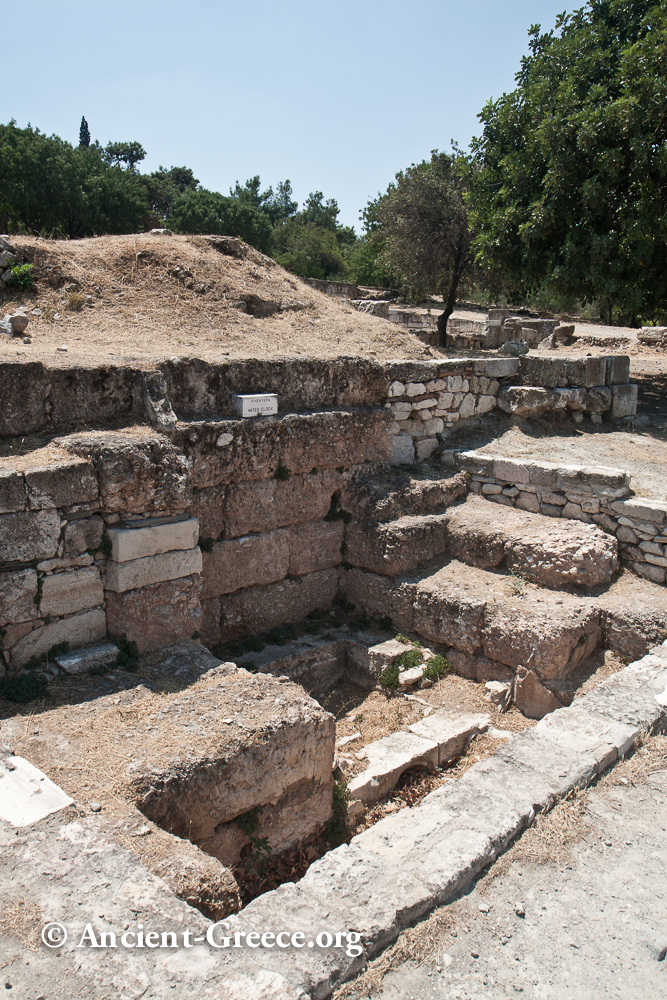
The Klepsydra (Greek: Κλεψύδρα), originally known as Empedo, is an ancient natural spring and springhouse situated on the northwest slope of the Acropolis in Athens. It served as a critical water source for the Acropolis and its surrounding sanctuaries from the Neolithic period through the Byzantine era.
During the Classical period, specifically under the administration of Cimon in the 5th century BCE, the spring was formalized with a paved courtyard and a draw-basin. The structure underwent significant modifications over the centuries, including a Roman-era vaulting and its later incorporation into the Byzantine fortifications of the Acropolis. Archaeological excavations have revealed a complex sequence of use, abandonment, and reconstruction, reflecting the evolving hydrological and defensive needs of the city.
Η Κλεψύδρα (αγγλικά: Klepsydra), αρχικά γνωστή ως Εμπεδώ, είναι μια αρχαία φυσική πηγή και κρήνη που βρίσκεται στη βορειοδυτική πλαγιά της Ακρόπολης στην Αθήνα. Λειτούργησε ως κρίσιμη πηγή νερού για την Ακρόπολη και τα γύρω ιερά από τη Νεολιθική περίοδο έως τη Βυζαντινή εποχή.
Κατά την Κλασική περίοδο, συγκεκριμένα υπό τη διοίκηση του Κίμωνα τον 5ο αιώνα π.Χ., η πηγή διαμορφώθηκε με μια πλακόστρωτη αυλή και μια δεξαμενή άντλησης. Η κατασκευή υπέστη σημαντικές τροποποιήσεις ανά τους αιώνες, συμπεριλαμβανομένης μιας θολωτής κατασκευής της ρωμαϊκής εποχής και της μετέπειτα ενσωμάτωσής της στις βυζαντινές οχυρώσεις της Ακρόπολης. Οι αρχαιολογικές ανασκαφές έχουν αποκαλύψει μια πολύπλοκη αλληλουχία χρήσης, εγκατάλειψης και ανοικοδόμησης, αντανακλώντας τις εξελισσόμενες υδρολογικές και αμυντικές ανάγκες της πόλης.