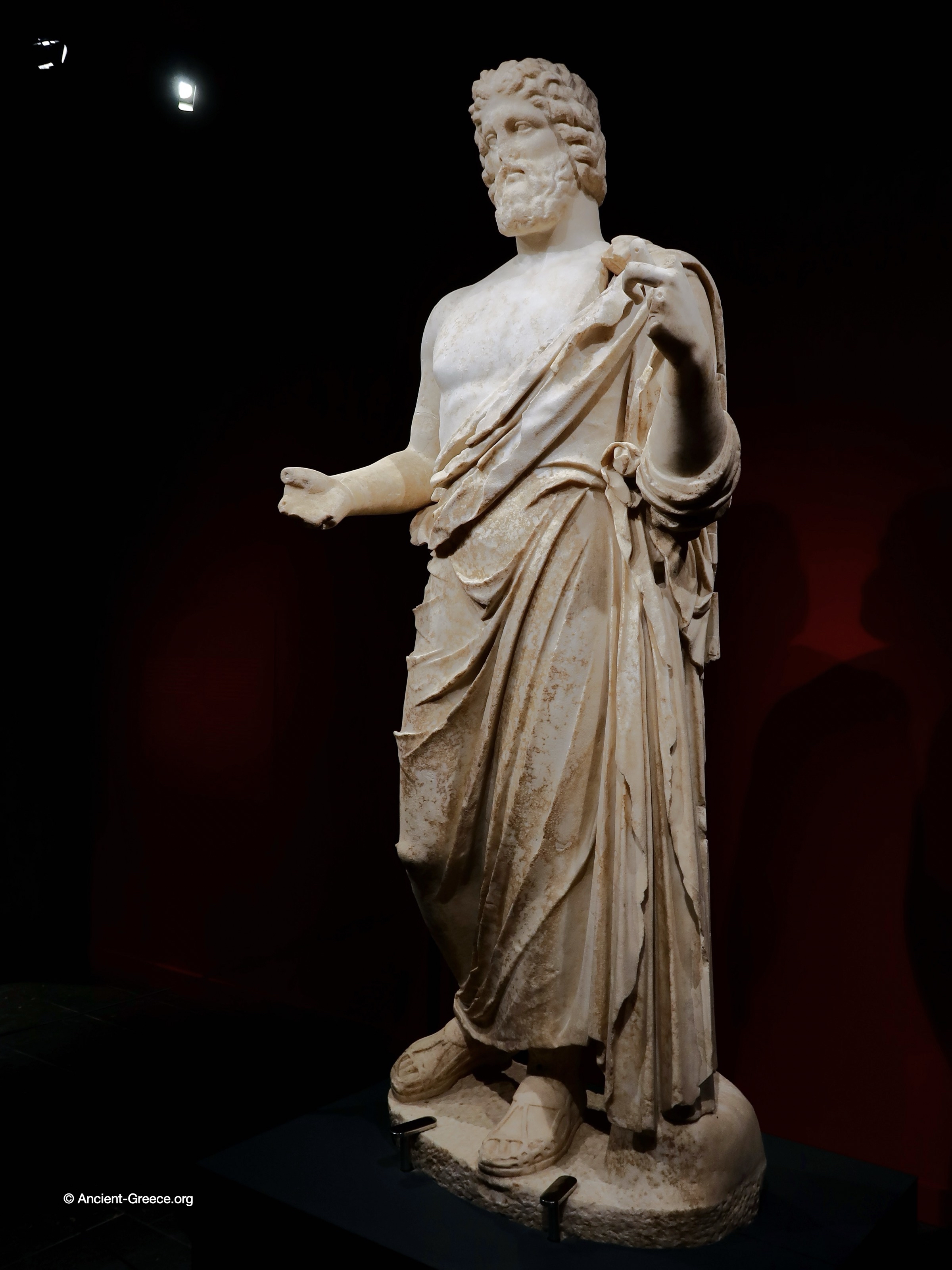
Sculpture of Asclepius form the Temple of Asclepius in Emporion, Spain. The Hellenistic sculpture identified as a representation of the Greek god Asclepios is one of the most exceptional pieces recovered from the Empúries site, and undoubtedly the most symbolic.
It is composed of elements sculpted from two types of marble, which confer different textures to the various parts of the figure. The bust and arms are made of marble from the island of Paros, while the feet and the part of the body dressed in the himátion are made of a finer-grained marble extracted from the Pentelic quarries (Attica).
The statue arrived in Emporion from a Greek workshop in the 2nd century BC, coinciding with the reform of the city's sanctuaries and the introduction of new cults.
The first studies of the figure and the discovery, in the same archaeological context, of another sculpture of a similar scale representing a serpent led to the identification of the statue as the god of medicine: Asclepios, son of Apollo and princess Coronis.
However, not all iconographic studies have reached the same conclusion, and the names Agathos Daimon and Serapis have also been proposed.
Exhibited at the Emporion Archaeological Museum, Catalonia, Spain.
Art Asklepius Catalonia Emporion Emporion Archaeological Museum Marble Medicine Museum Collection Mythology Original Photo Sculpture Spain