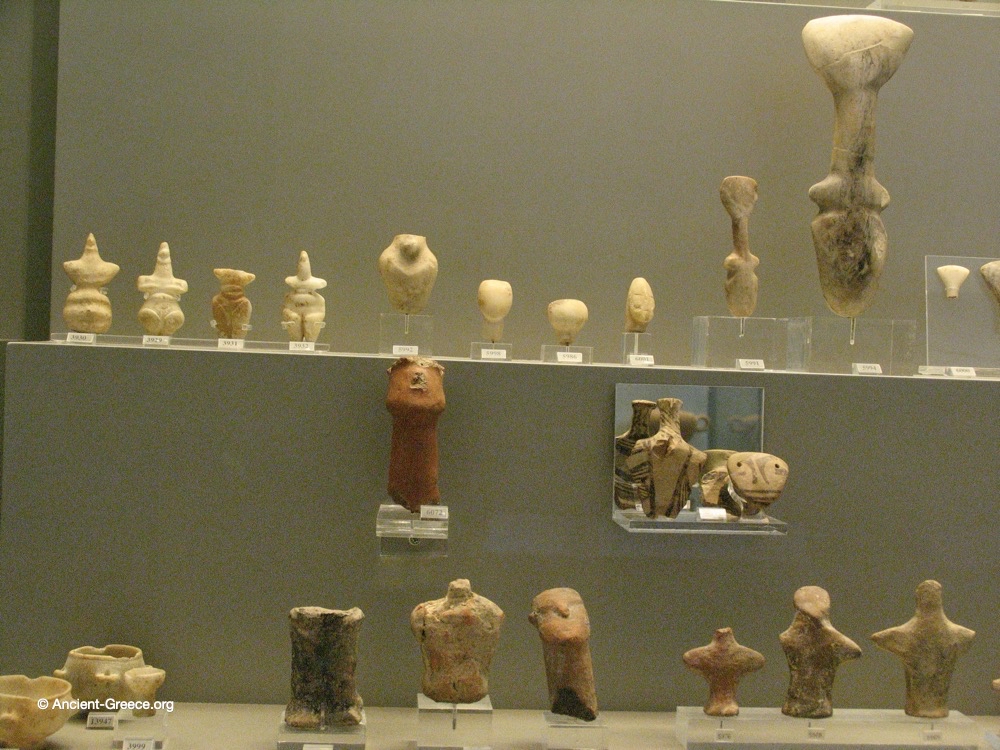
Statuettes from the Late Neolithic period (5300-4500 BCE)
In the Late Neolithic period (5300-4500 BC) abstract schematization prevails, a product of the transformations and developments of the period and not the result of technical inability. Moreover, the Nurse and the Thinker, with their superbly modeled rendering, underline the intentional choice of the abstract depiction of the human form. The plank figurines form a group of schematic figurines, in which the human figure is a flat rectangular piece of clay with two horizontal projections at the top to denote arms and a vestigial base. The acroliths are even more abstract. Into a rectangular or cylindrical core, indicating the body, is inserted a triangular shaft of stone or marble to denote a head and neck. The gender is not differentiated and since there are no anatomical features, these figurines should be described as humanoid rather than human. The ultimate schematization of the human form is to be seen in the ring shaped objects which appear in this period and throughout the Final Neolithic one (4500-3300 BC) that followed it. They were worn as amulets, and the materials used to make them included gold, perhaps the first metal used by man. During the Final Neolithie period white marble was also frequently employed for making anthropomorphic figurines, considered as the forerunners of the famous Cycladic figurines of the Early Bronze Age.
On exhibit at the National Archaeological Museum in Athens, Greece.
Athens Attica Ceramics Clay Cycladic National Archaeological Museum Original Photo Statuettes Stone Age