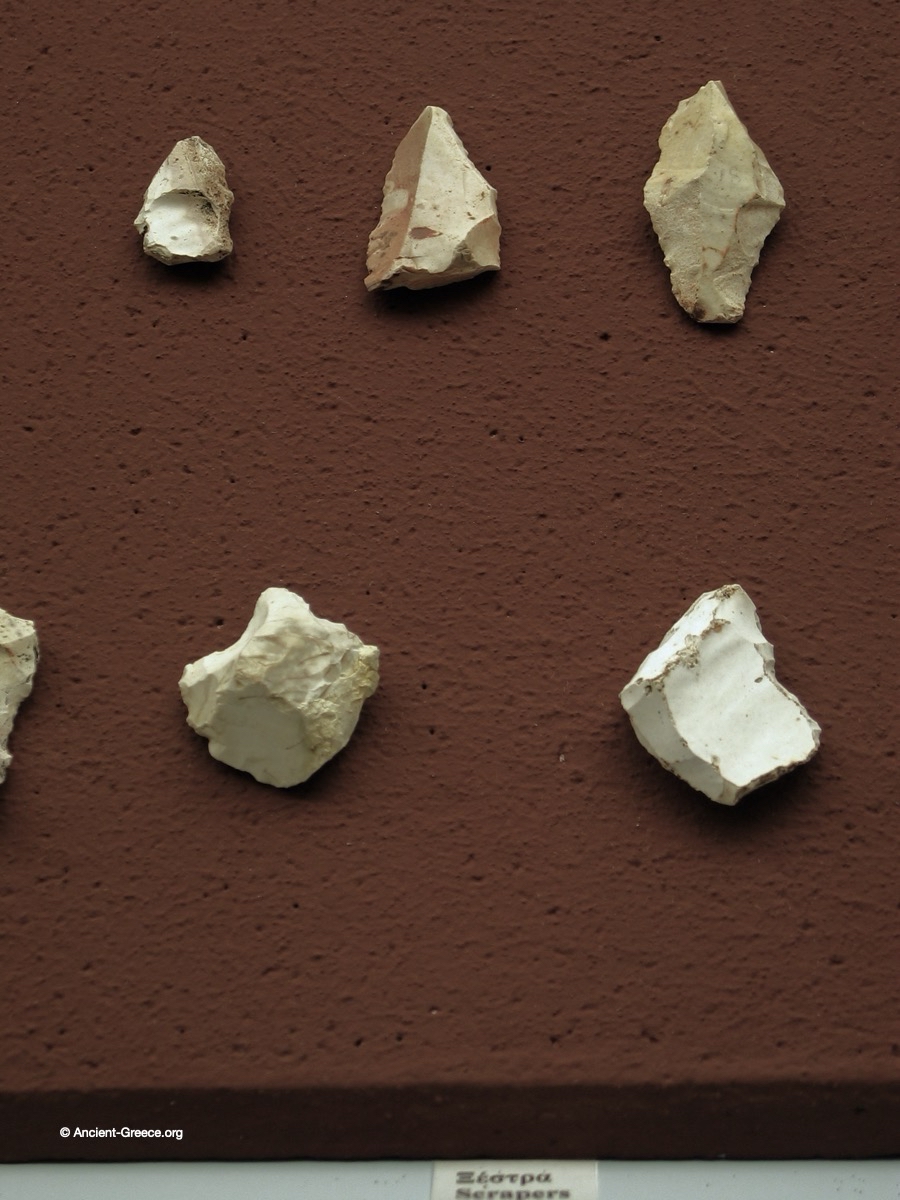
A collection of flint scrapers (Ξέστρα) dating to the Middle or Upper Paleolithic period (c. 50,000–10,000 BCE).
These tools were essential for the survival of early hunter-gatherer groups on Kefalonia, primarily used for cleaning animal hides, shaping wood, or processing plant materials. The intentional retouching along the edges shows the skill required to maintain a durable, sharp working surface. These specimens were a highlight of the prehistoric collection in Room I of the Archaeological Museum of Argostoli.
Συλλογή από ξέστρα (scrapers) από πυριτόλιθο, που χρονολογούνται στη Μέση ή Ανώτερη Παλαιολιθική περίοδο (περ. 50.000–10.000 π.Χ.). Τα εργαλεία αυτά ήταν απαραίτητα για την επιβίωση των πρώτων ομάδων κυνηγών-τροφοσυλλεκτών στην Κεφαλονιά, καθώς χρησιμοποιούνταν κυρίως για την επεξεργασία δερμάτων, τη διαμόρφωση ξύλου ή τον καθαρισμό φυτικών ινών. Η σκόπιμη επεξεργασία στις ακμές τους φανερώνει τη δεξιοτεχνία που απαιτούνταν για τη διατήρηση μιας ανθεκτικής και κοφτερής επιφάνειας εργασίας.
-- Exhibited in the Argostoli Archaeological Museum, Kefalonia island, before it closed down due to ear quake damage in 2014.
Argostoli Archaeological Museum Ionian Sea Kefalonia Museum Collection Original Photo Stone Stone Age | Λίθινη Εποχή Tools and Resources