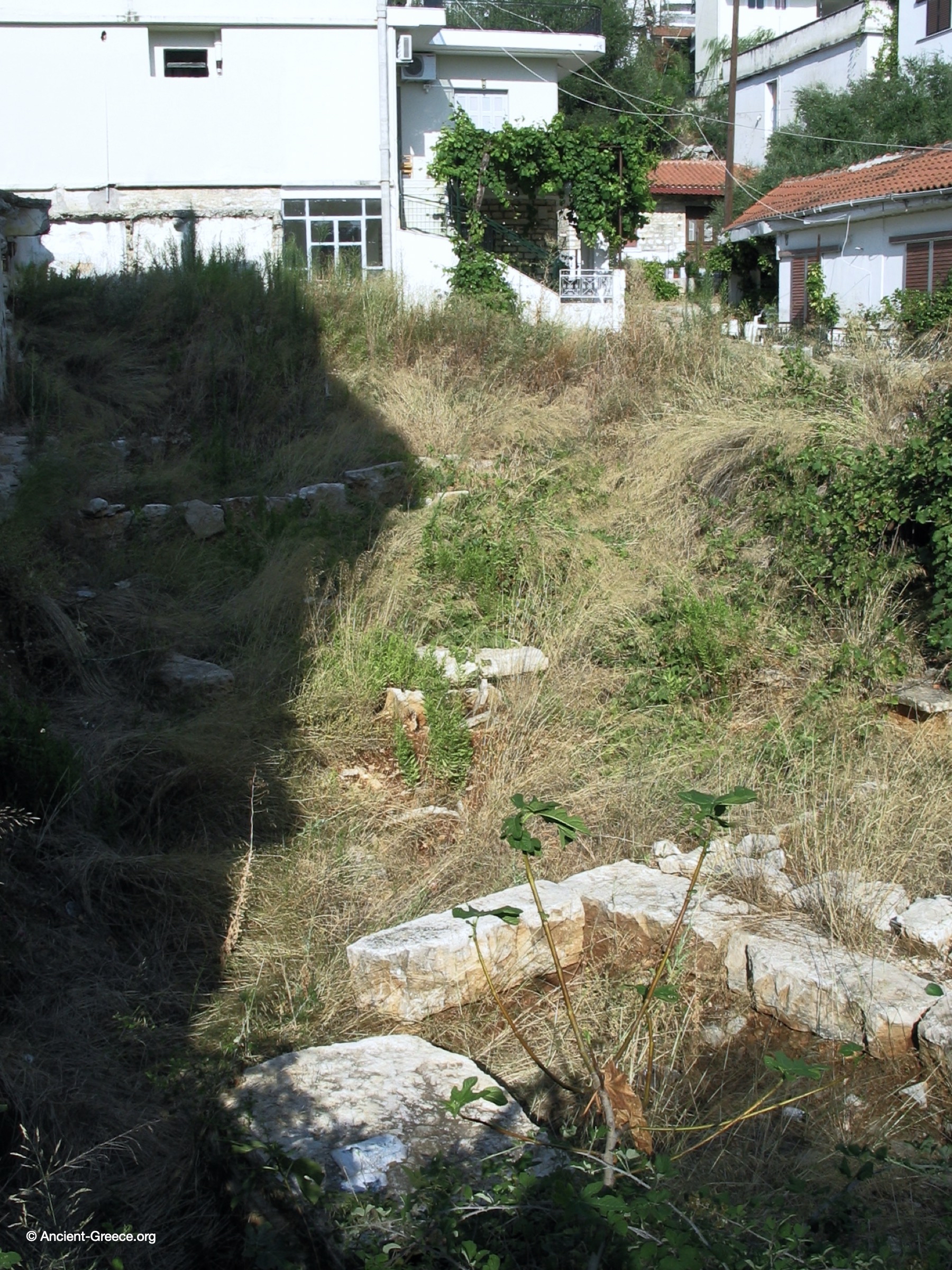
Ruins of the Western Cemetery within the Modern Urban Fabric
Archaeological Site of Arta
5th–4th Century BCE (Classical Period) Limestone and Local Stone This perspective illustrates the direct physical relationship between the ancient city of Ambracia and modern Arta. Foundations of funerary enclosures and sections of the ancient cemetery are preserved in open plots between contemporary residences, serving as a constant reminder of the city's continuous 2,700-year history and the challenges of preserving a sprawling archaeological site within a living city.
◈ ◈ ◈
Ερείπια του Δυτικού Νεκροταφείου στον Σύγχρονο Αστικό Ιστό
Αρχαιολογικός Χώρος Άρτας
5ος–4ος αιώνας π.Χ. (Κλασική Περίοδος)
Ασβεστόλιθος και Τοπικός Λίθος
Αυτή η οπτική γωνία αναδεικνύει την άμεση φυσική σχέση ανάμεσα στην αρχαία Αμβρακία και τη σύγχρονη Άρτα. Θεμέλια ταφικών περιβόλων και τμήματα του αρχαίου νεκροταφείου διασώζονται σε ανοιχτά οικόπεδα ανάμεσα σε σύγχρονες κατοικίες, αποτελώντας διαρκή υπενθύμιση της συνεχούς ιστορίας 2.700 ετών της πόλης και των προκλήσεων διατήρησης ενός εκτεταμένου αρχαιολογικού χώρου μέσα σε μια ζωντανή πόλη.
Ancient Ambracia, modern Arta, Epirus, Greece.
Αρχαία Αμβρακία, σύγχρονη Άρτα. Ήπειρος, Ελλάδα.