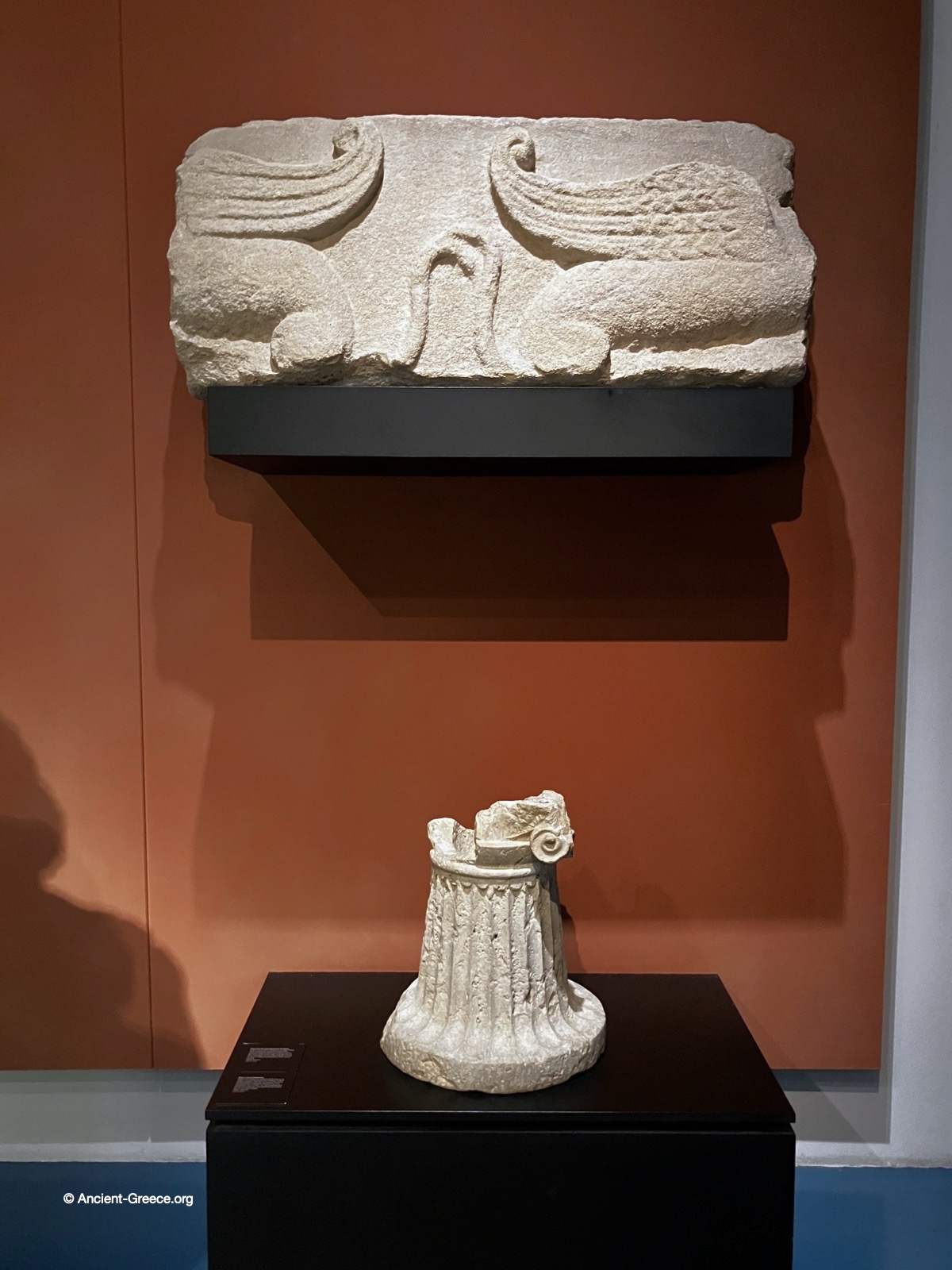
Part of a frieze with sphinx decoration and Altar or ablution basin. From the temple of Asclepius area, in the Neapolis of Emporion.
Altar or ablution basin. Found in front of the temple traditionally attributed to Asclepius, in the sanctuary in the southern sector of the Neapolis of Emporion.
Part of a frieze with sphinx decoration
Found in Sant Marti d'Empúries, the ancient Palaia
Polis Emporitana, together with other architectural elements that could be part of a sacred building erected at that site. Its chronology has been discussed but is often placed in the Hellenistic or even Roman period.
Sandstone
A pedestal in the form of an Ionic column found in front of the temple traditionally attributed to Asclepius, in the sanctuary in the southern sector of the Neapolis of Emporion. It has been interpreted as an altar, although it possibly served as a basin for ablutions that had
a place in the religious ritual.
Limestone
Exhibited at the Catalan Museum of Archaeology, Barcelona, Spain. Museu d'Arqueologia de Catalunya (MAC).
Architecture Art Asclepius Barcelona Catalan Museum of Archaeology - Museu d Arqueologia de Catalunya (MAC) Catalonia Ionic Original Photo Sculpture Spain Sphinx Temple of Asclepius