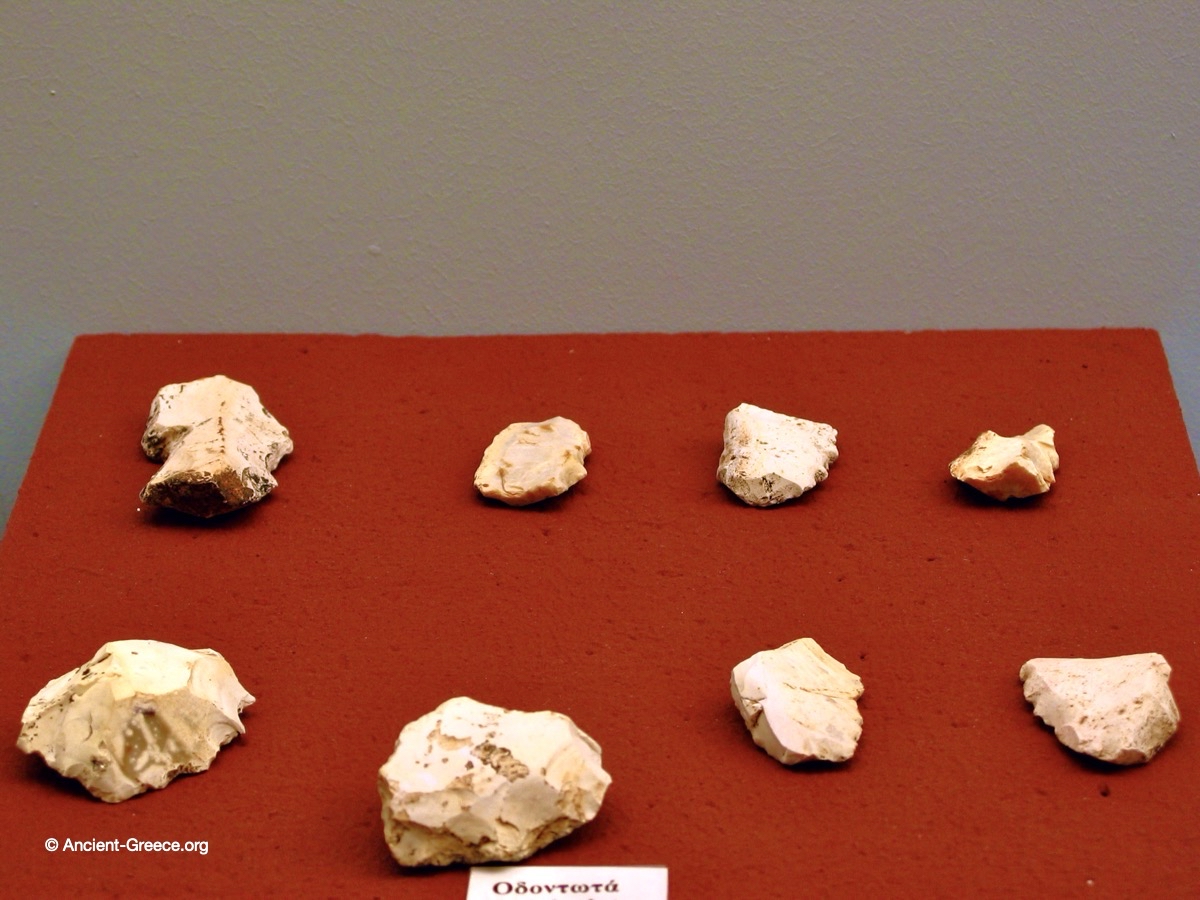
A collection of flint denticulates (Οδοντωτά) dating to the Middle or Upper Paleolithic period (c. 50,000–10,000 BCE).
These tools are characterized by their "toothed" or serrated edges, created by intentional retouching to produce a series of small notches. In the daily life of Paleolithic hunter-gatherers on Kefalonia, these would have functioned much like modern saws or shredders, ideal for woodworking, processing tough plant fibers, or stripping meat. These were displayed in Room I of the Archaeological Museum of Argostoli.
Συλλογή από οδοντωτά (denticulates) από πυριτόλιθο, που χρονολογούνται στη Μέση ή Ανώτερη Παλαιολιθική περίοδο (περ. 50.000–10.000 π.Χ.). Τα εργαλεία αυτά χαρακτηρίζονται από τις πριονωτές ακμές τους, οι οποίες δημιουργήθηκαν με σκόπιμη επεξεργασία για την παραγωγή μιας σειράς εγκοπών. Στην καθημερινή ζωή των παλαιολιθικών ανθρώπων της Κεφαλονιάς, τα οδοντωτά λειτουργούσαν ως πρωτόγονα πριόνια, ιδανικά για την κατεργασία ξύλου, την επεξεργασία σκληρών φυτικών ινών ή τον τεμαχισμό κρέατος.
-- Exhibited in the Argostoli Archaeological Museum, Kefalonia island, before it closed down due to ear quake damage in 2014.
Argostoli Archaeological Museum Ionian Sea Kefalonia Original Photo Stone Stone Age Tools and Resources