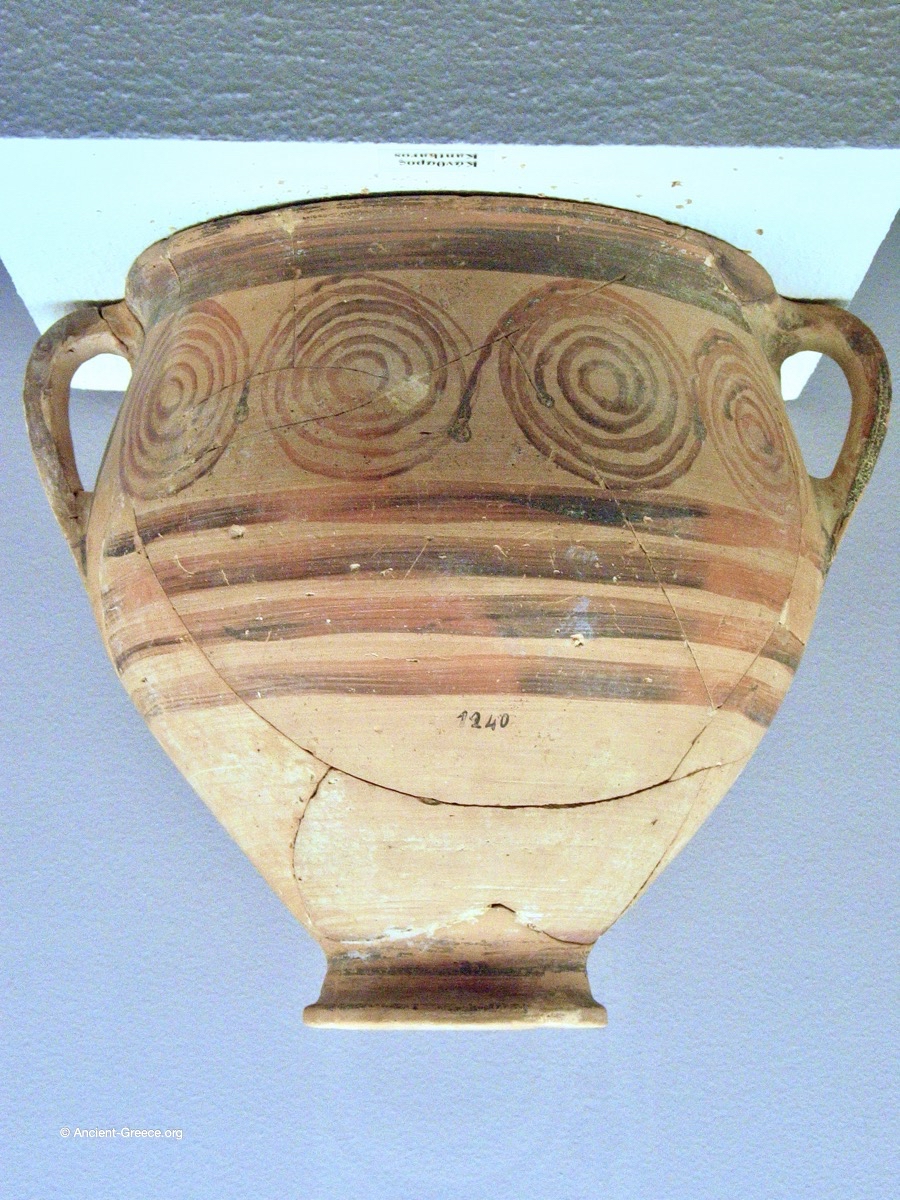
A Late Mycenaean krater (mixing bowl) decorated with a row of large, interconnected spirals and horizontal bands, dating to the Late Helladic III C period (c. 1100–1060/40 BCE).
This vessel is an excellent example of the "Close Style" or local regional variations found in the rich cemeteries of Lakithra and Metaxata. It was formerly displayed in Room II of the Archaeological Museum of Argostoli, highlighting the island's unique artistic development during the final stages of the Mycenaean world.
The ceramic vase was exhibited upside down in the museum (we were told for more stability in case of an earthquake). This photograph was flipped upside down to show a more customary view of the vase.
Υστερομυκηναϊκός κρατήρας διακοσμημένος με σειρά μεγάλων, συνεχόμενων σπειρών και οριζόντιες ταινίες, που χρονολογείται στην Υστεροελλαδική ΙΙΙ Γ περίοδο (περ. 1100–1060/40 π.Χ.). + Το αγγείο αυτό αποτελεί εξαιρετικό δείγμα των τοπικών καλλιτεχνικών ρυθμών που αναπτύχθηκαν στα πλούσια νεκροταφεία της Λακήθρας και των Μεταξάτων. + Εκτίθετο στην Αίθουσα ΙΙ του Αρχαιολογικού Μουσείου Αργοστολίου, αναδεικνύοντας την ιδιαίτερη πολιτισμική εξέλιξη του νησιού κατά την τελική φάση του μυκηναϊκού κόσμου.
-- Exhibited in the Argostoli Archaeological Museum, Kefalonia island, before it closed down due to ear quake damage in 2014.
Argostoli Archaeological Museum Art Bronze Age Ceramics Clay Helladic Ionian Sea Kefalonia Krater Mycenaean Original Photo Pottery