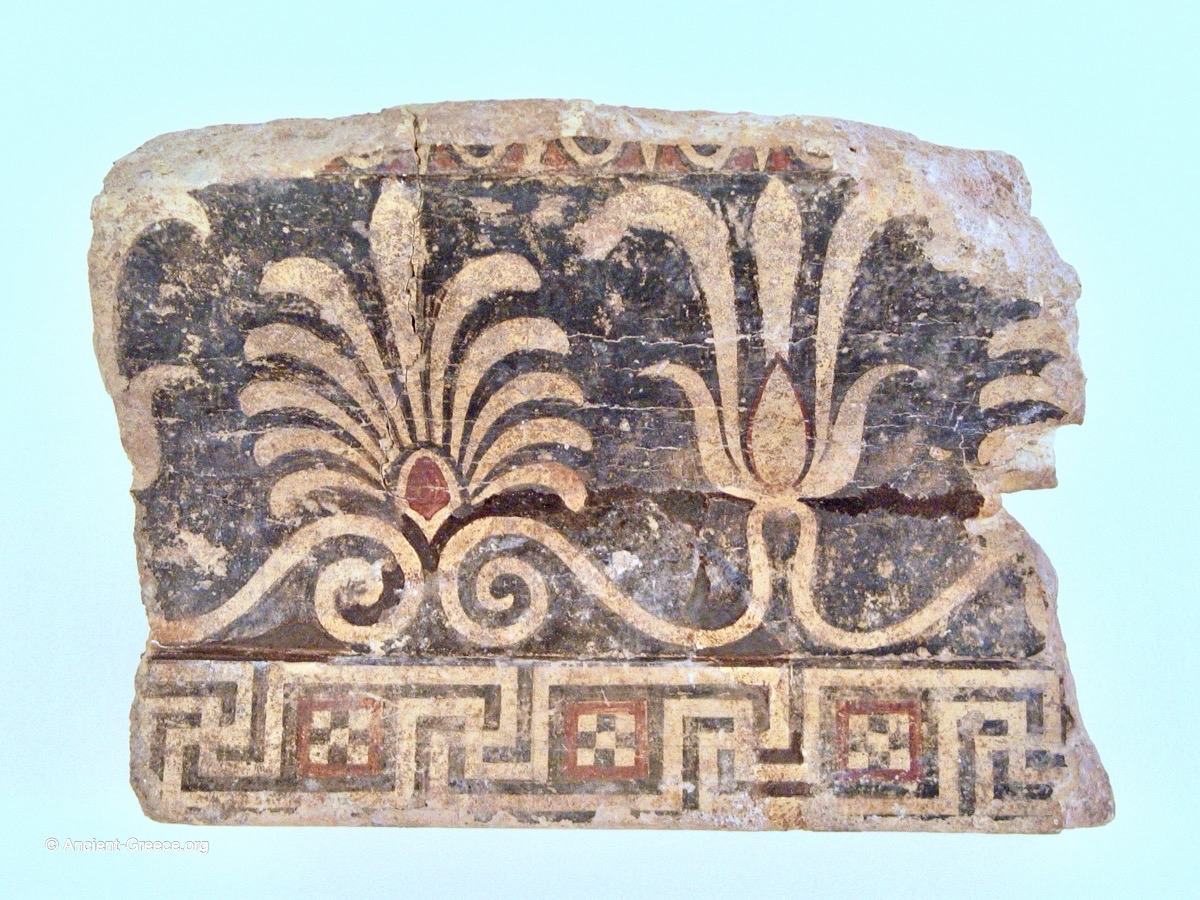
A fragment of a painted terracotta architectural element.
Likely from a sima (gutter) or a decorative frieze, dating to the Classical or Hellenistic period (c. 4th–3rd century BCE). The piece features exceptionally well-preserved polychrome decoration, including a palmette and lotus bud motif atop a running meander (Greek key) border. This fragment illustrates the vibrant colors that once adorned the temples and public buildings of the Cephallenian Tetrapolis. It was a standout exhibit in Room III of the Archaeological Museum of Argostoli until the 2014 earthquake.
Τμήμα γραπτού πήλινου αρχιτεκτονικού μέλους, πιθανώς από σίμη ή διακοσμητική ζωφόρο, που χρονολογείται στην Κλασική ή Ελληνιστική περίοδο (περ. 4ος–3ος αι. π.Χ.). Το θραύσμα φέρει εξαιρετικά διατηρημένη πολυχρωματική διακόσμηση με μοτίβα ανθεμίου και λωτού πάνω από μια ταινία μαιάνδρου. + Το εύρημα αυτό αναδεικνύει τα ζωντανά χρώματα που κάποτε κοσμούσαν τους ναούς και τα δημόσια κτίρια της Κεφαλληνιακής Τετράπολης. + Αποτελούσε ένα από τα πιο εντυπωσιακά εκθέματα της Αίθουσας ΙΙΙ του Αρχαιολογικού Μουσείου Αργοστολίου πριν από τον σεισμό του 2014.
-- Exhibited in the Argostoli Archaeological Museum, Kefalonia island, before it closed down due to ear quake damage in 2014.
Anthemions and Palmettes Argostoli Archaeological Museum Art Ceramics Clay Floral Ionian Sea Kefalonia Lotus Original Photo