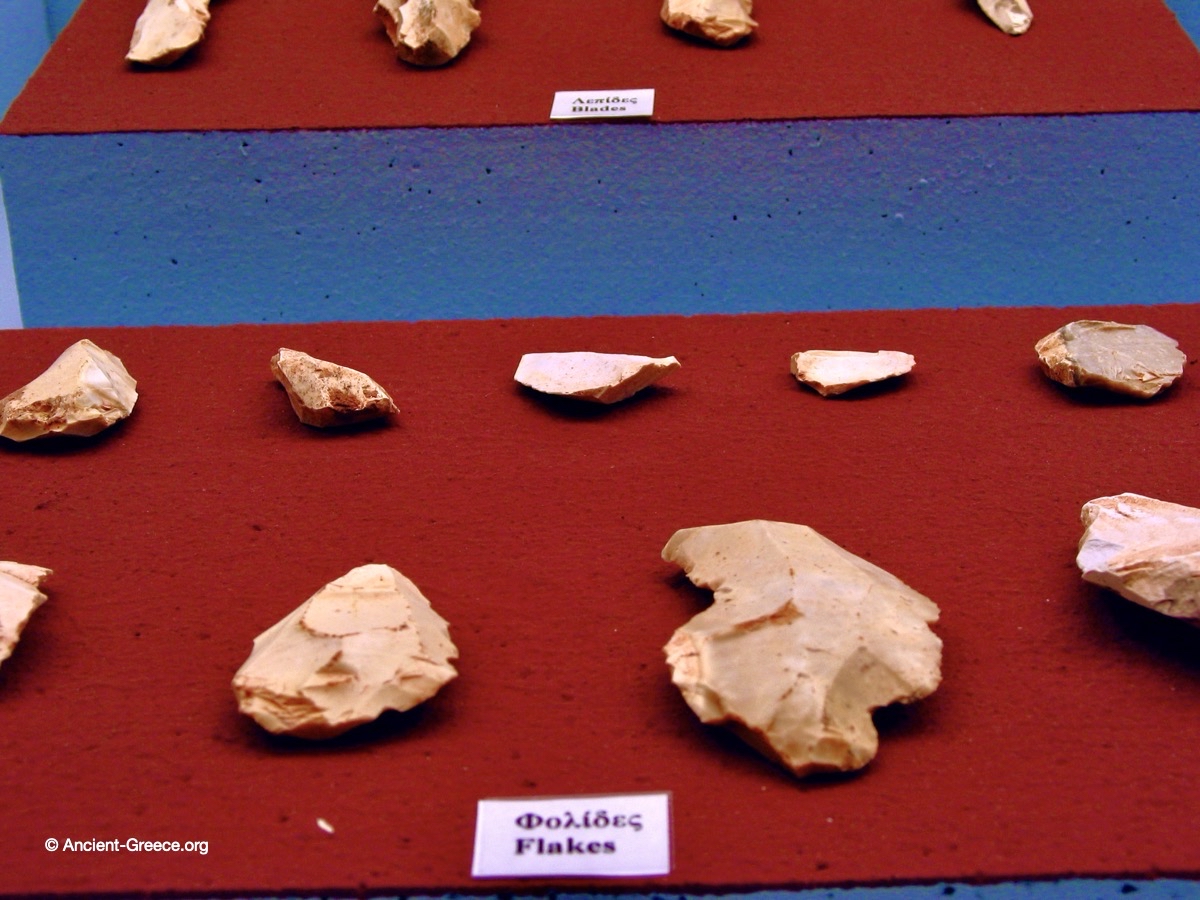
A collection of flint flakes (Φολίδες) dating to the Middle or Upper Paleolithic period (c. 50,000–10,000 BCE).
These fragments are the direct result of "knapping"—the process of striking a stone core to produce sharp-edged tools. While some flakes were mere waste products (debitage), many were used as convenient, razor-sharp disposable knives for butchery or fine cutting tasks. They represent the foundational "lithic industry" of the early inhabitants of Kefalonia and were exhibited in Room I of the Archaeological Museum of Argostoli.
Συλλογή από φολίδες (flakes) από πυριτόλιθο, που χρονολογούνται στη Μέση ή Ανώτερη Παλαιολιθική περίοδο (περ. 50.000–10.000 π.Χ.). Τα θραύσματα αυτά είναι το άμεσο αποτέλεσμα της «λιθοτεχνίας» —της διαδικασίας κρούσης ενός αρχικού πυρήνα λίθου για την κατασκευή εργαλείων. Ενώ ορισμένες φολίδες ήταν απλά κατάλοιπα της επεξεργασίας, πολλές χρησιμοποιούνταν ως αιχμηρά αναλώσιμα εργαλεία για την κοπή κρέατος ή άλλες λεπτές εργασίες.
-- Exhibited in the Argostoli Archaeological Museum, Kefalonia island, before it closed down due to ear quake damage in 2014.
Argostoli Archaeological Museum Ionian Sea Kefalonia Original Photo Stone Stone Age Tools and Resources