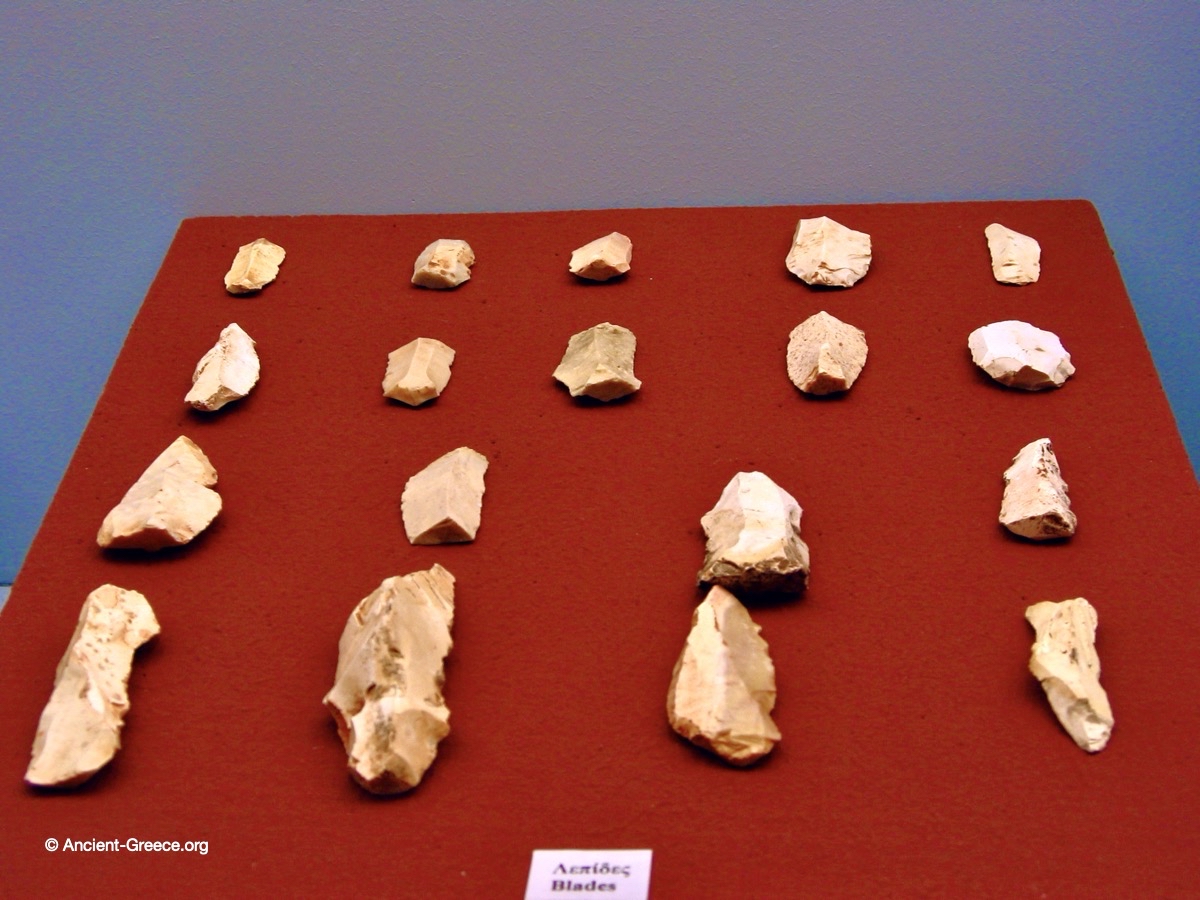
A collection of flint blades (Λεπίδες) dating to the Upper Paleolithic period (c. 35,000–10,000 BCE).
Unlike simple flakes, blades are specialized tools at least twice as long as they are wide, struck from a prepared core to create long, straight, and incredibly sharp cutting edges. These were the multi-purpose "knives" of the Stone Age, used by the early inhabitants of Kefalonia for butchery, skinning, and preparing other tools. They represent a peak in lithic technology and were exhibited in Room I of the Archaeological Museum of Argostoli.
Συλλογή από λεπίδες (blades) από πυριτόλιθο, που χρονολογούνται στην Ανώτερη Παλαιολιθική περίοδο (περ. 35.000–10.000 π.Χ.). Σε αντίθεση με τις απλές φολίδες, οι λεπίδες είναι εξειδικευμένα εργαλεία με μήκος τουλάχιστον διπλάσιο του πλάτους τους, τα οποία αποσπάστηκαν από έναν προετοιμασμένο πυρήνα για να δημιουργήσουν μακριές, ευθείες και εξαιρετικά κοφτερές ακμές. Αποτελούσαν τα «μαχαίρια» πολλαπλών χρήσεων της παλαιολιθικής εποχής και χρησιμοποιούνταν από τους πρώτους κατοίκους της Κεφαλονιάς για τον τεμαχισμό κρέατος, την εκδορά ζώων και την κατασκευή άλλων εργαλείων.
-- Exhibited in the Argostoli Archaeological Museum, Kefalonia island, before it closed down due to ear quake damage in 2014.
Argostoli Archaeological Museum Ionian Sea Kefalonia Original Photo Stone Stone Age Tools and Resources