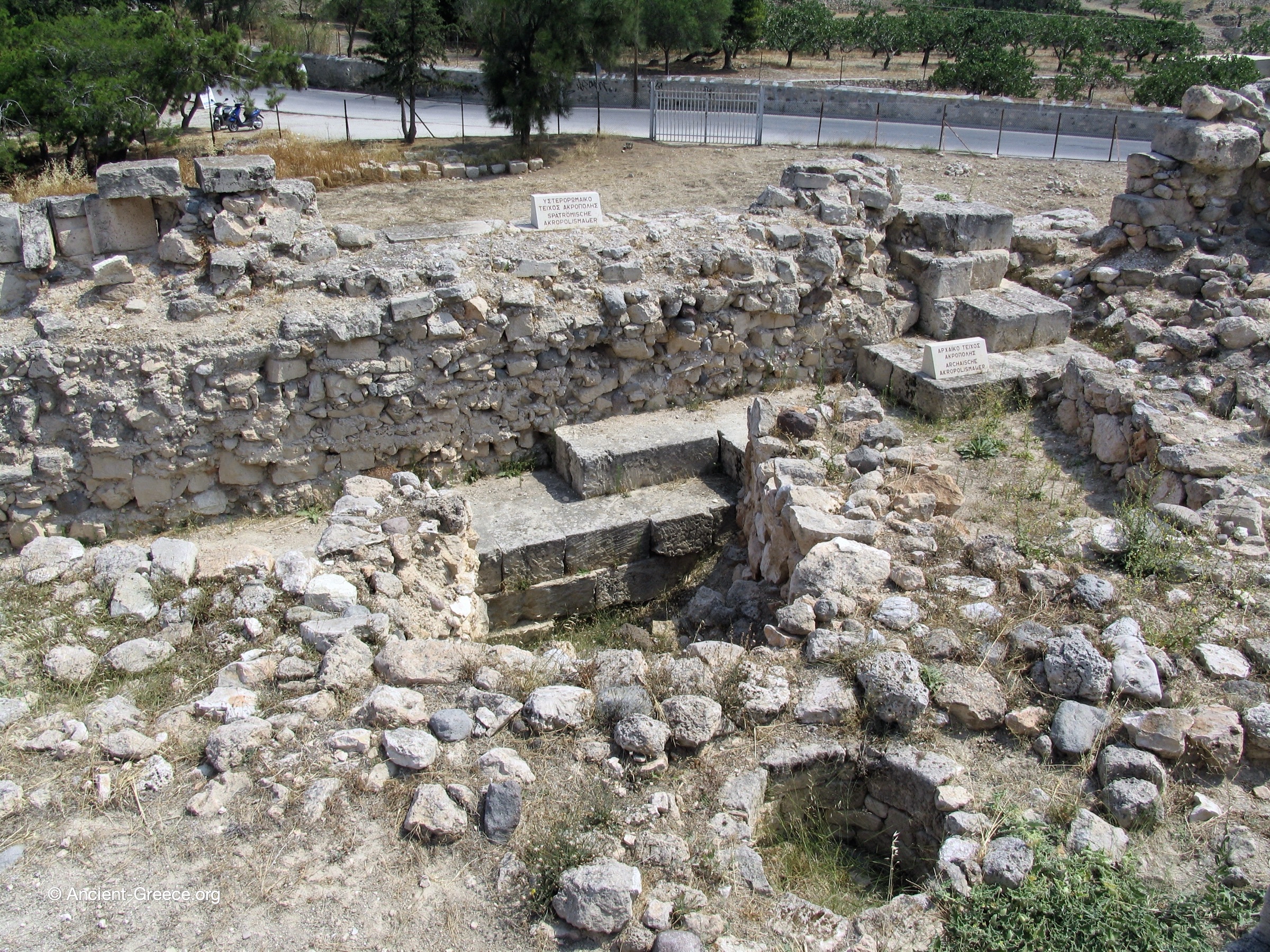
The visible ruins include sections of the Late Roman wall (c. 3rd–4th century CE) next to remnants of the Archaic fortification wall (c. 6th century BCE) demonstrate the site’s continuous strategic importance over the millennia.
This view highlights the formidable fortification systems of Kolona, showcasing the layered defensive history of the citadel. The visible ruins include sections of the Late Roman wall (c. 3rd–4th century CE), which was constructed using spolia and materials from earlier periods to protect the settlement during the declining years of the Empire. Adjacent to these are remnants of the Archaic fortification wall (c. 6th century BCE), reflecting the era when Aegina was a premier naval power and a rival to Athens. These superimposed defensive lines demonstrate the site’s continuous strategic importance and the necessity of safeguarding its concentrated wealth and maritime interests over the millennia. Kolona archaeological site, Aegina Island, Greece. -- Η άποψη αυτή αναδεικνύει τα επιβλητικά οχυρωματικά συστήματα της Κολώνας, προβάλλοντας τη διαστρωματωμένη αμυντική ιστορία της ακρόπολης. Τα ορατά ερείπια περιλαμβάνουν τμήματα του Υστερορωμαϊκού τείχους (περ. 3ος–4ος αι. μ.Χ.Ε.), το οποίο κατασκευάστηκε με τη χρήση οικοδομικού υλικού σε δεύτερη χρήση (spolia) από παλαιότερες περιόδους για την προστασία του οικισμού κατά τους ύστερους αυτοκρατορικούς χρόνους. Δίπλα σε αυτά βρίσκονται υπολείμματα του Αρχαϊκού οχυρωματικού τείχους (περ. 6ος αι. π.Χ.Ε.), που αντικατοπτρίζει την εποχή κατά την οποία η Αίγινα αποτελούσε κυρίαρχη ναυτική δύναμη και ανταγωνίστρια της Αθήνας. Αυτές οι επάλληλες αμυντικές γραμμές καταδεικνύουν τη διαρκή στρατηγική σημασία της θέσης και την ανάγκη διαφύλαξης του πλούτου και των ναυτικών της συμφερόντων ανά τους αιώνες.