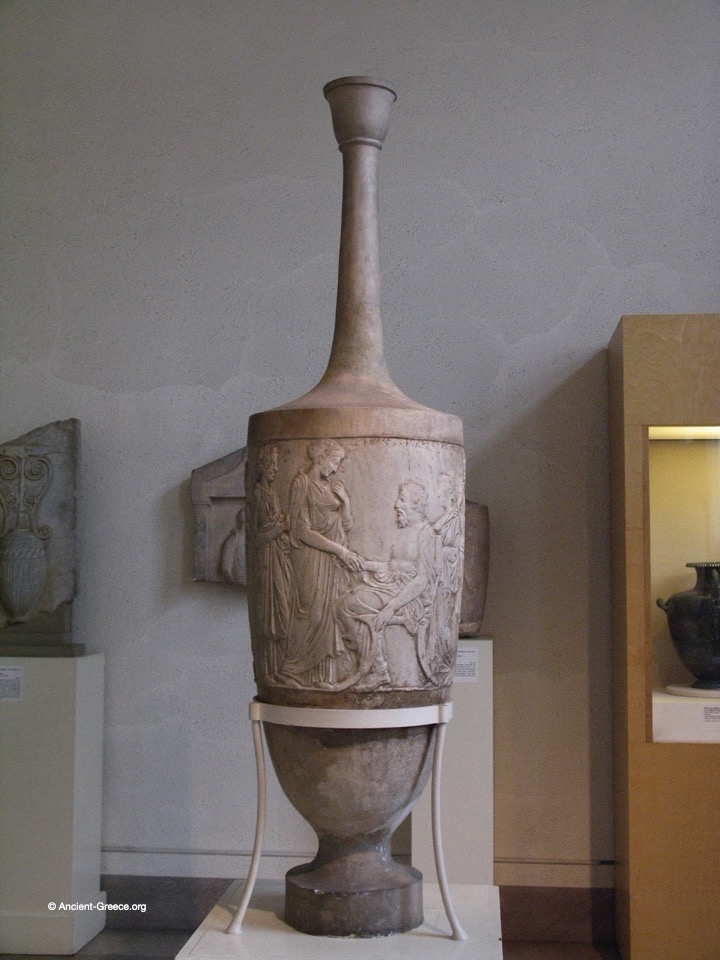
Lekythos (typical grave marker in the form of an oil flask). Pentelic marble. 390 - 380 BCE.
Large-scale marble lekythoi, imitating the shape of the smaller ceramic vessels, were used as grave markers for elite Athenians from the late fifth century until 317 B.C., when laws were passed forbidding such luxurious funerary monuments. The relief band around three-quarters of this vessel feature a seated man-most likely the deceased-with his family, all named by inscriptions alongside their heads. The elderly, bearded Kallias sits on a chair and clasps right hands with a woman named Arete; this gesture marks her as his wife. Another female relative named Kallis follows, leading a smaller figure wearing a long-sleeved tunic who carries two boxes that may contain the family's valuables; since she has no identifying inscription, she is probably a slave. Two figures, labeled Demainete and Eubios, stand behind Kallias and probably represent his daughter and son. The son appears partly nude and holds a strigil, an instrument used to scrape oil off the bodies of athletic competitors; this may be a sign of his physical training, one aspect of the education of freeborn Athenian boys.
Carved in low relief with delicate details, this high-quality piece is a sign of the prosperity of this family and reflects current artistic fashions set by architectural sculpture on monuments such as the Parthenon. Although the composition appears to capture the moment of Kallias's death, the size of the lekythos suggests that it marked an entire family's burial plot, serving as a monumental reminder of the importance of the family unit in Greek civic life.
Exhibited at the Boston Museum of Fine Arts. Boston, USA.
Art Boston Museum of Fine Arts Classical Funerary Lekythos Marble Original Photo Relief Sculpture USA