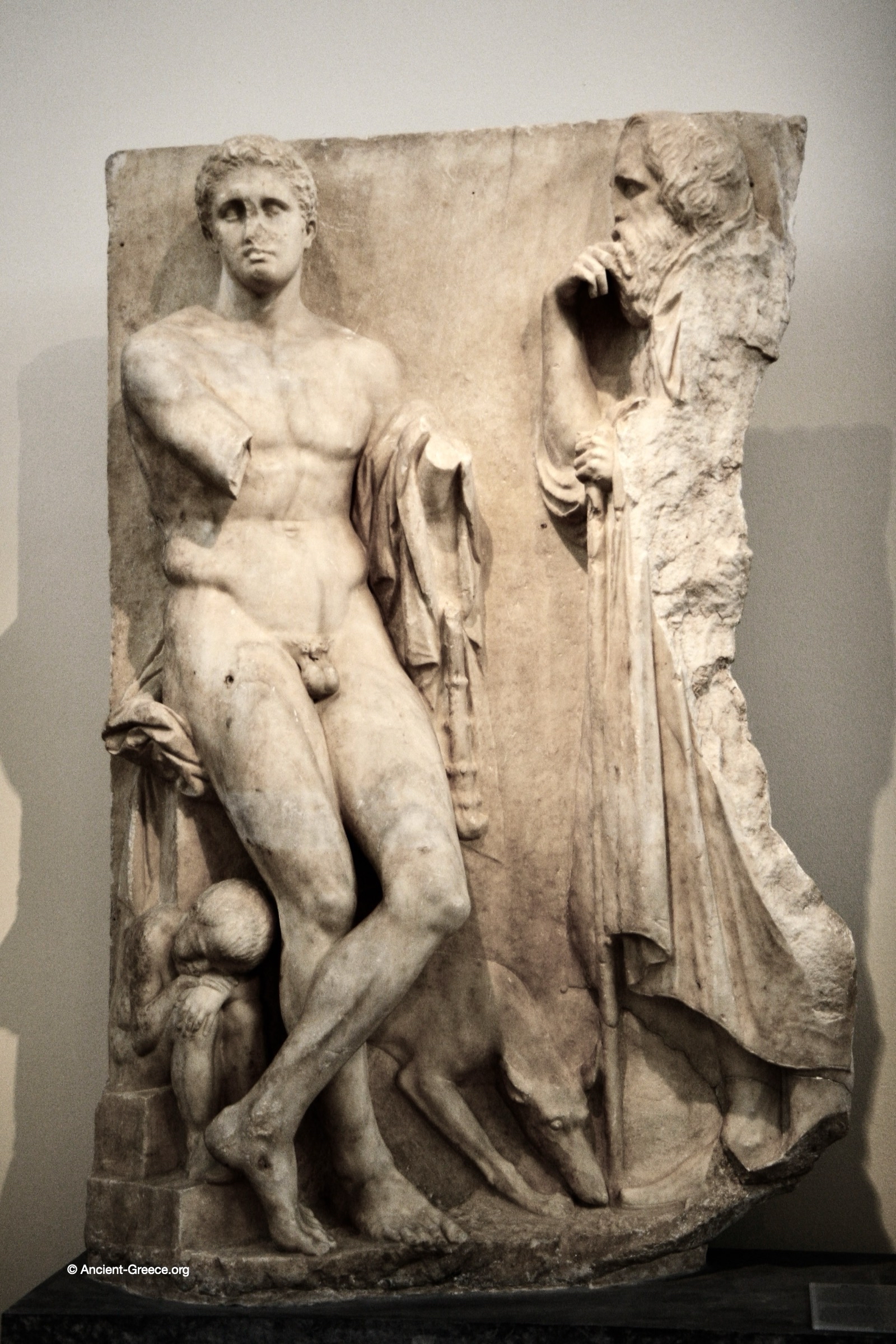
Grave stele. About 340 BCE.
Exhibited in the National Archaeological Museum in Athens, Greece. Pentelic marble.
Found in the bed of the Ilissos river in Athens. A nude youth leans against a pillar with his legs crossed. He holds a lagobolon (a stick to throw at hares) in his left hand, indicating that he was a hunter, as, too, does the dog sniffing the ground behind him. At the right side of the relief, the dead youth's aged father gazes at him, stricken with grief, leaning on his staff. Small holes at the side of and above the hair of the figures will have been used to attach metal wreaths. The representation is completed by the dead man's young servant who is half-asleep on the steps, exhausted by the painful loss. The rendering of the young man's body, which occupies the space with its monumental grandeur makes it likely that the figure was inspired by a free-standing statue of a hero. This outstanding monument, originally in the form of a naiskos, has been attributed to the Parian sculptor Skopas, or to a sculptor from his school.
Art Athens Attica Funerary Marble National Archaeological Museum Original Photo Relief Sculpture Skopas Stele