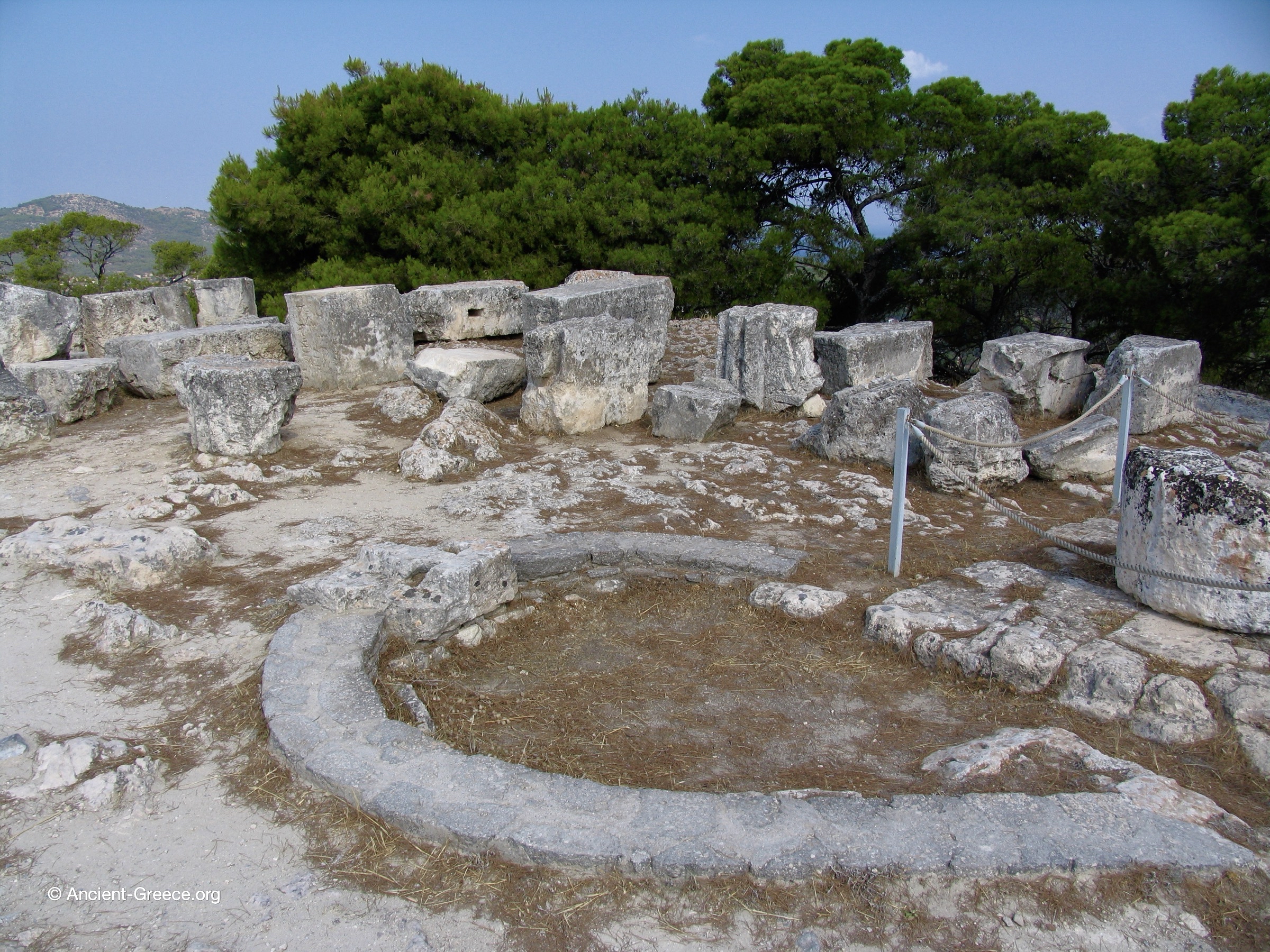
The remains of the archaic altar and sacrificial area at the Sanctuary of Aphaia (c. 500–470 BCE).
The remains of the archaic altar and sacrificial area at the Sanctuary of Aphaia (c. 500–470 BCE), located to the east of the main temple. This circular stone base was the focal point of religious ritual, where animal sacrifices and liquid libations were performed in honor of the goddess. The surrounding scattered blocks and foundations are part of the monumental altar complex that was strategically positioned to be visible to the faithful as they entered the sanctuary through the propylon, emphasizing the central role of sacrifice in Aeginetan religious life.
Τα κατάλοιπα του αρχαϊκού βωμού και του χώρου θυσιών στο Ιερό της Αφαίας (περ. 500–470 π.Χ.), που βρίσκεται στα ανατολικά του κυρίως ναού. Αυτή η κυκλική λίθινη βάση αποτελούσε το επίκεντρο της λατρευτικής τελετουργίας, όπου πραγματοποιούνταν οι θυσίες ζώων και οι σπονδές προς τιμήν της θεάς. Οι γύρω διάσπαρτοι λίθοι και τα θεμέλια αποτελούν μέρος του μνημειώδους συγκροτήματος του βωμού, ο οποίος ήταν στρατηγικά τοποθετημένος ώστε να είναι ορατός στους πιστούς καθώς εισέρχονταν στο ιερό από το πρόπυλο, υπογραμμίζοντας τον κεντρικό ρόλο της θυσίας στη θρησκευτική ζωή της Αίγινας. Temple of Aphaia Archaeological site. Aegina island, Greece.