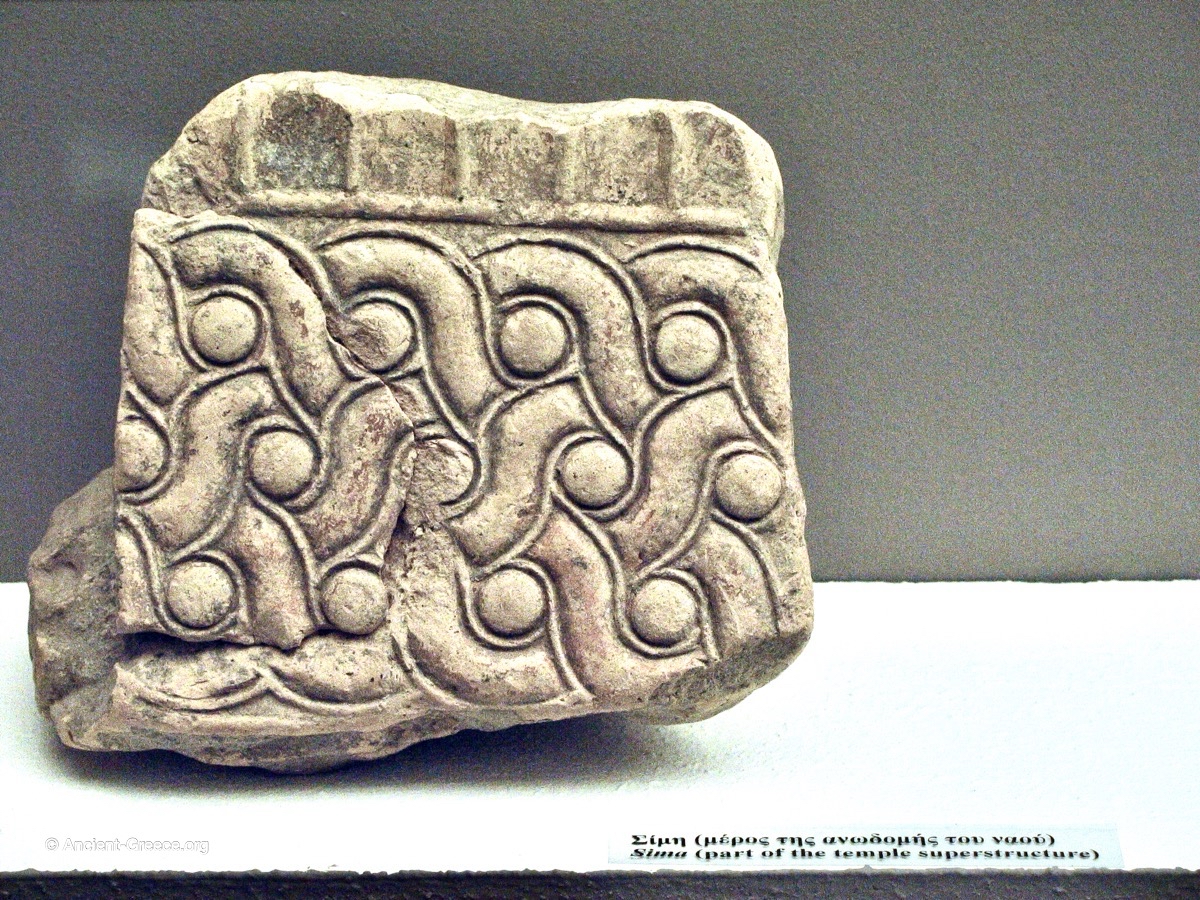
A fragment of a terracotta sima. Circa 3rd–2nd century BCE.
Sima (the upturned edge of a roof) featuring a decorative "running dog" or guilloche wave pattern. This architectural element was part of the temple superstructure of a Classical or Hellenistic sanctuary, likely from the area of Same or Pronnoi. It was a key piece in Room III of the Archaeological Museum of Argostoli, illustrating the transition from mudbrick and wood to more permanent, decorated stone and terracotta temples.
Θραύσμα πήλινης σίμης (το ανώτατο τμήμα της ανωδομής ενός ναού) με διακοσμητικό κυματοειδή μαίανδρο ή πλοχμό. Το αρχιτεκτονικό αυτό μέλος ανήκε στην ανωδομή ενός ναού της κλασικής ή ελληνιστικής περιόδου, πιθανώς από την περιοχή της Σάμης ή των Πρόννων. + Αποτελούσε βασικό έκθεμα της Αίθουσας ΙΙΙ του Αρχαιολογικού Μουσείου Αργοστολίου, αναδεικνύοντας τη μετάβαση στην κατασκευή μόνιμων, διακοσμημένων ναών στο νησί.
-- Exhibited in the Argostoli Archaeological Museum, Kefalonia island, before it closed down due to ear quake damage in 2014.
Argostoli Archaeological Museum Art Ceramics Clay Color and Polychromy Hellenistic Ionian Sea Kefalonia Museum Collection Original Photo Sima