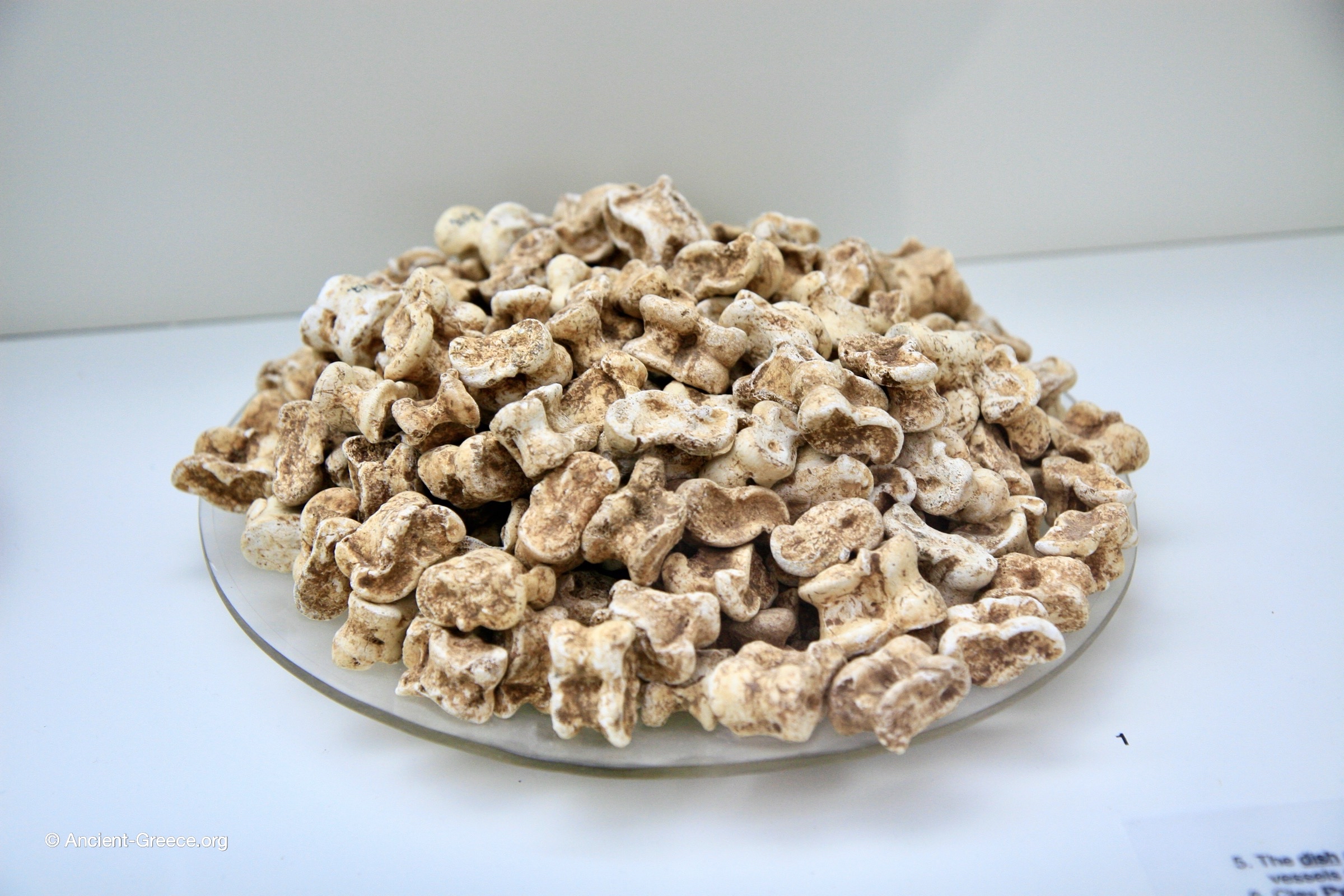
Collection of Astragali (Knucklebones)
Hagios Charalambos Cave, Lassithi Plain
Date: 1800–1650 BCE (Middle Minoan IIB Period)
Material: Bone (Sheep or Goat)
This large hoard of astragali (talus bones of small hooved animals) was found within the secondary burial context of Hagios Charalambos Cave. In the Minoan world, as in much of the ancient Mediterranean, knucklebones served a dual purpose: they were used as gaming pieces and as tools for divination (cleromancy). The sheer quantity found in this ossuary suggests they may have been deposited as a collective offering or belonged to several individuals who valued them as personal possessions. Their presence in a tomb indicates that even the most mundane objects of daily life and leisure were considered worthy of accompanying the deceased into the afterlife, perhaps to provide entertainment or a means to communicate with the divine.
Αυτή η μεγάλη συλλογή από αστραγάλους (οστά από τις κλειδώσεις μικρών οπληφόρων ζώων) βρέθηκε στο πλαίσιο των δευτερογενών ταφών στο σπήλαιο του Αγίου Χαραλάμπους. Στον μινωικό κόσμο, όπως και σε μεγάλο μέρος της αρχαίας Μεσογείου, οι αστράγαλοι είχαν διπλή χρήση: χρησιμοποιούνταν ως παιγνιόχαρτα (πεσσοί) και ως εργαλεία για μαντεία (αστραγαλομαντεία). Η τεράστια ποσότητα που βρέθηκε σε αυτό το οστεοφυλάκιο υποδηλώνει ότι μπορεί να κατατέθηκαν ως συλλογική προσφορά ή ότι ανήκαν σε πολλά άτομα που τους θεωρούσαν πολύτιμα προσωπικά αντικείμενα. Η παρουσία τους σε έναν τάφο υποδηλώνει ότι ακόμη και τα πιο καθημερινά αντικείμενα της ζωής και της αναψυχής θεωρούνταν άξια να συνοδεύσουν τον νεκρό στη μεταθανάτια ζωή, ίσως για να προσφέρουν ψυχαγωγία ή έναν τρόπο επικοινωνίας με το θείο.
In addition to the well-known use of knucklebones for games, the ancients also believed the bones had magic qualities to ward off evil or predict one's fortunes.
-- Exhibited in the Agions Nikolaos Archaeological Museum