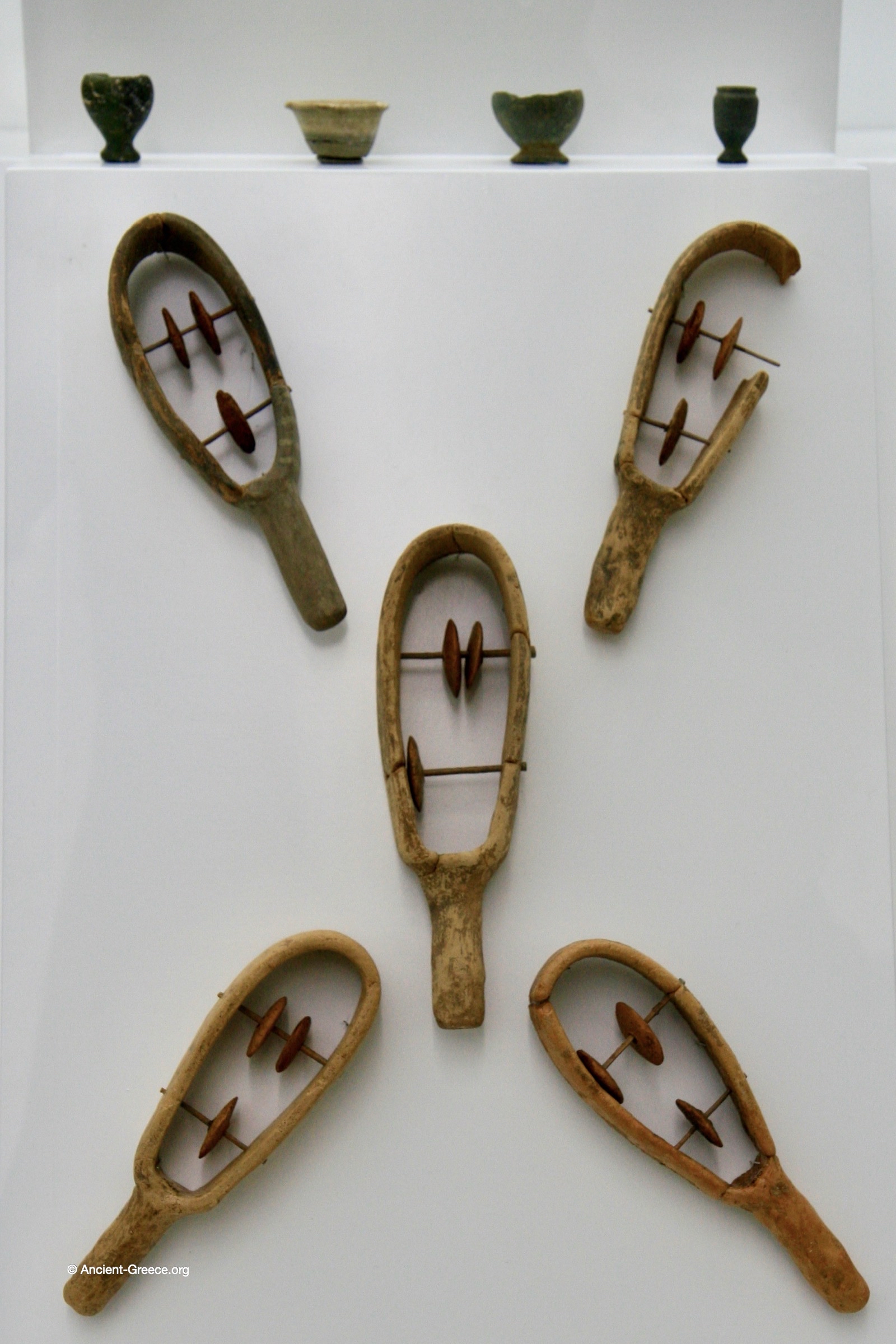
Terracotta Sistra (Musical Instruments)
Archanes, Phourni Cemetery
Date: 2000–1700 BCE (Protopalatial Period)
Material: Terracotta
These unique ceramic objects are models of sistra (singular: sistrum), a type of rattle or percussion instrument originally of Egyptian origin. Each consists of a loop-shaped frame with a handle, featuring horizontal crossbars that held sliding discs or rings to create sound when shaken. While the functional versions were likely made of wood or bronze, these terracotta examples were found in a funerary context at the Phourni cemetery. Their presence among burial offerings suggests that music and rhythmic sound played a vital role in Minoan funerary processions and religious rituals, intended perhaps to guide the deceased or invoke divine presence through sacred sound.
Αυτά τα μοναδικά πήλινα αντικείμενα είναι ομοιώματα σείστρων, ενός είδους κρουστού οργάνου (κουδουνίστρας) με αιγυπτιακή προέλευση. Κάθε σείστρο αποτελείται από ένα τοξωτό πλαίσιο με λαβή, το οποίο φέρει οριζόντιες ράβδους με κινητούς δίσκους ή δακτυλίους που παρήγαγαν ήχο όταν το όργανο ανακινείτο. Ενώ τα λειτουργικά όργανα ήταν πιθανότατα κατασκευασμένα από ξύλο ή μέταλλο, αυτά τα πήλινα δείγματα βρέθηκαν σε ταφικό πλαίσιο στο νεκροταφείο στο Φουρνί των Αρχανών. Η παρουσία τους μεταξύ των κτερισμάτων υποδηλώνει ότι η μουσική και ο ρυθμικός ήχος έπαιζαν ζωτικό ρόλο στις μινωικές ταφικές πομπές και τις θρησκευτικές τελετουργίες, με σκοπό ίσως να καθοδηγήσουν τον νεκρό ή να επικαλεστούν τη θεϊκή παρουσία μέσω του ιερού ήχου.
-- Exhibited in the Agions Nikolaos Archaeological Museum
Agios Nikolaos Archaeological Museum Art Bronze Age Crete Egyptian Funerary Minoan Music Original Photo