Architectural Remains of the Sanctuary of Asklepios at Bouthroton
Limestone masonry and stone-and-brick construction
Hellenistic sanctuary walls and Roman architectural remains
Bouthroton (Butrint), Albania • Ancient Epirus • Late 4th–3rd centuries BCE, with Roman additions (Hellenistic and Roman periods)
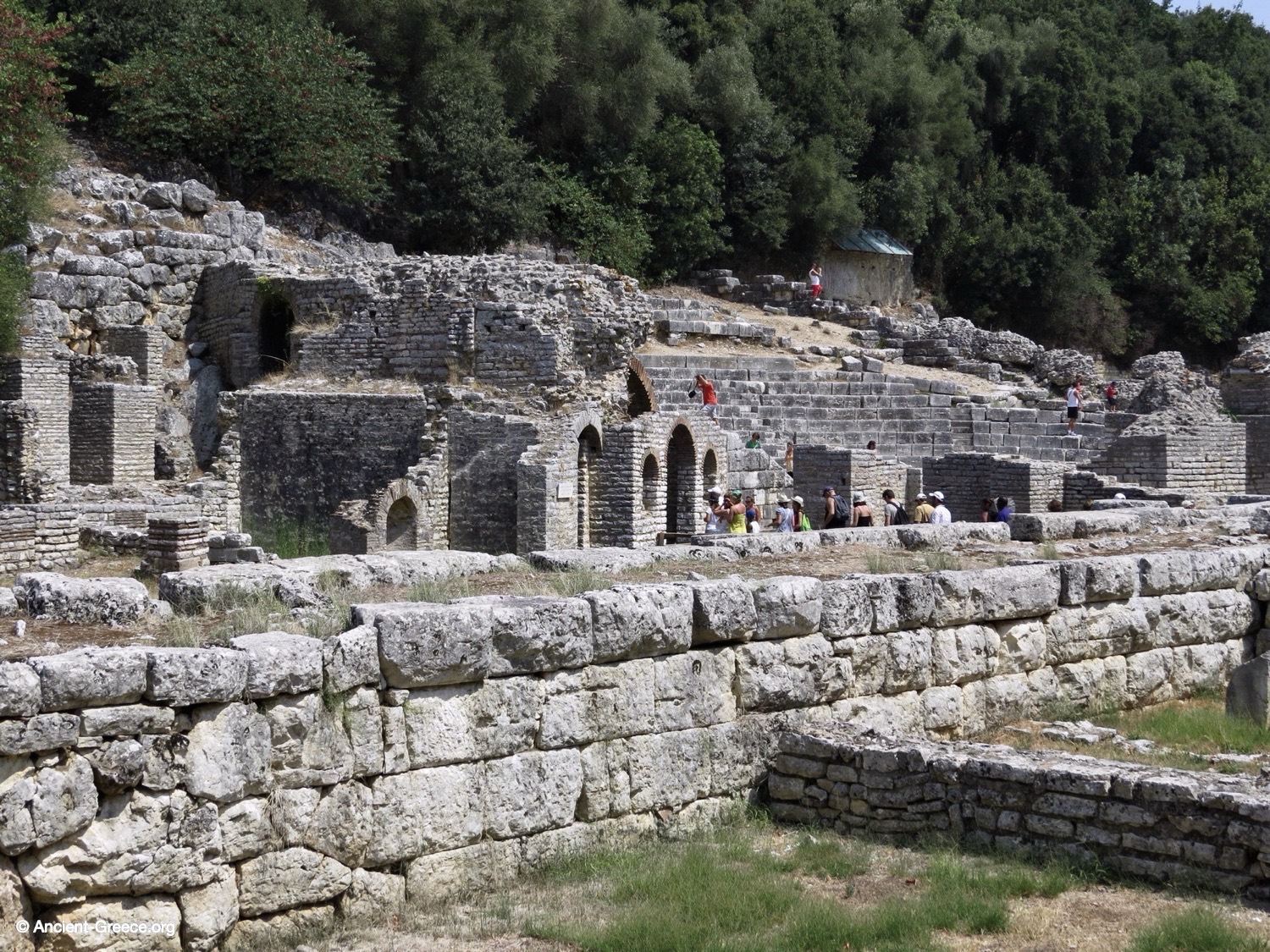
View of the architectural remains of the Sanctuary of Asklepios at ancient Bouthroton, near the Hellenistic theater. In the foreground, substantial limestone walls constructed from rectangular stone blocks define part of the sacred precinct, while the background preserves later masonry structures with arched openings. The healing sanctuary developed during the Hellenistic period and underwent significant modifications in Roman times, particularly during the 2nd century CE. The surviving architecture illustrates the successive phases of construction within one of the principal religious and civic centers of ancient Epirus.
◈
Αρχιτεκτονικά κατάλοιπα του Ιερού του Ασκληπιού στο Βουθρωτό
Ασβεστολιθική τοιχοποιία και λιθόπλινθη κατασκευή
Τείχη ελληνιστικού ιερού και ρωμαϊκά αρχιτεκτονικά κατάλοιπα
Βουθρωτό (Μπουτρίντ), Αλβανία • Αρχαία Ήπειρος • Τέλη 4ου–3ος αιώνας π.Χ., με ρωμαϊκές προσθήκες (Ελληνιστική και Ρωμαϊκή περίοδος)
Άποψη των αρχιτεκτονικών καταλοίπων του Ιερού του Ασκληπιού στο αρχαίο Βουθρωτό, κοντά στο ελληνιστικό θέατρο. Σε πρώτο πλάνο, ισχυροί ασβεστολιθικοί τοίχοι κατασκευασμένοι από ορθογώνιους λιθόπλινθους οριοθετούν τμήμα του ιερού περιβόλου, ενώ στο βάθος διατηρούνται μεταγενέστερες τοιχοποιίες με τοξωτά ανοίγματα. Το θεραπευτικό ιερό αναπτύχθηκε κατά την Ελληνιστική περίοδο και υπέστη σημαντικές μετατροπές κατά τους Ρωμαϊκούς χρόνους, ιδιαίτερα τον 2ο αιώνα μ.Χ. Η σωζόμενη αρχιτεκτονική αναδεικνύει τις διαδοχικές οικοδομικές φάσεις ενός από τα σημαντικότερα θρησκευτικά και πολιτικά κέντρα της αρχαίας Ηπείρου.
Bouthroton, Vlorë County, Albania. 2013
◈
Βουθρωτόν, κομητεία Vlorë, Αλβανία. 2013