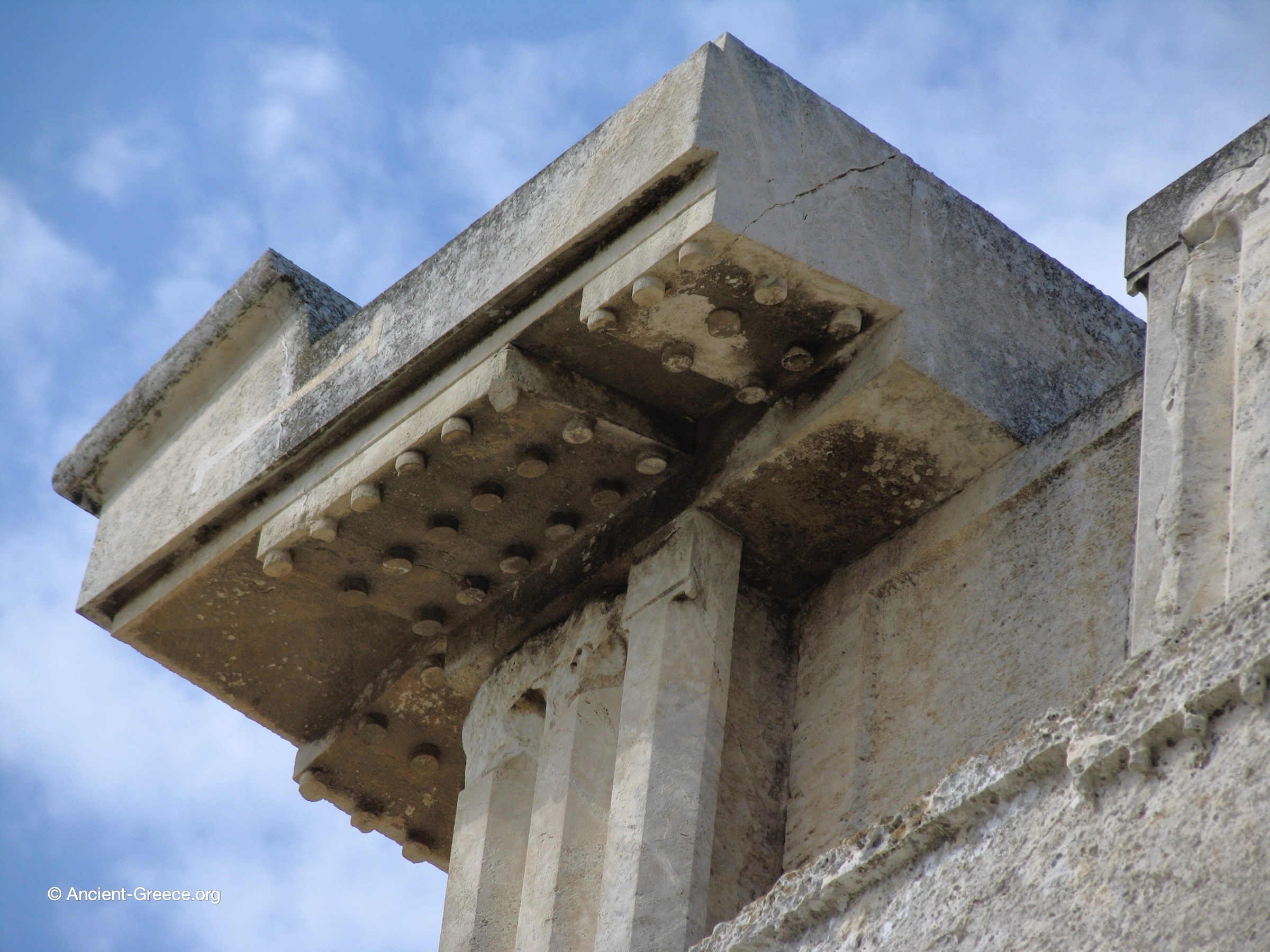
Mutules and guttae of the Temple of Aphaia. Aegina island, Greece. Temple of Aphaia is a Late Archaic temple in Aegina Island.
A detailed view of the entablature of the Temple of Aphaia (c. 500–470 BCE), highlighting the precise execution of Doric architectural elements. The photograph shows the mutules—the rectangular blocks attached to the underside of the corona—decorated with rows of guttae (small, peg-like projections). These features are stone translations of the wooden pegs and beams used in earlier Greek timber temples, reflecting the evolution of Greek religious architecture from wood to monumental limestone and marble while preserving traditional structural aesthetics.
In a standard Doric temple like the Temple of Aphaia, each mutule typically features 18 guttae, arranged in three rows of six.
Μια λεπτομερής άποψη του θριγκού του Ναού της Αφαίας (περ. 500–470 π.Χ.), που αναδεικνύει την ακρίβεια στην εκτέλεση των δωρικών αρχιτεκτονικών στοιχείων. Η φωτογραφία δείχνει καθαρά τους σταγόνες και τους κανόνες (mutules), τα ορθογώνια τμήματα που εφάπτονται στην κάτω επιφάνεια του γείσου και κοσμούνται με σειρές από σταγόνες (μικρές κυλινδρικές προεξοχές). Τα στοιχεία αυτά αποτελούν λίθινες μεταφορές των ξύλινων πείρων και δοκών που χρησιμοποιούνταν στους παλαιότερους ξύλινους ελληνικούς ναούς, αντανακλώντας την εξέλιξη της ελληνικής ναοδομίας από το ξύλο στον μνημειώδη πωρόλιθο και το μάρμαρο, διατηρώντας παράλληλα την παραδοσιακή δομική αισθητική. Temple of Aphaia Archaeological site. Aegina island, Greece.
Aegina Archaic Architecture Doric Entablature Guttae Metopes Mutules Original Photo Temple Temple of Aphaia