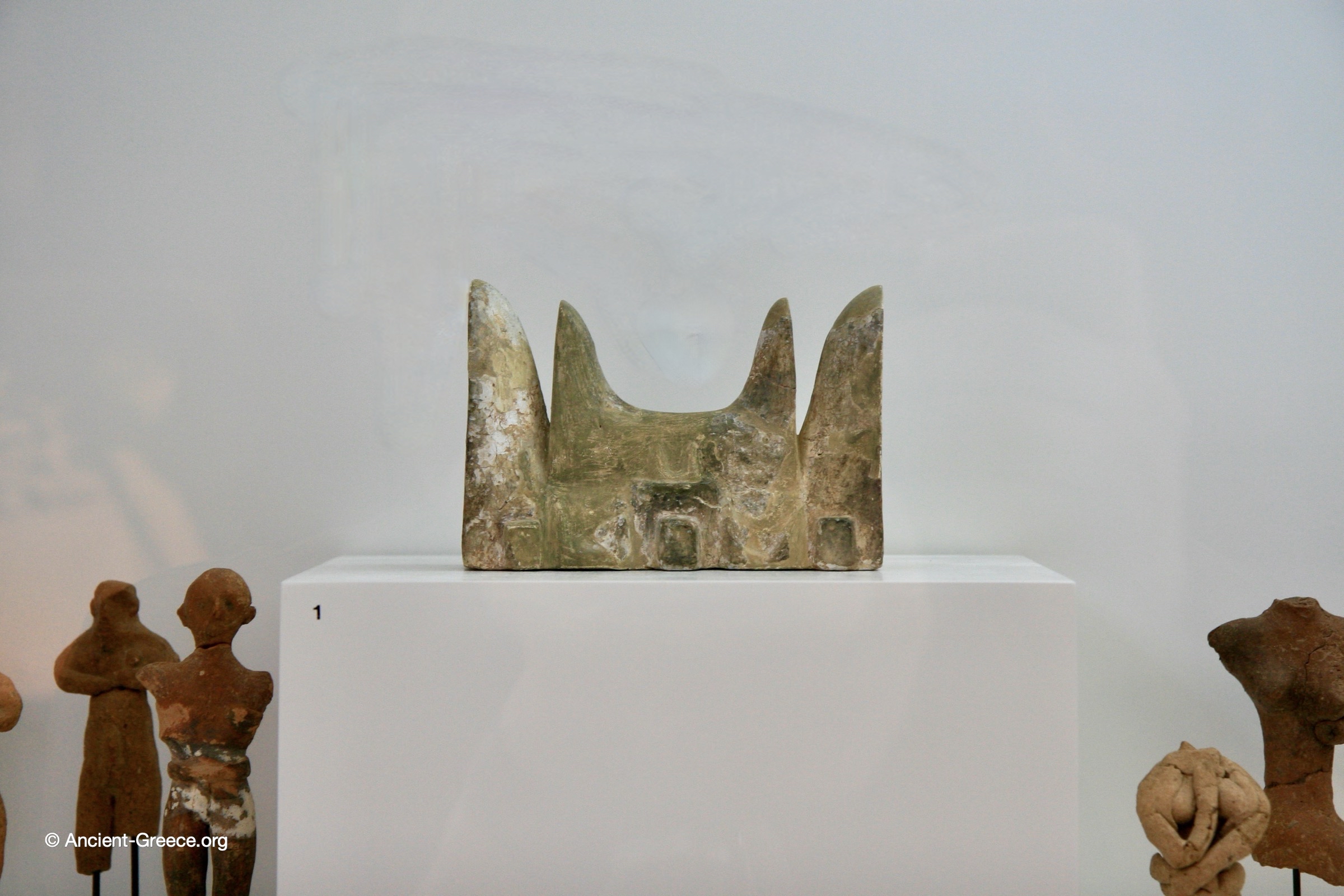
Stone Horns of Consecration
Minoan Peak Sanctuaries
2000–1425 BCE (Protopalatial to Neopalatial Period)
The Horns of Consecration are the most recognizable sacred symbol of Minoan religion, representing stylized bull horns. This specific example, carved from stone and found at a peak sanctuary, served as a miniature architectural model of the massive limestone horns that once adorned the rooflines of palaces like Knossos. At high-altitude shrines, these horns acted as "markers" of sacred space, often placed on altars or at the edges of ritual pits to signal the presence of the divine. The symbol emphasizes the bull's role as a link between the earth and the heavens, framing the ritual activities of the pilgrims who visited these mountain heights.
Τα Κέρατα Καθοσίωσης αποτελούν το πιο αναγνωρίσιμο ιερό σύμβολο της μινωικής θρησκείας, αναπαριστώντας σχηματοποιημένα κέρατα ταύρου. Το συγκεκριμένο δείγμα, λαξευμένο σε λίθο και προερχόμενο από ιερό κορυφής, λειτουργούσε ως μικρογραφικό ομοίωμα των μεγάλων λίθινων κεράτων που κάποτε κοσμούσαν τις στέγες των ανακτόρων, όπως αυτό της Κνωσού. Στα ιερά μεγάλου υψομέτρου, τα κέρατα αυτά λειτουργούσαν ως «σημαντήρες» του ιερού χώρου, τοποθετημένα συχνά πάνω σε βωμούς ή στις παρυφές τελετουργικών αποθέσεων για να δηλώσουν την παρουσία του θείου. Το σύμβολο αυτό υπογραμμίζει τον ρόλο του ταύρου ως συνδέσμου μεταξύ γης και ουρανού, πλαισιώνοντας τις τελετουργικές δραστηριότητες των προσκυνητών που επισκέπτονταν αυτές τις βουνοκορφές.
carved from chlorite or a similar soft green stone (often generally referred to as steatite or serpentine in older archaeological catalogs).
In the context of Minoan peak sanctuaries, these materials were favored for several reasons:
Workability: These stones are relatively soft, allowing artisans to achieve the sharp, precise tapering of the horns and the flat base needed for them to stand securely on an altar.
Symbolic Color: The greenish hue of chlorite and serpentine was often associated by the Minoans with vegetation and the natural world, reinforcing the sanctuary's connection to the "Mountain Mother" or nature deities.
Durability: Unlike the clay (terracotta) used for the surrounding figurines, stone was a "prestige" material. Using stone for the Horns of Consecration marked them as a more permanent, high-status dedication compared to the mass-produced clay votives.
-- Exhibited in the Agions Nikolaos Archaeological Museum