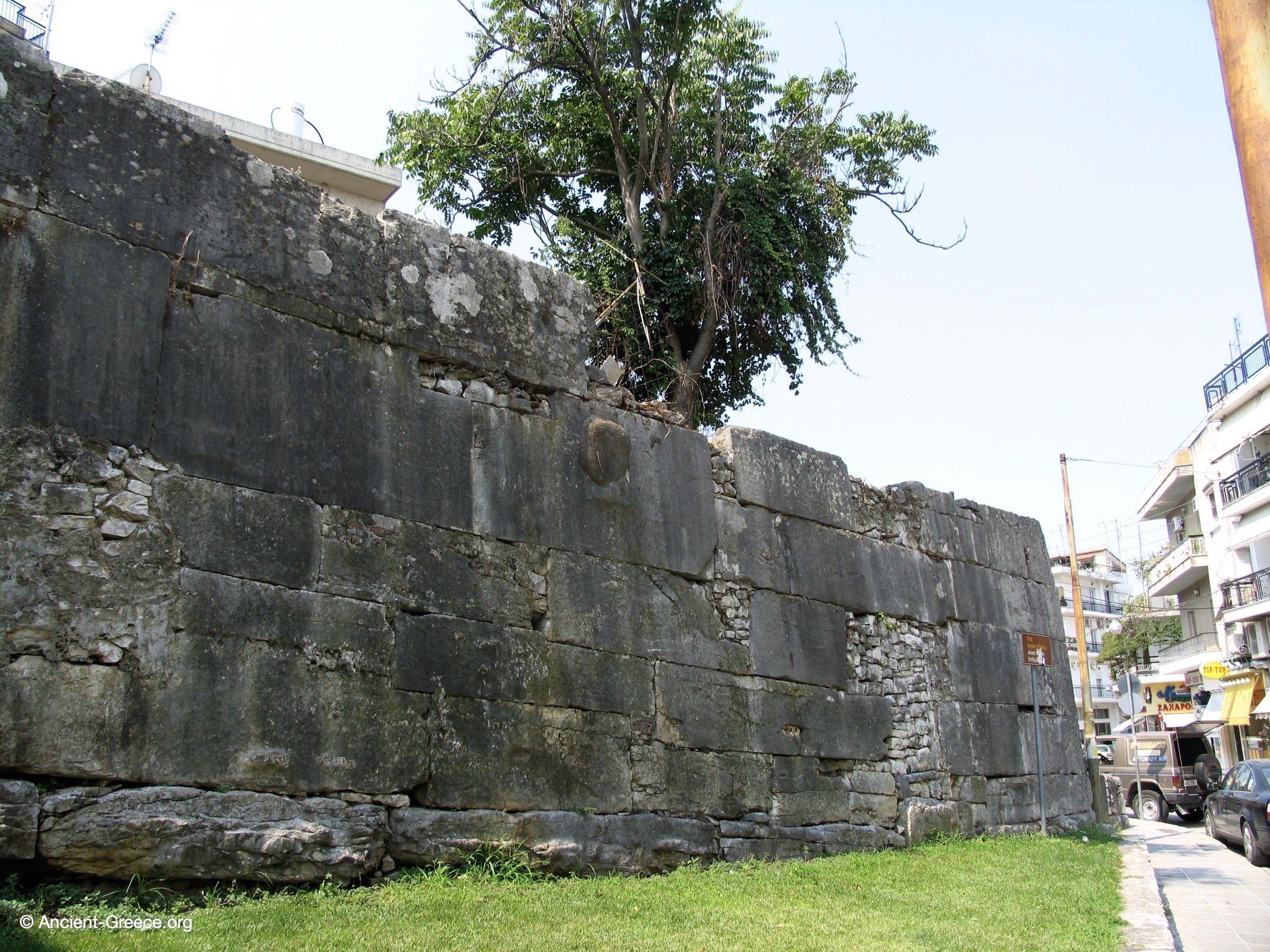
Ancient Isodomic Wall of Ambracia
Archaeological Site of Arta (Castle District)
Late 4th Century BCE (Hellenistic Period)
Limestone
This segment of the ancient fortification wall highlights the remarkable engineering of Hellenistic Ambracia. The use of isodomic masonry—where rectangular blocks of equal height are laid in regular courses—provided both aesthetic symmetry and immense structural stability. You can clearly see the "patchwork" areas where smaller stones were used to fill gaps caused by millennia of weathering and stone robbing. The massive blocks at the base are particularly noteworthy, as they were carved to follow the natural unevenness of the bedrock, creating a "custom fit" foundation that has survived for over 2,400 years.
◈ ◈ ◈
Αρχαίο Ισόδομο Τείχος της Αμβρακίας
Αρχαιολογικός Χώρος Άρτας (Περιοχή Κάστρου)
Τέλη 4ου αιώνα π.Χ. (Ελληνιστική Περίοδος) Ασβεστόλιθος
Αυτό το τμήμα του αρχαίου οχυρωματικού τείχους αναδεικνύει την εξαιρετική μηχανική της ελληνιστικής Αμβρακίας. Η χρήση της ισόδομης τοιχοποιίας—όπου ορθογώνιοι δόμοι ίσου ύψους τοποθετούνται σε κανονικές στρώσεις—προσέφερε τόσο αισθητική συμμετρία όσο και τεράστια δομική σταθερότητα. Διακρίνονται καθαρά τα σημεία «μπαλώματος» όπου χρησιμοποιήθηκαν μικρότερες πέτρες για να γεμίσουν κενά που προκλήθηκαν από χιλιετίες διάβρωσης και λιθοθηρίας. Οι ογκώδεις λίθοι στη βάση είναι ιδιαίτερα αξιοσημείωτοι, καθώς λαξεύτηκαν για να ακολουθούν τη φυσική ανομοιομορφία του βράχου, δημιουργώντας μια «κατά παραγγελία» θεμελίωση που επιβιώνει για πάνω από 2.400 χρόνια.
The Archaic (6th c. BCE) foundations of Ambracia are the stones at the very bottom of the wall. Using them as the foundation, the massive, precisely fit large isodomic blocks of the Classical/Hellenistic era (4th–3rd c. BCE) rise above them. The top layer, culminating in the crenellations, shows the medieval and later reconstructions from the Byzantine Despotate of Epirus through the Ottoman period.
Ancient Ambracia, modern Arta, Epirus, Greece. ◈ Αρχαία Αμβρακία, σύγχρονη Άρτα. Ήπειρος, Ελλάδα.
Ambracia Ambracia Wall Architecture Arta Byzantine Classical Epirus In Situ Martial Masonry Original Photo Stone