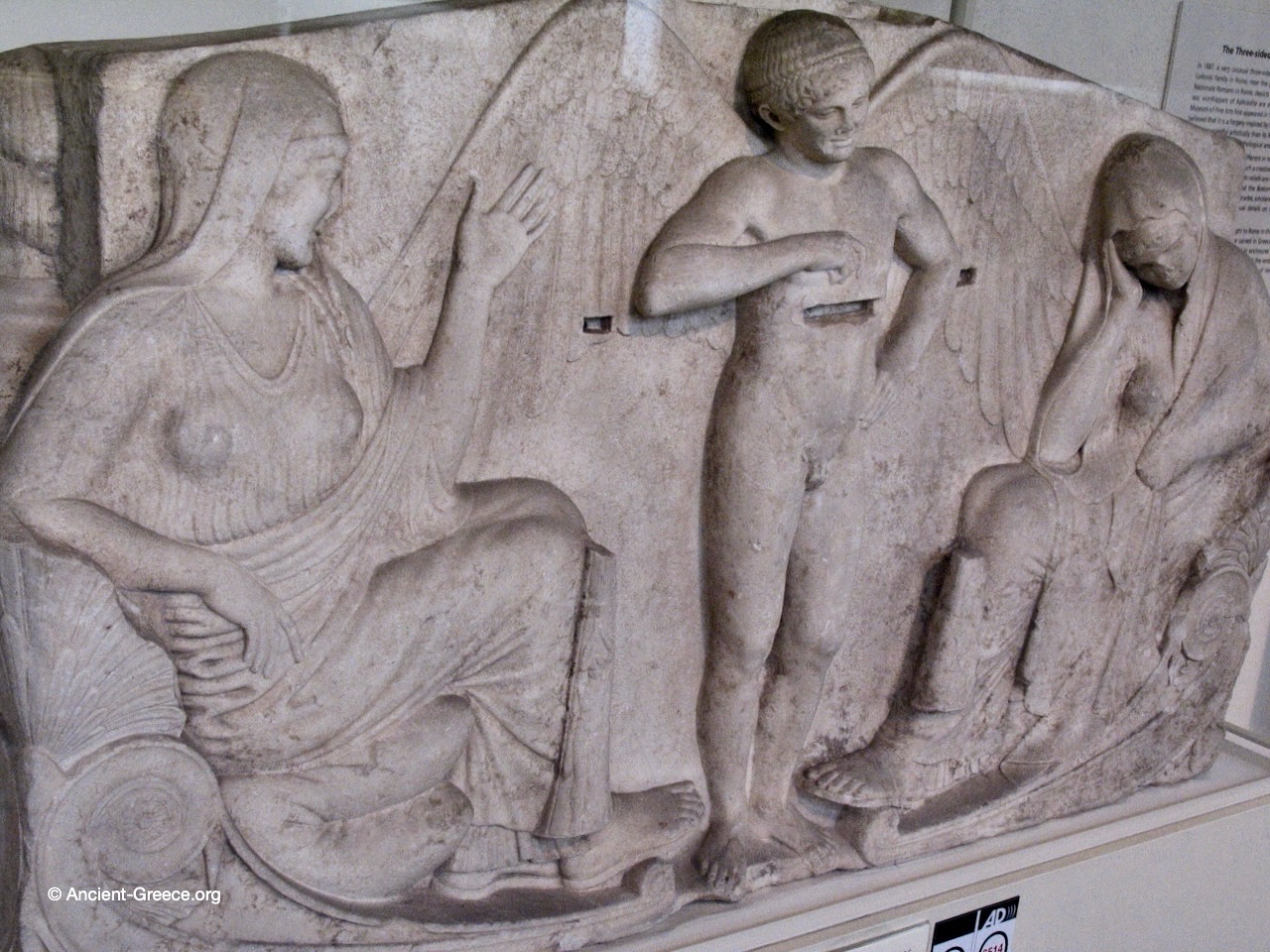
Three-sided relief. Early Classical Period, 470-440 BCE.
This three-sided marble relief, dating to the Early Classical period (ca. 470–440 BCE), was carved from northern Greek marble from the island of Thasos. Discovered in Rome near the modern Via Veneto, it likely served as a protective windbreak for an altar where sacrifices were performed.
The central figure here is Eros, god of love; on a balance, he weighs two small spirits with their hands bound by love. The original balance arm, now lost, was a separate piece of marble formerly anchored into three surviving holes in the central panel.
The composition is flanked by two of the most significant goddesses of the Greek pantheon: Demeter on the right and Aphrodite on the left. Demeter, goddess of agriculture, is identified by the pomegranate in the corner and is shown in a state of mourning for her daughter, Persephone, following her abduction by Hades. Opposite her, Aphrodite, goddess of love and fate, is identified by the presence of fish at the lower left. Together with her son Eros, Aphrodite is shown determining the duration of Persephone’s stay in the Underworld, an arrangement that eventually allowed the maiden to return to the surface each spring to renew the earth.
Right Side Panel: A young boy (a youthful worshipper or musician) is seated on a stool, playing a lyre (specifically a kithara or barbiton). In the corner below him, the pomegranate attribute identifies the connection to Demeter’s sphere.
Left Side Panel: A woman with clenched fist.
Altar Aphrodite Architecture Art Boston Museum of Fine Arts Demeter Eros Floral Mythology Original Photo Relief Sculpture USA Weights and Measures