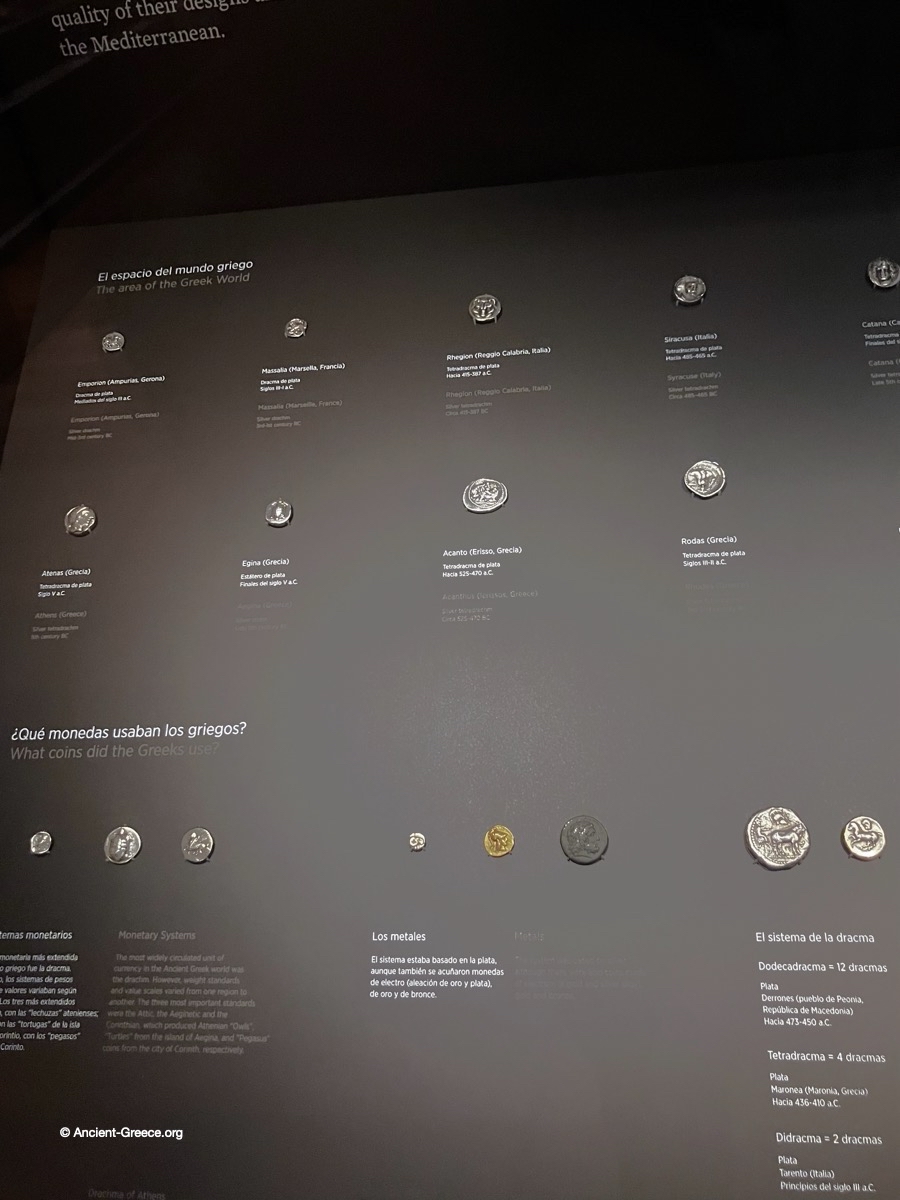
Display with coins of the Ancient Greek world.
The drachm was the primary unit of currency in Ancient Greece, though its value and weight varied across regional standards. The most influential weight standards—the Attic, Aeginetic, and Corinthian—gave rise to the iconic "Owls," "Turtles," and "Pegasoi" coins
While the drachm served as a universal reference, the Greek world lacked a single monetary union, leading to three dominant weight standards that defined regional trade:
Attic Standard: Produced the famous Athenian "Owls" (tetradrachms), which became the international reserve currency of the Mediterranean.
Aeginetic Standard: Minted on the island of Aegina, these were known for their "Turtles" (chelones), some of the earliest coins ever produced in Europe.
Corinthian Standard: The city of Corinth minted the "Pegasus" coins (staters), which were widely used throughout the Western colonies, including those in the Iberian Peninsula.
Exhibited in the Madrid National Archaeological Museum, Madrid, Spain.
Aegina Archaic Classical Coins Hellenistic Madrid Madrid National Archaeological Museum Original Photo Spain