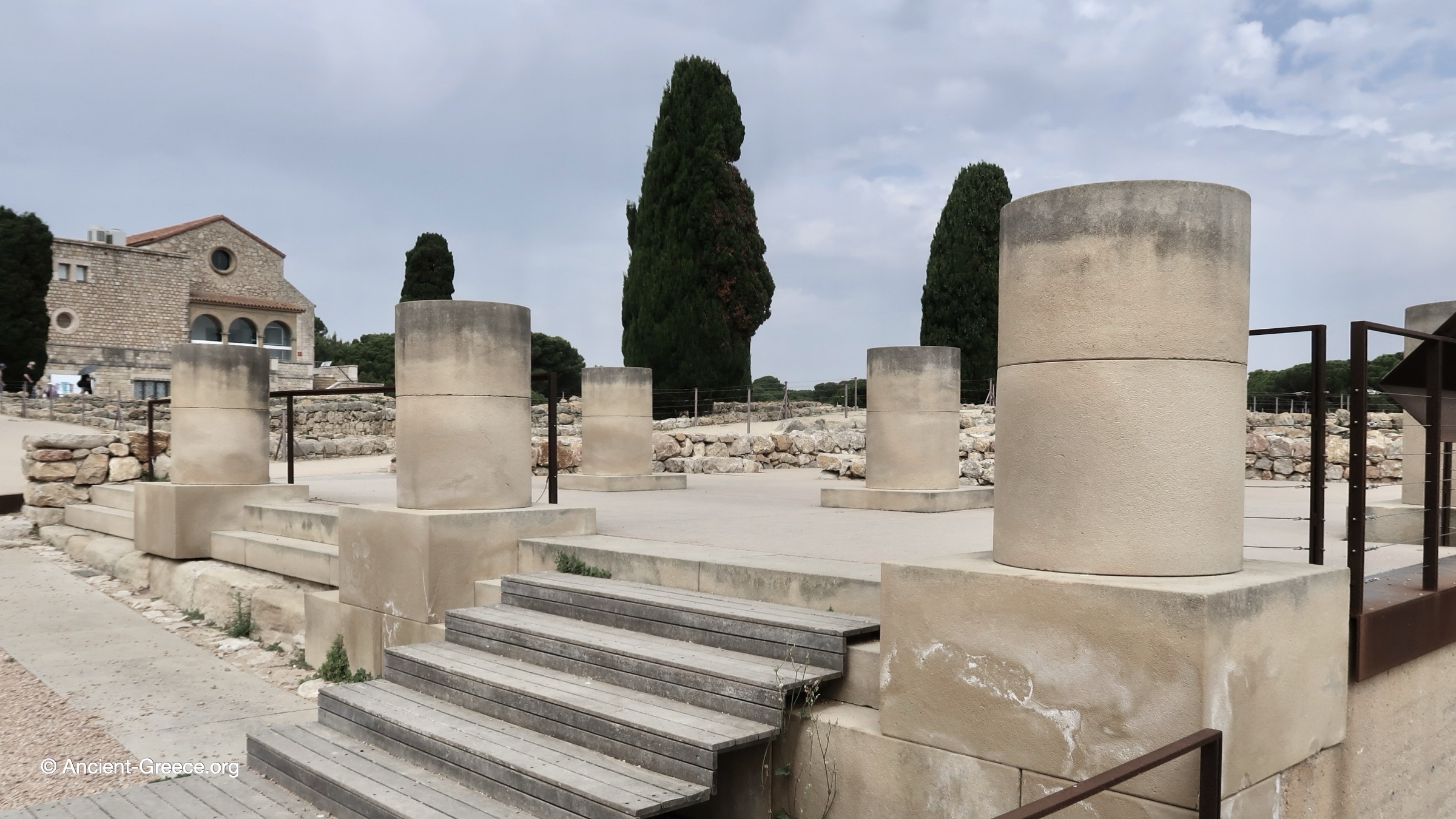
The Stoa at Emporion archeological site, Catalonia, Spain. 2nd century BCE
The agora and the stoa of Emporion
The archacological excavations carried out in the area of the agora and the stoa have shown that the construction of these new public spaces is part of the important urban transformation of the Greck nucleus of Emporion during the 2nd century BC.
The new public centre, formed by the large square dominated to the north by the monumental building of the stoa, with its double colonnade, was directly related to the new port area developed on the coast in the same period, complementing the old
natural port.
Other remains of buildings found in the excavations in the stoa, which are not visible today, show that this area had previously been occupied by blocks of houses from earlier stages of the Greck nucleus, that were separated from one another by alleys.
The oldest evidence corresponds to the first urbanization in this sector, from the second half of the 6th century BC.