On this page:
Ο αρχαιολογικός χώρος Κολώνα της Αίγινας αποτελεί έναν από τους σημαντικότερους στρωματογραφημένους οικισμούς στο Αιγαίο, με συνεχή ιστορία κατοίκησης που εκτείνεται σε πάνω από έξι χιλιετίες. Οι συστηματικές ανασκαφές στον λόφο ξεκίνησαν στα τέλη του 19ου αιώνα μέσω της συνεργασίας Ελλήνων, Γερμανών και Αυστριακών αρχαιολόγων, και η έρευνα συνεχίζεται μέχρι σήμερα.
Προϊστορικά Θεμέλια και Εποχή του Χαλκού
Οι παλαιότεροι πολιτιστικοί ορίζοντες στην Κολώνα χρονολογούνται στην Ύστερη Νεολιθική περίοδο (5η χιλιετία π.Χ.). Λόγω της ευνοϊκής γεωγραφικής της θέσης και της στρατηγικής ναυτικής της σημασίας, ο οικισμός εξελίχθηκε σε εξέχον κέντρο της προϊστορικής Ελλάδας ήδη κατά την Εποχή του Χαλκού.
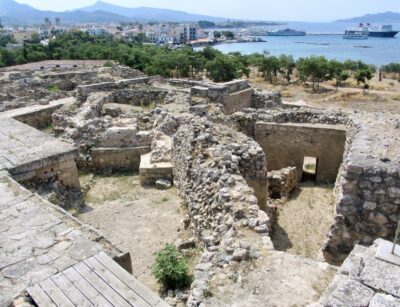
Η τοποθεσία είναι ιδιαίτερα φημισμένη για τα εξελιγμένα οχυρωματικά της συστήματα. Τα καλά διατηρημένα αμυντικά τείχη της 3ης και 2ης χιλιετίας π.Χ. θεωρούνται από τα σημαντικότερα δείγματα στρατιωτικής αρχιτεκτονικής αυτής της περιόδου στο Αιγαίο, αντανακλώντας την πρώιμη άνοδο του νησιού ως περιφερειακή δύναμη.
Το Αρχαϊκό και Κλασικό Ζενίθ
Από τον 7ο έως τις αρχές του 5ου αιώνα π.Χ., η Αίγινα λειτουργούσε ως ένας από τους κύριους εμπορικούς κόμβους του ελληνικού κόσμου. Αυτή η εποχή της ναυτικής κυριαρχίας και του συσσωρευμένου πλούτου τροφοδότησε μια περίοδο εξαιρετικής πολιτιστικής και αρχιτεκτονικής ανάπτυξης.
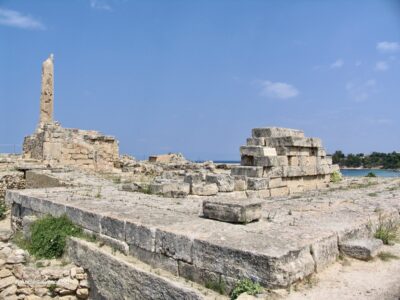
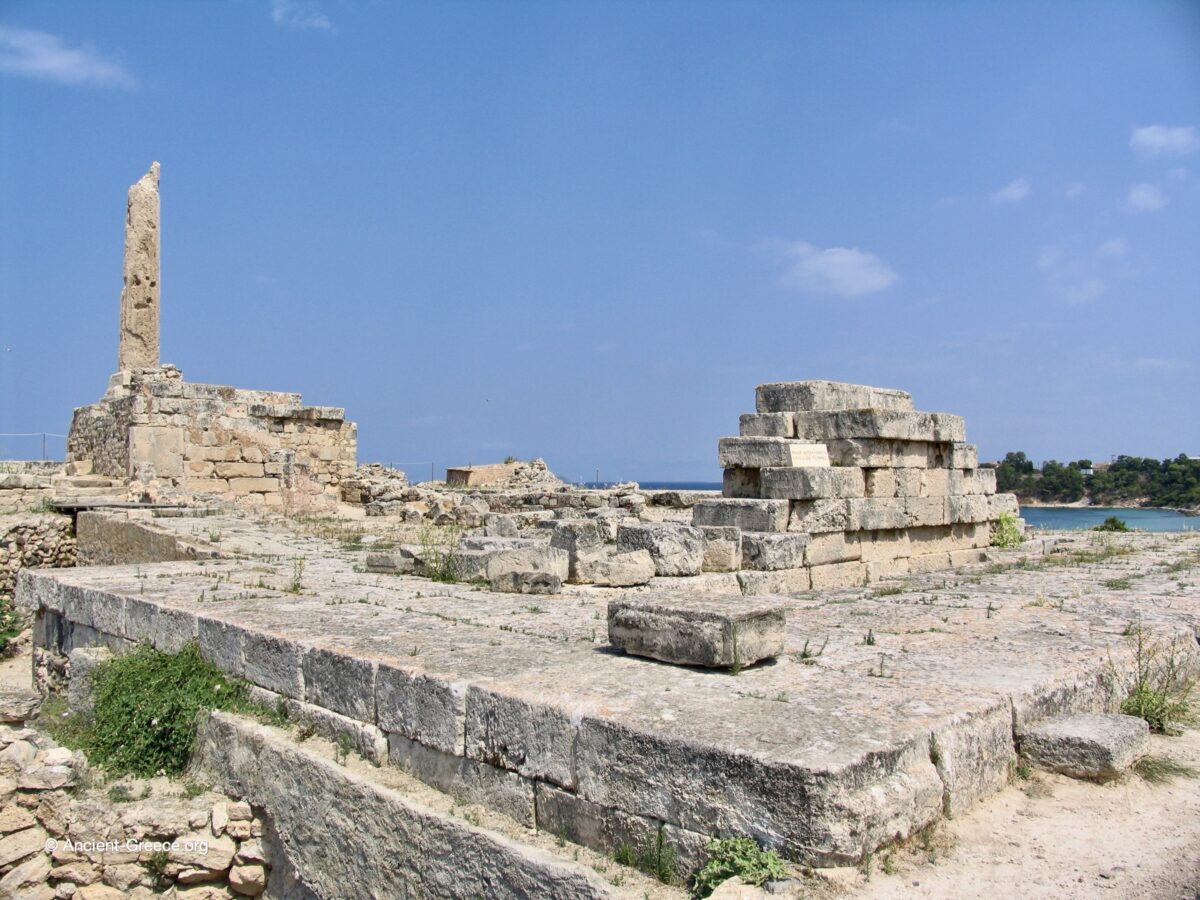
Το Ιερό του Απόλλωνα στην κορυφή του λόφου της Κολώνας αποτελεί το επίκεντρο αυτής της ευημερίας. Τα σωζόμενα αρχιτεκτονικά κατάλοιπα —συμπεριλαμβανομένου του ναού, του βωμού και του τείχους του τεμένους— χρονολογούνται στα τέλη του 6ου και στις αρχές του 5ου αιώνα π.Χ. Ωστόσο, αυτή η περίοδος ηγεμονίας τερματίστηκε απότομα το 459/458 π.Χ. μετά την αθηναϊκή κατάκτηση, μετά την οποία το νησί έχασε την ανεξάρτητη πολιτική και οικονομική του θέση.
Ελληνιστική, Ρωμαϊκή και Βυζαντινή Εποχή
Μετά την παρακμή της κλασικής της δύναμης, η Αίγινα περιήλθε στον έλεγχο των βασιλέων των Ατταλιδών της Περγάμου μετά το 210 π.Χ. Κατά τη διάρκεια αυτής της ελληνιστικής φάσης, ανεγέρθηκαν αρκετές μικρές λατρευτικές δομές στα δυτικά του κυρίως ναού.
Κατά την Ύστερη Ρωμαϊκή περίοδο, τα αρχαία κτίσματα εντός του ιερού κατεδαφίστηκαν σε μεγάλο βαθμό και η τοποθεσία μετατράπηκε σε έναν μικρό χριστιανικό οικισμό. Αυτή η τελική φάση κατοίκησης στον λόφο συνεχίστηκε μέχρι το τέλος της 1ης χιλιετίας μ.Χ., οπότε και η ακρόπολη τελικά εγκαταλείφθηκε.
Χρονολογική Σύνοψη Αρχιτεκτονικών Καταλοίπων
Η Ακρόπολη της Αίγινας-Κολώνας διατηρεί ένα αξιοσημείωτο αρχιτεκτονικό αρχείο σε αρκετές διακριτές εποχές:
Ύστερη Ρωμαϊκή και Βυζαντινή: περ. 200 – 1000 μ.Χ.
Προϊστορική: περ. 5000 – 1200 π.Χ. (Νεολιθική έως Μυκηναϊκή)
Αρχαϊκή και Κλασική: περ. 6ος – 4ος αιώνας π.Χ.
Ελληνιστική: περ. 3ος – 2ος αιώνας π.Χ.
| Φάση | Περίοδος | Χρονολογία (περ.) | Χαρακτηριστικά & Αρχιτεκτονική Εξέλιξη |
| Πόλη I-III | Τελική Νεολιθική – Πρωτοελλαδική I | 3500–2500 π.Χ.Ε. | Πρώτες μόνιμες κατασκευές· μετάβαση από τις καλύβες σε λίθινα θεμέλια. |
| Πόλη IV-V | Πρωτοελλαδική II | 2500–2200 π.Χ.Ε. | Ανέγερση των “Οικιών με διαδρόμους”· ενδείξεις έντονου εμπορίου και κεντρικής διοίκησης. |
| Πόλη VI | Πρωτοελλαδική III | 2200–2050 π.Χ.Ε. | Καταστροφή προηγούμενων φάσεων και ίδρυση νέου οχυρωμένου οικισμού. |
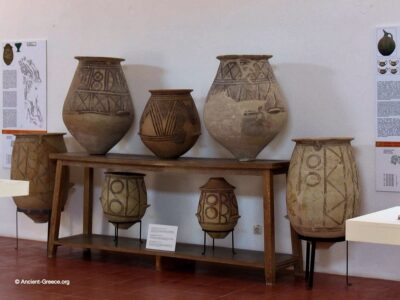
| Πόλη VII-IX | Μεσοελλαδική | 2050–1600 π.Χ.Ε. | Η “Χρυσή Εποχή” της αιγινήτικης κεραμικής (Αμαυρόχρωμη). Επέκταση των τειχών. |
| Πόλη X | Υστεροελλαδική (Μυκηναϊκή) | 1600–1200 π.Χ.Ε. | Η Αίγινα παραμένει ζωτικής σημασίας οχυρωμένη ναυτική βάση υπό τη μυκηναϊκή επιρροή. |
| Αρχαϊκή | Ιστορικοί Χρόνοι | 700–480 π.Χ.Ε. | Οικοδόμηση του μνημειώδους Ναού του Απόλλωνα και απόγειο της ναυτικής ισχύος. |
| Ύστερη | Ελληνιστική – Ρωμαϊκή | 323 π.Χ.Ε. – 400 μ.Χ.Ε. | Κατασκευή του Υστερορωμαϊκού τείχους με χρήση αρχαίου υλικού για αμυντικούς λόγους. |
The archaeological site of Aegina–Kolona represents one of the most significant stratified settlements in the Aegean, with a continuous occupation history spanning over six millennia. Systematic excavations on the hill began in the late 19th century through the collaboration of Greek, German, and Austrian archaeologists, and research continues to this day.
Bronze Age Foundations
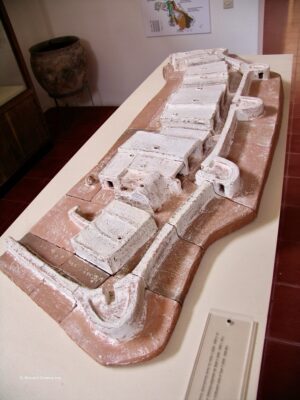
The earliest cultural horizons at Kolona date to the Late Neolithic period (5th millennium BCE). Due to its favorable geographical position and strategic maritime importance, the settlement evolved into a preeminent center of prehistoric Greece during the Bronze Age.
The site is particularly renowned for its sophisticated fortification systems. The well-preserved defensive walls of the 3rd and 2nd millennia BCE are considered among the most significant examples of military architecture from this period in the Aegean, reflecting the island’s early rise as a regional power.
Archaic and Classical Zenith
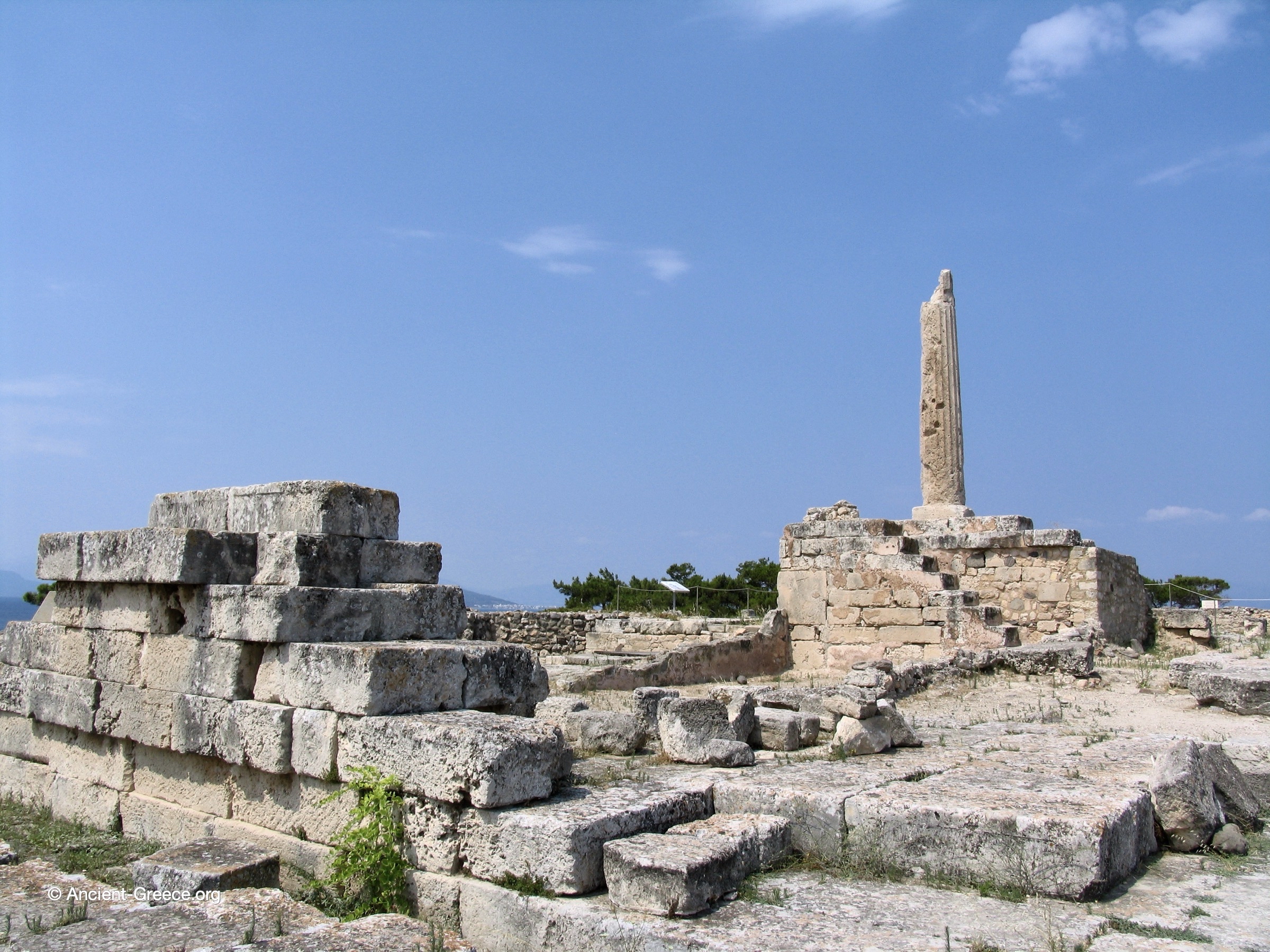
From the 7th to the early 5th century BCE, Aegina functioned as one of the primary commercial hubs of the Greek world. This era of maritime dominance and accumulated wealth fueled a period of extraordinary cultural and architectural development.
The Sanctuary of Apollo atop Kolona hill stands as the centerpiece of this prosperity. The surviving architectural remains—including the temple, the altar, and the temenos (enclosure) wall—date to the late 6th and early 5th centuries BCE. However, this period of hegemony ended abruptly in 459/458 BCE following the Athenian conquest, after which the island lost its independent political and economic standing.
Hellenistic, Roman, and Byzantine Eras
Following the decline of its Classical power, Aegina came under the control of the Attalid kings of Pergamon after 210 BCE. During this Hellenistic phase, several small cultic structures were erected to the west of the main temple.
By the Late Roman period, the ancient structures within the sanctuary were largely demolished, and the site transitioned into a small Christian settlement. This final phase of habitation on the hill persisted until the end of the 1st millennium CE, at which point the acropolis was eventually abandoned.
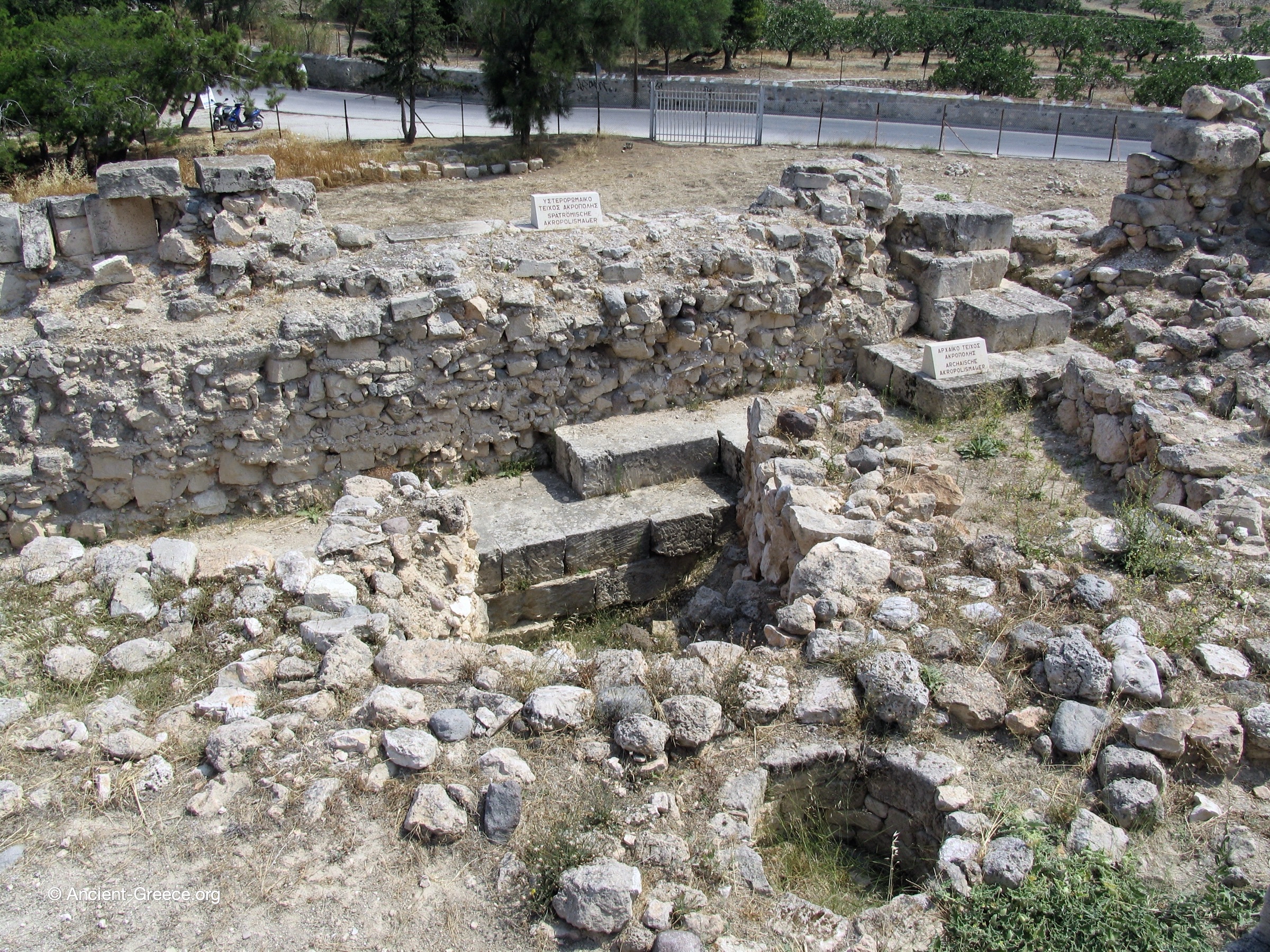
Chronological Summary of Architectural Remains
The Acropolis of Aegina-Kolona preserves a remarkable architectural record across several distinct epochs:
Prehistoric: ca. 5000 – 1200 BCE (Neolithic to Mycenaean)
Archaic and Classical: ca. 6th – 4th century BCE
Hellenistic: ca. 3rd – 2nd century BCE
Late Roman and Byzantine: ca. 200 – 1000 CE
| Phase | Period | Approximate Dates | Key Features & Architectural Developments |
| Town I-III | Final Neolithic – Early Helladic I | c. 3500–2500 BCE | First permanent structures; transition from Neolithic huts to stone-founded dwellings. |
| Town IV-V | Early Helladic II | c. 2500–2200 BCE | Rise of the “Corridor Houses” (e.g., Haus am Fels). Evidence of intense trade and centralized administration. |
| Town VI | Early Helladic III | c. 2200–2050 BCE | Destruction of previous towns followed by a new, densely built settlement with fortified perimeters. |
| Town VII-IX | Middle Helladic | c. 2050–1600 BCE | The “Golden Age” of Aeginetan pottery (Matt-Painted). Expansion of the massive fortification walls. |
| Town X | Late Helladic (Mycenaean) | c. 1600–1200 BCE | Shift in regional dominance toward Mycenae, but Kolona remains a vital fortified naval base. |
| Archaic | Historic Period | c. 700–480 BCE | Construction of the monumental Temple of Apollo (c. 520–510 BCE) and the rise of the Aeginetan naval empire. |
| Post-Classical | Hellenistic – Late Roman | c. 323 BCE – 400 CE | Construction of the Late Roman fortifications using ancient spolia to defend against barbarian incursions. |