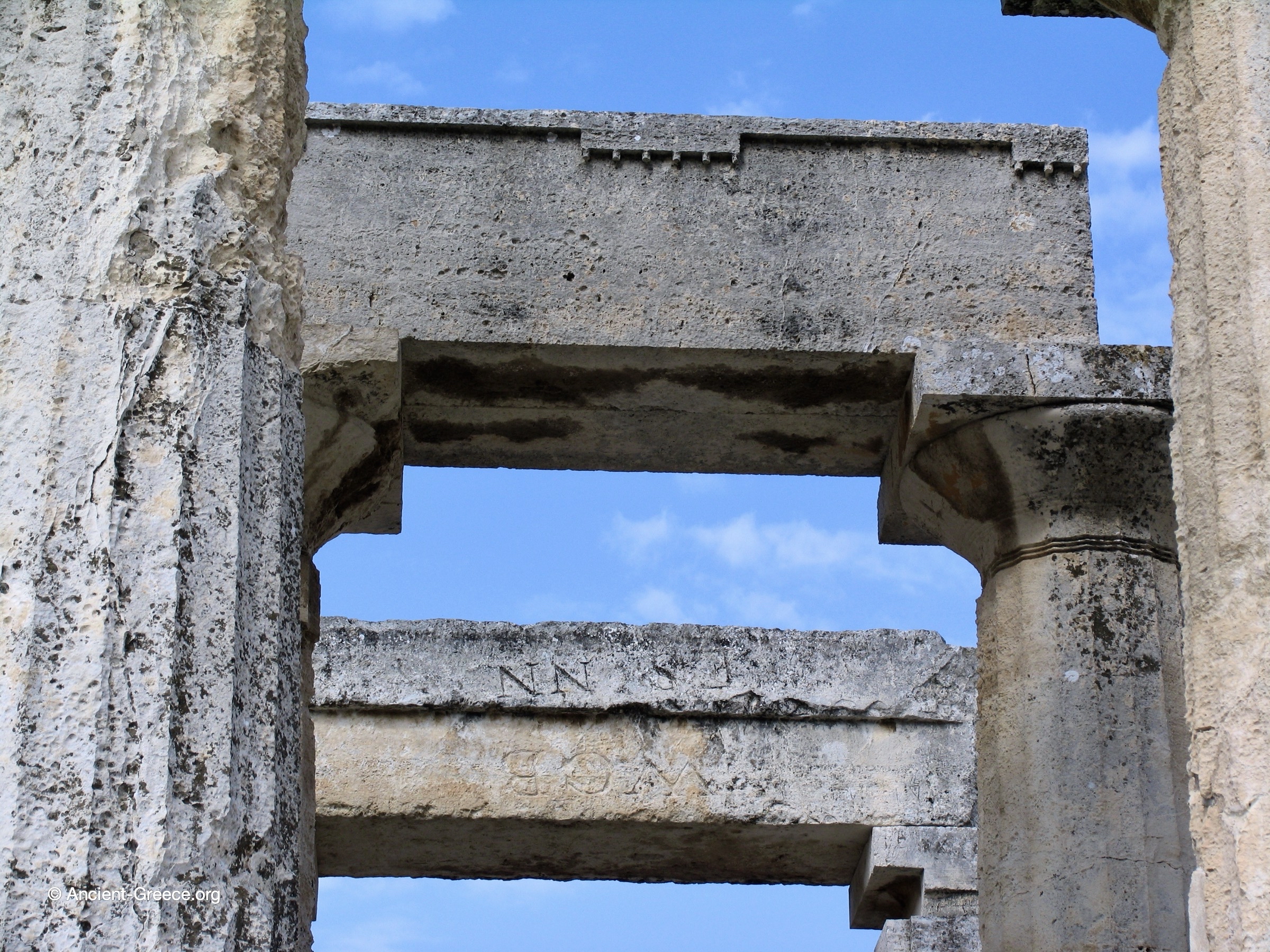
A detailed view of the Late Archaic Temple of Aphaia (c. 500–470 BCE), highlighting the sophisticated Doric architecture of its interior.
A detailed view of the Late Archaic Temple of Aphaia (c. 500–470 BCE), highlighting the sophisticated Doric architecture of its interior. This perspective focuses on the superimposition of the internal colonnades, where two rows of smaller columns were stacked atop one another to support the roof, creating a magnificent double-storied effect within the cella. Visible on the stone surfaces are various historic inscriptions and graffiti, remnants of centuries of travelers and visitors who documented their presence at this remote sanctuary dedicated to the local Aeginetan goddess, Aphaia.
---
Μια λεπτομερής άποψη του Ύστερου Αρχαϊκού Ναού της Αφαίας (περ. 500–470 π.Χ.), που αναδεικνύει την εξελιγμένη δωρική αρχιτεκτονική του εσωτερικού του. Η συγκεκριμένη οπτική γωνία εστιάζει στην υπέρθεση των εσωτερικών κιονοστοιχιών, όπου δύο σειρές μικρότερων κιόνων τοποθετούνταν η μία πάνω στην άλλη για τη στήριξη της στέγης, δημιουργώντας ένα εντυπωσιακό διώροφο αποτέλεσμα εντός του σηκού. Στις λίθινες επιφάνειες διακρίνονται διάφορες ιστορικές επιγραφές και χαράγματα, κατάλοιπα αιώνων από περιηγητές και επισκέπτες που κατέγραψαν την παρουσία τους σε αυτό το απομακρυσμένο ιερό, αφιερωμένο στην τοπική αιγινήτικη θεά, Αφαία. Temple of Aphaia Archaeological site. Aegina island, Greece.