On this page:
Ελληνικά
Ο Ναός της Αφαίας
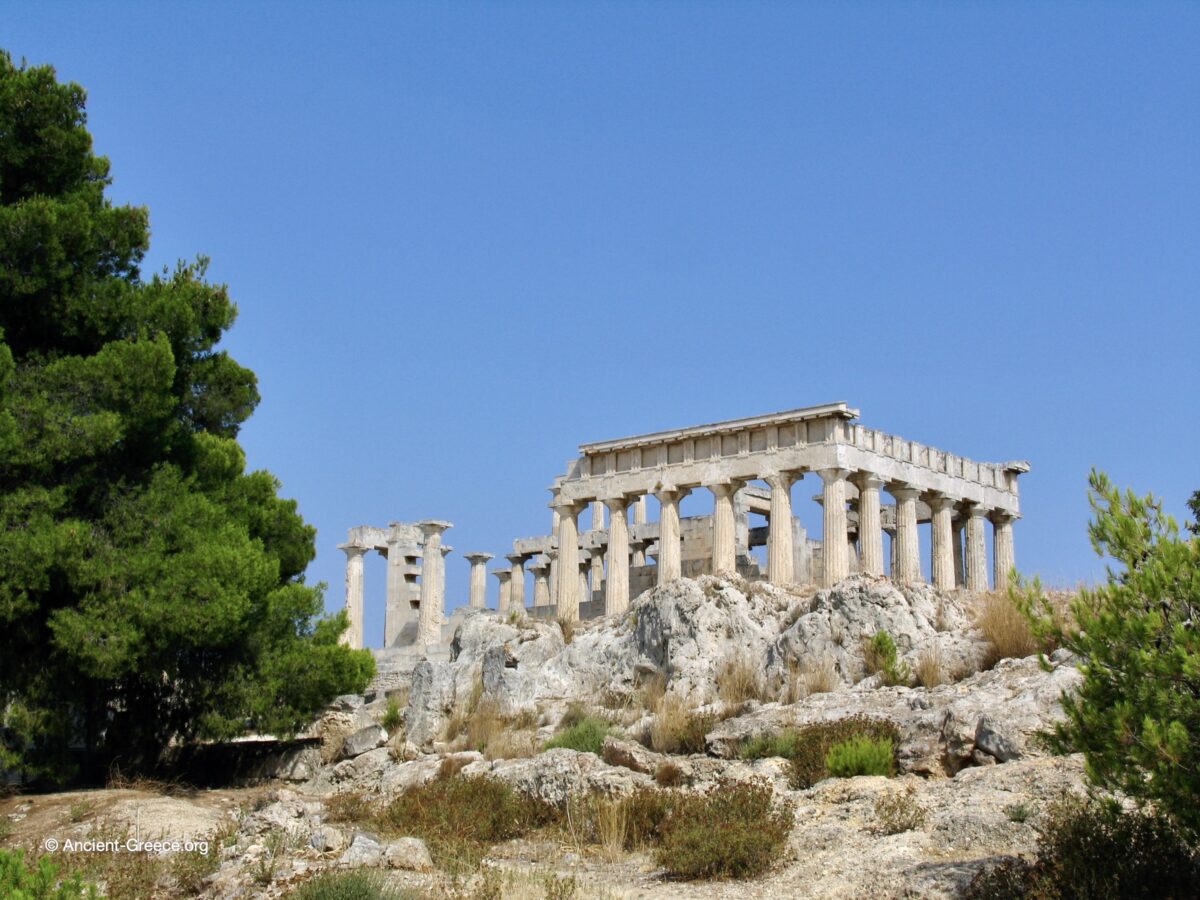
Ένας από τους πιο απολαυστικούς δωρικούς ναούς της Ελλάδας, ο ναός της Αφαίας, βρίσκεται στην κορυφή του πευκόφυτου λόφου του Μεσαγρού στο βορειοανατολικό άκρο της Αίγινας, περιτριγυρισμένος από εξαιρετική θέα στον Σαρωνικό Κόλπο και τη γύρω περιοχή. Οι ανασκαφές στον χώρο υποδηλώνουν τη χρήση του λόφου ως τόπου λατρείας από την Εποχή του Χαλκού, ενώ τα πρώτα αρχιτεκτονικά στοιχεία ανεγέρθηκαν στον χώρο τον 7ο αιώνα π.Χ. Κατά τις αρχικές ανασκαφές πιστευόταν ότι ο ναός ήταν αφιερωμένος στον Δία ή την Αθηνά. Το 1901, μετά από εκτενέστερη έρευνα, ο Furtwangler αποκάλυψε ότι ο ναός ήταν αφιερωμένος στην Αφαία, μια τοπική θεά της Αίγινας που προσομοίαζε με τη μινωική θεότητα Βριτόμαρτις, η οποία αργότερα πέρασε στους Μυκηναίους.
«Στην Αίγινα, καθώς πλησιάζετε το βουνό του Πανελληνίου Διός, υπάρχει το ΙΕΡΟ ΤΗΣ ΑΦΑΙΑΣ για την οποία ο Πίνδαρος συνέθεσε μια ωδή για τους Αιγινήτες. Η ιστορία της είναι μια τοπική υπόθεση στην Κρήτη, όπου λένε ότι ο Εύβουλος ήταν γιος του Καρμάνορος, ο οποίος εξάγνισε τον Απόλλωνα από τον φόνο του Πύθωνα, και η κόρη του Κάρμη γέννησε ένα παιδί από τον Δία, το όνομα της οποίας ήταν Βριτόμαρτις. Η ευχαρίστησή της ήταν το τρέξιμο και το κυνήγι και ήταν ιδιαίτερη φίλη της Αρτέμιδος. Φεύγοντας από τον Μίνωα, που την ερωτεύτηκε, έπεσε σε ένα δίχτυ που είχαν ρίξει για ψάρεμα. Η Άρτεμις την έκανε θεά και δεν τη λατρεύουν μόνο οι Κρήτες, αλλά και οι Αιγινήτες, οι οποίοι λένε ότι η Βριτόμαρτις τους εμφανίζεται στο νησί τους. Το όνομά της στην Αίγινα είναι Αφαία και στην Κρήτη Δίκτυννα.» (Παυσανίας, Ελλάδος Περιήγησις 1: Κεντρική Ελλάδα, Μετάφραση Peter Levi, Penguin Classics, Λονδίνο, 1979) Η θεά Αφαία αφομοιώθηκε στη λατρεία της «Αθηνάς Αφαίας» σε μεταγενέστερα χρόνια και η τελευταία θεά κατέχει εξέχουσα θέση στα γλυπτά των αετωμάτων.
Το Ιερό
Ένας περιβολότοιχος περιλείει το ιερό και παρέχει το επίπεδο έδαφος πάνω στο οποίο χτίστηκε ο ναός. Οι επισκέπτες εισέρχονται μέσω ενός απλού προπύλου. Αμέσως μετά την είσοδο, ένας ψηλός κίονας επιστεφόταν από μια σφίγγα, η οποία τώρα στεγάζεται στο Μουσείο της Αίγινας. Στα δεξιά της εισόδου και έξω από τον τοίχο του ιερού βρισκόταν ένα μεγάλο κτίριο, το οποίο πιστεύεται ότι ήταν η κατοικία των ιερέων και εξυπηρετούσε διοικητικές λειτουργίες.
Η παλαιότερη λατρευτική δομή στον χώρο ήταν ένα sacellum (ένα μικρό υπαίθριο ιερό) και ένας πρώιμος πρόστυλος ναός με τέσσερις κίονες μπροστά από τον σηκό. Αυτός ο ναός χτίστηκε γύρω στο 575-570 π.Χ. στα ερείπια του sacellum. Καταστράφηκε από φωτιά γύρω στο 510 π.Χ. Η πύλη εισόδου, ο οχυρωματικός τοίχος, η οικία των ιερέων, ο βωμός και ο κίονας της Σφίγγας χρονολογούνται σε αυτή την πρώιμη περίοδο κατασκευής.
Άλλα αναθήματα είχαν τοποθετηθεί γύρω από τον ναό, στεγάστρα που φιλοξενούσαν αγάλματα, ενώ η βάση του κίονα της Σφίγγας είναι ορατή μπροστά από τον ναό. Η κατοικία του ιερέα και τα διοικητικά κτίρια χτίστηκαν έξω από το ιερό, στα ανατολικά του προπύλου. Υπήρχε ένας βωμός απέναντι από την ανατολική πρόσοψη του ναού – τα θεμέλια του μεταγενέστερου βωμού είναι ορατά σήμερα – και από τη βάση του, μια κεκλιμένη ράμπα, πλάτους 2,90μ., οδηγεί απευθείας στον ναό. Τα θεμέλια διαφόρων εκδοχών του βωμού αποκαλύφθηκαν στην περιοχή. Ο Ναός της Αφαίας ήταν το πιο εντυπωσιακό οικοδόμημα και το επίκεντρο του ιερού.
Ο Ναός
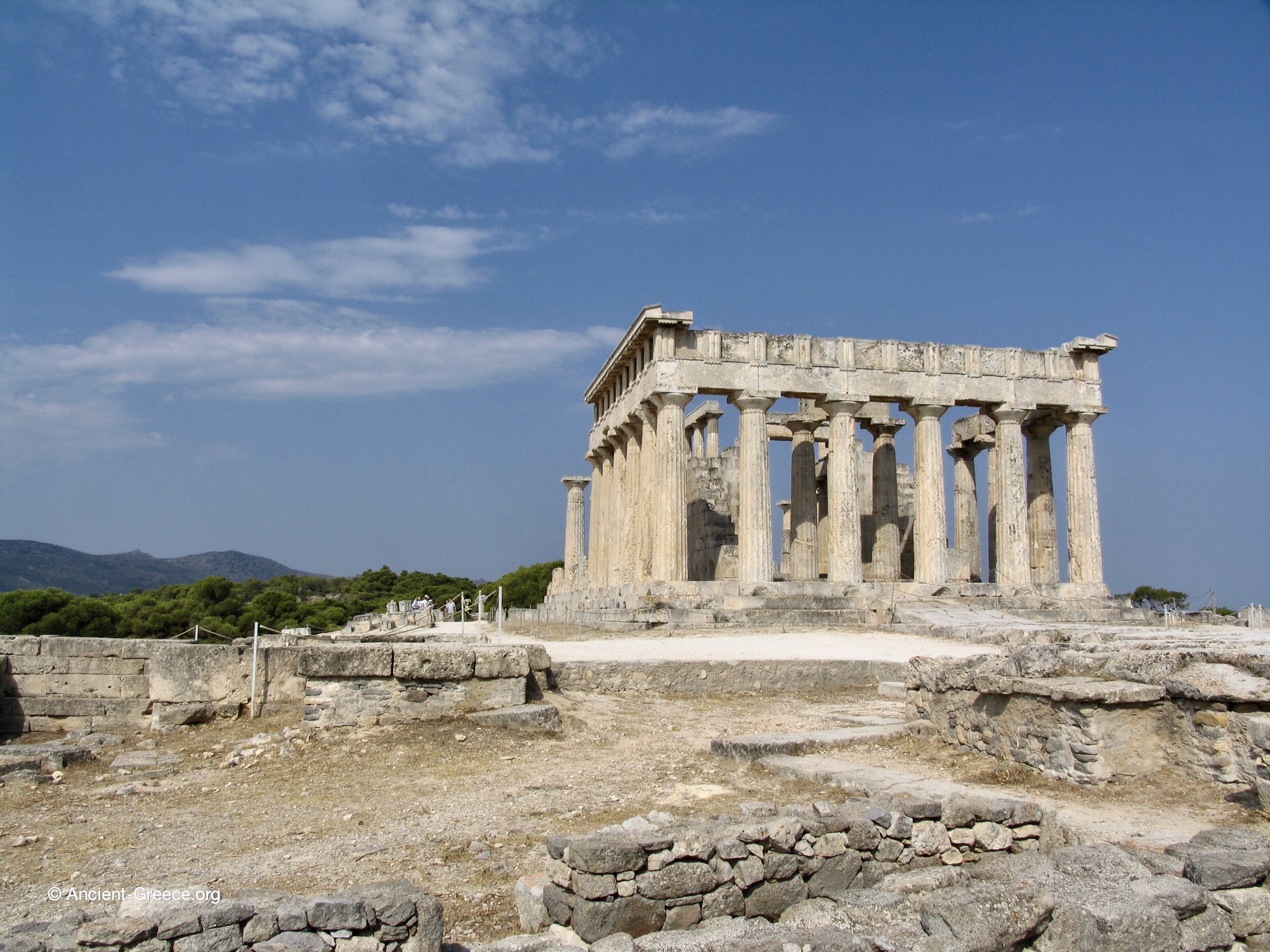
Ο υστεροαρχαϊκός ναός που βλέπουμε σήμερα ανεγέρθηκε στα ερείπια αυτού του παλαιότερου ναού στα τέλη του 6ου αιώνα π.Χ. ή στις αρχές του 5ου αιώνα π.Χ. Οι ανασκαφές του ναού της Αφαίας ξεκίνησαν το 1811 και συνεχίστηκαν από Γερμανούς αρχαιολόγους το 1901.
Ο ναός της Αφαίας είναι δωρικός περίπτερος με έξι κίονες στις στενές πλευρές και δώδεκα κίονες στις μακρές πλευρές, μια αναλογία 1:2 που ήταν ασυνήθιστη για ναό της εποχής του. Οι παλαιότεροι αρχαϊκοί ναοί χτίζονταν συνήθως με αναλογία 1:3. Ο ναός της Αφαίας εισήγαγε αρχιτεκτονικές εκλεπτύνσεις στις αναλογίες του και στην κλίση των κιόνων που επηρέασαν το αρχιτεκτονικό στυλ μεταγενέστερων κλασικών ναών, όπως ο Παρθενώνας της Αθήνας.
Ο ναός είχε συνολικά 32 κίονες, 29 από τους οποίους ήταν μονόλιθοι και τρεις ήταν κατασκευασμένοι από σπονδύλους. Κατασκευάστηκε εξ ολοκλήρου από ντόπιο πωρόλιθο και καλύφθηκε με μαρμάρινο επίχρισμα που ήταν βαμμένο με χρωστικές ουσίες. Σε σύγκριση με άλλους ναούς της εποχής, ο ναός της Αφαίας είναι πολύ πιο εκλεπτυσμένος, με λεπτότερους κίονες τοποθετημένους σε μεγαλύτερη απόσταση μεταξύ τους, οι οποίοι υψώνονται με ηπιότερη ένταση και καταλήγουν σε μικρότερα κιονόκρανα που στηρίζουν έναν ελαφρύτερο θριγκό. Το νερό της βροχής συλλεγόταν από τη στέγη του ναού και διοχετευόταν σε μια δεξαμενή λαξευμένη στον βράχο στη βορειοανατολική γωνία του ιερού.
Το Εσωτερικό του Ναού
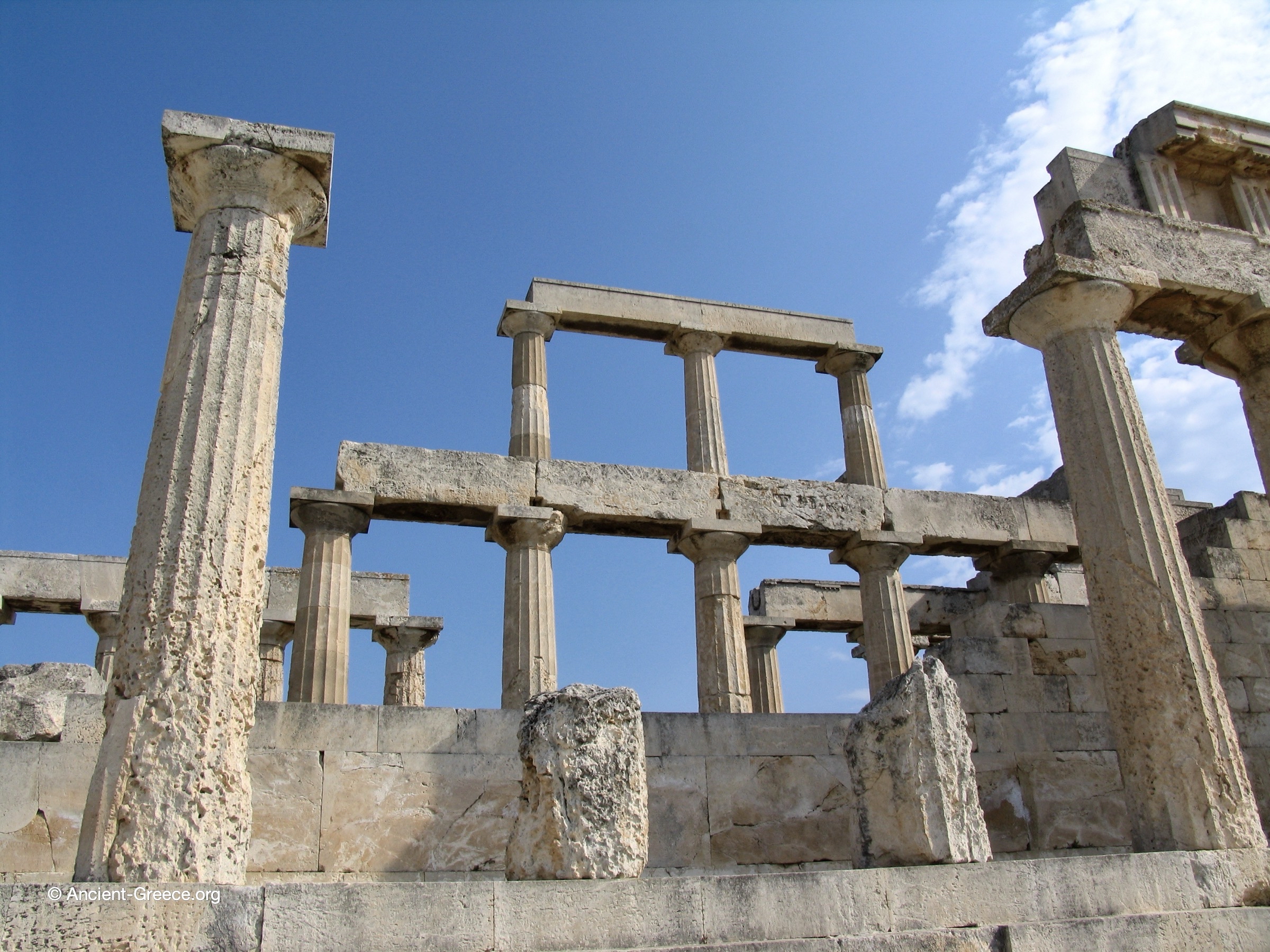
Ο ναός της Αφαίας παρουσίασε μια άλλη καινοτομία στο εσωτερικό του. Αντί για μια ενιαία κιονοστοιχία που εκτείνεται από το δάπεδο μέχρι την οροφή, οι αρχιτέκτονες ενσωμάτωσαν μια διώροφη κιονοστοιχία για τη στήριξη της στέγης. Οι κάτω κίονες είναι λεπτότεροι από τους εξωτερικούς και στενεύουν καθώς υψώνονται μέχρι τη μέση της απόστασης προς την οροφή για να στηρίξουν έναν λεπτό θριγκό. Ακριβώς πάνω από κάθε κίονα, τοποθετήθηκε ένας άλλος για να καλύψει το κενό μεταξύ του θριγκού και της οροφής. Οι εσωτερικοί κίονες, σε αρμονία με το περιστύλιο, είναι δωρικού ρυθμού και στενεύουν συνεχώς από το δάπεδο μέχρι την οροφή.
Ο διπλός σηκός χωριζόταν σε τρία κλίτη από τη διώροφη κιονοστοιχία κατά μήκος, και διέθετε δίστυλο πρόναο και οπισθόδομο εν παραστάσι, ενώ στέγαζε το λατρευτικό άγαλμα της Αθηνάς που ήταν κατασκευασμένο από ελεφαντόδοντο. Ο ναός ήταν πλούσια διακοσμημένος με έντονα χρώματα και μερικά από τα ωραιότερα γλυπτά της ύστερης αρχαϊκής και πρώιμης κλασικής περιόδου.
Η γλυπτική σύνθεση των αετωμάτων ήταν μοναδική στο ότι παρουσίαζε ένα ενιαίο θέμα και συνεπές μέγεθος όλων των γλυπτών. Ενώ η Αθηνά είναι η μεγαλύτερη μορφή και στα δύο αετώματα, καθώς στέκεται όρθια στο κέντρο του τριγώνου, οι υπόλοιπες μορφές έχουν όλες το ίδιο μέγεθος, καθώς εμφανίζονται σε διαφορετικές στάσεις που τους επιτρέπουν να προσαρμόζονται στον μειούμενο χώρο των τριγωνικών αετωμάτων.
Τα Γλυπτά των Αετωμάτων
Το σύμπλεγμα των αετωματικών γλυπτών από παριανό μάρμαρο απεικονίζει σκηνές από τον Τρωικό Πόλεμο και τοποθετήθηκε όταν ολοκληρώθηκε ο ναός γύρω στο 490 π.Χ. Η εικονογραφία συνδέει την ταυτότητα της Αίγινας με τα ηρωικά κατορθώματα των Αιακιδών.
Το Δυτικό Αέτωμα, φιλοτεχνημένο νωρίτερα, απεικονίζει τον Δεύτερο Τρωικό Πόλεμο με τον Αίαντα και τον Τεύκρο, και μορφές όπως ο Πάρις με σκυθική ενδυμασία. Αντιπροσωπεύοντας την κορύφωση της αιγινήτικης σχολής (περ. 500–480 π.Χ.), αυτά τα γλυπτά αποτελούν κορυφαία δείγματα της υστεροαρχαϊκής αρχιτεκτονικής τέχνης.
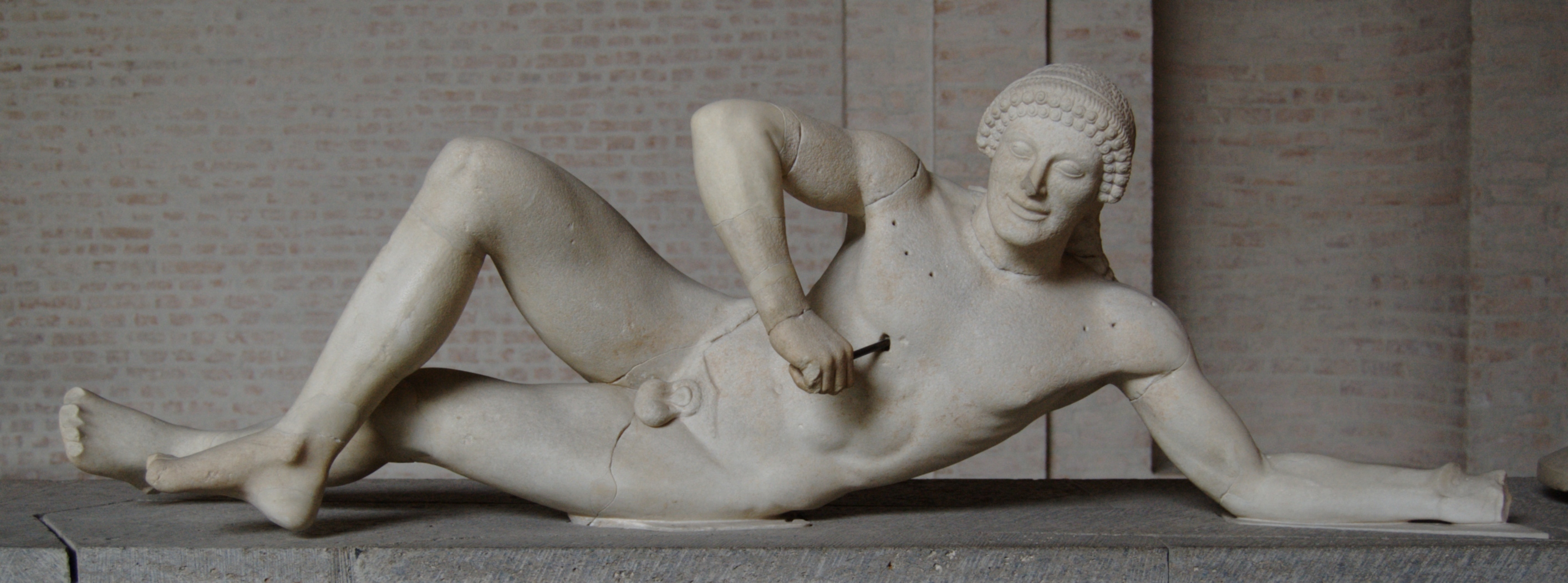
Οι μορφές παρουσιάζουν εξαιρετική ακρίβεια και λεπτή κατεργασία, διατηρώντας ορατά ίχνη του αρχικού χρώματος και μεταλλικά εξαρτήματα. Αυτή η τεχνική δεξιοτεχνία παρέχει ένα ζωτικό παράθυρο στην υφολογική εξέλιξη και την εξελιγμένη δεξιοτεχνία της περιόδου πριν από τη μετάβαση στην κλασική εποχή.
Το Ανατολικό Αέτωμα αναπαριστά τον Πρώτο Τρωικό Πόλεμο, με επίκεντρο τον Ηρακλή, τον Λαομέδοντα και τον Τελαμώνα. Αυτές οι συνθέσεις μπορεί να αντικατέστησαν παλαιότερες ομάδες που αναπαριστούσαν την αρπαγή της νύμφης Αίγινας και μια Αμαζονομαχία.
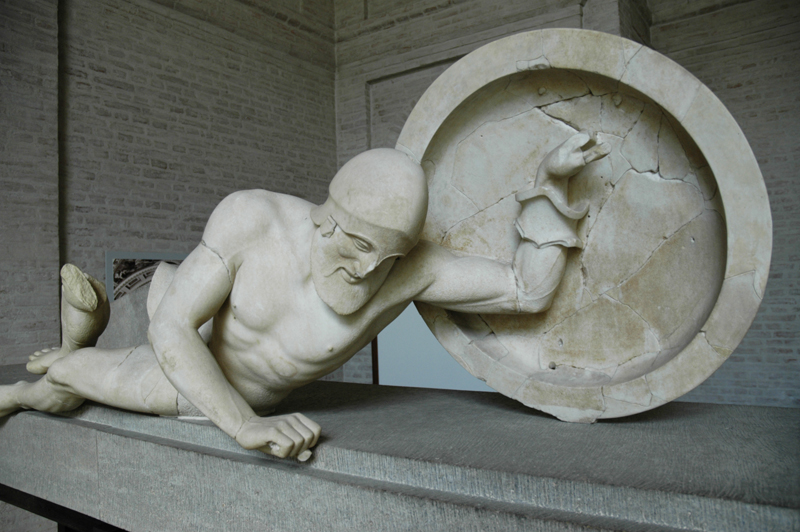
Προορισμένα να είναι σε παραγωγή κατά την έναρξη της Χρυσής Εποχής, τα πρώιμα αγάλματα ανήκουν στην υστεροαρχαϊκή περίοδο, ενώ τα νεότερα γλυπτά παρουσιάζουν όλα τα χαρακτηριστικά της κλασικής περιόδου.
Τα γλυπτά αφαιρέθηκαν το 1811 από τον Άγγλο Cockerell και τον Γερμανό von Hallerstein, ενώ η Ελλάδα βρισκόταν ακόμη υπό τουρκική κατοχή. Δύο χρόνια αργότερα, το 1813, ο πρίγκιπας Λουδοβίκος Α’ της Βαυαρίας αγόρασε τα γλυπτά, τα αποκατέστησε σύμφωνα με το γούστο της εποχής και τα εξέθεσε σε αυθαίρετη διάταξη στη Γλυπτοθήκη του Μονάχου, στη Γερμανία. Το 1962 αφαιρέθηκαν όλες οι εργασίες αποκατάστασης από τα γλυπτά και τοποθετήθηκαν σε μια πιο ακριβή διάταξη.
Τα γλυπτά εκτίθενται ακόμη στη Γλυπτοθήκη. Εκτός από όσα βρίσκονται τώρα στη Γερμανία, αρκετά μικρότερα τμήματα των γλυπτών της Αφαίας εκτίθενται στο Μουσείο της Αίγινας και στο Εθνικό Αρχαιολογικό Μουσείο στην Αθήνα.
One of the most delightful Doric temples of Greece, the temple of Aphaia (Ναός τῆς Ἀφαίας) is located atop the pine-clad Mesagro hill on the northeast end of Aegina island, encircled by excellent views of the Saronic Gulf and the surrounding area.
Excavations on the site denote the use of the hill as a place of worship since the Bronze Age while the first architectural elements were erected on site in the 7th century BCE.
During the initial excavations it was believed that the temple was dedicated to Zeus or to Athena. In 1901, after more extensive research Furtwangler revealed that the temple was dedicated to Aphaia a local Agenetan goddess that was similar to the Minoan deity Britomartis that was later passed to the Mycenaeans.
“In Aigina as you approach the mountain of the Panhellenic Zeus, there is a SANCTUARY OF APHAIA to whom Pindar composed a song for the Aiginetans. Her story is a local matter in Crete, where they say Euboulos was the son of Karmanor, who purified Apollo from the murder of Python, and his daughter Karme bore a child to Zeus whose name was Britomartis. Her pleasure was running and hunting and she was a particular friend of Artemis. Running away from Minos, who fell in love with her, she flung herself into a net let down for fishing. Artemis made her into a goddess and not only the Cretans worship her, but also the Aiginetans, who say Britomartis appears to them on their island. Her title in Aigina is Aphaia and in Crete Diktynna.”
(Pausanias, Guide to Greece 1: Central Greece, Translated by Peter Levi, Penguin Classics, London, 1979)
Goddess Aphaia was assimilated into worship of “Athena Aphaia” in later years and the later goddess is featured prominently in the sculptures of the pediments.
The Sanctuary
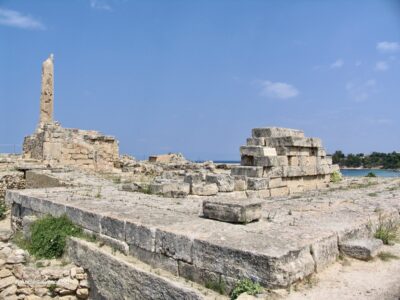
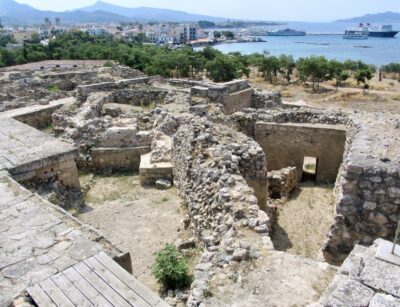
A terrace masonry wall encloses the sanctuary and provides the level ground upon which the temple was built. Visitors gain entrance by the way of a modest propylaeum. Just beyond the entrance a tall column was crowned by a sphinx, which is now housed at the Aegina museum. To the right of the entrance and outside the wall of the sanctuary stood a large building, which is believed to be the residence of the priests and served administrative functions.
The earliest worship structure on the site was a sacellum (a small roofless shrine), and an early prostyle temple with four columns in front of the naos. This temple was built around 575-570 on the ruins of the sacellum. This temple was destroyed by fire around 510 BCE. The entrance gate, the boundary wall, the priests’ house, the altar, and the Sphinx column are all dated to this early period of construction.
Other votive offerings were placed around the temple, shelters that housed statues, and the base of the Sphinx column can be seen around the front of the temple. The priest’s residence and administrative buildings were built outside the sanctuary, to the east of the propylaeum.
There was an altar opposite the east façade of the temple–the foundation of the late altar is visible today–and from its base, an inclining ramp, 2.90m wide, leads directly to the temple. The foundations of several iterations of the altar were unearthed on the area.
The Temple of Aphaia was the most impressive structure, and the focal point of the sanctuary.
The Temple
The late Archaic temple we see today was erected on the ruins of this older temple at the end of the 6th century BCE, or early in the 5th century. Excavations of the temple of Aphaia began in 1811, and were continued by German archaeologists in 1901.
The temple of Aphaia is Doric peripteral with six columns at the ends and twelve columns at the flanks, a 1:2 proportional relationship that was unusual for a temple of its era. Earlier archaic temples were usually built with a 1:3 proportional relationship.
The temple of Aphaia introduced architectural refinements in its proportions and inclination of the columns that influenced the architectural style of later Classical temples like the Parthenon of Athens.
The temple had a total of 32 columns, 29 of which were monolithic and three were built of drums.
It was constructed entirely of local limestone and it was covered with marble stucco that was itself painted with pigments.
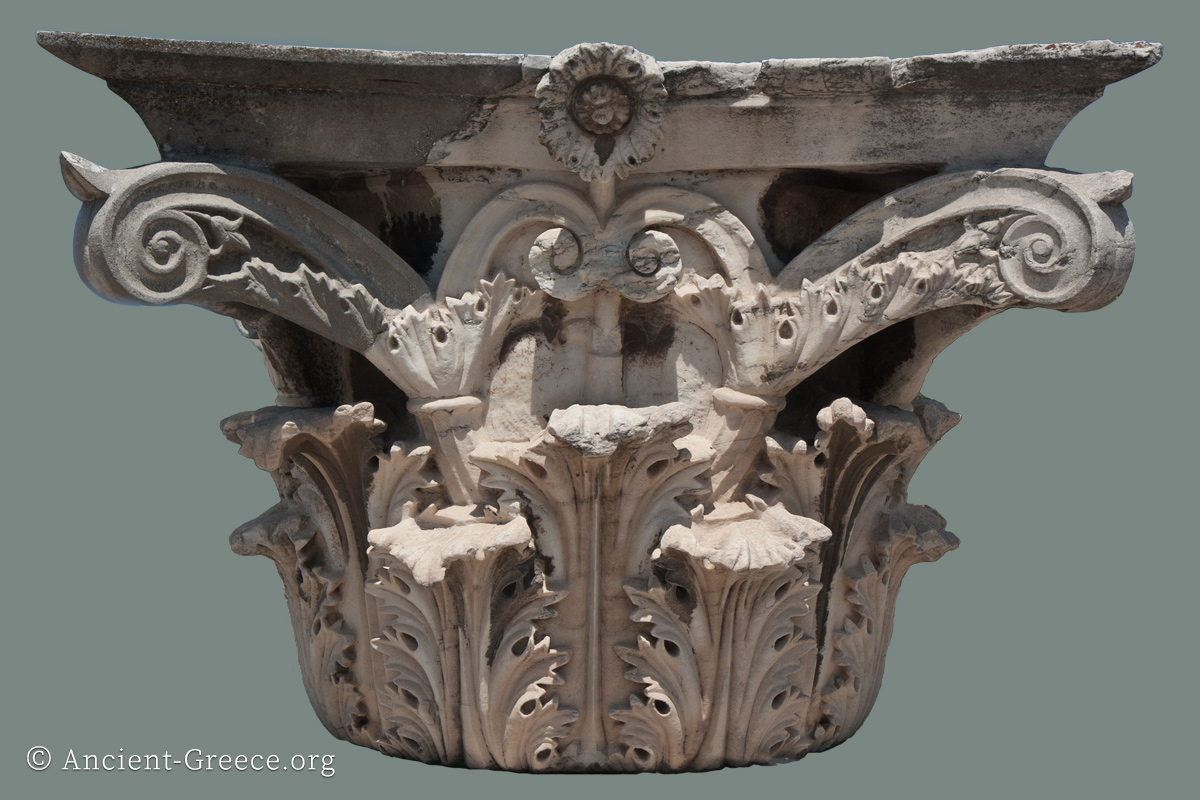
Compared with other temples of the era, the temple of Aphaia is much more refined with slender columns spaced further apart, rising with subtler entasis, to conclude at a smaller capitals that support a lighter entablature.
The rainwater was collected from the roof of the temple and was channeled to a cistern that was cut on the rock at the northeast corner of the sanctuary.
The Temple’s Interior
The temple of Aphaia presented another innovation in its interior. Instead of a single colonnade that spans the distance from floor to ceiling, the architects incorporated a two-storeyed colonnade to support the roof.
The bottom columns are thinner than the exterior columns, and taper as they rise half way to the ceiling to support a slender entablature.
Directly above each column, another one was placed to span the space between the entablature and the ceiling. The interior columns, consistent with the peristlyle, are of the Doric order and taper continuously from the floor all the way to the ceiling.
The double naos was divided into three isles by the double-decked colonnade length wise, and it had both a distyle pronaos and opisthodromos in antis (small rooms at the front and back, with two supporting columns each), and it housed the cult statue of Athena that was made of ivory.
The temple was lavishly decorated with vivid colors and some of the finest sculptures of the Late Archaic and Early Classical period.
The sculptural composition of the pediments was unique that it presented a unified theme and consistent size of all sculptures. While Athena is the largest figure in both pediments as she stands tall in the center of the triangle, the rest of the figures are all the same size as they appear in different postures that allows them to conform to the diminishing space of the triangular pediments.
The Pediment Sculptures
The complex of pediment sculptures of Parian marble depict scenes from the Trojan war and were put in place when the temple was completed around 490 BCE. The iconography to links Aegina’s identity to the heroic deeds of the Aeacids.
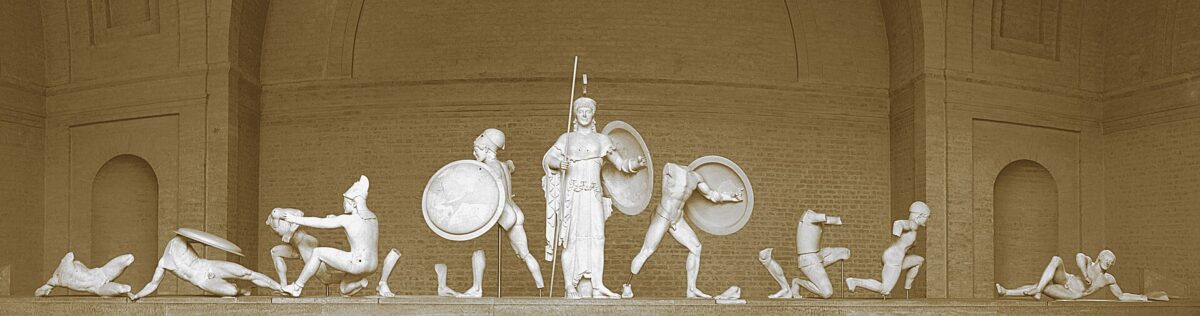
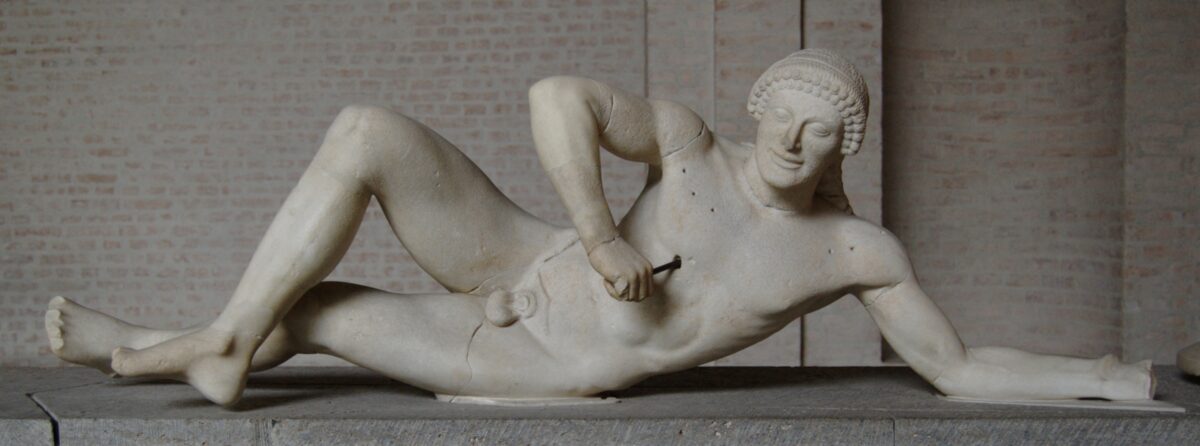
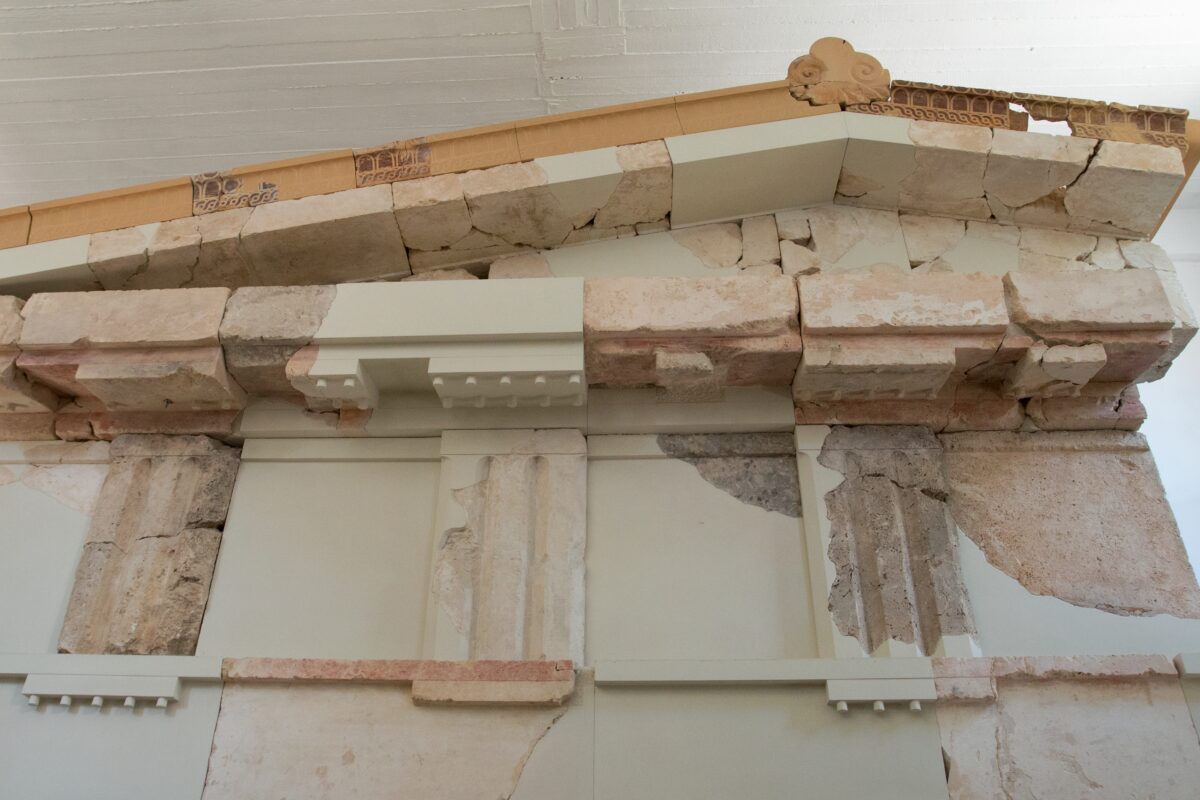
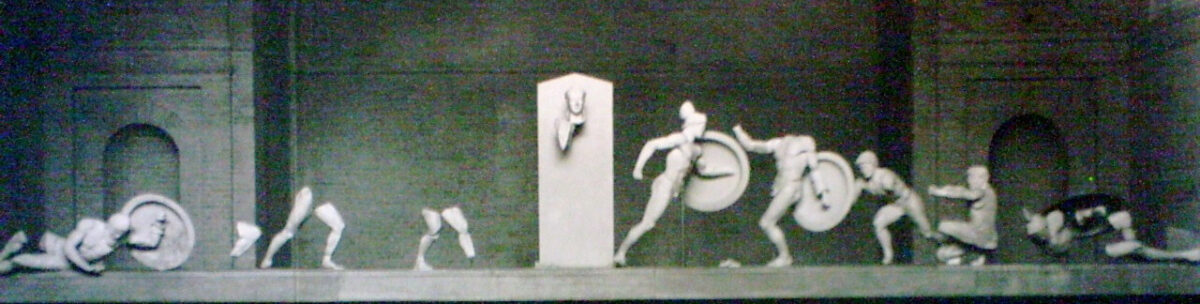
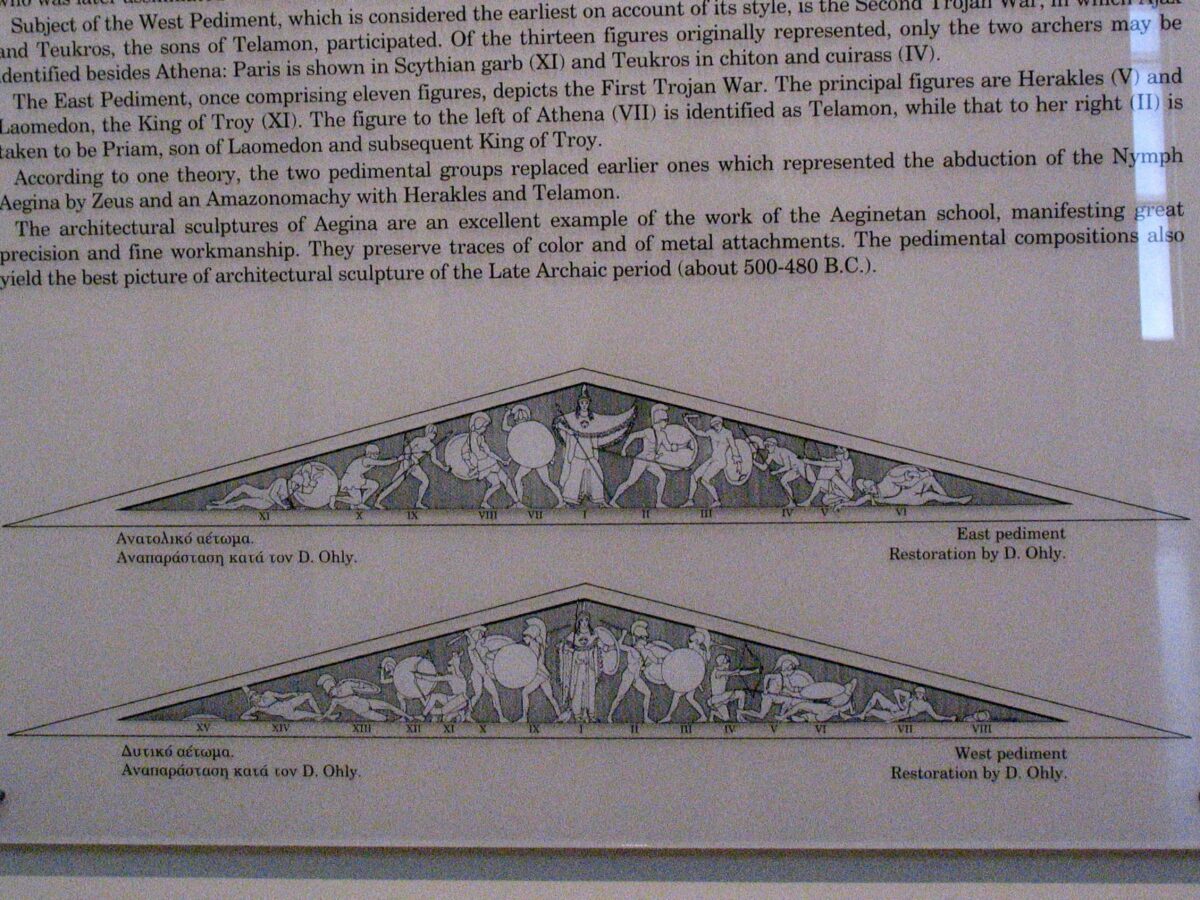
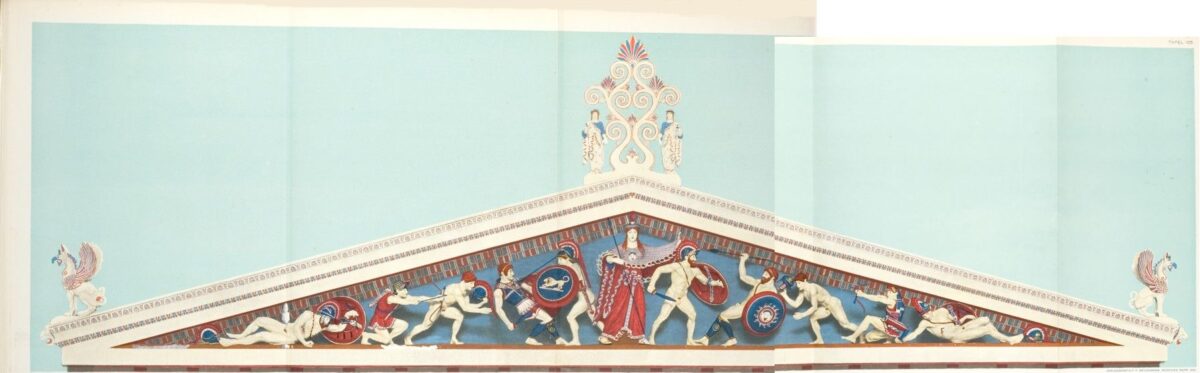
The West Pediment, styled earlier, depicts the Second Trojan War featuring Ajax and Teukros, with figures such as Paris in Scythian attire.
Representing the pinnacle of the Aeginetan school (c. 500–480 B.C.), these sculptures serve as premier examples of Late Archaic architectural art. The figures exhibit exceptional precision and fine workmanship, retaining visible traces of original color and metal attachments. This technical mastery provides a vital window into the stylistic evolution and sophisticated craftsmanship of the period before the transition to the Classical era.
The East Pediment portrays the First Trojan War, centered on Herakles, Laomedon, and Telamon. These compositions may have replaced earlier groups representing the abduction of the Nymph Aegina and an Amazonomachy.
Destined to be in production during the start of the Golden Era, the early statues belong to the Late Archaic period, while the newer sculptures exhibit all the characteristics of the Classical period.
The sculptures were taken in 1811 by the English Cockerell and the German von Hallerstein, while Greece was still under Turkish occupation. Two years later, in 1813, Prince Ludwig I of Bavaria purchased the sculptures, had them restored to contemporary taste, and exhibited them in arbitrary arrangement in the Glyptothek Museum in Munich, Germany. In 1962 all restoration work was removed from the sculptures and they were placed in a more accurate arrangement. The sculptures are still on display at the Glyptothek Museum.
Besides what is now in Germany, several smaller parts of the Aphaia sculptures are exhibited at the Aegina Museum and at the National Archaeological Museum in Athens.
Photo Archive
Related Pages