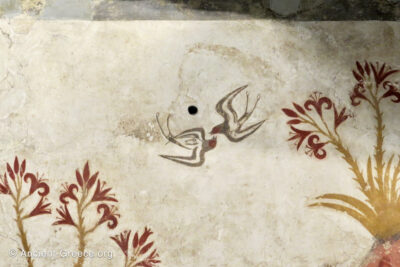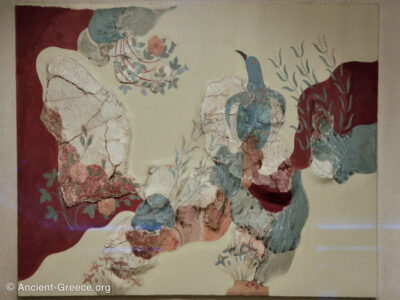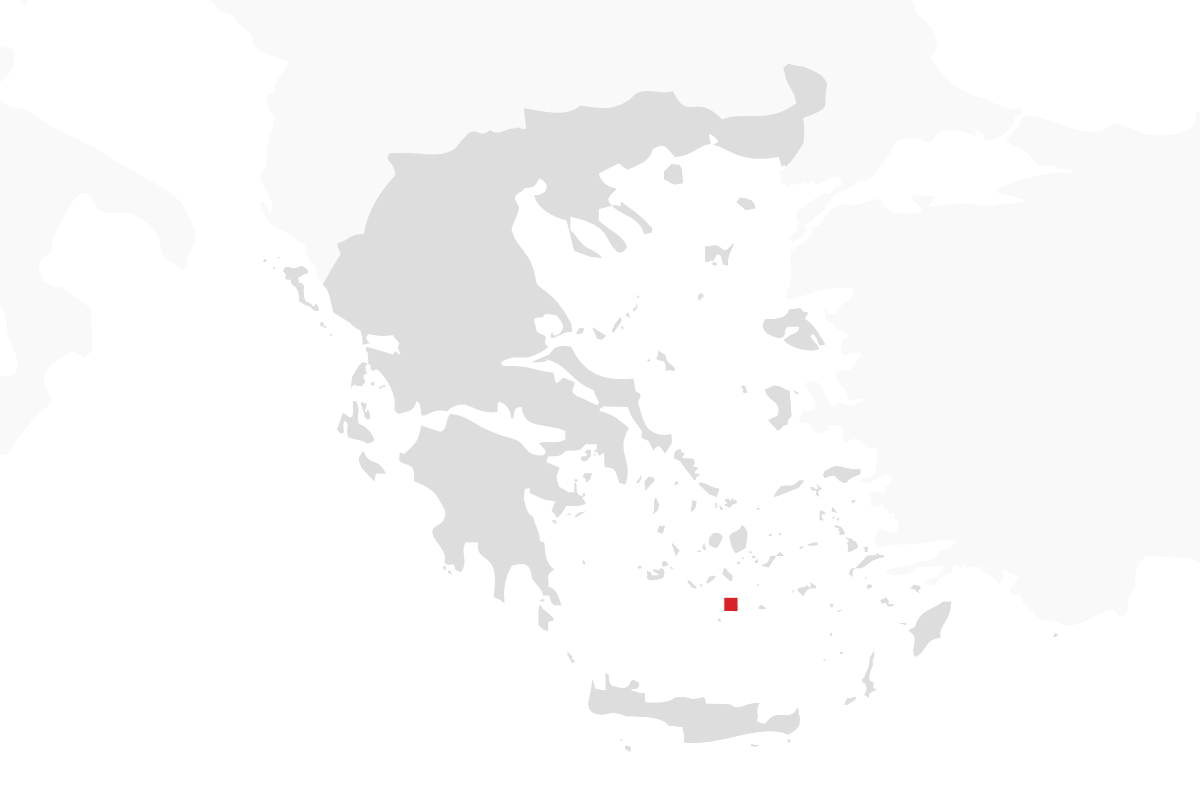


The fresco was found its the Upper floor, south wall frieze, of West House in ancient Akrotiri (Thera, Santorini (which was buried under volcanic ash in 1627 BCE). Given the amount of location detail present in the fresco, it can be seen as a map of landscapes and festive events.
Spyridon Marinatos originally theorized that the Miniature Frieze from Akrotiri depicted a military return from a distant expedition to Libya. However, Nanno Marinatos challenges this “military homecoming” narrative by analyzing the specific iconography and environmental details of the fresco. She points out that the flora and fauna, alongside the dress of the figures, are more characteristic of the local Aegean landscape than North Africa. Furthermore, she argues that the decorative elements—such as butterflies, swallows, and flower garlands—signify a religious festival or a peaceful ceremonial procession rather than a naval return from war.
A key piece of evidence against the Libyan theory involves the technical limitations of the ships themselves. Nanno Marinatos notes that the primary method of propulsion shown in the “Ship Procession” is paddling, a technique suited for short-distance coastal travel or ritual display. This method would have been entirely impractical for a long-haul voyage across the open sea from Libya to Thera. Instead, the scene depicts a fleet moving between two local towns, likely on the same island or a neighboring one, as part of a highly organized social or religious event.
The social hierarchy depicted in the fresco further reinforces the idea of a local island festival. The artist portrays a wide spectrum of society, from “rustics” in animal hides to nobles in long robes and youths in ceremonial kilts. Marinatos suggests that the “simple” town on the left and the sophisticated “right town” (likely Akrotiri itself) represent a journey between a dependency and a central hub. The presence of horns of consecration and sacrificial animals at the destination confirms that the fleet’s arrival was intended for a sacred celebration involving the entire community, rather than a military debarkation.
This image is in the public domain. Original image: https://en.wikipedia.org/wiki/File:AKROTIRI_SHIP-PROCESSION-FULL_PANO-3.jpg
Image Gallery
Related Pages