On this page:
Το Μουσείο Καλών Τεχνών της Βοστώνης φιλοξενεί μια εκτενή συλλογή αρχαίας ελληνικής και ρωμαϊκής τέχνης και αντικειμένων. Ορισμένα από τα σημαντικότερα εκθέματα της ελληνικής και ρωμαϊκής συλλογής περιλαμβάνουν:
The Boston Museum of Fine Arts hosts an extensive collection of Ancient Greek and Roman art and artifacts. Some of the highlights of the Greek and Roman collection include:
Three-Sided Classical Relief
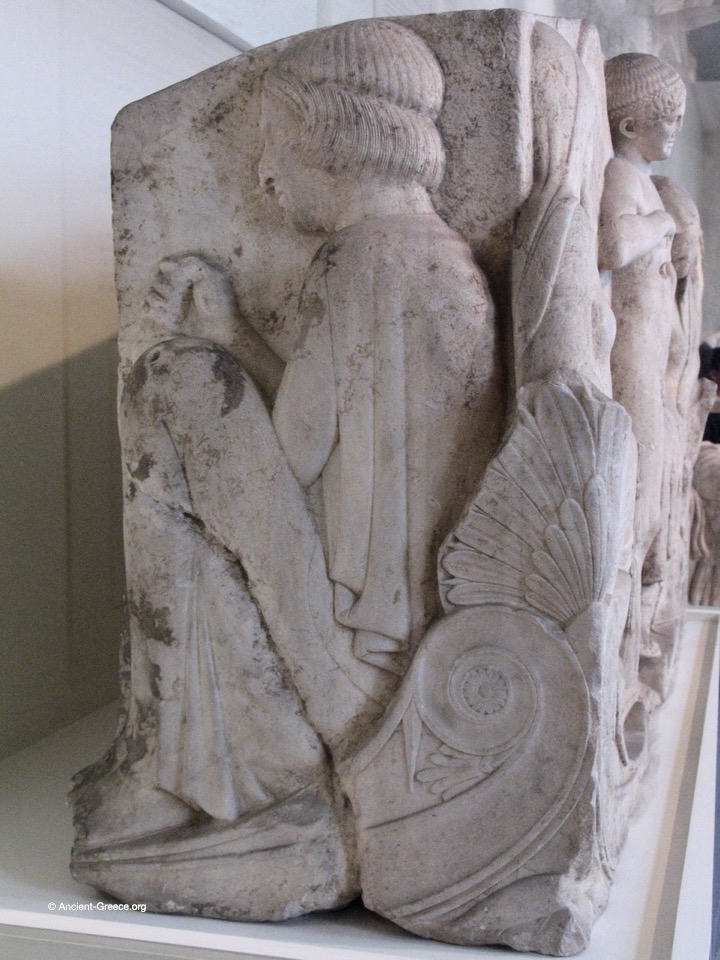
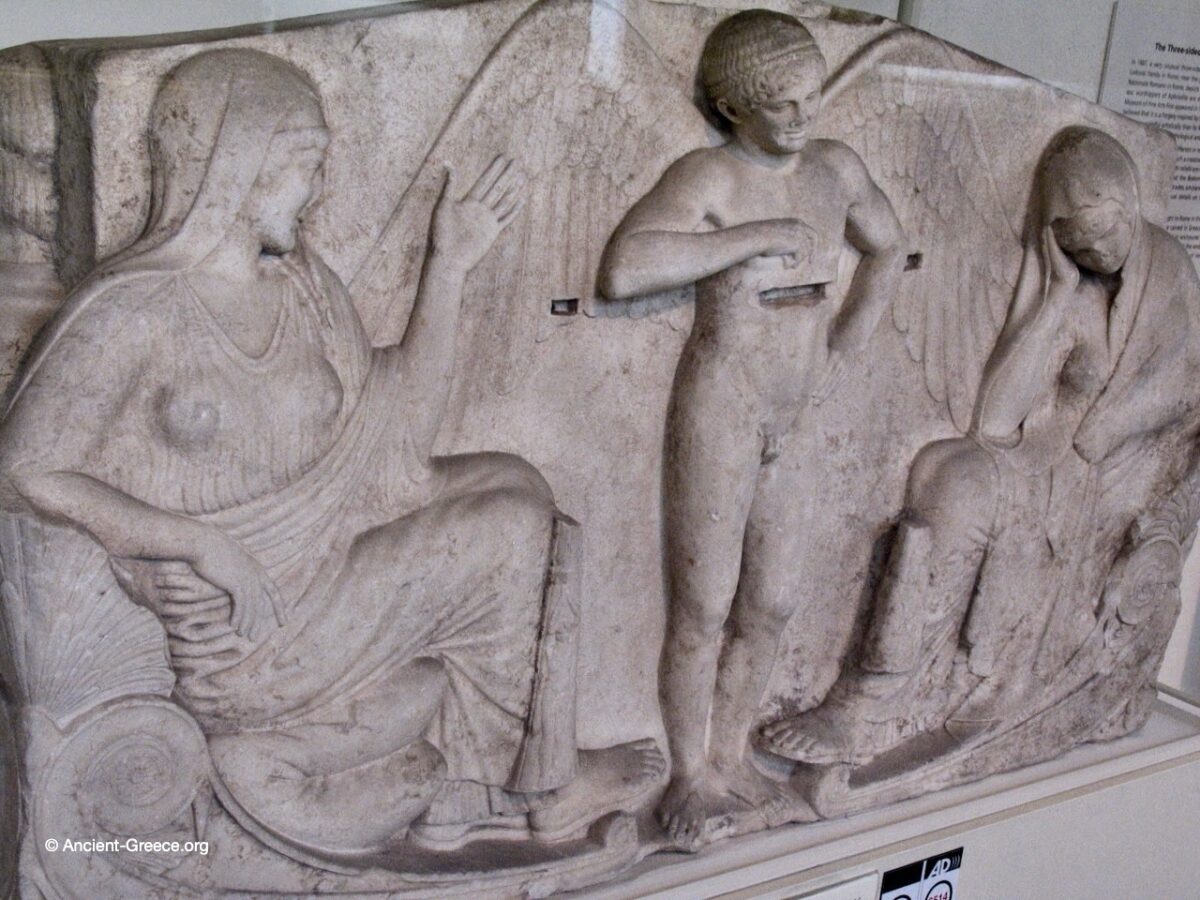
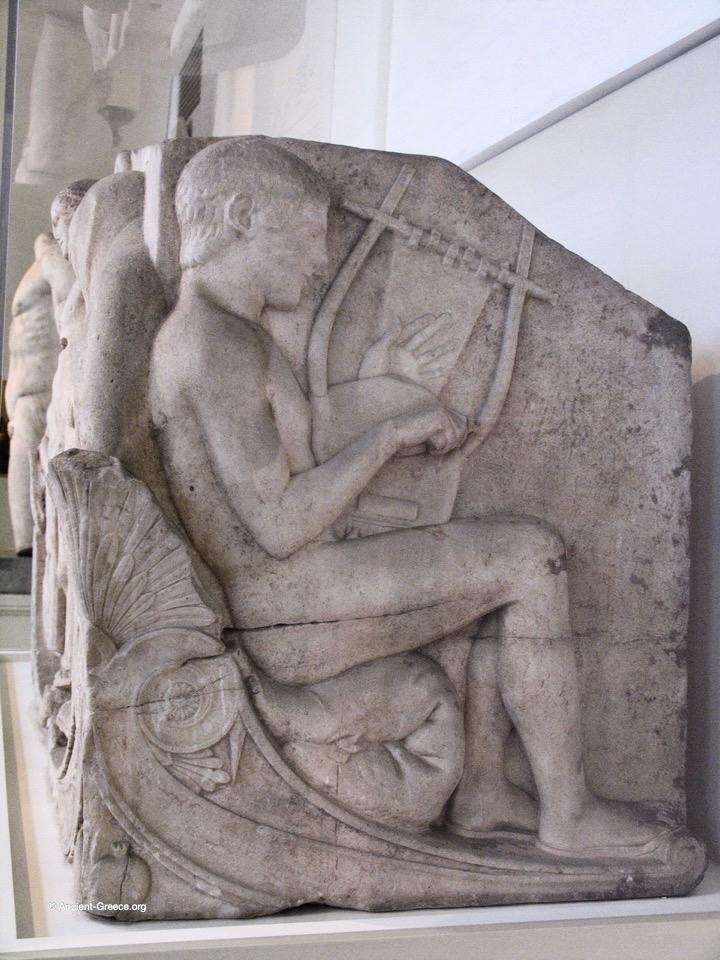
Tο τρίπλευρο ανάγλυφο (γνωστό και ως «Θρόνος της Βοστώνης»).
Αυτό το μαρμάρινο τρίπλευρο ανάγλυφο, που χρονολογείται στην Πρώιμη Κλασική περίοδο (περ. 470–440 π.Χ.), είναι φιλοτεχνημένο από μάρμαρο της βόρειας Ελλάδας, από το νησί της Θάσου. Ανακαλύφθηκε στη Ρώμη, κοντά στη σημερινή Via Veneto, και πιθανότατα χρησίμευε ως προστατευτικό παραπέτασμα (θωράκιο) για έναν βωμό όπου τελούνταν θυσίες.
Η κεντρική μορφή είναι ο Έρως, ο θεός της αγάπης, ο οποίος απεικονίζεται να ζυγίζει δύο μικρά πνεύματα των οποίων τα χέρια είναι δεμένα από την αγάπη. Ο αρχικός ζυγός, που πλέον έχει χαθεί, ήταν ένα ξεχωριστό κομμάτι μαρμάρου που παλαιότερα ήταν στερεωμένο στις τρεις σωζόμενες οπές του κεντρικού τμήματος.
Η σύνθεση πλαισιώνεται από δύο από τις σημαντικότερες θεές του ελληνικού πανθέου: τη Δήμητρα στα δεξιά και την Αφροδίτη στα αριστερά. Η Δήμητρα, θεά της γεωργίας, αναγνωρίζεται από το ρόδι στη γωνία και εμφανίζεται σε κατάσταση πένθους για την κόρη της, Περσεφόνη, μετά την απαγωγή της από τον Άδη. Απέναντί της, η Αφροδίτη, θεά του έρωτα και της μοίρας, αναγνωρίζεται από την παρουσία ψαριών κάτω αριστερά. Μαζί με τον γιο της, τον Έρωτα, η Αφροδίτη εμφανίζεται να καθορίζει τη διάρκεια της παραμονής της Περσεφόνης στον Κάτω Κόσμο, μια διευθέτηση που τελικά επέτρεψε στην κόρη να επιστρέφει στην επιφάνεια κάθε άνοιξη για να ανανεώνει τη γη.
Δεξί πλευρικό τμήμα: Ένα νεαρό αγόρι (ένας νεαρός πιστός ή μουσικός) κάθεται σε ένα σκαμνί, παίζοντας λύρα (συγκεκριμένα κιθάρα ή βάρβιτο). Στη γωνία κάτω από αυτόν, το ρόδι ως σύμβολο προσδιορίζει τη σύνδεση με τη σφαίρα επιρροής της Δήμητρας.
Αριστερό πλευρικό τμήμα: Μια γυναίκα με σφιγμένη γροθιά.
This three-sided marble relief, dating to the Early Classical period (ca. 470–440 BCE), was carved from northern Greek marble from the island of Thasos. Discovered in Rome near the modern Via Veneto, it likely served as a protective windbreak for an altar where sacrifices were performed.
The central figure is Eros, the god of love, who is depicted weighing two small spirits whose hands are bound by love. The original balance arm, now lost, was a separate piece of marble formerly anchored into three surviving holes in the central panel.
The composition is flanked by two of the most significant goddesses of the Greek pantheon: Demeter on the right and Aphrodite on the left. Demeter, goddess of agriculture, is identified by the pomegranate in the corner and is shown in a state of mourning for her daughter, Persephone, following her abduction by Hades. Opposite her, Aphrodite, goddess of love and fate, is identified by the presence of fish at the lower left. Together with her son Eros, Aphrodite is shown determining the duration of Persephone’s stay in the Underworld, an arrangement that eventually allowed the maiden to return to the surface each spring to renew the earth.
Right Side Panel: A young boy (a youthful worshipper or musician) is seated on a stool, playing a lyre (specifically a kithara or barbiton). In the corner below him, the pomegranate attribute identifies the connection to Demeter’s sphere.
Left Side Panel: A woman with clenched fist.
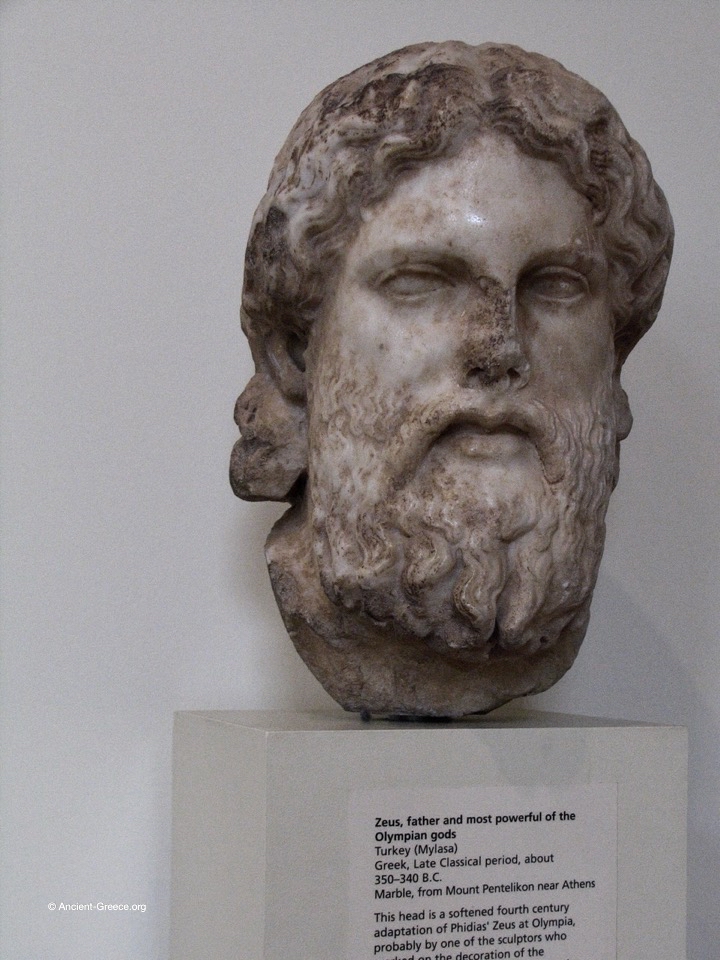
Marble Statue Heads
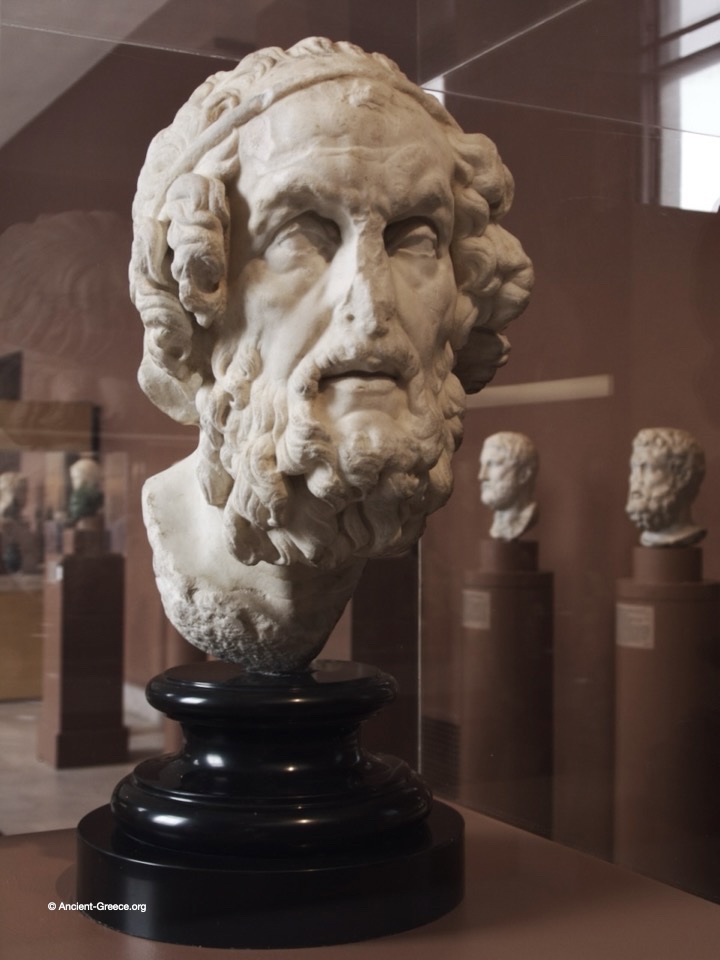
Μαρμάρινη προτομή του Ομήρου Μια μαρμάρινη προτομή του Ομήρου, του ποιητή της Ιλιάδας και της Οδύσσειας, από τα τέλη του 1ου αιώνα π.Χ. ή τον 1ο αιώνα μ.Χ. Αυτό το ρωμαϊκό πορτρέτο αποτελεί μια αριστοτεχνική επανερμηνεία του θρυλικού ποιητή σε ελληνιστικό ύφος. Η βαθιά, περίτεχνη λάξευση και τα αυλακωμένα χαρακτηριστικά παραπέμπουν στο εκφραστικό «μπαρόκ» στυλ της Περγάμου, χρησιμοποιώντας την εικονογραφία του προχωρημένου γήρατος —φαλάκρα, μυώδης λαιμός και ρυτιδωμένο δέρμα— για να υπογραμμιστεί η σοφία του ποιητή και η σύνδεσή του με τη μακρινή ηρωική εποχή της Ελλάδας. Το γλυπτό απεικονίζει τον χαρακτήρα του Ομήρου μέσα από την ποιητική ταινία (κεφαλόδεσμο) που δηλώνει την ικανότητά του, και τα βαριά βλέφαρα που υποδηλώνουν τη θρυλική του τύφλωση, ένα χαρακτηριστικό που συχνά συνδεόταν με την πνευματική ενόραση των αρχαίων μάντεων.
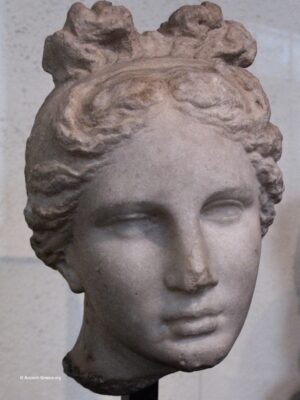
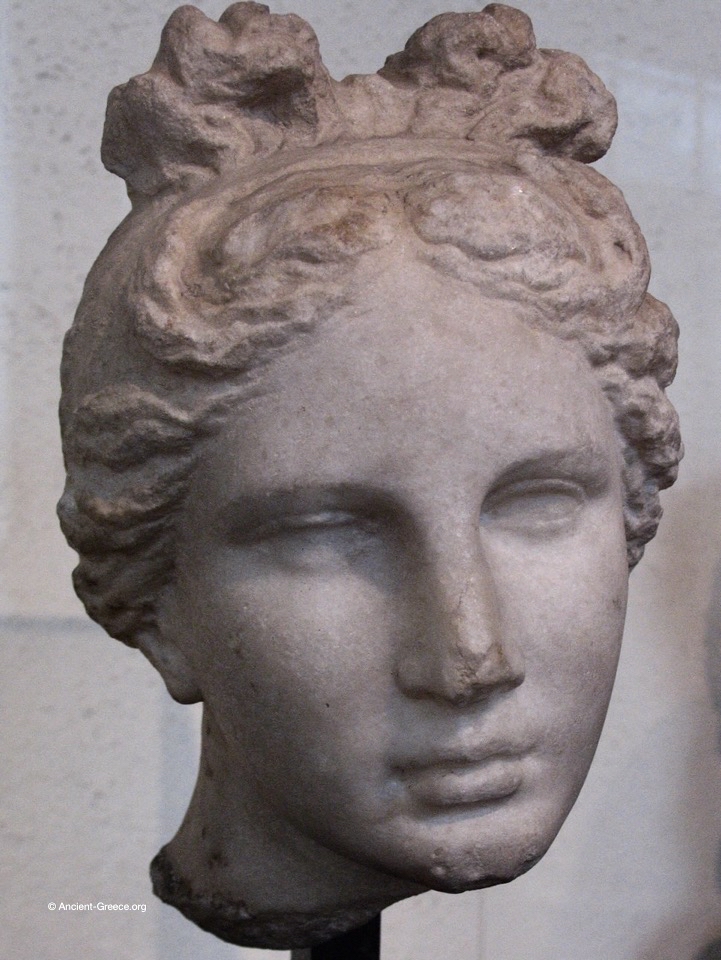
Κεφαλή της Αφροδίτης (γνωστή ως “The Bartlett Head”) Κλασική περίοδος, 330–300 π.Χ. Φιλοτεχνημένη από το εκλεκτότερο παριανό μάρμαρο και σχεδιασμένη για να είναι ορατή από όλες τις πλευρές, η «Κεφαλή Bartlett» είναι ένα διάσημο αριστούργημα της Ύστερης Κλασικής περιόδου. Ενσαρκώνει το επαναστατικό ύφος του Αθηναίου γλύπτη Πραξιτέλη, ο οποίος ήταν ο πρώτος που κατέκτησε τις απαλές, «καπνώδεις» (sfumato) υφές και τους στιλπνούς τόνους του δέρματος που είναι μοναδικοί στο μάρμαρο. Το περίτεχνο χτένισμα και ο κότσος σε σχήμα τόξου απηχούν την επιρροή της Αφροδίτης της Κνίδου. Η κεφαλή προοριζόταν αρχικά για τοποθέτηση σε ένα ολόσωμο άγαλμα και παραμένει ένα από τα σημαντικότερα έργα κλασικής τέχνης στις Ηνωμένες Πολιτείες.
Κεφαλή του Δία 350 – 340 π.Χ. Μάρμαρο από το όρος Πεντέλη, κοντά στην Αθήνα. Η κεφαλή του Δία αποτελεί μια εκλεπτυσμένη προσαρμογή (μέσα 4ου αι.) του χρυσελεφάντινου αγάλματος του Διός στην Ολυμπία, έργο του Φειδία από τον 5ο αιώνα. Αν και βασίζεται στο αριστούργημα της Ύψιστης Κλασικής περιόδου, το γλυπτό παρουσιάζει μια πιο «μαλακή» αισθητική και μια πιο ρευστή έκφραση, χαρακτηριστικά της Ύστερης Κλασικής περιόδου. Η εικονογραφία υποδηλώνει μια τοπική θεότητα της Καρίας, συγκεκριμένα τον Δία Λαβραύνδο ή Ζηνοποσειδώνα, όπως μαρτυρούν δύο οπές στην κορυφή που προορίζονταν για τη στερέωση του πόλου, του υψηλού κυλινδρικού καλύμματος κεφαλής που ήταν τυπικό για τα λατρευτικά αγάλματα στη νοτιοδυτική Μικρά Ασία.
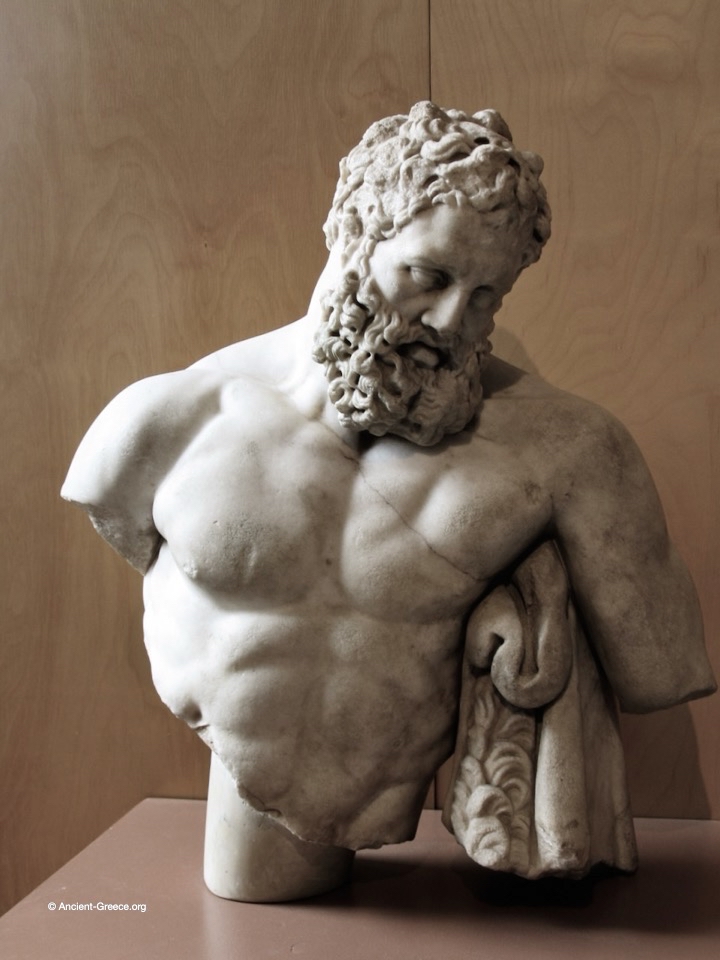
Κουρασμένος Ηρακλής (τύπος “Herakles Farnese”) Αυτό το ρωμαϊκό μαρμάρινο γλυπτό είναι ένα αντίγραφο του 2ου αιώνα μ.Χ. (πιθανώς της εποχής του Αδριανού ή των Αντωνίνων) του διάσημου χάλκινου πρωτοτύπου του «Κουρασμένου Ηρακλή», έργο του Σικυώνιου γλύπτη Λυσίππου (4ος αι. π.Χ.). Ανήκει στον τύπο “Herakles Farnese” και απεικονίζει έναν ηλικιωμένο και εξαντλημένο ήρωα που γέρνει βαριά πάνω σε ένα ρόπαλο καλυμμένο με τη δορά του λέοντος της Νεμέας. Το ψυχολογικό βάθος του πρωτοτύπου διατηρείται μέσα από τα ανακατεμένα μαλλιά, το συνοφρυωμένο μέτωπο και τα βαθουλωμένα μάτια, που μεταφέρουν το φυσικό και συναισθηματικό τίμημα των Άθλων του. Το κάτω τμήμα ανασκάφηκε από τα Νότια Λουτρά της Πέργης και φυλασσόταν στο Μουσείο της Αττάλειας, ενώ ο άνω κορμός ανήκε στη συλλογή του Μουσείου Καλών Τεχνών της Βοστώνης. Μετά από χρόνια διαπραγματεύσεων, το Μουσείο της Βοστώνης μεταβίβασε την πλήρη κυριότητα του άνω τμήματος στην Τουρκία το 2011, επιτρέποντας την επανένωση των δύο κομματιών.
A marble portrait of Homer, the author of the Iliad and the Odyssey from the late 1st century BCE or the 1st century CE. This Roman marble portrait, dating from the late 1st century BCE to the 1st century CE, represents a masterful Hellenistic-style reimagining of the legendary poet Homer, the author of the Iliad and the Odyssey. The deep, intricate carving and furrowed features evoke the expressive “baroque” style of Pergamon, utilizing the iconography of advanced age—a balding pate, sinewy neck, and wrinkled skin—to underscore the poet’s wisdom and his connection to Greece’s distant heroic age.
Thiesculpture portrays Homer’s character through the poetic fillet (headband) signifying his prowess and deeply lidded eyes that denote his legendary blindness, a trait often associated with the spiritual insight of ancient seers.
Head of Aphrodite known as “The Bartlett Head”. Classical. 330–300 BCE. Carved from the finest Parian marble and designed to be viewed fully in the round, the “Bartlett Head” is a celebrated Late Classical masterpiece that embodies the revolutionary style of the Athenian sculptor Praxiteles, who was the first to master the soft, “smoky” sfumato textures and polished skin tones unique to marble.
The head’s intricate hairstyle and bowlike topknot echo the influence of Aphrodite of Knidos, the most famous nude statue of antiquity. Originally intended for insertion into a full-length body, the head remains one of the most significant works of Classical art in the United States, showcasing the delicate features and tilting axes that define the refined, sultry aesthetic of the mid-4th century BCE.
Head of Zeus. 350 – 340 BCE. Marble, from Mount Pentelikon near Athens
Zeus’ head is a refined mid-4th-century adaptation of the 5th-century chryselephantine Zeus at Olympia by Phidias. While modeled after the High Classical masterpiece, the sculpture exhibits a “softened” aesthetic and a more fluid expression characteristic of the Late Classical period, likely carved by one of the masters associated with the Mausoleum at Halicarnassus near modern Milas (Mylasa). The iconography suggests a localized Carian deity, specifically Zeus Labraundos or Zenoposeidon, as evidenced by two distinct drill holes at the crown intended for the attachment of a polos, the tall cylindrical headdress typical of cult statues in south-western Asia Minor.
Weary Herakles (“Herakles Farnese” type, now in the Antalya Museum, in Turkey). This Roman marble sculpture is a 2nd-century CE copy (likely Hadrianic or Antonine) of the famous “Weary Herakles” bronze original by the 4th-century BCE Greek master Lysippos of Sikyon. Belonging to the “Herakles Farnese” type, the work depicts an aged and exhausted hero leaning heavily upon a club draped with the Nemean lion skin. The psychological depth of the original is preserved through Herakles’ disheveled hair, knotted brow, and sunken eyes, which convey the physical and emotional toll of his Labors. While this specific fragment is incomplete—with both arms broken—the iconography of the type suggests he originally held the Apples of the Hesperides hidden behind his back in his right hand.
The lower portion was excavated from the South Baths at Perge and housed in the Antalya Museum, while the upper torso was part of the collection at the Museum of Fine Arts, Boston. Following years of negotiations, the MFA transferred full ownership of the upper fragment to Turkey in 2011, allowing the two pieces to be reunited.
Bronze and Iron Age Greece
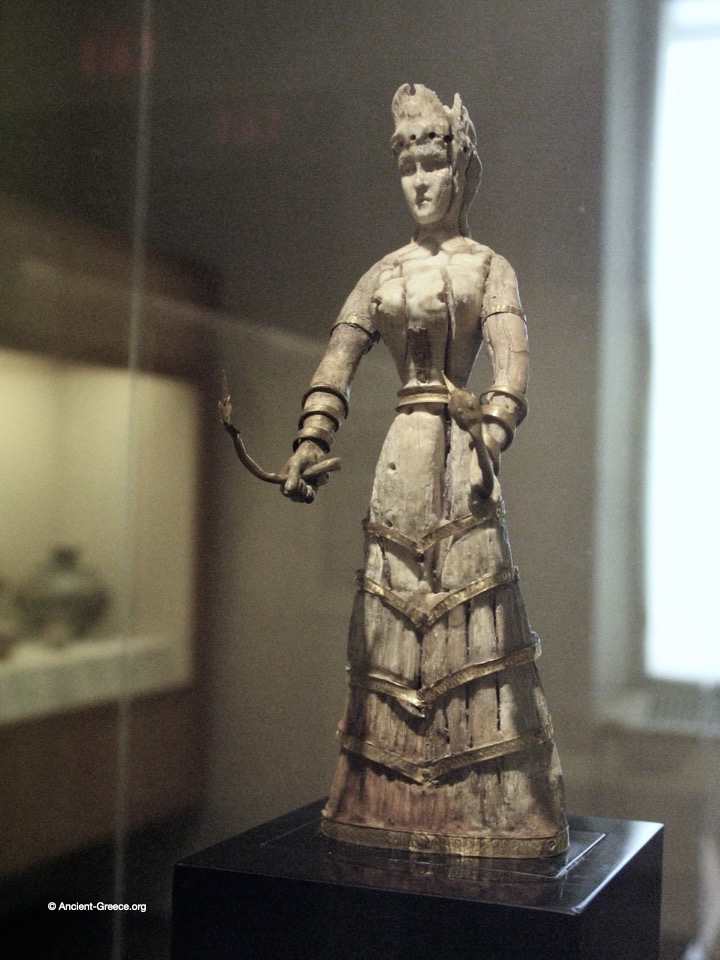
Ειδώλιο της «Θεάς των Όφεων» Αυτό το ειδώλιο μινωικής τεχνοτροπίας, που βρίσκεται στη συλλογή του Μουσείου Καλών Τεχνών της Βοστώνης, απεικονίζει μια γυναικεία μορφή με παραδοσιακή ανακτορική ενδυμασία, η οποία περιλαμβάνει στέμμα, χρυσή ζώνη και μια φούστα με πέντε πτυχώσεις και χρυσές παρυφές. Παρόλο που το ειδώλιο αποτελεί ένα εντυπωσιακό δείγμα δεξιοτεχνίας σε ελεφαντόδοντο και χρυσό, έχει υποστεί εκτεταμένη σύγχρονη αποκατάσταση, ειδικά στο κάτω μέρος της φούστας, στον δεξιό βραχίονα και στο τυλιγμένο φίδι. Παρά τη φήμη του, το έργο παραμένει αντικείμενο έντονης επιστημονικής διαμάχης όσον αφορά τη γνησιότητά του. Οι επικριτές επισημαίνουν υφολογικές ανωμαλίες —όπως μια «υπερβολικά σύγχρονη» δομή προσώπου και ασυνήθιστα στενούς γοφούς σε σύγκριση με τα επαληθευμένα κρητικά ειδώλια— ενώ οι επιστημονικές εξετάσεις στα υλικά παραμένουν μη κατατοπιστικές.
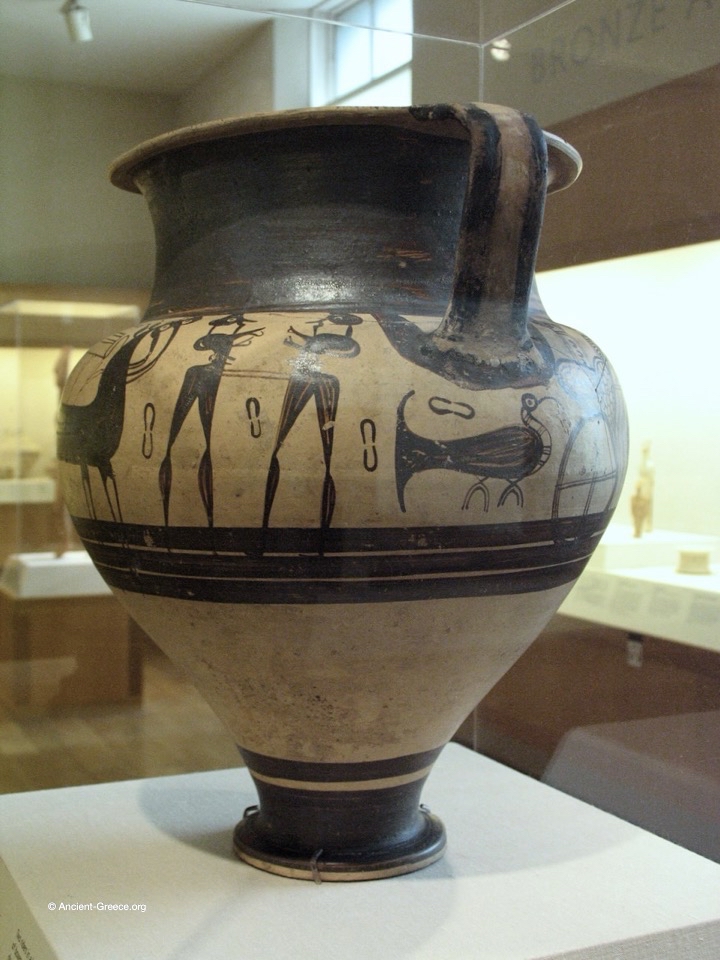
Μυκηναϊκός κρατήρας από την Κύπρο 1350 – 1250 π.Χ. Αυτό το μεγάλο κυπριακό αγγείο ανάμειξης οίνου, ή κρατήρας, είναι κατασκευασμένο από κόκκινο πηλό με ανοιχτόχρωμο επίχρισμα και φέρει μια συμμετρική σκηνή με ένα άρμα που σέρνουν δύο άλογα και οδηγούν δύο άνδρες. Μπροστά από κάθε άρμα απεικονίζονται δύο άνδρες που συμμετέχουν σε αγώνα πάλης με ζώνες —ένα ανατολίτικο άθλημα όπου οι αντίπαλοι δένονται μεταξύ τους στη μέση. Αξιοσημείωτη είναι η απόδοση των διογκωμένων γλουτών για να υποδηλωθεί η φυσική προσπάθεια, καθώς και οι κινήσεις των χεριών που θυμίζουν πυγμάχους σε προπόνηση.
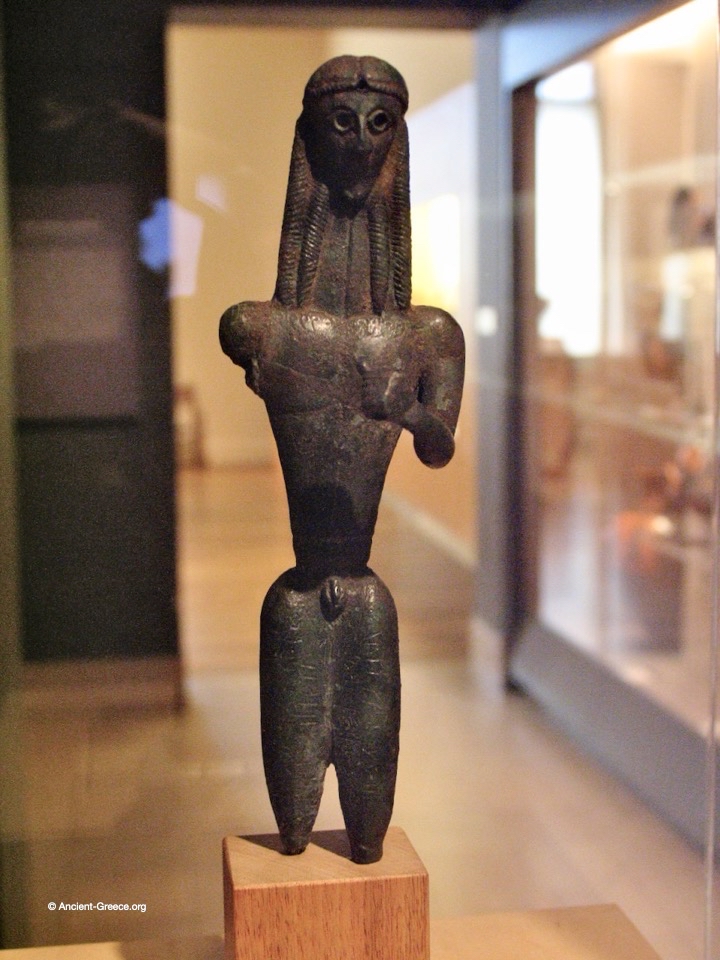
Χάλκινο αναθηματικό ειδώλιο γνωστό ως «Απόλλων του Μαντίκλου» Περίπου 700 – 675 π.Χ. (Ύστερη Γεωμετρική ή Πρώιμη Ανατολίζουσα περίοδος). Αυτό το συμπαγές χάλκινο αναθηματικό ειδώλιο, που αφιερώθηκε στις Θήβες γύρω στο 700 π.Χ., αντιπροσωπεύει μια κομβική μεταβατική στιγμή στην πρώιμη ελληνική τέχνη, όπου η γεωμετρική αφαίρεση άρχισε να παραχωρεί τη θέση της σε ένα αυξανόμενο ενδιαφέρον για τον φυσιοκρατικό όγκο και την κίνηση. Είτε απεικονίζει τον θνητό δωρητή είτε τον ίδιο τον θεό Απόλλωνα, η μορφή ορίζεται από το επιμηκυμένο σχήμα της και μια εγχάρακτη ελληνική επιγραφή σε έμμετρο λόγο, που τρέχει κάθετα κατά μήκος των μηρών και αναφέρει: «Ο Μάντικλος με αφιέρωσε ως δεκάτη στον Εκηβόλο [αυτόν που χτυπά από μακριά] με το αργυρό τόξο. Εσύ, Φοίβε, δώσε σε αντάλλαγμα κάτι ευχάριστο». Ο «Απόλλων του Μαντίκλου» ισορροπεί ανάμεσα στις γεωμετρικές συμβάσεις και τη στρογγυλεμένη μυϊκή διάπλαση στο στήθος και τους ώμους, αποτελώντας ένα από τα σημαντικότερα σωζόμενα δείγματα της Δαιδαλικής τεχνοτροπίας στην εξελισσόμενη προσπάθεια των Ελλήνων να κατανοήσουν το ανθρώπινο σώμα, η οποία σύντομα οδήγησε στη δημιουργία των Κούρων.
Snake Goddess statuette. This Minoan-style “Snake Goddess” statuette, currently in the collection of the Museum of Fine Arts, Boston, depicts a female figure in traditional palatial attire, including a crown, a gold girdle, and a five-flounced skirt edged with gold bands. While the figure is a striking example of ivory and gold craftsmanship, it has undergone significant modern restoration, specifically to the lower skirt, the right arm, and the coiled snake. Despite its fame, the piece remains the subject of intense scholarly debate regarding its authenticity; critics point to stylistic anomalies—such as a “too modern” facial structure and uncharacteristically narrow hips compared to verified Cretan figurines—while scientific testing on the materials remains inconclusive.
Mycenaean krater (mixing bowl) from Cyprus. 1350 – 1250 BCE. his large Cypriot wine vessel, or krater, is crafted from red clay with a buff slip and features a symmetrical scene of a two-horse chariot driven by two men. Positioned before each chariot are two males engaged in a belt-wrestling contest—an Oriental sport where opponents are strapped together at the waist—notably depicted with exaggerated buttocks to signify physical strain and arm gestures reminiscent of sparring boxers.
A votive bronze statuette known as Mantiklos Apollo from about 700 – 675 BCE (Late Geometic, or Early Orientalizing period). This solid bronze votive statuette, dedicated at Thebes around 700 BCE, represents a pivotal transitional moment in early Greek art where geometric abstraction began to yield to a burgeoning interest in naturalistic volume and motion. Whether depicting the mortal donor or the god Apollo himself, the figure is defined by its elongated form and an incised Greek inscription in poetic meter, running vertically along its thighs which reads: “Mantiklos dedicated me as a tithe to the Far Shooter, the bearer of the Silver Bow. You, Phoibos [Shining One], give something pleasing in return.”
The “Mantiklos Apollo” balances adherence to geometric conventions with rounded muscularity in the chest and shoulders, standing as one of the most significant surviving examples of the Daedalic style in the evolving Greek pursuit of understanding the human body, which soon evolved to kouros statues.
Other Greek and Roman Highlights
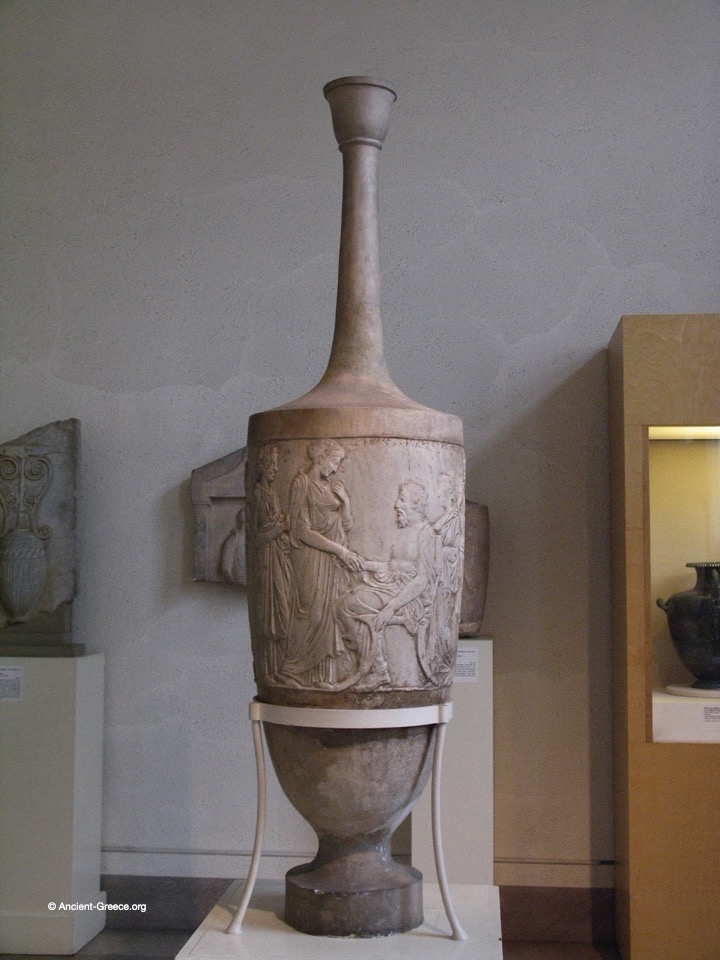
Λήκυθος Πεντελικό μάρμαρο, 390 – 380 π.Χ. Χαρακτηριστικό επιτύμβιο μνημείο σε σχήμα δοχείου ελαίου.
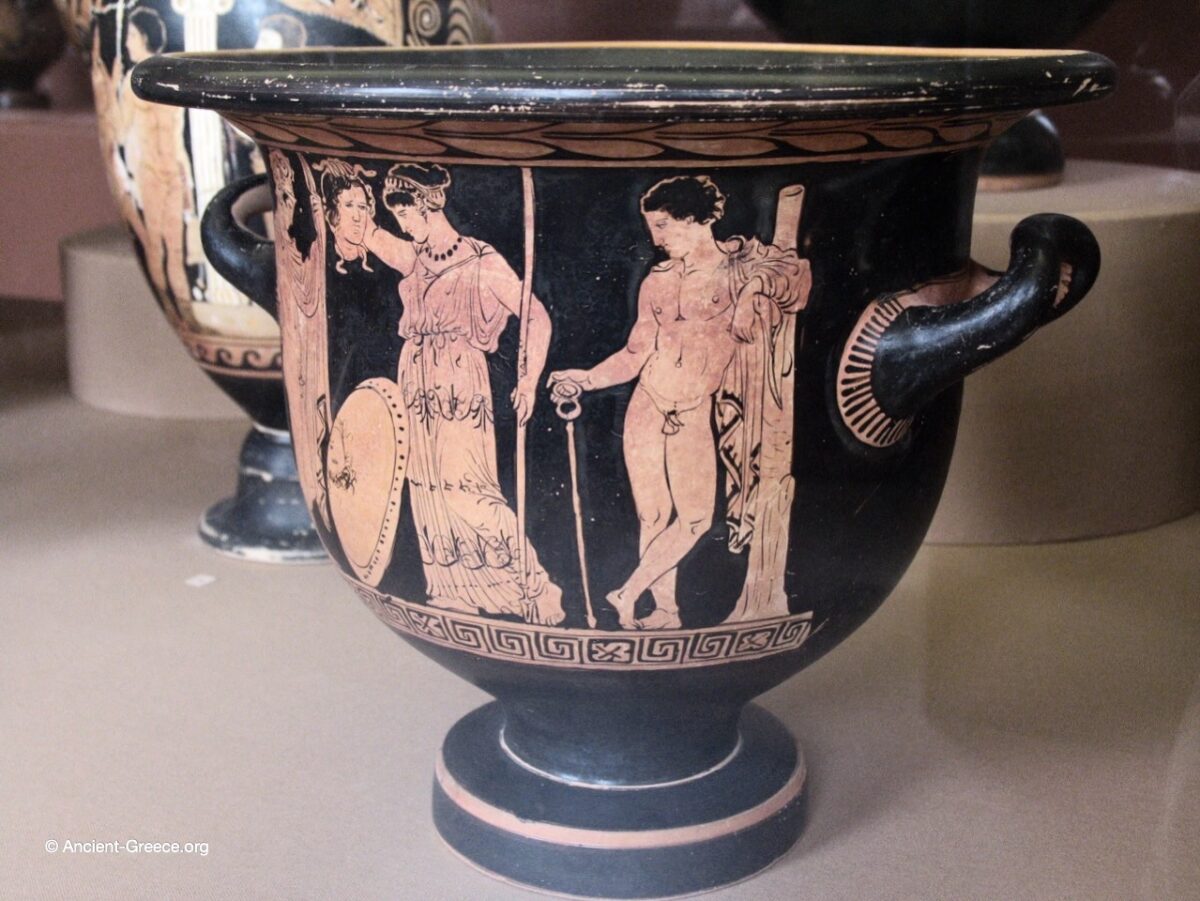
Ερυθρόμορφος κρατήρας (κωδωνόσχημος) 400–385 π.Χ. Αγγείο ανάμειξης οίνου που απεικονίζει τον Περσέα, την Αθηνά και τον Ερμή.
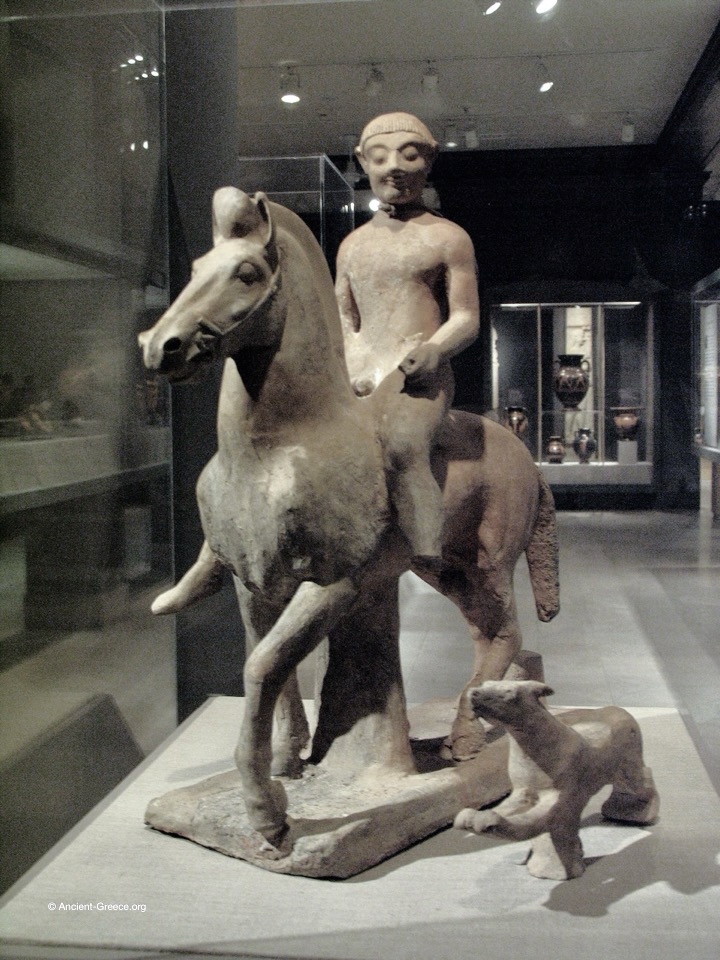
Νεαρός κυνηγός σε άλογο και σκύλος που τρέχει Πήλινο ειδώλιο από τη Σικελία. Περίπου 510 π.Χ. Πήλινη μορφή μεγάλης κλίμακας ενός γυμνού νέου που ιππεύει άλογο. Το άλογο και ο νέος συνοδεύονται από έναν σκύλο, ο οποίος μπορεί να ήταν αρχικά προσαρμοσμένος στην ίδια βάση. Η παρουσία του σκύλου προσδιορίζει τη μορφή ως κυνηγό. Μαζί με τις μορφές βρέθηκε ένας πέτασος (καπέλο ταξιδιού), ο οποίος είναι πολύ μικρός για το κεφάλι του αναβάτη, οπότε μπορεί να φοριόταν στην πλάτη του, κρεμασμένος στον λαιμό με κορδόνι. Σε αντίθεση με την ηπειρωτική Ελλάδα και τα νησιά του Αιγαίου, οι ελληνικές αποικίες στη Σικελία δεν είχαν εύκολη πρόσβαση σε καλής ποιότητας μάρμαρο γλυπτικής. Έτσι, ανέπτυξαν μια παράδοση μεγάλης κλίμακας πήλινων γλυπτών. Αν και έχουν βρεθεί άλλες μορφές ίππων και αναβατών ως ακρωτήρια ναών, αυτός ο αυτοτελής κυνηγός είναι ασυνήθιστος.
Ο Κύων (Σκύλος): Πήλινη μορφή κυνηγόσκυλου σε καλπασμό, με τα αυτιά πίσω και τη μύτη στον αέρα. Η παρουσία του σκύλου επιβεβαιώνει την ταυτότητα του αναβάτη ως κυνηγού.
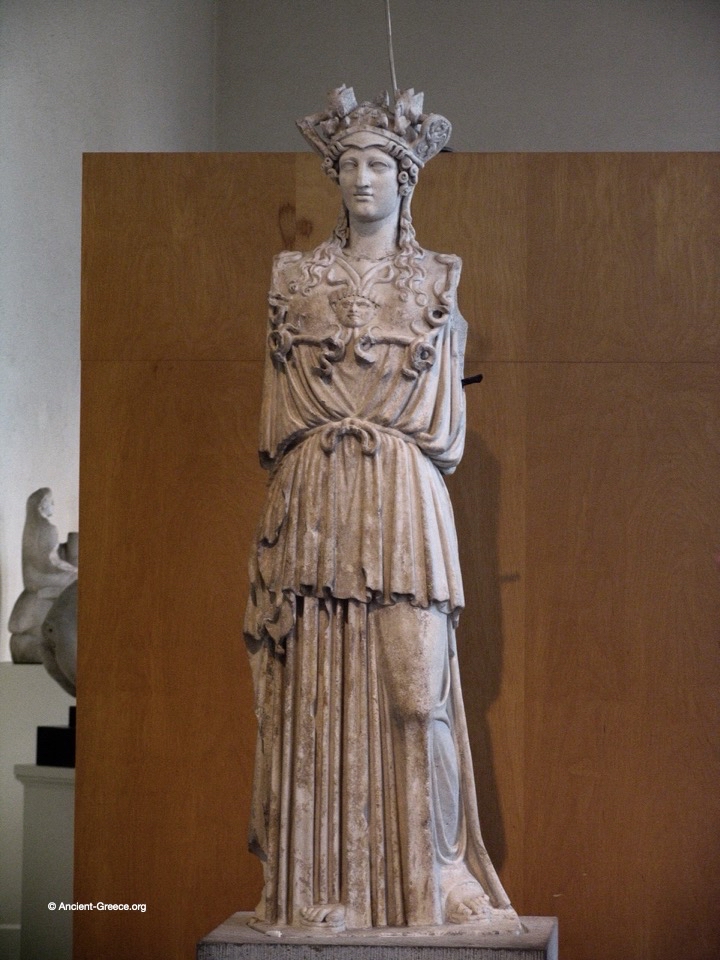
Άγαλμα της Αθηνάς Παρθένου 2ος ή 3ος αι. π.Χ.
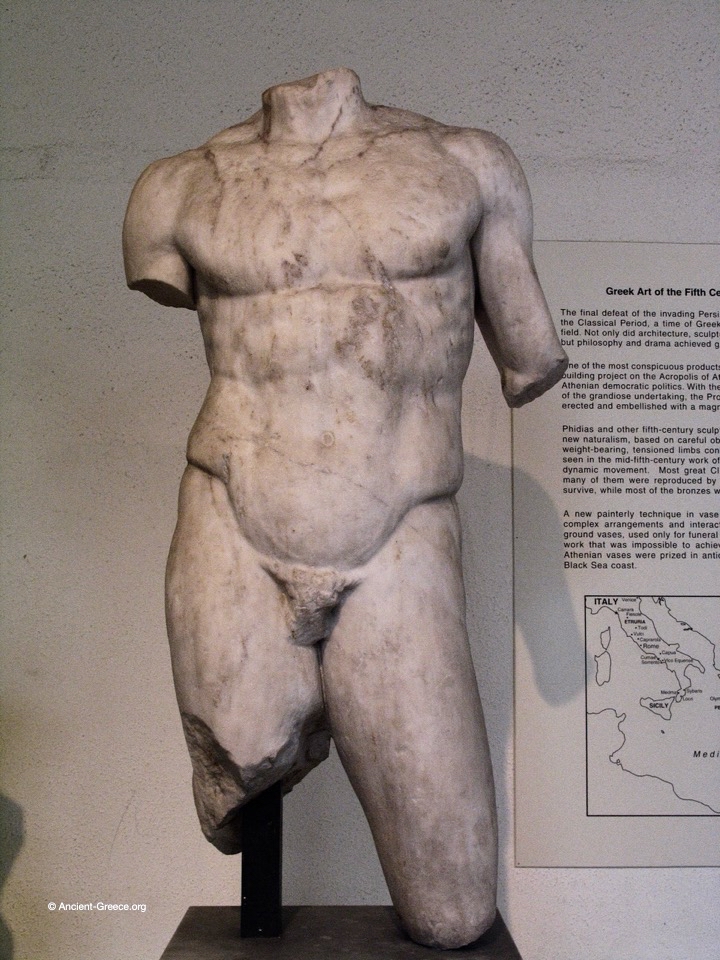
Ανδρικός κορμός Μάρμαρο, 1ος αι. μ.Χ.
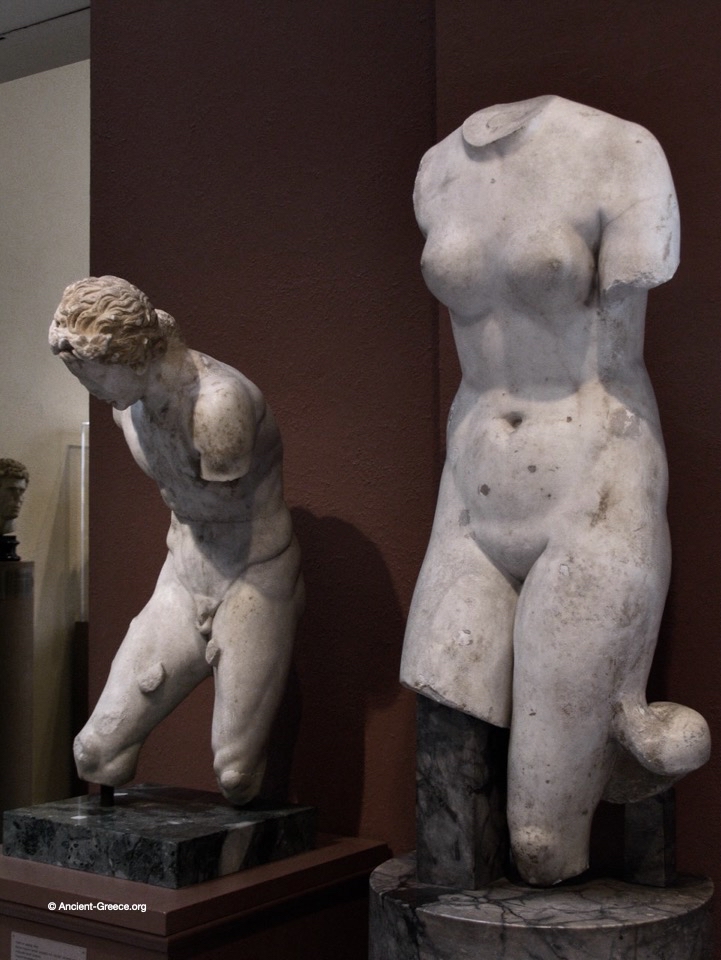
Νεαρός Σάτυρος και Αφροδίτη (150 – 200 π.Χ.)
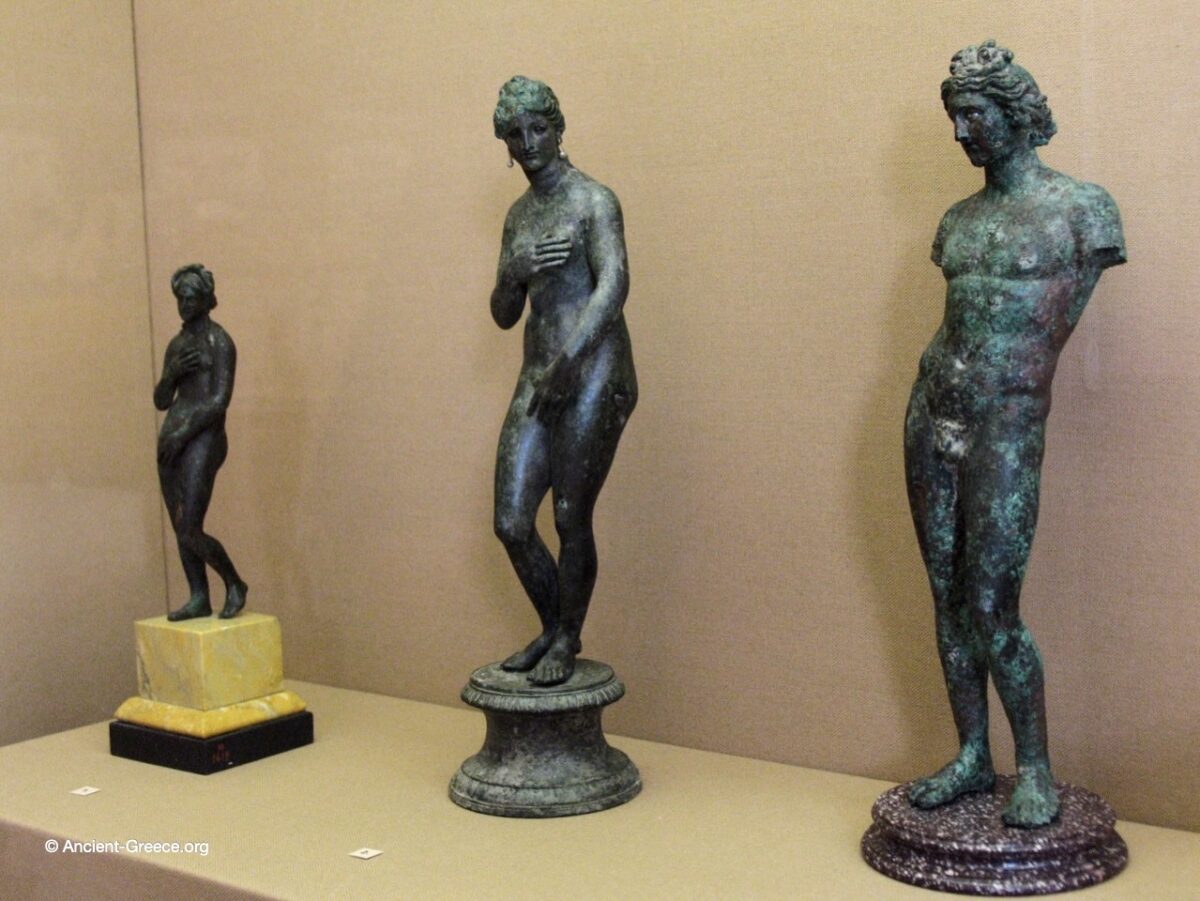
Χάλκινα ειδώλια Από τα δεξιά προς τα αριστερά: Απόλλων (1ος αι. π.Χ. – 1ος αι. μ.Χ., με ένθετο ασήμι), Αφροδίτη του Καπιτωλίου με χρυσά σπειροειδή σκουλαρίκια (1ος αι. π.Χ. – 2ος αι. μ.Χ.) και Αφροδίτη του Καπιτωλίου (3ος αι. π.Χ. – 2ος αι. μ.Χ.).
Lekythos (typical grave marker in the form of an oil flask). Pentelic marble. 390 – 380 BCE.
Red-figure mixing bowl (bell krater) with Perseus, Athena, and Hermes. 400–385 BCE.
Young hunter on horseback and running dog. Clay statuette from Sicily. Circa 510 BCE.
Large scale terracotta figure of a nude youth riding a horse. The horse and youth are accompanied by a dog (65.464), which may have originally been attached to the same base, though its precise location in relation to the horse is uncertain. The presence of the dog identifies the figure as a hunter. A petasos (traveling hat) was found with the figures, but is too small for the rider’s head, so it may have been worn on his back, looped around the neck with a cord.
Condition: Missing left foot, part of horse’s tail, and part of bridle. Some reconstruction, including horse’s mane. Hands and horse’s mouth pierced for reins in another material, now missing. Traces of white on surface may be undercoat for painting. The figure was handmade and the surface has been roughly smoothed.
Unlike mainland Greece and the Aegean islands, the Greek colonies in Sicily did not have easy access to good sculpting marbles. Thus, they developed a tradition of large-scale terracotta sculpture instead. Though other horse and rider figures have been found as temple akroteria, this free standing hunter is unusual.
The Hound: Terracotta figure of a running hound (companion to the horse and rider, 65.463) extended in a gallop, ears back and nose in the air. Rests on hind feet, with support under stomach. The dog may have originally been attached to the same base as the horse and rider, though its precise location in relation to the horse is uncertain. The presence of the dog identifies the rider as a hunter.
Statue of Athena Parthenos. 2nd or 3rd c. BCE.
Male torso. Marble. 1st c. CE.
Young Satyr (150 – 200 BCE), and Aphrodite.
Bronze statuettes. Right to left: Apollo (1st c. BCE – 1st c. CE. Inlaid with silver. ). Capitoline Aphrodite with gold spiral earings(1st c. BCE – 1st-2nd c. CE.), and Capitoline Aphrodite (3d c. BCE – 1st-2nd c. CE.)