On this page:
Το Αρχαιολογικό Μουσείο Πάρου εκθέτει ευρήματα από ανασκαφές στο νησί της Πάρου και την ευρύτερη περιοχή των Κυκλάδων. Ακολουθούν ορισμένα επιλεγμένα εκθέματα από τη συλλογή του.
Paros Archaeological Museum exhibits artifacts from excavations in Paros island vicinity, in the Aegean Sea, Greece. These are some selected highlights, from its exhibits.
Highlights – Επιλεγμένα Εκθέματα
Λορέμ ιψούμ ντολόρ σιτ αμέτ, κονσεκτέτουρ αντιπισκίνγκ ελίτ, σεντ ντο ειούσμοντ τεμπόρ ινσιντιντούντ ουτ λαμπόρε.
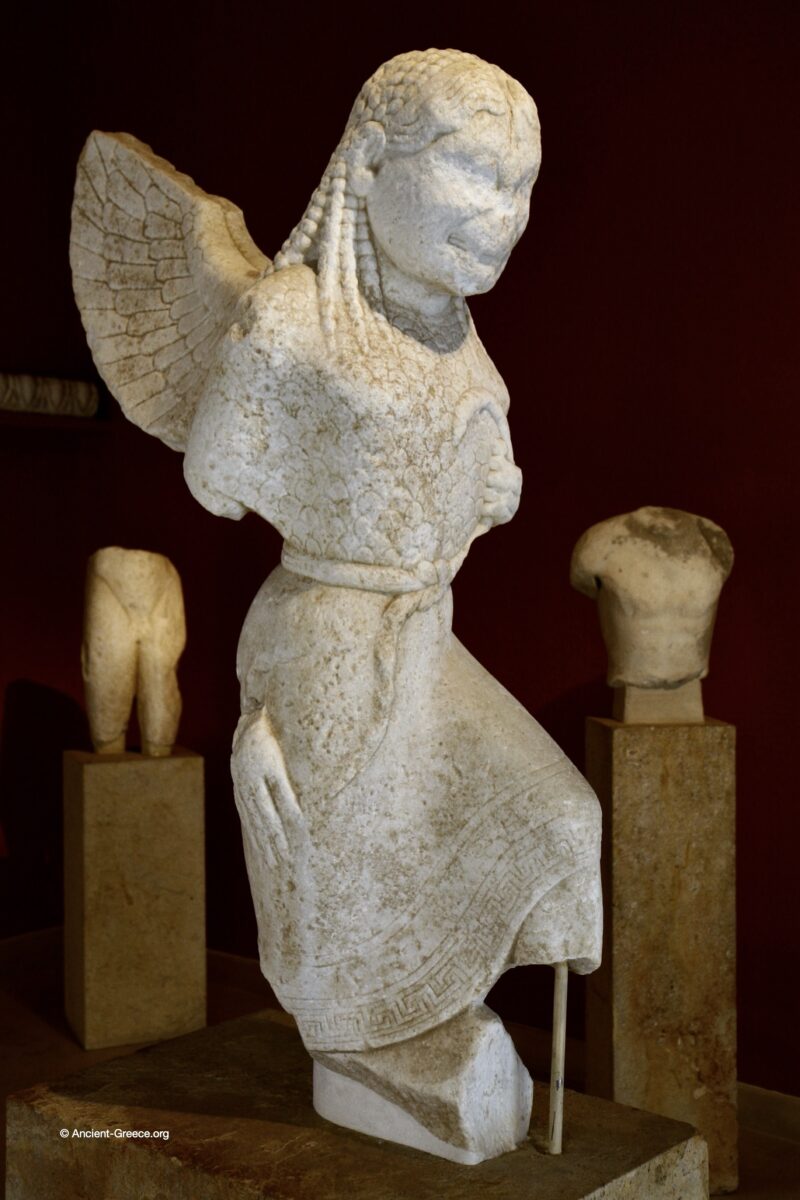
Archaic statue of a Gorgon. Mid-6th century BCE.
Gorgon with her wings joined at her back, standing with two legs on a marble tile. In her left hand she holds the head of the snake, which coils around her waist as a belt, while the right hand rests on her thigh. Her large head,out of proportion to the torso, combines human characteristics, like her hair, with the typical apotropaic features of a Gorgon: lolling tongue, boar tusks, and bulging eyes.
Her garment, chiton, from neck to waist is scaly and belted with a snake. The end of the chiton is decorated with a meander. This is the first depiction of a Gorgon in statue form. Found with the torso A 1284, only a few meters away from the Archaeological Museum inside a sanctuary or public building.
Mid- 6th century B.C. Source: Archaeological Museum, Paros Island, Greece.
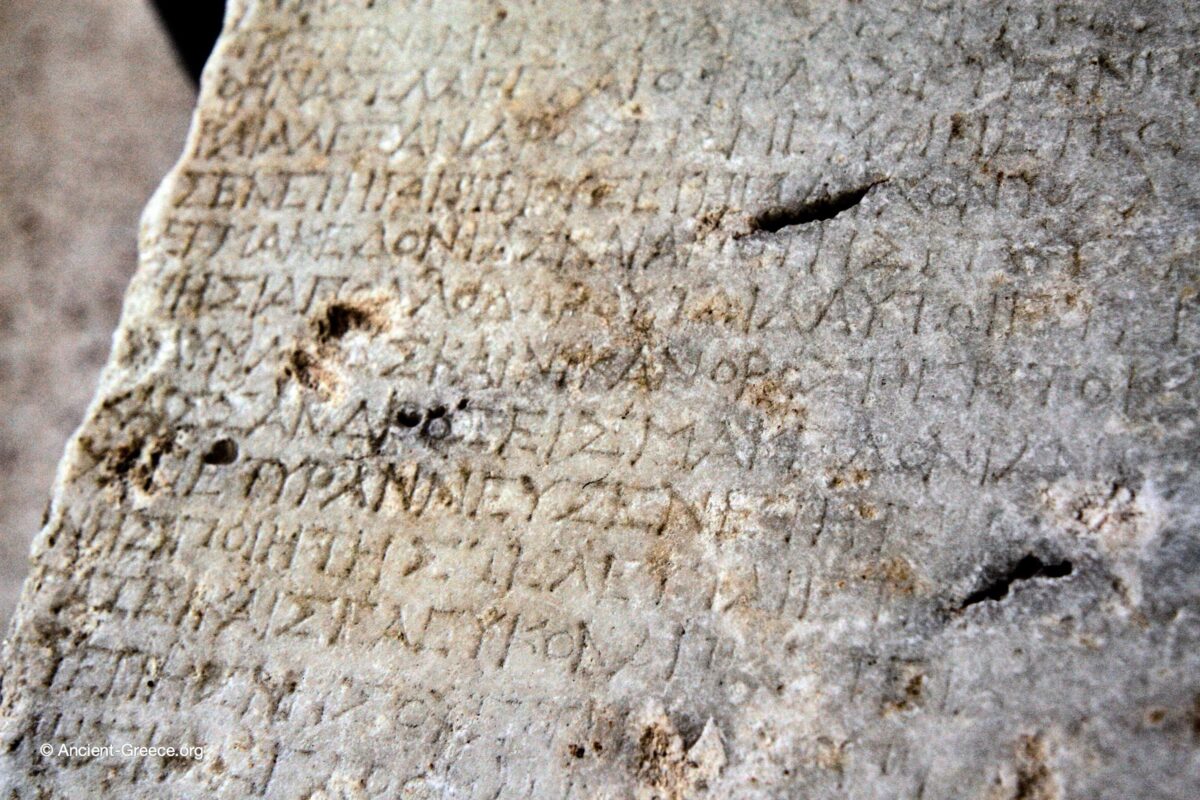
Parian Chronicle inscription detail: This inscription records in 134 lines a chronological record from the time of the mythical king of Athens Kekrops (1582 B.C.) until the time of the Athenian eponymous ruler Diognetos (264-263 B.C.).
This chronological record documents the birth and death of the most important personalities of greek antiquity as well as important political and historical events.
There is a possibility that the stele had been standing in Archilocheion so that it was accessible and visible by all.
It is dated in the 3rd cent.B.C. and was carved by a Parian sculptor.
In 1627 two of the three parts were discovered in the castle of Paoikia and were transported to Smyrna by a man called Sampson. These parts were later bought by lord Arundel and were donated to the Oxford Ashmolean Museum, in which they are still kept. In 1897 in the place called Tholos in Paroikia, in Varouchas’ land, the third part of the inscription was found and was entrusted by Andreas Varouchas to the Museum, where it is now exhibited. Exhibited in Paros Archaeological Museum, Paros Island, Greece.
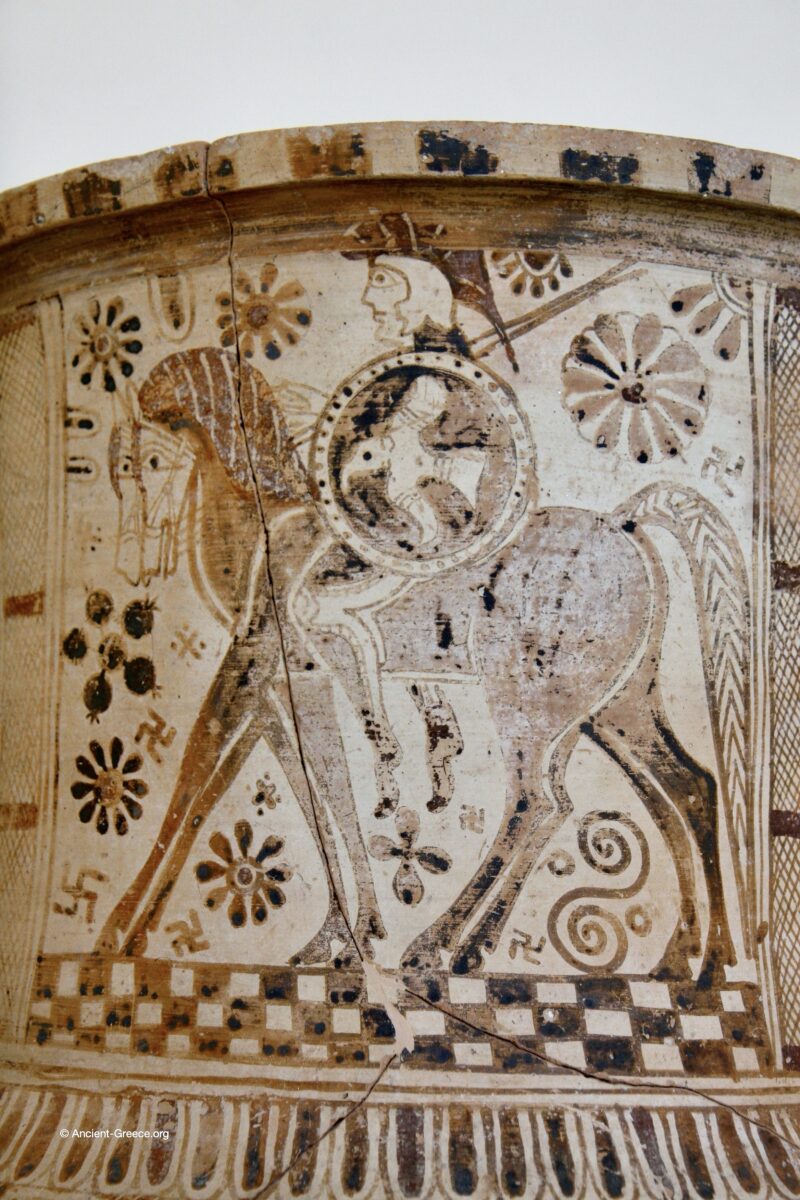
Large amphora from a Cycladic workshop detail of a mounted warrior. 7th century BCE.
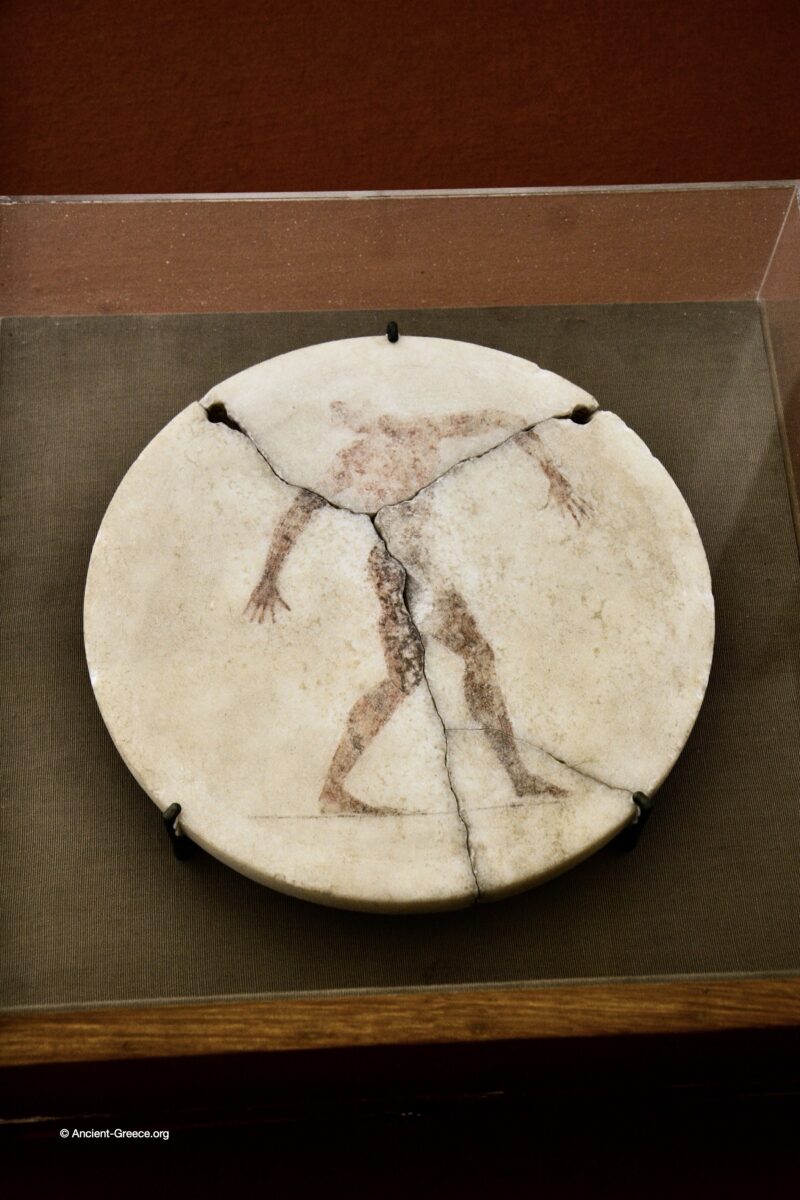
Marble disk, with painting of a discus thrower. Mid – 5th century BCE.
Marble disk, depicting a discus thrower.
The discus thrower is preparing to throw the discus. The athlete is painted in red and his hair with gold, of which traces were still preserved when the disk was found. Probably the disk that he holds in his right hand was painted with the same gold. Found on the lid of an urn, which probably contained the ashes of the athlete, who had won a victory in the discus. Source: Archaeological Museum, Paros Island, Greece.
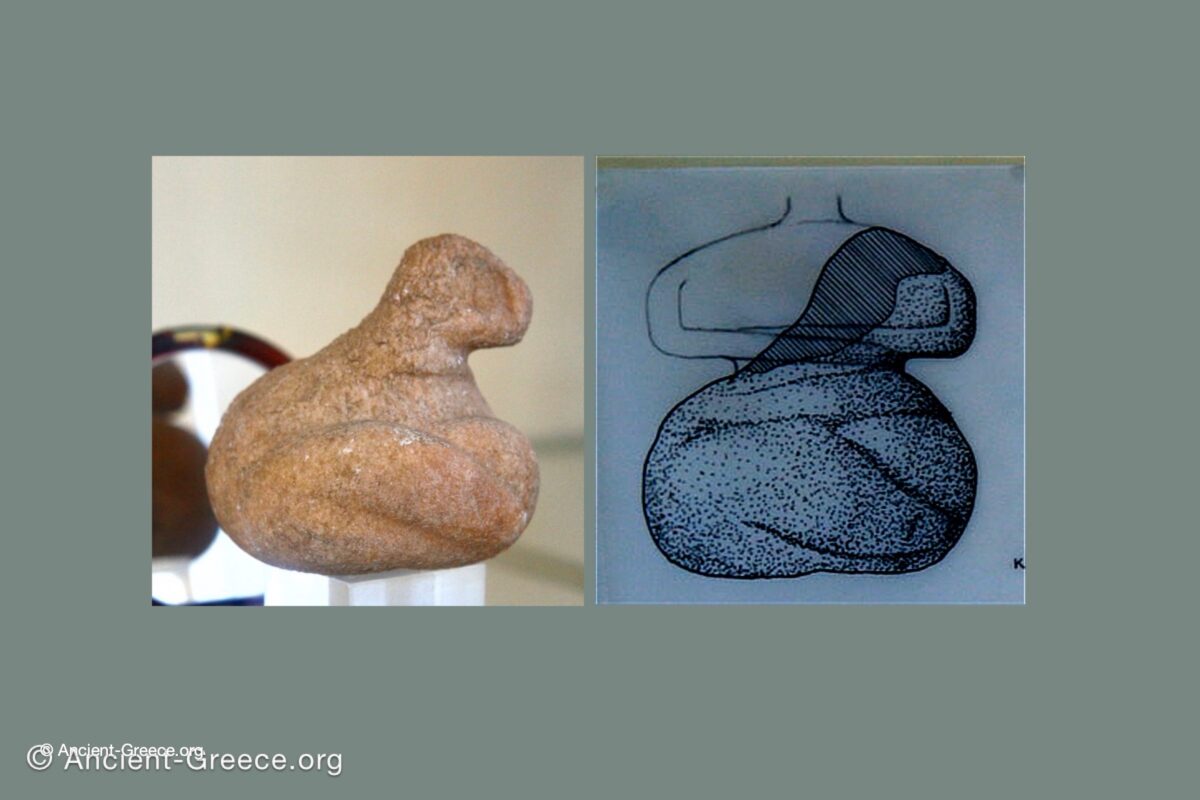
The Naked Lady of Saliagos fragment (next to the reconstruction drawing of the missing part), also known as The Fat Lady of Saliagos, is the oldest known Cycladic statuette (5000 to 4000 BCE).