On this page:
A Cosmopolitan Era | Μια Κοσμοπολίτικη Εποχή
The Hellenistic Age (323-31 BCE) marks the transformation of Greek society from the localized and introverted city-states to an open, cosmopolitan, and at times exuberant culture that permeated the entire eastern Mediterranean, Egypt, and Southwest Asia. The autonomous cities of the Classical era gave way to the will of the large kingdoms that were led by one ruler.
While the Hellenistic world incorporated a number of different people, Greek thinking, mores, and way of life dominated the public affairs of the time. All aspects of culture took a Greek hue, with the Greek language being established as the official language of the Hellenistic world.
The art and literature of the era were transformed accordingly. Instead of the previous preoccupation with the “Ideal”, Hellenistic art focused on the “real”. Depictions of man in both art and literature revolved around exuberant, and often amusing themes that for the most part explored the daily life and the emotional world of humans, gods, and heroes alike.
Η Ελληνιστική Εποχή (323-31 π.Χ.) σηματοδοτεί τον μετασχηματισμό της ελληνικής κοινωνίας από τις τοπικές και εσωστρεφείς πόλεις-κράτη σε έναν ανοιχτό, κοσμοπολίτικο και ενίοτε πληθωρικό πολιτισμό, ο οποίος διαπότισε ολόκληρη την ανατολική Μεσόγειο, την Αίγυπτο και τη Νοτιοδυτική Ασία. Οι αυτόνομες πόλεις της Κλασικής εποχής παραχώρησαν τη θέση τους στη βούληση των μεγάλων βασιλείων, τα οποία διοικούνταν από έναν μόνον ηγεμόνα.
Ενώ ο ελληνιστικός κόσμος ενσωμάτωσε πλήθος διαφορετικών λαών, η ελληνική σκέψη, τα ήθη και ο τρόπος ζωής κυριάρχησαν στις δημόσιες υποθέσεις της εποχής. Όλες οι πτυχές του πολιτισμού απέκτησαν μια ελληνική απόχρωση, με την ελληνική γλώσσα να καθιερώνεται ως η επίσημη γλώσσα του ελληνιστικού κόσμου.
Η τέχνη και η λογοτεχνία της εποχής μεταμορφώθηκαν αναλόγως. Αντί για την προηγούμενη ενασχόληση με το «Ιδεατό», η ελληνιστική τέχνη επικεντρώθηκε στο «πραγματικό». Οι απεικονίσεις του ανθρώπου τόσο στην τέχνη όσο και στη λογοτεχνία περιστράφηκαν γύρω από πληθωρικά και συχνά διασκεδαστικά θέματα που, ως επί το πλείστον, εξερευνούσαν την καθημερινή ζωή και τον συναισθηματικό κόσμο ανθρώπων, θεών και ηρώων εξίσου.
The Division of Empire | Η Διαίρεση της Αυτοκρατορίας
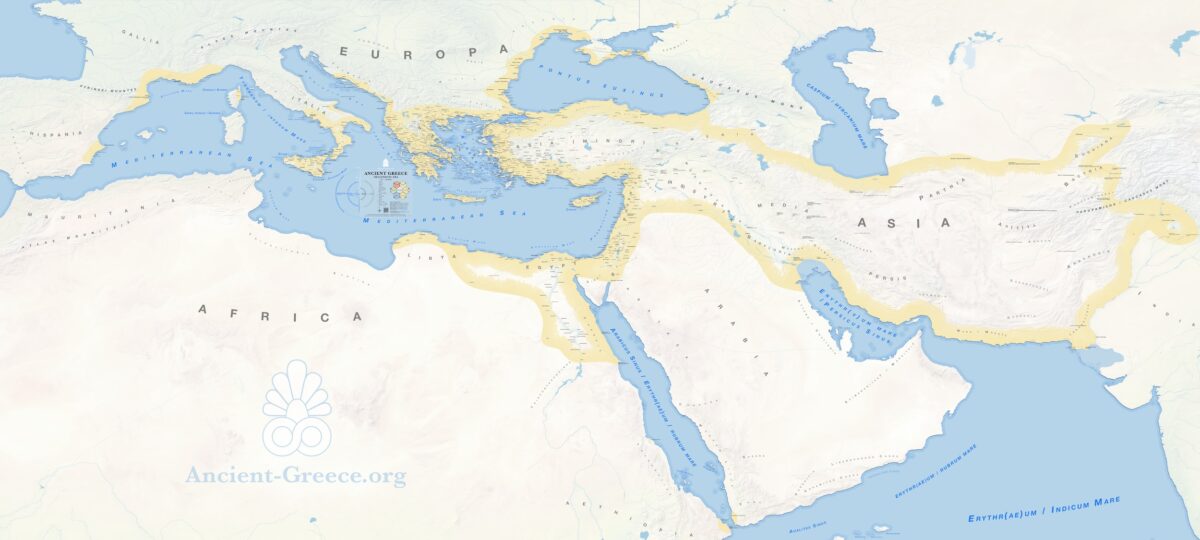
As Alexander the Great left no apparent heir after his conquest of the Persian Empire and death, his generals divided the conquered lands into kingdoms that spanned an area from Greece to the edge of the Hindu Kush (know the the Greeks as Caucasus Indicus). For centuries, they fought common enemies and against each other as they attempted to establish their power, and eventually, three major kingdoms emerged through the strife that followed the death of Alexander in 323 BCE and persisted for the most part over the next three hundred years.
Egypt and parts of the Middle East came under the rule of Ptolemy, Seleucus controlled Syria and the remnants of the Persian Empire, while Macedonia, Thrace, and parts of northern Asia Minor came under the hegemony of Antigonus and his son Demetrius.
Several smaller kingdoms were established at various times, in Hellenistic Greece.
In Asia Minor, the Attalid kingdom and the Kindom of Pontus (281–62 BCE) were established around Pergamum and the southern shores of the Black Sea respectively.
The independent Kingdom of Bactria was created after Diodotos I, the satrap of Bacria at the time, led a rebellion against Seleucid rule in 256–250 BCE in what’s today the countries of Afghanistan, Tajikistan, and Uzbekistan.
Following the collapse of the Mauryan Empire, the Greko-Bacrian king Demetrius I invaded Northern India and established the Indo-Greek kingdom in 185 BCE.
Very few cities took advantage of their strategic location to remain independent sovereign players during the Hellenistic Era: Rhodes, Byzantium, Cyzicus.
Most city-states of classical Greece remained independent, but under the watch of Macedonian garrisons. Athens lost it’s political and military power but remained a vital cultural and educational capital. Sparta was forced to join the Achaean League despite its dogged resistance. Given its strategic location, Corinth was contested by both the Achaean League and the Macedonians who eventually established a stronghold in Acrocorinth and controlled it henceforth. Corcyra (Κέρκυρα, known today as Corfu) was largely independent under the control of Syracuse who later passed it to the king Pyrrhus. It was later conquered by Illyrian pirates who disrupted the shipping lanes between Italy and Greece, giving Rome the perfect excuse to begin interfering in Greek affairs. Following its total destruction by Alexander the Great in 335 BCE, Thebes was rebuilt by Cassander in 316 BCE, but it never regained its status as a sovereign superpower.
The old Greek city-states west of the Pindus mountain range and north of the Ambracian Gulf (what’s today the province of Epirus and southern Albania) formed the Kingdom of Epirus which flourished under king Pyrrhus (306–272 BCE). Western Greece south of the Ambracian Gulf formed the “Achaean League” in 243 BCE.
Cities of Magna Graecia (Μεγάλη Ελλάδα) in Sicily and Souther Italy, along with Greek city-states in the easter Mediterranean, Libya, and in the Black Sea (Euxinus Pontus; Εὔξεινος Πόντος) remained independent and flourished during the Hellenistic era, but successive conflicts gradually made them subjects to the emerging powers of Carthage and the Roman Republic. The latter eventually conquered all Carthaginian and Greek lands on their way to establishing the Roman Empire.
Miletus, and Syracuse continued to flourish, while others emerged as major centers of Hellenic culture throughout the kingdoms. Pergamum, Ephesus, Antioch, Damascus, and Trapezus are few of the cities whose reputations have survived to our day.
None were more influential than Alexandria of Egypt however. Alexandria was founded by Alexander the Great himself in 331 BCE and very quickly became the center of commerce and culture of the Hellenistic world under the Ptolemies. Alexandria hosted the tomb of Alexander the Great, and the Pharos (lighthouse) of Alexandria, listed as one of the Seven Wonders of the Ancient World. The famed Library of Alexandria aspired to host the entire knowledge of the known world in its shelves, requiring all docking ships to provide their books for copying.
In the Hellenistic Era and for centuries afterward, Alexandria was a major conduit through which Greek knowledge (e.g. science, philosophy, and literature), along with the recorded texts of other ancient cultures spread their influence to the subsequent empires that conquered it.
Καθώς ο Μέγας Αλέξανδρος δεν άφησε εμφανή κληρονόμο μετά την κατάκτηση της Περσικής Αυτοκρατορίας και τον θάνατό του, οι στρατηγοί του χώρισαν τα κατακτημένα εδάφη σε βασίλεια που εκτείνονταν σε μια περιοχή από την Ελλάδα έως τις παρυφές του Ινδικού Καυκάσου (Hindu Kush). Για αιώνες, πολέμησαν εναντίον κοινών εχθρών αλλά και μεταξύ τους στην προσπάθειά τους να εδραιώσουν την εξουσία τους και, τελικά, τρία μεγάλα βασίλεια αναδύθηκαν μέσα από τις συγκρούσεις που ακολούθησαν τον θάνατο του Αλεξάνδρου το 323 π.Χ. και παρέμειναν, ως επί το πλείστον, ενεργά για τα επόμενα τριακόσια χρόνια.
Η Αίγυπτος και τμήματα της Μέσης Ανατολής περιήλθαν υπό την κυριαρχία του Πτολεμαίου, ο Σέλευκος ήλεγχε τη Συρία και τα απομεινάρια της Περσικής Αυτοκρατορίας, ενώ η Μακεδονία, η Θράκη και τμήματα της βόρειας Μικράς Ασίας περιήλθαν στην ηγεμονία του Αντιγόνου και του γιου του, Δημητρίου.
Διάφορα μικρότερα βασίλεια ιδρύθηκαν σε διαφορετικές περιόδους στην ελληνιστική Ελλάδα. Στη Μικρά Ασία, το βασίλειο των Ατταλιδών και το Βασίλειο του Πόντου (281–62 π.Χ.) ιδρύθηκαν γύρω από την Πέργαμο και τις νότιες ακτές του Εύξεινου Πόντου αντίστοιχα. Το ανεξάρτητο Βασίλειο της Βακτρίας δημιουργήθηκε αφού ο Διόδοτος Α΄, ο σατράπης της Βακτρίας εκείνη την εποχή, ηγήθηκε μιας εξέγερσης κατά της κυριαρχίας των Σελευκιδών το 256–250 π.Χ., σε όσα είναι σήμερα τα κράτη του Αφγανιστάν, του Τατζικιστάν και του Ουζμπεκιστάν. Μετά την κατάρρευση της Αυτοκρατορίας των Μαουρύα, ο Ελληνοβακτριανός βασιλιάς Δημήτριος Α΄ εισέβαλε στη Βόρεια Ινδία και ίδρυσε το Ινδοελληνικό βασίλειο το 185 π.Χ.
Πολύ λίγες πόλεις εκμεταλλεύτηκαν τη στρατηγική τους θέση για να παραμείνουν ανεξάρτητοι κυρίαρχοι παίκτες κατά την Ελληνιστική Εποχή: η Ρόδος, το Βυζάντιο και η Κύζικος. Οι περισσότερες πόλεις-κράτη της κλασικής Ελλάδας παρέμειναν ανεξάρτητες, αλλά υπό την επίβλεψη μακεδονικών φρουρών. Η Αθήνα έχασε την πολιτική και στρατιωτική της ισχύ, αλλά παρέμεινε μια ζωτική πολιτιστική και εκπαιδευτική πρωτεύουσα. Η Σπάρτη αναγκάστηκε να προσχωρήσει στην Αχαϊκή Συμπολιτεία παρά τη σκληρή αντίστασή της. Λόγω της στρατηγικής της θέσης, η Κόρινθος διεκδικήθηκε τόσο από την Αχαϊκή Συμπολιτεία όσο και από τους Μακεδόνες, οι οποίοι τελικά εγκατέστησαν ένα οχυρό στον Ακροκόρινθο και την ήλεγχαν έκτοτε. Η Κέρκυρα ήταν σε μεγάλο βαθμό ανεξάρτητη υπό τον έλεγχο των Συρακουσών, οι οποίες αργότερα την παρέδωσαν στον βασιλιά Πύρρο. Αργότερα κατακτήθηκε από Ιλλυριούς πειρατές που διέκοψαν τις ναυτιλιακές οδούς μεταξύ Ιταλίας και Ελλάδας, δίνοντας στη Ρώμη την τέλεια αφορμή να αρχίσει να παρεμβαίνει στις ελληνικές υποθέσεις. Μετά την ολοκληρωτική καταστροφή της από τον Μέγα Αλέξανδρο το 335 π.Χ., η Θήβα ανοικοδομήθηκε από τον Κάσσανδρο το 316 π.Χ., αλλά δεν ανέκτησε ποτέ το καθεστώς της ως κυρίαρχης υπερδύναμης.
Οι παλιές ελληνικές πόλεις-κράτη δυτικά της οροσειράς της Πίνδου και βόρεια του Αμβρακικού Κόλπου (αυτό που είναι σήμερα η επαρχία της Ηπείρου και η νότια Αλβανία) σχημάτισαν το Βασίλειο της Ηπείρου, το οποίο ήκμασε υπό τον βασιλιά Πύρρο (306–272 π.Χ.). Η Δυτική Ελλάδα νότια του Αμβρακικού Κόλπου σχημάτισε την «Αχαϊκή Συμπολιτεία» το 243 π.Χ.
Οι πόλεις της Μεγάλης Ελλάδας (Magna Graecia) στη Σικελία και τη Νότια Ιταλία, μαζί με ελληνικές πόλεις-κράτη στην ανατολική Μεσόγειο, τη Λιβύη και τον Εύξεινο Πόντο, παρέμειναν ανεξάρτητες και ήκμασαν κατά την ελληνιστική εποχή, αλλά οι διαδοχικές συγκρούσεις τις έκαναν σταδιακά υπηκόους των αναδυόμενων δυνάμεων της Καρχηδόνας και της Ρωμαϊκής Δημοκρατίας. Η τελευταία τελικά κατέκτησε όλα τα καρχηδονιακά και ελληνικά εδάφη στον δρόμο της προς την ίδρυση της Ρωμαϊκής Αυτοκρατορίας.
Η Μίλητος και οι Συρακούσες συνέχισαν να ακμάζουν, ενώ άλλες αναδείχθηκαν ως μεγάλα κέντρα του ελληνικού πολιτισμού σε όλα τα βασίλεια. Η Πέργαμος, η Έφεσος, η Αντιόχεια, η Δαμασκός και η Τραπεζούντα είναι μερικές από τις πόλεις των οποίων η φήμη επιβιώνει μέχρι τις μέρες μας.
Καμία όμως δεν ήταν πιο επιδραστική από την Αλεξάνδρεια της Αιγύπτου. Η Αλεξάνδρεια ιδρύθηκε από τον ίδιο τον Μέγα Αλέξανδρο το 331 π.Χ. και πολύ γρήγορα έγινε το κέντρο του εμπορίου και του πολιτισμού του ελληνιστικού κόσμου υπό τους Πτολεμαίους. Η Αλεξάνδρεια φιλοξενούσε τον τάφο του Μεγάλου Αλεξάνδρου και τον Φάρο της Αλεξάνδρειας, που καταλέγεται στα Επτά Θαύματα του Αρχαίου Κόσμου. Η περίφημη Βιβλιοθήκη της Αλεξάνδρειας φιλοδοξούσε να φιλοξενήσει ολόκληρη τη γνώση του γνωστού κόσμου στα ράφια της, απαιτώντας από όλα τα πλοία που ελλιμενίζονταν να παραδίδουν τα βιβλία τους για αντιγραφή.
Στην Ελληνιστική Εποχή και για αιώνες αργότερα, η Αλεξάνδρεια ήταν ο κύριος αγωγός μέσω του οποίου η ελληνική γνώση (π.χ. επιστήμη, φιλοσοφία και λογοτεχνία), μαζί με τα καταγεγραμμένα κείμενα άλλων αρχαίων πολιτισμών, διέδωσαν την επιρροή τους στις μετέπειτα αυτοκρατορίες που την κατέκτησαν.
Rich Culture and Science | Πλούσιος Πολιτισμός και Επιστήμη
Many famous thinkers and artists of the Hellenistic era created works that remained influential for centuries. Schools of thought like the Stoics, the Skeptics, and the Epicurians continued the substantial philosophical tradition of Greece, while art, literature, and poetry reached new heights of innovation and development through the work of Kalimachus, Apollonious of Rhodes, Menander, and Theocritos.
Great works of art were created during the Hellenistic Era. The sculptures and canons of Polykleitos remained influential and were copied throughout the Hellenistic and Roman Eras, and even centuries later during the Italian Renaissance.
In Architecture, the classical styles were further refined and augmented with new ideas like the Corinthian order (first seen in the Temple of Apollo in Bassae in the Classical Era), which was first used on an exterior on the Temple of Olympian Zeus in Athens. Public buildings and monuments were constructed on larger scale in more ambitious configuration and complexity. The Mausoleum of Pergamum, merged architectural space and sculpture by the placement of heroic statues in the close proximity of a grand staircase.
Hellenistic Greece became a time of substantial maturity of the sciences. In geometry, Euclid’s elements became the standard all the way up to the 20th c. CE., and the work of Archimedes on mathematics along with his practical inventions became influential and legendary.
Eratosthenes calculated the circumference of the earth within 1500 miles by simultaneously measuring the shadow of two vertical sticks placed one in Alexandria and one in Syene. The fact that the earth was a sphere was common knowledge in the Hellenistic world.
Πολλοί διάσημοι στοχαστές και καλλιτέχνες της ελληνιστικής εποχής δημιούργησαν έργα που παρέμειναν επιδραστικά για αιώνες. Φιλοσοφικές σχολές όπως οι Στωικοί, οι Σκεπτικοί και οι Επικούρειοι συνέχισαν τη σημαντική φιλοσοφική παράδοση της Ελλάδας, ενώ η τέχνη, η λογοτεχνία και η ποίηση έφτασαν σε νέα ύψη καινοτομίας και ανάπτυξης μέσα από το έργο του Καλλίμαχου, του Απολλώνιου του Ρόδιου, του Μενάνδρου και του Θεοκρίτου.
Σπουδαία έργα τέχνης δημιουργήθηκαν κατά την Ελληνιστική Εποχή. Τα γλυπτά και οι κανόνες του Πολυκλείτου παρέμειναν επιδραστικά και αντιγράφηκαν καθ’ όλη τη διάρκεια της Ελληνιστικής και Ρωμαϊκής Εποχής, ακόμη και αιώνες αργότερα κατά την ιταλική Αναγέννηση.
Στην αρχιτεκτονική, οι κλασικοί ρυθμοί βελτιώθηκαν περαιτέρω και ενισχύθηκαν με νέες ιδέες, όπως ο κορινθιακός ρυθμός (που εμφανίστηκε για πρώτη φορά στον Ναό του Επικούριου Απόλλωνα στις Βάσσες κατά την Κλασική Εποχή), ο οποίος χρησιμοποιήθηκε για πρώτη φορά σε εξωτερικό χώρο στον Ναό του Ολυμπίου Διός στην Αθήνα. Δημόσια κτίρια και μνημεία κατασκευάστηκαν σε μεγαλύτερη κλίμακα, με πιο φιλόδοξη διαμόρφωση και πολυπλοκότητα. Ο Βωμός της Περγάμου συνένωσε τον αρχιτεκτονικό χώρο και τη γλυπτική με την τοποθέτηση ηρωικών αγαλμάτων σε άμεση γειτνίαση με μια μεγαλοπρεπή σκάλα.
Η ελληνιστική Ελλάδα αποτέλεσε μια εποχή σημαντικής ωριμότητας των επιστημών. Στη γεωμετρία, τα «Στοιχεία» του Ευκλείδη έγιναν το πρότυπο μέχρι τον 20ό αιώνα μ.Χ., ενώ το έργο του Αρχιμήδη στα μαθηματικά, μαζί με τις πρακτικές του εφευρέσεις, κατέστη επιδραστικό και θρυλικό.
Ο Ερατοσθένης υπολόγισε την περιφέρεια της γης με απόκλιση εντός 1500 μιλίων, μετρώντας ταυτόχρονα τη σκιά δύο κάθετων ράβδων τοποθετημένων μία στην Αλεξάνδρεια και μία στη Συήνη. Το γεγονός ότι η γη ήταν σφαίρα αποτελούσε κοινή γνώση στον ελληνιστικό κόσμο.
Conflicts and Strife | Συγκρούσεις και Έριδες
The Hellenistic age was characterized by constant conflict, even after the major kingdoms were established. Challenges to the Hellenistic kingdoms appeared from both internal and new external enemies.
The size of the empire made securing it next to impossible, and life outside the orderly large cities was filled with danger from bandits and pirates. Internal strife and revolutions caused the borders of the kingdoms to be shifted several times as the rulers of the major and minor kingdoms engaged in continuous fighting with many of the rulers, like Mithridates VI Eupator (or Mithridates the Great), dreamed of repeating Alexander the Great’s epic conquests and fought against other Greek kingdoms and against increasing Roman incursions into Asia Minor and the Black Sea.
At the same time serious threats to the Hellenistic world came from external threats. A Celtic people, the Gauls invaded Macedonia and reached southern Greece in 279 BCE attempting to plunder the treasure of Delphi, which was miraculously saved (Pausanias, 20). Eventually, Attalus defeated the Gauls after they crossed into Asia Minor.
Η Ελληνιστική εποχή χαρακτηρίστηκε από συνεχείς συγκρούσεις, ακόμη και μετά την εδραίωση των μεγάλων βασιλείων. Προκλήσεις για τα ελληνιστικά βασίλεια εμφανίστηκαν τόσο από εσωτερικούς όσο και από νέους εξωτερικούς εχθρούς.
Το μέγεθος της αυτοκρατορίας καθιστούσε τη διαφύλαξή της σχεδόν αδύνατη, και η ζωή έξω από τις οργανωμένες μεγάλες πόλεις ήταν γεμάτη κινδύνους από ληστές και πειρατές. Οι εσωτερικές έριδες και οι επαναστάσεις προκάλεσαν επανειλημμένες μετατοπίσεις των συνόρων των βασιλείων, καθώς οι ηγεμόνες των μεγάλων και μικρών βασιλείων επιδίδονταν σε συνεχείς μάχες, με πολλούς από αυτούς, όπως ο Μιθριδάτης ΣΤ΄ ο Ευπάτωρ (ή Μιθριδάτης ο Μέγας), να ονειρεύονται την επανάληψη των επικών κατακτήσεων του Μεγάλου Αλεξάνδρου και να πολεμούν ενάντια σε άλλα ελληνικά βασίλεια, καθώς και ενάντια στις αυξανόμενες ρωμαϊκές εισβολές στη Μικρά Ασία και τον Εύξεινο Πόντο.
Ταυτόχρονα, σοβαρές απειλές για τον ελληνιστικό κόσμο προήλθαν από εξωτερικούς κινδύνους. Ένας κελτικός λαός, οι Γαλάτες, εισέβαλαν στη Μακεδονία και έφτασαν στη νότια Ελλάδα το 279 π.Χ. επιχειρώντας να λεηλατήσουν τους θησαυρούς των Δελφών, οι οποίοι σώθηκαν με θαυματουργό τρόπο (Παυσανίας, 20). Τελικά, ο Άτταλος νίκησε τους Γαλάτες αφού εκείνοι πέρασαν στη Μικρά Ασία.
The Rise of Rome | Η Άνοδος της Ρώμης
At the time of Hellenistic Era, Rome had risen to a formidable power and by 200 BCE occupied not only Italy, but also the entire coastal Adriatic Sea and Illyria.
During the second Punic War (218 – 201 BCE) when Hannibal of Carthage managed to establish a successful campaign against the Romans in Italy, Philip V of Macedon allied with him and annexed Illyria, starting thus a series of wars with Rome that led to the eventual annexation of Greece by the Romans.
In the end, large part of the Hellenistic kingdoms disintegrated by constant incursions by tribes of the fringes, many parts were simply given to Rome through the will of deceased rulers, and others won brief independence by revolution.
In 31 BCE Octavian (later Augustus) defeated the rulers of Egypt Anthony and Cleopatra in the naval battle of Actium in Epirus, and completed the demise of the Hellenistic Era.
The battle of Actium is considered the pivotal moment that defines the end of Ancient Greece. After the battle of Actium, the entire Hellenic world became subject to Rome. Greece in the next two thousand years was to undergo a series of conquests that made its people subjects of numerous powers and did not gain its self-determination until the 19th century CE.
But ancient Greek civilization continued to be influential in the arts and the letters, well into the 20th century and beyond.
Κατά την Ελληνιστική Εποχή, η Ρώμη είχε εξελιχθεί σε μια τρομερή δύναμη και μέχρι το 200 π.Χ. κατείχε όχι μόνο την Ιταλία, αλλά και ολόκληρη την ακτογραμμή της Αδριατικής Θάλασσας και την Ιλλυρία.
Κατά τη διάρκεια του Β΄ Καρχηδονιακού Πολέμου (218 – 201 π.Χ.), όταν ο Αννίβας της Καρχηδόνας κατάφερε να διεξαγάγει μια επιτυχημένη εκστρατεία εναντίον των Ρωμαίων στην Ιταλία, ο Φίλιππος Ε΄ της Μακεδονίας συμμάχησε μαζί του και προσάρτησε την Ιλλυρία, ξεκινώντας έτσι μια σειρά πολέμων με τη Ρώμη που οδήγησαν στην τελική προσάρτηση της Ελλάδας από τους Ρωμαίους.
Τελικά, μεγάλο μέρος των ελληνιστικών βασιλείων διαλύθηκε από συνεχείς επιδρομές φυλών της περιφέρειας, πολλά τμήματα παραχωρήθηκαν απλώς στη Ρώμη μέσω της διαθήκης θανόντων ηγεμόνων, και άλλα κέρδισαν μια σύντομη ανεξαρτησία μέσω επαναστάσεων.
Το 31 π.Χ., ο Οκταβιανός (μετέπειτα Αύγουστος) νίκησε τους ηγεμόνες της Αιγύπτου Αντώνιο και Κλεοπάτρα στη ναυμαχία του Ακτίου στην Ήπειρο, και ολοκλήρωσε το τέλος της Ελληνιστικής Εποχής.
Η ναυμαχία του Ακτίου θεωρείται η κομβική στιγμή που ορίζει το τέλος της Αρχαίας Ελλάδας. Μετά τη ναυμαχία του Ακτίου, ολόκληρος ο ελληνικός κόσμος υποτάχθηκε στη Ρώμη. Η Ελλάδα, τα επόμενα δύο χιλιάδες χρόνια, επρόκειτο να υποστεί μια σειρά κατακτήσεων που κατέστησαν τον λαό της υπήκοο πολυάριθμων δυνάμεων και δεν ανέκτησε την αυτοδιάθεσή της μέχρι τον 19ο αιώνα μ.Χ.
Όμως, ο αρχαίος ελληνικός πολιτισμός συνέχισε να είναι επιδραστικός στις τέχνες και τα γράμματα, μέχρι τον 20ό αιώνα και μετέπειτα.
Chapters | Κεφάλαια
This history of Ancient Greece is divided into the following chapters: | Αυτή η ιστορία της Αρχαίας Ελλάδας είναι χωρισμένη στα ακόλουθα κεφάλαια:
- Timeline | Χρονολόγιο
- Introduction | Εισαγωγή
- Overview | Επισκόπηση
- Geography & Geology | Γεωγραφία & Γεολογία
- Stone Age | Λίθινη Εποχή
- Bronze Age | Εποχή του Χαλκού
6.2 Minoan | Μινωικός Πολιτισμός
6.3 Mycenaean | Μυκηναϊκός Πολιτισμός - Iron Age | Εποχή του Σιδήρου
7.1 Geometric or Dark Age | Γεωμετρική ή Σκοτεινή Εποχή
7.2 Archaic Era | Αρχαϊκή Εποχή - Classical Era | Κλασική Εποχή
- Hellenistic Era | Ελληνιστική Εποχή
Photographs | Φωτογραφίες
At a Glance
- 323 to 30 BCE
- Alexandria, Ephesus, Rhodes, Seleucia on the Tigris, Antiochia, Byzantium, Heraclea Pontica, Amisos, Ptolemais
- Hellenistic Kingdoms
- Ptolemaic Egypt
- Library of Alexandria
- Archimedes, Ptolemy, Euclid, Eratosthenes, Hipparchus,
- Bactria and Indio-Greek kingdoms
- Contact with Chinese
- Silk Road
- Roman conquest of Greece
Related Pages