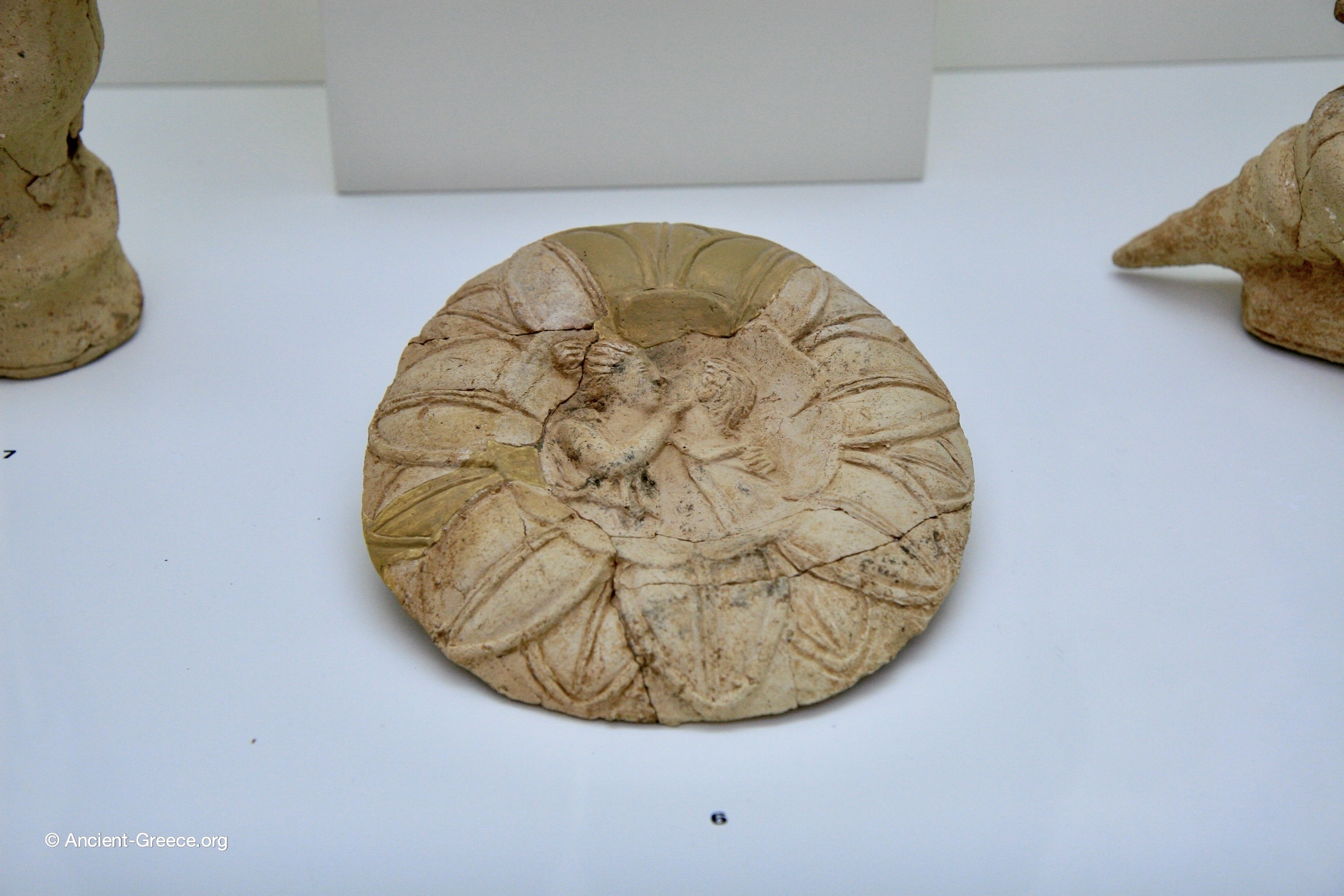
Molded Terracotta Disc with shallow relief of couple in kissing in embrace
Cemeteries of Kamara (Agios Nikolaos)
Date: 300 BCE–200 CE (Hellenistic or Roman Period)
Material: Terracotta
This intricate terracotta disc features a central medallion framed by the petals of an open lotus flower. The interior depicts an intimate scene of a couple kissing; the woman, with her hair styled in a bun, tenderly guides the man’s face with her right hand placed under his chin while resting her other arm around his shoulder. Found in the cemeteries of ancient Kamara (modern-day Agios Nikolaos), such molded discs were often used as decorative appliques for funerary furniture, lids for small vessels, or as symbolic tokens placed with the deceased. The combination of the lotus—a symbol of rebirth and eternal beauty—with an affectionate embrace suggests a theme of love that transcends death, reflecting the personal and sentimental nature of Hellenistic and Roman funerary art.
Πήλινος ανάγλυφος δίσκος από τα νεκροταφεία της Καμάρας (Άγιος Νικόλαος), που χρονολογείται στην Ελληνιστική ή Ρωμαϊκή περίοδο (3ος αι. π.Χ. – 2ος αι. μ.Χ.). Το κέντρο του δίσκου καταλαμβάνει ένα άνθος λωτού σε πλήρη άνθιση, στο εσωτερικό του οποίου απεικονίζεται ένα ζευγάρι που φιλιέται. Η γυναίκα, με τα μαλλιά της πιασμένα σε κότσο, καθοδηγεί τρυφερά το πρόσωπο του άνδρα με το δεξί της χέρι κάτω από το πηγούνι του, ενώ έχει το άλλο της χέρι γύρω από τον ώμο του. Τέτοιοι ανάγλυφοι δίσκοι χρησιμοποιούνταν συχνά ως διακοσμητικά στοιχεία σε ταφικά έπιπλα ή καλύμματα σκευών. Ο συνδυασμός του λωτού —συμβόλου αναγέννησης— με την ερωτική σκηνή υποδηλώνει μια θεματική για την αγάπη που ξεπερνά τον θάνατο, αντανακλώντας τον προσωπικό και συναισθηματικό χαρακτήρα της επιτύμβιας τέχνης των ελληνιστικών και ρωμαϊκών χρόνων.
-- Exhibited in the Agions Nikolaos Archaeological Museum
Agios Nikolaos Archaeological Museum Art Ceramics Crete Floral Funerary Hellenistic Lotus Original Photo Relief Roman