On this page:
Ελληνικά
Περιεχόμενα:
Οι τοιχογραφίες του Ακρωτηρίου
Οι τοιχογραφίες του Ακρωτηρίου αποτελούν τη σημαντικότερη συλλογή Κυκλαδικής τέχνης της Ύστερης Εποχής του Χαλκού (περ. 1627–1500 π.Χ.).
Σε αντίθεση με τις σύγχρονες τοιχογραφίες της Μινωικής Κρήτης, που συχνά έδιναν προτεραιότητα στην ανακτορική και θρησκευτική εικονογραφία, το θηραϊκό σώμα έργων διακρίνεται για τον πανοραμικό νατουραλισμό και την αφηγηματική του πολυπλοκότητα.
Η διατήρηση αυτών των έργων—θαμμένα στην ηφαιστειακή τέφρα για πάνω από τρεις χιλιετίες—προσφέρει μια απαράμιλλη ματιά σε μια κοινωνία τεχνικά προηγμένη και διεθνώς συνδεδεμένη.
Τεχνική Δεξιοτεχνία και η Παλέτα των Δύο Μπλε
Οι καλλιτέχνες του Ακρωτηρίου χρησιμοποίησαν την τεχνική του buon fresco (νωπογραφία), εφαρμόζοντας ορυκτές χρωστικές σε υγρό ασβεστοκονίαμα. Αυτό απαιτούσε τεράστια ταχύτητα και ακρίβεια. Για τις λεπτομέρειες, χρησιμοποιήθηκε περιστασιακά η τεχνική a secco (σε στεγνή επιφάνεια) με οργανικό συνδετικό υλικό.
Σήμα κατατεθέν του θηραϊκού εργαστηρίου ήταν η εξελιγμένη «Παλέτα των Δύο Μπλε». Ενώ οι καλλιτέχνες χρησιμοποιούσαν τον φυσικό ορυκτό Γλαυκοφανή που απαντάται τοπικά στις Κυκλάδες, είχαν επίσης πρόσβαση στο υψηλής τεχνολογίας, συνθετικό Αιγυπτιακό Κυανό. Αυτή η συνθετική χρωστική, ένα πολυτελές εμπόρευμα από την Αίγυπτο, αποδεικνύει τον ρόλο του Ακρωτηρίου ως κύριου κόμβου του Αιγαίου.
Εικονογραφία και η «Κυκλαδική Ιδιαιτερότητα»
Ενώ η θηραϊκή τέχνη υιοθέτησε τη Μινωική σύμβαση της λεπτής μέσης και τη χρωματική κωδικοποίηση των φύλων (ερυθρόλευκο για τους άνδρες, λευκό για τις γυναίκες), εισήγαγε μια επαναστατική «Κυκλαδική Ιδιαιτερότητα».

Το χελιδόνι—το θηραϊκό θέμα par excellence—και η «φωτογραφική» απόδοση των τοπικών ηφαιστειακών τοπίων αποκαλύπτουν μια απομάκρυνση από τις γενικευμένες σκηνές της φύσης της Κνωσού. Επιπλέον, η Μικρογραφική Ζωφόρος από τη Δυτική Οικία εισάγει μια λεπτομερή αφήγηση ναυτικών αποστολών που είναι σχεδόν μοναδική στην Εποχή του Χαλκού.
Χρωματική Παλέτα της Εποχής του Χαλκού:
Egyptian Blue
Synthetic silicate; deep, luminous cobalt.
#1034A6
Glaucophane
Natural Cycladic mineral; a muted, steely blue-gray.
#6082B6
Red Ochre
Iron-oxide earth; used for “sun-drenched” male skin.
#8B322C
Yellow Ochre
Natural earth; used for lions and floral stems.
#D4AF37
Carbon Black
Charred organic matter; the “ink” of the ancient world.
#1A1A1B
Αριστουργήματα της Θηραϊκής Τέχνης
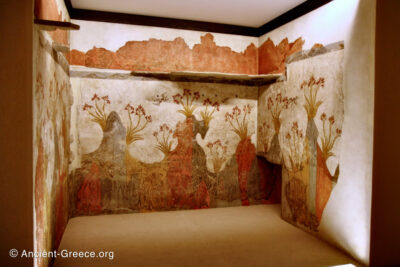
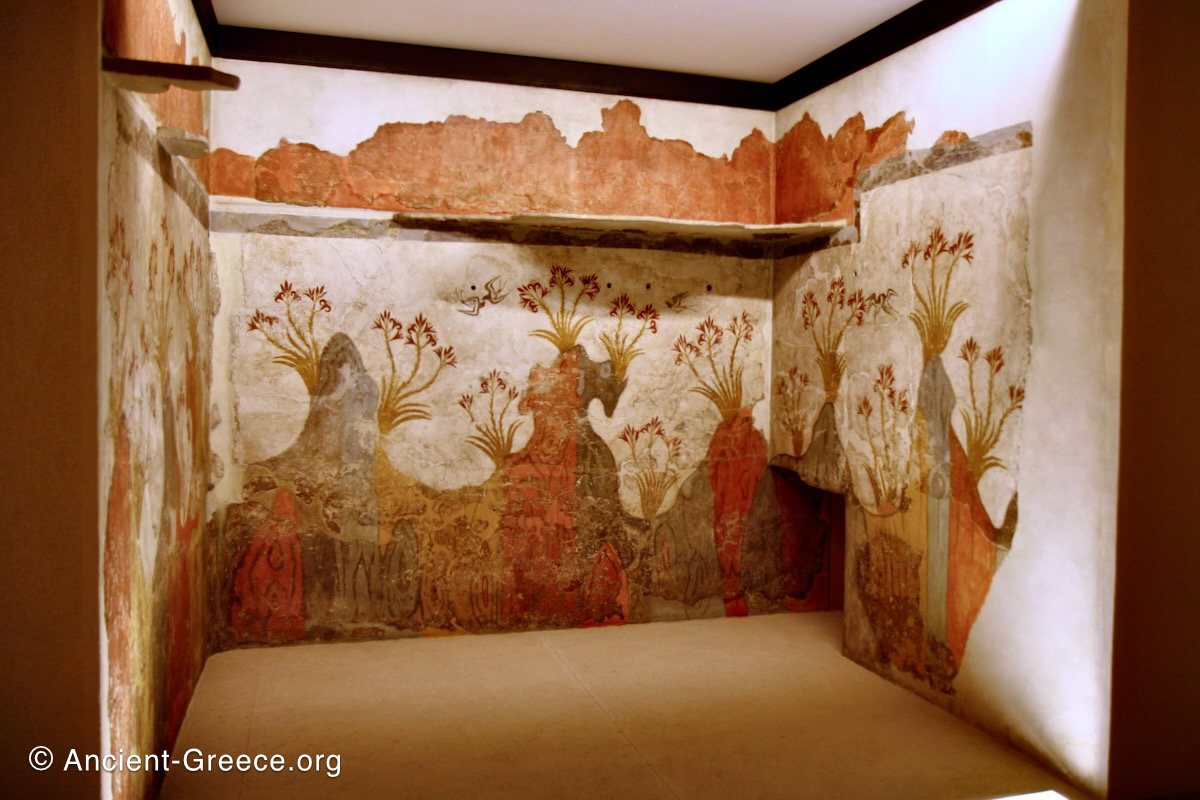
Η Τοιχογραφία της Άνοιξης (περ. 1627–1500 π.Χ., Κλασική περίοδος της θέσης, Κυκλαδική εποχή) ανακαλύφθηκε στο Δωμάτιο Δ2 του Συγκροτήματος Δ. Είναι η μόνη μεγάλης κλίμακας τοιχογραφία που βρέθηκε in situ, καλύπτοντας τρεις τοίχους ενός δωματίου. Η σύνθεση απεικονίζει ένα ζωντανό, βραχώδες τοπίο γεμάτο με συστάδες κόκκινων κρίνων και πετούμενα χελιδόνια, γιορτάζοντας την ετήσια αναγέννηση της φύσης. Το πρωτότυπο φυλάσσεται στο Εθνικό Αρχαιολογικό Μουσείο στην Αθήνα.
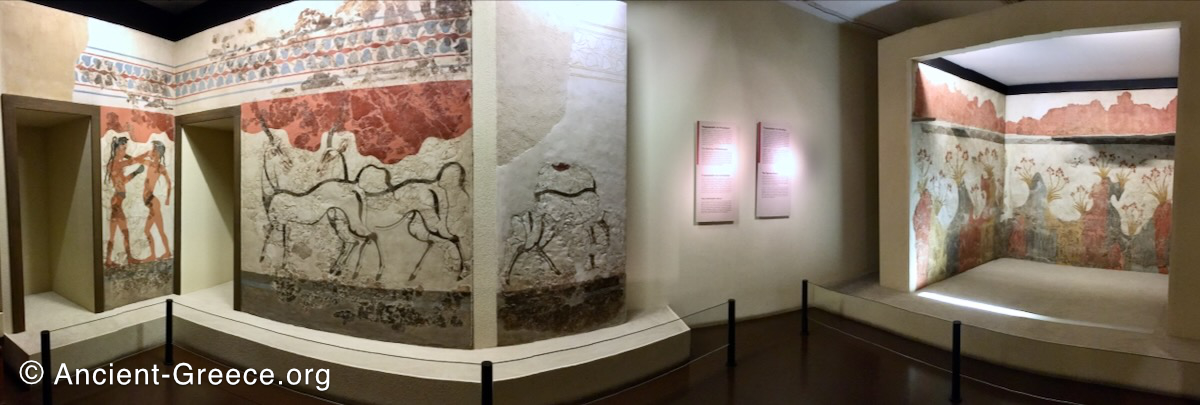
Οι Πυγμάχοι και οι Αντιλόπες (περ. 1627–1500 π.Χ., Κλασική περίοδος, Κυκλαδική εποχή) βρέθηκαν στο Κτήριο Βήτα. Αυτές οι τοιχογραφίες αποδίδονται στον ίδιο καλλιτέχνη, ο οποίος χαρακτηρίζεται από τη μινιμαλιστική χρήση της γραμμής και την έμφαση στη ζωτική κίνηση. Οι «Πυγμάχοι» απεικονίζουν δύο νέους που επιδίδονται σε ένα τελετουργικό άθλημα, φορώντας γάντια πυγμαχίας και χαρακτηριστικές μπλε ζωγραφισμένες τούφες μαλλιών, ενώ οι «Αντιλόπες» χρησιμοποιούν ένα απλό, ισχυρό περίγραμμα για να μεταδώσουν τη χάρη των ζώων. Σήμερα στεγάζονται στο Εθνικό Αρχαιολογικό Μουσείο στην Αθήνα.
Οι Κροκοσυλλέκτριες (περ. 1627–1500 π.Χ., Κλασική περίοδος, Κυκλαδική εποχή) προέρχονται από τον πάνω όροφο της Ξεστής 3. Αυτή η σύνθετη σκηνή απεικονίζει νεαρές γυναίκες να συλλέγουν κρόκο για να τον προσφέρουν σε μια καθιστή θεά που προστατεύεται από έναν γρύπα. Η τοιχογραφία παρέχει πολύτιμες πληροφορίες για τις τελετουργίες της Εποχής του Χαλκού, τη γυναικεία μύηση και τη φαρμακευτική ή βαφική σημασία του κρόκου. Τα σπαράγματα μοιράζονται μεταξύ του Εθνικού Αρχαιολογικού Μουσείου και του Μουσείου Προϊστορικής Θήρας.

Η Τοιχογραφία του Στόλου (περ. 1627–1500 π.Χ., Κλασική περίοδος, Κυκλαδική εποχή), που βρέθηκε στη Δυτική Οικία, είναι ένα αριστούργημα μικρογραφικής ζωγραφικής. Απεικονίζει μια ναυτική πομπή μεταξύ δύο λιμανιών, με περίτεχνα πλοία, θαλάσσια ζωή και ένα λεπτομερές παραθαλάσσιο τοπίο. Το έργο αυτό είναι απαραίτητο για την κατανόηση της ναυπηγικής της Εποχής του Χαλκού και της γεωπολιτικής εμβέλειας του θηραϊκού στόλου. Βρίσκεται στο Εθνικό Αρχαιολογικό Μουσείο στην Αθήνα.
Η Τοιχογραφία του Στόλου: Εικονογραφία και Ερμηνεία
Η Τοιχογραφία του Στόλου αποτελεί ένα από τα σημαντικότερα δείγματα αφηγηματικής τέχνης της Ύστερης Εποχής του Χαλκού. Λόγω των εκτενών τοπογραφικών λεπτομερειών της, η ζωφόρος θεωρείται συχνά ένας χάρτης σε πανοραμική θέα [4].
Η Θεωρία της Θρησκευτικής Εορτής
Ο Σπυρίδων Μαρινάτος είχε αρχικά διατυπώσει τη θεωρία ότι η Μικρογραφική Ζωφόρος από το Ακρωτήριαπεικόνιζε την επιστροφή μιας στρατιωτικής αποστολής από τη Λιβύη [6]. Ωστόσο, η Ναννώ Μαρινάτου αμφισβητεί αυτό το αφηγηματικό πλαίσιο, αναλύοντας το περιβάλλον και την εικονογραφία. Επισημαίνει ότι η χλωρίδα, η πανίδα και η ενδυμασία των μορφών προσιδιάζουν περισσότερο στο Κυκλαδικό τοπίο παρά στη Βόρεια Αφρική [4]. Επιπλέον, διακοσμητικά στοιχεία όπως οι πεταλούδες, τα χελιδόνια και οι γιρλάντες λουλουδιών υποδηλώνουν μια θρησκευτική εορτή ή μια ειρηνική τελετουργική πομπή [9].
Ναυτική Τεχνολογία και Κοινωνική Ιεραρχία
Ένα βασικό στοιχείο κατά της θεωρίας της Λιβύης αφορά τους τεχνικούς περιορισμούς των πλοίων. Η κύρια μέθοδος πρόωσης που εμφανίζεται στην πομπή είναι η κωπηλασία με κουπιά χειρός, μια τεχνική κατάλληλη για παράκτιες μετακινήσεις μικρών αποστάσεων ή τελετουργικές επιδείξεις [4]. Αυτή η μέθοδος θα ήταν εντελώς μη πρακτική για ένα ταξίδι μεγάλων αποστάσεων από την Αφρική στη Θήρα. Η κοινωνική ιεραρχία που απεικονίζεται ενισχύει την ιδέα μιας τοπικής εορτής, καθώς ο καλλιτέχνης παρουσιάζει ένα ευρύ φάσμα της κοινωνίας, από αγρότες με δέρματα ζώων έως ευγενείς με μακρούς χιτώνες. Η παρουσία καθαγιασμένων κεράτων στον προορισμό επιβεβαιώνει ότι η άφιξη του στόλου προοριζόταν για μια ιερή τελετή [5].
Akrotiri Frescoes
The wall-paintings of Akrotiri constitute the most significant collection of Cycladic art from the Late Bronze Age (c. 1627–1500 BC) [2]. Unlike the contemporary frescoes of Minoan Crete, which often prioritized palatial and religious iconography, the Theran subject matter is distinguished by its panoramic naturalism and narrative complexity [4]. The preservation of these works—entombed in volcanic ash for over three millennia—provides an unparalleled view into a society that was technically advanced and internationally connected [5].
Technical Mastery and the Palette of Two Blues
The artists of Akrotiri employed the buon fresco (true fresco) technique, applying mineral pigments onto wet lime plaster [1]. This required immense speed and precision, as the painter had to complete the work before the plaster dried to ensure a permanent chemical bond. For finer details, a secco (dry) technique was occasionally used with an organic binder. A hallmark of the Theran workshop was the sophisticated Palette of Two Blues. While artists utilized the natural, muted mineral Glaucophane found locally in the Cyclades, they also had access to the high-tech, synthetic Egyptian Blue [1]. This blue frit, a luxury trade commodity from Egypt, demonstrates Akrotiri’s role as a primary Aegean hub [4]. By mixing these two blues, painters achieved a chromatic range and luminous depth that set their work apart from the more standardized palettes of their contemporaries in Crete or the Mycenaean mainland.
Iconography and the Cycladic Twist
While Theran art adopted the Minoan “wasp-waist” convention and gendered color coding (red-brown for men, white for women), it introduced a revolutionary Cycladic Twist.
The swallow—the Theran subject par excellence—and the “photographic” rendering of local volcanic landscapes reveal a departure from the more generalized nature scenes of Knossos [3]. Furthermore, the Miniature Frieze from the West House introduces a detailed narrative of maritime expeditions and townscapes that is nearly unique in the Bronze Age Mediterranean, bridging the gap between decorative art and historical documentation [4].
Bronze Age Pigment Palette
Egyptian Blue
Synthetic silicate; deep, luminous cobalt.
#1034A6
Glaucophane
Natural Cycladic mineral; a muted, steely blue-gray.
#6082B6
Red Ochre
Iron-oxide earth; used for “sun-drenched” male skin.
#8B322C
Yellow Ochre
Natural earth; used for lions and floral stems.
#D4AF37
Carbon Black
Charred organic matter; the “ink” of the ancient world.
#1A1A1B
The Masterpieces of Theran Art
The Spring Fresco (c. 1627–1500 BC, Classical period of the site, Cycladic era) was discovered in Room D2 of Complex D. It is the only large-scale wall-painting found in situ, covering three walls of a single room. The composition depicts a vibrant, rocky landscape filled with clusters of red lilies and swooping swallows, celebrating the annual rebirth of nature. While the original remains in the National Archaeological Museum in Athens.
The Boxing Children and the Antelopes (c. 1627–1500 BC, Classical period, Cycladic era) were found in Building Beta. These frescoes are attributed to the same artist, characterized by a minimalist use of line and a focus on vital movement. The “Boxing Children” depicts two youths engaged in a ritualized sport, wearing boxing gloves and distinctive blue-painted hair locks, while the “Antelopes” utilizes a simple, powerful outline to convey the grace of the animals. These are currently housed in the National Archaeological Museum in Athens.
The Crocus Gatherers (c. 1627–1500 BC, Classical period, Cycladic era) originated from the upper floor of Xeste 3. This complex scene depicts young women gathering saffron from crocus flowers to offer to a seated goddess guarded by a griffin. The fresco provides invaluable insight into Bronze Age ritual, female initiation, and the medicinal or textile-dyeing importance of saffron. The fragments are shared between the National Archaeological Museum and the Museum of Prehistoric Thera.
Ship procession fresco showing a number of Bronze Age ships in a naval festival procession. From from Thera (Santorini) 17th century BCE.
The Flotilla Wall-painting (also known as the Ship Procession) is a significant example of Late Bronze Age narrative art, providing a rare topographical perspective of the Aegean world. Given the extensive location detail present in the frieze, scholars often interpret the work as a map rendered from a bird’s-eye view [4].
Iconography and the Festival Narrative
Spyridon Marinatos originally theorized that the Miniature Frieze from Akrotiri depicted a military return from a distant expedition to Libya [6]. However, Nanno Marinatos challenges this “military homecoming” narrative by analyzing the specific iconography and environmental details. She observes that the flora and fauna, alongside the dress of the figures, are characteristic of the local Cycladic landscape rather than North Africa [4]. Furthermore, the presence of decorative elements—such as butterflies, swallows, and flower garlands—suggests a religious festival or a peaceful ceremonial procession rather than a naval return from war [9].
Nautical Logistics and Social Stratification
A key piece of evidence against the Libyan theory involves the technical limitations of the vessels. The primary method of propulsion shown in the procession is paddling, a technique suited for short-distance coastal travel or ritual display [4]. This method would have been impractical for a long-haul voyage across the open sea from Africa to Thera. Instead, the scene likely depicts a fleet moving between two local towns as part of an organized social or religious event. The social hierarchy depicted further reinforces this; the artist portrays a spectrum of society, from “rustics” in animal hides to nobles in robes. The journey between the “simple” town on the left and the sophisticated “right town” (likely Akrotiri itself) culminates at a destination marked by horns of consecration, confirming the sacred nature of the arrival [5].
Bibliography
Perdikatsis, V., et al. (2000). “Physico-chemical Characterisation of the Thera Wall Paintings.” Proceedings of the First International Symposium on the Wall Paintings of Thera.
Doumas, C. (1992). The Wall-Paintings of Thera. Athens: The Thera Foundation.
Immerwahr, S. (1990). Aegean Painting in the Bronze Age. University Park: Pennsylvania State University Press.
Morgan, L. (1988). The Miniature Wall Paintings of Thera: A Study in Aegean Culture and Iconography. Cambridge: Cambridge University Press.
Doumas, C. (1983). Thera: Pompeii of the Ancient Aegean. London: Thames & Hudson.
Marinatos, S. (1968-1976). Excavations at Thera I-VII. Athens: Archaeological Society of Athens.
National Archaeological Museum. (2026). Exhibition Guide: The Minoan Civilization and Thera. Athens.
Thera Prehistoric Museum. (2026). Geological and Archaeological Records of the Akrotiri Settlement. Santorini.
Μουσείο Προϊστορικής Θήρας. (2026). Γεωλογικά και Αρχαιολογικά Αρχεία του Οικισμού του Ακρωτηρίου. Σαντορίνη.
Doumas, C. (1983). Thera: Pompeii of the Ancient Aegean. London: Thames & Hudson.
Marinatos, S. (1968-1976). Excavations at Thera I-VII. Athens: Archaeological Society of Athens.
Εθνικό Αρχαιολογικό Μουσείο. (2026). Οδηγός Έκθεσης: Ο Μινωικός Πολιτισμός και η Θήρα. Αθήνα.
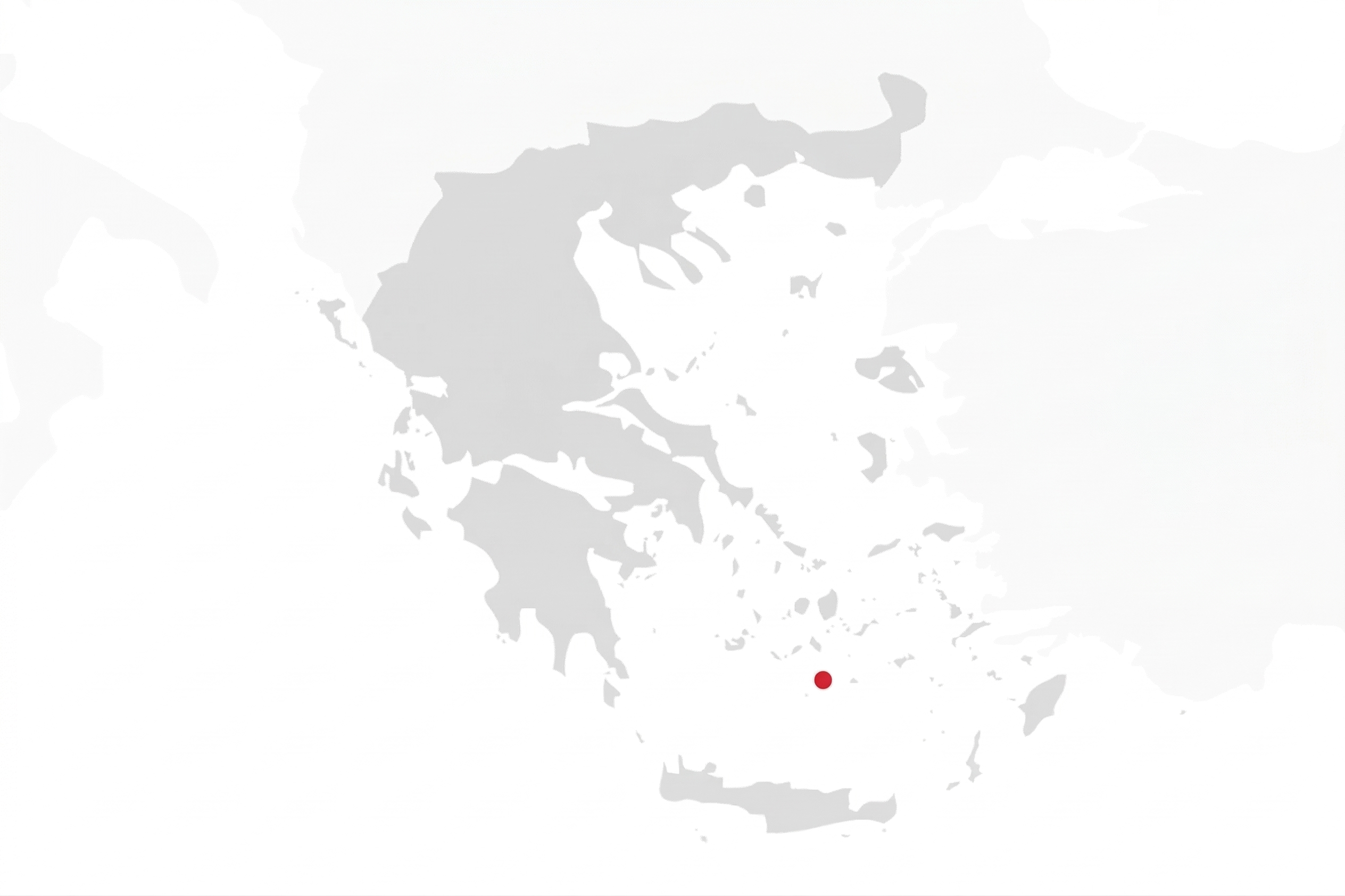
Akrotiri (Greek: Ακρωτήρι) represents one of the most significant archaeological sites in the Aegean, offering an unparalleled view of Bronze Age (3000 ~ 1100 BCE) urban life.
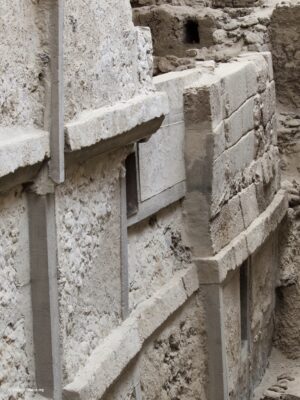
Located on the island of Thera (Santorini), this settlement was buried under layers of volcanic ash during the massive eruption in the 17th century BCE.
This cataclysmic event acted as a preservative, encasing the town and freezing its architecture, narrow streets, and sophisticated internal systems in a state of remarkable conservation.
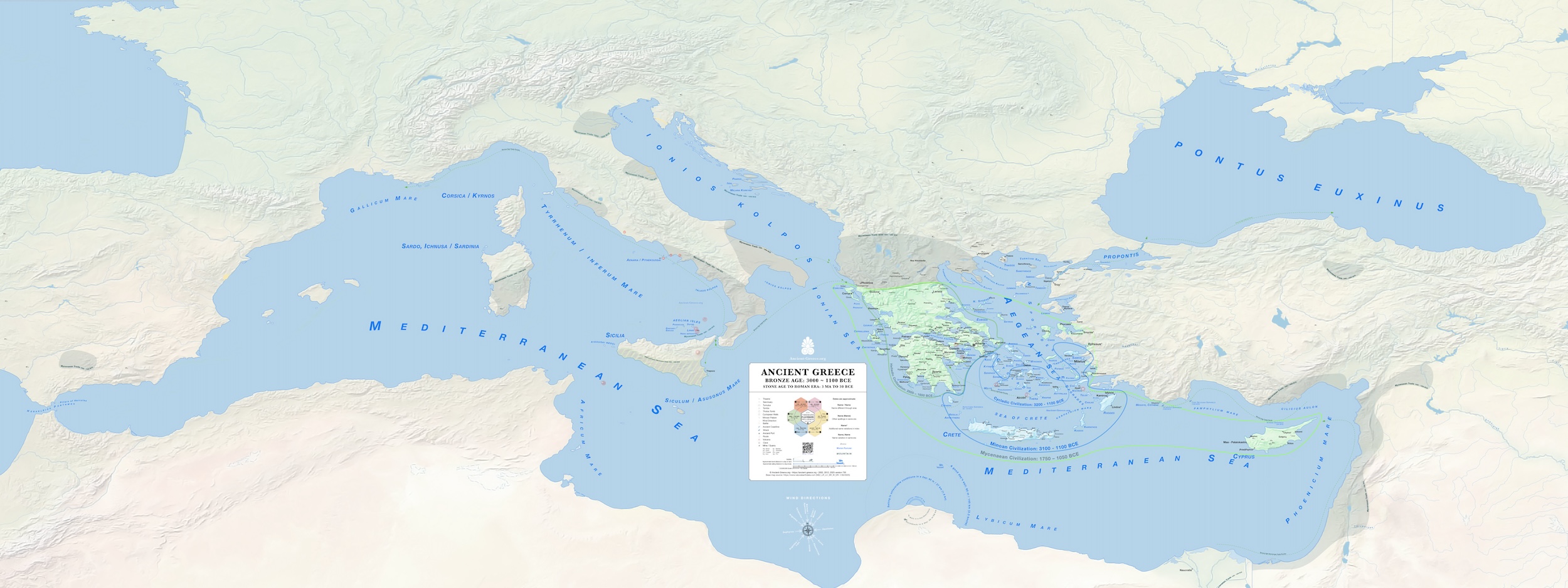
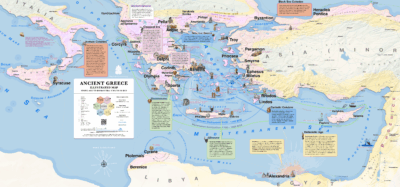
This map illustrates the central position of Akrotiri within the complex commercial networks of the Aegean during the Bronze Age. The settlement served as a primary maritime hub, facilitating trade and cultural exchange between the Cycladic islands, Minoan Crete, and the Mycenaean mainland. The cartographic data highlights the synchronous development of the Cycladic, Minoan, and Helladic civilizations during the Bronze Age.
◈ ◈ ◈
Ο χάρτης αυτός αποτυπώνει την κεντρική θέση που κατείχε το Ακρωτήρι στα σύνθετα εμπορικά δίκτυα του Αιγαίου κατά την Εποχή του Χαλκού. Ο οικισμός λειτουργούσε ως κομβικό ναυτιλιακό κέντρο, διευκολύνοντας το εμπόριο και τις πολιτισμικές ανταλλαγές μεταξύ των Κυκλάδων, της Μινωικής Κρήτης και της Μυκηναϊκής ηπειρωτικής Ελλάδας.