Agios Nikolaos Archaeological Museum | Αρχαιολογικό Μουσείο Αγίου Νικολάου
On this page:
Ελληνικά
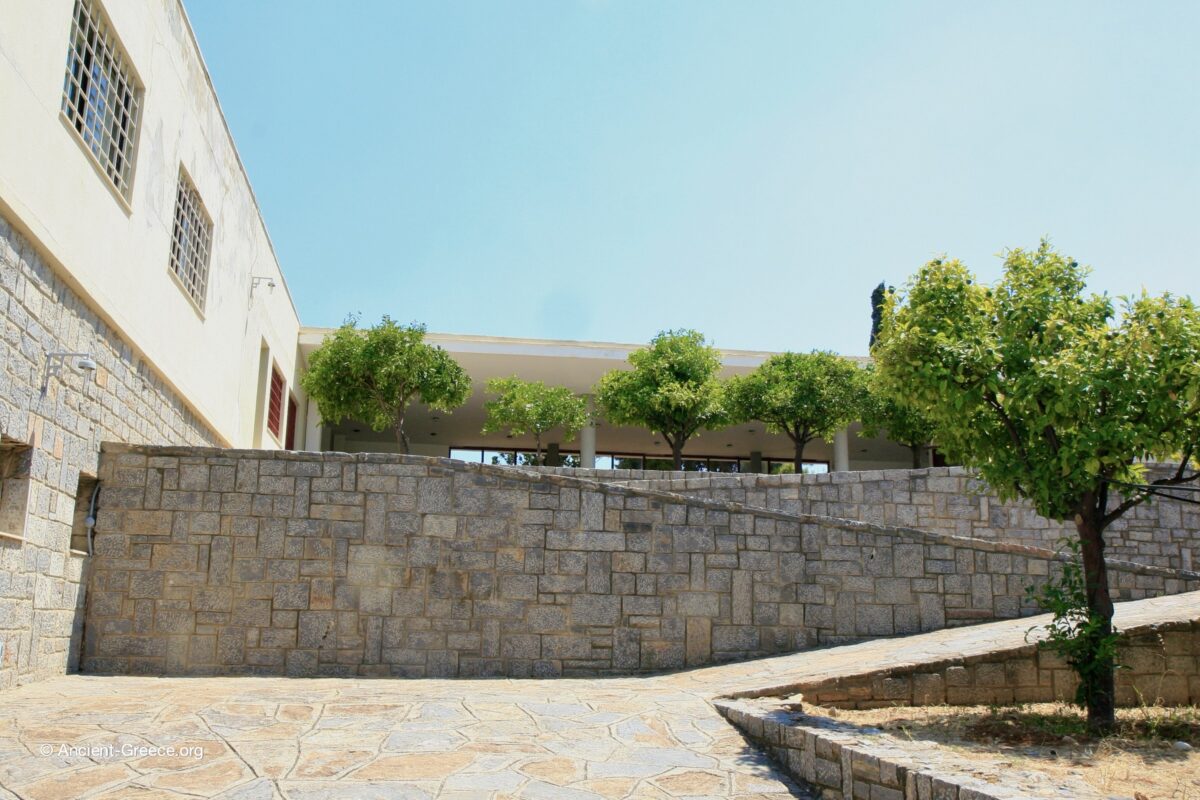
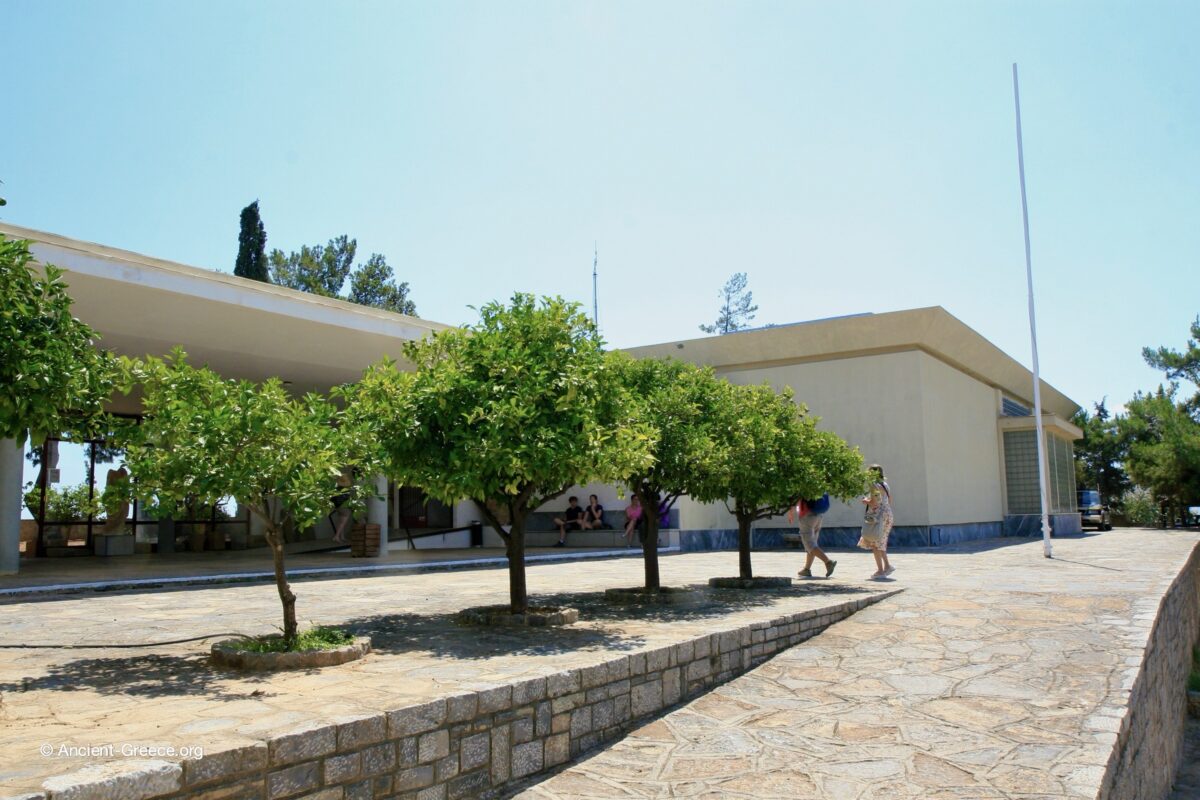
Το Αρχαιολογικό Μουσείο Αγίου Νικολάου ιδρύθηκε για την έκθεση ευρημάτων από την ανατολική Κρήτη, καλύπτοντας μια τεράστια χρονική περίοδο από τη Νεολιθική Εποχή έως το τέλος της Ελληνορωμαϊκής περιόδου, παρουσιάζοντας έτσι τη διαχρονική εξέλιξη της τέχνης στην περιοχή. Το κτίριο διαθέτει οκτώ αίθουσες διατεταγμένες κυκλικά γύρω από ένα κεντρικό αίθριο, όπου η πορεία των επισκεπτών γίνεται δεξιόστροφα, επιτρέποντας την παρακολούθηση των εκθεμάτων κατά ανασκαφικά σύνολα και χρονολογική σειρά.
Σημαντικά Εκθέματα
Νεκροταφείο Αγίας Φωτιάς: Η πρώτη αίθουσα φιλοξενεί κτερίσματα από το μεγαλύτερο προϊστορικό νεκροταφείο της Κρήτης (3.000-2.300 π.Χ.). Περιλαμβάνει πάνω από 1.600 αγγεία και λεπίδες οψιανού, μαρτυρώντας τις έντονες επιρροές του Κρητοκυκλαδικού πολιτισμού.
Ανάκτορο των Μαλίων: Στην τέταρτη αίθουσα εκτίθενται τα σπουδαία ευρήματα από τις ανασκαφές της Γαλλικής Αρχαιολογικής Σχολής στο ανάκτορο των Μαλίων.
The Archaeological Museum of Agios Nikolaos, Crete, was established to showcase finds from Eastern Crete, and covers a vast chronological range from the Neolithic period to the end of the Greco-Roman era, illustrating the regional evolution of art through the ages. The museum building features eight exhibition rooms arranged around a central courtyard, guiding visitors in a clockwise direction to view the collections in chronological order and by excavation site.
The collection at the Archaeological Museum of Agios Nikolaos is truly one of the most underrated gems in Crete. While the Heraklion museum gets the “blockbuster” crowds for its palace frescoes, Agios Nikolaos offers a much more intimate and technically fascinating look at the Lassithi and Sitia districts.
This selection of images from the museum artifacts tracks the evolution of the Eastern Cretan identity:
Collection Highlights
The Early “International” Style: Artifacts from Aghia Photia and Mochlos perfectly capture that 3rd Millennium BCE moment where Crete was a melting pot. The Cycladic-style idols and the Egyptian-influenced gold foil diadems show that eastern Crete was the island’s first “cosmopolitan” gateway.
The Personal Side of Ritual: With the artifacts from the Peak Sanctuaries (Petsofas) and the Hagios Charalambos Cave, the collection shifts from “wealth display” to “personal prayer.” The anatomical votives for healing and the sheer number of gaming knucklebones (astragali) make these ancient people of Crete feel very human and relatable.
The Literacy Transition: Seeing the Linear A offering tables alongside later Hellenistic coins from Itanos provides a great “long-view” of how Eastern Crete communicated its power and piety through writing and currency over nearly 2,000 years.
The museum houses grave goods from the largest prehistoric Agia Fotia Cemetery cemetery in Crete (3,000–2,300 CE). It includes over 1,600 handmade vessels, bronze daggers, and obsidian blades, highlighting strong “Creto-Cycladic” cultural influences. It also exhibits significant findings from excavations in the Palace of Malia, various cemeteries, and peak sanctuaries.
Photo Highlights
Neolithic Tools and Figurines
Pelekita Cave (Zakros) and Various Sites
Date: 4500–3000 BCE (Neolithic Period)
Material: Bone, Limestone, and Greenstone (Chlorite/Serpentine)
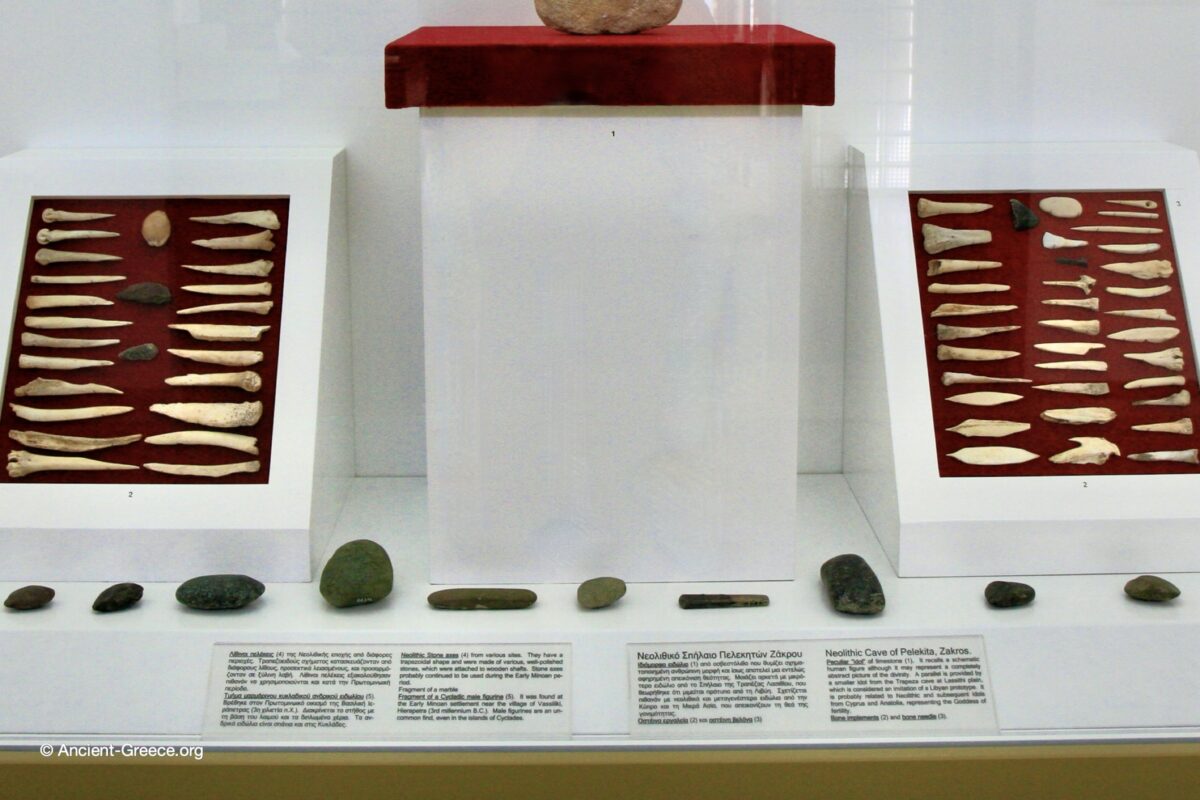
This display presents a comprehensive look at the technological and spiritual life of Crete’s earliest settlers. On the left and right are extensive sets of bone implements, including awls, spatulas, and needles used for leatherworking and weaving. Centrally featured is the “peculiar” limestone idol from Pelekita Cave, an abstract representation likely depicting a fertility goddess. Below these are polished greenstone axes and grinders from various locations. These stone tools were essential for the first agriculturalists to clear land and process grain. Together, these finds illustrate the transition from a purely survival-based existence to a society with specialized tools and a developing symbolic language that would eventually blossom into the Minoan civilization.
Αυτή η προθήκη παρουσιάζει μια ολοκληρωμένη εικόνα της τεχνολογικής και πνευματικής ζωής των πρώτων κατοίκων της Κρήτης. Αριστερά και δεξιά βρίσκεται ένα εκτενές σύνολο οστέινων εργαλείων, όπως σουβλιά, σπάτουλες και βελόνες που χρησιμοποιούνταν για την επεξεργασία του δέρματος και την υφαντουργία. Στο κέντρο δεσπόζει το ιδιότυπο ασβεστολιθικό ειδώλιο από το σπήλαιο Πελεκητά, μια αφηρημένη αναπαράσταση που πιθανώς απεικονίζει μια θεά της γονιμότητας. Κάτω από αυτά εκτίθενται στιλβωμένοι λίθινοι πέλεκεις και τριπτήρες από διάφορες τοποθεσίες. Αυτά τα εργαλεία ήταν απαραίτητα για τους πρώτους γεωργούς για τον καθαρισμό της γης και την επεξεργασία των καρπών. Μαζί, αυτά τα ευρήματα αναδεικνύουν τη μετάβαση από μια ύπαρξη βασισμένη στην επιβίωση σε μια κοινωνία με εξειδικευμένα εργαλεία και μια αναπτυσσόμενη συμβολική γλώσσα.Bull-Head Ritual Rhyta
Minoan Peak Sanctuaries
2000–1425 BCE (Protopalatial to Neopalatial Periods)
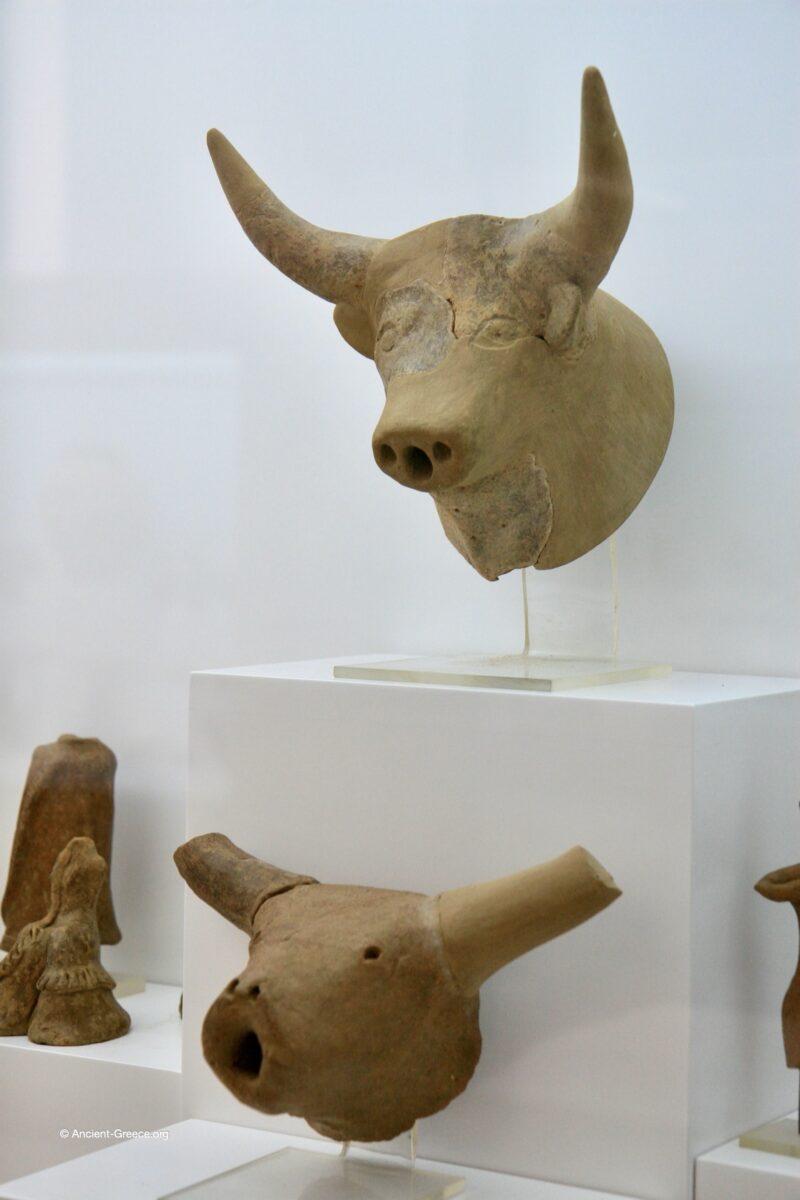
These clay bull-head rhyta are exceptional examples of ritual pouring vessels used in the communal ceremonies of Minoan peak sanctuaries. A rhyton of this type features an opening at the top for filling and a smaller exit hole at the snout for libations. The naturalistic rendering of the upper head, with its prominent horns and incised eyes, reflects the bull’s status as a potent symbol of divine strength and fertility. Such vessels were often intentionally broken or “killed” after a ceremony, a ritual act that marked the end of their sacred function and left them as permanent offerings to the deity within the sanctuary grounds.
The bull was a central symbol of Minoan civilization, representing stamina, strength, and fertility. In the Middle Minoan I and II periods, bull figurines and rhyta (ritual pouring vessels) became common offerings at peak sanctuaries across Crete. These objects played vital roles in both religious and funerary rites, reflecting the bull’s multifaceted importance in the Mediterranean world—from its labor in agriculture to its central role in bull-leaping contests, processions, and sacrifices. The cultural legacy of the bull is even preserved in the Greek alphabet; the letter Alpha (A) originates from the Semitic “aleph,” meaning “bull,” and its shape is an inverted representation of a bull’s head. In later Greek mythology, this Minoan focus evolved into tales of Zeus, Theseus and the Minotaur, and the labors of Herakles.
Αυτά τα πήλινα ρυτά σε σχήμα κεφαλής ταύρου αποτελούν εξαιρετικά δείγματα τελετουργικών αγγείων που χρησιμοποιούνταν στις κοινοτικές τελετές των μινωικών ιερών κορυφής. Ένα ρυτό αυτού του τύπου διαθέτει μια οπή στο επάνω μέρος για το γέμισμα και μια μικρότερη οπή εξόδου στο ρύγχος για τις σπονδές. Η φυσιοκρατική απόδοση της επάνω κεφαλής, με τα έντονα κέρατα και τα εγχάρακτα μάτια, αντανακλά τη σημασία του ταύρου ως ισχυρού συμβόλου θεϊκής δύναμης και γονιμότητας. Τέτοια σκεύη συχνά θραύονταν σκόπιμα μετά την τελετή, μια τελετουργική πράξη που σηματοδοτούσε το τέλος της ιερής λειτουργίας τους και τα καθιστούσε μόνιμα αναθήματα προς τη θεότητα στον χώρο του ιερού.
Ο ταύρος αποτελούσε κεντρικό σύμβολο του μινωικού πολιτισμού, αντιπροσωπεύοντας τη δύναμη, την αντοχή και τη γονιμότητα. Κατά τη Μεσομινωική Ι και ΙΙ περίοδο, τα ειδώλια και τα ρυτά (τελετουργικά αγγεία) σε σχήμα ταύρου έγιναν κοινά αναθήματα στα μινωικά ιερά κορυφής σε όλη την Κρήτη. Τα αντικείμενα αυτά έπαιζαν ζωτικό ρόλο τόσο στις θρησκευτικές όσο και στις ταφικές τελετουργίες, αντανακλώντας την πολυδιάστατη σημασία του ταύρου στον μεσογειακό κόσμο—από τη συμβολή του στις αγροτικές εργασίες έως τον κεντρικό του ρόλο στα ταυροκαθάψια, τις πομπές και τις θυσίες. Η πολιτιστική κληρονομιά του ταύρου διασώζεται ακόμη και στο ελληνικό αλφάβητο· το γράμμα Άλφα (Α) προέρχεται από τη σημιτική λέξη “aleph”, που σημαίνει «ταύρος», και το σχήμα του είναι μια ανεστραμμένη απεικόνιση κεφαλής ταύρου. Στη μεταγενέστερη ελληνική μυθολογία, αυτή η μινωική παράδοση εξελίχθηκε σε μύθους όπως αυτός του Δία, του Θησέα και του Μινώταυρου, και των άθλων του Ηρακλή.Anthropomorphic and Zoomorphic Amulets
Hagios Charalambos Cave, Lassithi Plain
Date: 1800–1650 BCE (Middle Minoan IIB Period)
Material: Bone and light-colored stone
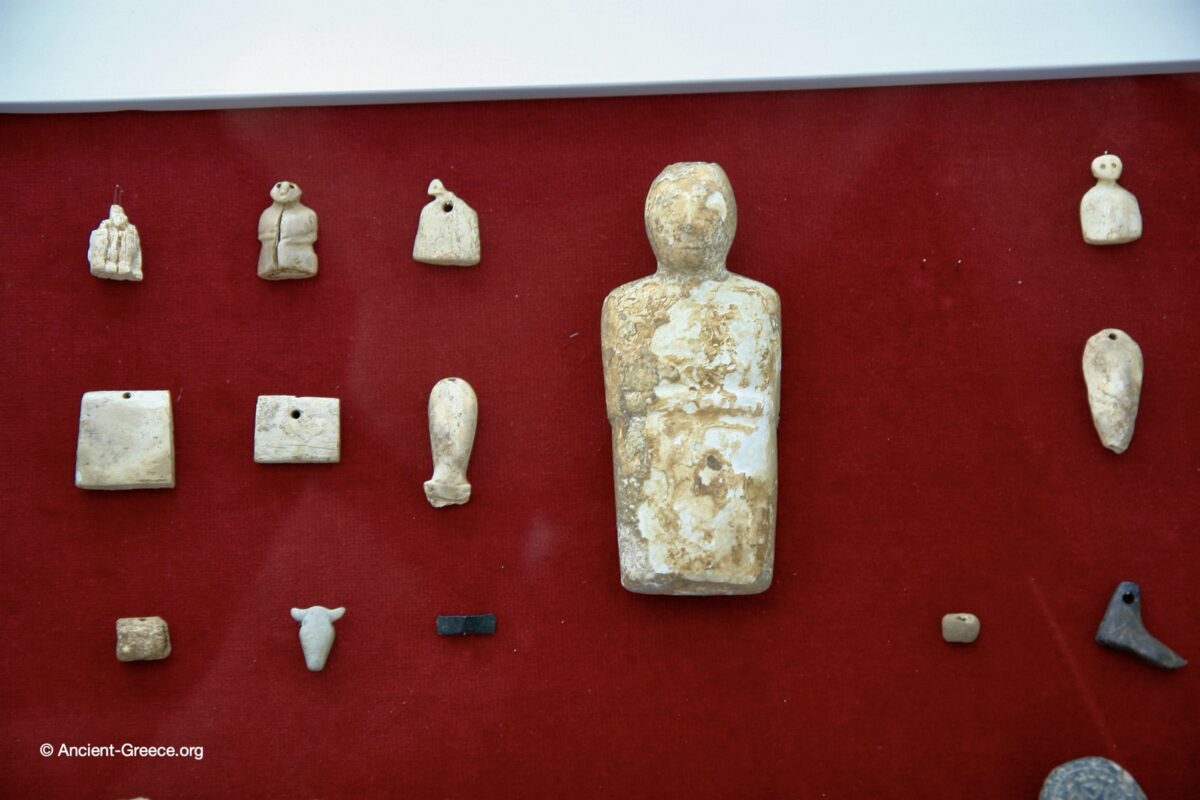
This assemblage of small-scale carvings from the secondary burial site of Hagios Charalambos Cave showcases the intricate “miniature art” of the Middle Minoan IIB period. The collection includes highly schematic anthropomorphic figurines, animal-head amulets (zoomorphes), and geometric pendants. Most pieces feature suspension holes, indicating they were worn as personal jewelry or protective charms during life before being deposited with the deceased. The use of bone and soft stone for these intimate objects reflects a widespread Protopalatial tradition of personal piety, where such talismans were believed to provide spiritual protection in both the earthly and the afterlife realms.
Αυτό το σύνολο μικρογλυπτικής από τον χώρο δευτερογενών ταφών στο σπήλαιο του Αγίου Χαραλάμπους αναδεικνύει την περίτεχνη «μικροτεχνία» της Μεσομινωικής ΙΙΒ περιόδου. Η συλλογή περιλαμβάνει εξαιρετικά σχηματοποιημένα ανθρωπόμορφα ειδώλια, φυλακτά σε σχήμα κεφαλής ζώου (ζωόμορφα) και γεωμετρικά περίαπτα. Τα περισσότερα κομμάτια φέρουν οπές ανάρτησης, γεγονός που υποδηλώνει ότι φοριούνταν ως προσωπικά κοσμήματα ή φυλακτά κατά τη διάρκεια της ζωής, πριν τοποθετηθούν μαζί με τους νεκρούς. Η χρήση οστού και μαλακού λίθου για αυτά τα οικεία αντικείμενα αντανακλά μια διαδεδομένη πρωτοανακτορική παράδοση προσωπικής ευσέβειας, όπου τέτοια φυλακτά θεωρούνταν ότι παρείχαν πνευματική προστασία τόσο στον επίγειο κόσμο όσο και στη μεταθανάτια ζωή.Human Head Votive Figurines
Minoan Peak Sanctuaries
2000–1425 BCE (Protopalatial to Neopalatial Periods)
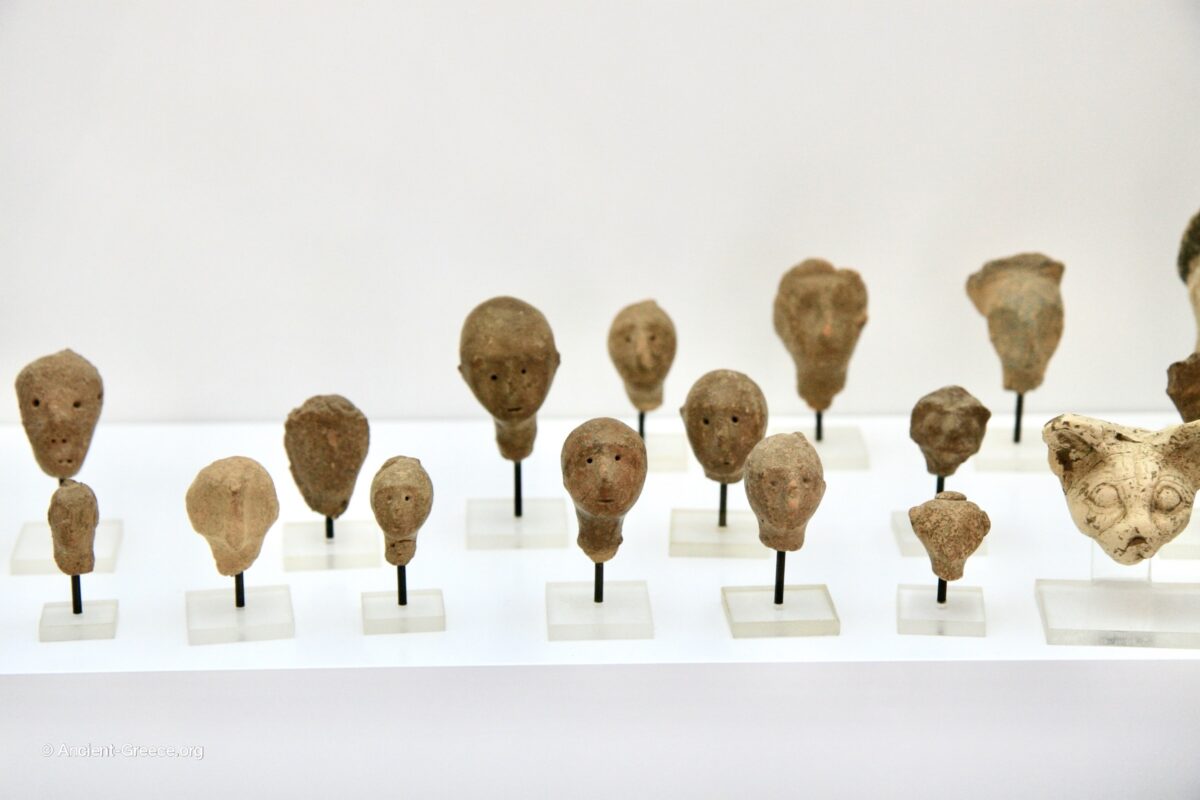
These small terracotta heads are part of a vast tradition of votive offerings found at Minoan peak sanctuaries. During the Protopalatial and Neopalatial periods, pilgrims traveled to high-altitude sites to deposit these figurines, which often represented the worshipers themselves. The heads are highly individualized through varied hairstyles, facial features, and expressions, suggesting they were intended to maintain a permanent presence for the petitioner before the deity. While some served as stand-alone offerings, many were originally part of full-body figurines placed in rock crevices or communal altars to invoke divine protection, healing, or success in agricultural and social endeavors.
These objects played vital roles in both religious and funerary rites, reflecting the bull’s multifaceted importance in the Mediterranean world—from its labor in agriculture to its central role in bull-leaping contests, processions, and sacrifices.
Αυτές οι μικρές πήλινες κεφαλές αποτελούν μέρος μιας ευρείας παράδοσης αναθηματικών προσφορών που βρέθηκαν στα μινωικά ιερά κορυφής. Κατά την Πρωτοανακτορική και Νεοανακτορική περίοδο, οι προσκυνητές ταξίδευαν σε τοποθεσίες με μεγάλο υψόμετρο για να εναποθέσουν αυτά τα ειδώλια, τα οποία συχνά αναπαριστούσαν τους ίδιους τους πιστούς. Οι κεφαλές είναι εξαιρετικά εξατομικευμένες μέσω ποικίλων χτενισμάτων, χαρακτηριστικών του προσώπου και εκφράσεων, υποδηλώνοντας ότι προορίζονταν να διατηρήσουν μια μόνιμη παρουσία του αιτούντος ενώπιον της θεότητας. Ενώ ορισμένες λειτουργούσαν ως αυτοτελή αναθήματα, πολλές αποτελούσαν αρχικά μέρος ολόσωμων ειδωλίων που τοποθετούνταν σε σχισμές βράχων ή κοινοτικούς βωμούς για την επίκληση θεϊκής προστασίας, θεραπείας ή επιτυχίας στις αγροτικές και κοινωνικές δραστηριότητες.
Τα αντικείμενα αυτά έπαιζαν ζωτικό ρόλο τόσο στις θρησκευτικές όσο και στις ταφικές τελετουργίες, αντανακλώντας την πολυδιάστατη σημασία του ταύρου στον μεσογειακό κόσμο—από τη συμβολή του στις αγροτικές εργασίες έως τον κεντρικό του ρόλο στα ταυροκαθάψια, τις πομπές και τις θυσίες.Pithamphora with Spiral Decoration
Malia, Quartier M
1800–1700 BCE (Protopalatial Period)
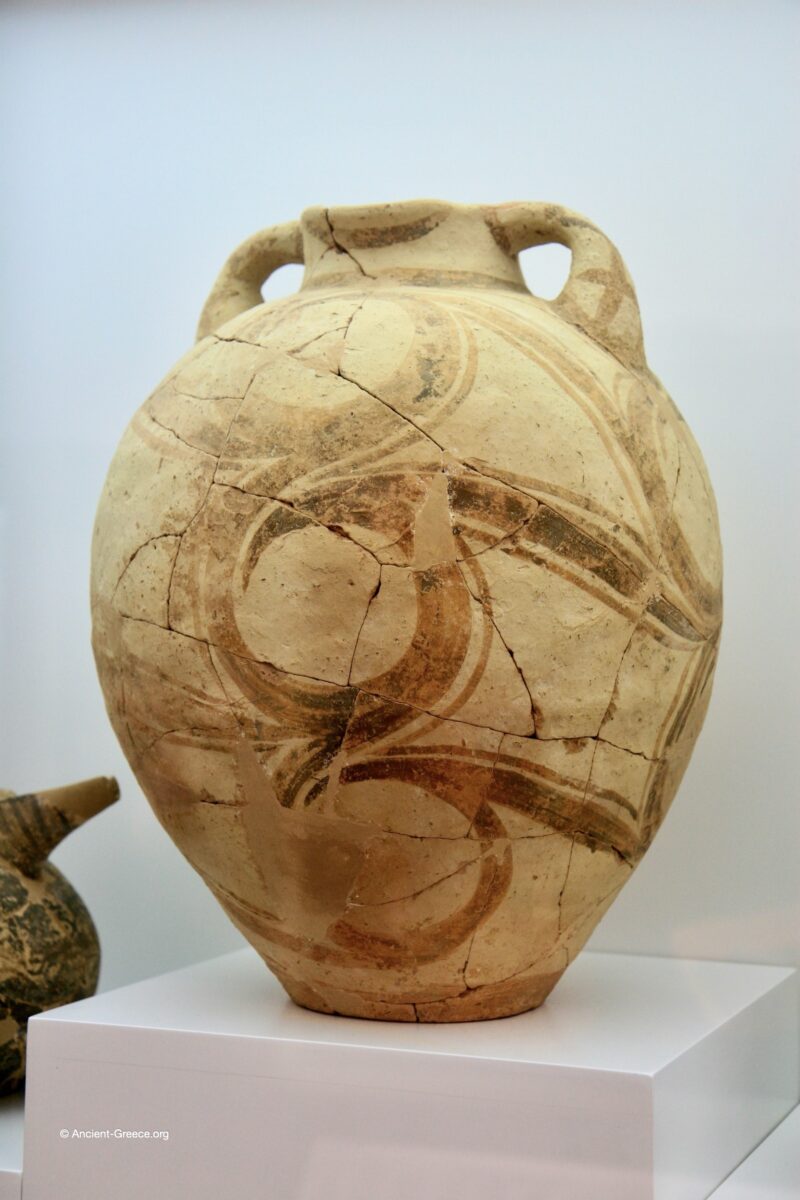
This large ceramic storage jar, or pithamphora, is a characteristic product of the Malia workshops during the Protopalatial period. It is decorated with expansive, interlinked spiral motifs executed in a bold, dark-on-light style. The spiral is one of the most fundamental and symbolic designs in Minoan art, often interpreted as representing the movement of water or the infinite cycle of nature. Found within the well-organized domestic and workshop complex of Quartier M, this vessel would have been used for the bulk storage and transport of agricultural staples like olive oil or wine, illustrating the economic vitality and aesthetic consistency of the first Minoan palatial centers.
Αυτός ο μεγάλος πήλινος αποθηκευτικός αμφορέας, ή πιθαμφορέας, αποτελεί χαρακτηριστικό προϊόν των εργαστηρίων των Μαλίων κατά την Πρωτοανακτορική περίοδο. Είναι διακοσμημένος με μεγάλες, αλληλένδετες σπείρες, φιλοτεχνημένες με την τεχνική του σκούρου πάνω σε ανοιχτόχρωμο βάθος. Η σπείρα είναι ένα από τα πιο θεμελιώδη και συμβολικά σχέδια της μινωικής τέχνης, που συχνά ερμηνεύεται ως αναπαράσταση της κίνησης του νερού ή του απείρου κύκλου της φύσης. Το αγγείο αυτό, που βρέθηκε στο οργανωμένο συγκρότημα κατοικιών και εργαστηρίων της Συνοικίας Μ, χρησίμευε για τη μαζική αποθήκευση και μεταφορά αγροτικών προϊόντων, όπως το ελαιόλαδο ή το κρασί, αναδεικνύοντας την οικονομική ζωντάνια και την αισθητική συνοχή των πρώτων μινωικών ανακτορικών κέντρων.Protopalatial “Teapot” Vessel
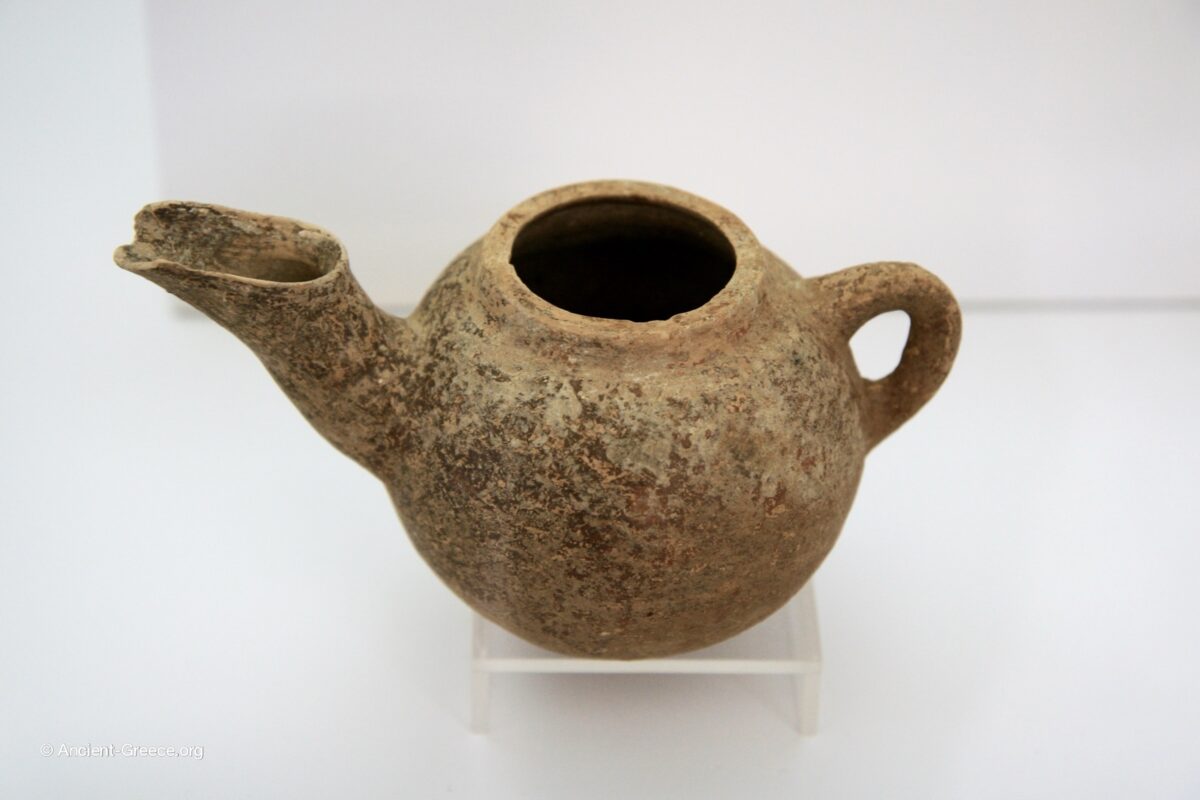
Palace of Malia
c. 2000–1900 BCE
Ceramic “teapot” vessel discovered beneath the floor of a stairwell in the Palace of Malia, dating to the period of the First Palaces (c. 2000–1900 BCE). The vessel was found inside a rectangular cist made of stone plaques, identifying it as a foundation deposit. This ritual practice, which involves burying offerings beneath a building during its construction to invoke divine protection, is a tradition in the Greek world stretching from the Neolithic period to the present day. Such “ritual deposits” are also documented in other major civilizations of the Near East and Egypt, reflecting a widespread ancient need to ensure the spiritual security of architectural structures.
Πήλινο αγγείο σε σχήμα «τσαγιέρας» που ανακαλύφθηκε κάτω από το δάπεδο ενός κλιμακοστασίου στο Ανάκτορο των Μαλίων, και χρονολογείται στην περίοδο των Πρώτων Ανακτόρων (περ. 2000–1900 π.Χ.). Το αγγείο βρέθηκε μέσα σε ορθογώνια θήκη από λίθινες πλάκες, γεγονός που το προσδιορίζει ως θεμέλιο απόθεση. Αυτή η τελετουργική πρακτική, που περιλαμβάνει την ταφή προσφορών κάτω από ένα κτίριο κατά τη διάρκεια της κατασκευής του για την επίκληση θεϊκής προστασίας, αποτελεί μια παράδοση του ελληνικού χώρου που εκτείνεται από τη Νεολιθική εποχή μέχρι σήμερα. Παρόμοιες «τελετουργικές αποθέσεις» έχουν εντοπιστεί και σε άλλους μεγάλους πολιτισμούς της Εγγύς Ανατολής και της Αιγύπτου, αντανακλώντας μια ευρύτατα διαδεδομένη αρχαία ανάγκη για την εξασφάλιση της πνευματικής θωράκισης των αρχιτεκτονικών κατασκευών.Triton Shell Ritual Vessel
Palace of Malia (NE Area)
Middle Minoan III – Late Minoan I (1700/1650–1425 BCE)
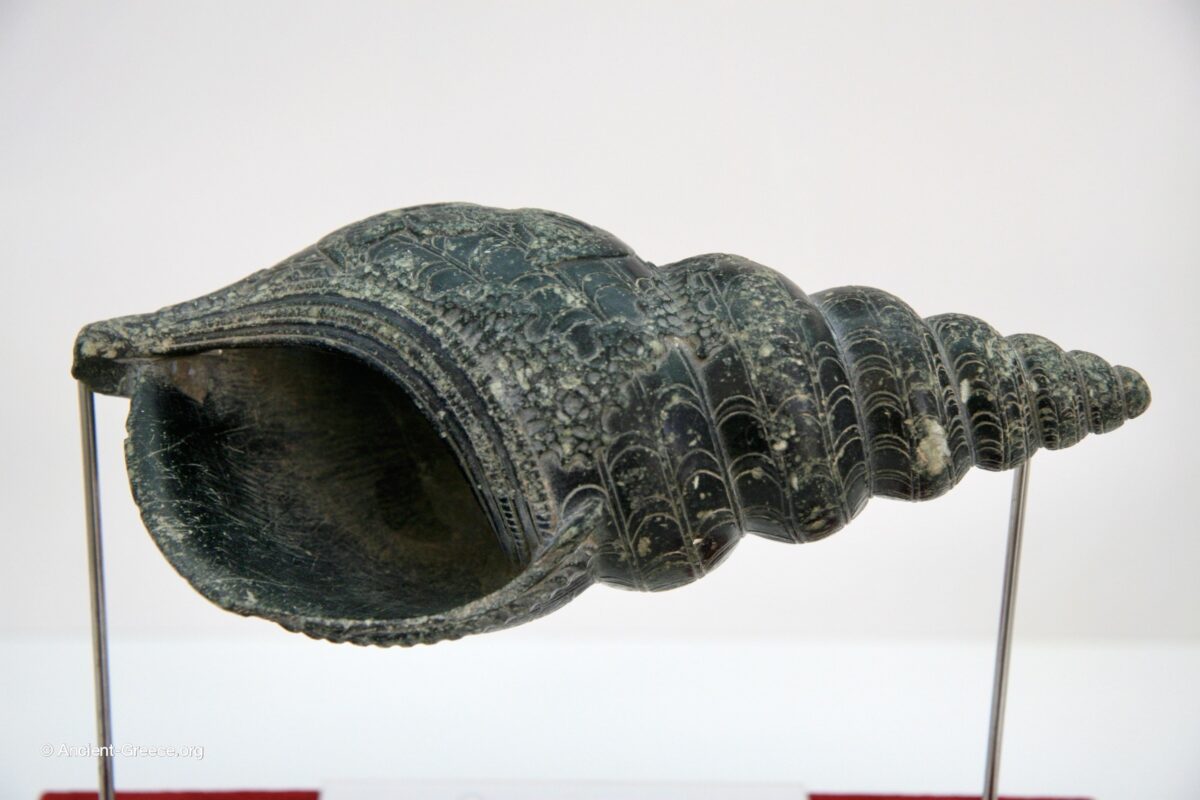
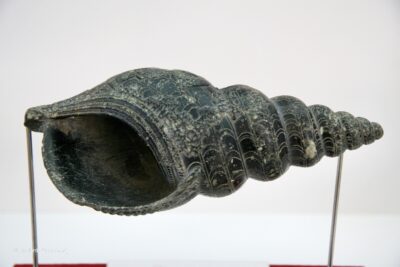
Ritual vessel in the shape of a triton shell made of serpentine, found in the area northeast of the Palace of Malia and dating to 1700–1425 BCE. The exterior is decorated in low relief with a ritual scene featuring two Minoan demons (genii). One demon is shown emptying the contents of a ritual jug into the raised hands of the other. This iconography is heavily inspired by the Egyptian goddess Taweret, who was adapted into the Minoan pantheon as a protective spirit of nature and fertility. The use of such a prestigious stone vessel, mimicking a natural marine shell, emphasizes the intersection of maritime life and religious ceremony in the Neopalatial period.
Τελετουργικό σκεύος σε σχήμα κοχυλιού (τρίτωνα) από σερπεντινίτη, που βρέθηκε στην περιοχή βορειοανατολικά του Ανακτόρου των Μαλίων και χρονολογείται στην Μεσομινωική ΙΙΙ – Υστερομινωική Ι περίοδο (1700–1425 π.Χ.). Η εξωτερική επιφάνεια κοσμείται με χαμηλό ανάγλυφο που παριστάνει μια τελετουργική σκηνή με δύο μινωικούς δαίμονες. Ο ένας δαίμονας αδειάζει το περιεχόμενο μιας τελετουργικής πρόχου στα υψωμένα χέρια του άλλου. Το θέμα της σκηνής είναι εμπνευσμένο από την αιγυπτιακή θεά Taweret (Θουέρις), η οποία υιοθετήθηκε από τον μινωικό πολιτισμό ως προστάτιδα της φύσης και της ζωής. Η χρήση ενός τόσο πολύτιμου λίθινου σκεύους, που μιμείται ένα φυσικό θαλάσσιο όστρακο, υπογραμμίζει τη σύνδεση της θαλάσσιας ζωής με τις θρησκευτικές τελετουργίες της νεοανακτορικής περιόδου.Gold Jewelry and Diadems
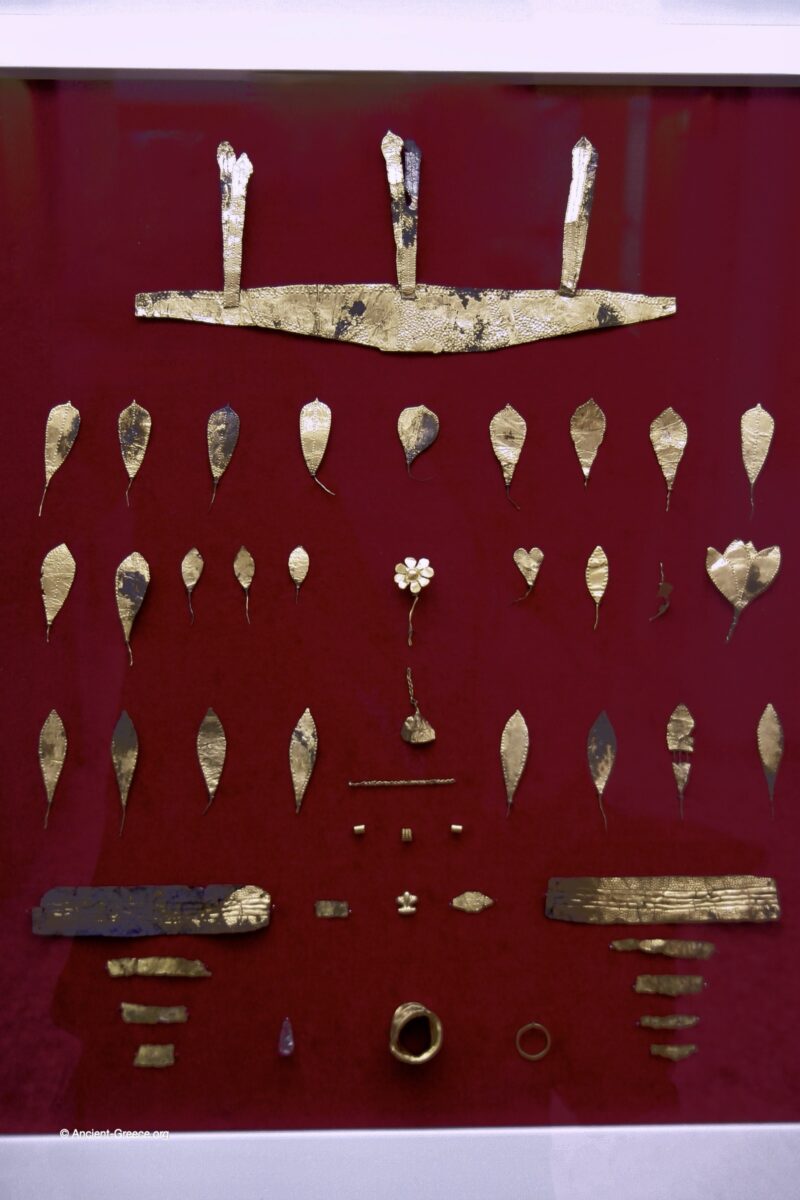
Mochlos, Early Minoan Cemetery
Date: 2900–1900 BCE (Prepalatial Period / EM II–MM IA)
Material: Gold foil
Excavated from the elite “house tombs” of Mochlos, this collection represents some of the most important Prepalatial finds in eastern Crete. The assemblage features a prominent diadem with three upright appendages and various leaf-shaped pendants, all crafted from delicate gold foil. While the wider community utilized smaller rock shelters or pithos burials, two monumental tombs stand out for their architectural refinement and immense wealth. The presence of these gold diadems, which served as powerful symbols of elite status, suggests that these specific tombs were reserved for local families who held significant religious or administrative roles. These artifacts provide clear evidence of the social stratification and specialized craftsmanship that emerged in Crete as early as the 3rd Millennium BCE.
Αυτή η συλλογή, που ανασκάφηκε από τους «οικιακούς τάφους» της ελίτ στον Μόχλο, αντιπροσωπεύει ορισμένα από τα σημαντικότερα προανακτορικά ευρήματα της ανατολικής Κρήτης. Το σύνολο περιλαμβάνει ένα εξέχον διάδημα με τρεις όρθιες απολήξεις και ποικίλα φυλλόσχημα περίαπτα, όλα φιλοτεχνημένα από λεπτό φύλλο χρυσού. Ενώ η ευρύτερη κοινότητα χρησιμοποιούσε μικρότερες βραχοσκεπές ή ταφές σε πίθους, δύο μνημειώδεις τάφοι ξεχωρίζουν για την αρχιτεκτονική τους υπεροχή και τον τεράστιο πλούτο τους. Η παρουσία αυτών των χρυσών διαδημάτων, που λειτουργούσαν ως ισχυρά σύμβολα κοινωνικής ελίτ, υποδηλώνει ότι οι συγκεκριμένοι τάφοι προορίζονταν για τοπικές οικογένειες με σημαντικούς θρησκευτικούς ή διοικητικούς ρόλους. Τα αντικείμενα αυτά παρέχουν σαφείς αποδείξεις για την κοινωνική διαστρωμάτωση και την εξειδικευμένη τέχνη που αναπτύχθηκε στην Κρήτη ήδη από την 3η χιλιετία π.Χ.Anthropomorphic Stone Figurine
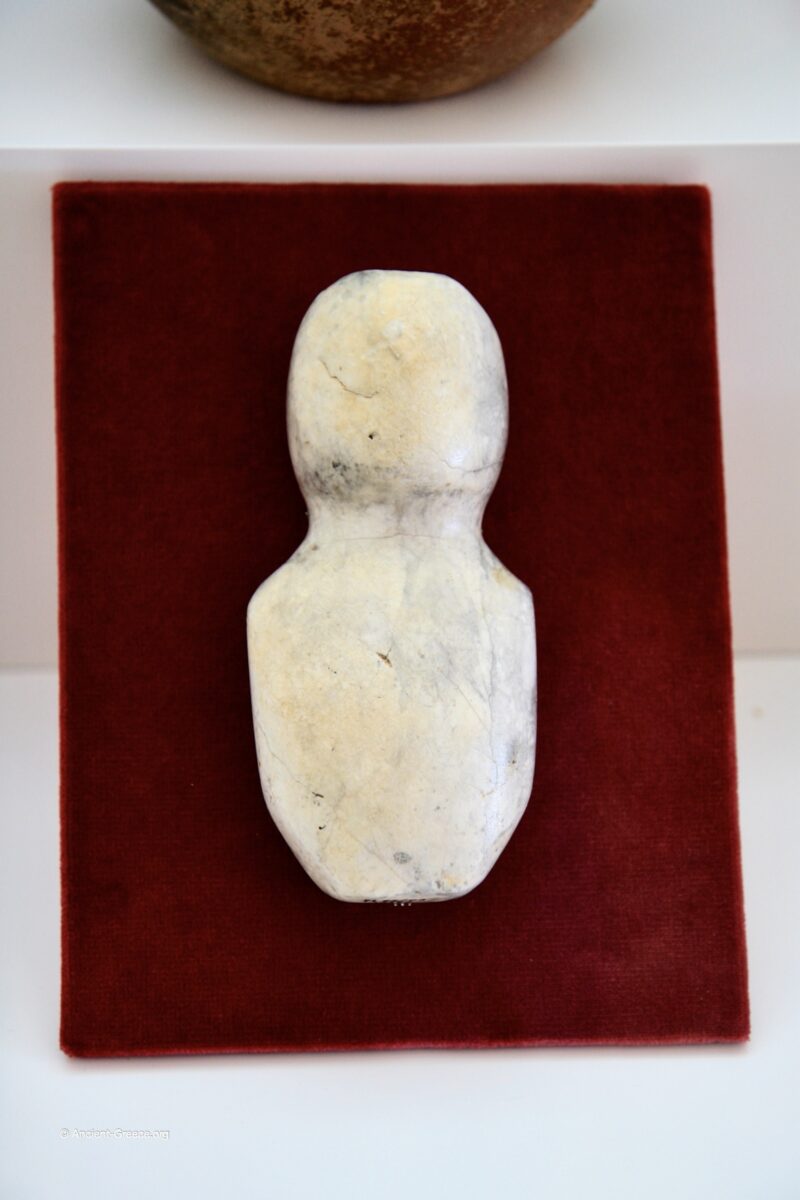
Malia, Quartier M
1800–1700 BCE (Protopalatial Period)
This small, highly stylized anthropomorphic figurine is carved from light-colored stone and belongs to the Protopalatial context of Quartier M at Malia. The figure is reduced to its most essential geometric forms, featuring a rounded head and a tapering torso without articulated limbs. Such figurines are rare in palatial contexts compared to the earlier Prepalatial period, suggesting the survival or deliberate revival of ancient Cretan traditions within the sophisticated urban environment of the First Palaces. While its exact function remains debated, it likely served a protective or votive purpose within a domestic shrine.
Αυτό το μικρό, εξαιρετικά σχηματοποιημένο ανθρωπόμορφο ειδώλιο είναι λαξευμένο σε ανοιχτόχρωμο λίθο και προέρχεται από το πρωτοανακτορικό πλαίσιο της Συνοικίας Μ στα Μάλια. Η μορφή έχει αναχθεί στα πλέον απαραίτητα γεωμετρικά σχήματα, με στρογγυλεμένο κεφάλι και συγκλίνοντα κορμό χωρίς αρθρωμένα μέλη. Τέτοια ειδώλια είναι σπάνια σε ανακτορικά περιβάλλοντα σε σύγκριση με την προγενέστερη Προανακτορική περίοδο, γεγονός που υποδηλώνει την επιβίωση ή την εσκεμμένη αναβίωση αρχαίων κρητικών παραδόσεων μέσα στο εξελιγμένο αστικό περιβάλλον των Πρώτων Ανακτόρων. Αν και η ακριβής λειτουργία του παραμένει θέμα συζήτησης, πιθανότατα εξυπηρετούσε προστατευτικό ή αναθηματικό σκοπό σε κάποιο οικιακό ιερό.Inscribed Gold Pin
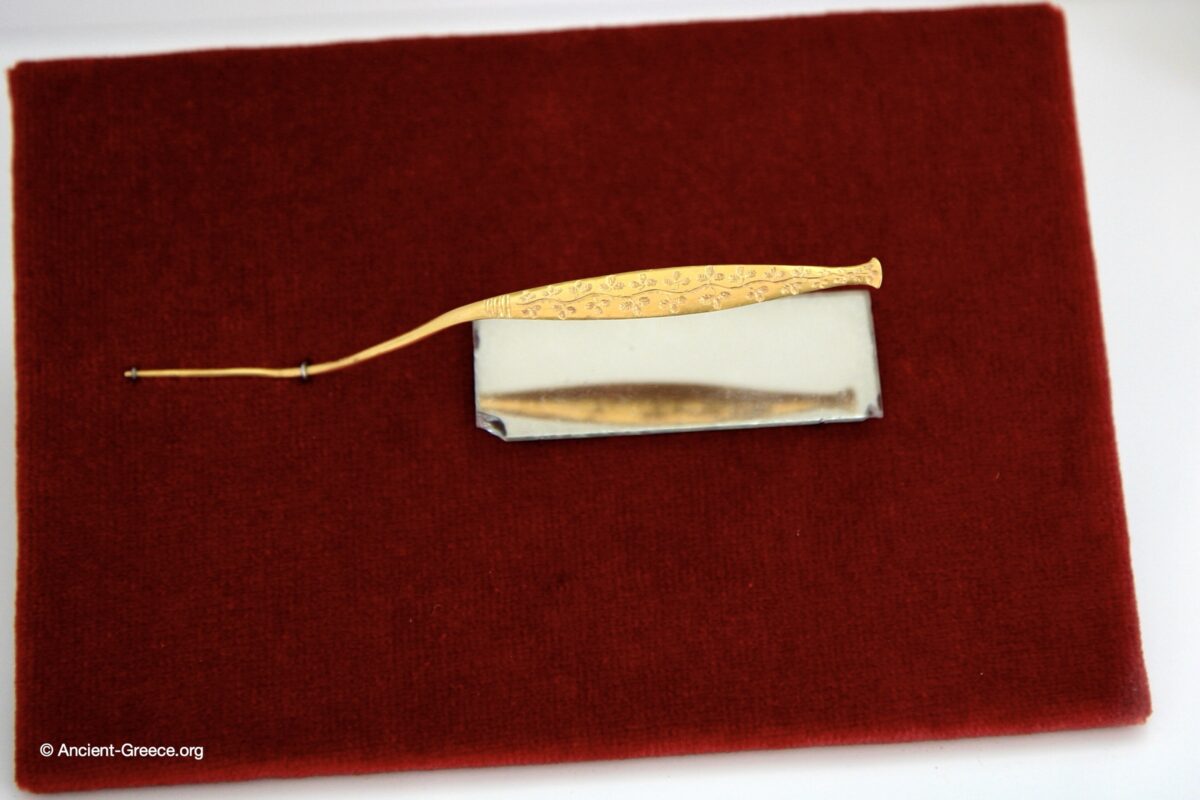
Unknown Provenance
Late Minoan I (1600/1580–1425 BCE)
A rare gold pin of the Late Minoan I period, featuring an elongated, flattened head decorated on one side with an incised bramble motif. The reverse side is incised with an exceptionally long inscription consisting of eighteen symbols of the Linear A script. The pin was acquired in Brussels by the renowned archaeologist Jean-Pierre Olivier and donated to the museum in 1981. Given its precious material and the presence of script, it likely served as a high-status personal ornament or a votive offering belonging to a prominent individual of the Minoan courtly or religious sphere.
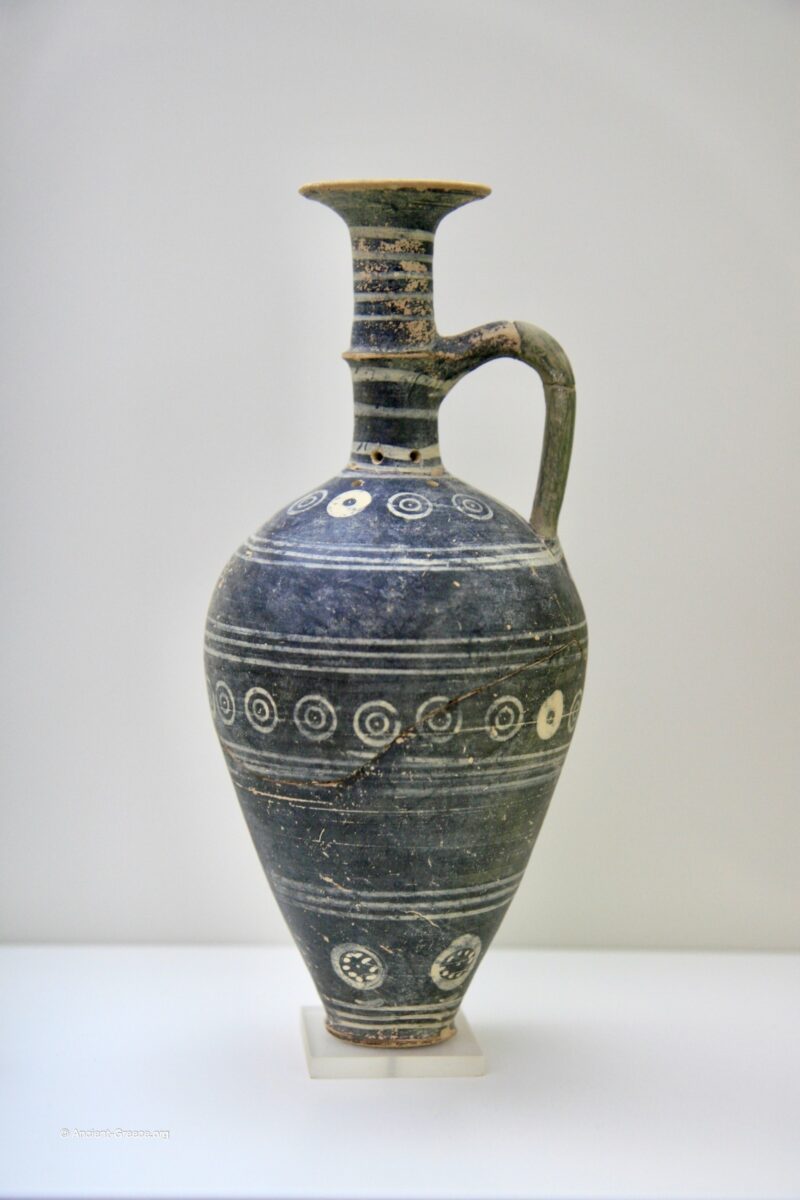
Ένα σπάνιο χρυσό καρφίδιο (βελόνα) της Υστερομινωικής Ι περιόδου, με πεπλατυσμένη κεφαλή που κοσμείται στην κύρια όψη με εγχάρακτο μοτίβο βατόμουρου. Στην πίσω όψη φέρει μια ασυνήθιστα μακροσκελή επιγραφή αποτελούμενη από δεκαοκτώ σύμβολα της Γραμμικής Α γραφής. Το αντικείμενο αγοράστηκε στις Βρυξέλλες από τον διαπρεπή αρχαιολόγη Jean-Pierre Olivier και δωρήθηκε στο μουσείο το 1981. Λόγω του πολύτιμου υλικού και της παρουσίας της γραφής, πιθανότατα αποτελούσε προσωπικό κόσμημα υψηλής κοινωνικής θέσης ή αναθηματικό αντικείμενο που ανήκε σε εξέχον μέλος της μινωικής ανακτορικής ή θρησκευτικής ιεραρχίας.A Cypriot-style jug (oinochoe) from the cemeteries of Kamara (Agios Nikolaos), dating to the Cypro-Archaic period (7th Century BCE). It features the “Black-on-Red” style of decoration, characterized by concentric circles and horizontal bands, illustrating the strong maritime and trade connections between eastern Crete and Cyprus.
Πρόχους (οινοχόη) κυπριακού τύπου από τα νεκροταφεία της Καμάρας (Άγιος Νικόλαος), που χρονολογείται στην Κυπρο-Αρχαϊκή περίοδο (7ος αι. π.Χ.). Φέρει διακόσμηση του ρυθμού «Μελανό επί Ερυθρού» με ομόκεντρους κύκλους και οριζόντιες ταινίες, γεγονός που αποδεικνύει τις ισχυρές ναυτιλιακές και εμπορικές σχέσεις της ανατολικής Κρήτης με την Κύπρο.The Milatos Cemetery Assemblage
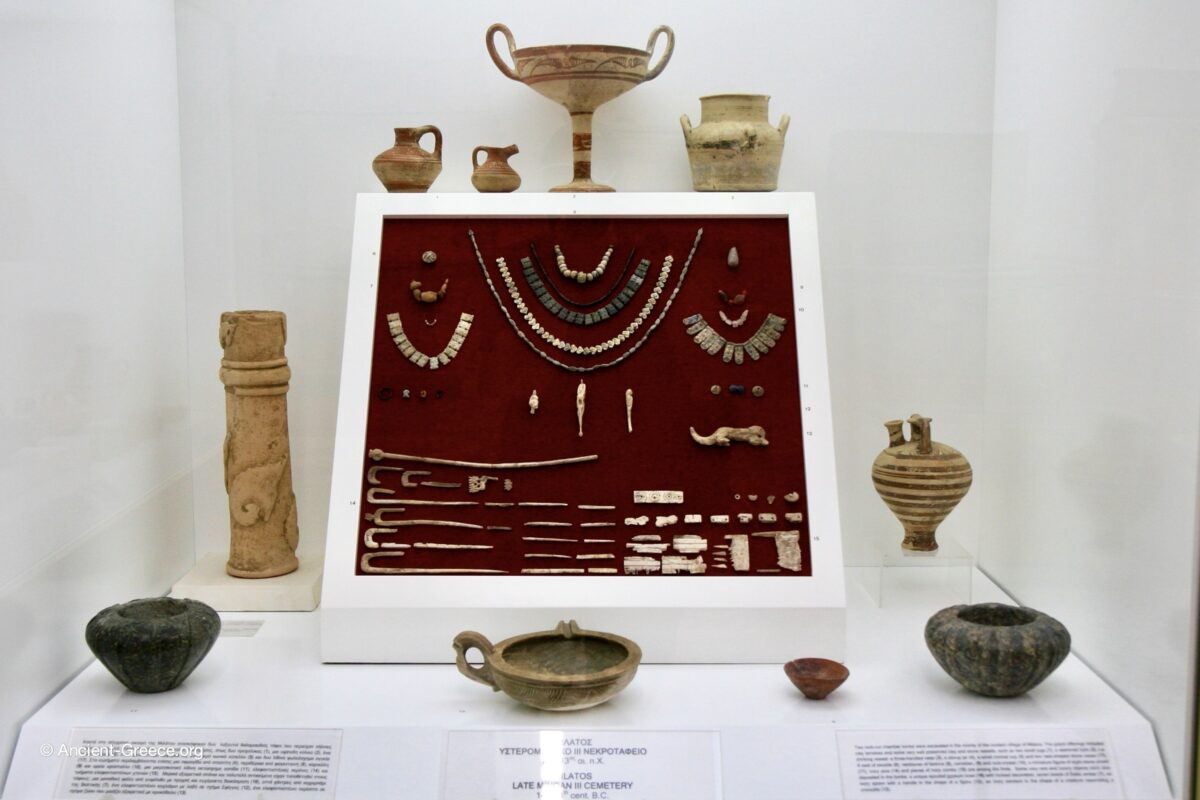
Milatos, Mirabello
14th–13th Century BCE
A complete funerary assemblage from the Late Minoan III cemetery at Milatos, dating to 1400–1200 BCE. This rich collection includes ceramic tableware, extensive personal jewelry of glass and faience, and bronze tools such as pins and razors. The presence of stone vessels, like the carved blossom bowls, alongside ritual stands and lamps, emphasizes the site’s role as a prosperous regional center. These finds reflect the complex social hierarchy and the elaborate preparation of the deceased for the afterlife in Eastern Crete during the 13th Century BCE.
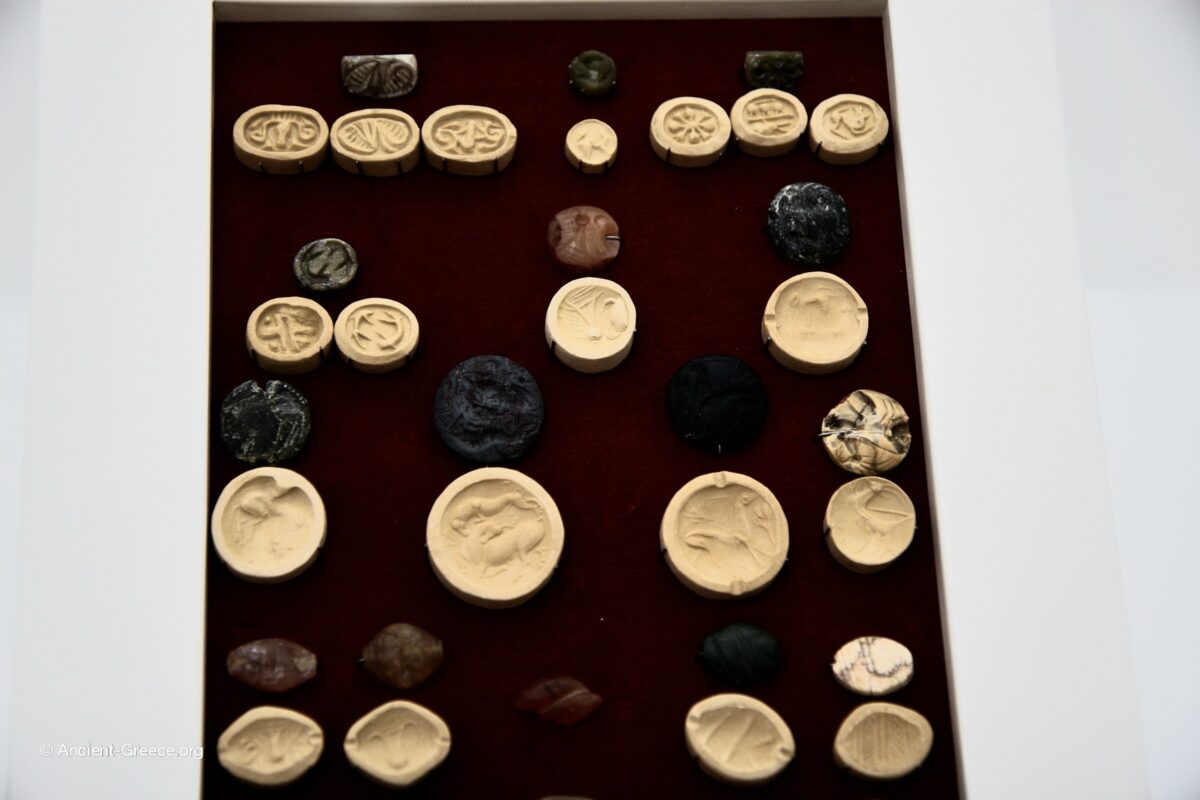
Ένα πλήρες ταφικό σύνολο από το Υστερομινωικό ΙΙΙ νεκροταφείο του Μιλάτου, που χρονολογείται στο 1400–1200 π.Χ. Αυτή η πλούσια συλλογή περιλαμβάνει κεραμική επιτραπέζια σκεύη, εκτεταμένα προσωπικά κοσμήματα από υαλόμαζα και φαγεντιανή, καθώς και χάλκινα εργαλεία, όπως περόνες και ξυράφια. Η παρουσία λίθινων αγγείων, όπως οι ανάγλυφοι «ανθοδόχοι» (blossom bowls), δίπλα σε τελετουργικές βάσεις και λυχνάρια, υπογραμμίζει τον ρόλο της περιοχής ως ευημερούντος περιφερειακού κέντρου. Τα ευρήματα αυτά αντανακλούν την περίπλοκη κοινωνική ιεραρχία και την επιμελημένη προετοιμασία των νεκρών για τη μεταθανάτια ζωή στην Ανατολική Κρήτη κατά τον 13ο αι. π.Χ.A collection of Minoan seal stones and their modern plaster impressions from various sites in eastern Crete, primarily dating to the Neopalatial period (c. 1700–1450 BCE). These intricate seals, carved from semi-precious stones like steatite, carnelian, and agate, feature a variety of motifs including animals, floral patterns, and geometric designs, which served both as personal identifiers and administrative tools.
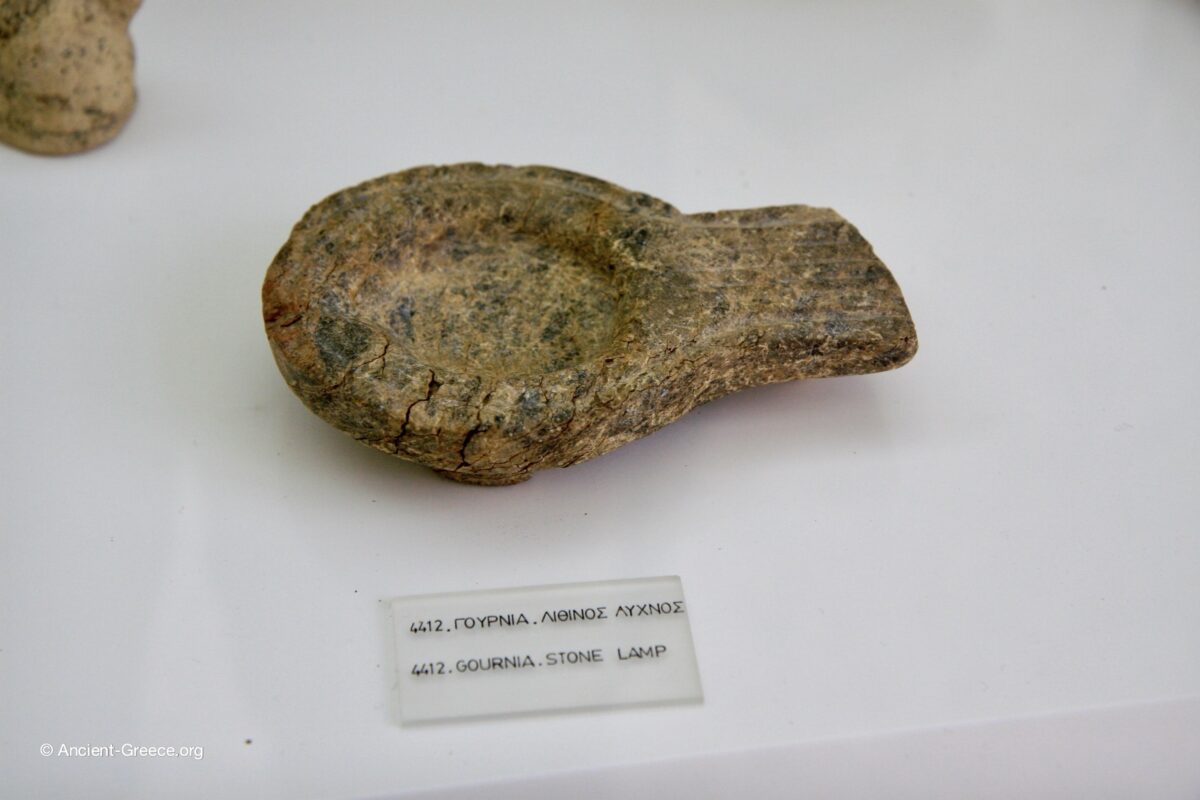
Συλλογή μινωικών σφραγιδόλιθων και των σύγχρονων γύψινων αποτυπωμάτων τους από διάφορες θέσεις της ανατολικής Κρήτης, που χρονολογούνται κυρίως στη Νεοανακτορική περίοδο (περ. 1700–1450 π.Χ.). Αυτές οι περίτεχνες σφραγίδες, λαξευμένες σε ημιπολύτιμους λίθους όπως ο στεατίτης, το σάρδιο και ο αχάτης, φέρουν ποικίλα μοτίβα, όπως ζώα, φυτικά σχέδια και γεωμετρικά σχήματα, και χρησίμευαν τόσο ως προσωπικά διακριτικά όσο και ως διοικητικά εργαλεία.Stone lamp from the Minoan town of Gournia, dating to the Neopalatial period (c. 1700–1450 BCE). Carved from dark stone, likely steatite or serpentinite, this type of lamp was a common household object used to hold oil and a wick, providing light in the densely packed urban rooms of the settlement.
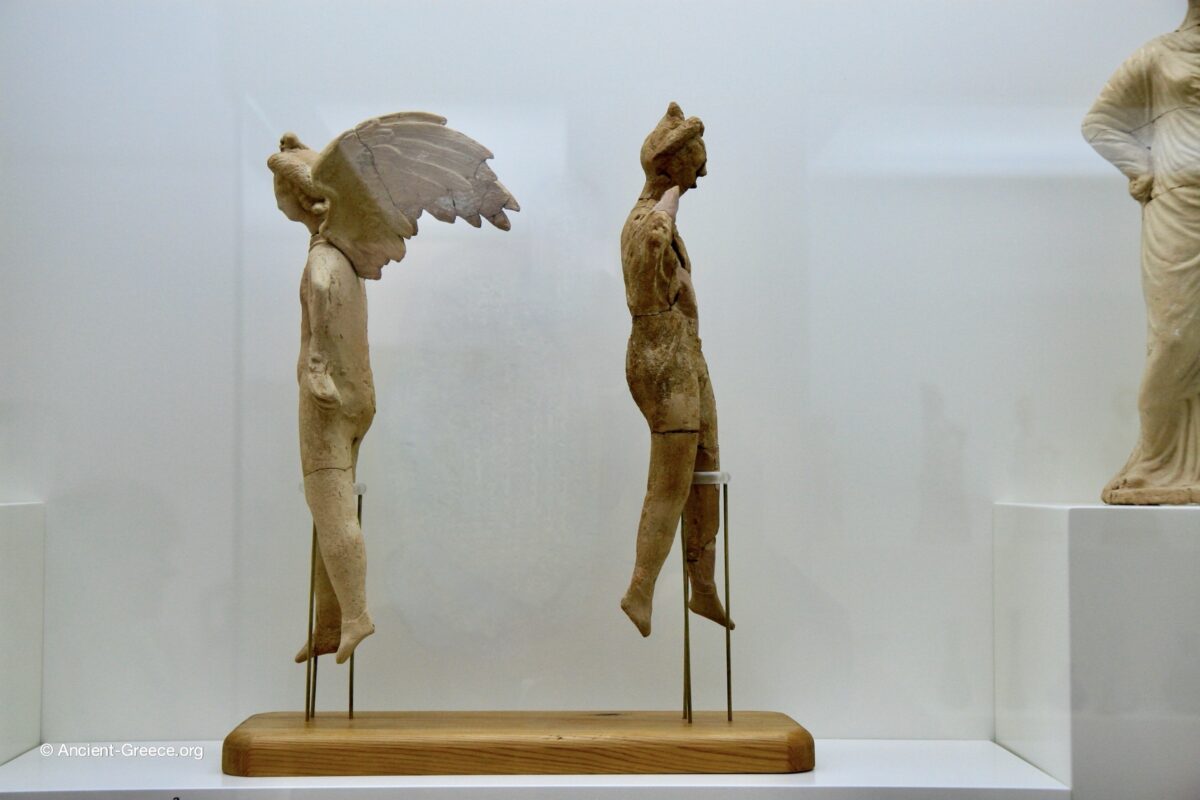
Λίθινος λύχνος από τη μινωική πόλη των Γουρνιών, που χρονολογείται στη Νεοανακτορική περίοδο (περ. 1700–1450 π.Χ.). Λαξευμένος σε σκουρόχρωμο λίθο, πιθανώς στεατίτη ή σερπεντινίτη, αυτού του τύπου ο λύχνος αποτελούσε κοινό οικιακό αντικείμενο που χρησίμευε για τη συγκράτηση λαδιού και φυτιλιού, παρέχοντας φως στα πυκνοκατοικημένα δωμάτια του οικισμού.Terracotta figurines of winged Eros (Cupid) from the cemeteries of Kamara (Agios Nikolaos), dating to the Hellenistic period (3rd–1st Century BCE), depicting the god of love in a dynamic, hovering pose characteristic of the era’s funerary art.
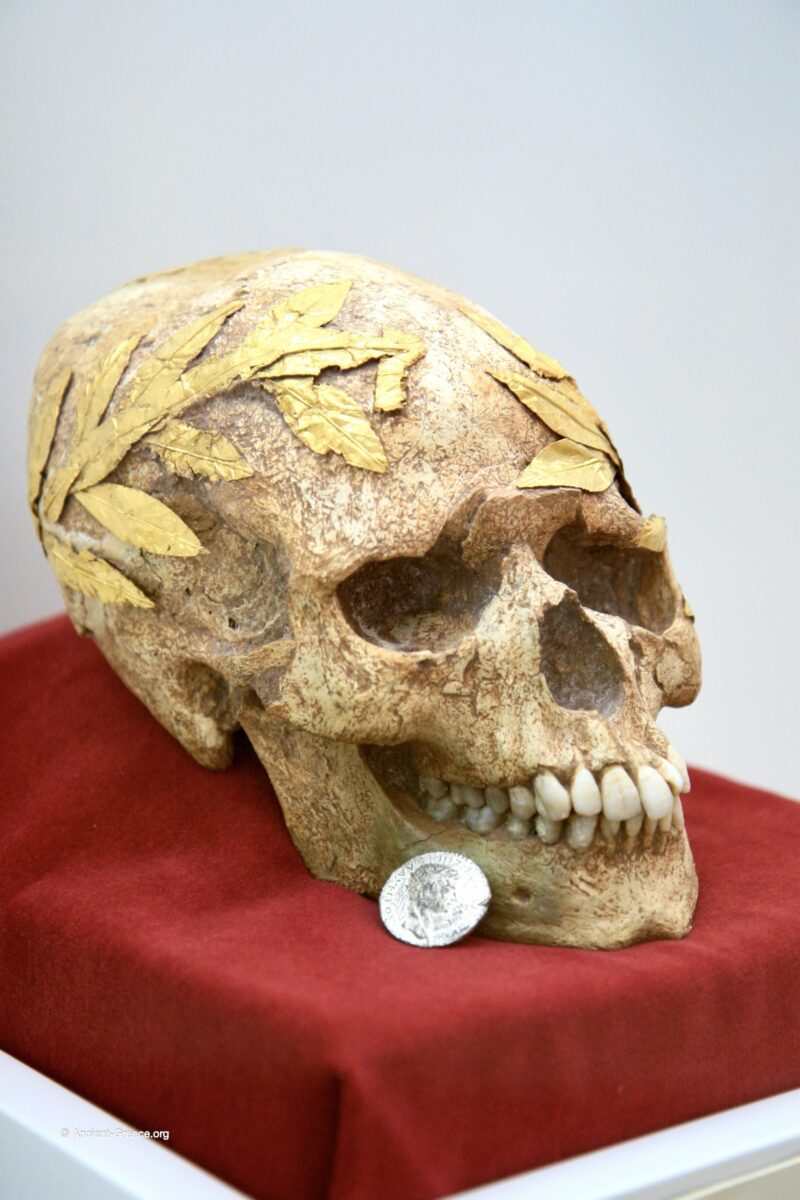
Πήλινα ειδώλια του πτερωτού Έρωτα από τα νεκροταφεία της Καμάρας (Άγιος Νικόλαος), που χρονολογούνται στην Ελληνιστική περίοδο (3ος–1ος αι. π.Χ.) και απεικονίζουν τον θεό του έρωτα σε μια δυναμική στάση αιώρησης, χαρακτηριστική της επιτύμβιας τέχνης της εποχής.The skull of a young athlete from the Roman cemetery of Kamara (Agios Nikolaos), dating to the 1st Century CE. He was found with a gold olive wreath still encircling his head and a silver denarius of the Emperor Tiberius placed in his mouth as “Charon’s obol,” intended as payment for the ferryman of the underworld.
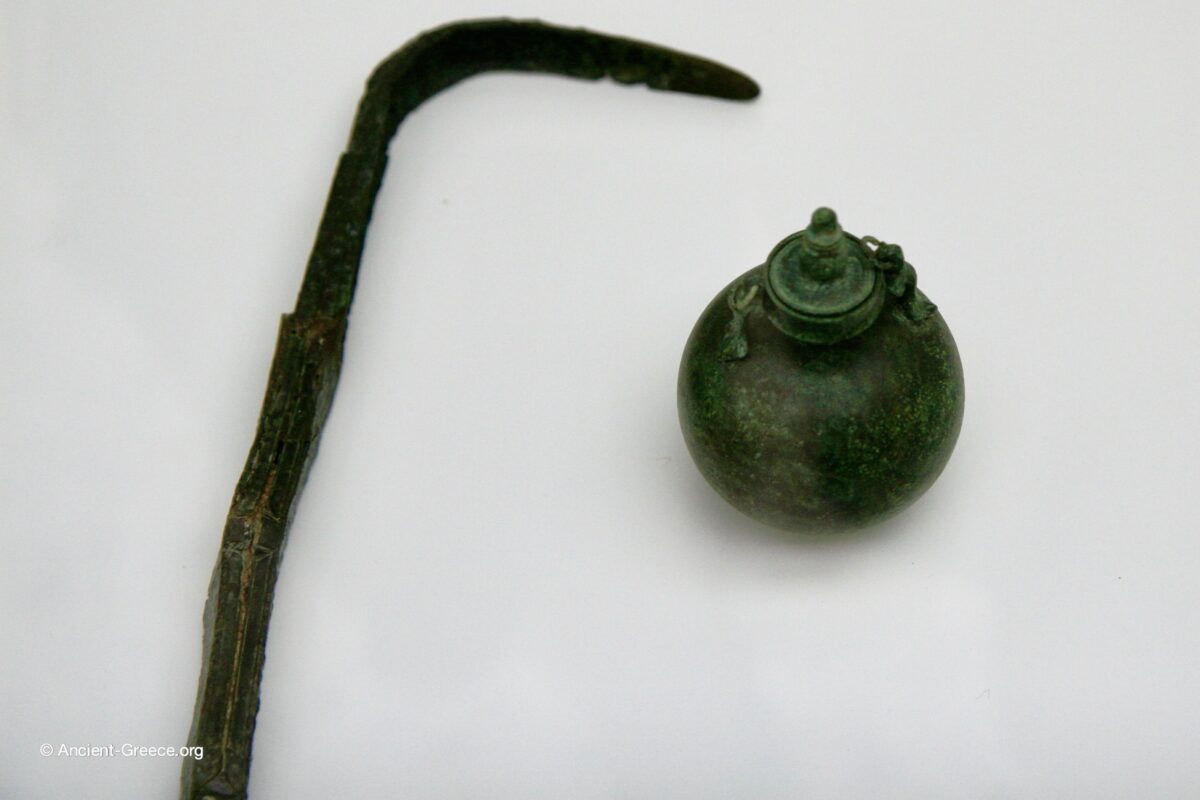
Το κρανίο ενός νεαρού αθλητή από το ρωμαϊκό νεκροταφείο της Καμάρας (Άγιος Νικόλαος), που χρονολογείται στον 1ο αι. μ.Χ. Βρέθηκε με ένα χρυσό στεφάνι ελιάς να περιβάλλει το κεφάλι του και ένα ασημένιο δηνάριο του Αυτοκράτορα Τιβέριου στο στόμα του ως «οβολό του Χάρωνα», προοριζόμενο για την πληρωμή του πορθμέα του Κάτω Κόσμου.Bronze strigil and aryballos (oil flask) from the cemeteries of Kamara (Agios Nikolaos), dating to the Roman period (1st Century CE). These tools were essential equipment for athletes, used for applying oil before exercise and scraping off sweat, oil, and dust afterward.
Χάλκινη στλεγγίδα και αρύβαλλος (δοχείο ελαίου) από τα νεκροταφεία της Καμάρας (Άγιος Νικόλαος), που χρονολογούνται στη Ρωμαϊκή περίοδο (1ος αι. μ.Χ.). Τα εργαλεία αυτά αποτελούσαν απαραίτητο εξοπλισμό για τους αθλητές, καθώς χρησιμοποιούνταν για την επάλειψη με λάδι πριν από την άσκηση και τον καθαρισμό του σώματος από τον ιδρώτα, το λάδι και τη σκόνη μετά από αυτήν.
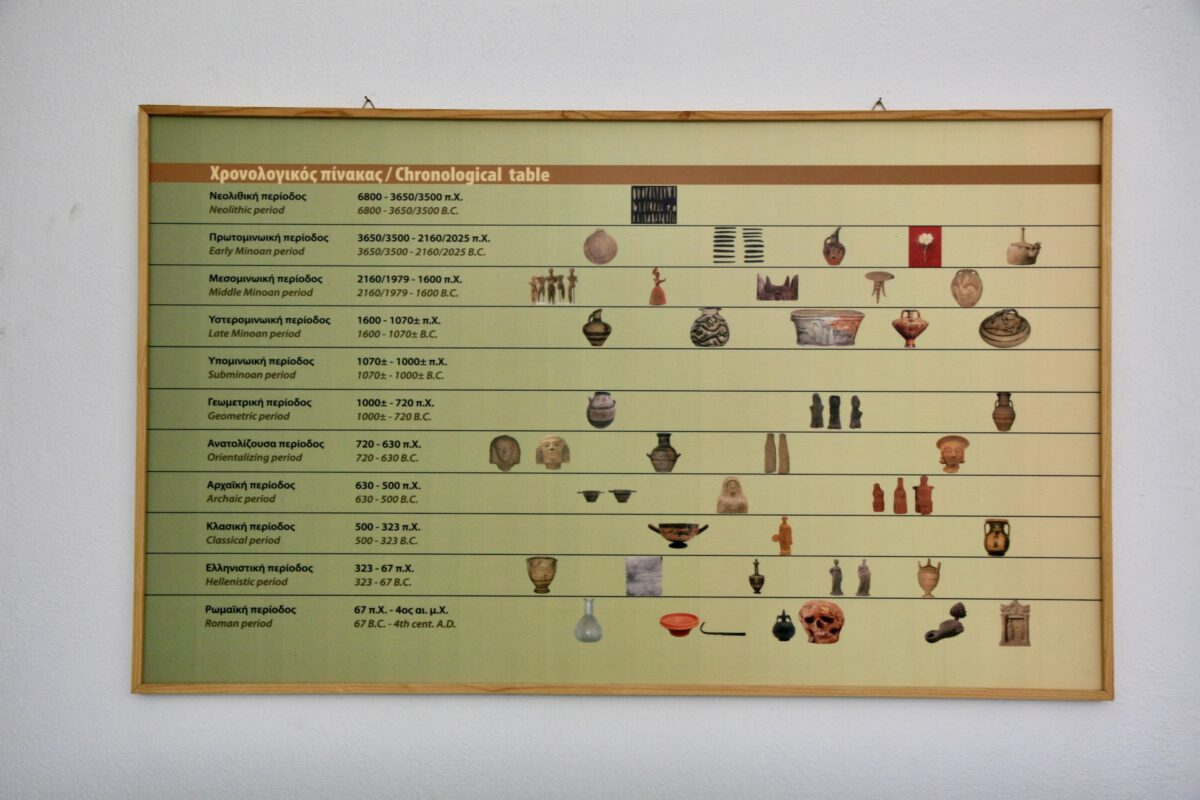
A chronological table at the Archaeological Museum of Agios Nikolaos showing the timeline of Eastern Crete from the Neolithic period (6800 BCE) to the Roman period (4th century CE).
Χρονολογικός πίνακας στο Αρχαιολογικό Μουσείο Αγίου Νικολάου που παρουσιάζει τη χρονική εξέλιξη της Ανατολικής Κρήτης από τη Νεολιθική εποχή (6800 π.Χ.) έως τη Ρωμαϊκή περίοδο (4ος αι. μ.Χ.).Agios Nikolaos Archaeological Museum in Crete.Agios Nikolaos Archaeological Museum. Crete, Greece.
This image is provided for non-commercial, educational use under CC BY-NC-ND 4.0.
Free for non-commercial use with these restrictions:
provide credit, no edits or derivatives, no resale or relicensing.
(Click in the box to select all text for copying)
Notice: ancient-greece.org is not responsible for errors. The license applies to the photograph; users are responsible for clearing rights to underlying subjects (museums, artifacts, etc.).