Aptera
Aptera, Crete
Aptera (Greek: Άπτερα), also known historically as Apteron (Ἄπτερον) or Aptara, was an ancient city located in the western part of the island of Crete, Greece. Situated on a fortified hill directly above the Bay of Souda, it served as one of the most significant and powerful city-states in the region spanning from the Minoan era through the Hellenistic and Roman periods.
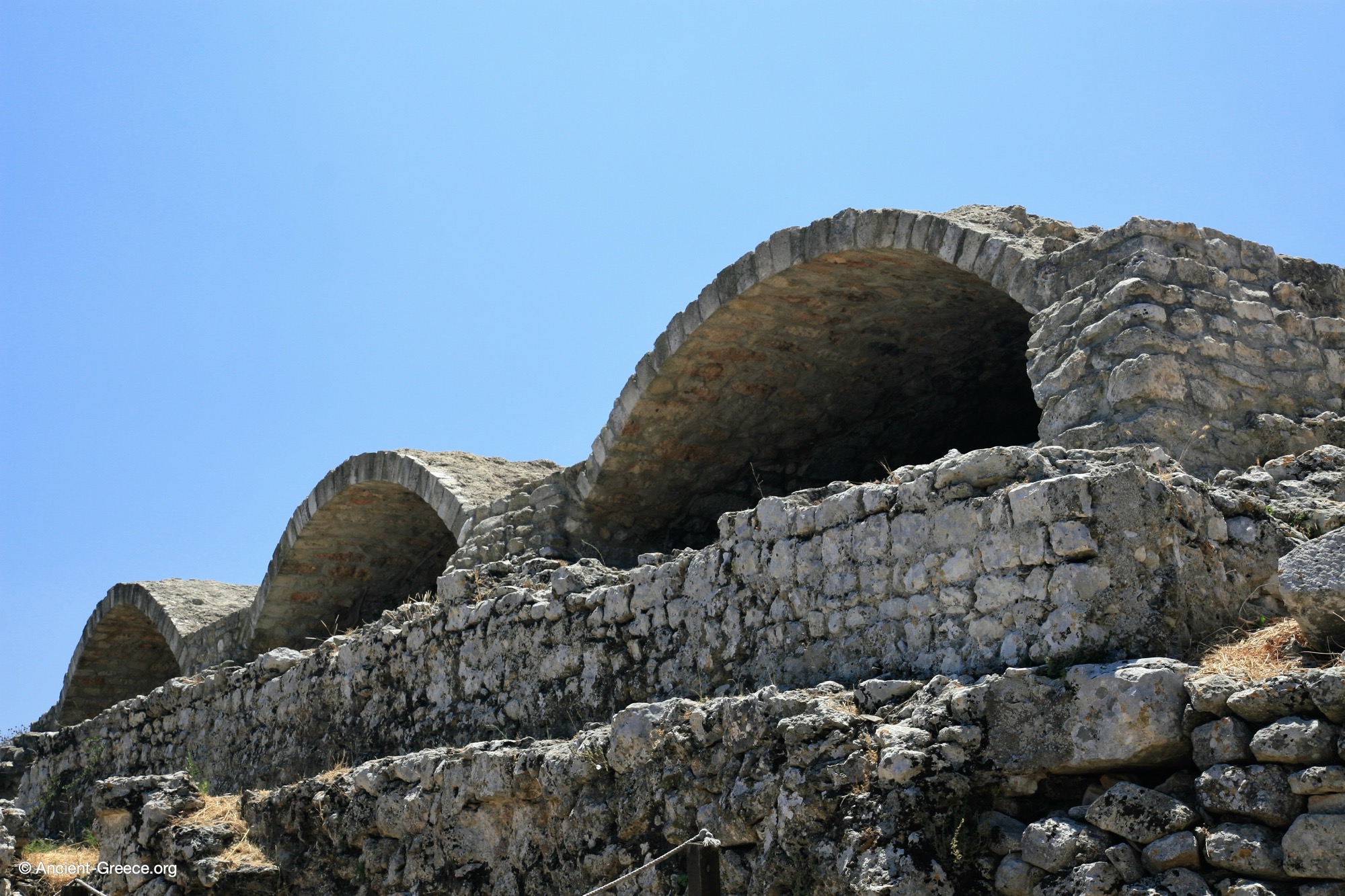
The archaeological site features substantial ruins that reflect its long occupation, economic prosperity, and strategic maritime importance. Key extant structures include a well-preserved Roman theater, an extensive network of Roman vaulted cisterns designed to supply the city’s bathhouses, and a classical sanctuary dedicated to Artemis and Apollo. The city’s extensive fortifications, constructed with massive polygonal masonry, underscore its defensive capabilities and regional influence until its gradual decline and eventual abandonment following a severe earthquake in the 7th century CE.
◈
Άπτερα, Κρήτη
Η Άπτερα, γνωστή ιστορικά και ως Άπτερον ή Απτάρα, ήταν μια αρχαία πόλη που βρισκόταν στο δυτικό τμήμα του νησιού της Κρήτης. Χτισμένη σε έναν οχυρωμένο λόφο ακριβώς πάνω από τον κόλπο της Σούδας, λειτούργησε ως μία από τις πιο σημαντικές και ισχυρές πόλεις-κράτη της περιοχής, με διάρκεια από τη Μινωική εποχή έως την Ελληνιστική και τη Ρωμαϊκή περίοδο.
Ο αρχαιολογικός χώρος διαθέτει σημαντικά ερείπια που αντικατοπτρίζουν τη μακρόχρονη κατοίκηση, την οικονομική ευημερία και τη στρατηγική ναυτική της σημασία. Βασικά σωζόμενα κτίσματα περιλαμβάνουν ένα καλοδιατηρημένο ρωμαϊκό θέατρο, ένα εκτεταμένο δίκτυο ρωμαϊκών θολωτών δεξαμενών που σχεδιάστηκαν για την τροφοδοσία των λουτρών της πόλης, και ένα κλασικό ιερό αφιερωμένο στην Άρτεμη και τον Απόλλωνα. Οι εκτεταμένες οχυρώσεις της πόλης, κατασκευασμένες με ογκώδη πολυγωνική τοιχοποιία, υπογραμμίζουν τις αμυντικές της ικανότητες και την περιφερειακή της επιρροή μέχρι τη σταδιακή παρακμή και την τελική εγκατάλειψή της μετά από έναν ισχυρό σεισμό τον 7ο αιώνα μ.Χ.

-
The Trireme | Η Τριήρης
The trireme was a long, maneuverable war vessel with three banks of oars (a total of 170 oarsmen).…
-
Aptera | Άπτερα
Aptera (Greek: Άπτερα), also known historically as Apteron (Ἄπτερον) or Aptara, was an ancient city located in the…
-
Kos Island | Νήσος Κως
Kos (alternatively spelled Cos or Kôs) is a Greek island in the Dodecanese archipelago, located in the southeastern…
-
Asklepieia: Healing Centers
The Evolution of Healing Sanctuaries From Prehistoric Ritual to Organized Medicine The development of medicinal practice in the…
-
Kos – Asklepieion | Το Ασκληπιείο της Κω
Kos (Κως) Asklepieion (Ασκληπιείο)3rd Century π.Χ. (Hellenistic) Τhe Asklepieion of Kos, or the Sanctuary of Asklepios, is one of the most significant healing centers…
-
Kos Archaeological Museum | Το Αρχαιολογικό Μουσείο Κω
Archaeological Museum of Kos | Το Αρχαιολογικό Μουσείο Κω The Archaeological Museum of Kos is a premier repository for the material…
-
Lindos Acropolis | Ακρόπολη Λίνδου
Lindos Acropolis The Lindos Acropolis, also known as the Acropolis of Lindos, is a natural citadel and archaeological…
-
Rhodes Archaeological Museum | Αρχαιολογικό Μουσείο Ρόδου
The Archaeological Museum of Rhodes, also known as the Archaeological Museum of the City of Rhodes, is the…
-
Akrotiri: Architecture and Urban Design | Ακρωτήρι: Αρχιτεκτονική και Πολεοδομία
Bronze Age Akrotiri: Architecture and Urban Design | Αρχιτεκτονική και Αστικός Σχεδιασμός The urban planning of Akrotiri reveals a highly…
-
Akrotiri Frescoes | Οι τοιχογραφίες του Ακρωτηρίου
Akrotiri Frescoes The wall-paintings of Akrotiri constitute the most significant collection of Cycladic art from the Late Bronze Age (c. 1627–1500 BC). Unlike the…
-
Ancient Milos | Αρχαία Μήλος
Milos remains a pivotal site for understanding Aegean prehistory and classical development, primarily due to its unique geological…
-
Phylakopi Archaeological Site | Φυλακωπή Μήλου
Phylakopi, (Greek: Φυλακωπή) located on the northern coast of the island of Milos, represents one of the most significant Bronze…
-
Akrotiri Art | Ακρωτήρι Τέχνη
Akrotiri Frescoes The wall-paintings of Akrotiri constitute the most significant collection of Cycladic art from the Late Bronze Age (c. 1627–1500 BC). Unlike the contemporary…
-
Akrotiri History | Ακρωτήρι Ιστορία
Akrotiri (Greek: Ακρωτήρι) was a Bronze Age settlement on the volcanic Greek island of Santorini (Thera), primarily active from the mid-fifth millennium…
-
Akrotiri Archaeological Site | Ακρωτήρι Αρχαιολογικός Χώρος
Akrotiri (Greek: Ακρωτήρι) represents one of the most significant archaeological sites in the Aegean, offering an unparalleled view of Bronze…
-
Elina | Ελίνα
Ancient Elina, known today as the archaeological site of Dymokastro, is a fortified coastal settlement strategically situated on a hill…
-
Orraon | Όρραον
Orraon: The Stone Stronghold of the Molossians The archaeological site of Orraon (Ancient Greek: Ὄρραον. Also Horreum or Horraon), situated on…
-
Kassope Archaeological Site | Αρχαιολογικός Χώρος Κασσώπης
Kassope or Cassope (Ancient Greek: Κασσώπη, Κασσωπία, Κασσιόπη). Ancient Kassope is located on a remote plateau of Mt. Zalongo in Epirus, Greece,…