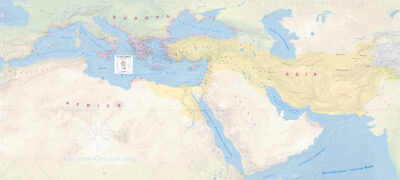

| Petralona scull (Dating estimates vary widely from 700000 to 160000 years before present) | Paleolithic Period (2.5 million – 10000 BCE) | |
| Apidima Cave scull fragment is the earliest example of modern humans (early Homo sapiens) found outside Africa | 210000 years ago | |
| Franchthi Cave artifacts indicate seafaring activity | 13000 BCE | Mesolithic Period (13000 – 7000 BCE) |
| Earliest evidence of burials found in Franchthi Cave in the Argolid, Greece | 7250 BCE | |
| Evidence of food producing economy, simple hut construction, and systematic seafaring activity in mainland Greece and the Aegean | 7000 BCE | Neolithic Period (7000 – 3000 BCE) |
| First “Megaron House” at Sesclo, in central Greece | 5700 BCE | |
| Evidence of earliest fortifications at Dimini, Greece | 3400 BCE | |
| 3200 BCE | Early Cycladic Culture (3200 – 2000 BCE) | |
| Houses of Vasiliki and Myrtos Messara Tholoi House of Tiles at Lerna | 3000 BCE | Aegean Bronze Age or Early Bronze Age (3000 – 2000 BCE) Minoan Prepalatial or EMIA, EMIB (3000 – 2600 BCE) Early Helladic Period (3000 – 2000 BCE) |
| 2600 BCE | Minoan Prepalatial Period or: EMIIA, EMIIB, MMIII (2600 – 2000 BCE) | |
| Destruction of Minoan settlements | 2000 BCE | Minoan Protopalatial Period or: MMIA, MMIB, MMI IA, MMI IB, MMI IIA, MMI IIB, LMIA Early (1900 – 1700 BCE) Early Middle Cycladic (2000-1600 BCE) Middle Helladic Period or Middle Bronze Age (2000-1550 BCE) |
| 1750 | Mycenaean Culture (1750 – 1050 BCE) | |
| Destruction of Minoan palaces Settlement of Akrotiri, Thera Grave Circle B at Mycenae | 1700 BCE | Minoan Neopalatial Period or: LMIA Advanced, LMIA Final, LMIB Early, LMIB Late, LMII (1700 – 1400 BCE) |
| Eruption of Thera volcano (sometime between 1627 and 1500) | 1627 BCE | |
| Grave Circle A at Mycenae Legends: Argo Voyage, Heracles, Oedipus | 1600 BCE | Late Bronze Age or The Heroic Age (1600 – 1100 BCE) |
| Tholos Tomb at Mycenae | 1550 BCE | Late Helladic Period (1500 – 1100 BCE) Late Cycladic Period (1500 – 1100 BCE) |
| Linear B writing (1450-1180) | 1450 BCE | |
| Mycenaean Palaces Evidence of expanded Mycenaean trade at Levand | 1400 BCE | Minoan Postpalatial Period or: LMIIIA1, LMIIIA2, LMIIIB, LMIIIC (1400 – 1100 BCE) |
| Palace of Knossos destruction | 1370 BCE | |
| “Sea Peoples” begin raids in the Eastern Mediterranean | 1300 BCE | |
| Trojan War (1250 or 1210) | 1250 BCE | |
| Destruction of many Mycenaean palaces Doric Invasions? (1200-1100) Sea Peoples (1200-1100) | 1200 BCE | |
| 1180 BCE | Sub-Mycenaean Period (1180 – 1050 BCE) | |
| Destruction of Miletus and resettlement | 1100 BCE | Sub-Minoan Period (1150 – 950 BCE) Dark Age of Greece (1100 – 700 BCE) Proto-Geometric Period (1100 – 900 BCE) |
| End of Mycenaean civilization Lefkandi: Toumba building | 1000 BCE | |
| 900 BCE | Geometric Period (900 – 700 BCE) | |
| Early migrations: emporions at Al-Mina (825-800), colony at Pithekoussai (775-770) | 825 BCE | |
| First Olympic Games | 776 BCE | |
| Greek colonies established in Southern Italy & Sicily Invention of Greek alphabet Homeric poems recorded in writing (750-700) | 750 BCE | Late Geometric (circa 760 – 700 BCE) |
| 740 BCE | Orientalizing Period (circa 740 – 650 BCE) | |
| First Messenian War Sparta invades Messenia (730-710) Naxos founded (734) Syracuse founded (733) | 730 BCE | |
| 700 BCE | Archaic Period (700 – 480 BCE) | |
| Earliest Lyric Poets | 650 BCE | |
| Second Messenian War Sparta invades Messenia (640-630) Cyrene founded (630) | 640 BCE | |
| Sappho born in Lesbos | 630 BCE | |
| Thales (625-545) born in Miletos | 625 BCE | |
| Pythagoras (569-475) born in Samos | 569 BCE | |
| Solon replaces the Draconian law in Athens and lays the foundation for Democracy. He introduced to Athens the first coinage and a system of weights and measures | 594 BCE | |
| Pisistratos becomes tyrant of Athens | 546 BCE | |
| Pesistratos Dies. His sons become tyrants of Athens | 527 BCE | |
| Red-figure pottery developed in Athens | 525 BCE | |
| Alcmaeonid family and Spartans free Athens from tyranny. Introduction of Democracy in Athens | 510 BCE | |
| Kleisthenes begins reforming Athenian code of laws, and establishes a democratic constitution | 508 BCE | |
| Ionian revolt | 499 – 494 BCE | |
| Persian Wars | 497-479 BCE | |
| Battle of Marathon Athenians defeat Darius and his Persian army | 490 BCE | |
| Silver mines discovered near Athens Athens begin building naval fleet | 483 BCE | |
| Aristides ostracized | 482 BCE | |
| Xerxes marches on Greece Battle of Thermopylae Persians burn the Acropolis Athens and allies defeat Persian fleet at naval battle of Salamis | 480 BCE | Classical Period (480 – 323 BCE) Transitional (480 – 450 BCE) |
| Battle of Plataea Greeks defeat Persian army | 479 BCE | |
| Delian league lead by Athens | 477 BCE | |
| Earthquake in Lakonia Helot revolt against Sparta in Messenia | 465 BCE | |
| Peloponnesian Wars: “First Peloponnesian War” | 461-445 BCE | |
| Perikles leads Athens through its “Golden Era” (ca. 460-429) | 460 BCE | |
| Aeschylus produces “the Oresteia” trilogy of tragedies (Agamemnon, Libation Barers, Eumenides) in Athens | 458 BCE | |
| Delian league treasury moved from Delos to Athens | 454 BCE | |
| Sophist Protagoras visits Athens | 450 BCE | |
| Acropolis and other major building projects begin in Athens Construction of Parthenon (449-432) Sophocles produces the tragedy “Ajax” | 449 BCE | |
| Thirty-year peace treaty signed between Athens and Sparta in winter 446/445 | 446 BCE | |
| Sophocles produces “Antigone” in Athens 430-429 | 441 BCE | |
| Peloponnesian War (431-404) resumes Euripedes produces “Medea” in Athens | 431 BCE | |
| Plague epidemic in Athens | 430 BCE | |
| Death of Perikles | 429 BCE | |
| Peace of Nicias | 421 BCE | |
| Construction of Temple of Athena Nike (420-410) | 420 BCE | |
| Athenians resume hostilities Spartans defeat Athens at Mantinea | 418 BCE | |
| Athens razes Melos | 416 BCE | |
| Athens expedition to Syracuse Alcibiades defects to Sparta | 415 BCE | |
| Syracuse defeats Athens | 413 BCE | |
| Aristophanes produces “Lysistrata” | 411 BCE | |
| Athens surrenders to Sparta Thirty tyrants rule Athens | 404 BCE | |
| Democracy restored in Athens | 403 BCE | |
| Trial and execution of Socrates | 399 BCE | |
| Plato establishes the Athens Academy | 380 BCE | |
| Sparta defeated in Leuctra | 371 BCE | |
| Thebes defeats Sparta at Mantinea | 362 BCE | |
| Philip II, becomes King of Macedonia | 359 BCE | |
| Macedonian army defeats Athens and its allies at Chaeronea League of Corinth founded | 338 BCE | |
| Phillip II Assassinated. Alexander the Great becomes king of Macedonia | 336 BCE | |
| Aristotle founds the Lyceum in Athens | 335 BCE | |
| Alexander the Great defeats Persian army at Granicus river in Anatolia | 334 BCE | |
| Alexander the Great defeats Persians at Issus | 333 BCE | |
| Tyre capitulates to Alexander after siege | 332 BCE | |
| Alexander invades Egypt City of Alexandria founded in Egypt Alexander defeats Persians at Gaugamela | 331 BCE | |
| Alexander’s army reaches Bactria (Afghanistan) | 329 BCE | |
| Alexander marries Roxane (princes of Bactria) | 327 BCE | |
| Alexander’s army reaches India | 326 BCE | |
| Death of Alexander the Great | 323 BCE | Hellenistic Period (323 – 146 BCE) |
| Aristotle dies | 322 BCE | |
| Stoic philosopher Zeno founds school in Athens | 310 BCE | |
| Epicurus establishes ‘The Garden’ in Athens | 307 BCE | |
| Ptolemy I founds museum in Alexandria | 300 BCE | |
| Archimedes (287-212) born in Syracuse | 287 BCE | |
| Achaean League founded | 284 BCE | |
| Invasion of Greece by Gauls | 279 BCE | |
| Gauls defeated by king Attalus I | 238 BCE | |
| First Macedonian War (214-204) Rome defeats Philip V of Macedon | 214 BCE | |
| Roman conquer Syracuse. End of Greek city-state independence in Sicily. | 212 BCE | |
| Second Macedonian War (200-196) Victory of Flamininus at Cynoscephalae | 200 BCE | |
| Third Macedonian War (172-168/7) Lucius Aemelius Paulus of Rome defeats Perseus of Macedon at Pydna. Macedonia divided into four republics | 172 BCE | |
| Roman Invasion of Greece Mummius Achaicus sacks Corinth and dissolves the Achaean league. Rome rules Greece henceforth | 146 BCE | Late Hellenistic or Greco-Roman (146 – 30 BCE) |
| Romans led by Sulla sack Athens | 86 BCE | |
| Battle of Aktion Octavian (later Augustus) defeats Mark Antony and Cleopatra | 31 BCE | |
| Death of Cleopatra | 30 BCE | End of “Ancient Greece” period |
| Γεγονός / Εύρημα | Χρονολογία | Περίοδος |
| Κρανίο των Πετραλώνων (Οι εκτιμήσεις χρονολόγησης ποικίλλουν ευρέως από 700.000 έως 160.000 χρόνια πριν από σήμερα) | Παλαιολιθική Περίοδος (2,5 εκατομμύρια – 10.000 π.Χ.) | |
| Το θραύσμα κρανίου από το Σπήλαιο Απήδημα είναι το αρχαιότερο δείγμα σύγχρονου ανθρώπου (πρώιμου Homo sapiens) που βρέθηκε εκτός Αφρικής | 210.000 χρόνια πριν | |
| Τα τεχνουργήματα του Σπηλαίου Φράγχθι υποδηλώνουν ναυτική δραστηριότητα | 13.000 π.Χ. | Μεσολιθική Περίοδος (13.000 – 7.000 π.Χ.) |
| Οι αρχαιότερες ενδείξεις ταφών βρέθηκαν στο Σπήλαιο Φράγχθι στην Αργολίδα | 7.250 π.Χ. | |
| Ενδείξεις οικονομίας παραγωγής τροφής, κατασκευής απλών καλυβών και συστηματικής ναυτικής δραστηριότητας στην ηπειρωτική Ελλάδα και το Αιγαίο | 7.000 π.Χ. | Νεολιθική Περίοδος (7.000 – 3.000 π.Χ.) |
| Το πρώτο «Μέγαρο» στο Σέσκλο της κεντρικής Ελλάδας | 5.700 π.Χ. | |
| Ενδείξεις των αρχαιότερων οχυρώσεων στο Διμήνι | 3.400 π.Χ. | |
| 3.200 π.Χ. | Πρωτοκυκλαδικός Πολιτισμός (3.200 – 2.000 π.Χ.) | |
| Οικίες στο Βασιλική και στον Μύρτο Θολωτοί τάφοι της Μεσσαράς Οικία των Τηλών στη Λέρνα | 3.000 π.Χ. | Εποχή του Χαλκού στο Αιγαίο ή Πρώιμη Εποχή του Χαλκού (3.000 – 2.000 π.Χ.) Προανακτορική Μινωική Περίοδος ή ΠΜ ΙΑ, ΠΜ ΙΒ (3.000 – 2.600 π.Χ.) Πρωτοελλαδική Περίοδος (3.000 – 2.000 π.Χ.) |
| 2.600 π.Χ. | Προανακτορική Μινωική Περίοδος ή: ΠΜ ΙΙΑ, ΠΜ ΙΙΒ, ΜΜ ΙΙΙ (2.600 – 2.000 π.Χ.) | |
| Καταστροφή μινωικών οικισμών | 2.000 π.Χ. | Παλαιοανακτορική Μινωική Περίοδος ή: ΜΜ ΙΑ, ΜΜ ΙΒ, ΜΜ Ι ΙΑ, ΜΜ Ι ΙΒ, ΜΜ ΙΙΑ, ΜΜ ΙΙΒ, ΥΜ ΙΑ Πρώιμη (1.900 – 1.700 π.Χ.) Πρώιμη Μεσοκυκλαδική (2.000-1.600 π.Χ.) Μεσοελλαδική Περίοδος ή Μέση Εποχή του Χαλκού (2.000-1.550 π.Χ.) |
| 1.750 π.Χ. | Μυκηναϊκός Πολιτισμός (1.750 – 1050 π.Χ.) | |
| Καταστροφή μινωικών ανακτόρων Οικισμός Ακρωτηρίου, Θήρα Ταφικός Κύκλος Β στις Μυκήνες | 1.700 π.Χ. | Νεοανακτορική Μινωική Περίοδος ή: ΥΜ ΙΑ Προχωρημένη, ΥΜ ΙΑ Τελική, ΥΜ ΙΒ Πρώιμη, ΥΜ ΙΒ Ύστερη, ΥΜ ΙΙ (1.700 – 1.400 π.Χ.) |
| Έκρηξη του ηφαιστείου της Θήρας (κάποια στιγμή μεταξύ 1627 και 1500) | 1627 π.Χ. | |
| Ταφικός Κύκλος Α στις Μυκήνες Μύθοι: Αργοναυτική Εκστρατεία, Ηρακλής, Οιδίποδας | 1.600 π.Χ. | Ύστερη Εποχή του Χαλκού ή Ηρωική Εποχή (1.600 – 1.100 π.Χ.) |
| Θολωτός Τάφος στις Μυκήνες | 1.550 π.Χ. | Υστεροελλαδική Περίοδος (1.500 – 1.100 π.Χ.) Υστεροκυκλαδική Περίοδος (1.500 – 1.100 π.Χ.) |
| Γραφή Γραμμική Β (1450-1180) | 1.450 π.Χ. | |
| Μυκηναϊκά Ανάκτορα Ενδείξεις διευρυμένου μυκηναϊκού εμπορίου στο Λεβάντε | 1.400 π.Χ. | Μετανακτορική Μινωική Περίοδος ή: ΥΜ ΙΙΙΑ1, ΥΜ ΙΙΙΑ2, ΥΜ ΙΙΙΒ, ΥΜ ΙΙΙΓ (1.400 – 1.100 π.Χ.) |
| Καταστροφή του ανακτόρου της Κνωσού | 1370 π.Χ. | |
| Οι “Λαοί της Θάλασσας” ξεκινούν επιδρομές στην Ανατολική Μεσόγειο | 1.300 π.Χ. | |
| Τρωικός Πόλεμος (1250 ή 1210) | 1.250 π.Χ. | |
| Καταστροφή πολλών μυκηναϊκών ανακτόρων Κάθοδος των Δωριέων; (1200-1100) Λαοί της Θάλασσας (1200-1100) | 1.200 π.Χ. | |
| 1.180 π.Χ. | Υπομυκηναϊκή Περίοδος (1.180 – 1.050 π.Χ.) | |
| Καταστροφή της Μιλήτου και επανεγκατάσταση | 1.100 π.Χ. | Υπομινωική Περίοδος (1.150 – 950 π.Χ.) Σκοτεινοί Αιώνες της Ελλάδας (1.100 – 700 π.Χ.) Πρωτογεωμετρική Περίοδος (1.100 – 900 π.Χ.) |
| Τέλος του μυκηναϊκού πολιτισμού Λευκαντί: Κτίριο της Τούμπας | 1.000 π.Χ. | |
| 900 π.Χ. | Γεωμετρική Περίοδος (900 – 700 π.Χ.) | |
| Πρώιμες μεταναστεύσεις: εμπόρια στην Αλ Μίνα (825-800), αποικία στις Πιθηκούσσες (775-770) | 825 π.Χ. | |
| Πρώτοι Ολυμπιακοί Αγώνες | 776 π.Χ. | |
| Ίδρυση ελληνικών αποικιών στη Νότια Ιταλία & Σικελία Εφεύρεση του ελληνικού αλφαβήτου Καταγραφή των ομηρικών επών (750-700) | 750 π.Χ. | Ύστερη Γεωμετρική (περίπου 760 – 700 π.Χ.) |
| 740 π.Χ. | Ανατολίζουσα Περίοδος (περίπου 740 – 650 π.Χ.) | |
| Α’ Μεσσηνιακός Πόλεμος Η Σπάρτη εισβάλλει στη Μεσσηνία (730-710) Ίδρυση της Νάξου (734) Ίδρυση των Συρακουσών (733) | 730 π.Χ. | |
| 700 π.Χ. | Αρχαϊκή Περίοδος (700 – 480 π.Χ.) | |
| Πρώιμοι Λυρικοί Ποιητές | 650 π.Χ. | |
| Β’ Μεσσηνιακός Πόλεμος Η Σπάρτη εισβάλλει στη Μεσσηνία (640-630) Ίδρυση της Κυρήνης (630) | 640 π.Χ. | |
| Γέννηση της Σαπφούς στη Λέσβο | 630 π.Χ. | |
| Γέννηση του Θαλή (625-545) στη Μίλητο | 625 π.Χ. | |
| Γέννηση του Πυθαγόρα (569-475) στη Σάμο | 569 π.Χ. | |
| Ο Σόλωνας αντικαθιστά τη Δρακόντεια νομοθεσία στην Αθήνα και θέτει τα θεμέλια της Δημοκρατίας. Εισάγει στην Αθήνα το πρώτο νόμισμα και ένα σύστημα μέτρων και σταθμών | 594 π.Χ. | |
| Ο Πεισίστρατος γίνεται τύραννος της Αθήνας | 546 π.Χ. | |
| Θάνατος του Πεισίστρατου. Οι γιοι του γίνονται τύραννοι της Αθήνας | 527 π.Χ. | |
| Ανάπτυξη της ερυθρόμορφης κεραμικής στην Αθήνα | 525 π.Χ. | |
| Η οικογένεια των Αλκμαιωνιδών και οι Σπαρτιάτες απελευθερώνουν την Αθήνα από την τυραννία. Εισαγωγή της Δημοκρατίας στην Αθήνα | 510 π.Χ. | |
| Ο Κλεισθένης αρχίζει τη μεταρρύθμιση του αθηναϊκού κώδικα νόμων και εγκαθιδρύει δημοκρατικό πολίτευμα | 508 π.Χ. | |
| Ιωνική Επανάσταση | 499 – 494 π.Χ. | |
| Περσικοί Πόλεμοι | 497-479 π.Χ. | |
| Μάχη του Μαραθώνα Οι Αθηναίοι νικούν τον Δαρείο και τον περσικό στρατό του | 490 π.Χ. | |
| Ανακάλυψη ορυχείων αργύρου κοντά στην Αθήνα Η Αθήνα αρχίζει να χτίζει πολεμικό στόλο | 483 π.Χ. | |
| Εξοστρακισμός του Αριστείδη | 482 π.Χ. | |
| Ο Ξέρξης εκστρατεύει κατά της Ελλάδας Μάχη των Θερμοπυλών Οι Πέρσες πυρπολούν την Ακρόπολη Η Αθήνα και οι σύμμαχοί της νικούν τον περσικό στόλο στη ναυμαχία της Σαλαμίνας | 480 π.Χ. | Κλασική Περίοδος (480 – 323 π.Χ.) Μεταβατική (480 – 450 π.Χ.) |
| Μάχη των Πλαταιών Οι Έλληνες νικούν τον περσικό στρατό | 479 π.Χ. | |
| Η Δηλιακή Συμμαχία υπό την ηγεσία της Αθήνας | 477 π.Χ. | |
| Σεισμός στη Λακωνία Εξέγερση των Ειλώτων κατά της Σπάρτης στη Μεσσηνία | 465 π.Χ. | |
| Πελοποννησιακοί Πόλεμοι: «Πρώτος Πελοποννησιακός Πόλεμος» | 461-445 π.Χ. | |
| Ο Περικλής οδηγεί την Αθήνα στον «Χρυσό Αιώνα» της (περ. 460-429) | 460 π.Χ. | |
| Ο Αισχύλος ανεβάζει την τριλογία τραγωδιών «Ορέστεια» (Αγαμέμνων, Χοηφόροι, Ευμενίδες) στην Αθήνα | 458 π.Χ. | |
| Το ταμείο της Δηλιακής Συμμαχίας μεταφέρεται από τη Δήλο στην Αθήνα | 454 π.Χ. | |
| Ο σοφιστής Πρωταγόρας επισκέπτεται την Αθήνα | 450 π.Χ. | |
| Ξεκινούν τα έργα στην Ακρόπολη και άλλα μεγάλα οικοδομικά έργα στην Αθήνα Κατασκευή του Παρθενώνα (449-432) Ο Σοφοκλής ανεβάζει την τραγωδία «Αίας» | 449 π.Χ. | |
| Υπογραφή Τριακονταετούς Ειρήνης μεταξύ Αθήνας και Σπάρτης τον χειμώνα του 446/445 | 446 π.Χ. | |
| Ο Σοφοκλής ανεβάζει την «Αντιγόνη» στην Αθήνα 430-429 | 441 π.Χ. | |
| Επανέναρξη του Πελοποννησιακού Πολέμου (431-404) Ο Ευριπίδης ανεβάζει τη «Μήδεια» στην Αθήνα | 431 π.Χ. | |
| Επιδημία λοιμού στην Αθήνα | 430 π.Χ. | |
| Θάνατος του Περικλή | 429 π.Χ. | |
| Νικίειος Ειρήνη | 421 π.Χ. | |
| Κατασκευή του Ναού της Αθηνάς Νίκης (420-410) | 420 π.Χ. | |
| Οι Αθηναίοι επαναλαμβάνουν τις εχθροπραξίες Οι Σπαρτιάτες νικούν την Αθήνα στη Μαντίνεια | 418 π.Χ. | |
| Η Αθήνα ισοπεδώνει τη Μήλο | 416 π.Χ. | |
| Αθηναϊκή εκστρατεία στις Συρακούσες Ο Αλκιβιάδης αυτομολεί στη Σπάρτη | 415 π.Χ. | |
| Οι Συρακούσες νικούν την Αθήνα | 413 π.Χ. | |
| Ο Αριστοφάνης ανεβάζει τη «Λυσιστράτη» | 411 π.Χ. | |
| Η Αθήνα παραδίδεται στη Σπάρτη Οι Τριάκοντα Τύραννοι κυβερνούν την Αθήνα | 404 π.Χ. | |
| Αποκατάσταση της Δημοκρατίας στην Αθήνα | 403 π.Χ. | |
| Ο Πλάτων ιδρύει την Ακαδημία Αθηνών | 380 π.Χ. | |
| Η Σπάρτη ηττάται στα Λεύκτρα | 371 π.Χ. | |
| Η Θήβα νικά τη Σπάρτη στη Μαντίνεια | 362 π.Χ. | |
| Ο Φίλιππος Β’ γίνεται βασιλιάς της Μακεδονίας | 359 π.Χ. | |
| Ο μακεδονικός στρατός νικά την Αθήνα και τους συμμάχους της στη Χαιρώνεια Ιδρύεται η Συμμαχία της Κορίνθου | 338 π.Χ. | |
| Δολοφονία του Φιλίππου Β’. Ο Μέγας Αλέξανδρος γίνεται βασιλιάς της Μακεδονίας | 336 π.Χ. | |
| Ο Αριστοτέλης ιδρύει το Λύκειο στην Αθήνα | 335 π.Χ. | |
| Ο Μέγας Αλέξανδρος νικά τον περσικό στρατό στον Γρανικό ποταμό στη Μικρά Ασία | 334 π.Χ. | |
| Ο Μέγας Αλέξανδρος νικά τους Πέρσες στην Ισσό | 333 π.Χ. | |
| Η Τύρος παραδίδεται στον Αλέξανδρο μετά από πολιορκία | 332 π.Χ. | |
| Ο Αλέξανδρος εισβάλλει στην Αίγυπτο Ιδρύεται η πόλη της Αλεξάνδρειας στην Αίγυπτο Ο Αλέξανδρος νικά τους Πέρσες στα Γαυγάμηλα | 331 π.Χ. | |
| Ο στρατός του Αλεξάνδρου φτάνει στη Βακτριανή (Αφγανιστάν) | 329 π.Χ. | |
| Ο Αλέξανδρος παντρεύεται τη Ρωξάνη (πριγκίπισσα της Βακτριανής) | 327 π.Χ. | |
| Ο στρατός του Αλεξάνδρου φτάνει στην Ινδία | 326 π.Χ. | |
| Ο στρατός του Αλεξάνδρου φτάνει στην Ινδία | 326 π.Χ. | |
| Θάνατος του Μεγάλου Αλεξάνδρου | 323 π.Χ. | Ελληνιστική Περίοδος (323 – 146 π.Χ.) |
| Ο Αριστοτέλης πεθαίνει | 322 π.Χ. | |
| Ο Στωικός φιλόσοφος Ζήνων ιδρύει σχολή στην Αθήνα | 310 π.Χ. | |
| Ο Επικούρειος φιλόσοφος Επίκουρος ιδρύει σχολή στην Αθήνα | 307 π.Χ. | |
| Ο Πτολεμαίος Α’ ιδρύει το Μουσείο στην Αλεξάνδρεια | 300 π.Χ. | |
| Ο Αρχιμήδης (287-212) γεννιέται στις Συρακούσες | 287 π.Χ. | |
| Ίδρυση της Αχαϊκής Συμπολιτείας | 284 π.Χ. | |
| Εισβολή των Γαλατών στην Ελλάδα | 279 π.Χ. | |
| Οι Γαλάτες ηττώνται από τον βασιλιά Άτταλο Α’ | 238 π.Χ. | |
| Α’ Μακεδονικός Πόλεμος (214-204) Η Ρώμη νικά τον Φίλιππο Ε’ της Μακεδονίας | 214 π.Χ. | |
| Οι Ρωμαίοι καταλαμβάνουν τις Συρακούσες. Τέλος της ανεξαρτησίας των ελληνικών πόλεων-κρατών στη Σικελία | 212 π.Χ. | |
| Β’ Μακεδονικός Πόλεμος (200-196) Νίκη του Φλαμινίνου στις Κυνός Κεφαλές | 200 π.Χ. | |
| Γ’ Μακεδονικός Πόλεμος (172-168/7) Ο Ρωμαίος Λεύκιος Αιμίλιος Παύλος νικά τον Περσέα της Μακεδονίας στην Πύδνα. Η Μακεδονία χωρίζεται σε τέσσερις δημοκρατίες | 172 π.Χ. | |
| Ρωμαϊκή Εισβολή στην Ελλάδα Ο Μόμμιος Αχαϊκός λεηλατεί την Κόρινθο και διαλύει την Αχαϊκή Συμπολιτεία. Η Ρώμη κυβερνά την Ελλάδα έκτοτε | 146 π.Χ. | Ύστερη Ελληνιστική ή Ελληνορωμαϊκή Περίοδος (146 – 30 π.Χ.) |
| Οι Ρωμαίοι υπό την ηγεσία του Σύλλα λεηλατούν την Αθήνα | 86 π.Χ. | |
| Ναυμαχία του Ακτίου Ο Οκταβιανός (μετέπειτα Αύγουστος) νικά τον Μάρκο Αντώνιο και την Κλεοπάτρα | 31 π.Χ. | |
| Θάνατος της Κλεοπάτρας | 30 π.Χ. | Τέλος της περιόδου της «Αρχαίας Ελλάδας» |
Chapters | Κεφάλαια
This history of Ancient Greece is divided into the following chapters: | Αυτή η ιστορία της Αρχαίας Ελλάδας είναι χωρισμένη στα ακόλουθα κεφάλαια:
- Timeline | Χρονολόγιο
- Introduction | Εισαγωγή
- Overview | Επισκόπηση
- Geography & Geology | Γεωγραφία & Γεολογία
- Stone Age | Λίθινη Εποχή
- Bronze Age | Εποχή του Χαλκού
6.2 Minoan | Μινωικός Πολιτισμός
6.3 Mycenaean | Μυκηναϊκός Πολιτισμός - Iron Age | Εποχή του Σιδήρου
7.1 Geometric or Dark Age | Γεωμετρική ή Σκοτεινή Εποχή
7.2 Archaic Era | Αρχαϊκή Εποχή - Classical Era | Κλασική Εποχή
- Hellenistic Era | Ελληνιστική Εποχή
Related Pages