On this page:
Ἐμπόριον (English: Emporion, Empuries Catalan: Empúries) was a market, and later a city founded in today’s Catalonia, Spain in 575 BCE by Greeks from Phocaea, a prosperous city in Asia Minor. Today, its ancient ruins comprise the Empúries Archaeological Site.
A Brief History of Emporion
Founded in the 6th century BCE by Phocaean Greeks from Massalia (Marseille), Emporion served as a vital “emporion” or trading hub connecting the Mediterranean with the interior of Iberia.
Phocaeans were the “marathon runners” of Greek colonization, having traveled 2,300 kilometers (1,430 miles), crossing nearly the entire length of the Mediterranean Sea to establish a city-states in its western shores. The Phocaean colonial network comprised major city-states such as Massalia, Alalia, and Velia, alongside strategically placed emporia including Rhode, Mainake, and Hemeroskopeion.
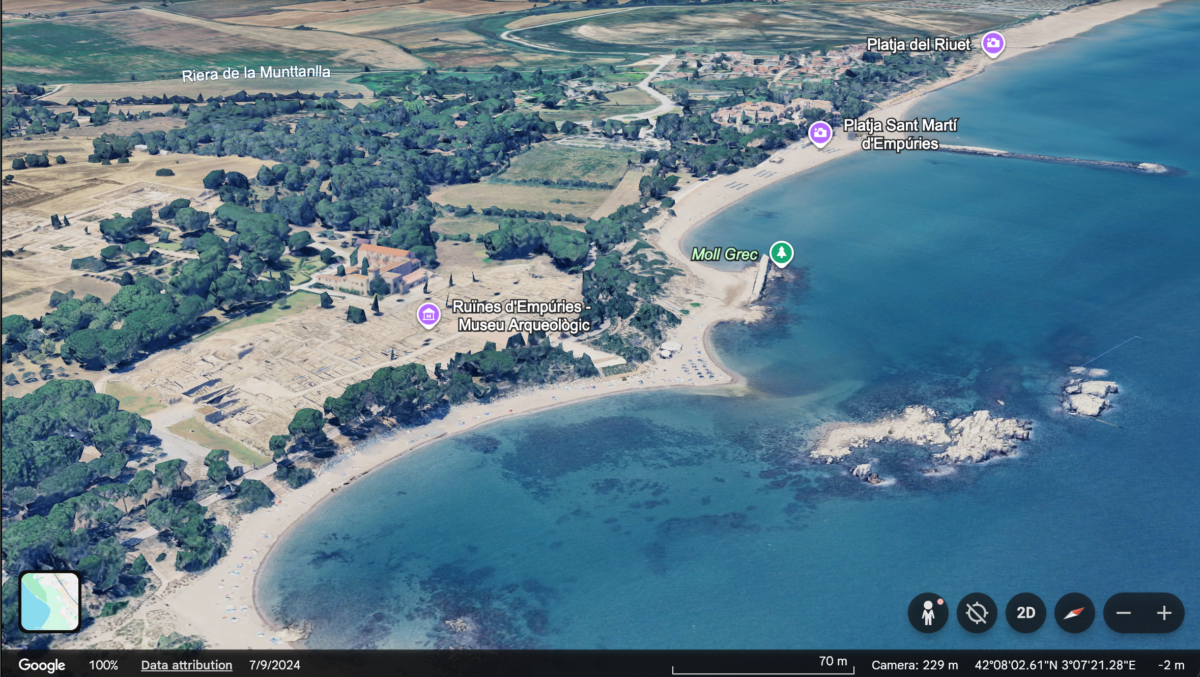
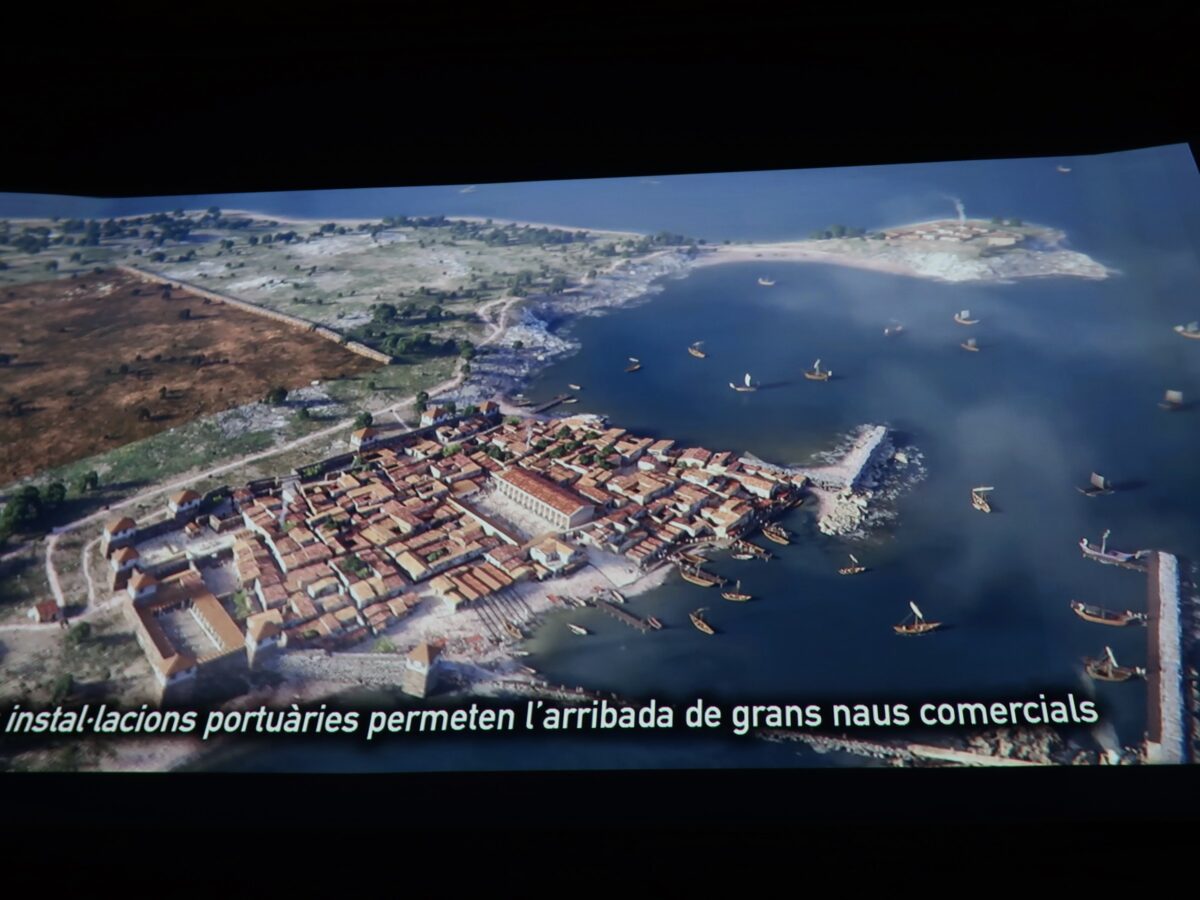
Emporion had two separate harbors on the Mediterranean Sea and good road access to the interior of Iberia, so it became a strategic maritime foothold on the Costa Brava and a hub of commercial and cultural activity with the indigenous people, introducing Greek coinage, pottery, and commercial law.
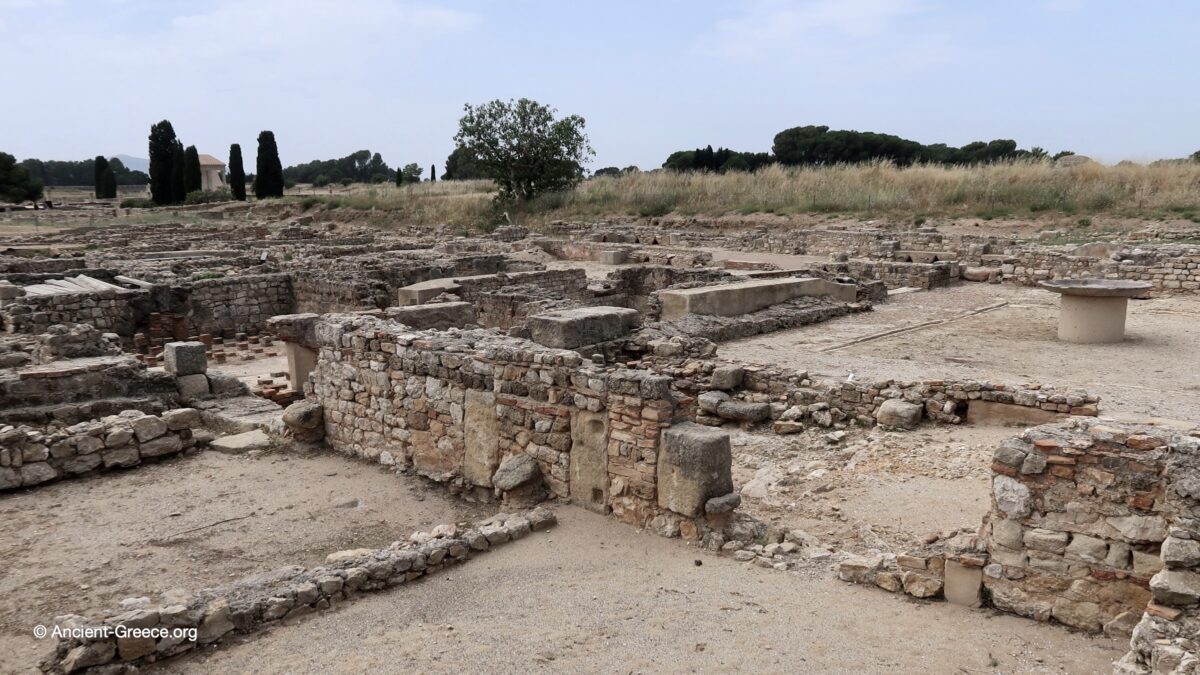
The initial Archaic settlement, the “Palaia Polis” (old town) established a bit to the north at Sant Martí d’Empúries is now, before relocating to the Neapolis (“Nea Polis” meaning “new town”) on the location the Emporion archaeological site is today.
While Neapolis was later utilized by the Romans, its core identity for centuries was defined by its Greek layout, defensive walls, and deep cultural ties to the Aegean.
Early Iron Age growth led to stabilized settlements, with activity centered on the hills near estuaries and marshes, specifically at Sant Martí d’Empúries and the Vilanera necropolis.
The arrival of Phoenician goods was followed in the 6th century BC by the establishment of a Greek empórion. This period marks the convergence of indigenous port-side occupation and the emergence of Iberian culture.
During the second half of the 6th century BC, a new wave of Phocaeans established a second settlement known as Neapolis on the opposite side of the port. This expansion consolidated the Emporion enclave as the primary Greek commercial hub in the Iberian Peninsula, providing rich archaeological evidence of daily life.
The Greek Neapolis
Emporion Hellenistic Mole
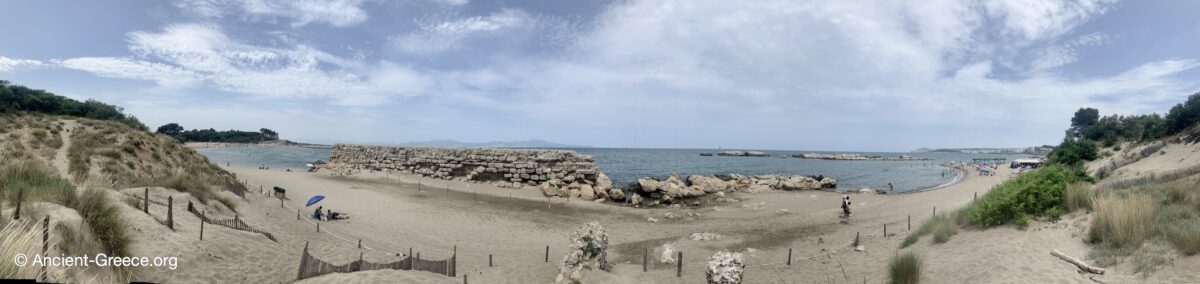
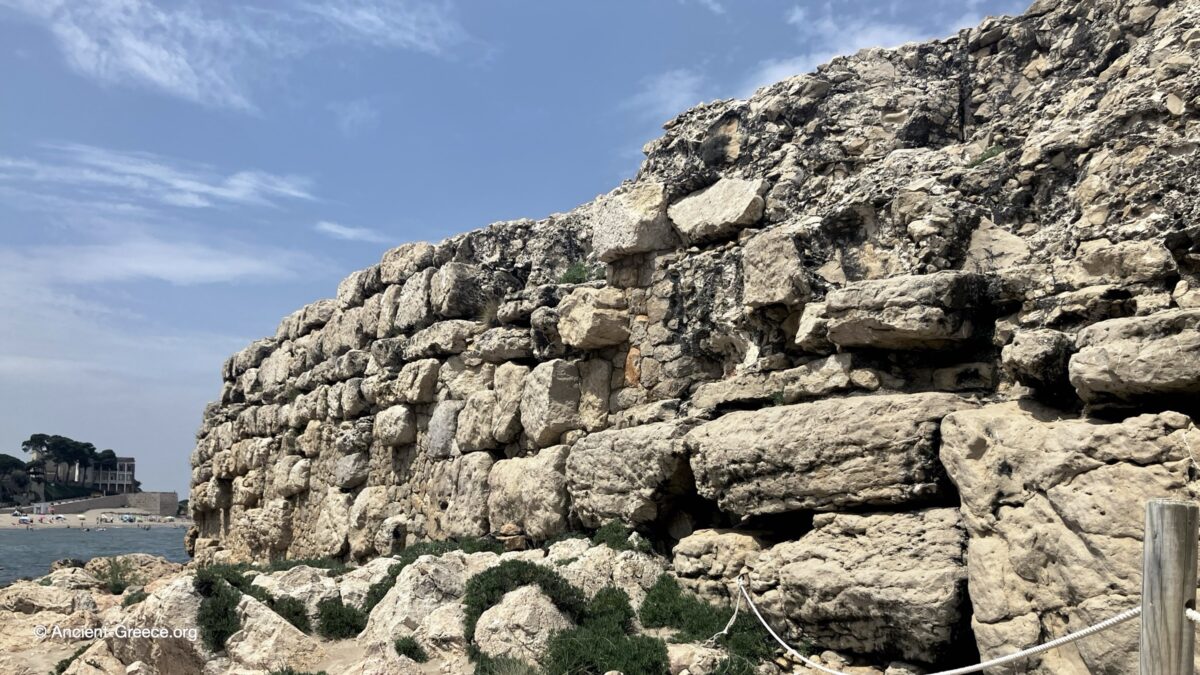
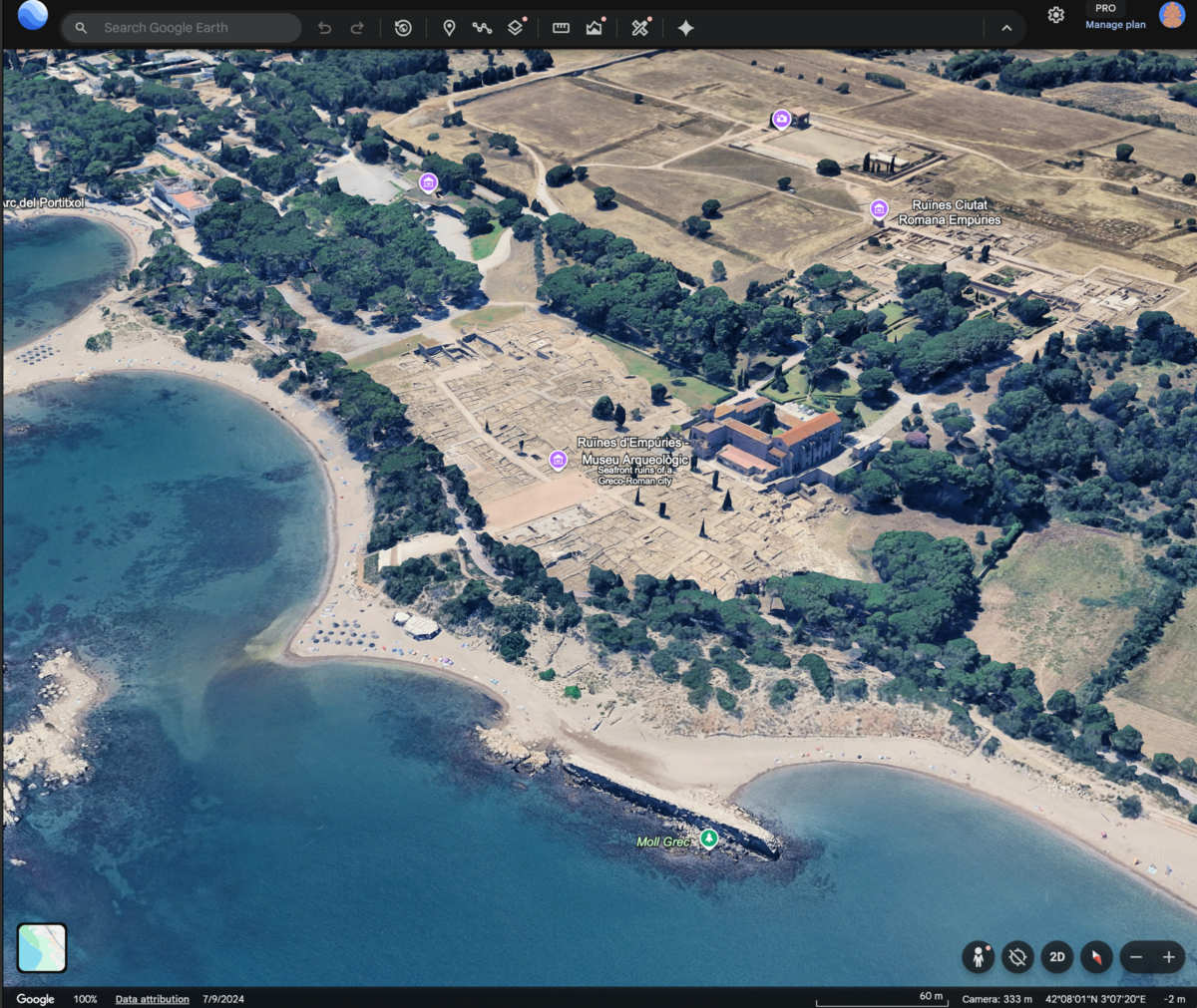
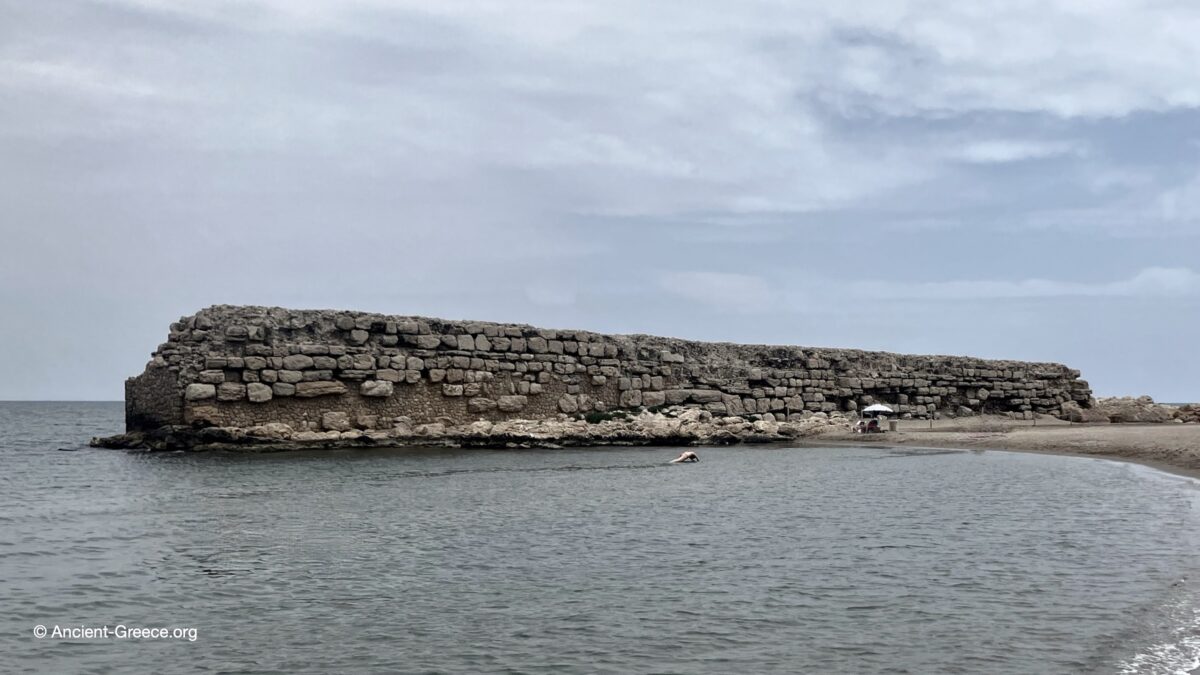
A massive 2nd-century BCE Hellenistic breakwater protected the Neapolis harbor. It is a fine example of ancient Greek maritime engineering that has survived for two thousand years.
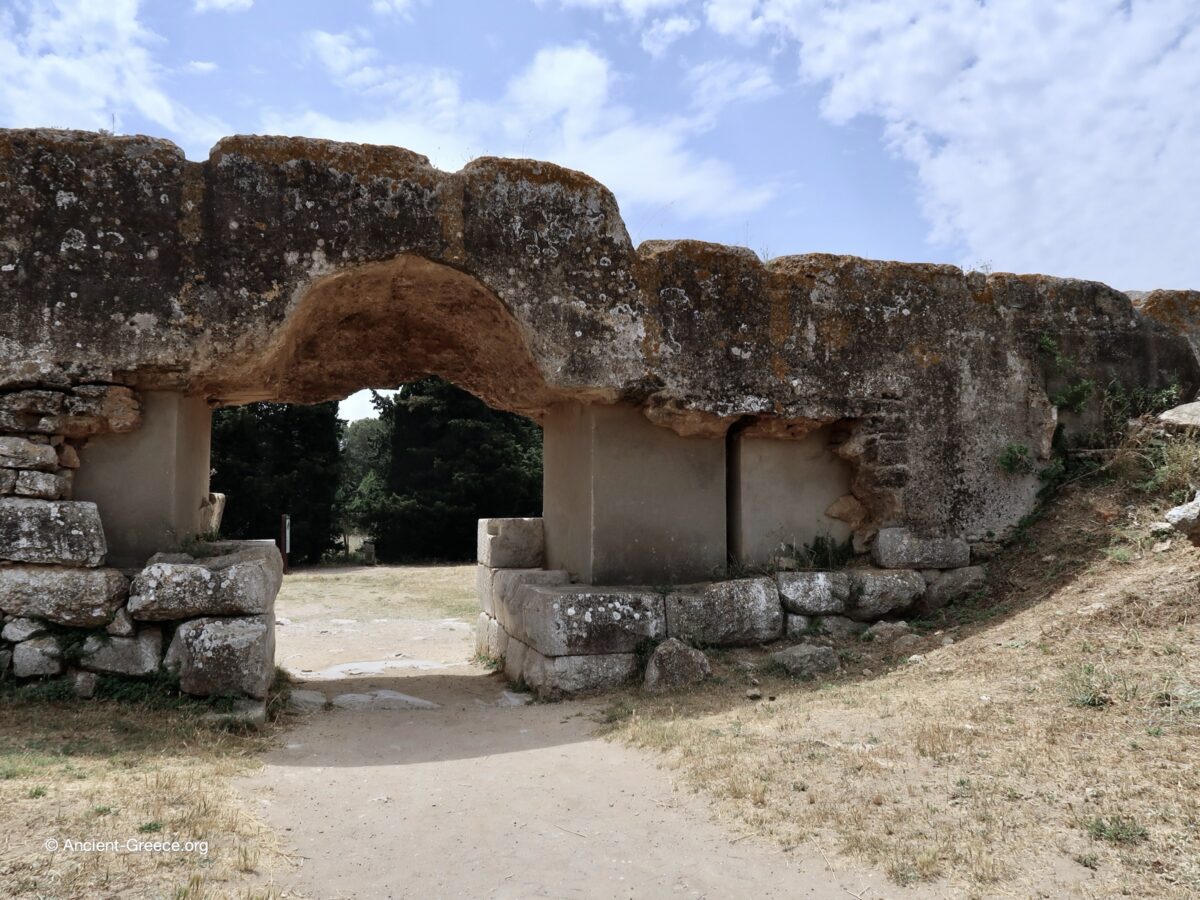
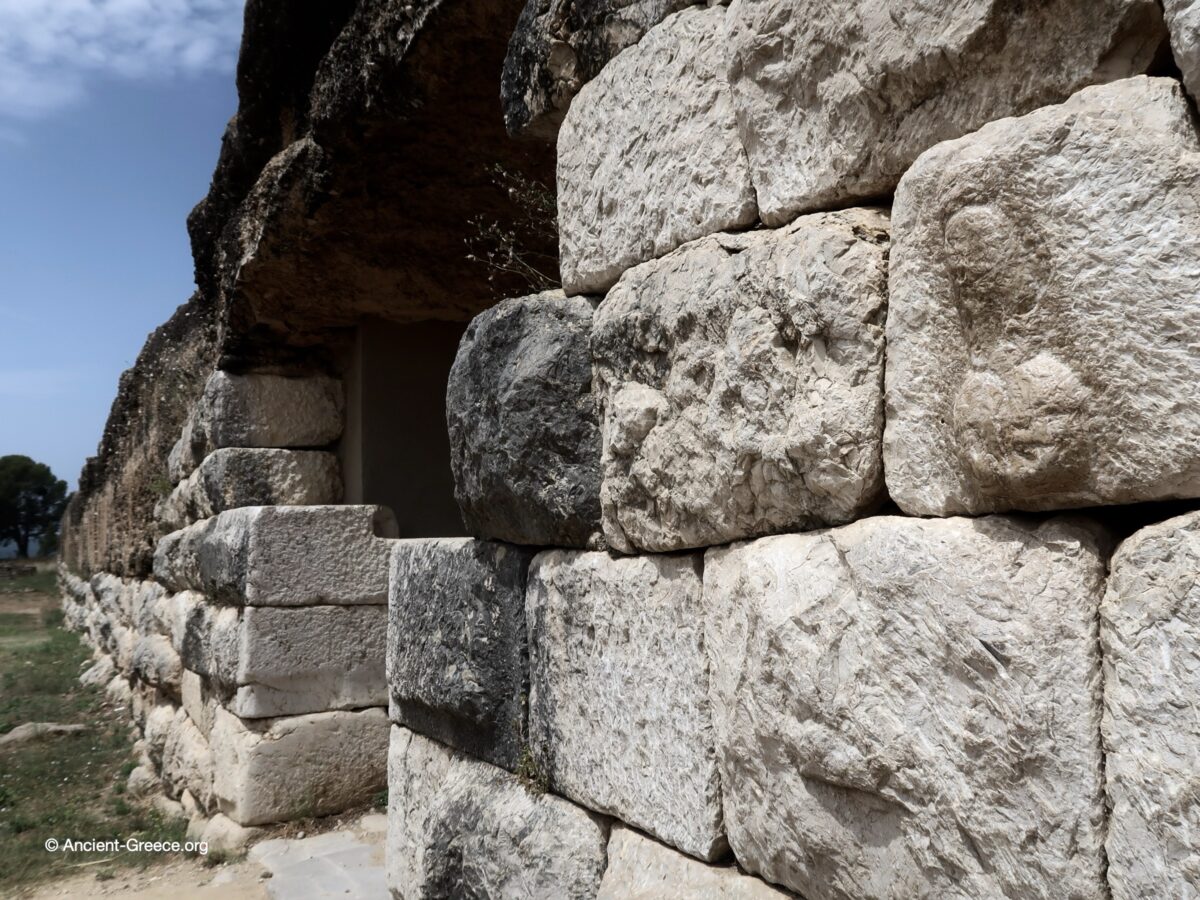
Neapolis Southern Defense System
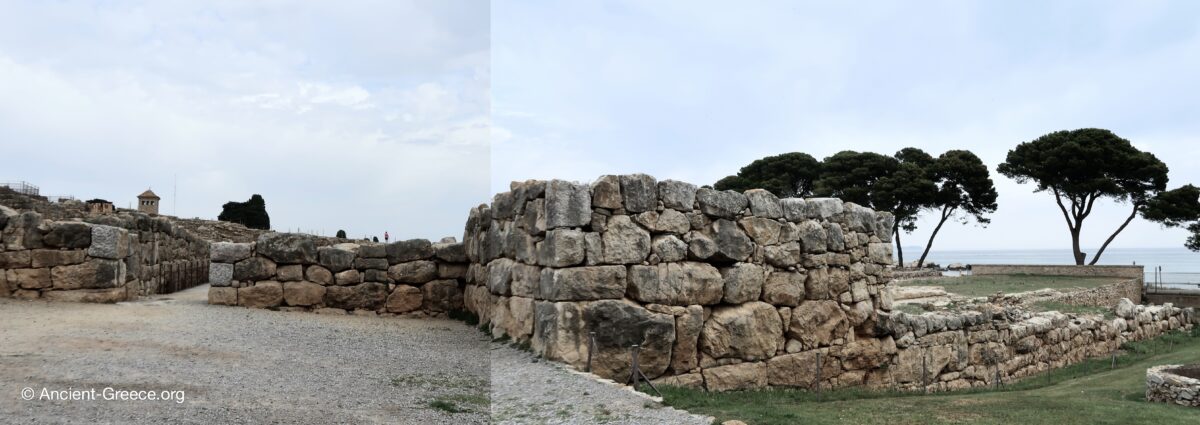
The defense system in the southern sector of Neapolis underwent diverse reforms over time, with architectural remains from various building phases still preserved today.
Beneath the city’s modern structures, elements of the 5th-century BCE defenses remain visible adjacent to the acropolis. These were succeeded in the 4th century BCE by a new section of wall featuring towers and a moat, though these components were almost entirely dismantled to facilitate later construction.
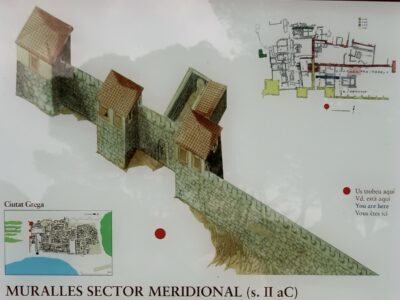
By the 3rd century BCE, a proteichisma—an outer protective wall—was added to reinforce the existing 4th-century BCE fortifications, only to be partially dismantled in subsequent years. The surviving walls were ultimately constructed in the mid-2nd century BCE. This final phase includes two prominent towers designed to protect the primary southern gateway, along with a third defensive tower situated at the southwest corner.
The Sanctuary of Asclepius
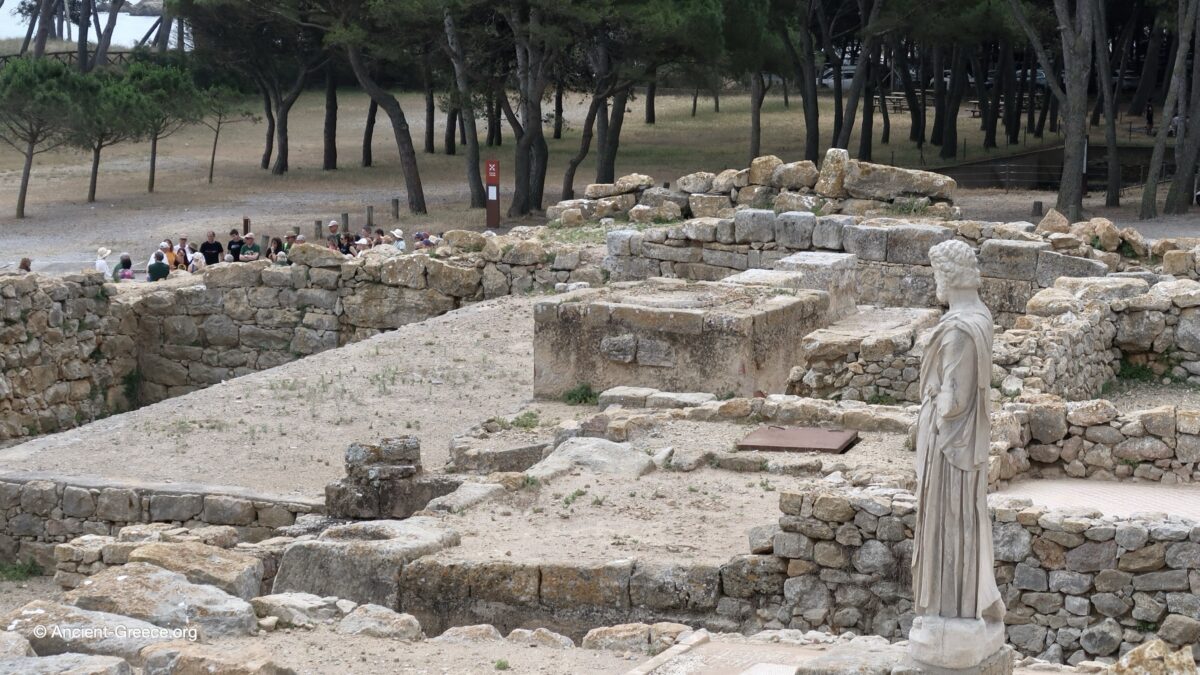
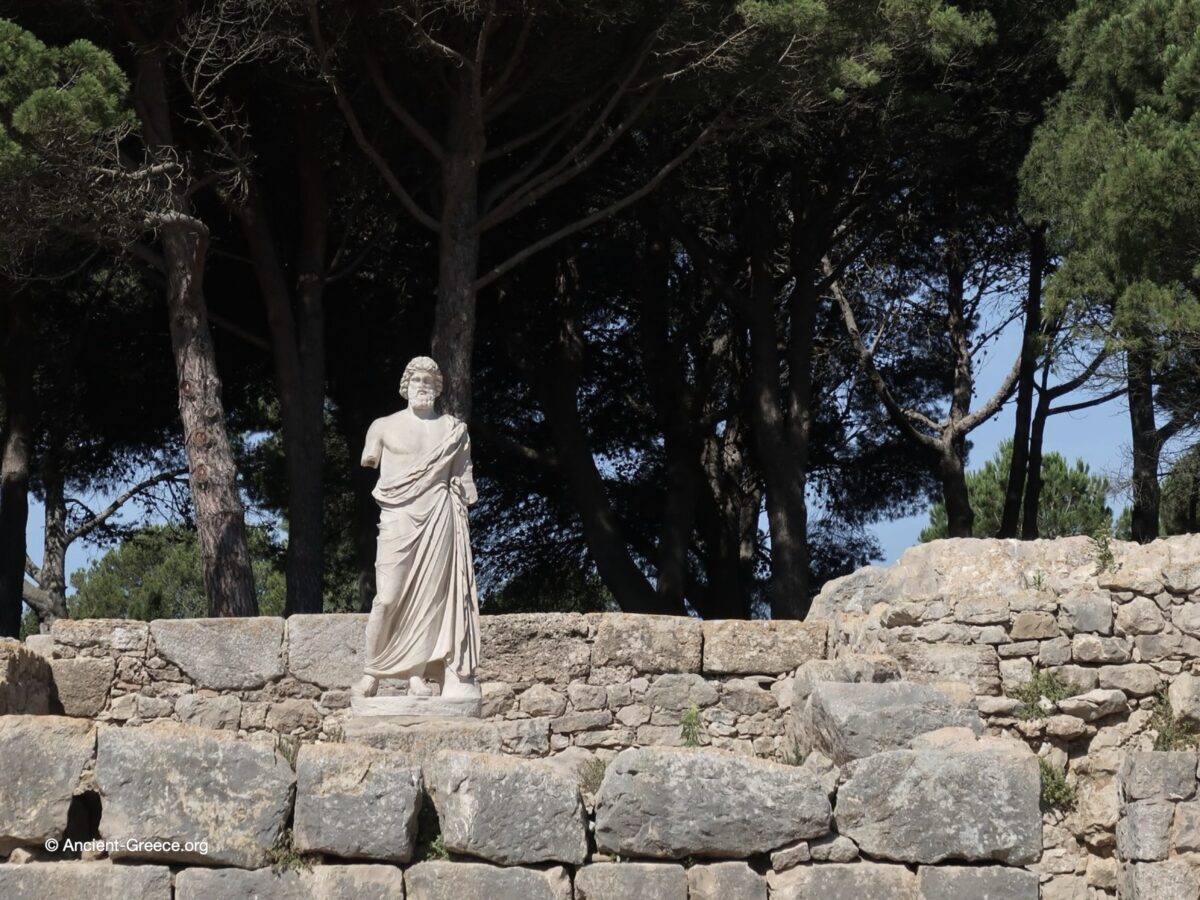
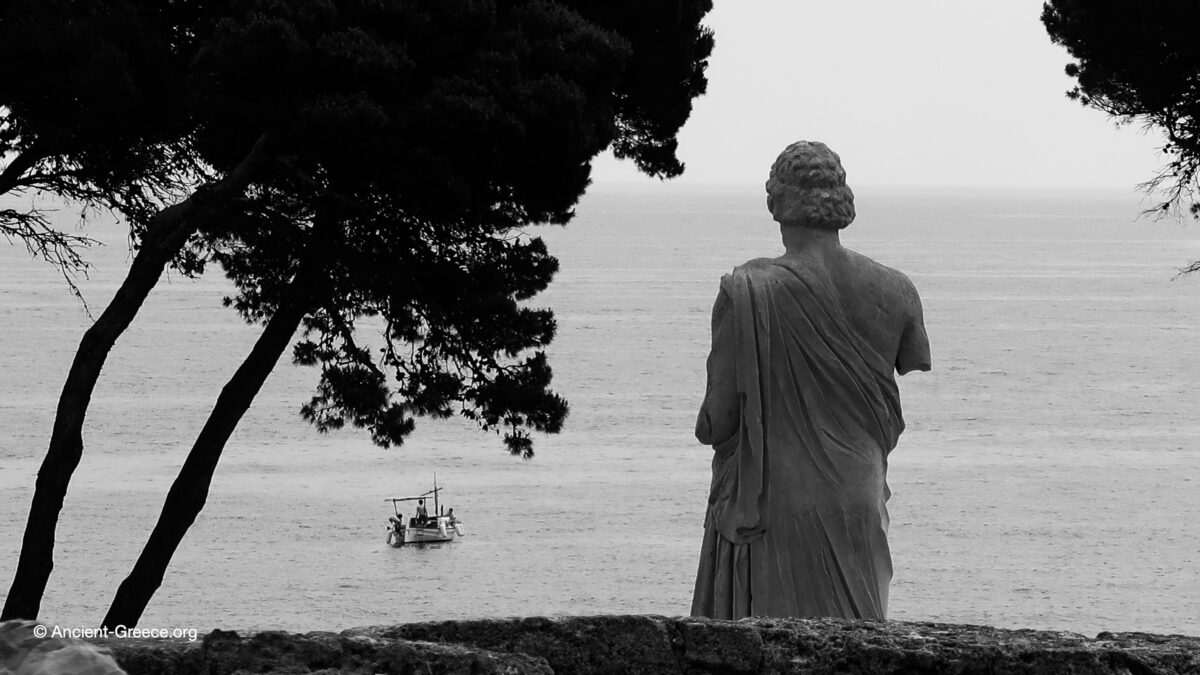
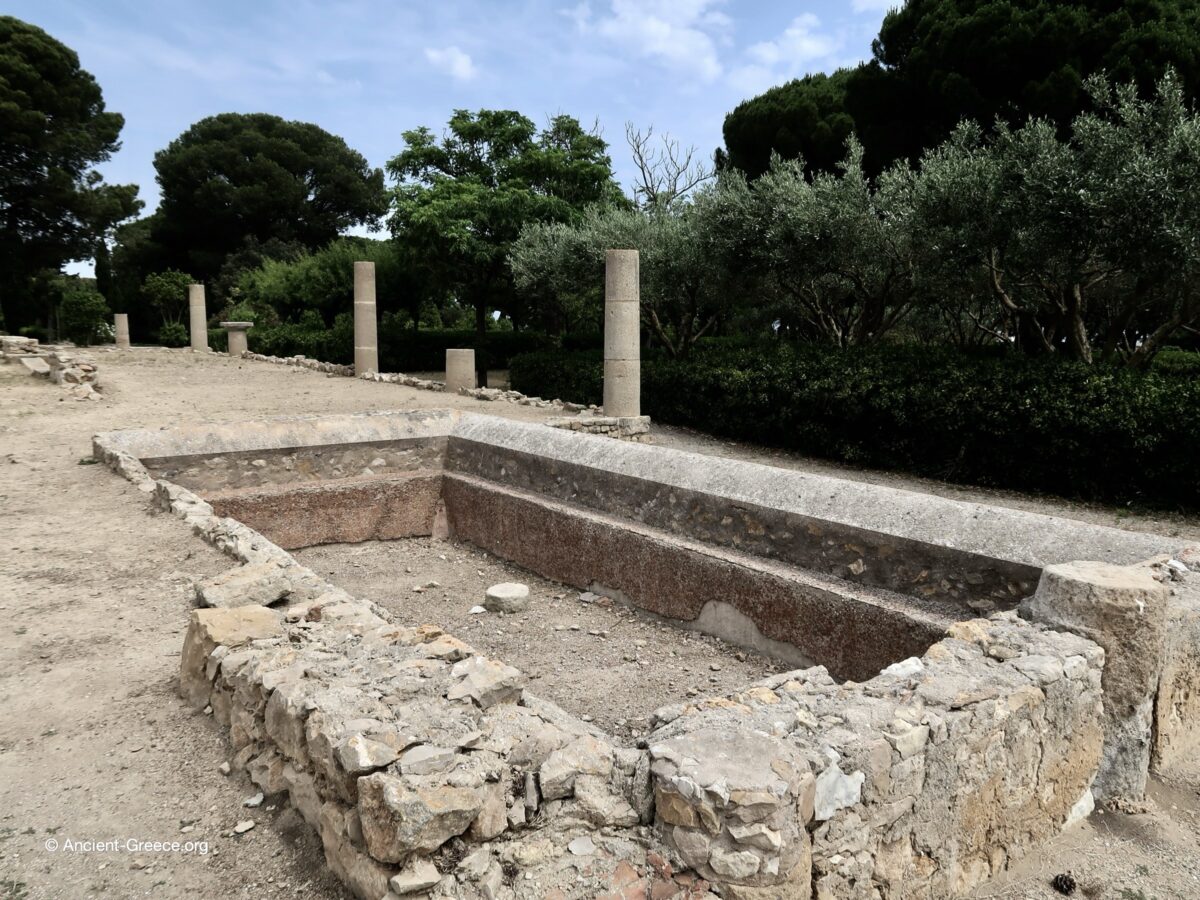
The religious heart of the Greek city was the sanctuary dedicated to Asclepius, the god of healing, whose cult was central to the Neapolis. The presence of a monumental cistern and a marble statue of the god (now in the museum) highlights the site’s dual role as a place of both physical and spiritual restoration for sailors and citizens alike.
The statue arrived in Emporion from a Greek workshop in the 2nd century BCE, coinciding with the reform of the city’s sanctuaries and the introduction of new cults.
The statue was recovered in the area of the sanctuaries. The upper part was found inside a cistern, while the rest of the statue was recovered in the temple where the god had been worshipped, in the exact place where a replica now stands.–Empuries Museum
The Fish Factory
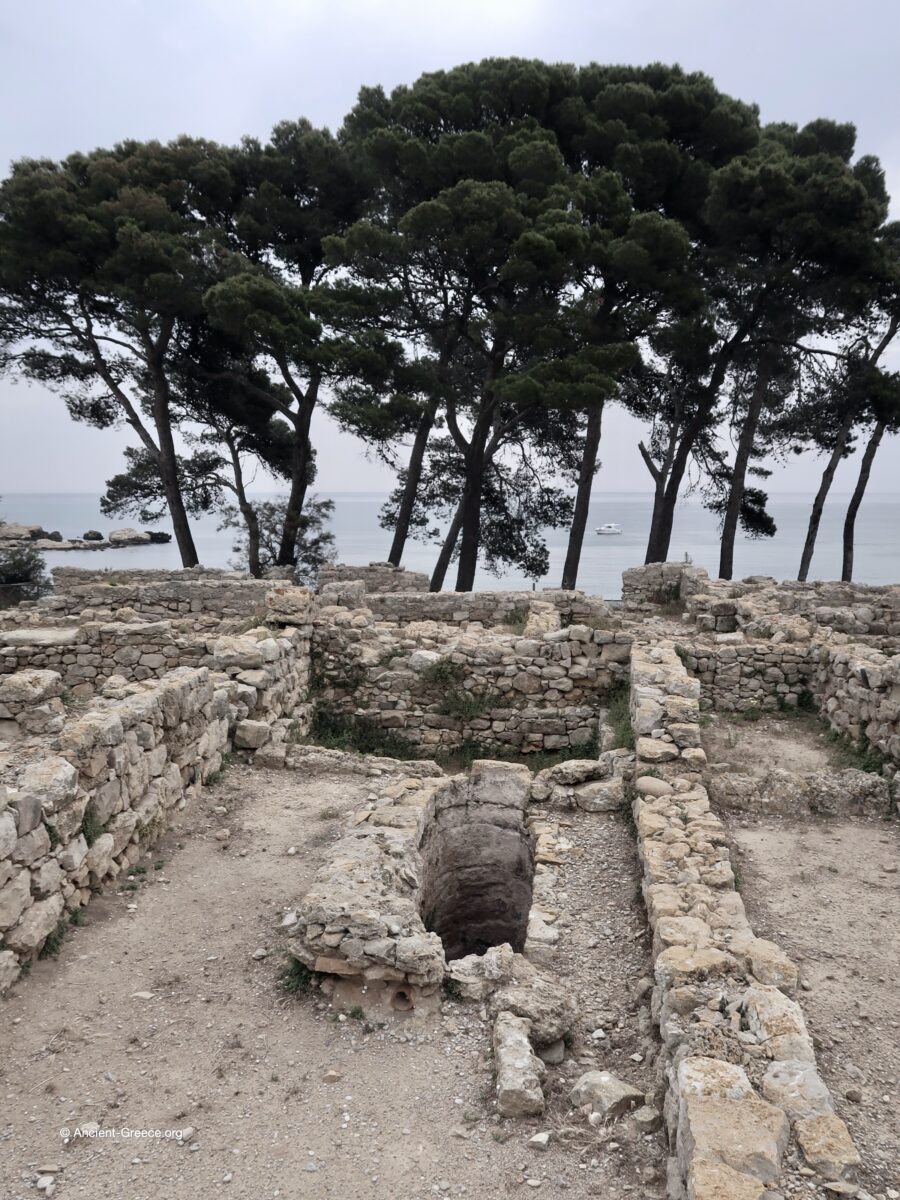
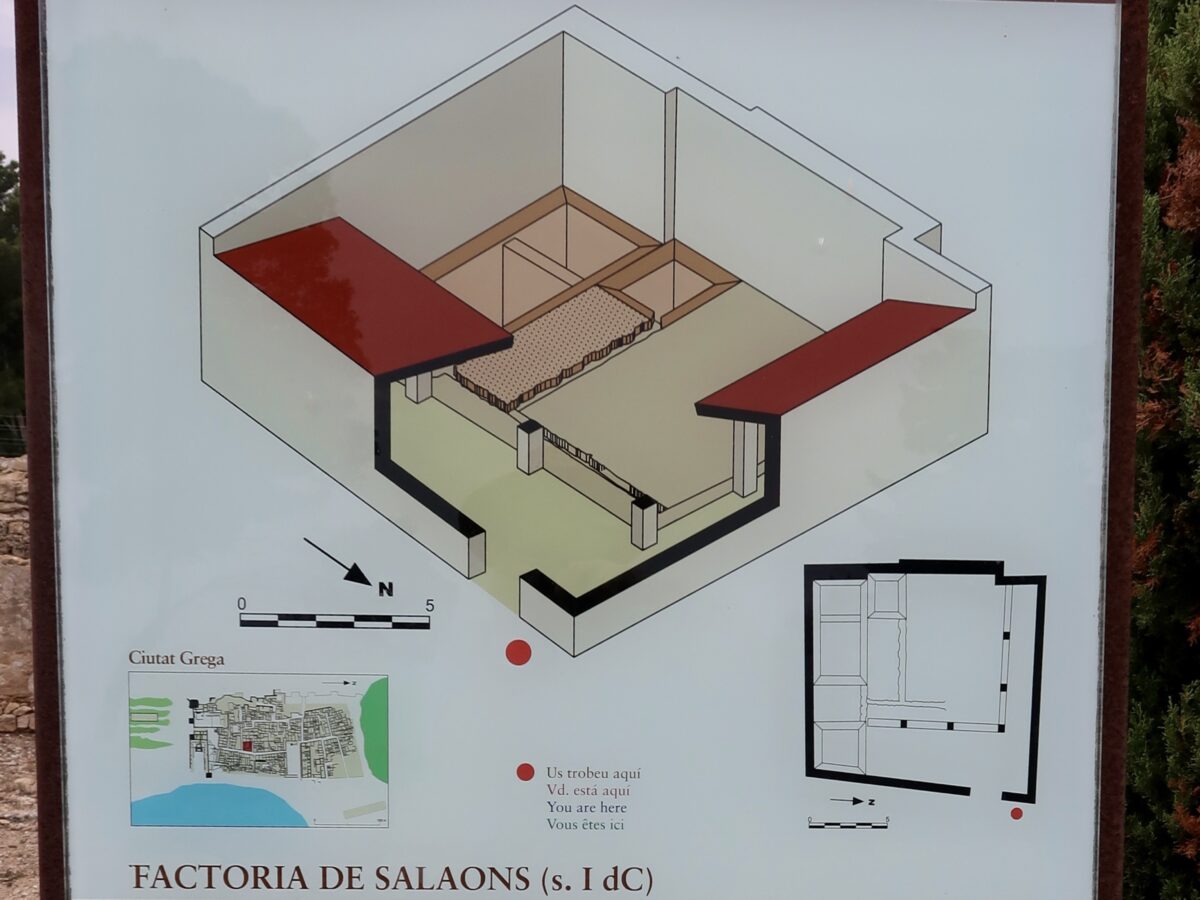
The Fish Factory and Cyclopean Gate are the highlights of the Greek maritime economy and defense.
Hellenistic Houses Mosaics
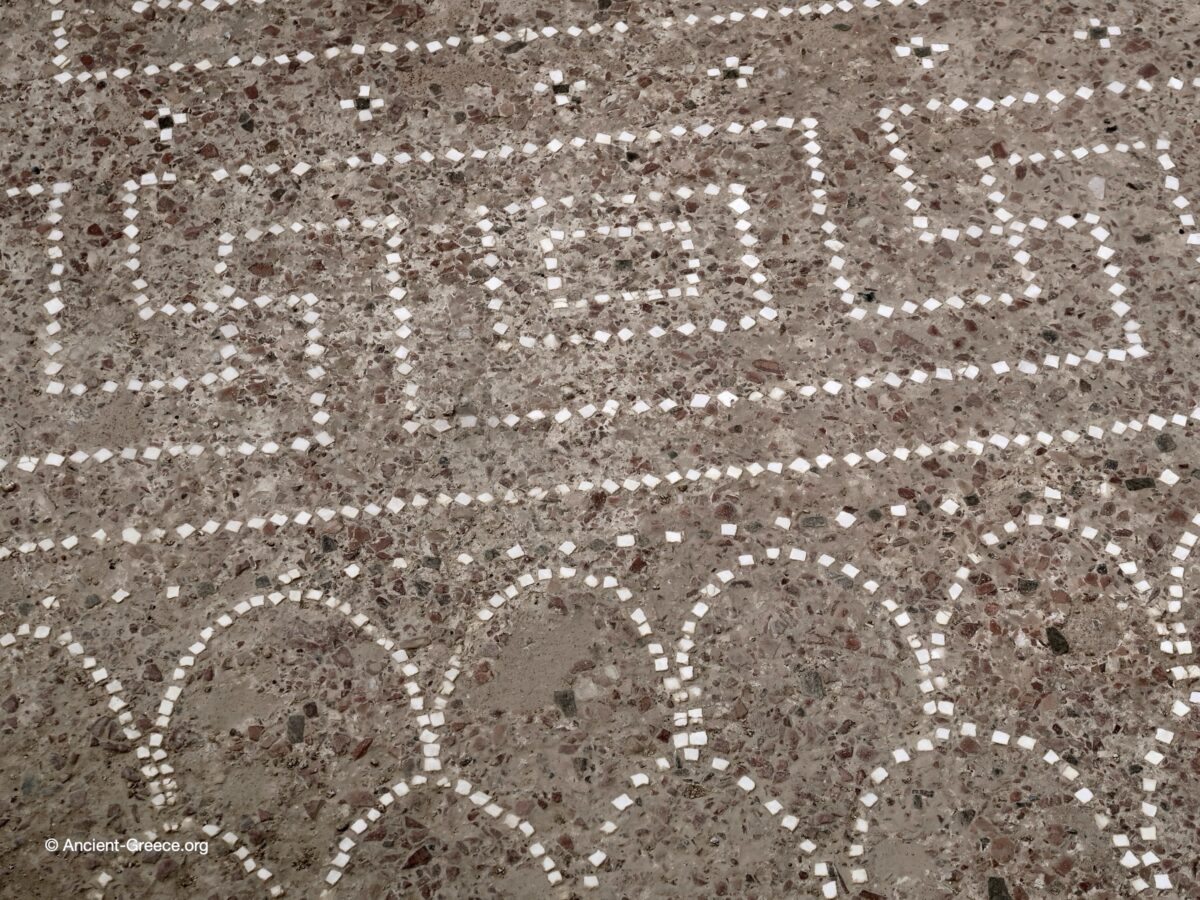
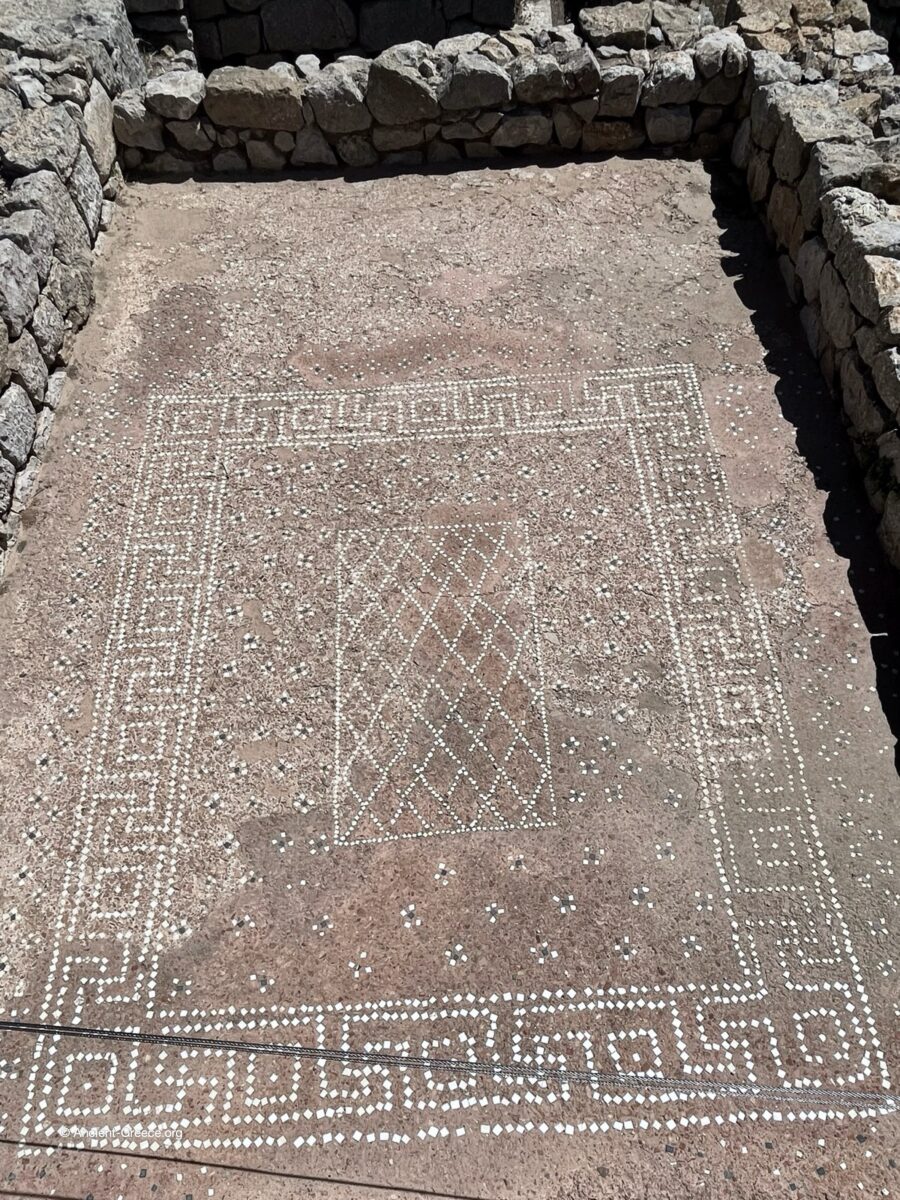
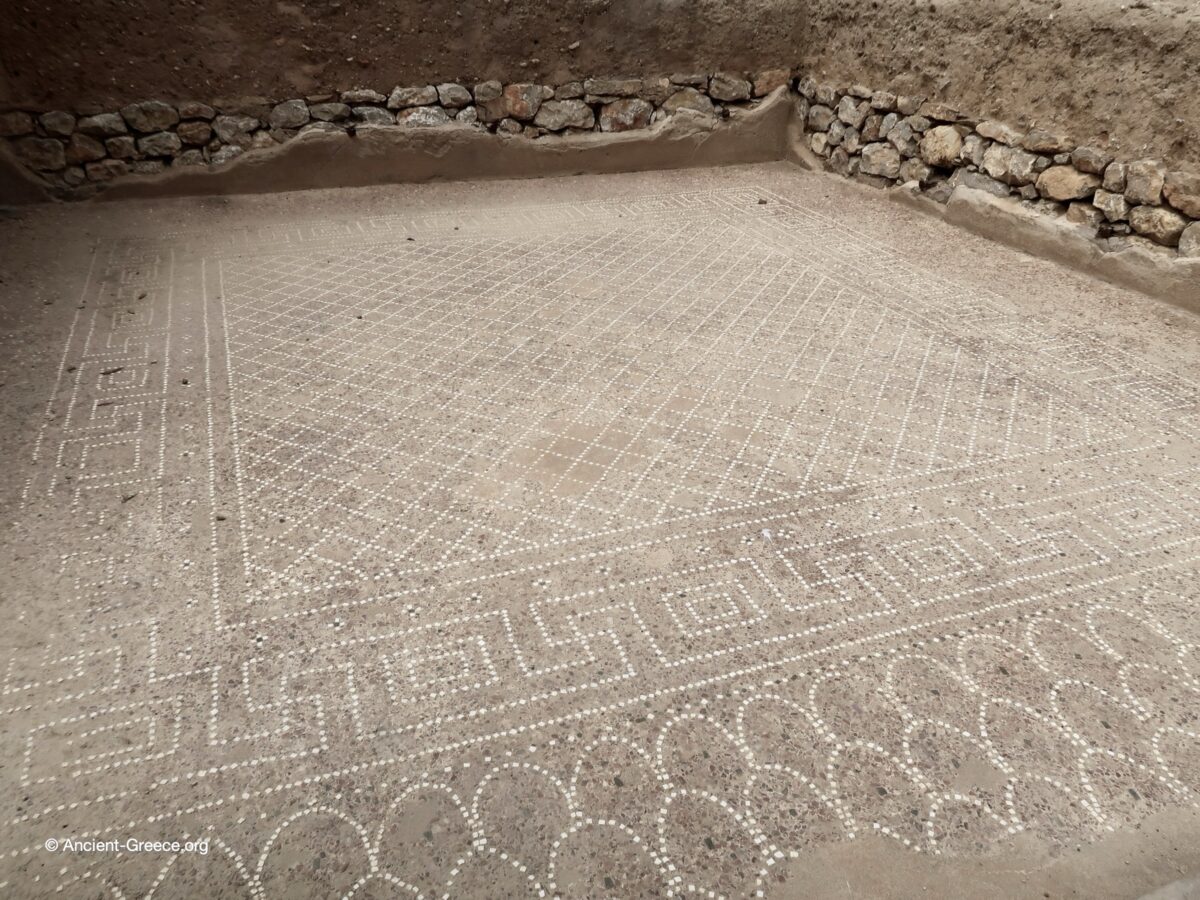
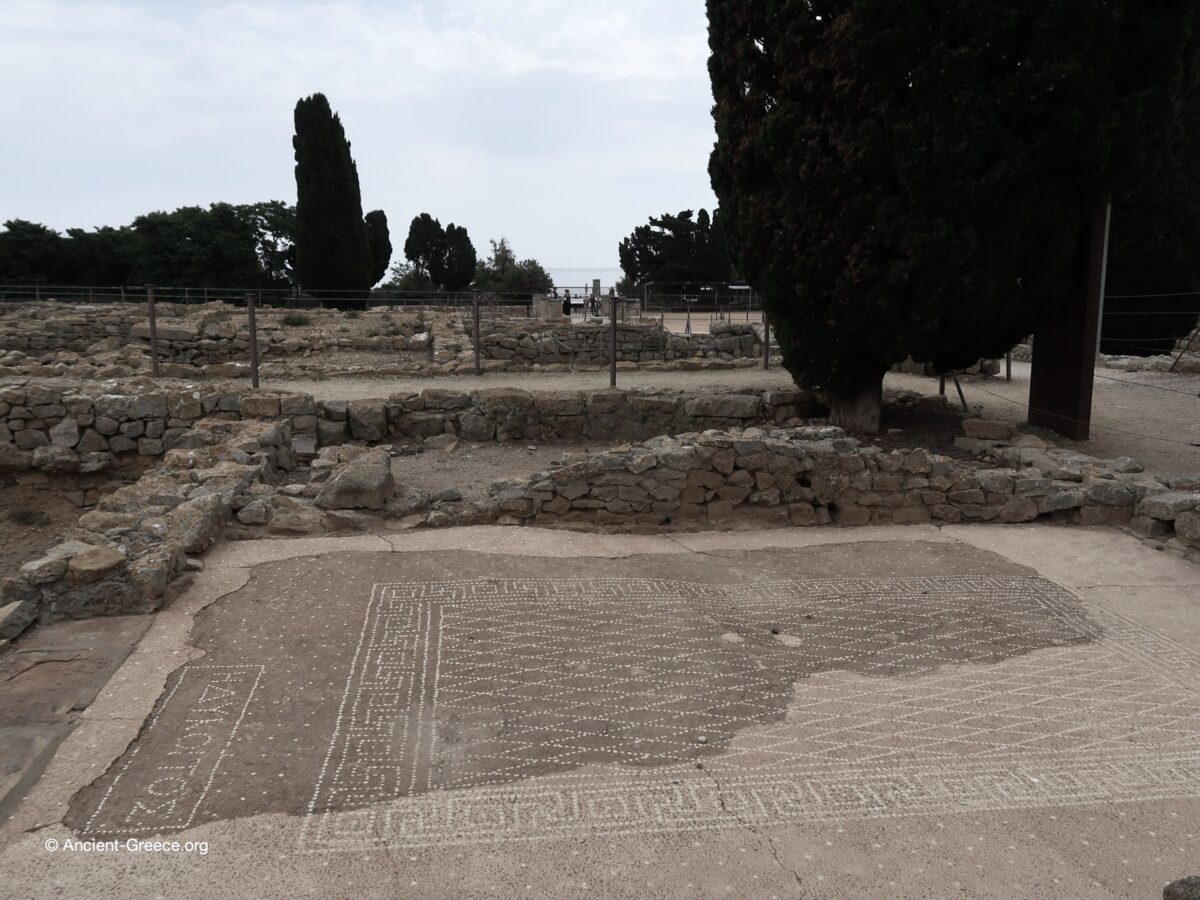
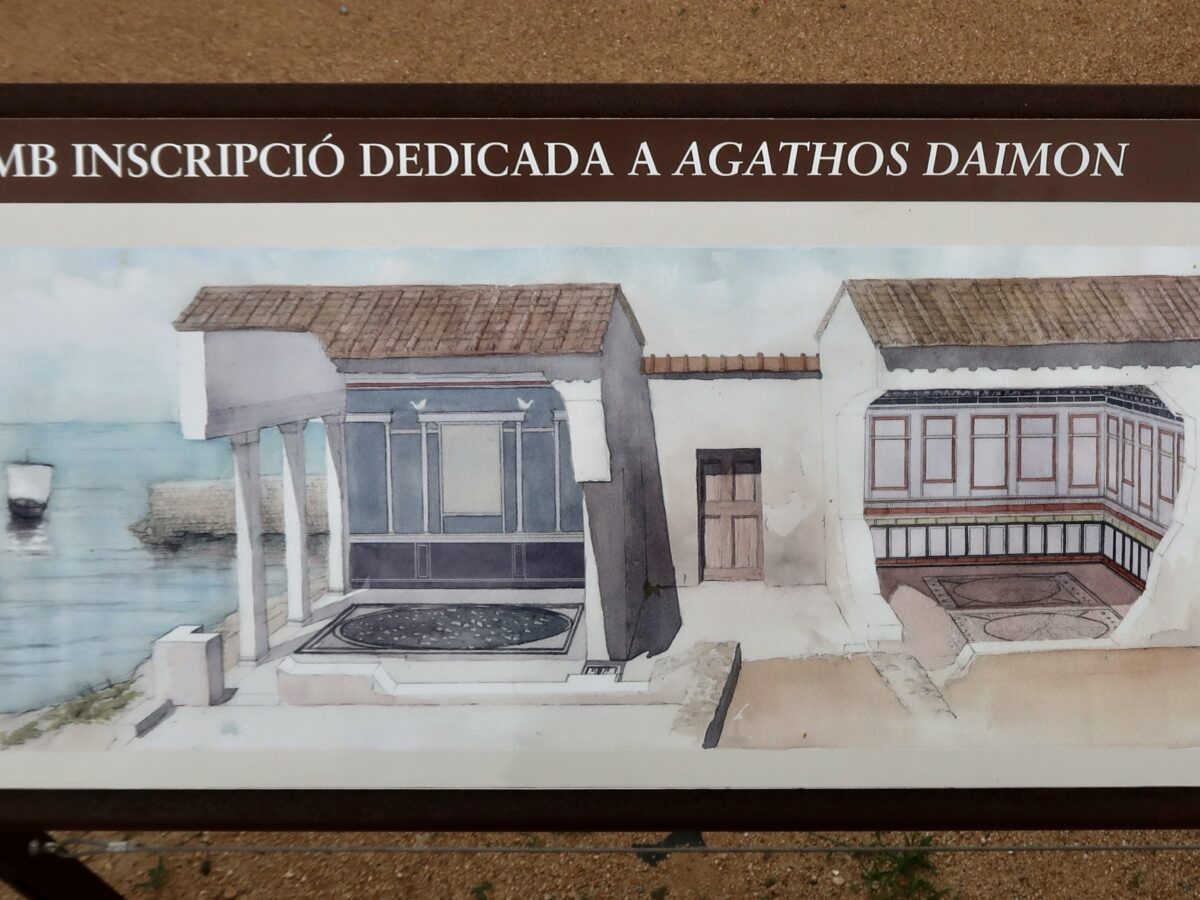
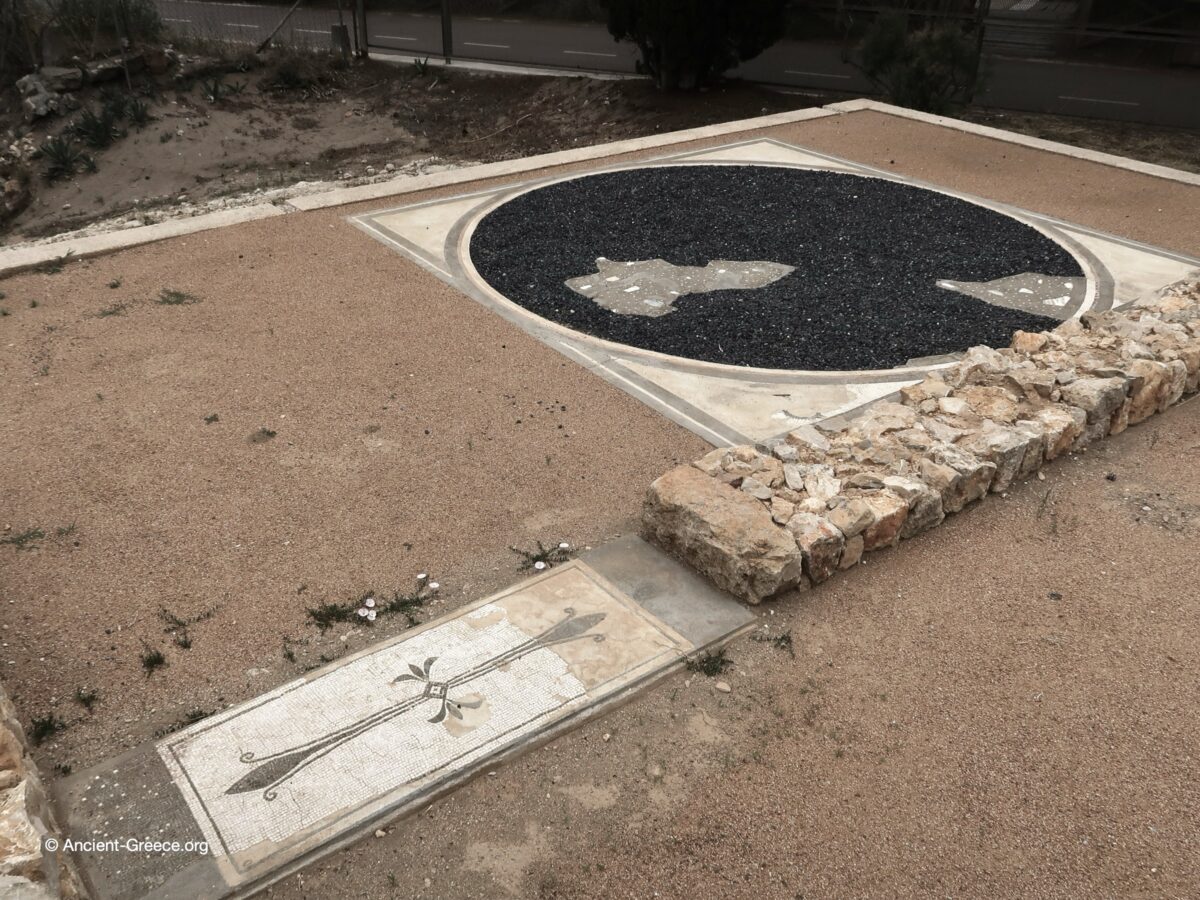
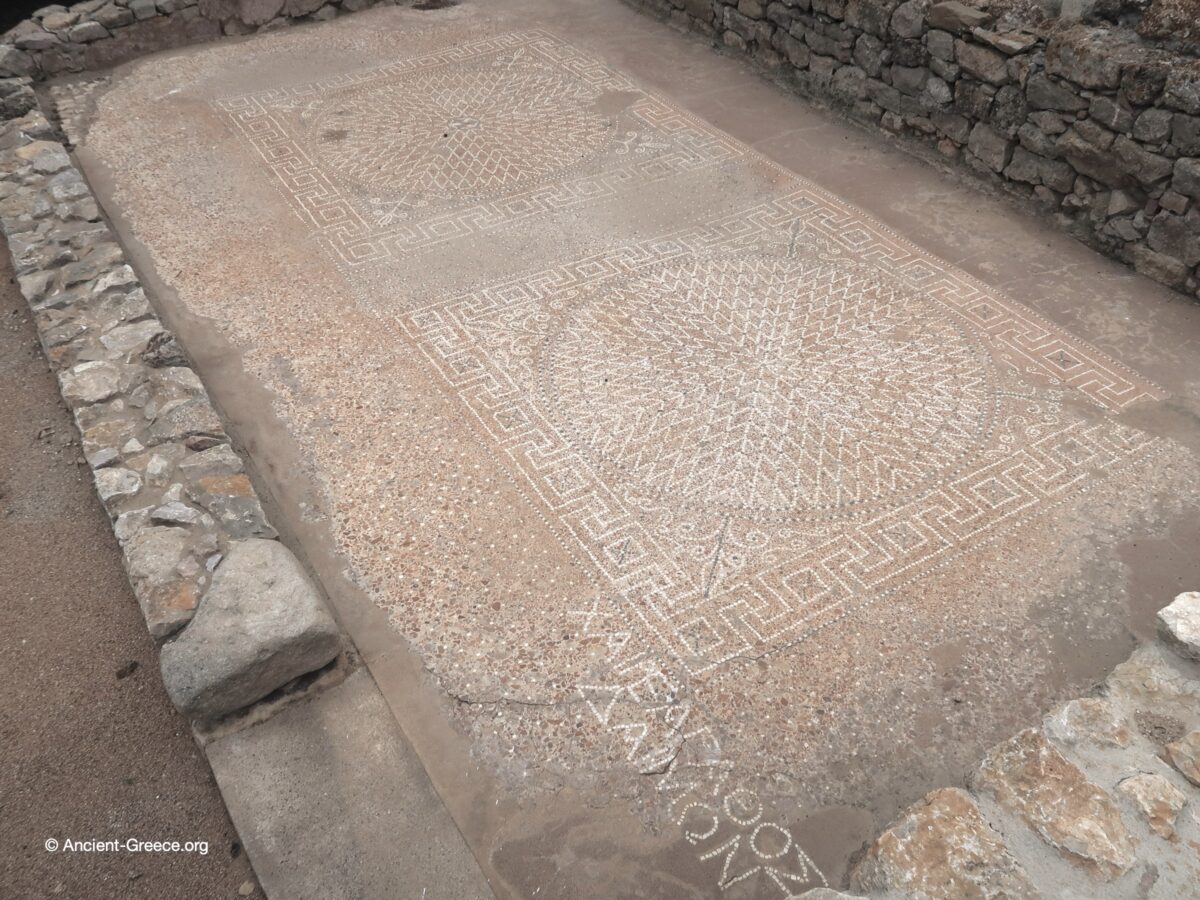
The ΧΑΙΡΕ ΑΓΑΘΕ ΔΑΙΜΩΝ (Hail, Good Spirit) house represents the peak of Greek urban luxury before the Roman arrival.
The House of the mosaic with an inscription dedicated to Agathos Daimon is a domestic building that was constructed during the important transformation of the Greek city that took place in the 2nd and 1st centuries BC, and which continued in use until the beginning of the Roman imperial era.
It was built in a privileged location, in direct contact with the port area. The interior was accessed through a corridor, which led to an inner court.
The main room of the house, used as a banquet hall, preserves a pavement that shows a greeting inscription in Greek at the entrance with the legend ΧΑΙΡΕ ΑΓΑΘΕ ΔΑΙΜΩΝ, invoking the protective genius or Agathos Daimon (Good Spirit).
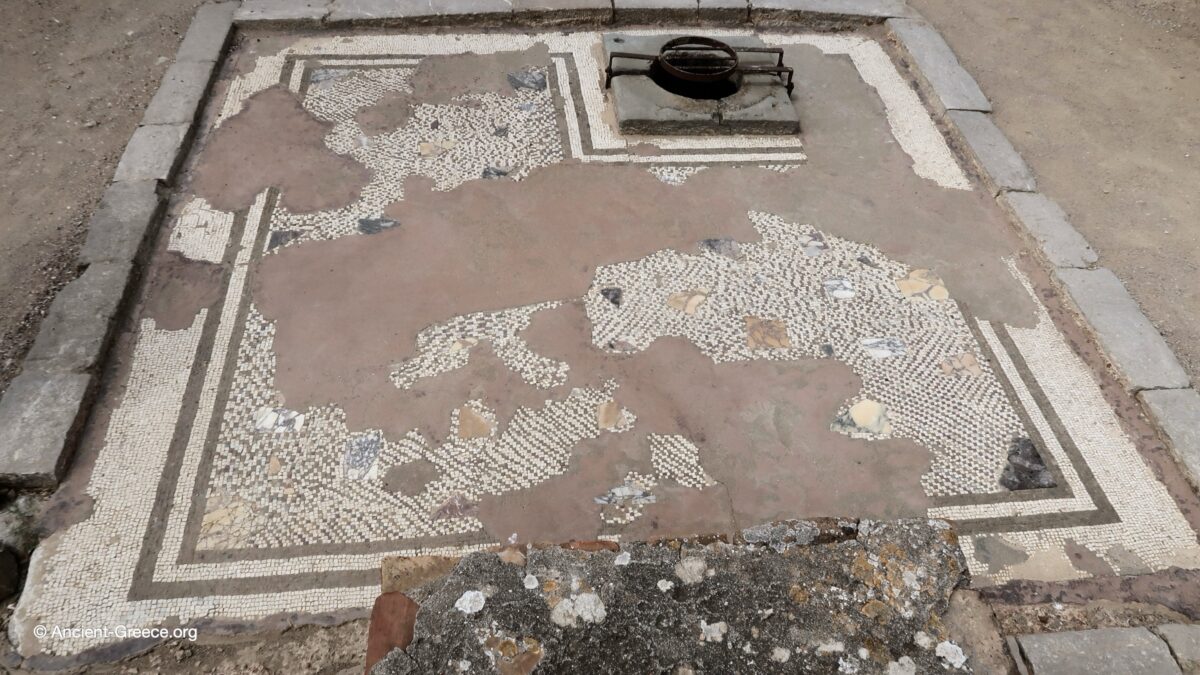
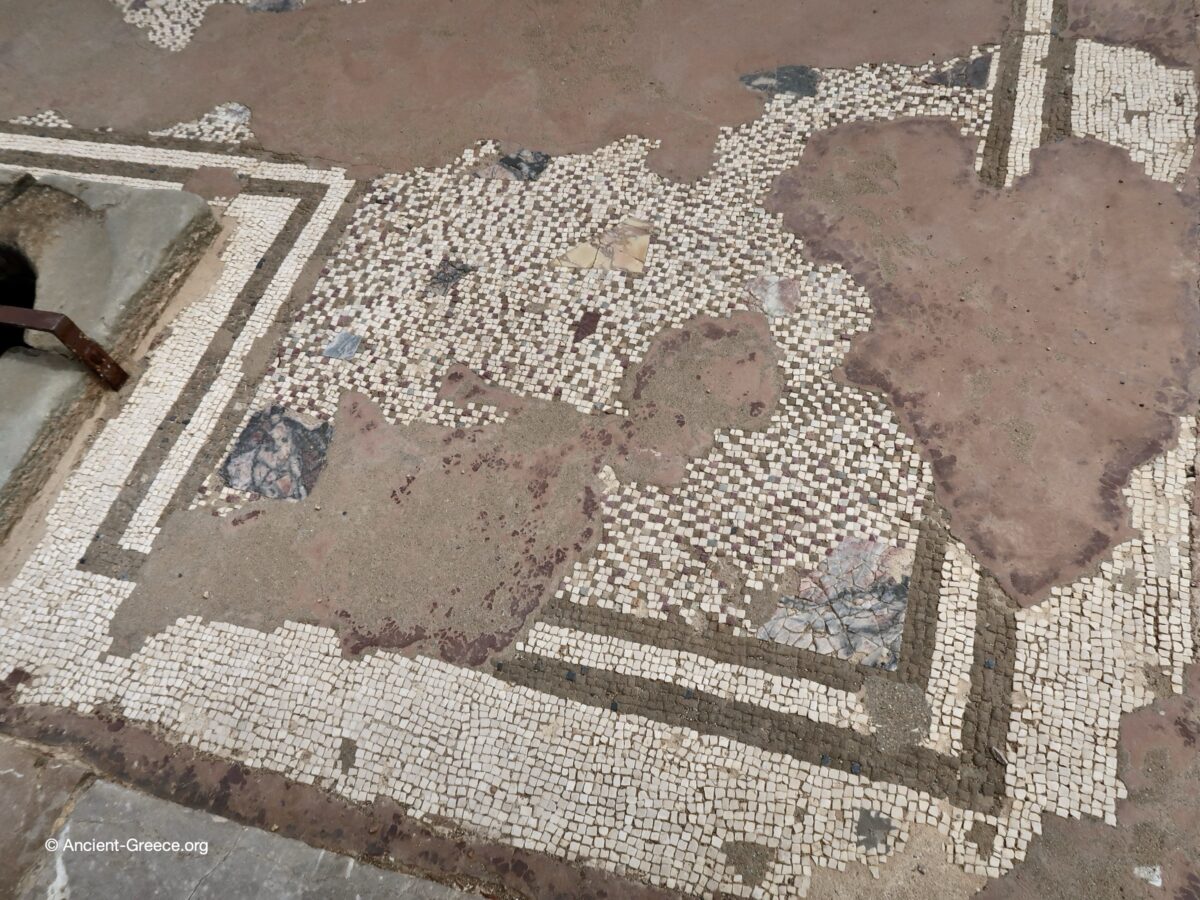
The decoration of the pavement was made with crushed tile/pottery mixed with lime mortar to create the red base, and white marble tesserae forming patterns. It was the standard for high-end Hellenistic Greek residences in the 2nd century BCE.
Further north, there was another room paved in mosaic tiling, forming a central black circle with marble inlays. The back wall must have had an open porch or window with views of the port and the bay.
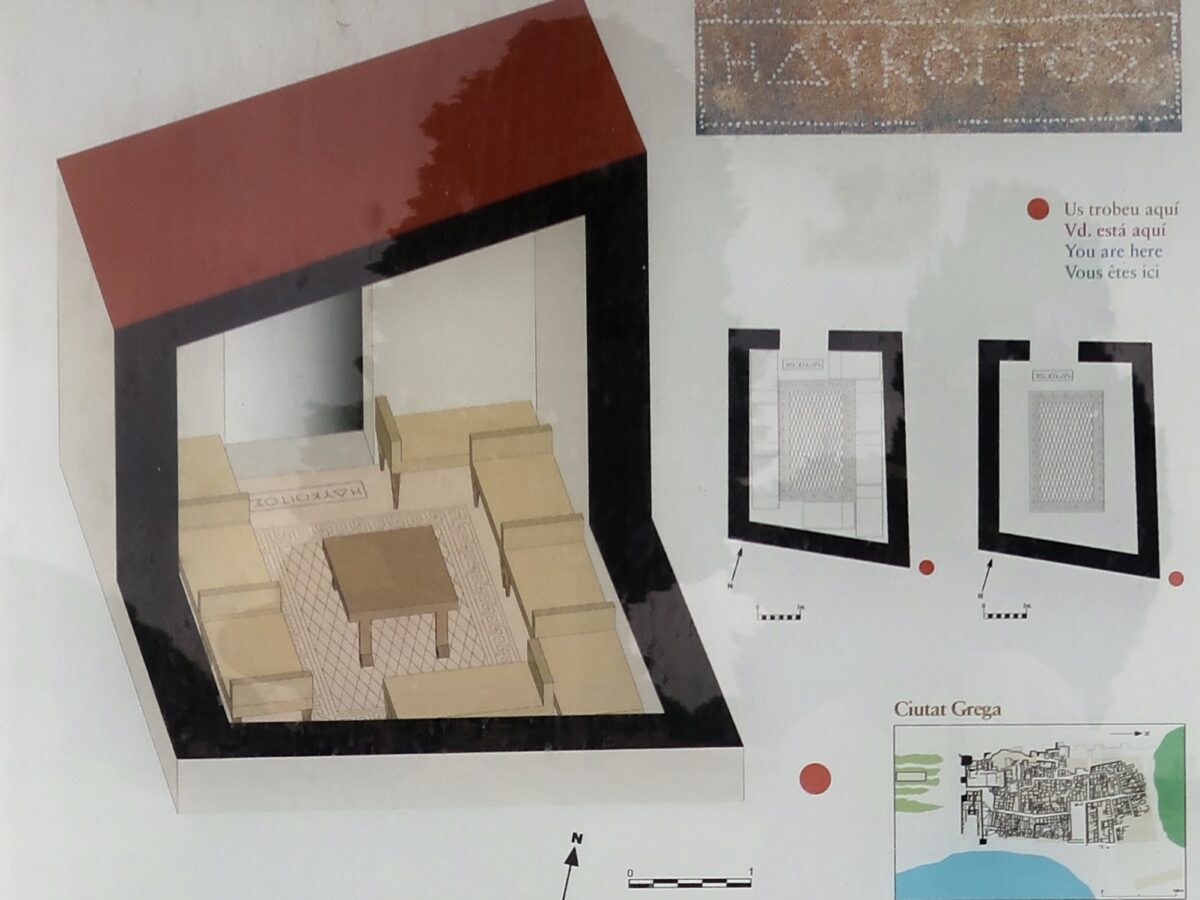
In a nearby 1st century BCE house, a room where symposia took place has a similar tesserae mosaic floor with the inscription ΗΔΥΚΟΙΤΟΣ at its entrance. ΗΔΥΚΟΙΤΟΣ (Hedykoitos) translating to ‘sweetly reclining’ or ‘of pleasant rest,’ it reflects the ritualized Greek custom of dining while reclined on couches, emphasizing the house as a center of hospitality and joy. The symposia took place at the end of the day and were reserved for free men. At these meetings, the owner of the house invited his friends to supper, to drink wine and to a whole host of entertainments.
The Agora and Stoa
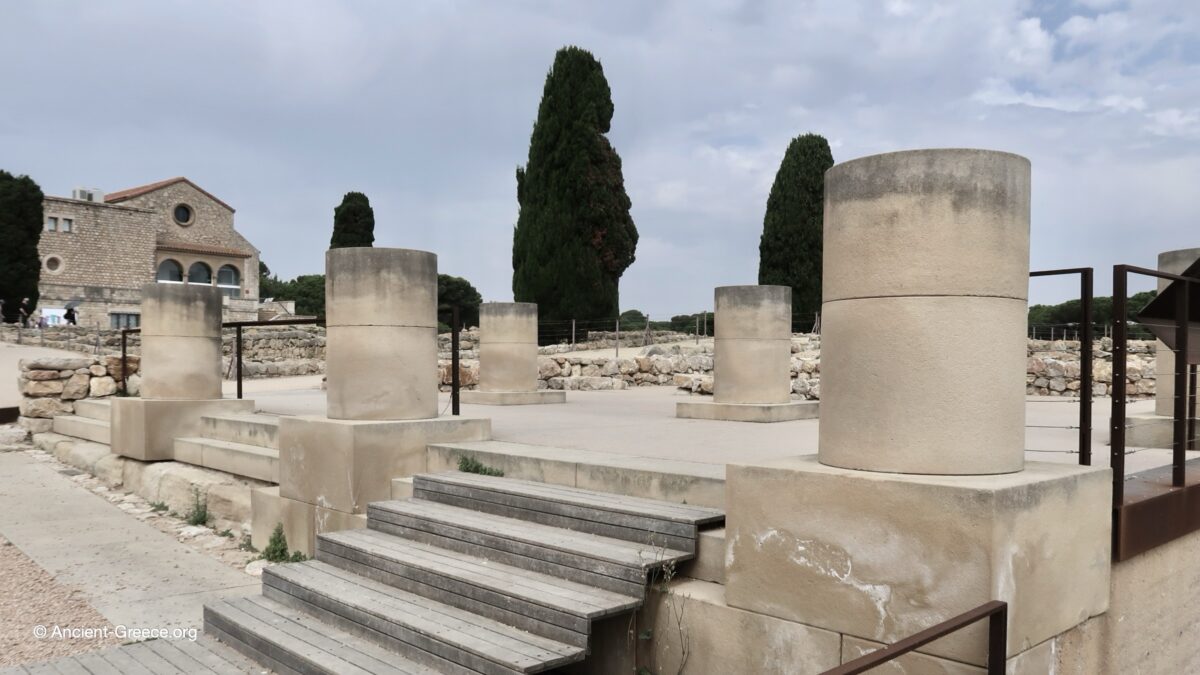
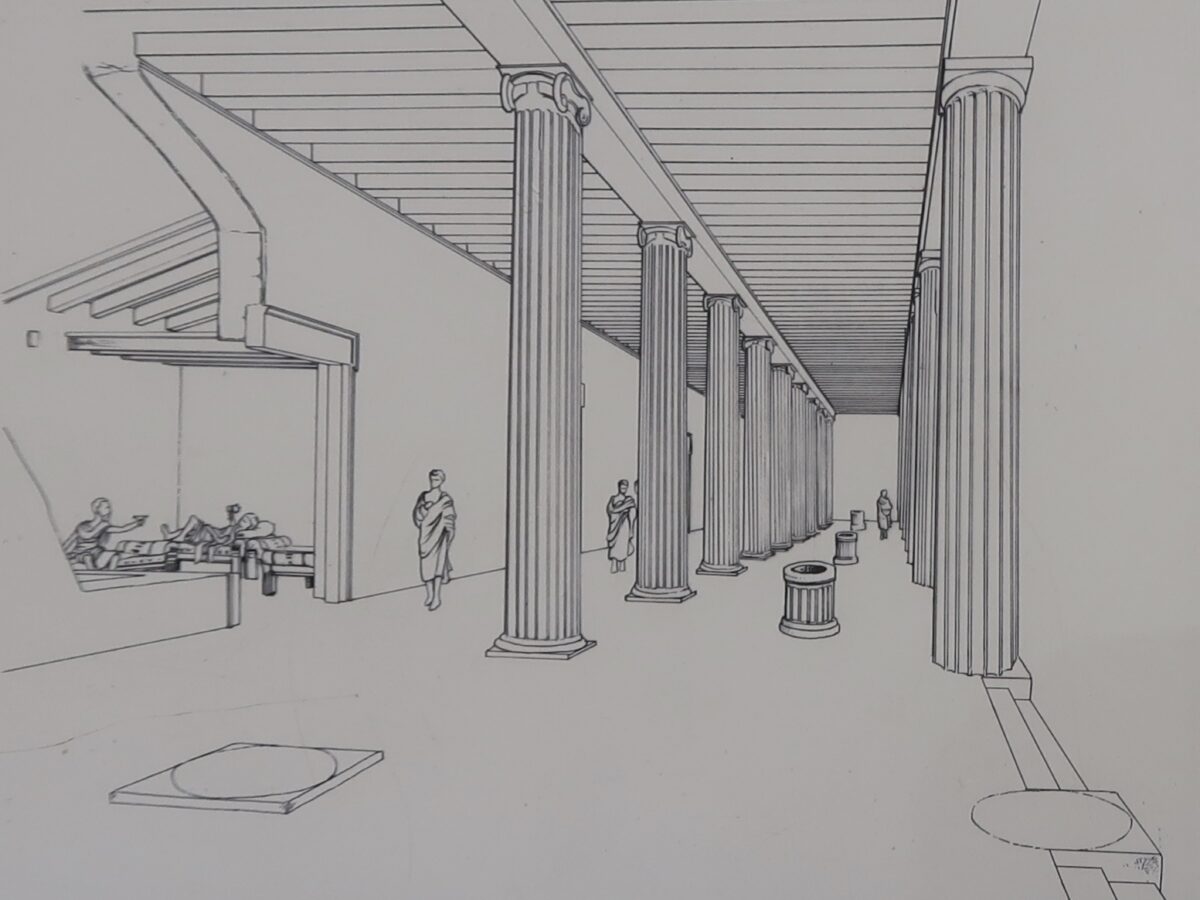
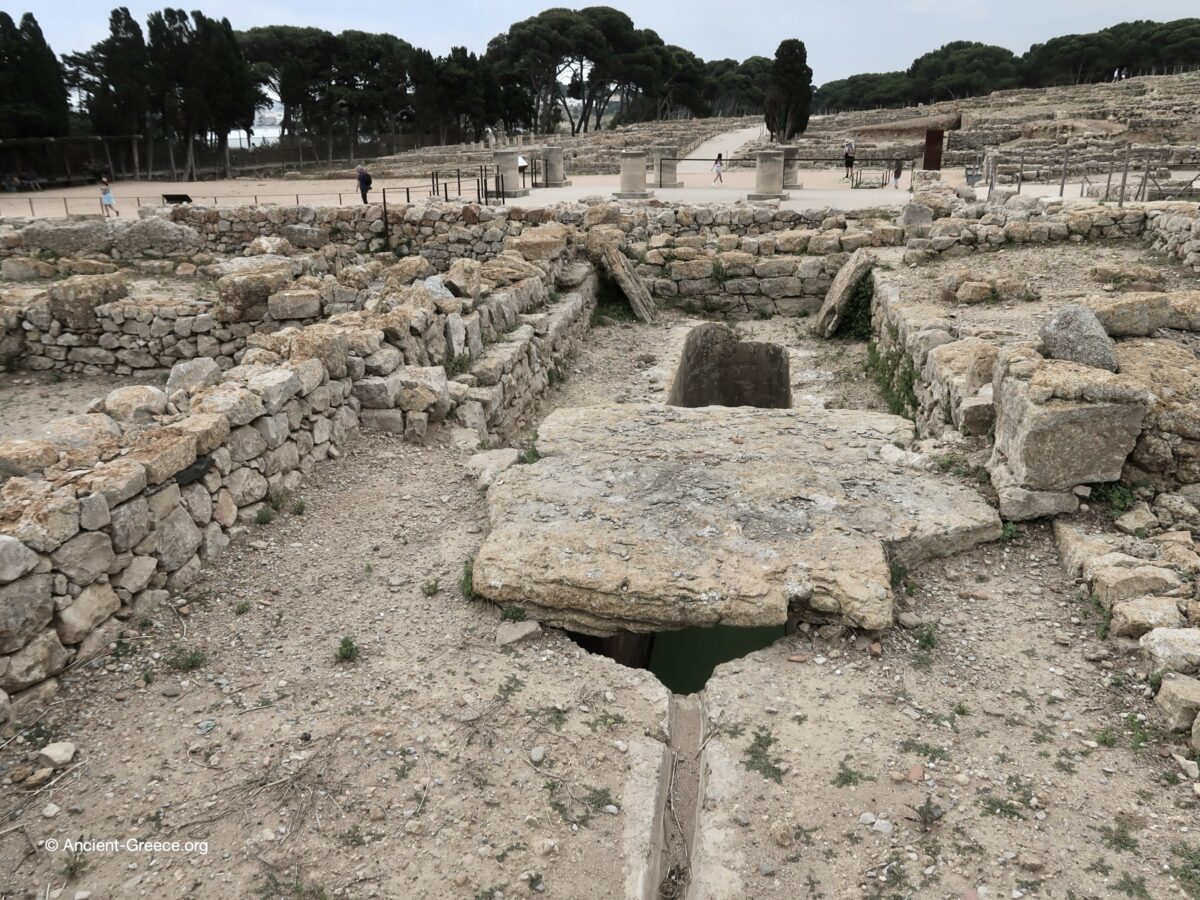
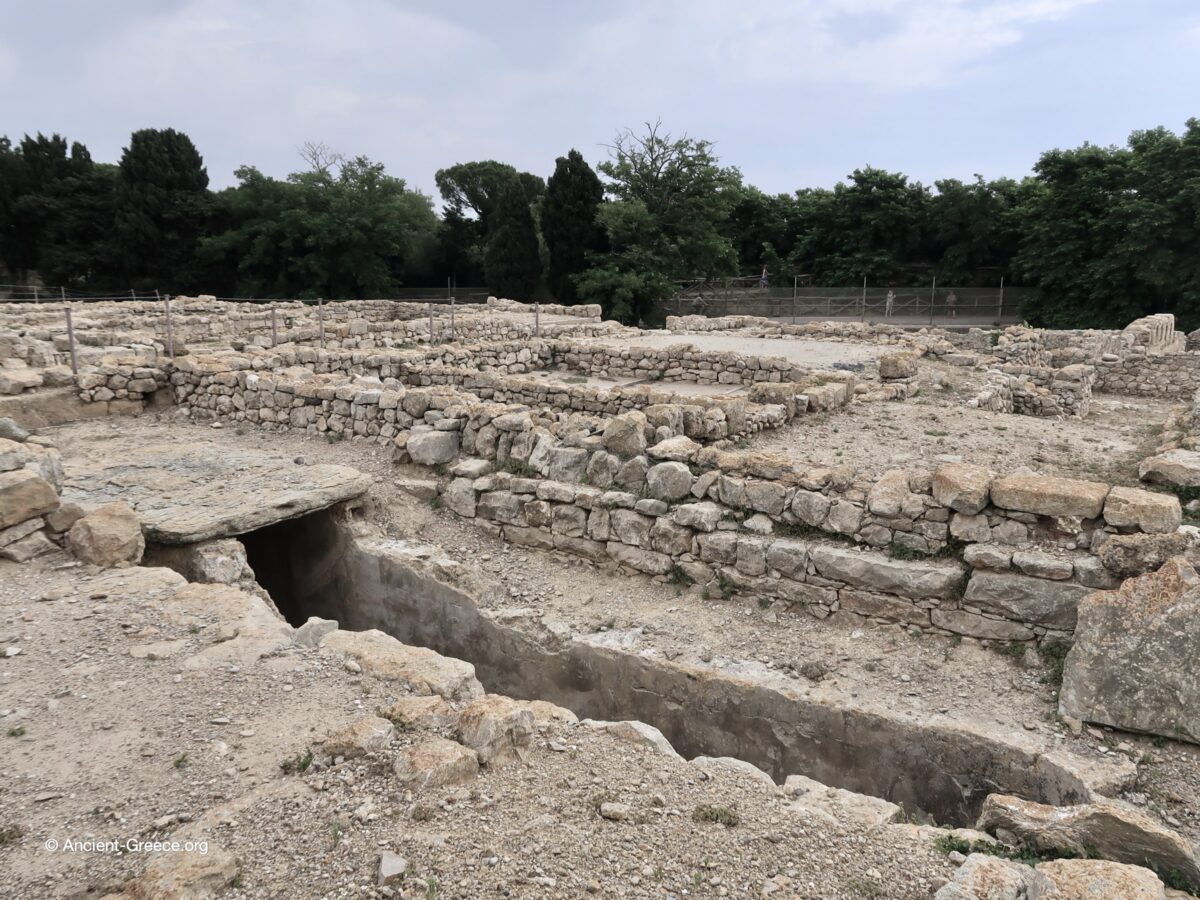
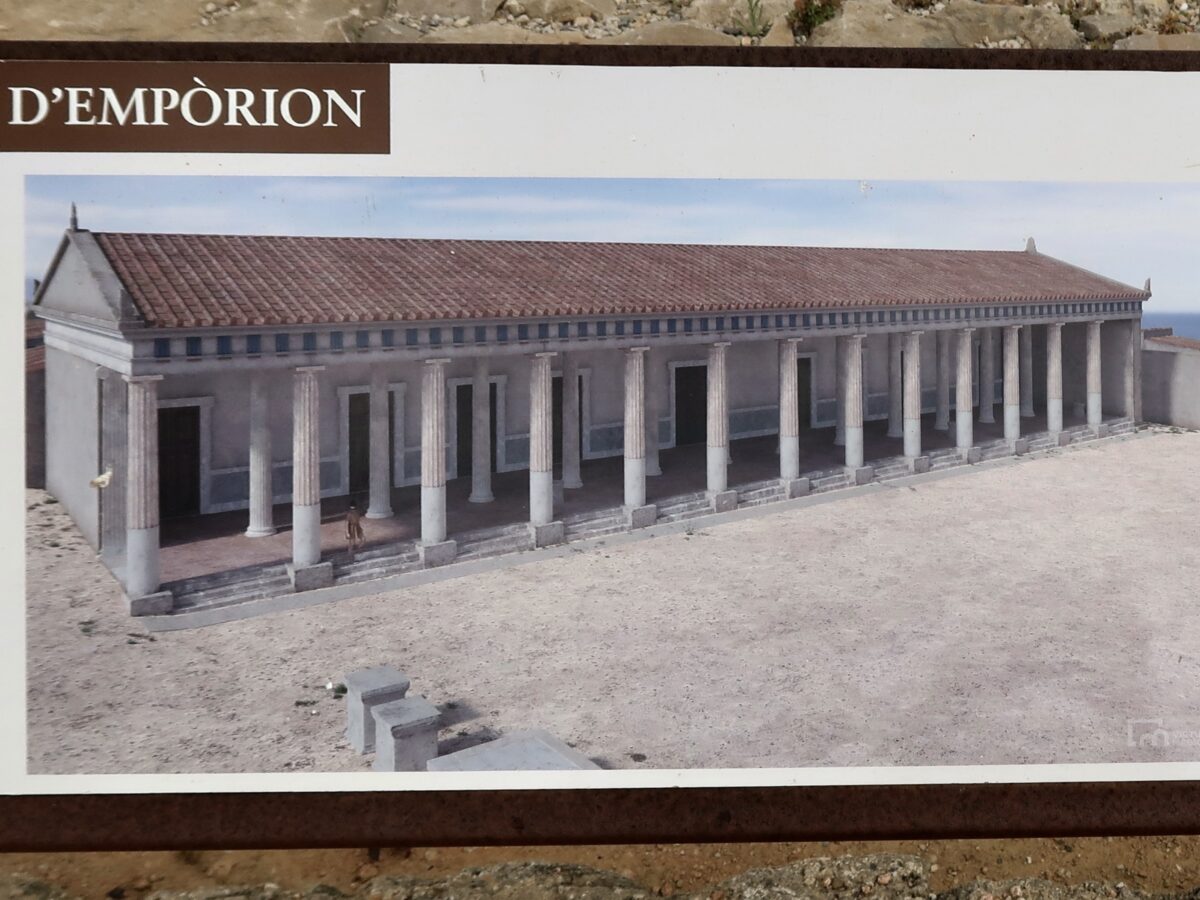
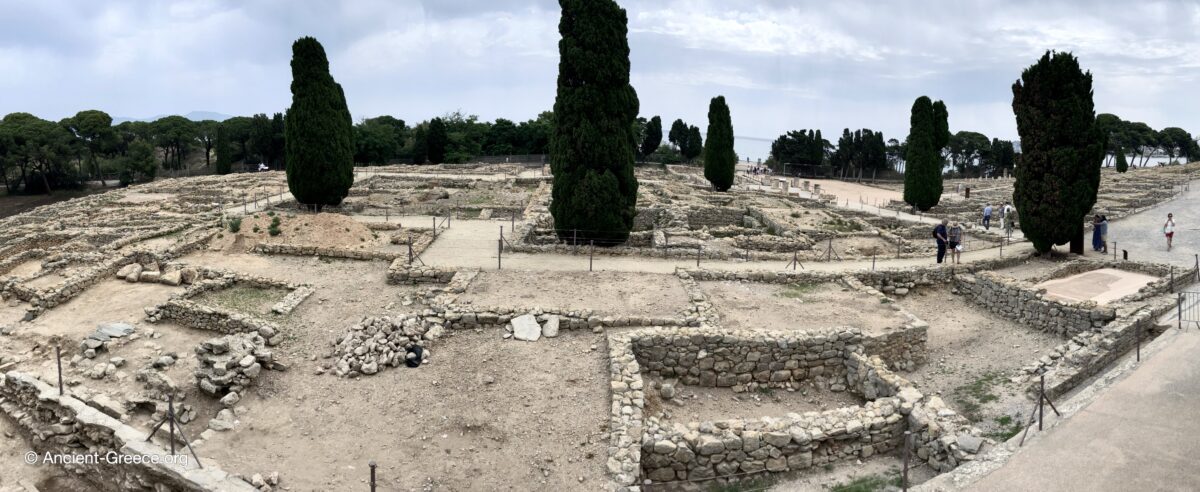
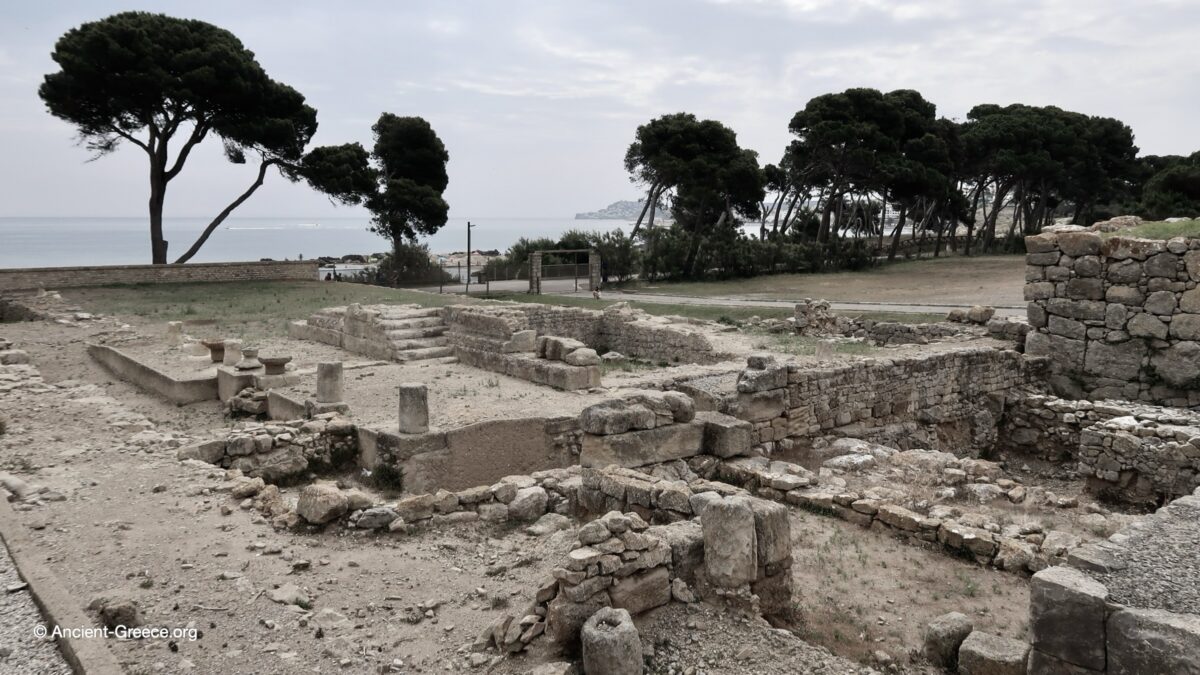
The stoa of Emporion. In the 2nd century BC the ancient Greek city of Emporion experienced significant urban renewal as a result of a particularly prosperous period thanks to intense trade and the Roman military presence. During this period, the new public centre made up of the agora and the stoa was also built.
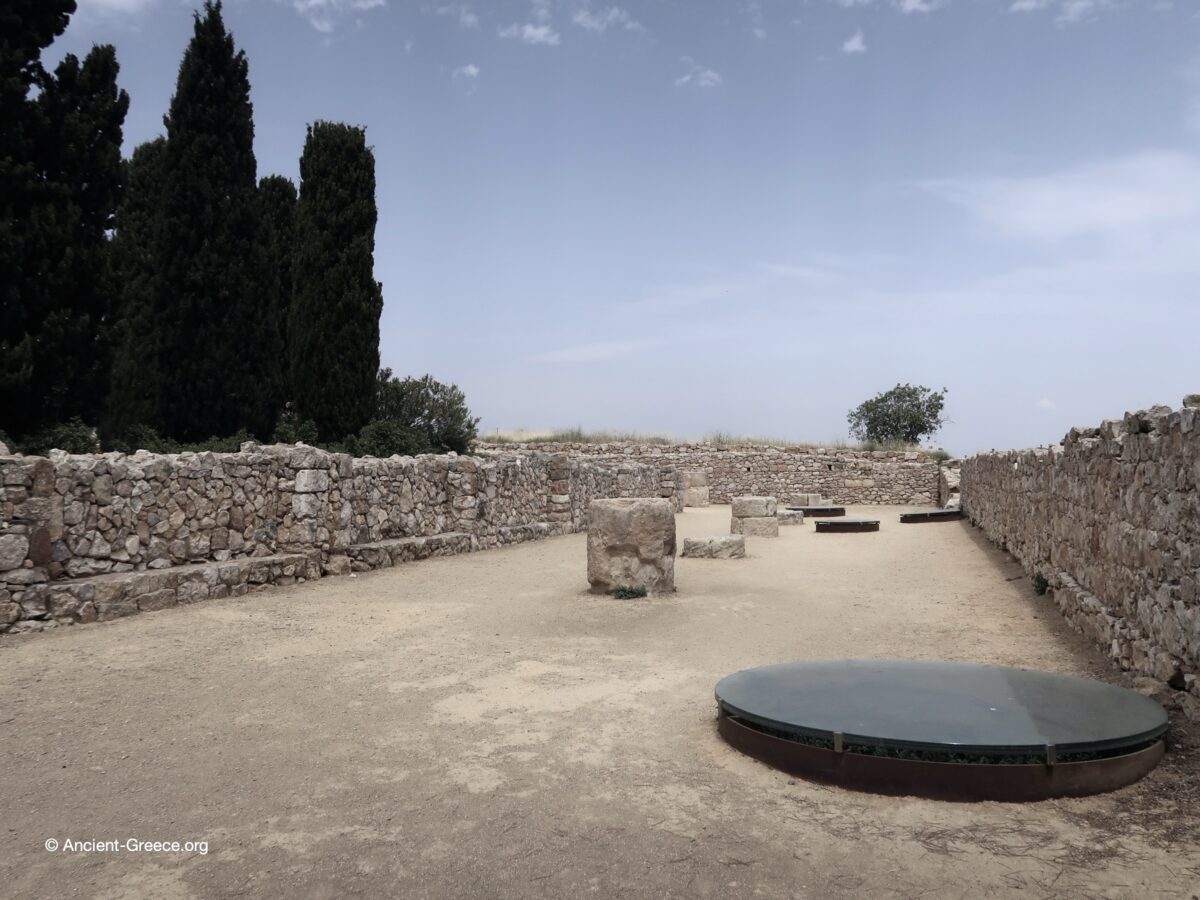
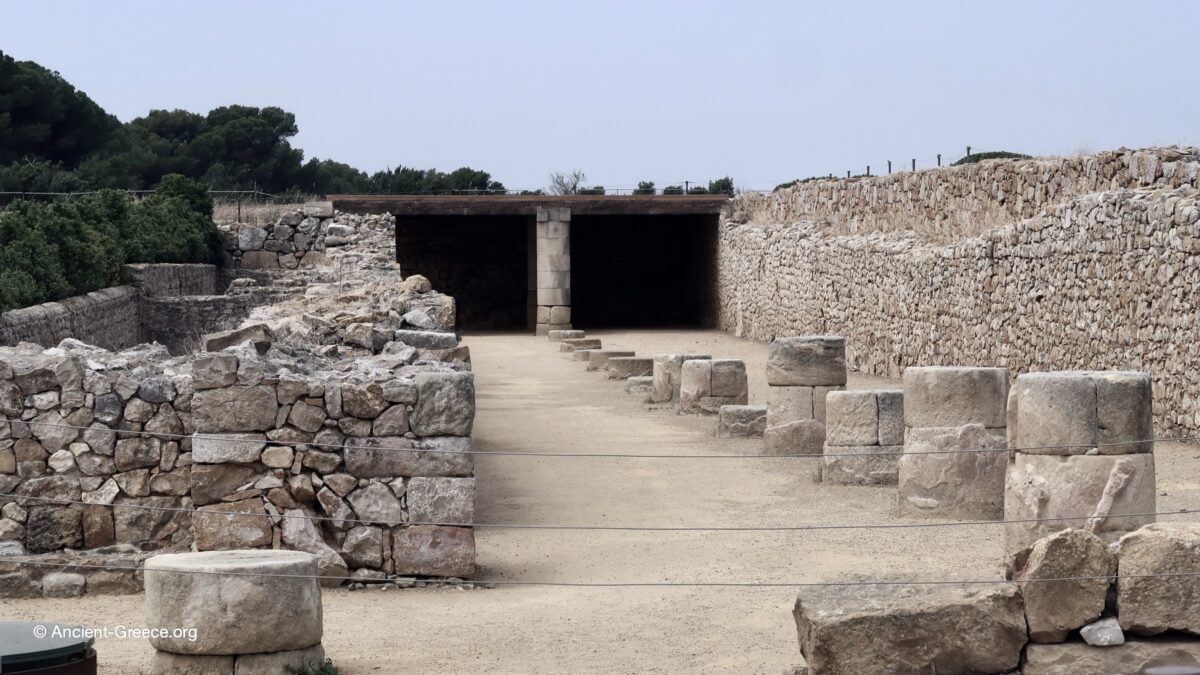
The square of the agora was dominated to the north by the great building of the stoa, 52 m. long and 14 m. wide. Entry was through an open front with steps that gave way to a monumental portico formed by a double row of twelve columns and, in the background, a number of rooms that could be use for trading and civic celebrations. Four large vaulted cisterns were constructed below ground level to collect rainwater channelled down from the roofs.
The abandonment of the Neapolis during the Roman imperial period led to the despoilment of the construction materials of the stoa. No elements, therefore, have been preserved that could reveal the order and style of its colonnades, and we only can see the large blocks of stone that formed the foundations. However, the remains allow the structure of the building to be restituted. The presentation of this monument includes the reconstruction the walkway of the stoa at its western end, while the rest of the building is shown at the level corresponding to the foundations.
The Water Filter system
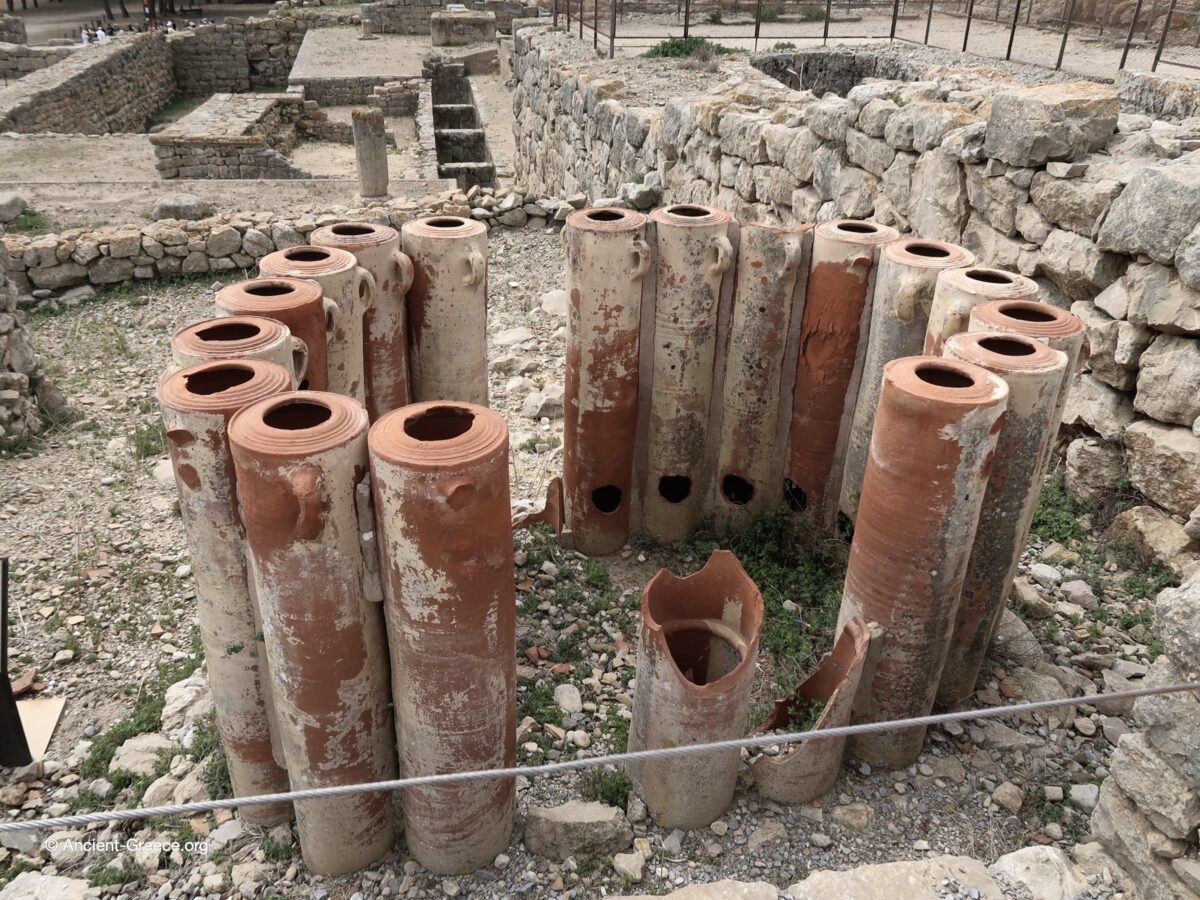
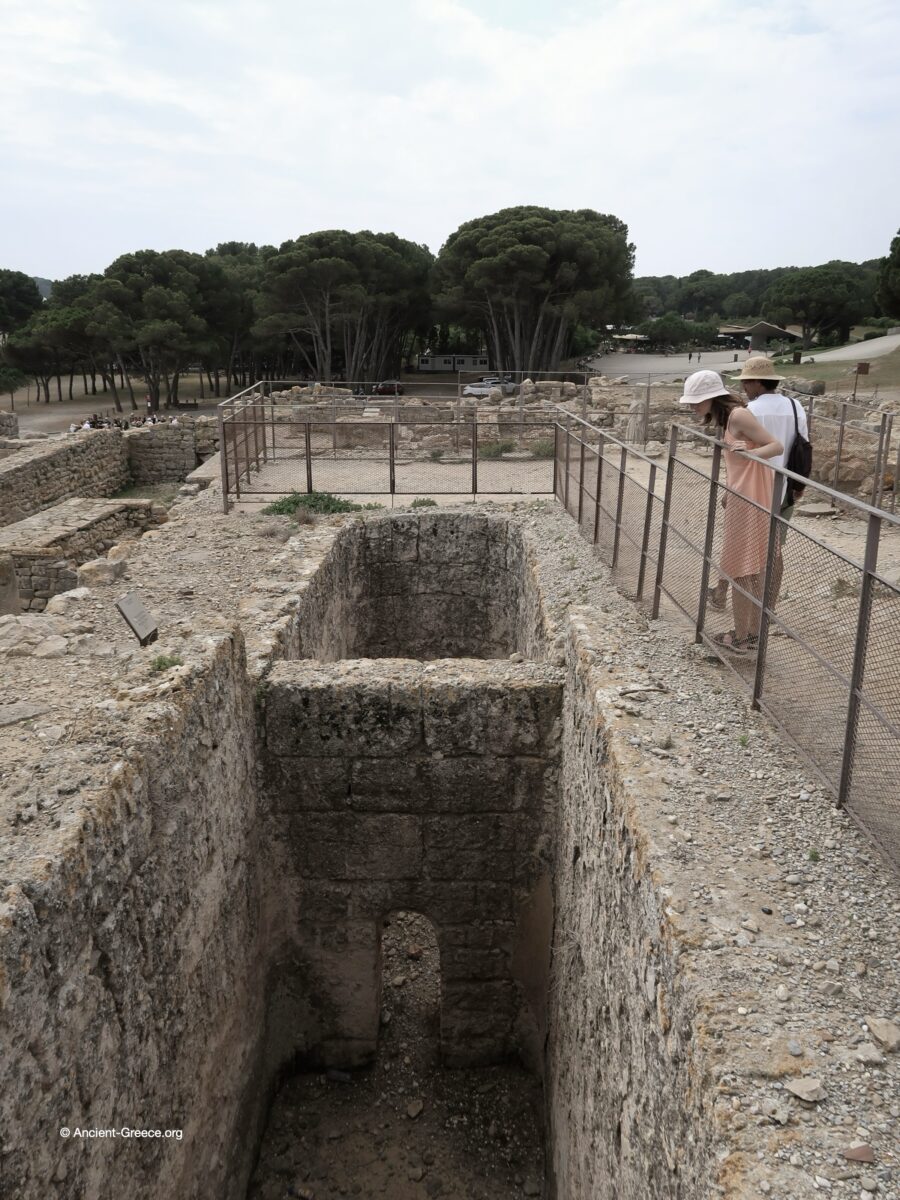
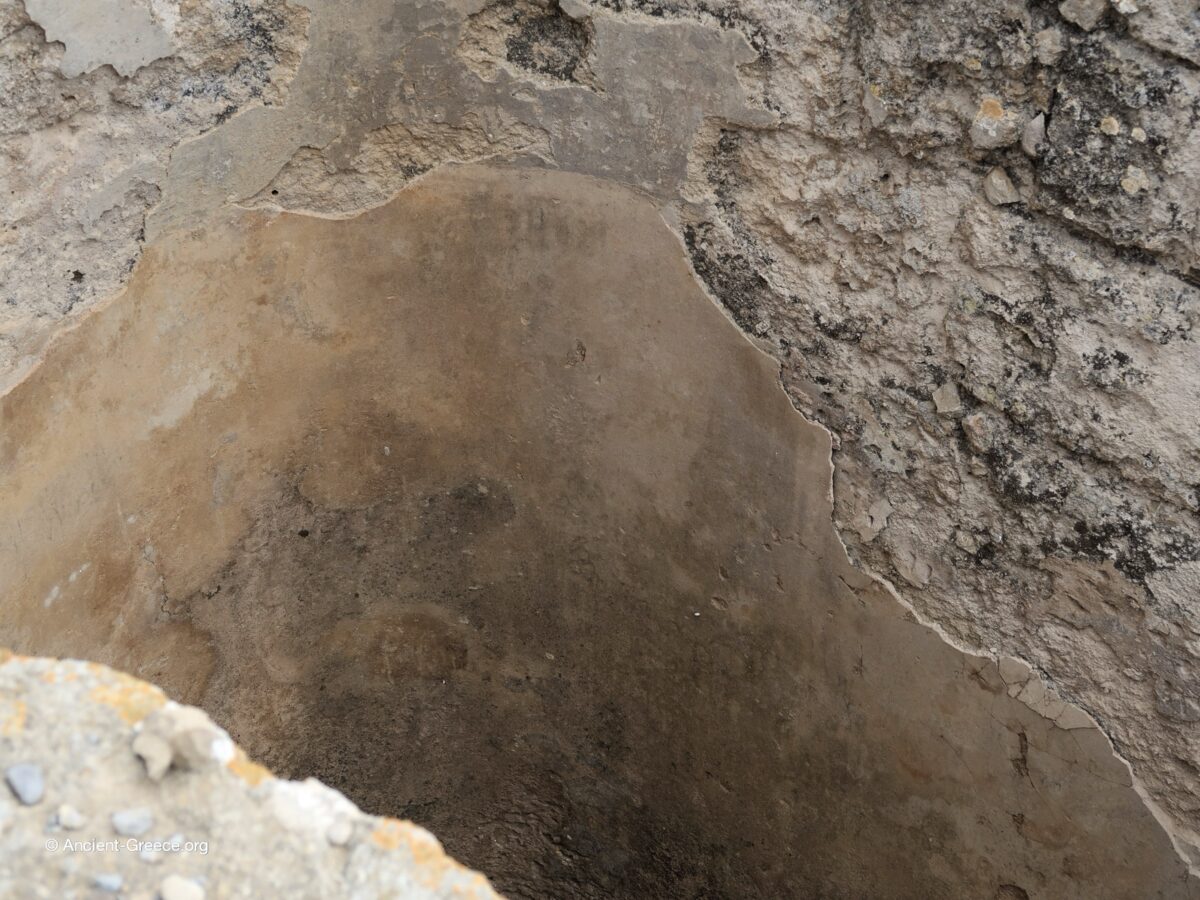
Water filter at Neapolis. The water filter system at the Neapolis of Emporion is a highlight of Hellenistic engineering, primarily dating to the 3rd – 2nd century BCE. Because Emporion was situated in a marshy coastal area with brackish water, these filters were essential for providing potable water to the “Neapolis” (New City) and the pilgrims visiting the healing sanctuary.
This unique “ground water filter” consists of a large, vertical ceramic cylinder (similar to a pithos but perforated or used as a settling tank) set into the earth. It was designed to filter rainwater or stream water using layers of sand and gravel before it reached the storage chambers.
The Roman Town
Roman Mosaics
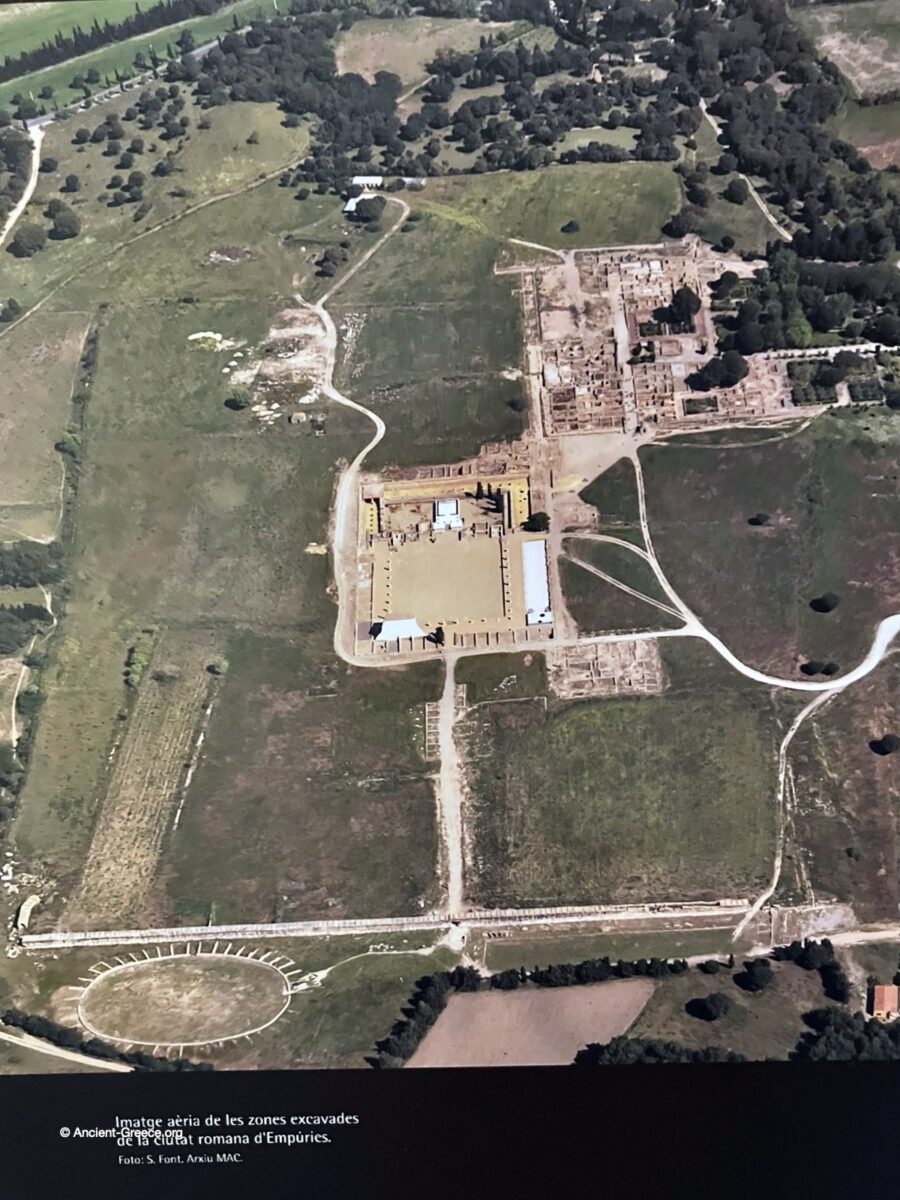
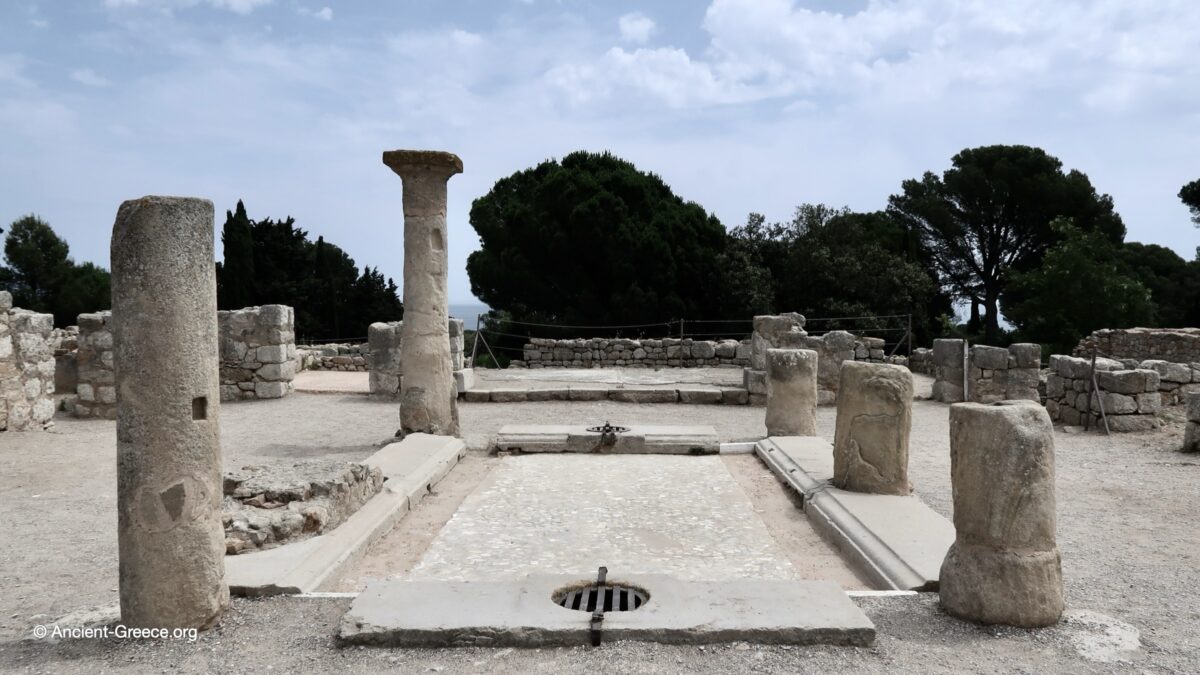
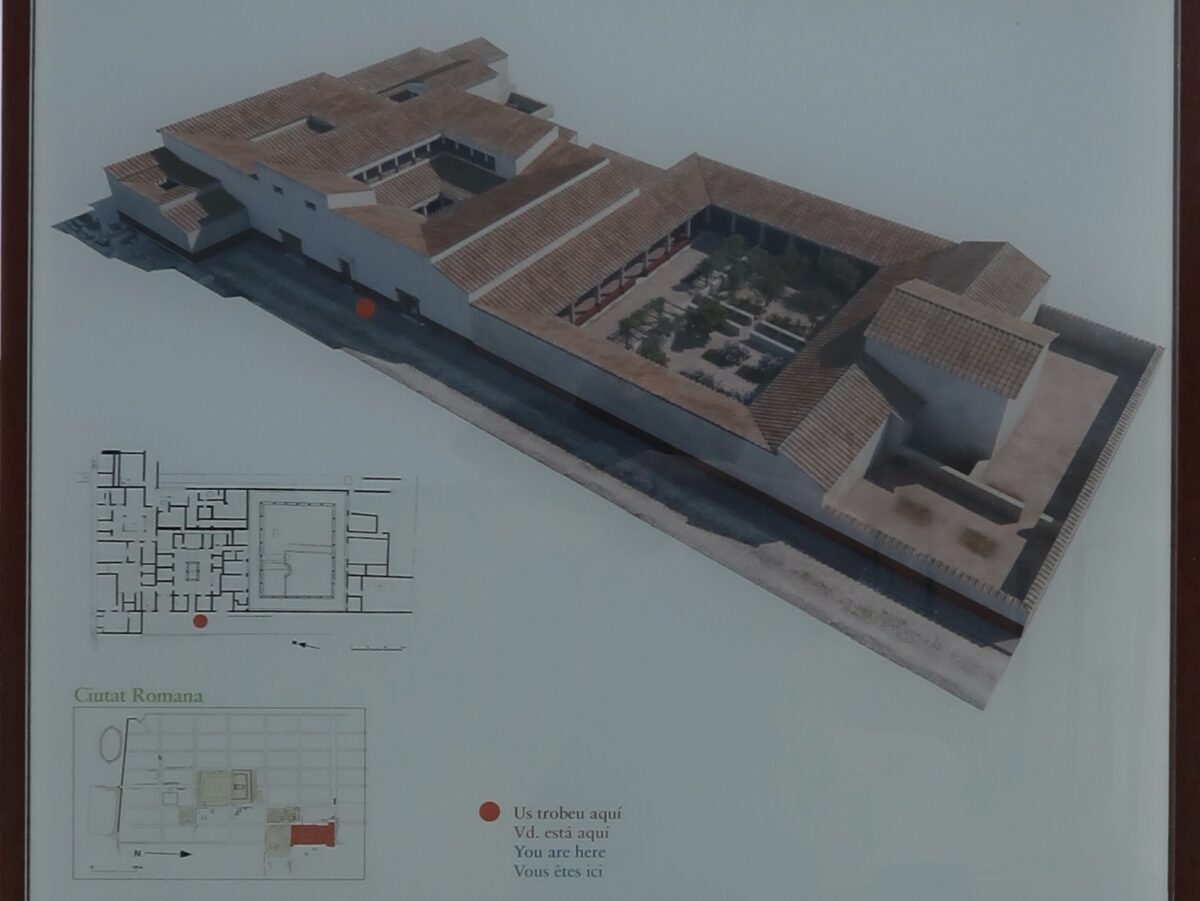
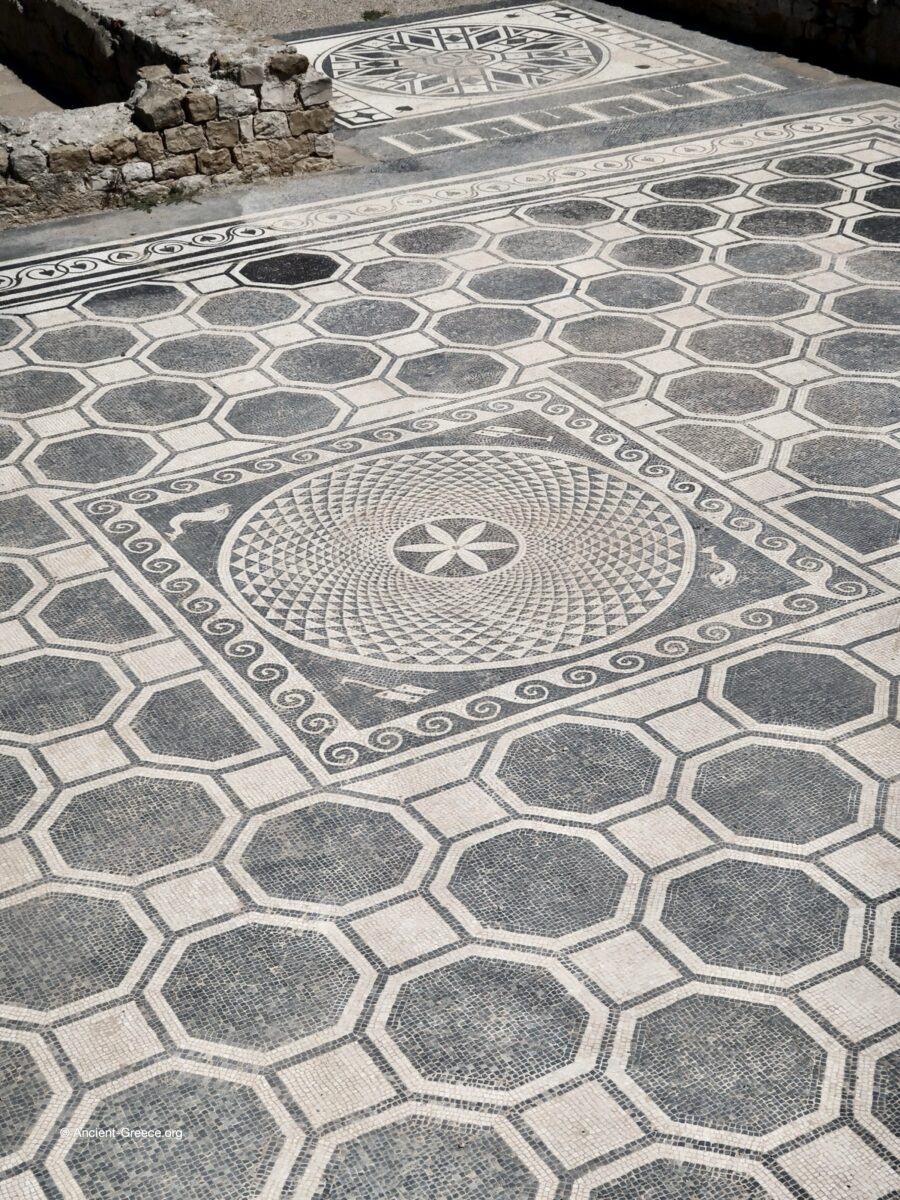
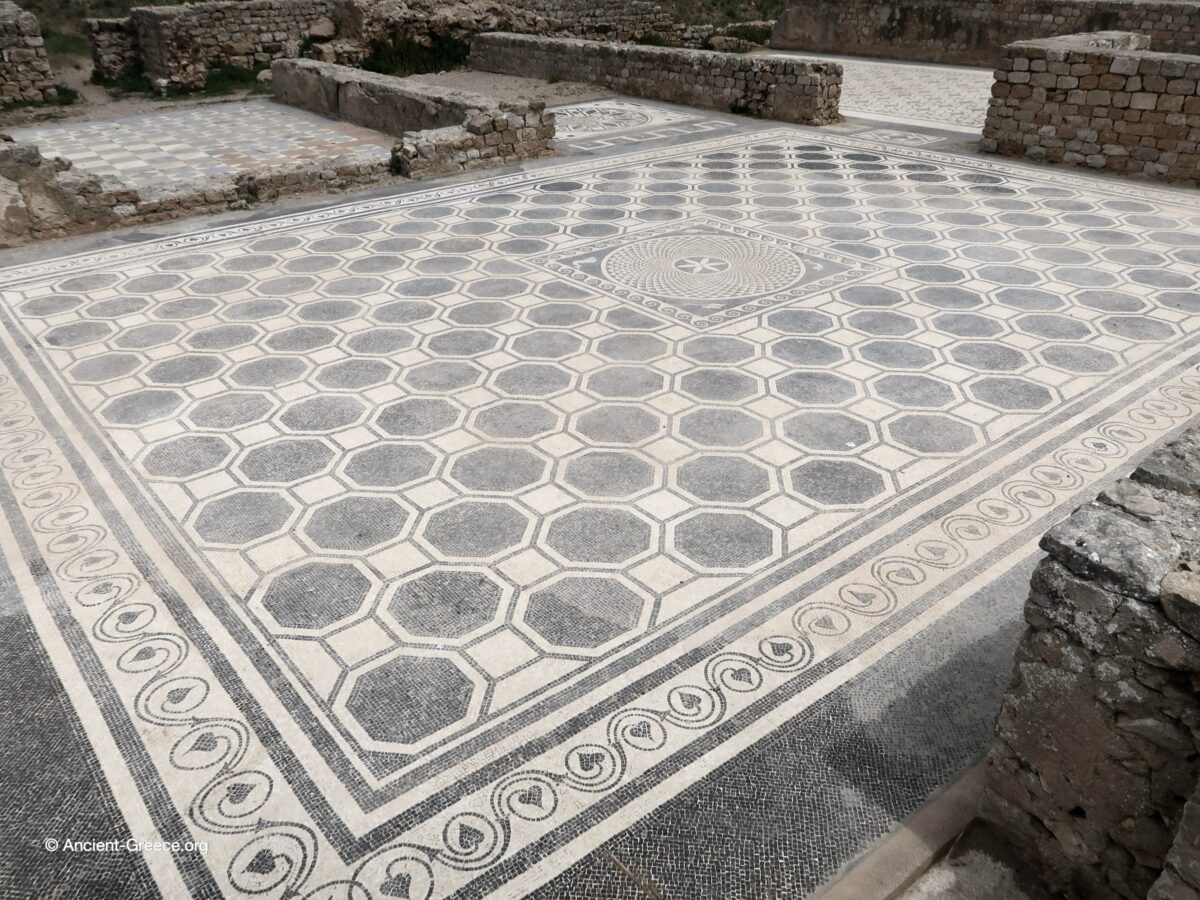
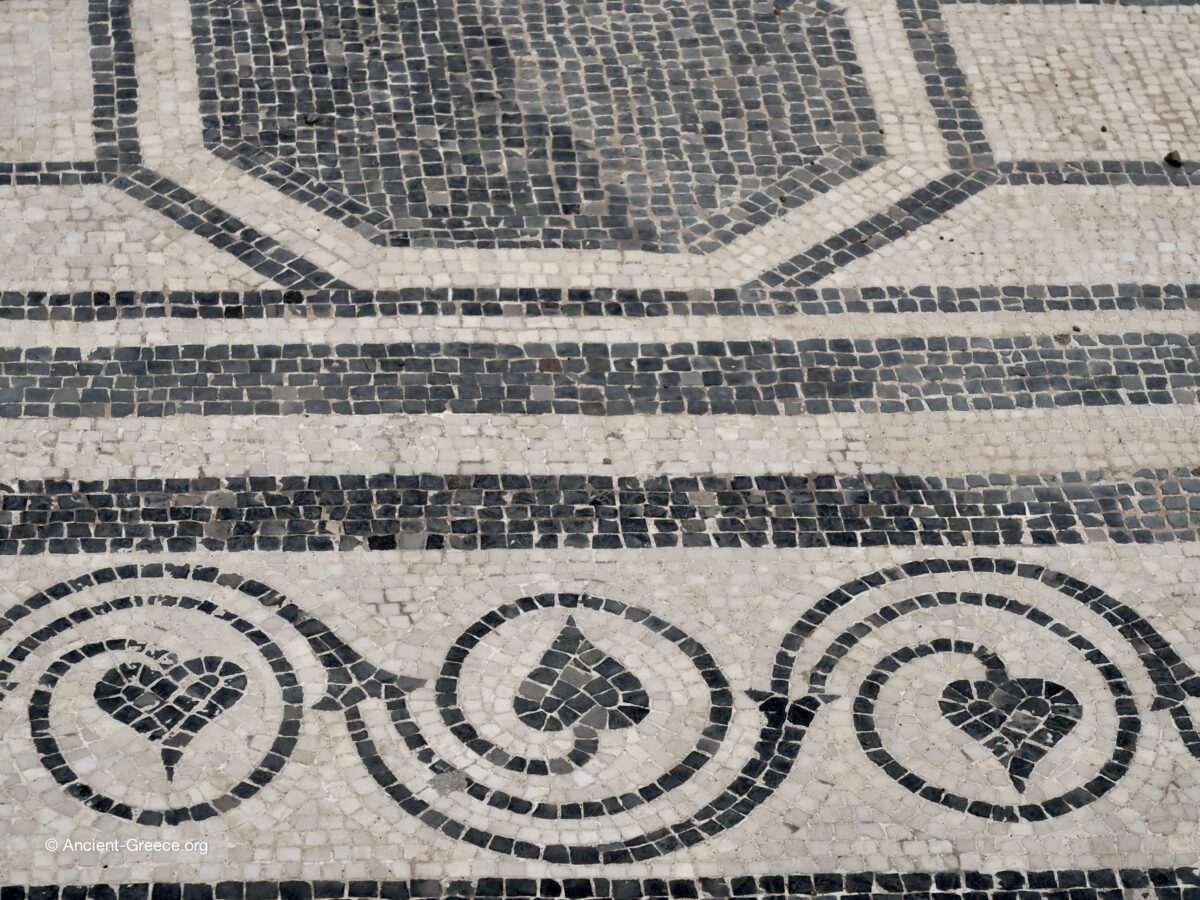
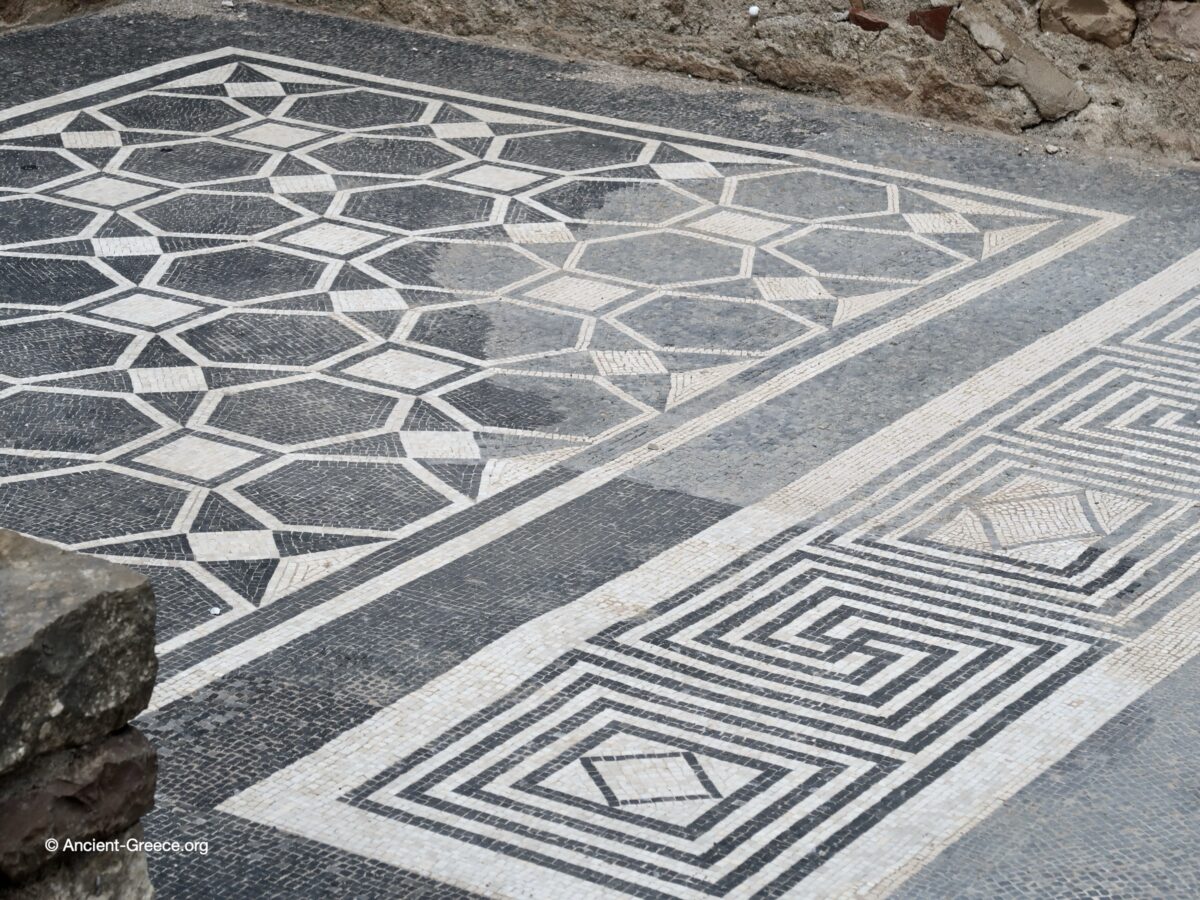
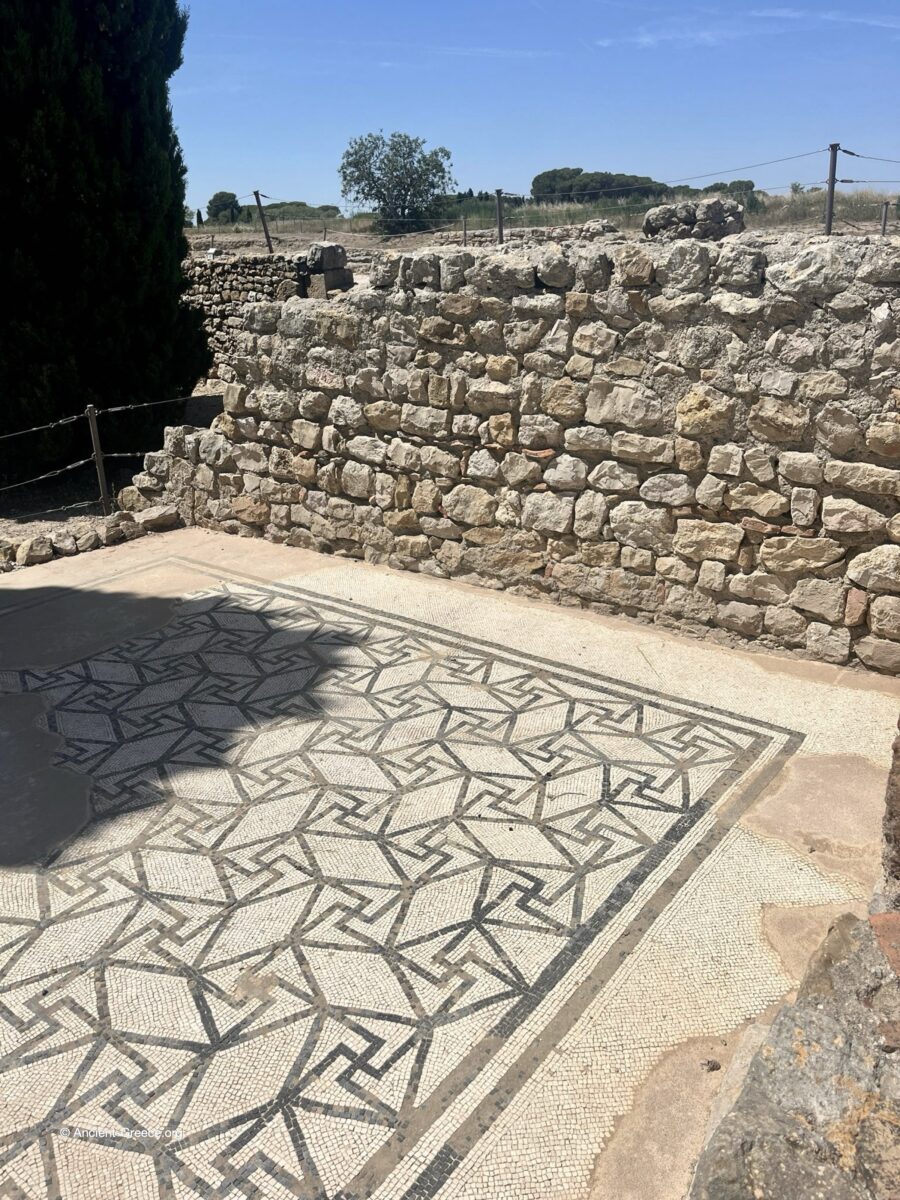
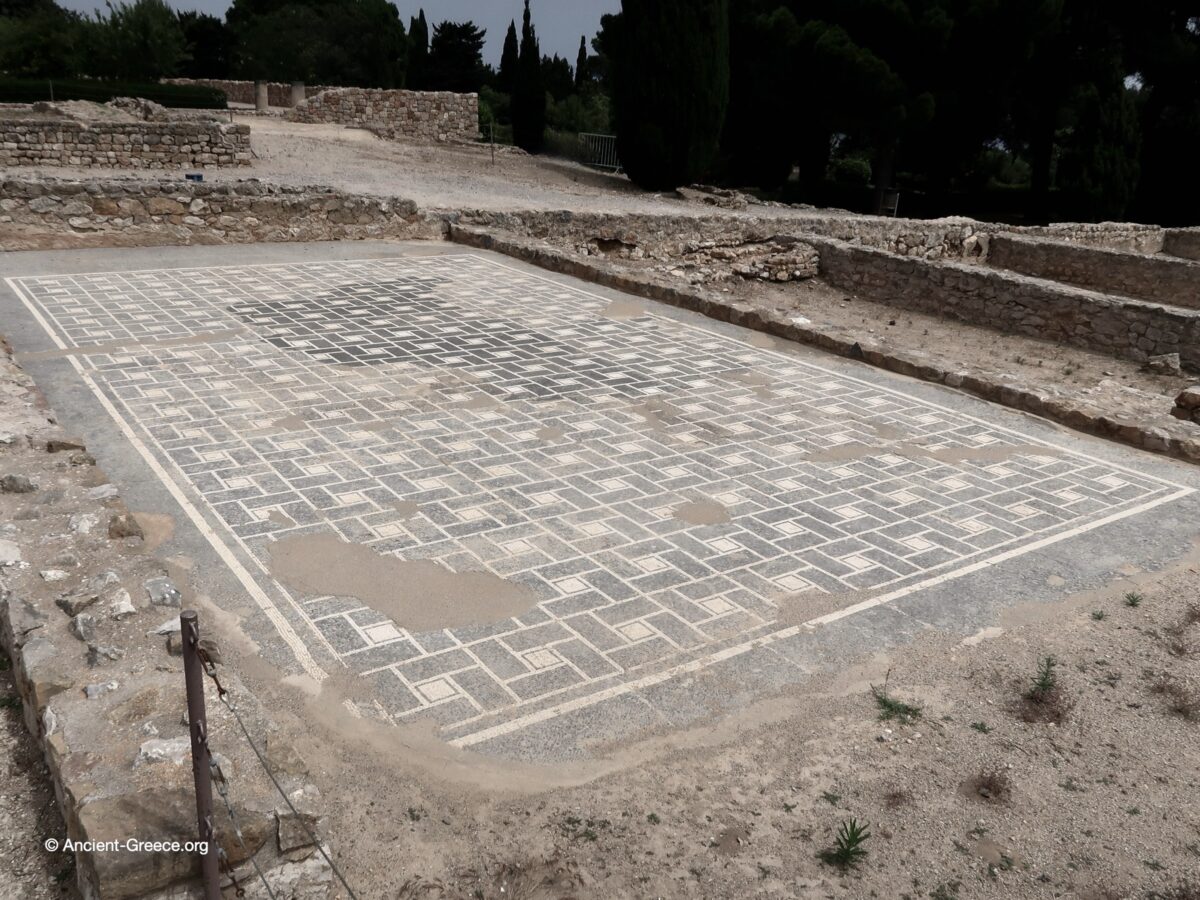
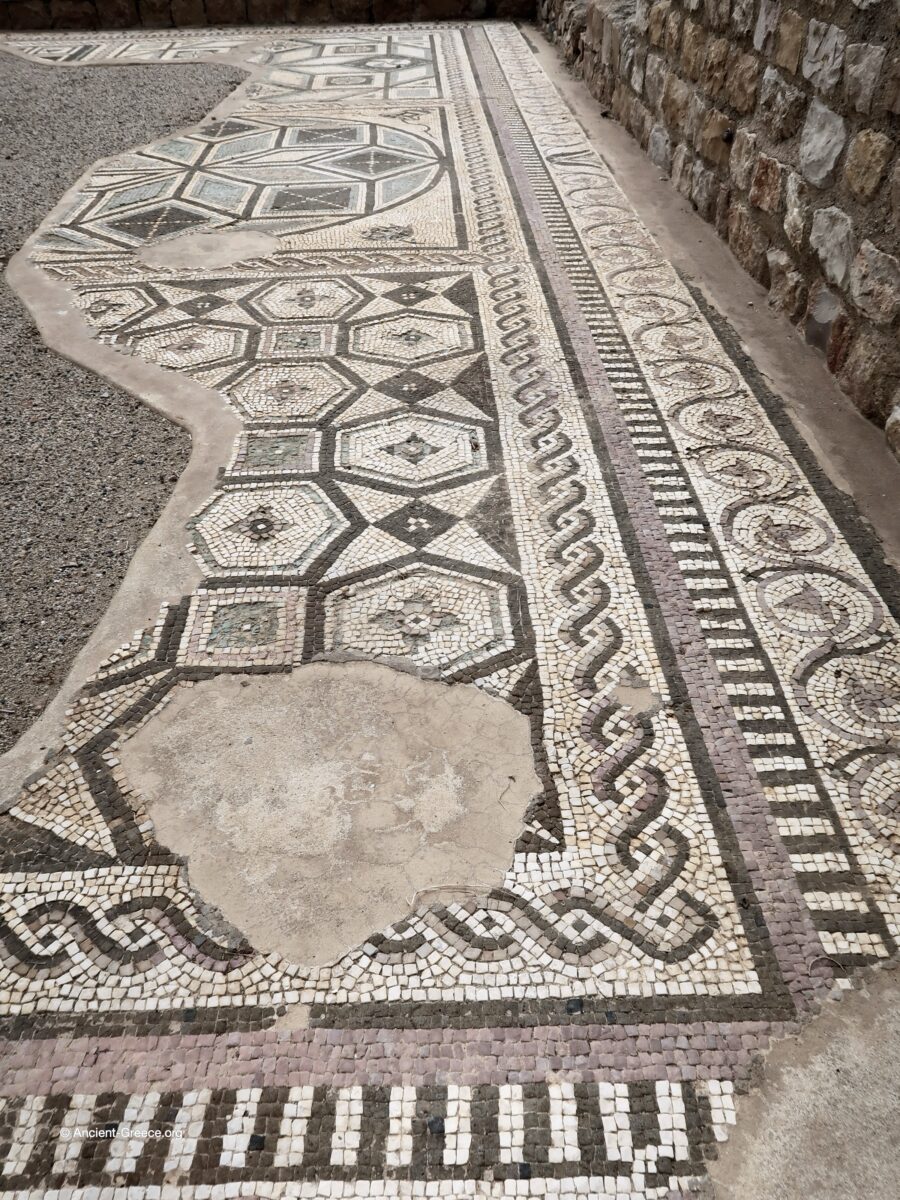
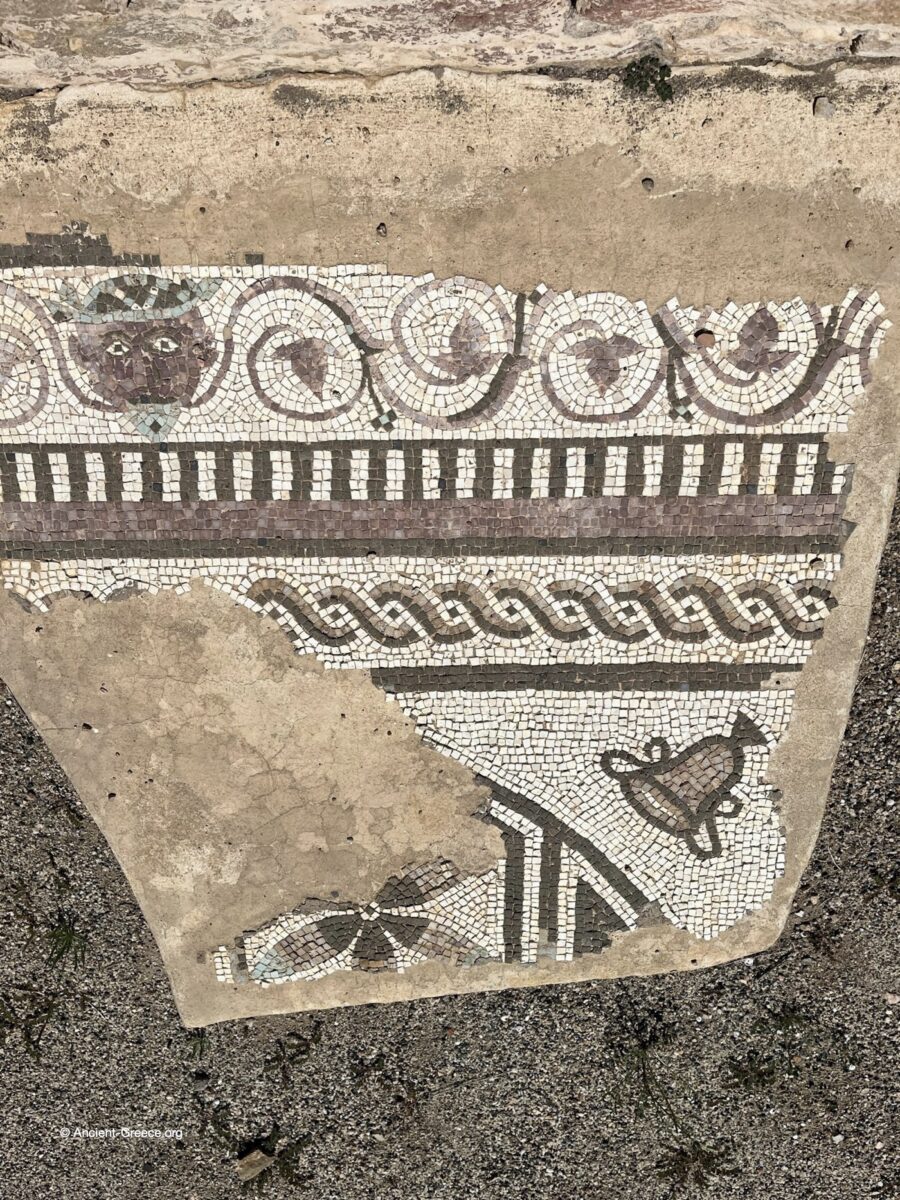
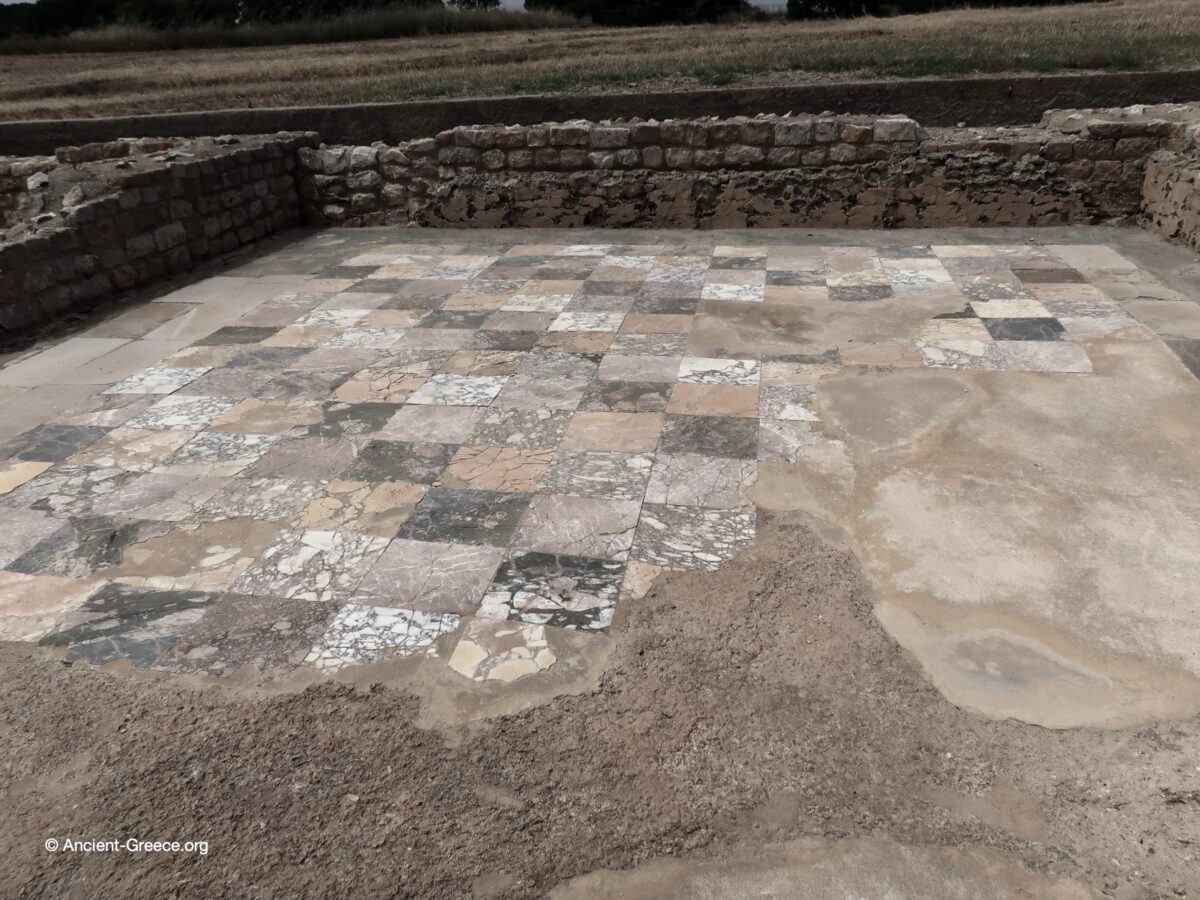
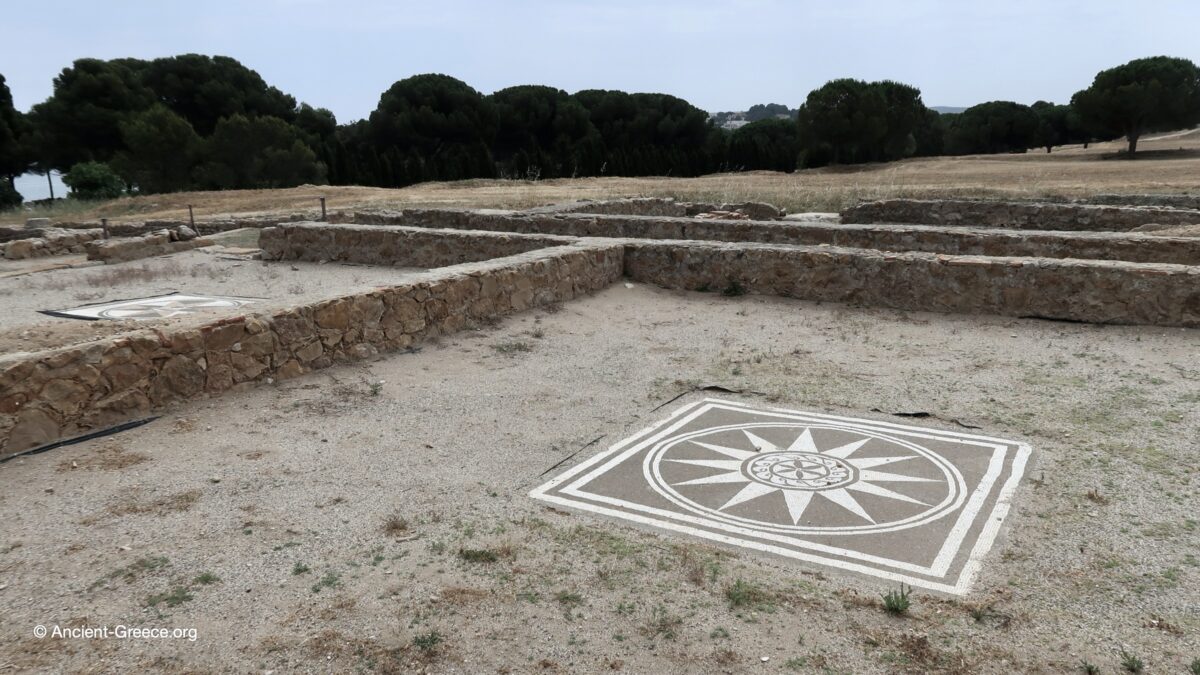
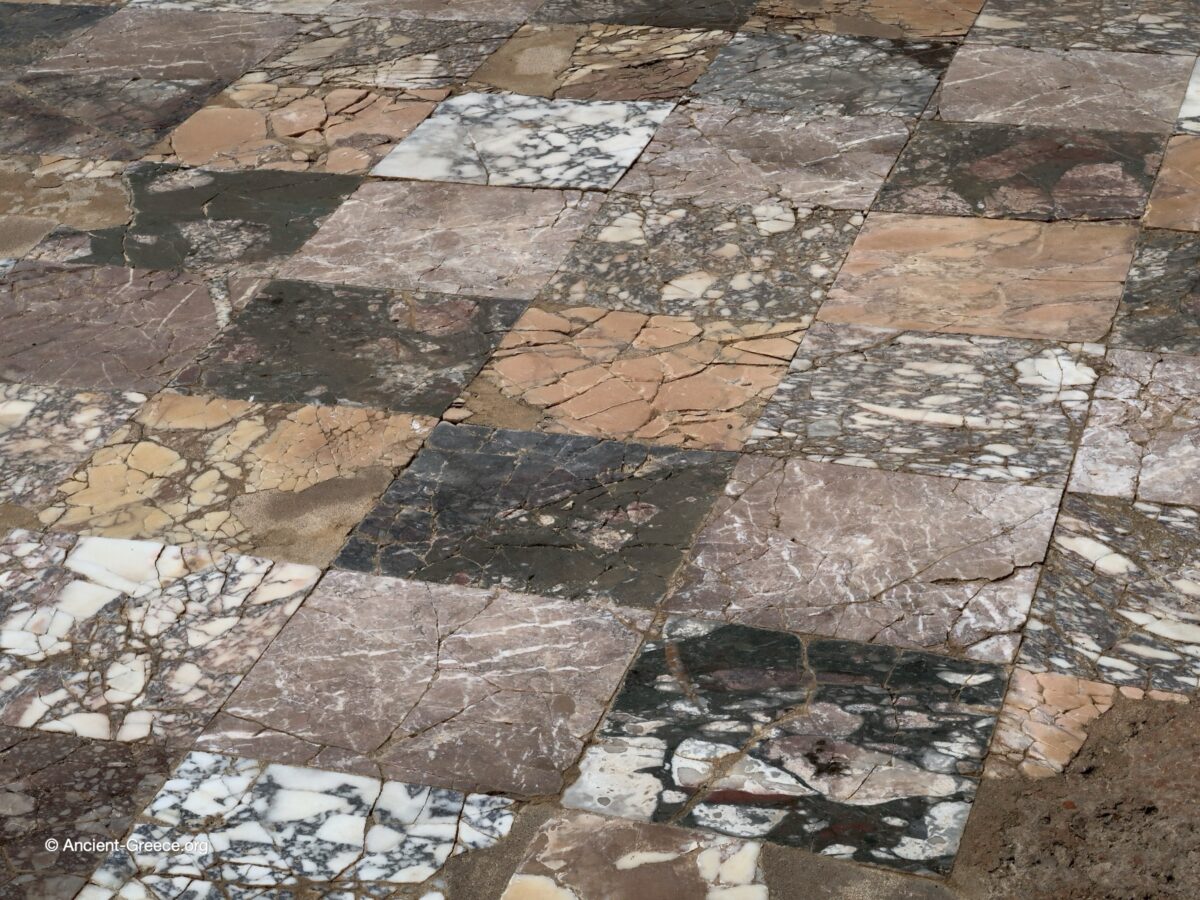
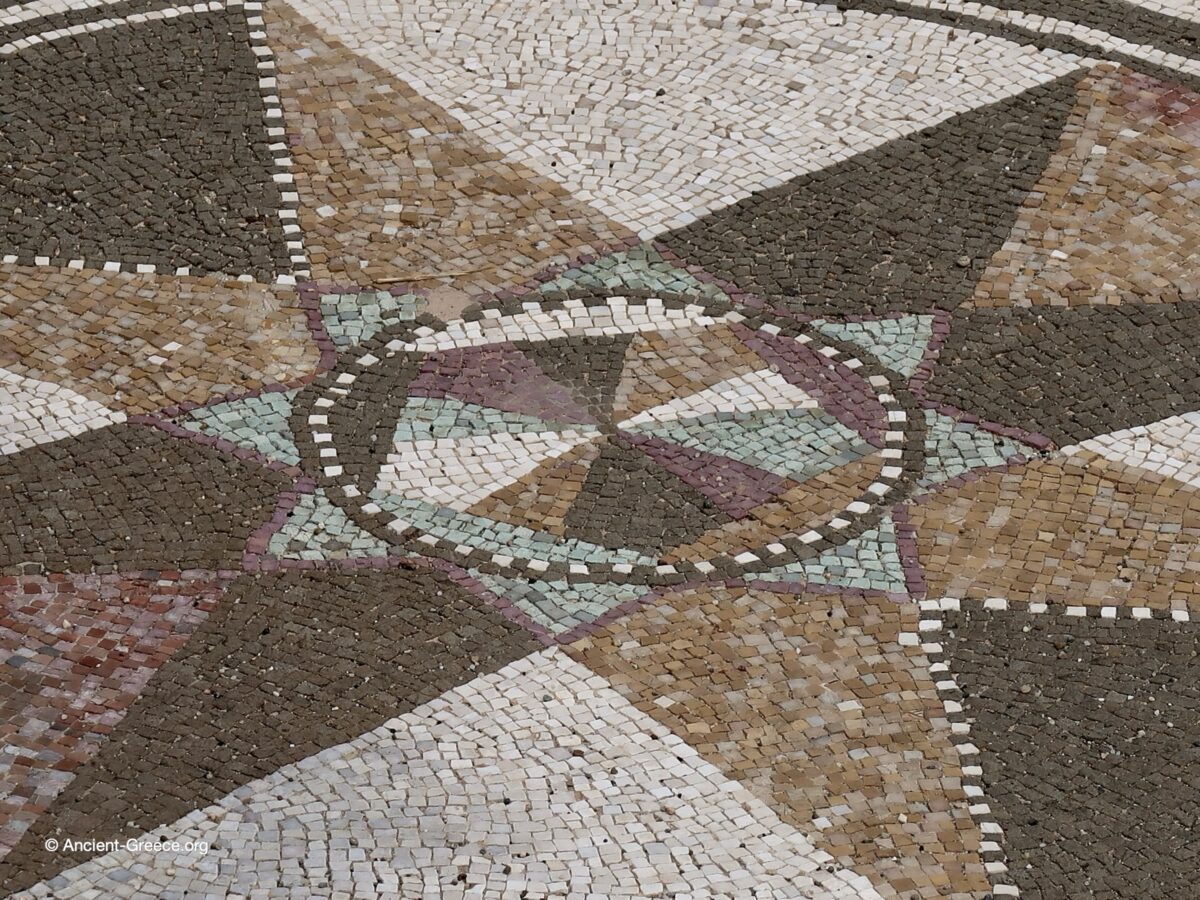
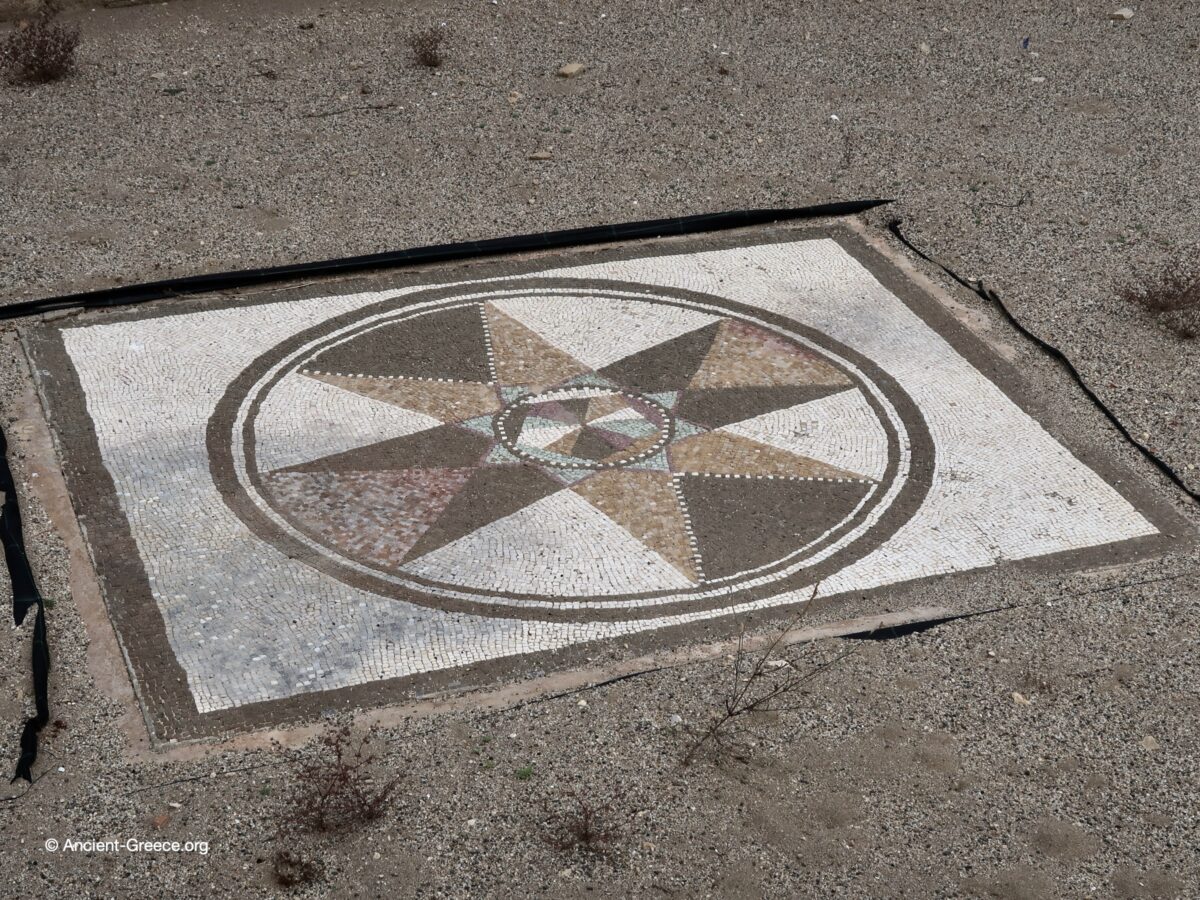
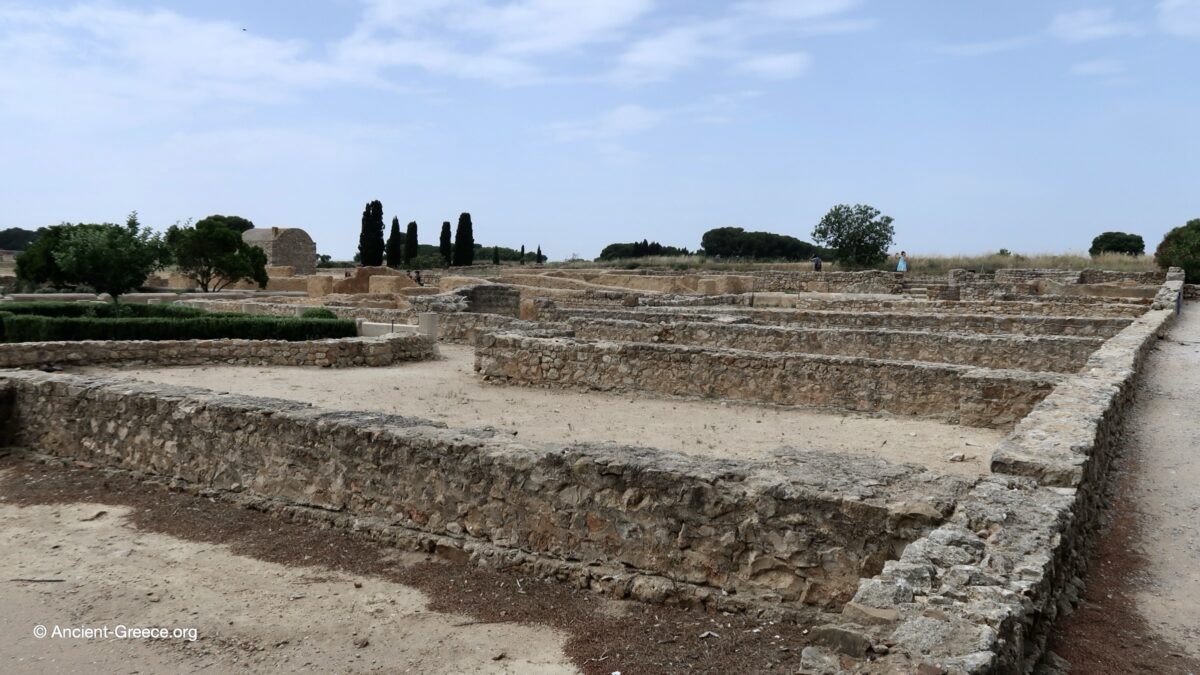
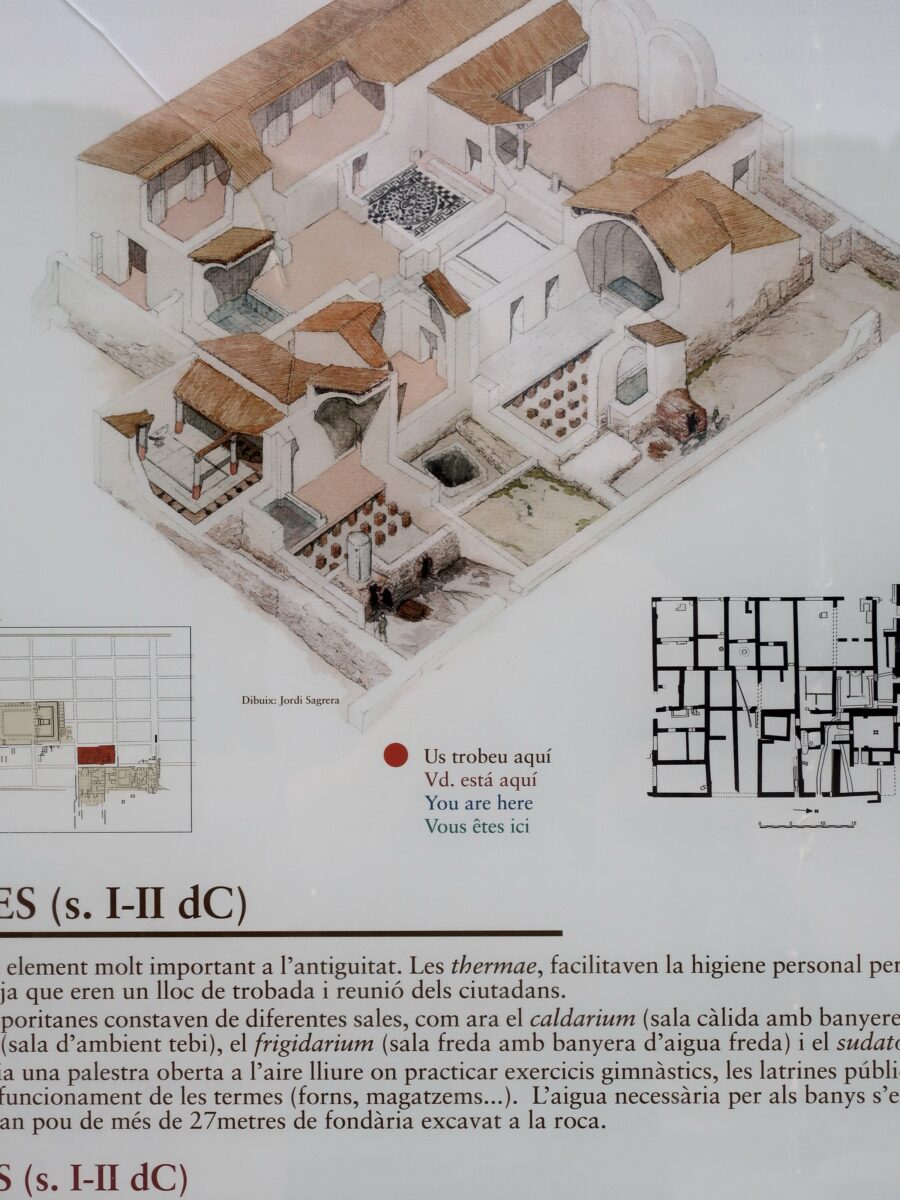
Following the arrival of the Scipio during the Punic Wars, a new, massive Roman city was built on the hill above the Greek Neapolis. This section features the Roman Mosaics, which are generally more geometric and elaborate, reflecting the tastes of the Roman Colonia established by Julius Caesar.
The Forum
The forum (1st century BCE – 1st century CE) was the political, religious and economic hub of the Roman city. Most of the important buildings are concentrated around it.
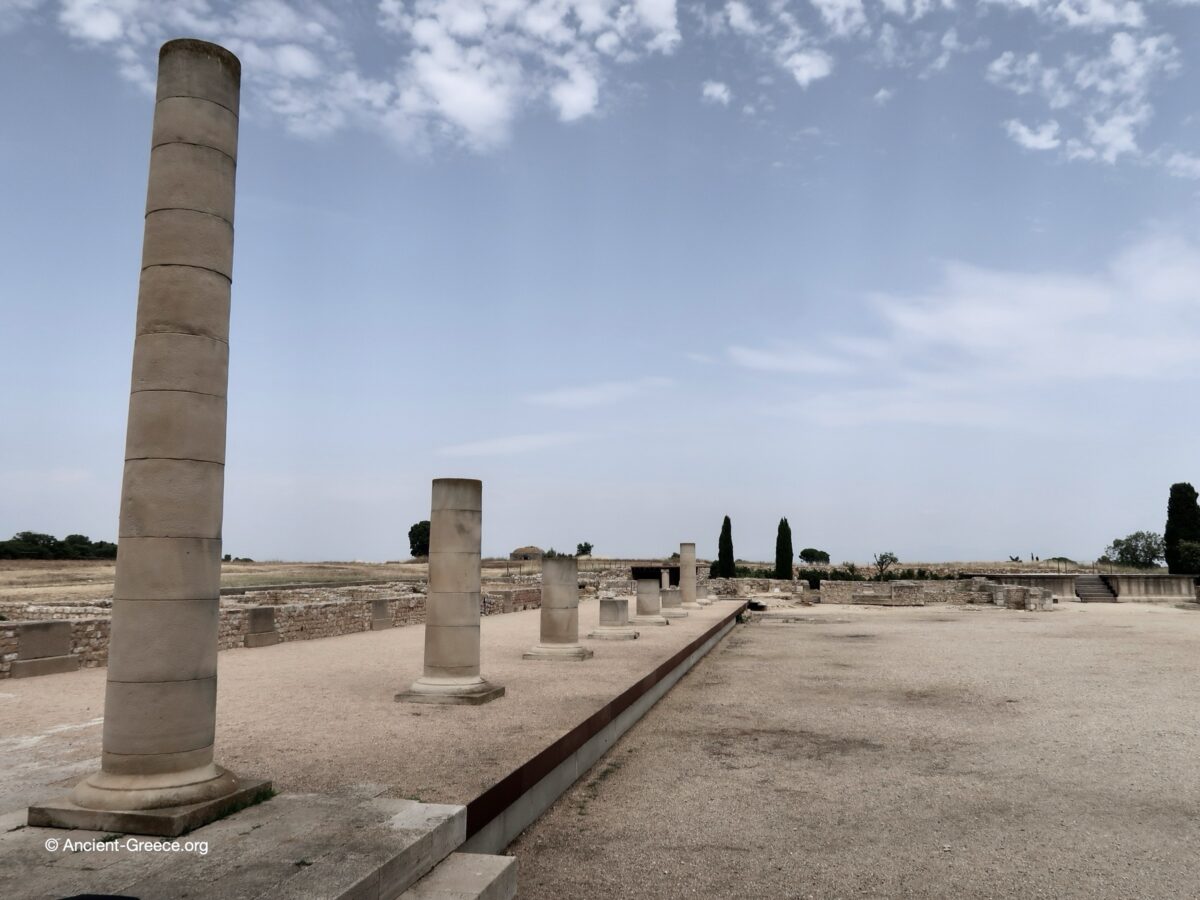
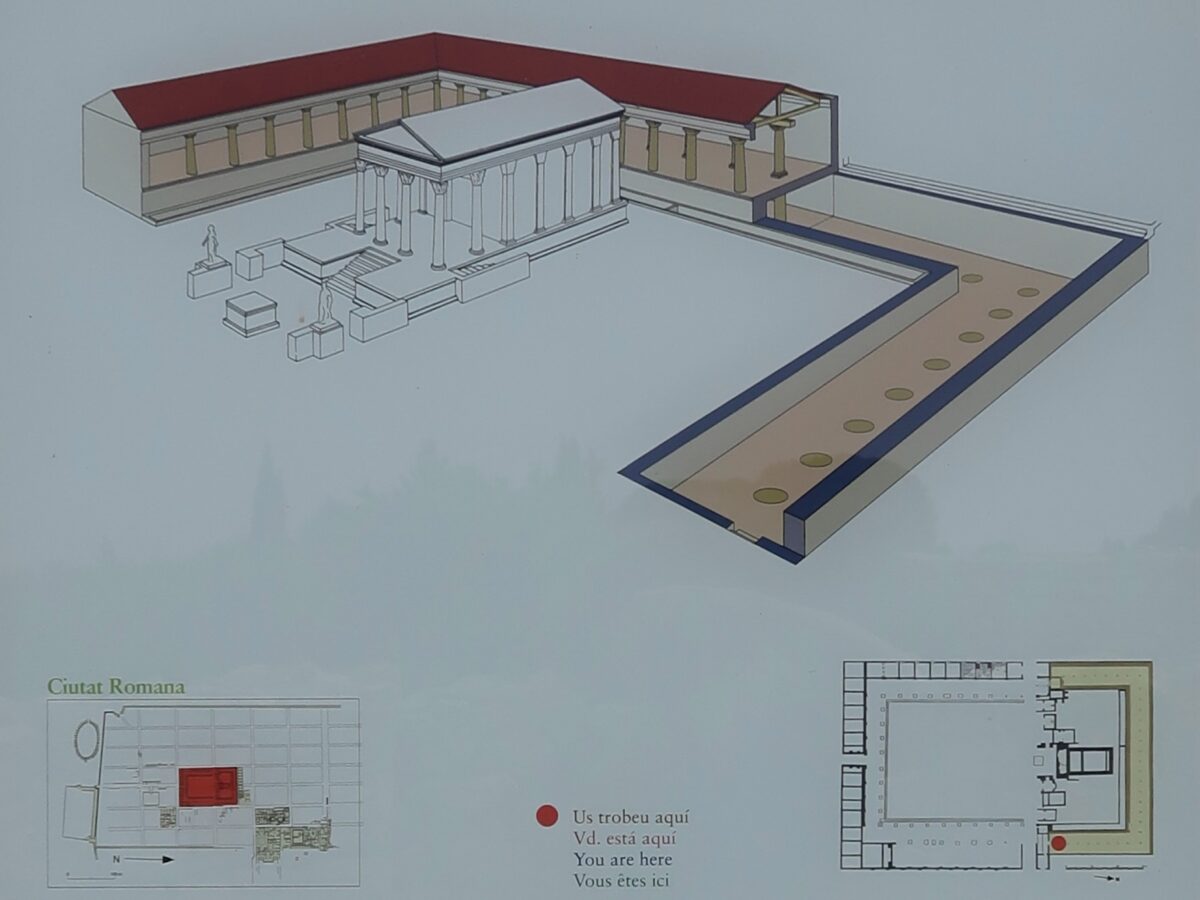
It had a large open space enclosed by a perimeter portico on three sides. On the north side had a temple of Jupiter, Juno, and Minerva with smaller temples dedicated to other gods on its flanks. The east end housed the city’s administrative buildings–the curia (the headquarters of the municipal council) and the basilica which dealt with justice affairs. The west and south sectors was dedicated to commercial premises (tabernae) which opened onto the surrounding streets.
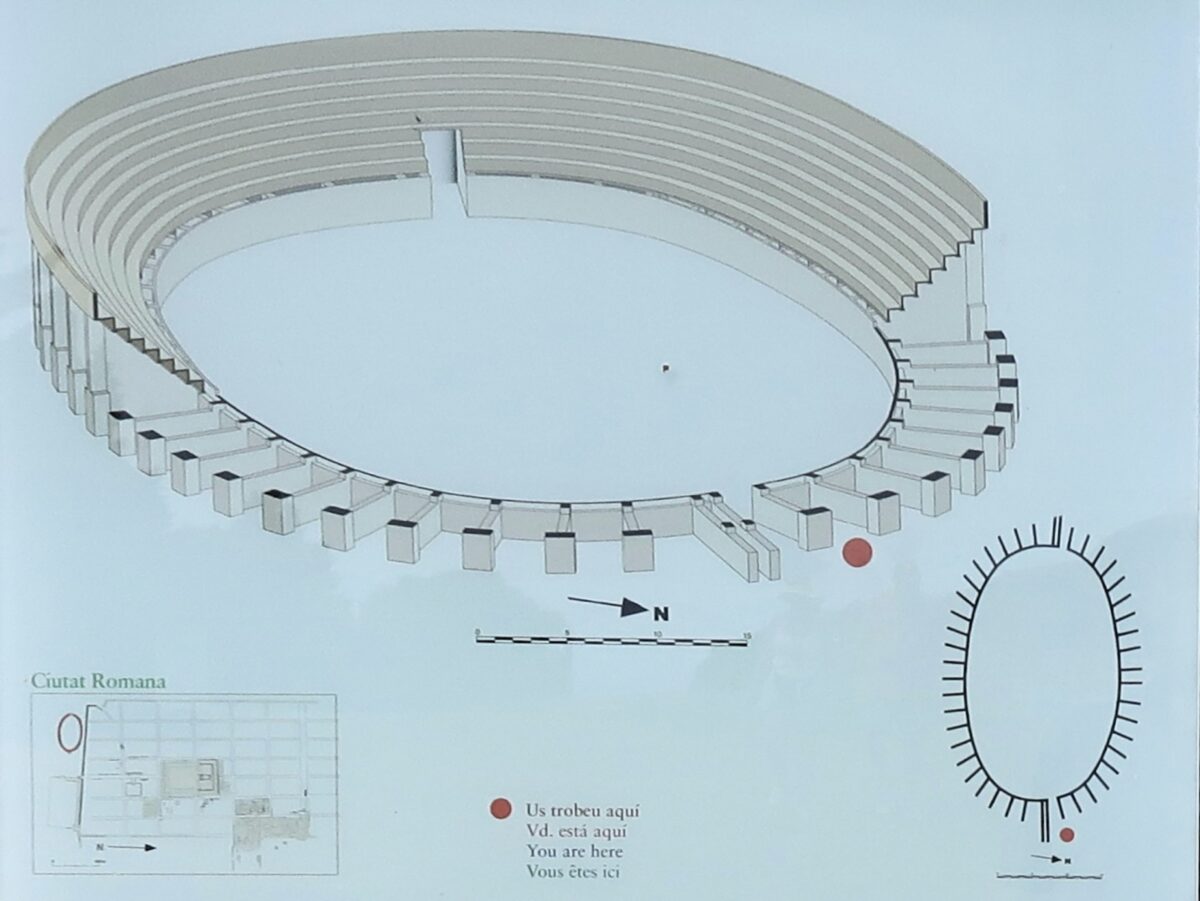
The Roman Baths, Walls, and Amphitheater
The Indigenous Indigetes and the Dual City
Emporion was a unique “Dipolis,” where the Greek Neapolis stood alongside the indigenous settlement of the Indigetes. Over centuries, these two distinct communities grew through trade and proximity until the indigenous population was gradually absorbed into the expanding urban fabric of the Graeco-Roman city.
Photo Gallery
This is collection of photographs of Emporion Ancient Greek and Roman town in Catalonia, Spain.
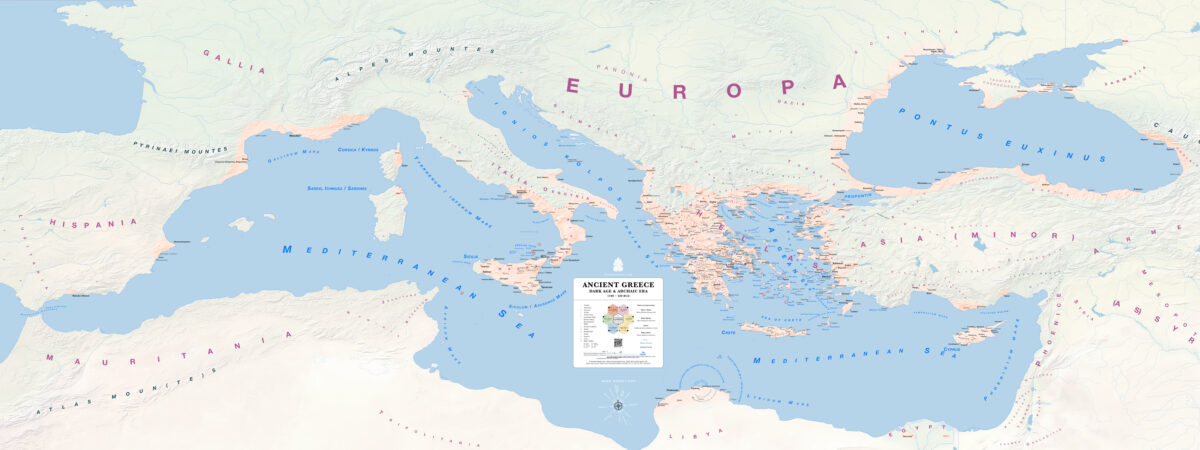
Image Highlights
Related Pages
Bag of Rosemary Travel Video of Emporion Archaeological site.