
On this page:
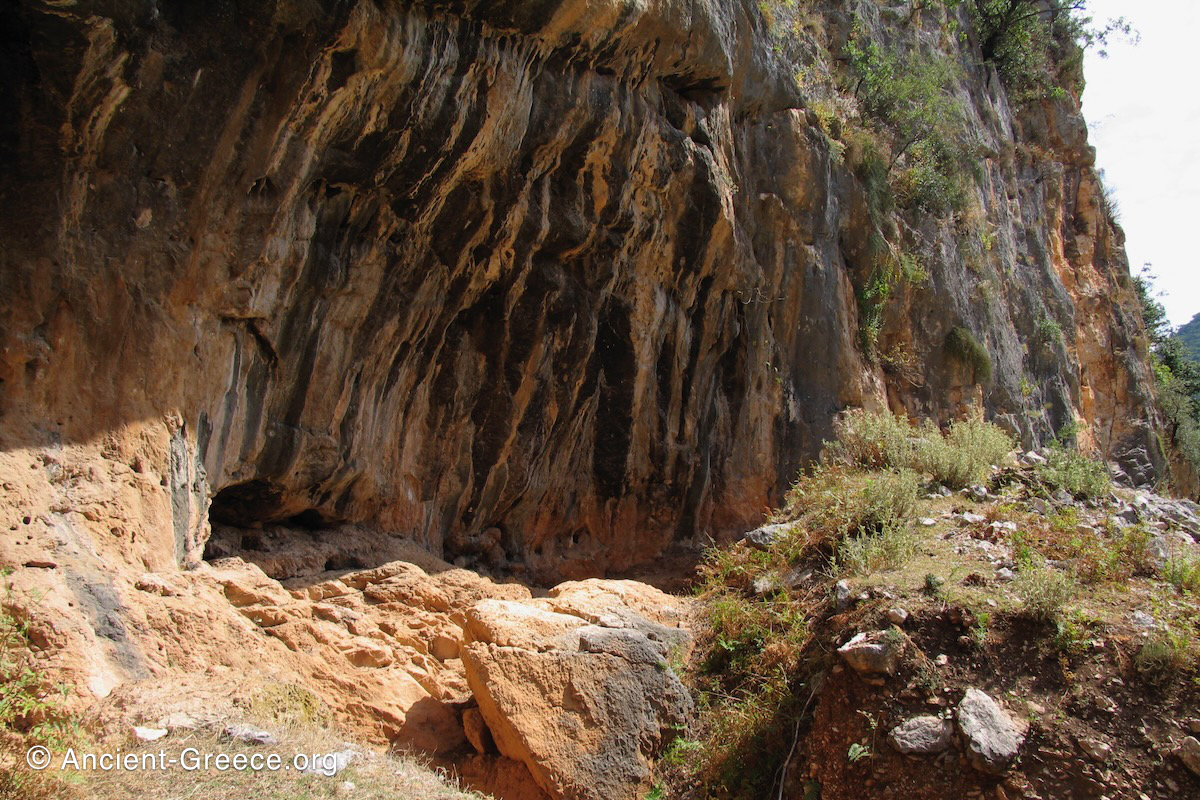
The Paleolitchic rock shelter known as Ασπροχάλικο (Asprochaliko), is a small archaeological site in Epirus, Greece.
According to the information on the site, this rock shelter was excavated between 1964 and 1966 and has a 6-meter sequence of Mousterian and Upper Paleolithic layers.
Over half a million flaked stone tools and fragments of animal bone were found during excavations. Many of which are sheltered in the Ioannina Archaeological Museum.
Η παλαιολιθική βραχοσκεπή που είναι γνωστή ως Ασπροχάλικο, είναι ένας μικρός αρχαιολογικός χώρος στην Ήπειρο της Ελλάδας.
Σύμφωνα με τις πληροφορίες στον χώρο, αυτή η βραχοσκεπή ανασκάφηκε μεταξύ 1964 και 1966 και διαθέτει μια στρωματογραφική αλληλουχία 6 μέτρων από Μουστέρια και Ανώτερα Παλαιολιθικά στρώματα.
Πάνω από μισό εκατομμύριο πελεκημένα λίθινα εργαλεία και θραύσματα οστών ζώων βρέθηκαν κατά τη διάρκεια των ανασκαφών. Πολλά από αυτά φυλάσσονται στο Αρχαιολογικό Μουσείο Ιωαννίνων.
History | Ιστορία
The site was in use from 100,000 years ago, probably in spring and autumn by nomadic hunters who followed animal herds through the mountains of Epirus.
Bone evidence from the site indicate that in this narrow valley around the river Louros lived and migrated herds of red deer, elk, ibex, aurochs, and even rhinoceros.
The base of the deposits is dated to the Middle Paleolithic era and flint tools characterize the finds. A multitude of Middle Paleolithic levels separate this base and the upper levels where “evidence of a stone-tool industry dominated by small “backed” blades (blades on which one edge is blunted by retouching) used as projectile points.” (Runnels and Murray 28)
Curtis Runnels and Tjeerd Van Andel, indicate in the Landscape Archaeology in Southern Epirus, Greece I that Asprochaliko seems to have been “a highly specialized site in a larger, hierarchical system”, and that the population of the entire Preveza province at the time “was probably limited to a single small band of ca. 25 to 75 persons resident on a seasonal basis (116).
The same source tells that Asprochaliko cave was abandoned sometime at the end of the Pleistocene period (130).
Ο χώρος βρισκόταν σε χρήση από 100.000 χρόνια πριν, πιθανότατα την άνοιξη και το φθινόπωρο, από νομάδες κυνηγούς που ακολουθούσαν κοπάδια ζώων μέσα από τα βουνά της Ηπείρου.
Τα οστικά ευρήματα από τον χώρο υποδηλώνουν ότι σε αυτή τη στενή κοιλάδα γύρω από τον ποταμό Λούρο ζούσαν και μετανάστευαν κοπάδια από κόκκινα ελάφια, άλκες, αγριοκάτσικα, ούρους, ακόμη και ρινόκερους.
Η βάση των αποθέσεων χρονολογείται στη Μέση Παλαιολιθική εποχή και τα πυριτολιθικά εργαλεία χαρακτηρίζουν τα ευρήματα. Ένα πλήθος επιπέδων της Μέσης Παλαιολιθικής διαχωρίζει αυτή τη βάση και τα ανώτερα επίπεδα όπου υπάρχουν “στοιχεία μιας λιθοτεχνίας που κυριαρχείται από μικρές λεπίδες «με ράχη» (λεπίδες των οποίων η μία ακμή έχει αμβλυνθεί με επεξεργασία) που χρησιμοποιούνταν ως αιχμές βλημάτων.” (Runnels και Murray 28)
Οι Curtis Runnels και Tjeerd Van Andel, αναφέρουν στο Landscape Archaeology in Southern Epirus, Greece I ότι το Ασπροχάλικο φαίνεται να ήταν “μια εξαιρετικά εξειδικευμένη θέση σε ένα ευρύτερο, ιεραρχικό σύστημα”, και ότι ο πληθυσμός ολόκληρης της επαρχίας Πρέβεζας εκείνη την εποχή “ήταν πιθανότατα περιορισμένος σε μια μόνο μικρή ομάδα περίπου 25 έως 75 ατόμων που διέμεναν σε εποχιακή βάση” (116).
Η ίδια πηγή αναφέρει ότι το σπήλαιο του Ασπροχάλικου εγκαταλείφθηκε κάποια στιγμή στο τέλος της Πλειστόκαινου περιόδου (130).
Photographs |Φωτογραφίες
Asprochaliko (Showing 1–8 of 8)
← Keyboard Navigation → | ← Πλοήγηση με το πληκτρολόγιο →
Related Pages

Sources & Documentation:
- Ministry of Culture (Site Information Board) – Referenced for the excavation dates (1964–1966), the 6-meter sequence of Mousterian and Upper Paleolithic layers, and the artifact counts housed in the Ioannina Archaeological Museum.
- Runnels, Curtis, and Priscilla Murray. Greece Before History: An Archaeological Companion and Guide. Stanford University Press, 2001. (Referenced for the quote on page 28 detailing the stone-tool industry dominated by small “backed” blades).
- Runnels, Curtis, and Tjeerd H. van Andel. “The Early Stone Age of the Nomos of Preveza: Landscape and Settlement.” In Landscape Archaeology in Southern Epirus, Greece I, edited by James Wiseman and Konstantinos L. Zachos, Hesperia Supplement 32. American School of Classical Studies at Athens, 2003.