On this page:
Περιεχόμενα:
The Evolution of Healing Sanctuaries
From Prehistoric Ritual to Organized Medicine
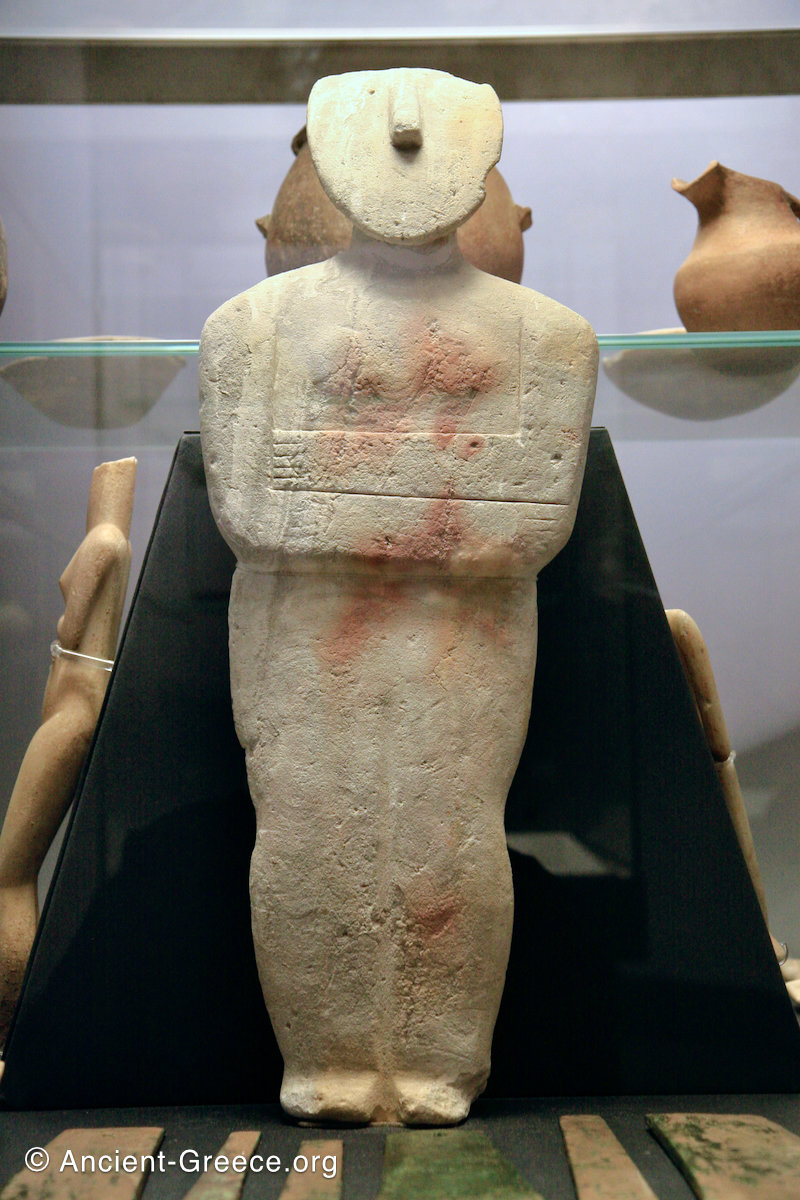
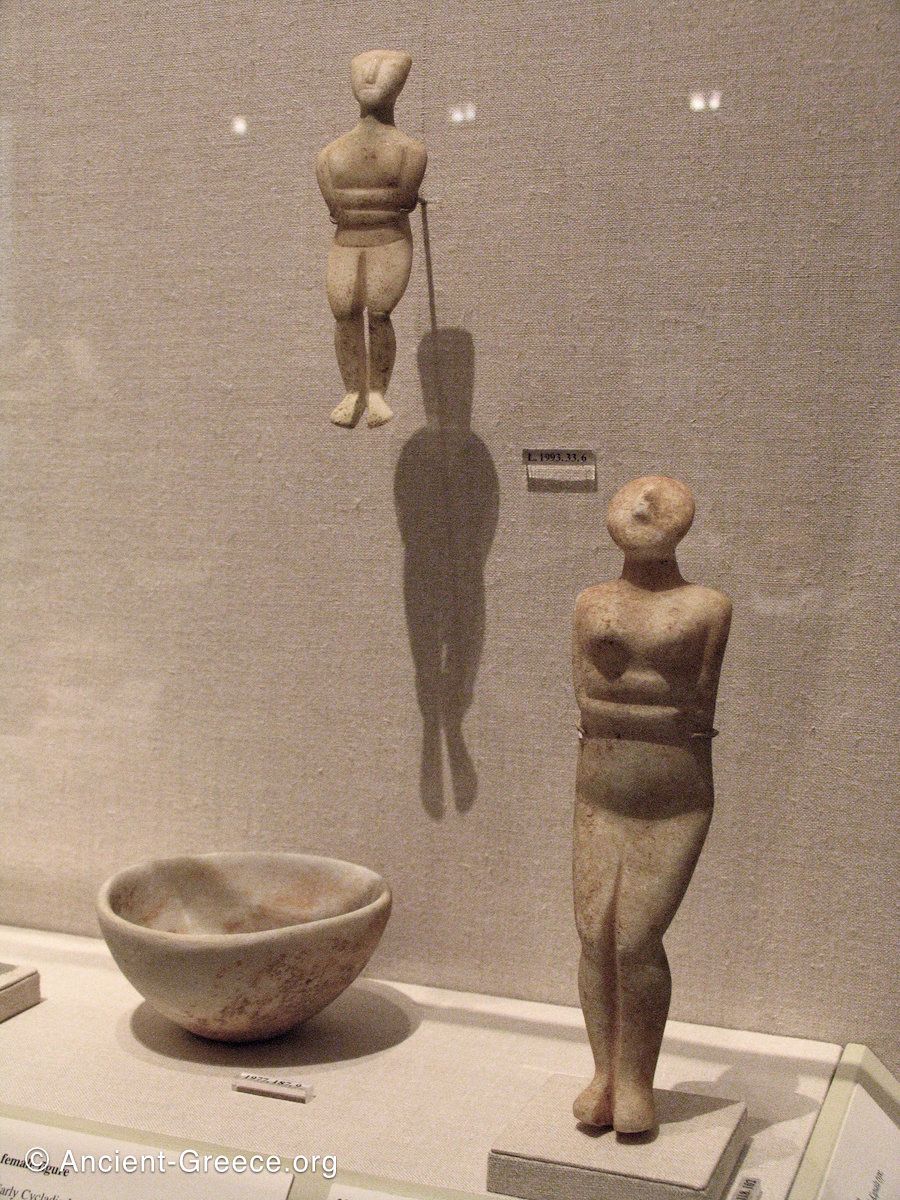
The development of medicinal practice in the ancient Greek world, often referred to as Iatrike, represents a complex transition from prehistoric ritual to organized clinical observation. Evidence of these organized healing practices dates back to the Stone Age and the Bronze Age, where therapeutic activities were primarily situated within natural environments such as springs and caves. In the Aegean region, early inhabitants sought divine intervention for maladies at Minoan peak sanctuaries, such as Petsofas on Crete, where the tradition of anatomical votives first appeared prominently around 2000–1600 BCE. These early offerings, often terracotta limbs or torsos, established a “visual contract” between the patient and the divine, a ritualistic precursor to the more formalized medical landscapes of the Archaic and Classical periods. Further north in the Cyclades, the deposition of figurines at sites like Keros suggests that the dedication of symbolic forms played a vital role in early spiritual and physical restoration rituals throughout the Aegean basin.
The Rise of the Asklepieion
By the Classical era, the cult of Asklepios had centralized these diverse traditions, establishing permanent architectural complexes that integrated the natural environment with sacred space. The Asklepieion of Epidaurus stands as the preeminent example of this transition, where the shift from folk magic to empirical observation began to take shape. The process of healing was centered on the rite of enkoimesis (incubation), during which patients slept within a sacred dormitory known as the Abaton. Ancient sources, including the Plutus by Aristophanes, describe how patients would wait for the god to appear in their dreams to offer a cure or medical advice. At Kos, the sanctuary famously associated with Hippocrates further bridged the gap between the divine and the empirical through a sophisticated understanding of hydrotherapy and environmental health, as evidenced by its monumental terraces and proximity to thermal springs.
Mediterranean Expansion and Material Culture
During the Hellenistic period, the influence of these sanctuaries expanded across the Mediterranean to sites such as Pergamon, Athens, and even Emporion in modern Catalonia. The Asklepieion at Emporion served as the therapeutic heart of the Phocaean colony, featuring a notable marble cult statue of Asklepios dating to the late 4th century BCE and a sophisticated ceramic water filter system designed for physical and spiritual restoration. As these sites evolved into massive centers of learning, they incorporated secular structures like theaters, gymnasia, and libraries. The anatomical votives also became more precise; marble reliefs found at the Asklepieion of Athens, now housed in the National Archaeological Museum, served as both thank-offerings (eucharisteria) and a clinical record of the god’s successes, effectively documenting the historical development of medical science.
Evidence of organized healing practices in the Greek world dates back to the Stone Age and the Bronze Age, where therapeutic activities were often tied to natural springs and caves.
In the Aegean region, early inhabitants sought divine intervention for maladies, a practice that evolved significantly during the Archaic period as local hero cults began to focus on specific deities associated with health.
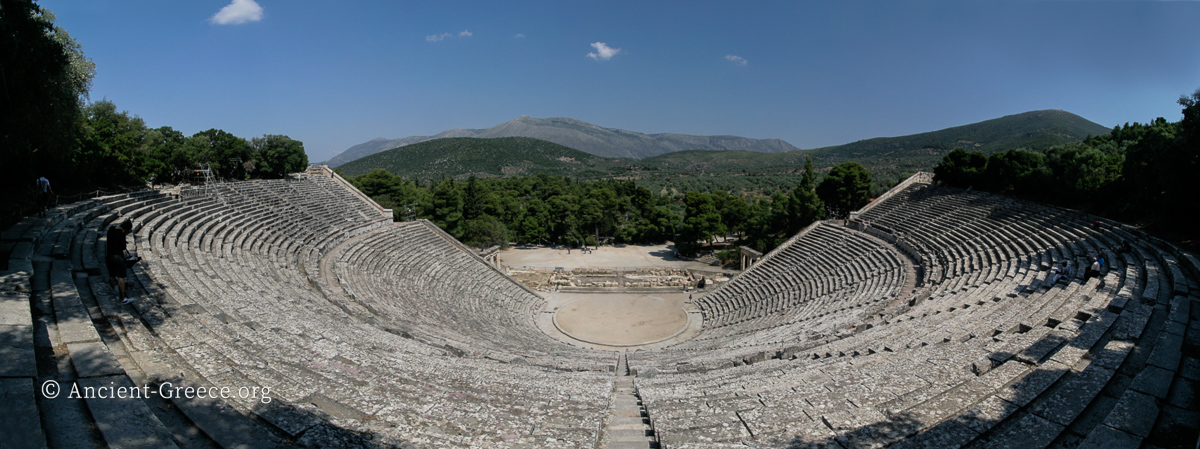
By the time of the Classical era, the cult of Asclepius had centralized these traditions, establishing permanent structures that integrated the natural environment with sacred architecture.
The Asklepieion of Epidaurus stands as the preeminent example of the transition from folk magic to clinical observation began to take shape.
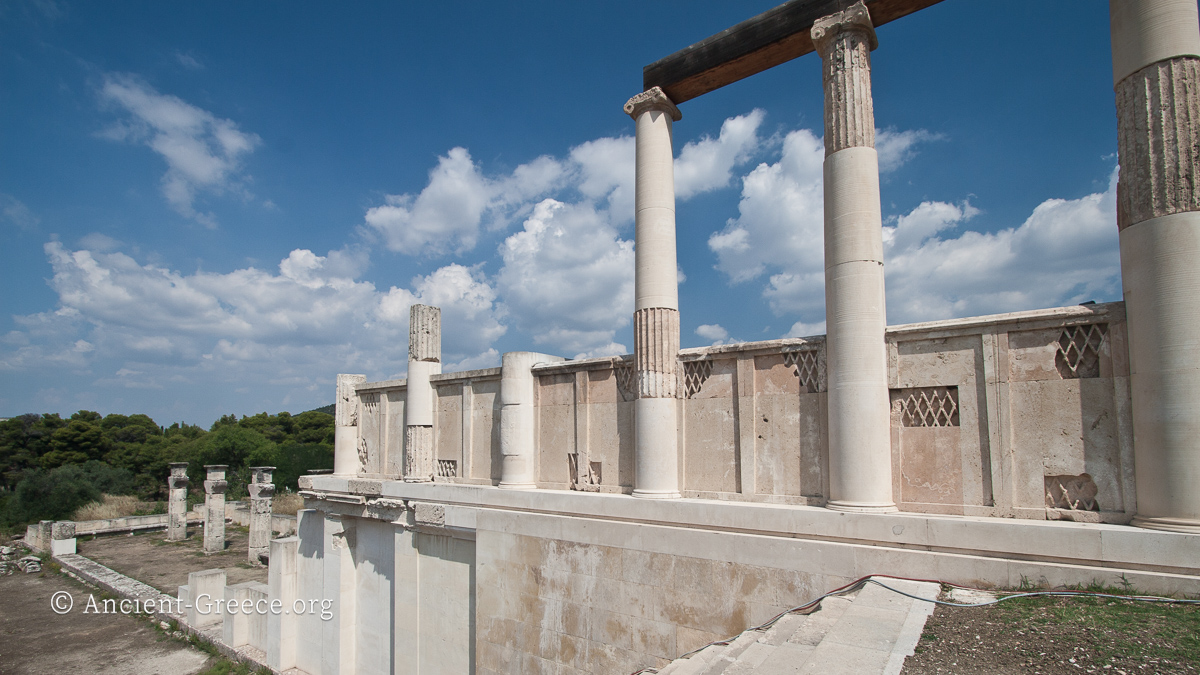
The process of healing at an Asklepieion was centered on the rite of enkoimesis or incubation, where patients slept within a sacred dormitory called the Abaton [3]. Ancient sources, such as the Plutus by Aristophanes, describe the ritualized nature of these visits, noting how patients would wait for the god to appear in their dreams to offer a cure or medical advice.
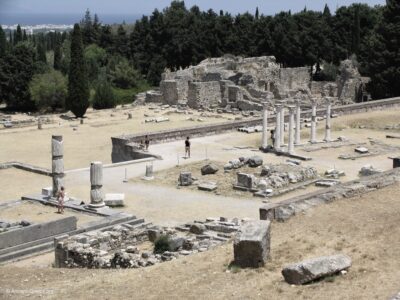
The sanctuary at Kos, famously associated with Hippocrates, further bridged the gap between the divine and the empirical. Here, the Architecture of the site, including the monumental terraces and the proximity to thermal springs, reflected a sophisticated understanding of hydrotherapy and environmental health.
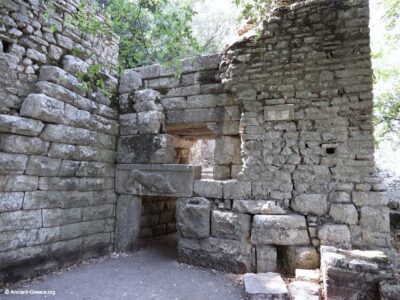
The Asklepieion at Emporion, situated in the Neapolis of the ancient Phocaean colony in Catalonia, served as the religious and therapeutic heart of the city [1]. While the monumental temple and precinct ruins visible today reached their final architectural form during the 2nd century BCE, the sanctuary’s significance is highlighted by the discovery of a marble cult statue of Asclepius dating to the late 4th century BCE.
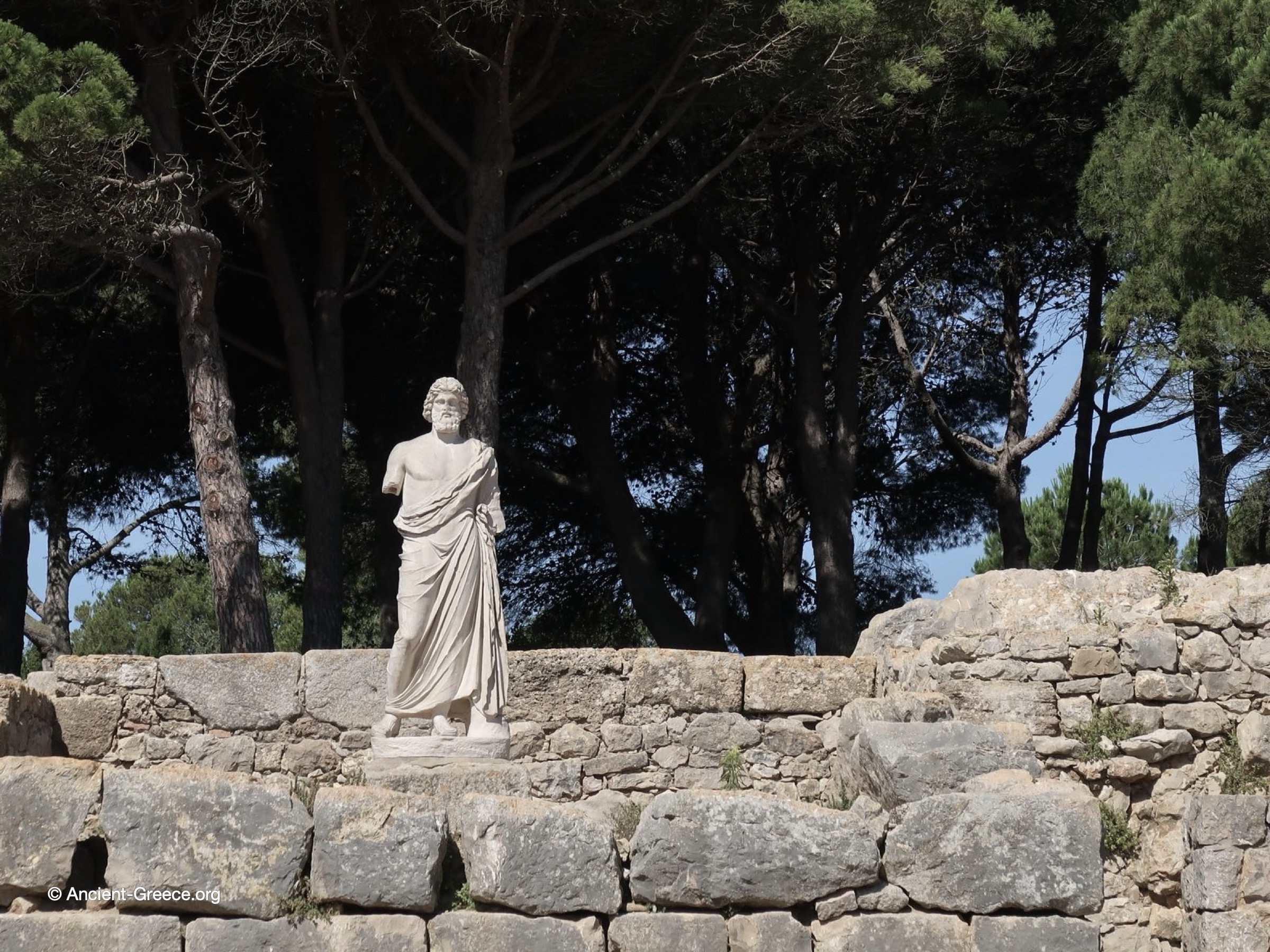
A unique feature of this sanctuary is its sophisticated water filter system, consisting of ceramic cylinders designed to provide potable water to both the citizens and the pilgrims who visited the site for physical and spiritual restoration.
During the Hellenistic period, Asklepieia proliferated across the Mediterranean, reaching as far as Pergamon and Rome. These sites became massive centers of learning and culture, often featuring theaters, gymnasia, and libraries alongside the traditional temple of Asclepius.
The expansion of these sanctuaries allowed for a standardized approach to medicine that influenced the Galenic traditions of the Roman era.
Notable examples include the Asklepieion at Athens, situated on the south slope of the Acropolis, which served as a vital urban center for those seeking both spiritual solace and physical recovery from the rigors of city life.
The Evolution of Anatomical Votives
From Minoan Peak Sanctuaries to Hellenistic Asklepieia
The tradition of offering specific body parts—hands, feet, ears, or torsos—as a plea for healing or a thank-offering (eucharisterion) first appears prominently in the Minoan peak sanctuaries of Crete, such as Petsofas, during the Bronze Age (c. 2000–1600 BCE).
Minoan Peak Sanctuaries
2000–1425 BCE (Protopalatial to Neopalatial Periods)
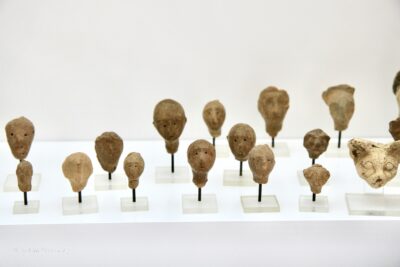
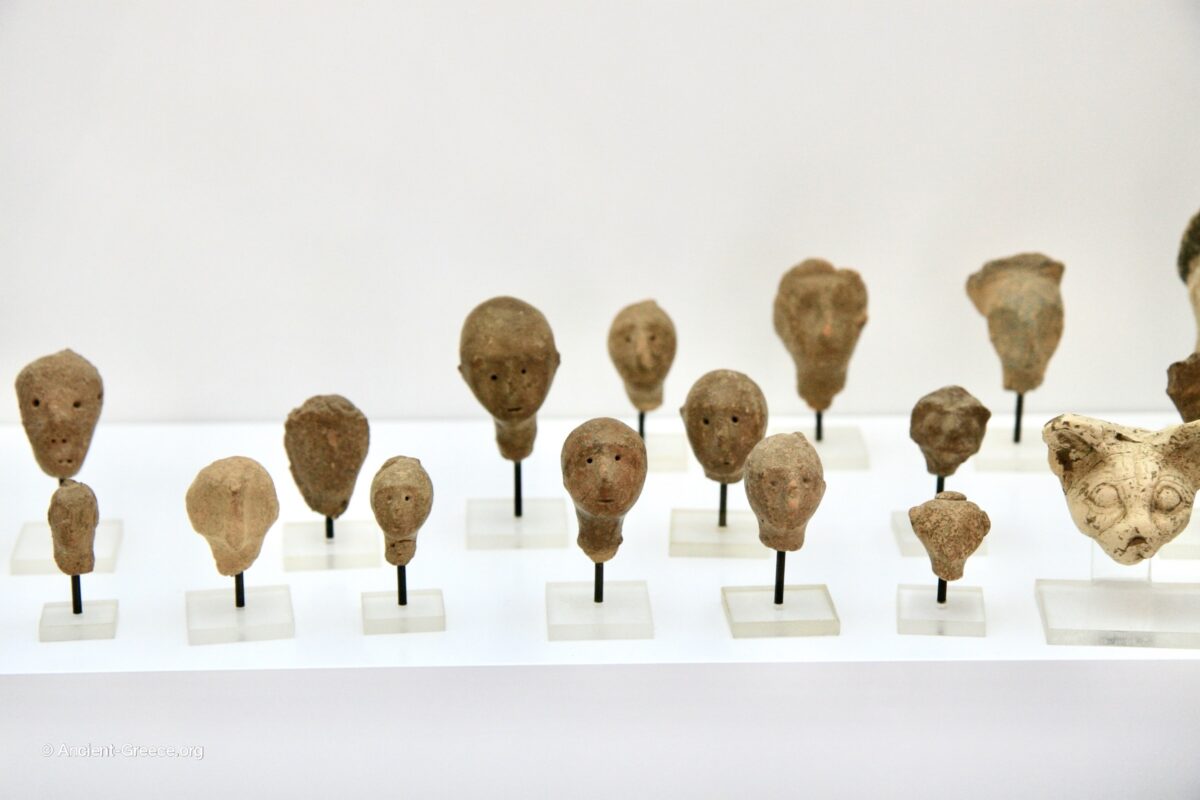
These small terracotta heads are part of a vast tradition of votive offerings found at Minoan peak sanctuaries. During the Protopalatial and Neopalatial periods, pilgrims traveled to high-altitude sites to deposit these figurines, which often represented the worshipers themselves. The heads are highly individualized through varied hairstyles, facial features, and expressions, suggesting they were intended to maintain a permanent presence for the petitioner before the deity. While some served as stand-alone offerings, many were originally part of full-body figurines placed in rock crevices or communal altars to invoke divine protection, healing, or success in agricultural and social endeavors.
These objects played vital roles in both religious and funerary rites, reflecting the bull’s multifaceted importance in the Mediterranean world—from its labor in agriculture to its central role in bull-leaping contests, processions, and sacrifices.
Αυτές οι μικρές πήλινες κεφαλές αποτελούν μέρος μιας ευρείας παράδοσης αναθηματικών προσφορών που βρέθηκαν στα μινωικά ιερά κορυφής. Κατά την Πρωτοανακτορική και Νεοανακτορική περίοδο, οι προσκυνητές ταξίδευαν σε τοποθεσίες με μεγάλο υψόμετρο για να εναποθέσουν αυτά τα ειδώλια, τα οποία συχνά αναπαριστούσαν τους ίδιους τους πιστούς. Οι κεφαλές είναι εξαιρετικά εξατομικευμένες μέσω ποικίλων χτενισμάτων, χαρακτηριστικών του προσώπου και εκφράσεων, υποδηλώνοντας ότι προορίζονταν να διατηρήσουν μια μόνιμη παρουσία του αιτούντος ενώπιον της θεότητας. Ενώ ορισμένες λειτουργούσαν ως αυτοτελή αναθήματα, πολλές αποτελούσαν αρχικά μέρος ολόσωμων ειδωλίων που τοποθετούνταν σε σχισμές βράχων ή κοινοτικούς βωμούς για την επίκληση θεϊκής προστασίας, θεραπείας ή επιτυχίας στις αγροτικές και κοινωνικές δραστηριότητες.
Τα αντικείμενα αυτά έπαιζαν ζωτικό ρόλο τόσο στις θρησκευτικές όσο και στις ταφικές τελετουργίες, αντανακλώντας την πολυδιάστατη σημασία του ταύρου στον μεσογειακό κόσμο—από τη συμβολή του στις αγροτικές εργασίες έως τον κεντρικό του ρόλο στα ταυροκαθάψια, τις πομπές και τις θυσίες.
Minoan Peak Sanctuaries
2000–1425 BCE (Protopalatial to Neopalatial Periods)
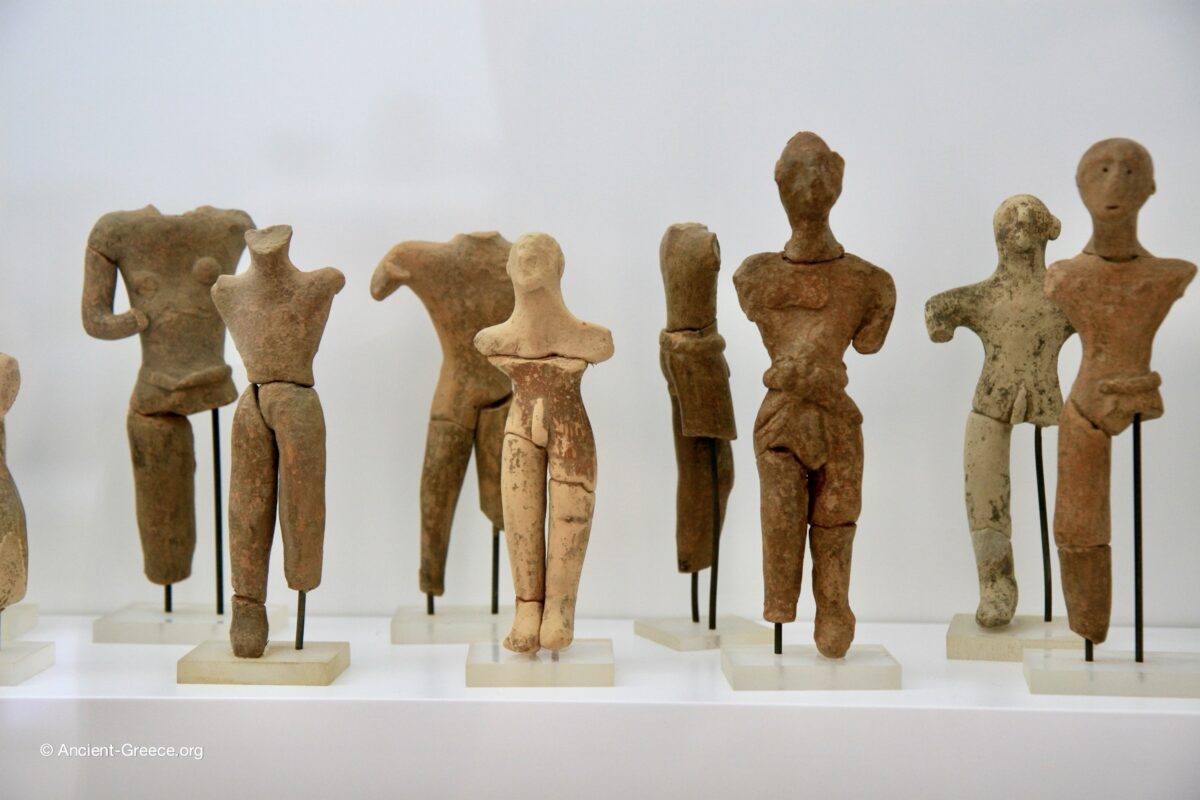
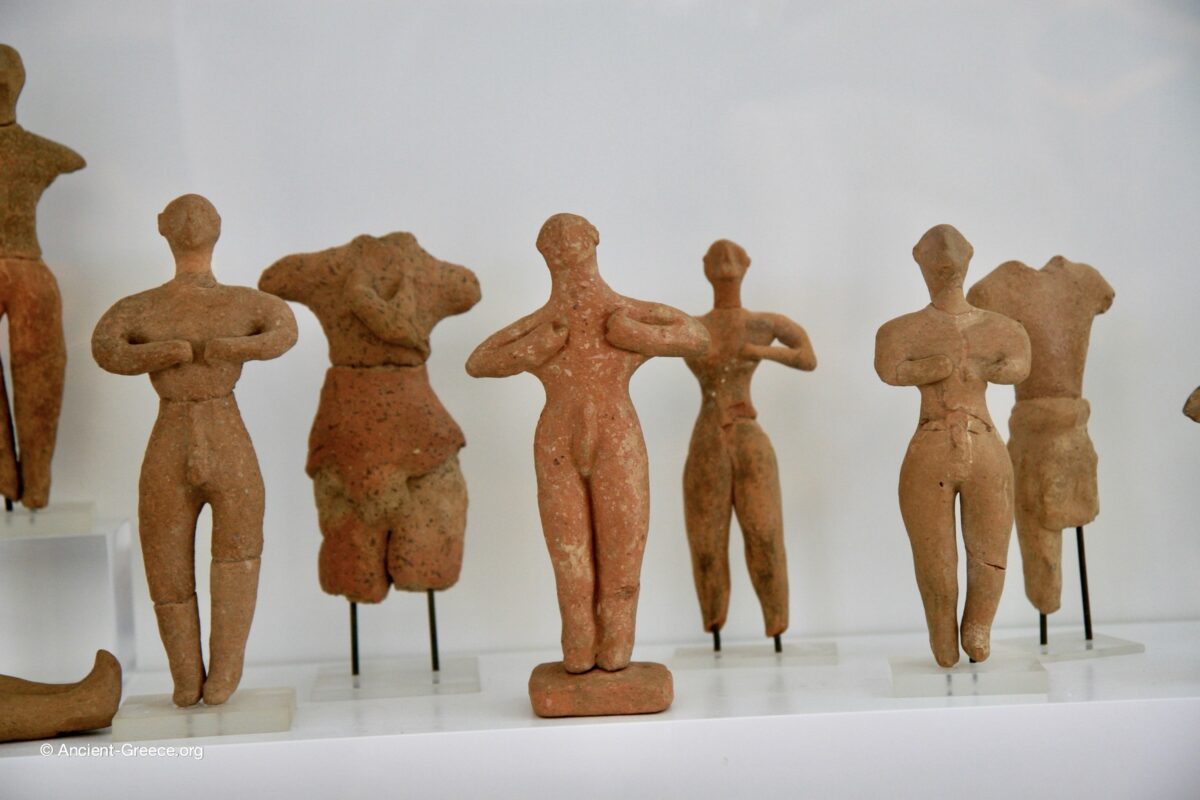
This collection of male terracotta figurines represents the typical votive offerings dedicated at Minoan peak sanctuaries. These figures are characterized by the “Minoan salute”—one arm bent at the elbow with the fist pressed against the forehead or chest—a gesture of prayer or respect toward the deity. The figurines clearly display Bronze Age Cretan masculine fashion, including the tight-waisted loincloth and occasional daggers attached to belts. Because these were handmade, they vary in size and detail, serving as personal surrogates for the worshipers who climbed to high-altitude sites like Petsofas or Mt. Juktas to seek divine favor for their health, family, or livestock.
Αυτή η συλλογή ανδρικών πήλινων ειδωλίων αντιπροσωπεύει τα τυπικά αναθήματα που αφιερώνονταν στα μινωικά ιερά κορυφής. Οι μορφές χαρακτηρίζονται από τον «μινωικό χαιρετισμό»—το ένα χέρι λυγισμένο στον αγκώνα με τη γροθιά στο μέτωπο ή στο στήθος—μια κίνηση προσευχής ή σεβασμού προς τη θεότητα. Τα ειδώλια αναδεικνύουν καθαρά την ανδρική ενδυμασία της εποχής του Χαλκού, περιλαμβάνοντας το περίζωμα με τη στενή μέση και ορισμένες φορές εγχειρίδια (μαχαίρια) στερεωμένα στη ζώνη. Καθώς ήταν χειροποίητα, ποικίλλουν σε μέγεθος και λεπτομέρεια, λειτουργώντας ως προσωπικά ομοιώματα των προσκυνητών που ανέβαιναν σε ιερά μεγάλου υψομέτρου, όπως ο Πετσοφάς ή ο Γιούχτας, για να ζητήσουν τη θεϊκή εύνοια για την υγεία, την οικογένεια ή τα ζωντανά τους.
Minoan Peak Sanctuaries
2000–1425 BCE (Protopalatial to Neopalatial Periods)
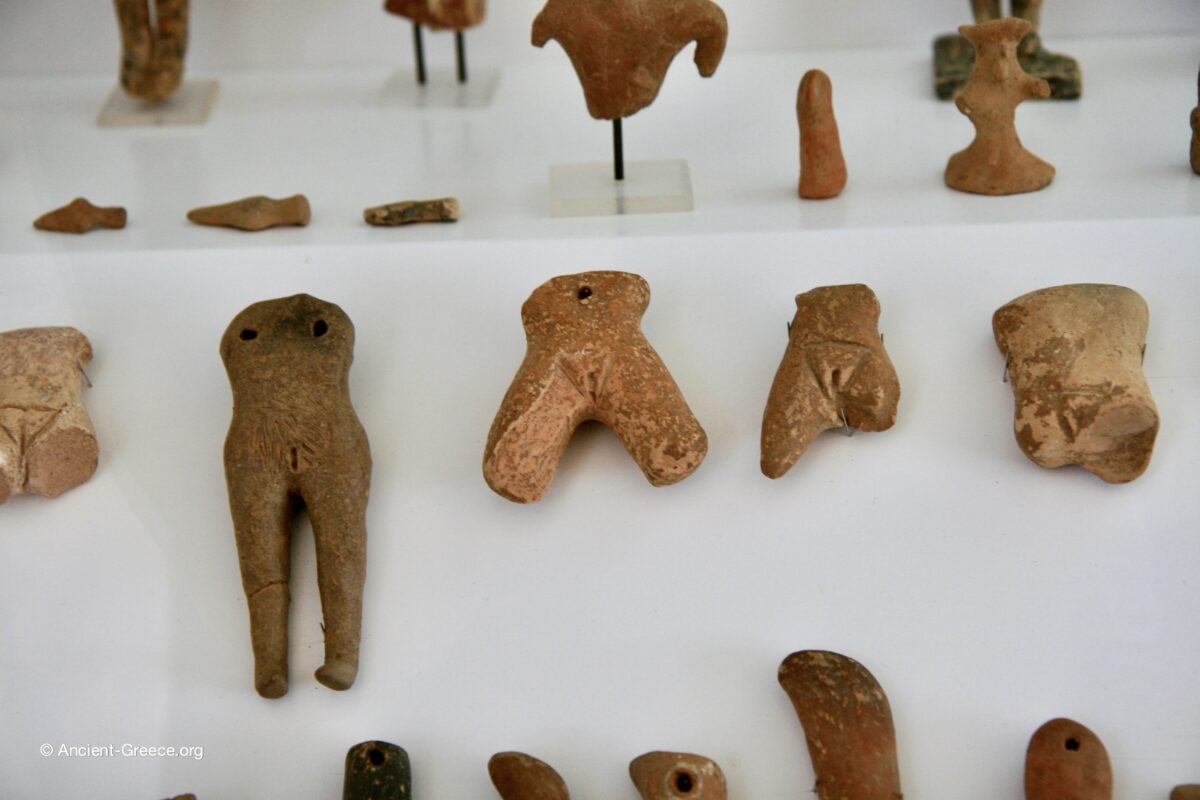
These clay artifacts from Minoan peak sanctuaries are classic examples of anatomical votives, representing specific parts of the human body such as torsos and lower limbs. Unlike the full-body figurines, these detached parts were offered to the deity as a form of “healing magic.” A worshiper suffering from an ailment in a specific area—be it the legs, the abdomen, or the chest—would dedicate a corresponding clay model to invoke divine healing or to give thanks for a recovery. This practice highlights the deeply personal and practical nature of Minoan religion at high-altitude sites, where the physical well-being of the individual was a primary focus of communal prayer.
Αυτά τα πήλινα αντικείμενα από μινωικά ιερά κορυφής αποτελούν κλασικά δείγματα ανατομικών αναθημάτων, που αναπαριστούν συγκεκριμένα μέλη του ανθρώπινου σώματος, όπως κορμούς και κάτω άκρα. Σε αντίθεση με τα ολόσωμα ειδώλια, αυτά τα μεμονωμένα μέλη προσφέρονταν στη θεότητα ως ένα είδος «θεραπευτικής μαγείας». Ένας προσκυνητής που υπέφερε από κάποια πάθηση σε μια συγκεκριμένη περιοχή—είτε στα πόδια, είτε στην κοιλιακή χώρα, είτε στον θώρακα—αφιέρωνε ένα αντίστοιχο πήλινο ομοίωμα για να επικαλεστεί τη θεϊκή θεραπεία ή για να ευχαριστήσει για την ανάρρωσή του. Αυτή η πρακτική υπογραμμίζει τον βαθιά προσωπικό και πρακτικό χαρακτήρα της μινωικής θρησκείας στα ιερά μεγάλου υψομέτρου, όπου η σωματική ευεξία του ατόμου αποτελούσε πρωταρχικό μέλημα της κοινής προσευχής.
Minoan Peak Sanctuaries
2000–1425 BCE (Protopalatial to Neopalatial Periods)
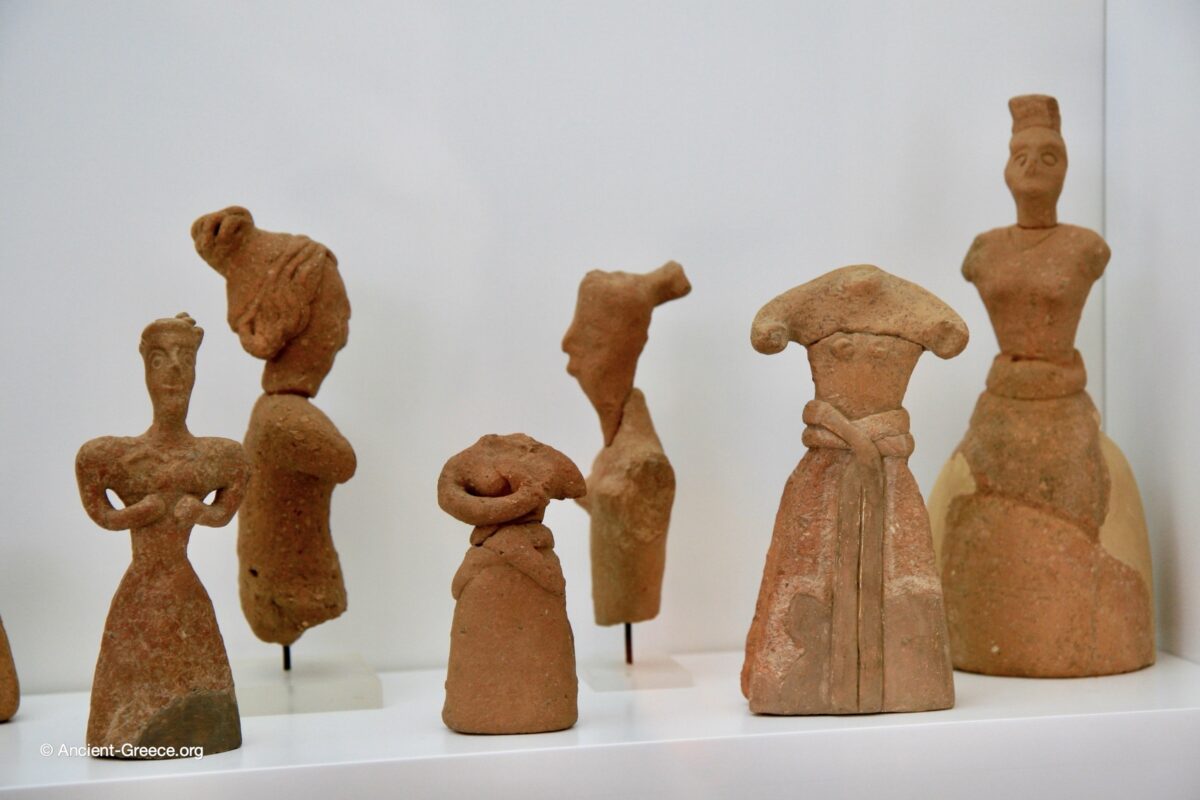
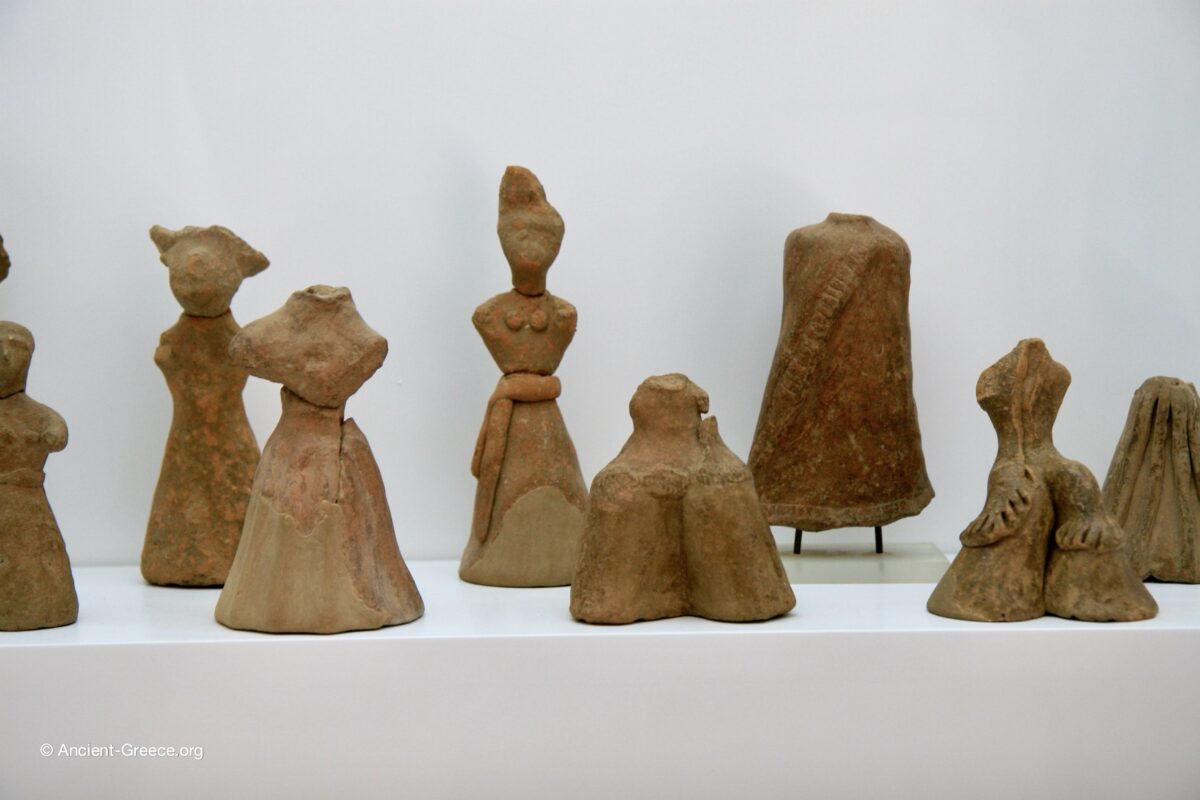
These female terracotta figurines from various Minoan peak sanctuaries provide an invaluable record of Bronze Age religious practice and high-status fashion. They are characterized by their elaborate tiered or bell-shaped skirts and bodices that are often open to the waist, reflecting the iconic “wasp-waist” silhouette of Minoan women. Many figures feature intricate hairstyles or tall, stylized hats, and their arms are typically held in ritual gestures—either pressed to the chest or extended in prayer. Like their male counterparts, these figurines served as personal surrogates for worshipers, representing their eternal presence before the deity to ensure fertility, protection, and the well-being of the household.
Αυτά τα γυναικεία πήλινα ειδώλια από διάφορα μινωικά ιερά κορυφής αποτελούν πολύτιμη μαρτυρία για τις θρησκευτικές πρακτικές και τη γυναικεία ένδυση της Εποχής του Χαλκού. Χαρακτηρίζονται από τις περίτεχνες κωδωνόσχημες ή πτυχωτές φούστες και τα περικόρμια (μπούστα) που είναι συχνά ανοιχτά μέχρι τη μέση, αντανακλώντας την εμβληματική μινωική σιλουέτα. Πολλές μορφές φέρουν περίτεχνες κομμώσεις ή υψηλούς, σχηματοποιημένους πίλους (καπέλα), ενώ τα χέρια τους είναι συνήθως τοποθετημένα σε τελετουργικές χειρονομίες—είτε πιεσμένα στο στήθος είτε σε έκταση προσευχής. Όπως και τα ανδρικά ειδώλια, οι μορφές αυτές λειτουργούσαν ως προσωπικά ομοιώματα των προσκυνητών, διασφαλίζοντας την αιώνια παρουσία τους ενώπιον της θεότητας για την ευόδωση της γονιμότητας, την προστασία και την ευημερία του οίκου.
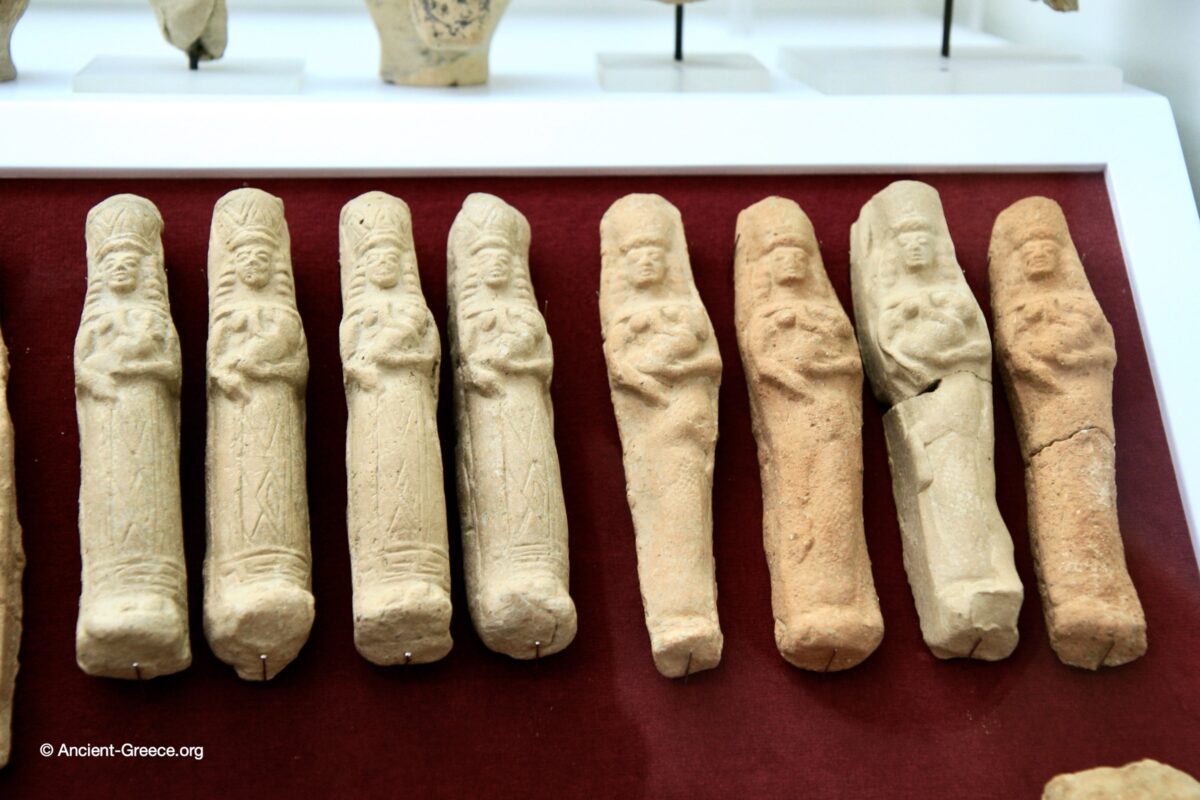
Πήλινα ειδώλια «Κουροτρόφου» από το ιερό του Ερμή και της Αφροδίτης στη Σύμη (Κάτω Σύμη), που χρονολογούνται στην Αρχαϊκή περίοδο (7ος–6ος αι. π.Χ.). Τα μήτρας αυτά ειδώλια απεικονίζουν μια γυναικεία θεότητα που κρατά ένα βρέφος, αποτελώντας ένα συνηθισμένο ανάθημα που συμβολίζει τη γονιμότητα, τη μητρότητα και την προστασία των παιδιών.
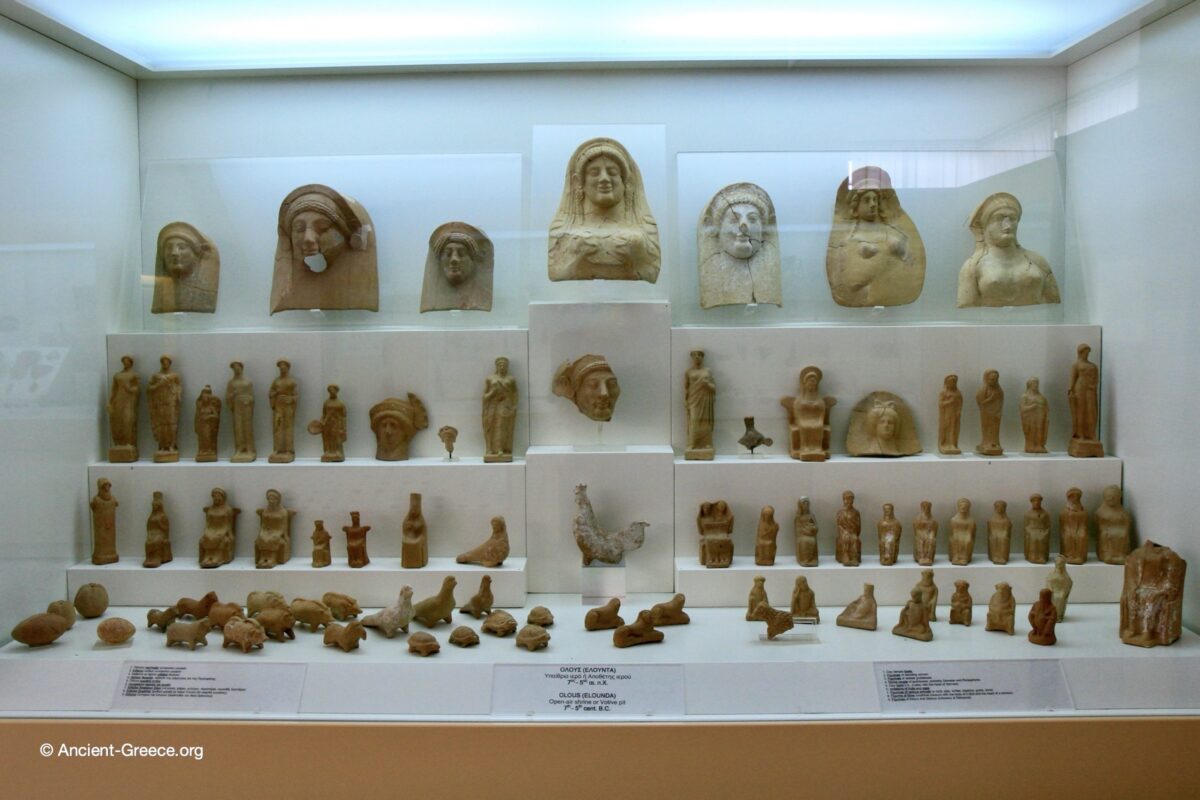
Olous (Elounda), Open-air Shrine or Votive Pit
Date: 700–400 BCE (Archaic to Classical Period)
Material: Terracotta
This diverse collection of terracotta figurines was recovered from an open-air shrine or “votive pit” at the site of ancient Olous. The assemblage features a wide array of subjects, including large-scale female protomes (busts) in the Daedalic style, standing and seated female figures, and a variety of zoomorphic votives such as bulls, rams, and birds. These objects were dedicated by worshippers as “votives”—symbolic gifts to a deity in exchange for protection, fertility, or the fulfillment of a prayer. The presence of such a vast quantity of figurines in a single pit suggests a long-standing ritual practice where old or broken offerings were ceremonially buried to make room for new ones, preserving a dense record of local religious life over three centuries.
Αυτή η ποικίλη συλλογή πήλινων ειδωλίων προέρχεται από ένα υπαίθριο ιερό ή «αποθέτη» στην αρχαία Όλου (Ελούντα). Το σύνολο περιλαμβάνει μια ευρεία γκάμα θεμάτων, όπως μεγάλου μεγέθους γυναικείες προτομές δαιδαλικής τεχνοτροπίας, όρθιες και καθήμενες γυναικείες μορφές, καθώς και ποικιλία ζωόμορφων αναθημάτων, όπως ταύρους, κριάρια και πουλιά. Τα αντικείμενα αυτά αφιερώνονταν από τους πιστούς ως «τάματα» —συμβολικά δώρα προς μια θεότητα με αντάλλαγμα την προστασία, τη γονιμότητα ή την εκπλήρωση μιας προσευχής. Η παρουσία μιας τόσο μεγάλης ποσότητας ειδωλίων σε έναν μόνο λάκκο υποδηλώνει μια μακροχρόνια τελετουργική πρακτική, όπου τα παλαιά ή κατεστραμμένα αναθήματα θάβονταν τελετουργικά για να δημιουργηθεί χώρος για νέα, διασώζοντας έτσι ένα πυκνό αρχείο της τοπικής θρησκευτικής ζωής κατά τη διάρκεια τριών αιώνων.
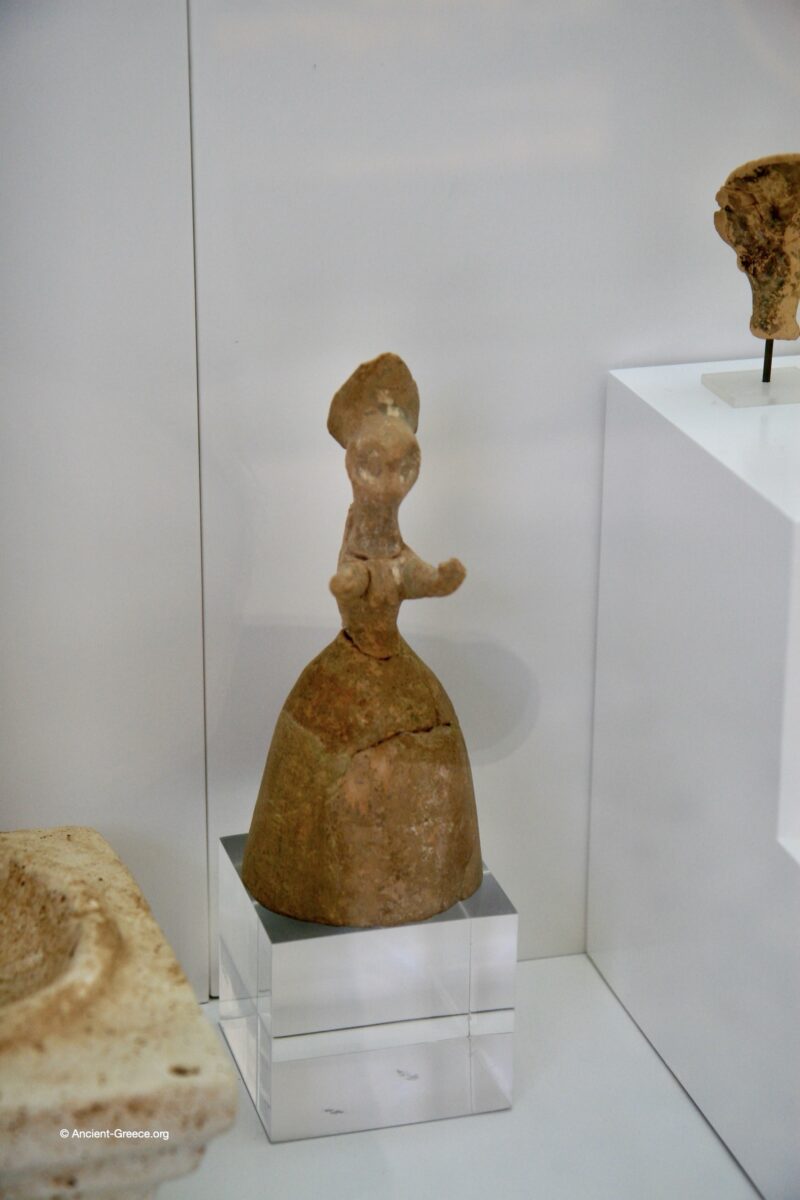
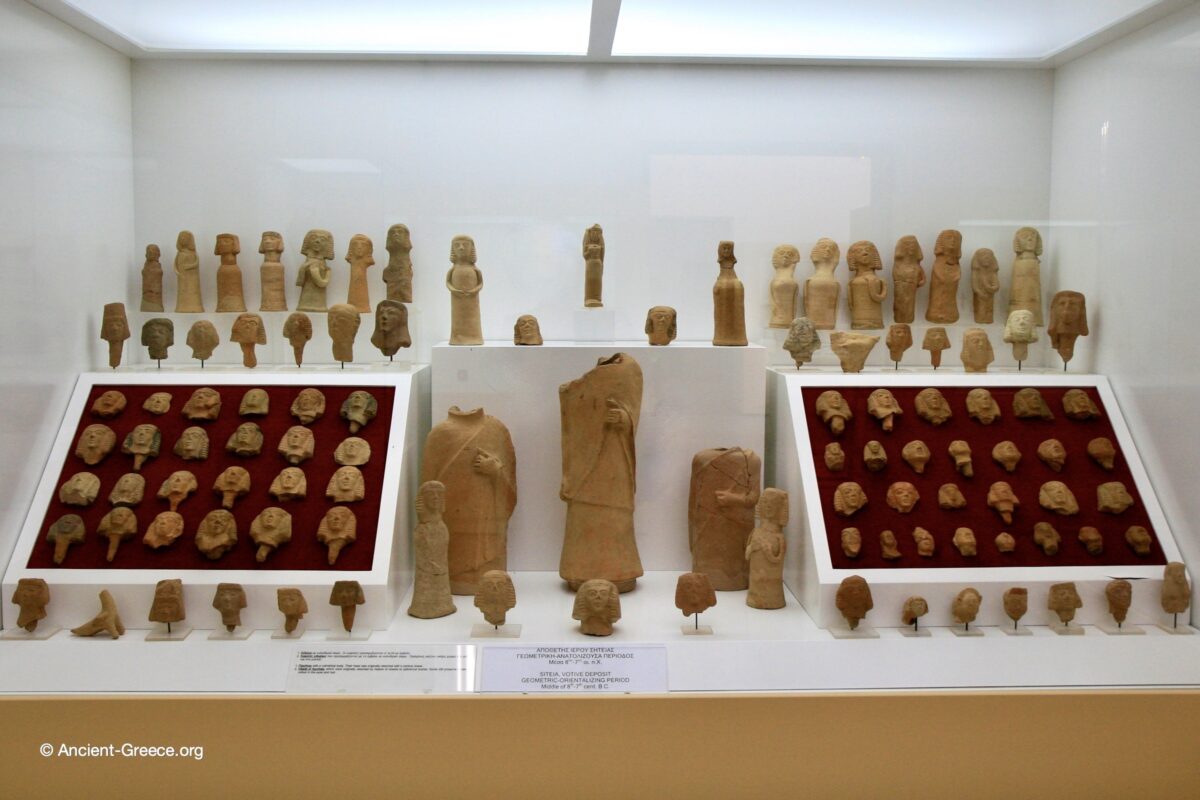
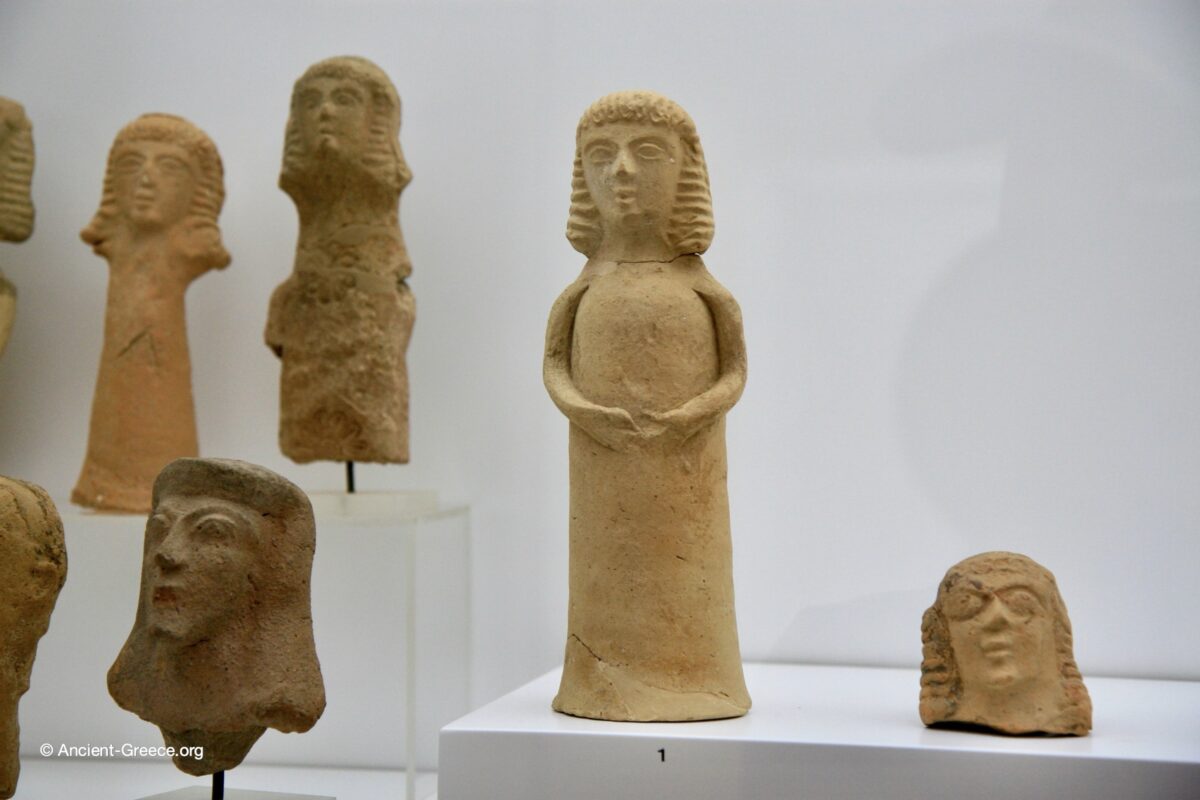
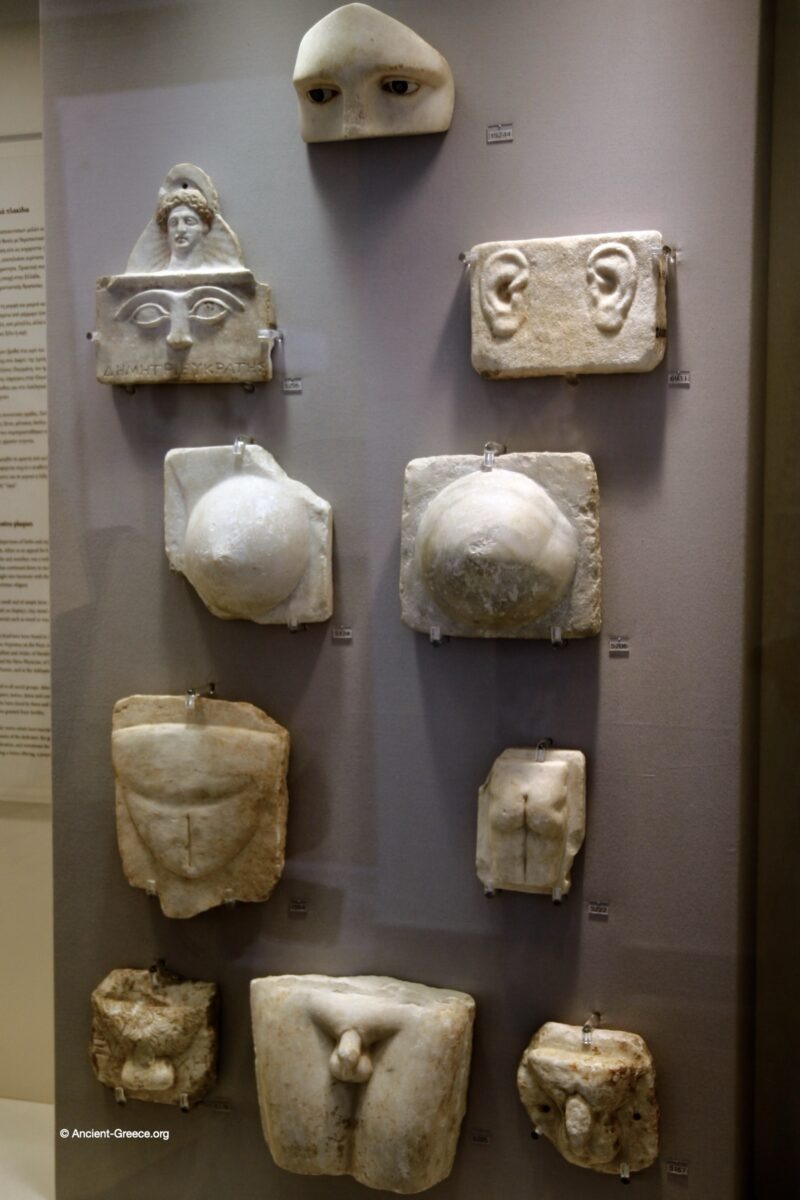
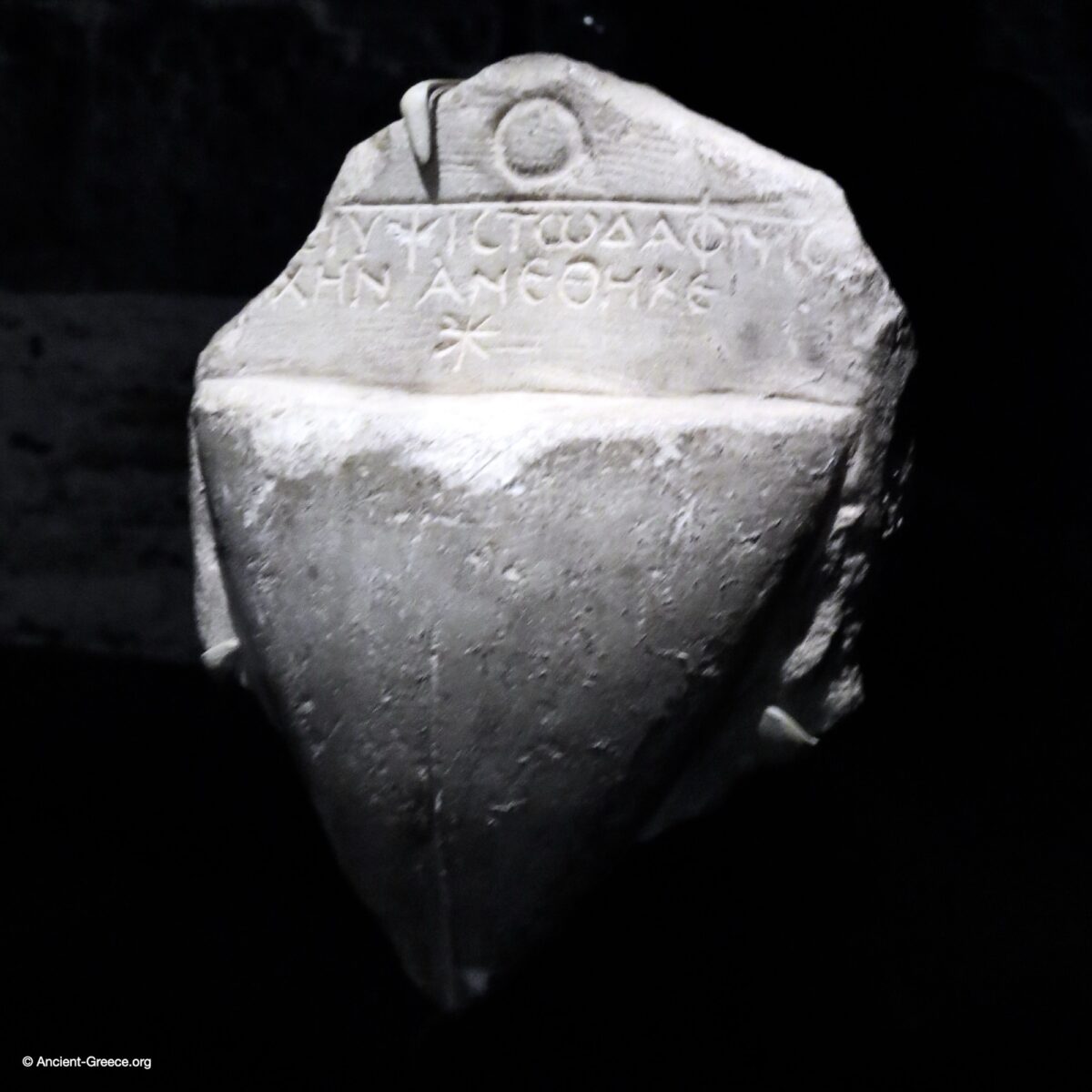
These terracotta limbs preceded the marble versions found in later Asklepieia and served as a direct “visual contract” between the patient and the divine. By the Classical and Hellenistic periods, these offerings became more anatomically precise; the marble reliefs found at the Asklepieion of Athens (like the one in the National Archaeological Museum) served as a clinical record of the god’s success, essentially advertising the sanctuary’s healing power to future pilgrims.
Από την Προϊστορική Τελετουργία στην Οργανωμένη Ιατρική
Η Εξέλιξη των Θεραπευτικών Ιερών
Η ανάπτυξη της ιατρικής πρακτικής στον αρχαίο ελληνικό κόσμο, γνωστή ως Ιατρική, αντιπροσωπεύει μια σύνθετη μετάβαση από τις προϊστορικές τελετουργίες στην οργανωμένη κλινική παρατήρηση. Τα στοιχεία οργανωμένων θεραπευτικών πρακτικών χρονολογούνται από τη Λίθινη Εποχή και την Εποχή του Χαλκού, όπου οι θεραπευτικές δραστηριότητες τοποθετούνταν κυρίως σε φυσικά περιβάλλοντα, όπως πηγές και σπήλαια.
Στην περιοχή του Αιγαίου, οι πρώτοι κάτοικοι αναζήτησαν τη θεία παρέμβαση για ασθένειες στα Μινωικά ιερά κορυφής, όπως στο Πετσοφά της Κρήτης, όπου η παράδοση των ανατομικών αναθημάτων εμφανίστηκε για πρώτη φορά περίπου το 2000–1600 π.Χ. Αυτές οι πρώιμες προσφορές, συχνά πήλινα μέλη ή κορμοί, καθιέρωσαν ένα «οπτικό συμβόλαιο» μεταξύ του ασθενούς και του θείου, προάγγελο των πιο οργανωμένων ιατρικών τοπίων της Αρχαϊκής και Κλασικής περιόδου. Στις Κυκλάδες, η εναπόθεση ειδωλίων σε τοποθεσίες όπως η Κέρος υποδηλώνει ότι η αφιέρωση συμβολικών μορφών έπαιζε ζωτικό ρόλο στις πρώιμες τελετουργίες πνευματικής και σωματικής αποκατάστασης.
Μετάβαση στο Ασκληπιείο
Κατά την Κλασική εποχή, η λατρεία του Ασκληπιού συγκέντρωσε αυτές τις διαφορετικές παραδόσεις, ιδρύοντας μόνιμα αρχιτεκτονικά συγκροτήματα που ενσωμάτωναν το φυσικό περιβάλλον στον ιερό χώρο. Το Ασκληπιείο της Επιδαύρου αποτελεί το κορυφαίο παράδειγμα αυτής της μετάβασης, όπου η στροφή από τη λαϊκή μαγεία στην εμπειρική παρατήρηση άρχισε να παίρνει σχήμα. Η διαδικασία της θεραπείας επικεντρωνόταν στην ιεροτελεστία της εγκοίμησης, κατά την οποία οι ασθενείς κοιμούνταν μέσα σε έναν ιερό κοιτώνα γνωστό ως Άβατο. Αρχαίες πηγές, όπως ο Πλούτος του Αριστοφάνη, περιγράφουν πώς οι ασθενείς περίμεναν τον θεό να εμφανιστεί στα όνειρά τους για να προσφέρει θεραπεία ή ιατρική συμβουλή. Στην Κω, το ιερό που συνδέεται με τον Ιπποκράτη γεφύρωσε περαιτέρω το χάσμα μεταξύ του θείου και του εμπειρικού μέσω μιας εξελιγμένης κατανόησης της υδροθεραπείας και της περιβαλλοντικής υγείας, όπως μαρτυρούν τα μνημειώδη άνδηρα και η γειτνίαση με θερμές πηγές.
Μεσογειακή Εξάπλωση και Υλικός Πολιτισμός
Κατά την Ελληνιστική περίοδο, η επιρροή αυτών των ιερών εξαπλώθηκε σε όλη τη Μεσόγειο σε τοποθεσίες όπως η Πέργαμος, η Αθήνα, ακόμη και το Εμπόριο στη σημερινή Καταλονία. Το Ασκληπιείο στο Εμπόριολειτουργούσε ως το θεραπευτικό κέντρο της φωκαϊκής αποικίας, διαθέτοντας ένα αξιοσημείωτο μαρμάρινο λατρευτικό άγαλμα του Ασκληπιού του τέλους του 4ου αιώνα π.Χ. και ένα εξελιγμένο σύστημα κεραμικών φίλτρων νερού. Καθώς αυτοί οι χώροι εξελίχθηκαν σε μεγάλα κέντρα μάθησης, ενσωμάτωσαν κοσμικές δομές όπως θέατρα, γυμνάσια και βιβλιοθήκες. Τα ανατομικά αναθήματα έγιναν επίσης πιο ακριβή· τα μαρμάρινα ανάγλυφα που βρέθηκαν στο Ασκληπιείο της Αθήνας, τα οποία φυλάσσονται τώρα στο Εθνικό Αρχαιολογικό Μουσείο, χρησίμευαν τόσο ως ευχαριστήρια όσο και ως κλινικό αρχείο των επιτυχιών του θεού, τεκμηριώνοντας την ιστορική εξέλιξη της ιατρικής επιστήμης.
Τα θεραπευτικά κέντρα του αρχαίου ελληνικού κόσμου, γνωστά ως Ασκληπιεία, ήταν ιερά τεμένη αφιερωμένα στον θεό της ιατρικής, Ασκληπιό. Τα συγκροτήματα αυτά λειτουργούσαν ως τα πρώτα ολιστικά νοσοκομεία, συνδυάζοντας τη θρησκευτική λατρεία, τη φυσικοθεραπεία και την εγκοίμηση για τη θεραπεία ποικίλων παθήσεων. Η παρουσία τους στο Αιγαίο και την ηπειρωτική Ελλάδα σηματοδότησε τη μετάβαση από τη μαγεία στην παρατήρηση.
Η διαδικασία της θεραπείας στα Ασκληπιεία επικεντρωνόταν στην τελετουργία της εγκοίμησης, όπου οι ασθενείς κοιμούνταν στο Άβατον περιμένοντας τη θεϊκή παρέμβαση. Σημαντικά κέντρα όπως αυτό της Επιδαύρου και της Κω αναδείχθηκαν σε κορυφαία ιδρύματα της Κλασικής εποχής, ενσωματώνοντας την Αρχιτεκτονική με τις θεραπευτικές πηγές. Οι αρχαίες πηγές επιβεβαιώνουν τη σημασία αυτών των χώρων για την κοινωνική και πολιτική ζωή της εποχής.
Κατά την Ελληνιστική περίοδο, τα Ασκληπιεία εξαπλώθηκαν σε όλη τη Μεσόγειο, από την Πέργαμο έως την Αθήνα, ενισχύοντας τον ρόλο τους ως κέντρα πολιτισμού και γνώσης. Στην Αθήνα, το ιερό στη νότια κλιτύ της Ακρόπολης αποτελούσε σημείο αναφοράς για τους πολίτες. Η κληρονομιά αυτών των χώρων παρέμεινε ζωντανή μέσω των έργων του Ιπποκράτη και αργότερα του Γαληνού, θέτοντας τα θεμέλια της σύγχρονης ιατρικής επιστήμης.
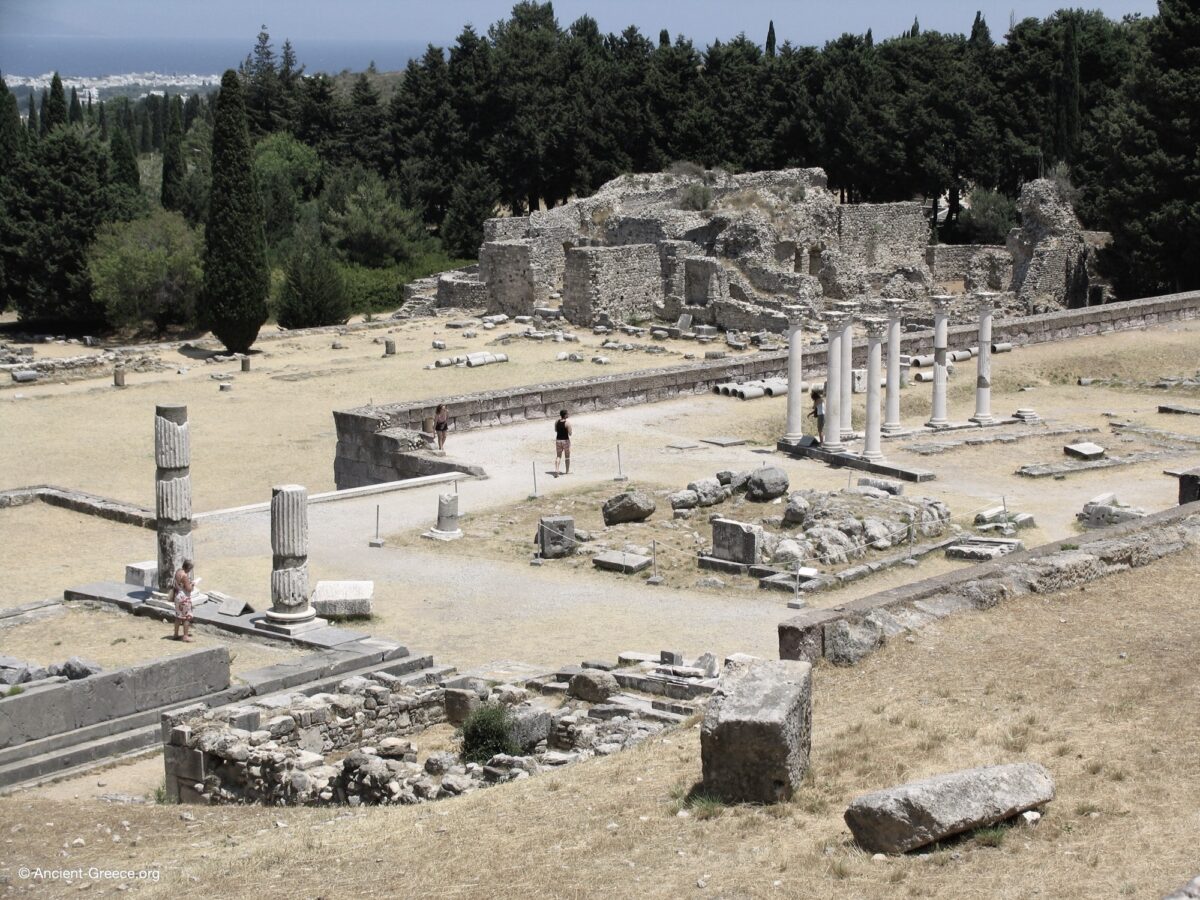
Kos, Greece
3rd–2nd Century BCE (Hellenistic)
Marble and Limestone
Architecture, Asclepius, Apollo
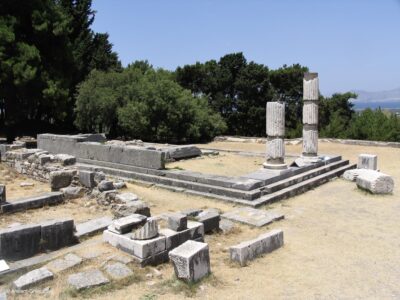
The second terrace serves as the primary religious core of the sanctuary, featuring a concentrated alignment of sacred structures. From left to right, the landscape includes the foundations of the Temple of Asclepius (Temple B) with its two re-erected columns, the central Great Altar, and the peripteral Temple of Apollo identified by its Corinthian order. In the background, the remains of the Roman baths are visible, while the modern town of Kos and the Aegean Sea define the distant horizon.
◈ ◈ ◈
Δεύτερο Άνδηρο του Ασκληπιείου, Κως
Κως, Ελλάδα
3ος–2ος αιώνας π.Χ. (Ελληνιστική)
Μάρμαρο και Ασβεστόλιθος
Architecture, Asclepius, Apollo
Το δεύτερο άνδηρο αποτελεί τον κύριο θρησκευτικό πυρήνα του ιερού, παρουσιάζοντας μια πυκνή παράταξη ιερών οικοδομημάτων. Από τα αριστερά προς τα δεξιά, το τοπίο περιλαμβάνει τα θεμέλια του Ναού του Ασκληπιού (Ναός Β) με τους δύο αναστηλωμένους κίονες, τον κεντρικό Μεγάλο Βωμό και τον περίπτερο Ναό του Απόλλωνα που αναγνωρίζεται από τον Κορινθιακό του ρυθμό. Στο βάθος διακρίνονται τα ερείπια των Ρωμαϊκών λουτρών, ενώ η σύγχρονη πόλη της Κω και το Aegean Πέλαγος ορίζουν τον μακρινό ορίζοντα.
———
Bibliography
Herzog, R. and Schazmann, P. (1932). Kos: Ergebnisse der deutschen Ausgrabungen und Forschungen. Band I: Asklepieion. Berlin: Verlag von Heinrich Keller. [https://wellcomecollection.org/works/xt4nwsuc]
Interdonato, E. (2013). L’Asklepieion di Kos: Archeologia del culto. Roma: “L’Erma” di Bretschneider. [https://www.isdistribution.com/BookDetail.aspx?aId=35506]
Melfi, M. (2016). “Architecture and rituals in the Hellenistic age: The case of the Asklepieion in Kos.” In M. Melfi and O. Bobou (eds.), Hellenistic Sanctuaries: Between Greece and Rome. Oxford University Press. [https://academic.oup.com/book/26224/chapter/194406254]
Η Εξέλιξη των Αναθηματικών Μελών
Από τα Μινωικά Ιερά Κορυφής στα Ελληνιστικά Ασκληπιεία
Η παράδοση της προσφοράς αναθηματικών μελών του σώματος—τα γνωστά μας «τάματα»—αποτελεί μια από τις μακροβιότερες παραδόσεις στη Μεσόγειο, ξεκινώντας από τα Μινωικά ιερά κορυφής της Εποχής του Χαλκού. Αυτά τα πήλινα μέλη λειτουργούσαν ως «οπτικά συμβόλαια» μεταξύ του πιστού και του θείου, μια πρακτική που εξελίχθηκε σε μαρμάρινα ανάγλυφα κατά την Κλασική περίοδο στα Ασκληπιεία της Αθήνας και της Επιδαύρου. Τα αναθήματα αυτά δεν ήταν μόνο εκφράσεις ευγνωμοσύνης, αλλά και αποδείξεις της θεραπευτικής δύναμης του θεού.
Minoan Peak Sanctuaries
2000–1425 BCE (Protopalatial to Neopalatial Periods)
These small terracotta heads are part of a vast tradition of votive offerings found at Minoan peak sanctuaries. During the Protopalatial and Neopalatial periods, pilgrims traveled to high-altitude sites to deposit these figurines, which often represented the worshipers themselves. The heads are highly individualized through varied hairstyles, facial features, and expressions, suggesting they were intended to maintain a permanent presence for the petitioner before the deity. While some served as stand-alone offerings, many were originally part of full-body figurines placed in rock crevices or communal altars to invoke divine protection, healing, or success in agricultural and social endeavors.
These objects played vital roles in both religious and funerary rites, reflecting the bull’s multifaceted importance in the Mediterranean world—from its labor in agriculture to its central role in bull-leaping contests, processions, and sacrifices.
Αυτές οι μικρές πήλινες κεφαλές αποτελούν μέρος μιας ευρείας παράδοσης αναθηματικών προσφορών που βρέθηκαν στα μινωικά ιερά κορυφής. Κατά την Πρωτοανακτορική και Νεοανακτορική περίοδο, οι προσκυνητές ταξίδευαν σε τοποθεσίες με μεγάλο υψόμετρο για να εναποθέσουν αυτά τα ειδώλια, τα οποία συχνά αναπαριστούσαν τους ίδιους τους πιστούς. Οι κεφαλές είναι εξαιρετικά εξατομικευμένες μέσω ποικίλων χτενισμάτων, χαρακτηριστικών του προσώπου και εκφράσεων, υποδηλώνοντας ότι προορίζονταν να διατηρήσουν μια μόνιμη παρουσία του αιτούντος ενώπιον της θεότητας. Ενώ ορισμένες λειτουργούσαν ως αυτοτελή αναθήματα, πολλές αποτελούσαν αρχικά μέρος ολόσωμων ειδωλίων που τοποθετούνταν σε σχισμές βράχων ή κοινοτικούς βωμούς για την επίκληση θεϊκής προστασίας, θεραπείας ή επιτυχίας στις αγροτικές και κοινωνικές δραστηριότητες.
Τα αντικείμενα αυτά έπαιζαν ζωτικό ρόλο τόσο στις θρησκευτικές όσο και στις ταφικές τελετουργίες, αντανακλώντας την πολυδιάστατη σημασία του ταύρου στον μεσογειακό κόσμο—από τη συμβολή του στις αγροτικές εργασίες έως τον κεντρικό του ρόλο στα ταυροκαθάψια, τις πομπές και τις θυσίες.
Minoan Peak Sanctuaries
2000–1425 BCE (Protopalatial to Neopalatial Periods)
This collection of male terracotta figurines represents the typical votive offerings dedicated at Minoan peak sanctuaries. These figures are characterized by the “Minoan salute”—one arm bent at the elbow with the fist pressed against the forehead or chest—a gesture of prayer or respect toward the deity. The figurines clearly display Bronze Age Cretan masculine fashion, including the tight-waisted loincloth and occasional daggers attached to belts. Because these were handmade, they vary in size and detail, serving as personal surrogates for the worshipers who climbed to high-altitude sites like Petsofas or Mt. Juktas to seek divine favor for their health, family, or livestock.
Αυτή η συλλογή ανδρικών πήλινων ειδωλίων αντιπροσωπεύει τα τυπικά αναθήματα που αφιερώνονταν στα μινωικά ιερά κορυφής. Οι μορφές χαρακτηρίζονται από τον «μινωικό χαιρετισμό»—το ένα χέρι λυγισμένο στον αγκώνα με τη γροθιά στο μέτωπο ή στο στήθος—μια κίνηση προσευχής ή σεβασμού προς τη θεότητα. Τα ειδώλια αναδεικνύουν καθαρά την ανδρική ενδυμασία της εποχής του Χαλκού, περιλαμβάνοντας το περίζωμα με τη στενή μέση και ορισμένες φορές εγχειρίδια (μαχαίρια) στερεωμένα στη ζώνη. Καθώς ήταν χειροποίητα, ποικίλλουν σε μέγεθος και λεπτομέρεια, λειτουργώντας ως προσωπικά ομοιώματα των προσκυνητών που ανέβαιναν σε ιερά μεγάλου υψομέτρου, όπως ο Πετσοφάς ή ο Γιούχτας, για να ζητήσουν τη θεϊκή εύνοια για την υγεία, την οικογένεια ή τα ζωντανά τους.
Minoan Peak Sanctuaries
2000–1425 BCE (Protopalatial to Neopalatial Periods)
These clay artifacts from Minoan peak sanctuaries are classic examples of anatomical votives, representing specific parts of the human body such as torsos and lower limbs. Unlike the full-body figurines, these detached parts were offered to the deity as a form of “healing magic.” A worshiper suffering from an ailment in a specific area—be it the legs, the abdomen, or the chest—would dedicate a corresponding clay model to invoke divine healing or to give thanks for a recovery. This practice highlights the deeply personal and practical nature of Minoan religion at high-altitude sites, where the physical well-being of the individual was a primary focus of communal prayer.
Αυτά τα πήλινα αντικείμενα από μινωικά ιερά κορυφής αποτελούν κλασικά δείγματα ανατομικών αναθημάτων, που αναπαριστούν συγκεκριμένα μέλη του ανθρώπινου σώματος, όπως κορμούς και κάτω άκρα. Σε αντίθεση με τα ολόσωμα ειδώλια, αυτά τα μεμονωμένα μέλη προσφέρονταν στη θεότητα ως ένα είδος «θεραπευτικής μαγείας». Ένας προσκυνητής που υπέφερε από κάποια πάθηση σε μια συγκεκριμένη περιοχή—είτε στα πόδια, είτε στην κοιλιακή χώρα, είτε στον θώρακα—αφιέρωνε ένα αντίστοιχο πήλινο ομοίωμα για να επικαλεστεί τη θεϊκή θεραπεία ή για να ευχαριστήσει για την ανάρρωσή του. Αυτή η πρακτική υπογραμμίζει τον βαθιά προσωπικό και πρακτικό χαρακτήρα της μινωικής θρησκείας στα ιερά μεγάλου υψομέτρου, όπου η σωματική ευεξία του ατόμου αποτελούσε πρωταρχικό μέλημα της κοινής προσευχής.
Minoan Peak Sanctuaries
2000–1425 BCE (Protopalatial to Neopalatial Periods)
These female terracotta figurines from various Minoan peak sanctuaries provide an invaluable record of Bronze Age religious practice and high-status fashion. They are characterized by their elaborate tiered or bell-shaped skirts and bodices that are often open to the waist, reflecting the iconic “wasp-waist” silhouette of Minoan women. Many figures feature intricate hairstyles or tall, stylized hats, and their arms are typically held in ritual gestures—either pressed to the chest or extended in prayer. Like their male counterparts, these figurines served as personal surrogates for worshipers, representing their eternal presence before the deity to ensure fertility, protection, and the well-being of the household.
Αυτά τα γυναικεία πήλινα ειδώλια από διάφορα μινωικά ιερά κορυφής αποτελούν πολύτιμη μαρτυρία για τις θρησκευτικές πρακτικές και τη γυναικεία ένδυση της Εποχής του Χαλκού. Χαρακτηρίζονται από τις περίτεχνες κωδωνόσχημες ή πτυχωτές φούστες και τα περικόρμια (μπούστα) που είναι συχνά ανοιχτά μέχρι τη μέση, αντανακλώντας την εμβληματική μινωική σιλουέτα. Πολλές μορφές φέρουν περίτεχνες κομμώσεις ή υψηλούς, σχηματοποιημένους πίλους (καπέλα), ενώ τα χέρια τους είναι συνήθως τοποθετημένα σε τελετουργικές χειρονομίες—είτε πιεσμένα στο στήθος είτε σε έκταση προσευχής. Όπως και τα ανδρικά ειδώλια, οι μορφές αυτές λειτουργούσαν ως προσωπικά ομοιώματα των προσκυνητών, διασφαλίζοντας την αιώνια παρουσία τους ενώπιον της θεότητας για την ευόδωση της γονιμότητας, την προστασία και την ευημερία του οίκου.
Πήλινα ειδώλια «Κουροτρόφου» από το ιερό του Ερμή και της Αφροδίτης στη Σύμη (Κάτω Σύμη), που χρονολογούνται στην Αρχαϊκή περίοδο (7ος–6ος αι. π.Χ.). Τα μήτρας αυτά ειδώλια απεικονίζουν μια γυναικεία θεότητα που κρατά ένα βρέφος, αποτελώντας ένα συνηθισμένο ανάθημα που συμβολίζει τη γονιμότητα, τη μητρότητα και την προστασία των παιδιών.
Olous (Elounda), Open-air Shrine or Votive Pit
Date: 700–400 BCE (Archaic to Classical Period)
Material: Terracotta
This diverse collection of terracotta figurines was recovered from an open-air shrine or “votive pit” at the site of ancient Olous. The assemblage features a wide array of subjects, including large-scale female protomes (busts) in the Daedalic style, standing and seated female figures, and a variety of zoomorphic votives such as bulls, rams, and birds. These objects were dedicated by worshippers as “votives”—symbolic gifts to a deity in exchange for protection, fertility, or the fulfillment of a prayer. The presence of such a vast quantity of figurines in a single pit suggests a long-standing ritual practice where old or broken offerings were ceremonially buried to make room for new ones, preserving a dense record of local religious life over three centuries.
Αυτή η ποικίλη συλλογή πήλινων ειδωλίων προέρχεται από ένα υπαίθριο ιερό ή «αποθέτη» στην αρχαία Όλου (Ελούντα). Το σύνολο περιλαμβάνει μια ευρεία γκάμα θεμάτων, όπως μεγάλου μεγέθους γυναικείες προτομές δαιδαλικής τεχνοτροπίας, όρθιες και καθήμενες γυναικείες μορφές, καθώς και ποικιλία ζωόμορφων αναθημάτων, όπως ταύρους, κριάρια και πουλιά. Τα αντικείμενα αυτά αφιερώνονταν από τους πιστούς ως «τάματα» —συμβολικά δώρα προς μια θεότητα με αντάλλαγμα την προστασία, τη γονιμότητα ή την εκπλήρωση μιας προσευχής. Η παρουσία μιας τόσο μεγάλης ποσότητας ειδωλίων σε έναν μόνο λάκκο υποδηλώνει μια μακροχρόνια τελετουργική πρακτική, όπου τα παλαιά ή κατεστραμμένα αναθήματα θάβονταν τελετουργικά για να δημιουργηθεί χώρος για νέα, διασώζοντας έτσι ένα πυκνό αρχείο της τοπικής θρησκευτικής ζωής κατά τη διάρκεια τριών αιώνων.
Σε αντίθεση με τα ανατομικά αναθήματα, τα Κυκλαδικά ειδώλια της Λίθινης Εποχής αναπαριστούν συνήθως ολόκληρη την ανθρώπινη μορφή, εστιάζοντας στη συνολική υπόσταση ή σε βιολογικές καταστάσεις όπως η εγκυμοσύνη. Παρόλο που στην Κέρο βρίσκουμε Αποσπασματικά ειδώλια, η έρευνα δείχνει ότι η θραύση τους ήταν μέρος μιας διαφορετικής τελετουργίας και όχι απαραίτητα μια έκκληση για θεραπεία συγκεκριμένου μέλους, όπως συνέβαινε με τα μετέπειτα αναθήματα στον Ασκληπιό.
Bibliography
Hart, G. D. (2000). Asclepius: The God of Medicine. Royal Society of Medicine Press.
Wickkiser, B. L. (2008). Asklepios, Medicine, and the Politics of Healing in Fifth-Century Greece. Johns Hopkins University Press.
Riethmüller, J. W. (2005). Asklepios: Heiligtümer und Kulte. Verlag Archäologie und Geschichte.
Melfi, M. (2007). I Santuari di Asclepio in Grecia. L’Erma di Bretschneider.
Myres, J. L. (1903). The Sanctuary of Petsofa. Annual of the British School at Athens.
Aleshire, S. B. (1989). The Athenian Asklepieion: The People, the Dedications, and the Inventories. Gieben.