This is a collection that includes significant objects from each historical period of Ancient Greece, starting in the Mesolithic era, and ending in Byzantine times. Click on an image to enter the slideroom.
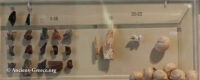
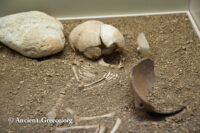
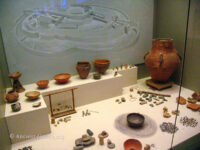
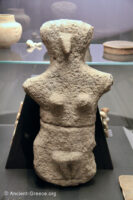
Stone Age Greece: Franchthi Cave Panorama. Peloponnese, Greece.Mesolithic objects from Franchthi Cave, including obsidian, bone, and flint tools, and snail shells. Circa 28000 – 15000 BCE).Child burial reconstruction from the Mesolithic era of the Franchthi cave.Neolithic everyday artifacts from Dimini.Limestone female figure from Karpathos. Probably Late Neolithic, 4500-3200 BC
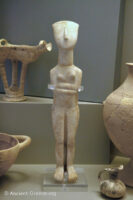
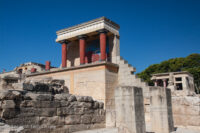
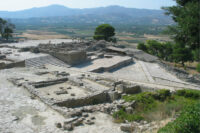
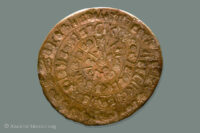
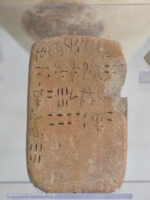
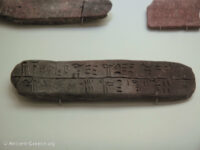
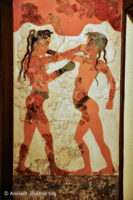
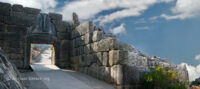
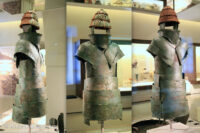
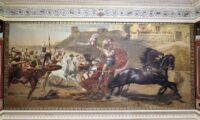
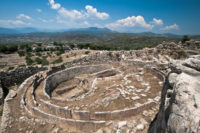
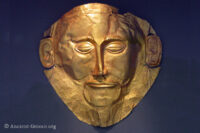
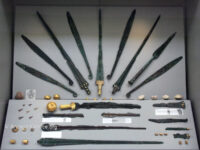
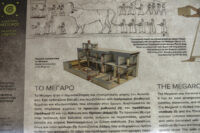
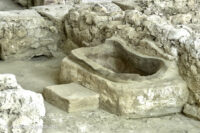
Cycladic figurine. Marble. 2800 – 2300 BCE. Copper / Bronze AgeShip procession fresco showing a number of Bronze Age ships in a naval festival procession. From from Thera (Santorini) 17th century BCE.Knossos palace North Entrance, North Pillar Hall. Bronze Age Greece.Phaistos Minoan palace. Bronze Age Greece.The Phaistos Disk is the earliest, and only script of its kind we have from the Minoans. It is dated to 1700 BCE and resembles Egyptian hieroglyphs.Linear A tablet from Zakros palace. 1450 BCE. Linear A is the first syllable based script in Bronze Age Greece.Linear B Script Clay Tablet from Knossos. 14-13 c. BCE. Bronze Age Greece. Linear B, an primitive form of Greek, was used in the late Bronze Age and was deciphered in 1953.Boxing Boys fresco from Akrotiri, Thera (Santorini). It is dated to between 1550 and 1500 BCE.The Lion Gate and the Cyclopean walls of Mycenae. Circa 1249 BCE. Strong Citadels were the centers of power in Bronze Age, Mycenaean Greece. The Lion Gate is the main access to the citadel of Mycenae. Above the gate, the iconic relief sculpture of two lions arranged symmetrically around a column is the first example of representational monumental sculpture in the European continent. While its significance has been lost to the depths of history, its placement above the main gate of the most powerful citadel of late Bronze Age has led to speculation that it symbolized something important like a family crest of a coat of arms. Three views of the Mycenaean Dendra Panoply (side, front, back). A rare example of a Mycenaean warrior’s armor in Bronze Age Greece. 15th century BCE.The Trojan War took place in late Bronze Age. Achilles’ Triumph (Triumph des Achill’) is a Fresco painted by Franz Matsch in 1894 CE.Mycenae Grave Circle A. 16th c. BCE. Bronze Age Greece. The grave offerings speak of an affluent ruling class and kicked a global interest in Greek archaeology.Gold death mask (known as Agamemnon’s Mask). 1550 – 1500 BCE. Found in Mycenae, Grave V, Grave Circle A. 16th c. BCE. One of many gold objects found on the site.A collection of Mycenaean swords and daggers of different styles from Mycenae. Bronze Age Greece. Mycenaeans produced some of the most advanced bronze weapons of the era.Nestor’s Palace (1300 – 1250 BCE) in Pylos – The Megaron. Bronze Age Greece. Reconstruction drawing. Pylos is one of the Mycenean palaces that were not fortified in the Bronze Age.Nestor’s Palace (1300 – 1250 BCE) in Pylos: The bathroom (το λουτρὀ). Greek Bronze Age rulers enjoyed luxury. Indoor baths are a common feature in many palaces of the era.
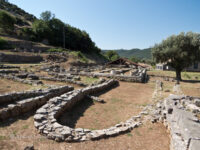
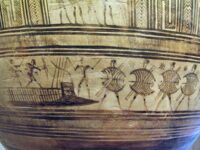
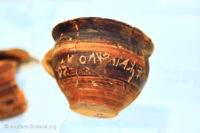
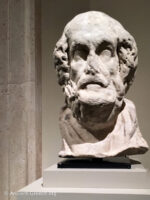
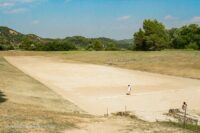
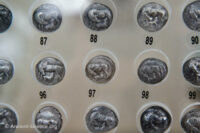
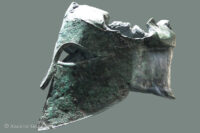
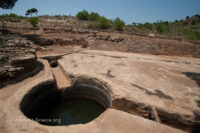
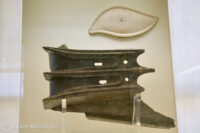
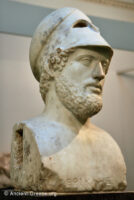
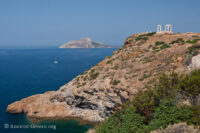
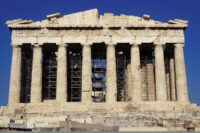
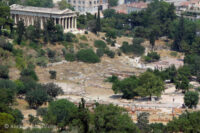
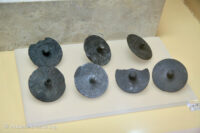
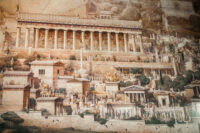
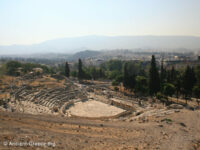
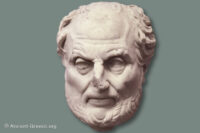
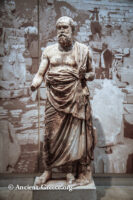
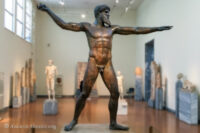
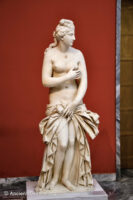
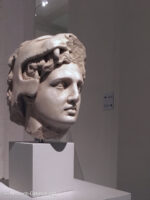
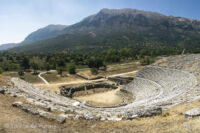
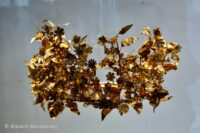
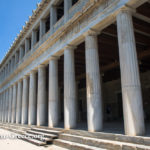
Megaron A (circa 16-12th c. BCE) is the rounded building foundations in the foreground. The temple of Apollo Thermios is just beyond it in the background. Thermos archaeological site, Aetolia, Greece. Archaic Era.Ship and warriors decoration on ampora from Ancient Greek Archaic Period. Naval prowess helped the Greeks colonize the entire Mediterranean and Black Seas in the Archaic era.Early Greek writing inscription on a cup. 7th c. BCE. Archaic Era. The Greek alphabet was developed sometime between 950 and 750 BCE.Marble Head of Homer. 1st – 2nd c. CE. Homer is the author of the epic poems, the Iliad and the Odyssey, which kicked off a literary revolution in Ancient Greece.The ancient Olympic stadium in ancient Olympia, the birthplace of the Olympic Games which still take place around the world every four years.Stater (στατήρ) coins. End of 6th c. to start of 5th c. BCE.Bronze helmet of Miltiades. Classical Era. The Athenian defense against the Persian invasions solidified the city’s leadership role in Greece.Lavrion Ancient Ore Washing Table. The silver mines were instrumental in the financing of the Athenian navy that defeated the Persians in Salamis, which kicked off the Classical era.Bronze ship ram (probably a trireme). 4th c. BCE. Classical Era. A rare example of a bronze ram from a war ship of the classical era.Marble bust of Pericles. Marble. Roman copy of a lost original from 440 – 430 BCE. Classical Era. Pericles was a central Athenian leader during the Greek Golden Age. Cape Sounion and the temple of Poseidon. Classical Era. It was part of the ambitious building project by Perkles that bestowed the land with many of the Classical temples we admire today.Parthenon west facade.The Agora of Athens with the temple of Hephaestus.Bronze ballots used by jurors to vote on a case. Classical Era.Painting of Delphi as it would have appeared in classical times. The Oracle of Delphi was influential in every facet of life for over a millennia.The theatre of Dionysus at the south slope of the Acropolis in Athens. This is where Drama and Comedy plays were performed in the Classical Era.Marble portrait of Thucydides. Roman copy of a 4th c. BCE original. History is a discipline that was founded largely by Herodotus and Thucydides in Classical Greece.Marble statue of a philosopher. 3d c. BCE. Hellenistic Era. Philosophy flourished in the Classical era.Zeus of Artemision bronze statue. c. 450 BCE.Statue of Aphrodite. Found at Baiai in southern Italy. “Syracuse Aphrodite” type. Made in the 2nd c. CE of the type of the Syracuse Aphrodite, the original of which goes back to the 4th c. BCE.Marble head of Alexander the Great wearing a lion’s scalp as helmet. Late 4th-3rd century BCE. Hellenistic Era. He was instrumental in spreading Greek civilization through Asia and North Africa.The theater of Dodona. 3d c. BCE. Hellenistic Era. The Oracle at Dodona was founded in the depths of history and flourished during Hellenistic times.Gold funerary wreath. 320 – 300 BCE.The Stoa of Atallos. The original Stoa was funded by the King of Pergamon, Attalos II in 159-138 BCE. It was completely destroyed by the Heruli in 267 CE, but it was rebuilt in the 20th century (1953-6) and houses the Agora Museum. Hellenistic Era.
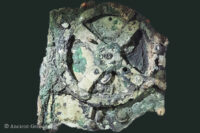
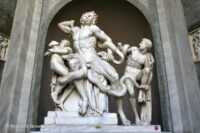
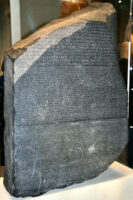
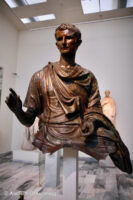
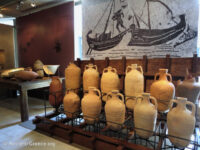
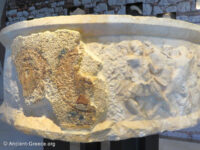
Antikythera Mechanism bronze fragment A. Circa 2nd – 1st c. BCE. Hellenistic Era.Statue of Laocoön at the Vatican Museum, Italy. 1st century CE Roman copy after a Greek original, The Rosetta Stone at the British Museum. 196 BCE. The Rosetta Stone is inscribed with Ancient Egyptian hieroglyphs, Demotic script, and Greek script, and it was instrumental in the decipherment of ancient Egyptian scripts.Statue of the emperor Augustus. Bronze. Found in Agios Efstratios in Euboea. 12-10 CE. Roman Era. The Romans loved everything Greek, and adopted much of the civilizations cultural fiber. Greeks themselves in time identified readily as Roman citizens. Nikopolis Archaeological Museum reconstruction of roman ship’s cross-section with transport amphorae (storage jars for safe transportation of goods). Maritime commercial activity was accelerated during the Roman Era around the Mediterranean.Statue Pedestal with Byzantine Mosaic of Saints Over Roman Amazonomachy Relief.T he pedestal was created initially by the Romans (1st-2nd c. CE), but in Byzantine times (5th – 6th c. CE) ti was covered with a Christian mosaic and used as an ambo in Basilica B in Nikopolis.
×
Attribution & License
This image is provided for non-commercial, educational use under CC BY-NC-ND 4.0.
Free for non-commercial use with restrictions:
provide credit, no edits, no resale.
(Click in the box to select all text for copying)
Notice: ancient-greece.org is not responsible for errors. Users are responsible for clearing rights to underlying subjects.