On this page:
Ελληνικά
Περιεχόμενα:
Γεωλογική Εξέλιξη και Ορυκτός Πλούτος
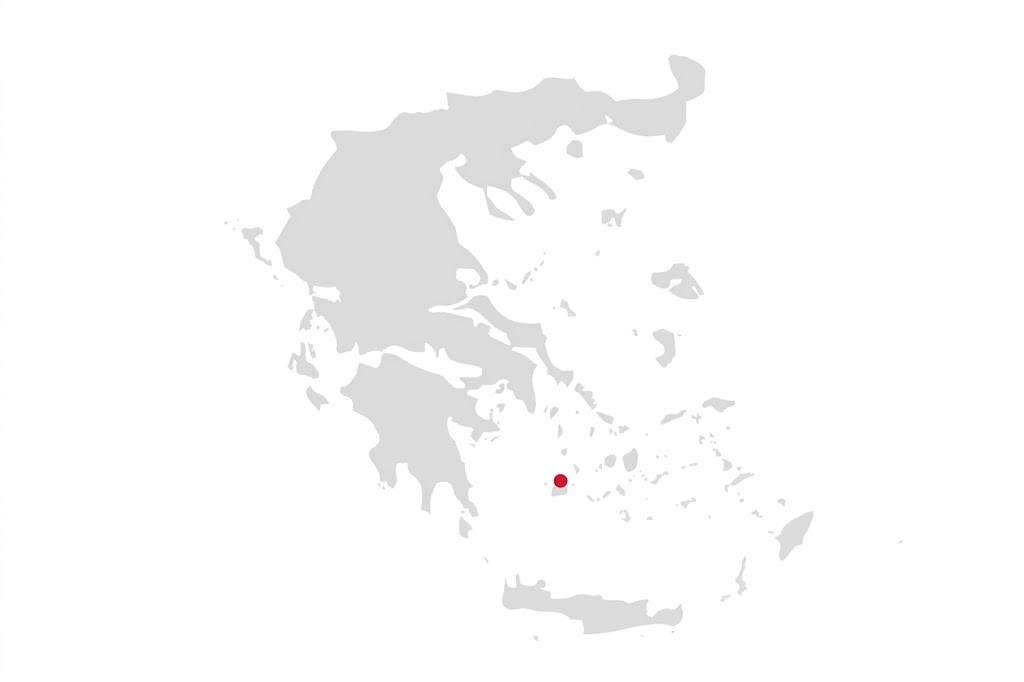
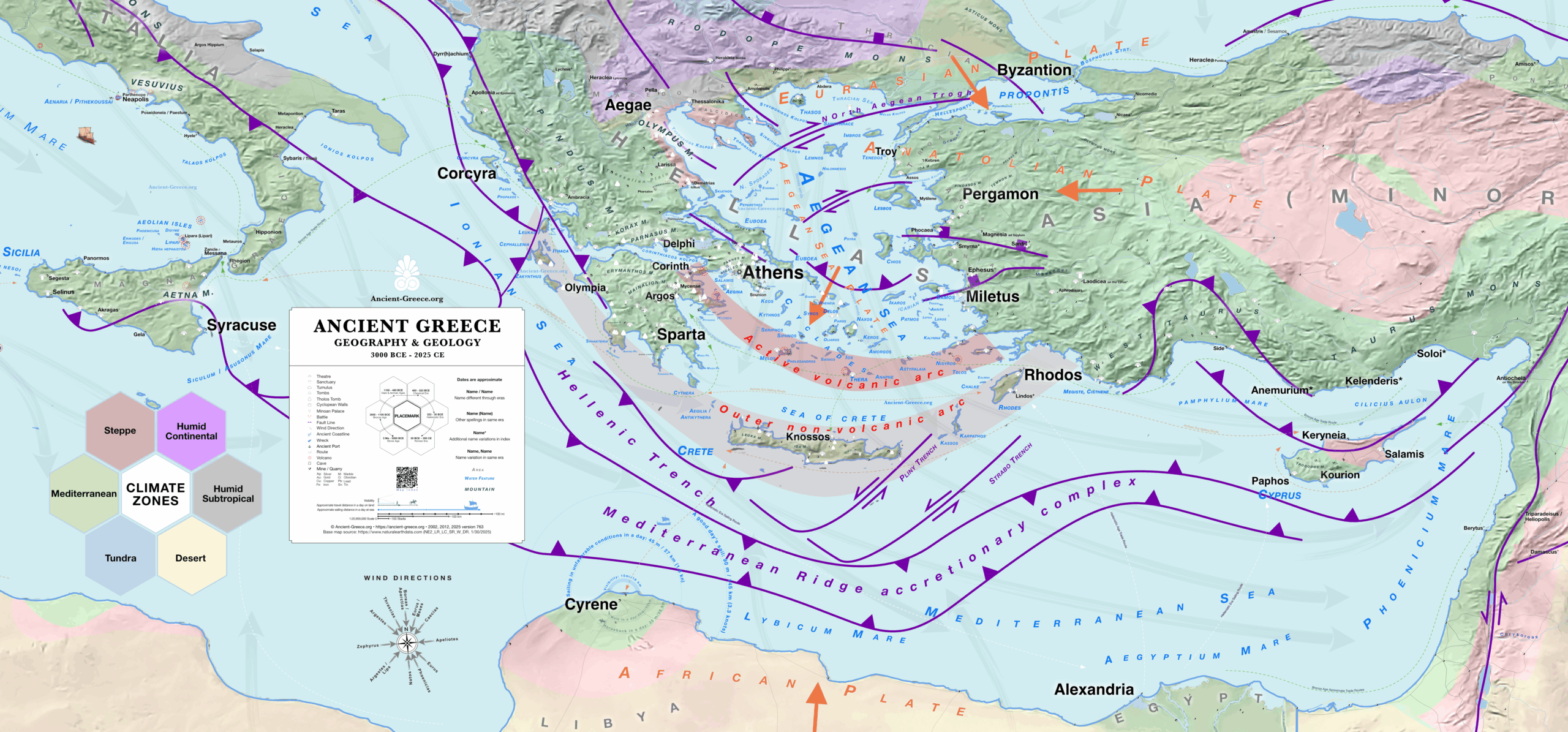
Το τοπίο της Μήλου είναι αποτέλεσμα της ηφαιστειακής δραστηριότητας στο Νότιο Αιγιακό Ηφαιστειακό Τόξο, η οποία ξεκίνησε πριν από 2,7 εκατομμύρια χρόνια [3]. Κατά την αρχαιότητα, το νησί αποτέλεσε βιομηχανικό κέντρο για την εξόρυξη στυπτηρίας, θείου και μπεντονίτη [3]. Επιπλέον, η μηλιά γη χρησιμοποιούνταν ως λευκή χρωστική ουσία, ενώ ο τραχείτης της Μήλου τροφοδοτούσε την αγορά με μυλόπετρες που εξάγονταν σε όλη τη Μεσόγειο κατά τη Ρωμαϊκή περίοδο [4].
Η Λίθινη Εποχή και ο Οψιανός
Η σημασία της Μήλου στη Λίθινη Εποχή οφείλεται στον οψιανό, το ηφαιστειακό γυαλί που ήταν απαραίτητο για την κατασκευή εργαλείων. Η εξόρυξη στα Νύχια και στο Δεμενεγάκι τροφοδότησε ένα δίκτυο που έφτασε στο Σπήλαιο Φράγχθι ήδη από την 11η χιλιετία π.Χ. [2].
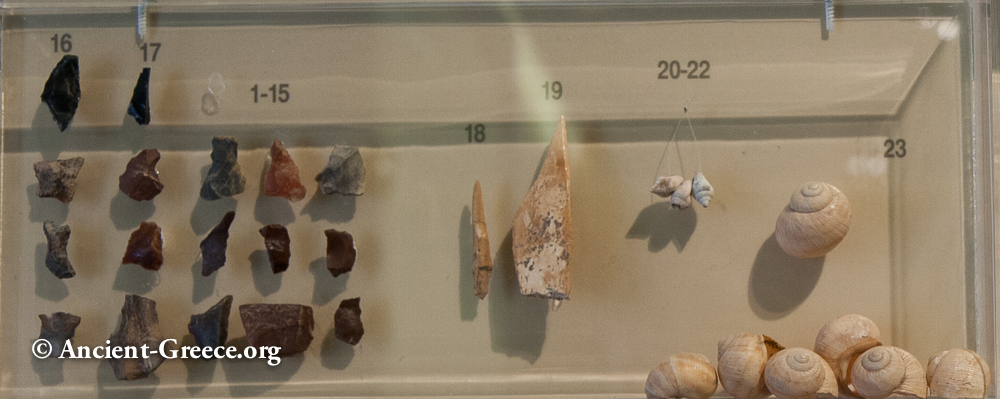
Κατά τη Νεολιθική περίοδο, ο οψιανός αποτέλεσε την κινητήριο δύναμη για την ανάπτυξη της ναυσιπλοΐας στο Αιγαίο [3].
Αρχαία Μήλος και η Πόλη του Κλήματος
Milos
2nd Century BCE (Hellenistic)
Marble and Stone
Milos
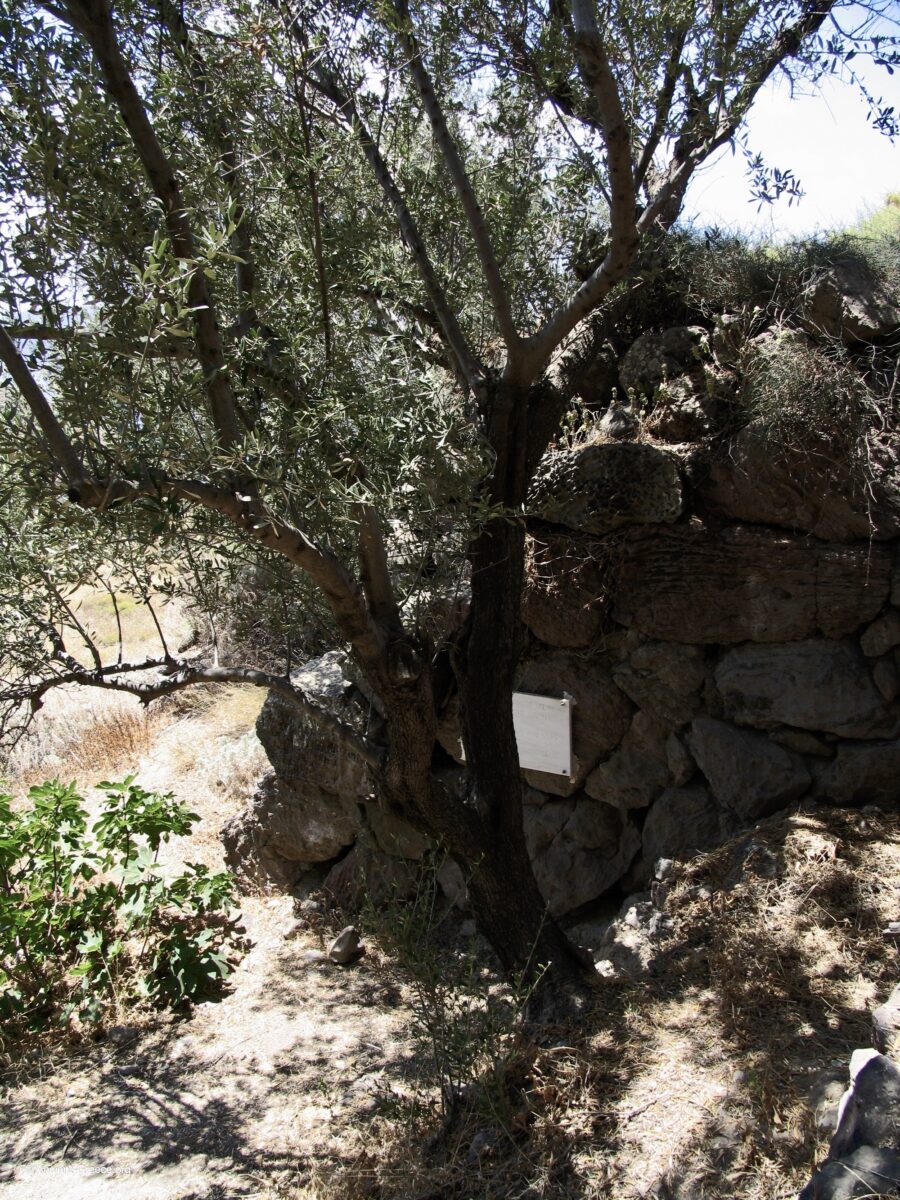
A small marble plaque is affixed to a stone retaining wall at the exact location where the Venus of Milos was discovered in 1820. The statue was found by a local farmer while excavating stones from this ancient structure, which was part of the urban fabric of the city near the ancient gymnasium. This modest marker serves as a testament to the serendipitous recovery of one of the most iconic masterpieces of the Hellenistic period within the Aegean [1].
◈ ◈ ◈
Σήμανση στη θέση εύρεσης της Αφροδίτης της Μήλου
Μήλος
2ος αιώνας π.Χ. (Ελληνιστική)
Μάρμαρο και Λίθος
Μήλος
Μια μικρή μαρμάρινη πλάκα είναι εντοιχισμένη σε έναν λίθινο αναλημματικό τοίχο στο ακριβές σημείο όπου ανακαλύφθηκε η Αφροδίτη της Μήλου το 1820. Το άγαλμα εντοπίστηκε από έναν ντόπιο αγρότη κατά την εκσκαφή λίθων από αυτή την αρχαία κατασκευή, η οποία αποτελούσε μέρος του αστικού ιστού της πόλης κοντά στο αρχαίο γυμνάσιο. Αυτή η λιτή σήμανση αποτελεί μαρτυρία για την τυχαία ανάκτηση ενός από τα πλέον εμβληματικά αριστουργήματα της Ελληνιστικής περιόδου στο Αιγαίο [1].
———
Bibliography
Kousser, R. (2005). “Creating the Past: The Vénus de Milo and the Hellenistic Reception of Classical Greece.” American Journal of Archaeology, 109(2), 227-250.
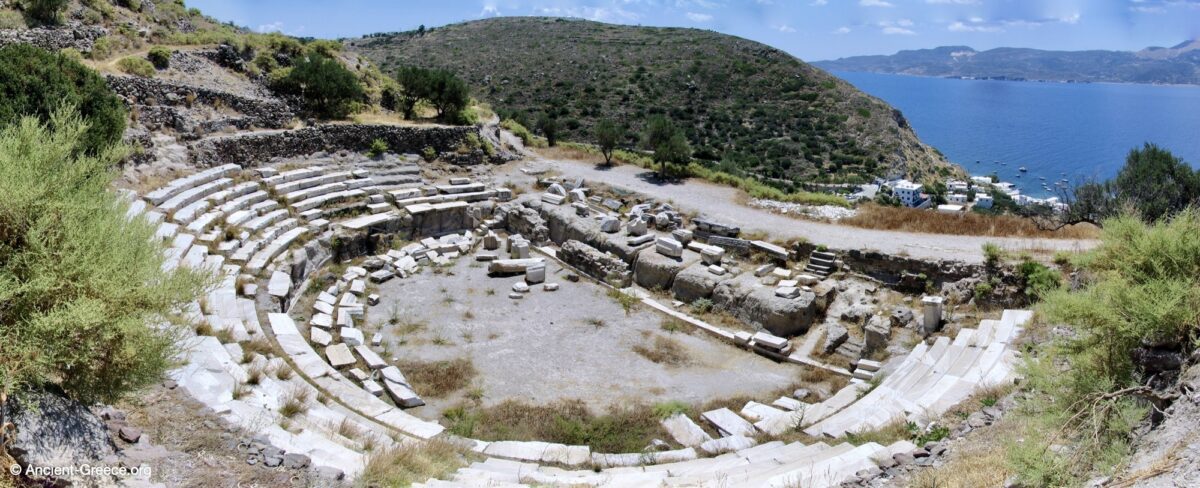
Η αρχαία πρωτεύουσα, το Κλήμα, ιδρύθηκε από Δωριείς. Το σημαντικότερο μνημείο είναι το Αρχαίο Θέατρο της Μήλου, ελληνιστικό κτίσμα που ανακατασκευάστηκε από τους Ρωμαίους με Παριανό μάρμαρο [4].
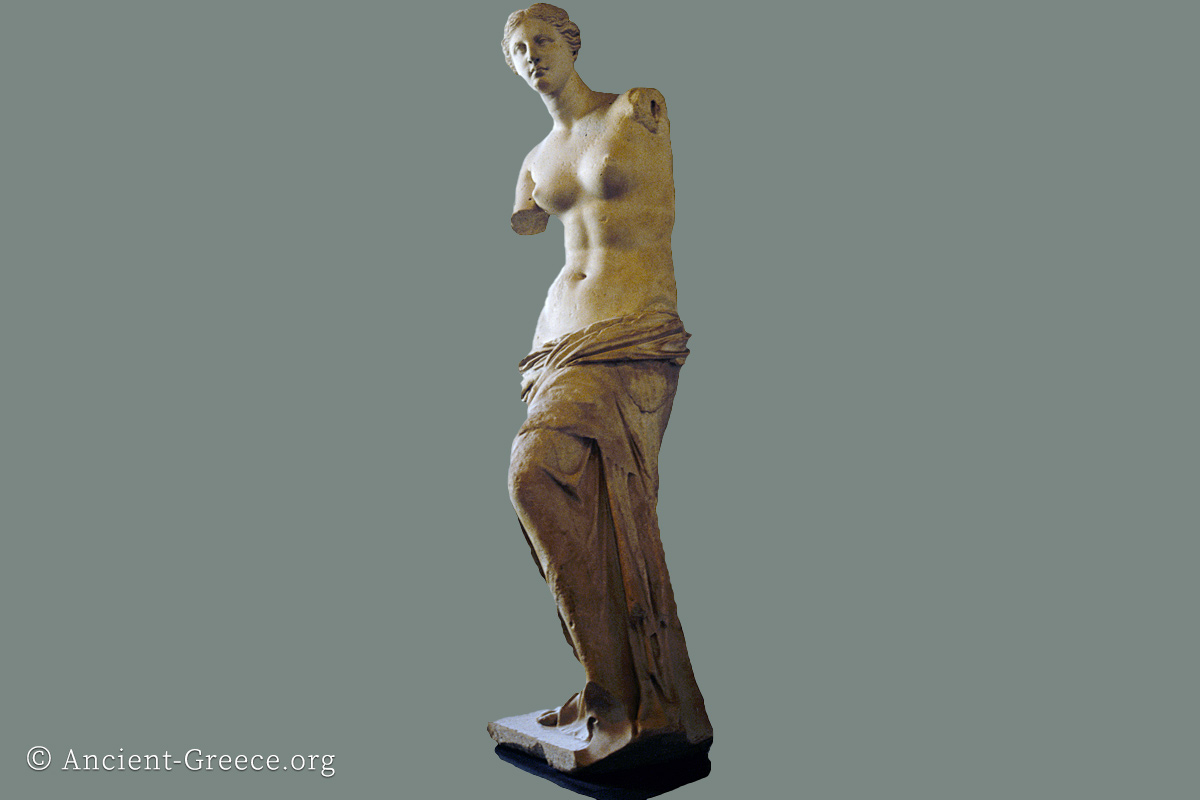
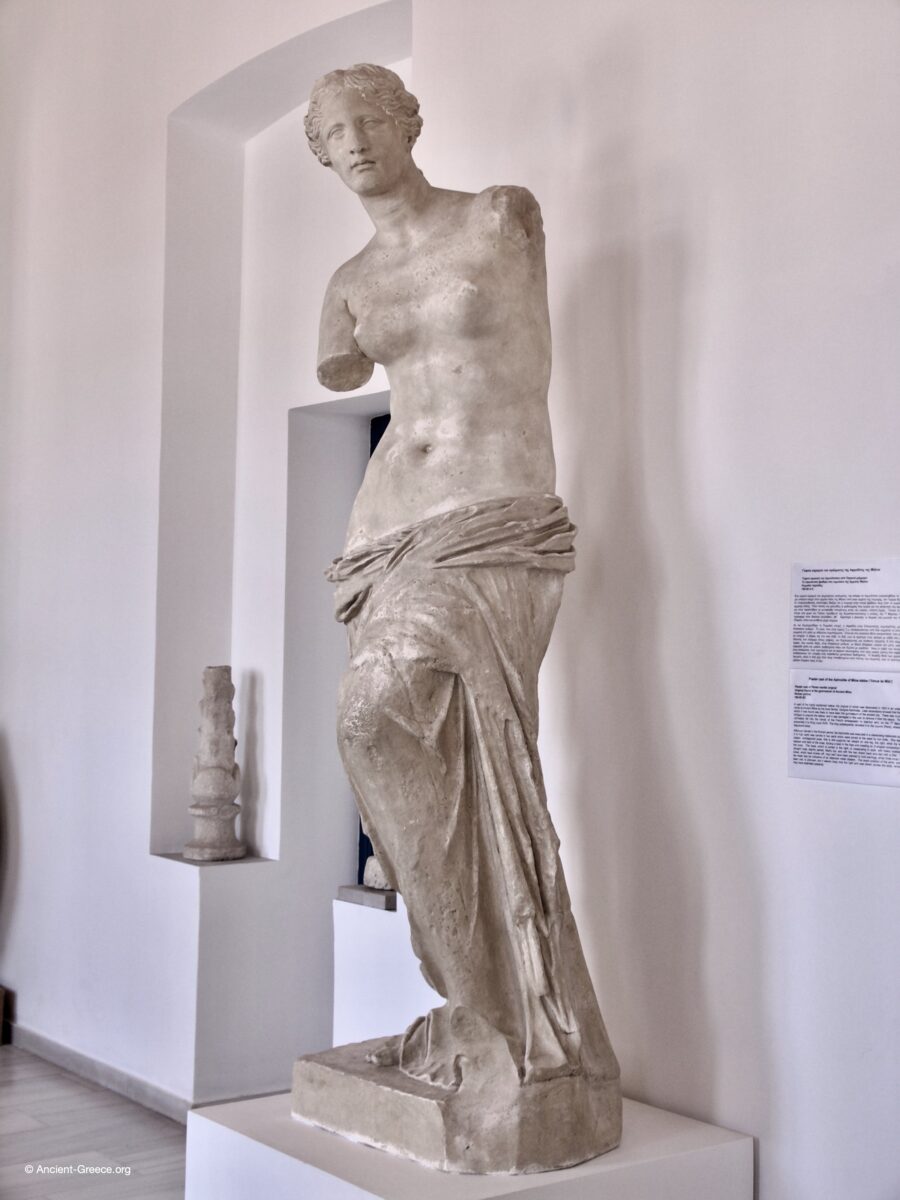
Κοντά στο θέατρο βρέθηκε το 1820 η Αφροδίτη της Μήλου. Σήμερα, το Αρχαιολογικό Μουσείο Μήλου, έργο του Ερνέστου Τσίλλερ, φιλοξενεί ένα γύψινο αντίγραφο του αγάλματος και ευρήματα από τη Φυλακωπή [4].
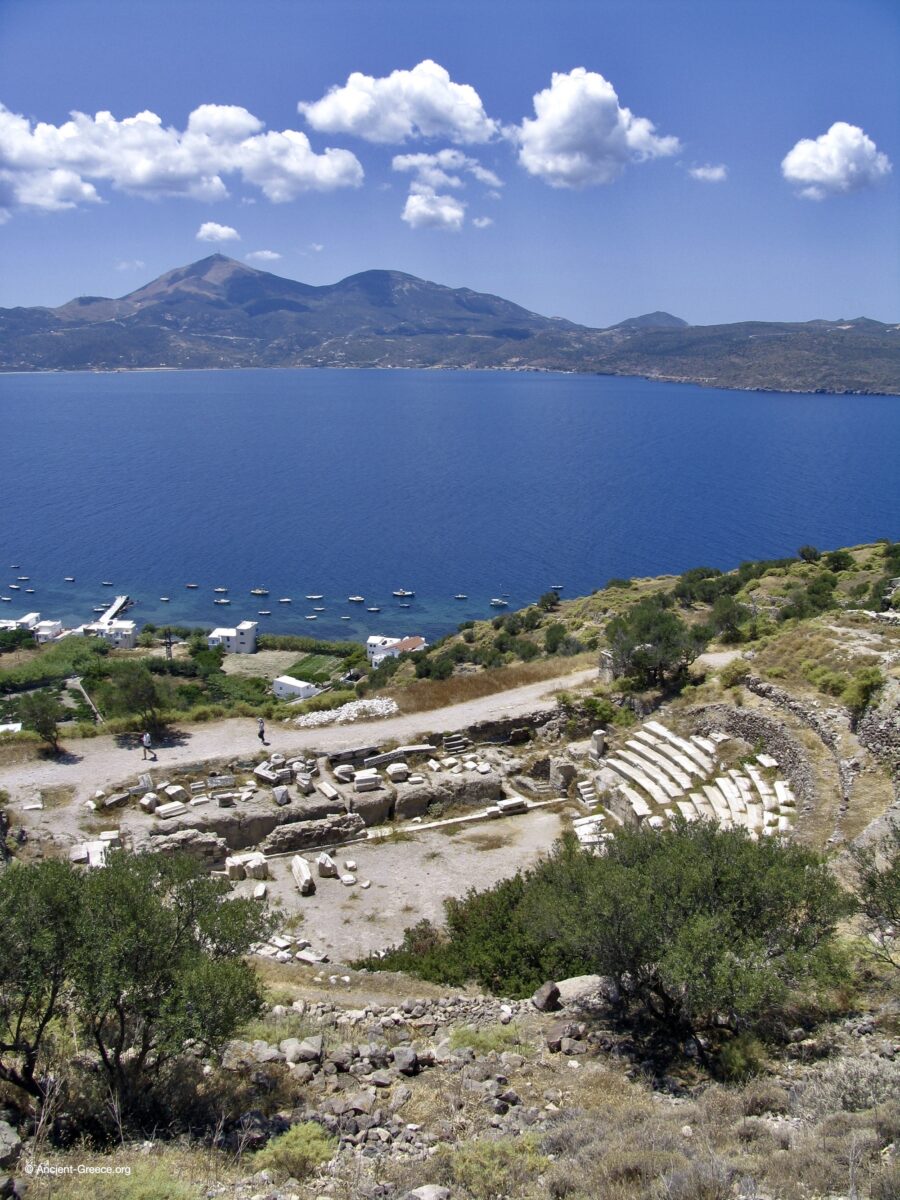
Το αρχαίο θέατρο βρίσκεται σε μια ειδυλλιακή τοποθεσία με θέα στον γαλήνιο κόλπο και τους μακρινούς ηφαιστειακούς λόφους του Αιγαίου. Αυτή η προνομιακή θέση προσέφερε ένα εντυπωσιακό σκηνικό για τις πολιτιστικές και πολιτικές συγκεντρώσεις, όπου οι θεατές παρακολουθούσαν τις παραστάσεις αγναντεύοντας παράλληλα τη θαλάσσια κίνηση. Η ενσωμάτωση της Ελληνιστικής μαρμάρινης αρχιτεκτονικής στο παράκτιο περιβάλλον αποτελεί χαρακτηριστικό παράδειγμα του ελληνικού ιδεώδους για την αρμονική συνύπαρξη των κτισμάτων με τον φυσικό κόσμο [1].
Milos
3rd Century BCE (Hellenistic)
Parian Marble
Milos
The ancient theater is situated within a natural hollow of the hillside, offering a panoramic view of the bay of Milos and the Aegean Sea. This location was strategically chosen during the Hellenistic period to integrate the theatrical experience with the dramatic volcanic landscape of the island.
◈ ◈ ◈
Πανόραμα του αρχαίου θεάτρου
Μήλος
3ος αιώνας π.Χ. (Ελληνιστική)
Πάριο Μάρμαρο
Μήλος
Το αρχαίο θέατρο είναι χτισμένο σε μια φυσική κοιλότητα της πλαγιάς, προσφέροντας πανοραμική θέα στον κόλπο της Μήλου και το Αιγαίο Πέλαγος. Η τοποθεσία αυτή επιλέχθηκε στρατηγικά κατά την Ελληνιστική περίοδο για να ενσωματώσει τη θεατρική εμπειρία στο εντυπωσιακό ηφαιστειακό τοπίο του νησιού.
Milos
3rd Century BCE (Hellenistic)
Parian Marble
Milos
The ancient theater is situated in an idyllic natural setting overlooking the serene bay and the distant volcanic hills of the Aegean. This scenic location provided a dramatic backdrop for cultural and political gatherings, where spectators could witness performances while viewing the maritime traffic below. The integration of the Hellenistic marble architecture with the surrounding coastal environment exemplifies the classical Greek ideal of harmonizing man-made structures with the natural world.
◈ ◈ ◈
Το Αρχαίο Θέατρο της Μήλου και το τοπίο του Αιγαίου
Μήλος
3ος αιώνας π.Χ. (Ελληνιστική)
Πάριο Μάρμαρο
Μήλος
Το αρχαίο θέατρο βρίσκεται σε μια ειδυλλιακή τοποθεσία με θέα στον γαλήνιο κόλπο και τους μακρινούς ηφαιστειακούς λόφους του Αιγαίου. Αυτή η προνομιακή θέση προσέφερε ένα εντυπωσιακό σκηνικό για τις πολιτιστικές και πολιτικές συγκεντρώσεις, όπου οι θεατές παρακολουθούσαν τις παραστάσεις αγναντεύοντας παράλληλα τη θαλάσσια κίνηση. Η ενσωμάτωση της Ελληνιστικής μαρμάρινης αρχιτεκτονικής στο παράκτιο περιβάλλον αποτελεί χαρακτηριστικό παράδειγμα του ελληνικού ιδεώδους για την αρμονική συνύπαρξη των κτισμάτων με τον φυσικό κόσμο.
———
Bibliography
https://cyclades.culture.gov.gr/wp-content/uploads/2024/03/MILOS-ENTYPO.pdf
Sparkes, B. A. (1982). “The Roman Theater at Milo.” Expedition Magazine, 25(1), 2–11.
Milos
3rd Century BCE (Hellenistic)
Parian Marble
Milos
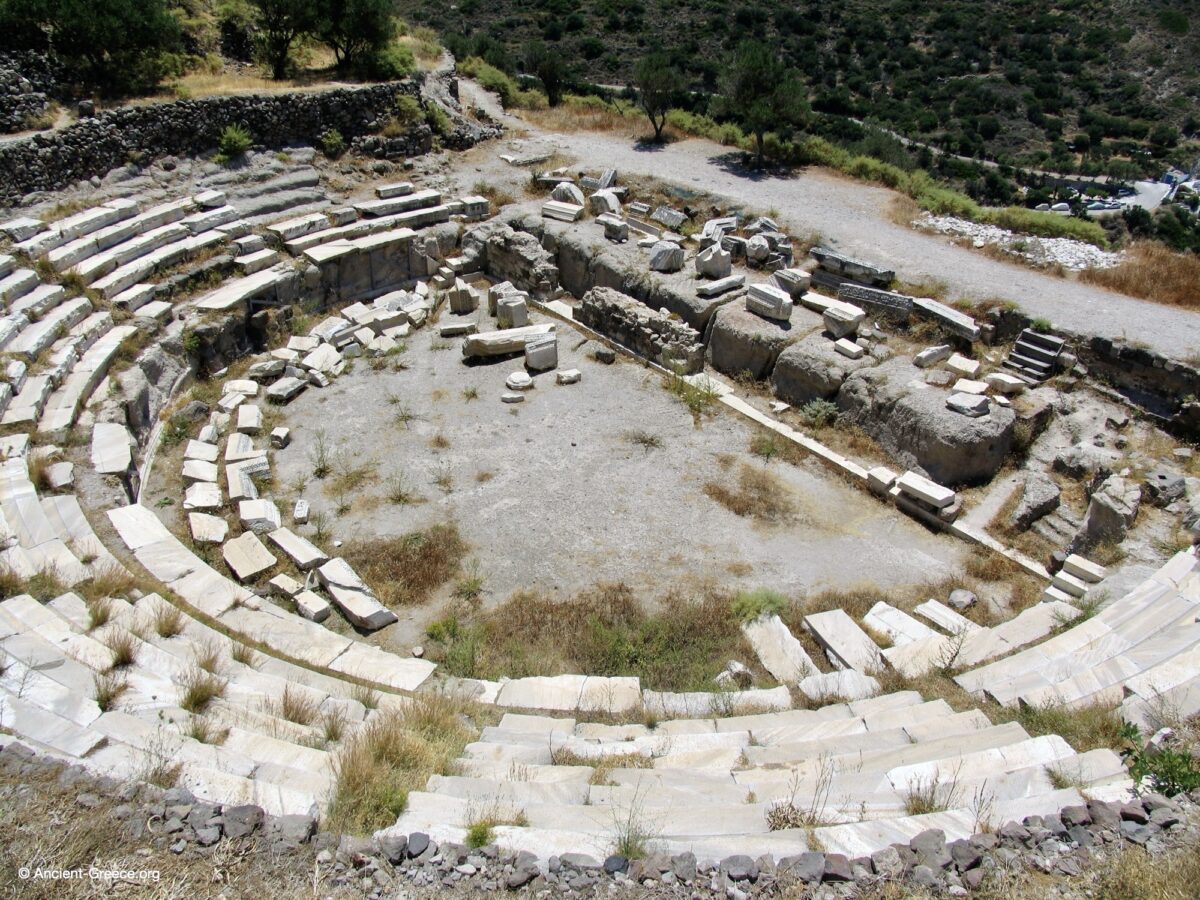
The view from the upper tiers of the ancient theater reveals the meticulously restored rows of Parian marble seating facing the orchestra and the sea. Originally constructed during the Hellenistic period, the structure was significantly expanded in Roman times to accommodate approximately 7,000 spectators within the Aegean landscape. The preservation of the marble blocks illustrates the monumental scale of the civic architecture that served the inhabitants of ancient Klima.
◈ ◈ ◈
Αρχαίο Θέατρο της Μήλου
Μήλος
3ος αιώνας π.Χ. (Ελληνιστική)
Πάριο Μάρμαρο
Μήλος
Η θέα από τις ανώτερες βαθμίδες του αρχαίου θεάτρου αποκαλύπτει τις σχολαστικά αποκατεστημένες σειρές μαρμάρινων εδωλίων που είναι στραμμένες προς την ορχήστρα και τη θάλασσα. Το οικοδόμημα, που θεμελιώθηκε αρχικά κατά την Ελληνιστική περίοδο, επεκτάθηκε σημαντικά στους ρωμαϊκούς χρόνους για να φιλοξενεί περίπου 7.000 θεατές στο τοπίο του Αιγαίου. Η διατήρηση των μαρμάρινων μελών καταδεικνύει τη μνημειακή κλίμακα της πολιτικής αρχιτεκτονικής που εξυπηρετούσε τους κατοίκους του αρχαίου Κλήματος
Το μνημείο κατασκευάστηκε αρχικά από τους κατοίκους της αρχαίας πόλης της Μήλου κατά την Ελληνιστικήπερίοδο, πιθανώς ήδη από τον 3ο αιώνα π.Χ.. Μετά την καταστροφή της πόλης από τους Αθηναίους το 416 π.Χ. και την επακόλουθη ανάκαμψή της, το θέατρο έγινε το επίκεντρο της πολιτιστικής ζωής. Η θέση του στη βραχώδη πλαγιά πάνω από τον οικισμό του Κλήματος προσέφερε ένα φυσικό κοίλο που μεγιστοποιούσε την ακουστική ποιότητα των παραστάσεων [5].
Κατά τη ρωμαϊκή περίοδο, το θέατρο υπέστη εκτεταμένη ανακατασκευή και επέκταση, αποκτώντας τη σημερινή του μνημειακή μορφή [5]. Το μαρμάρινο κοίλο, η ορχήστρα και το περίτεχνο διώροφο κτίριο της σκηνής (scenae frons) αντανακλούν την αυξημένη ευημερία της Μήλου υπό ρωμαϊκή κυριαρχία. Οι ανασκαφές αποκάλυψαν ότι το θέατρο παρέμεινε σε χρήση μέχρι τον 4ο αιώνα μ.Χ., αποτελώντας διαχρονική μαρτυρία της πολιτιστικής ζωντάνιας του νησιού [5].
Προϊστορική Φυλακωπή
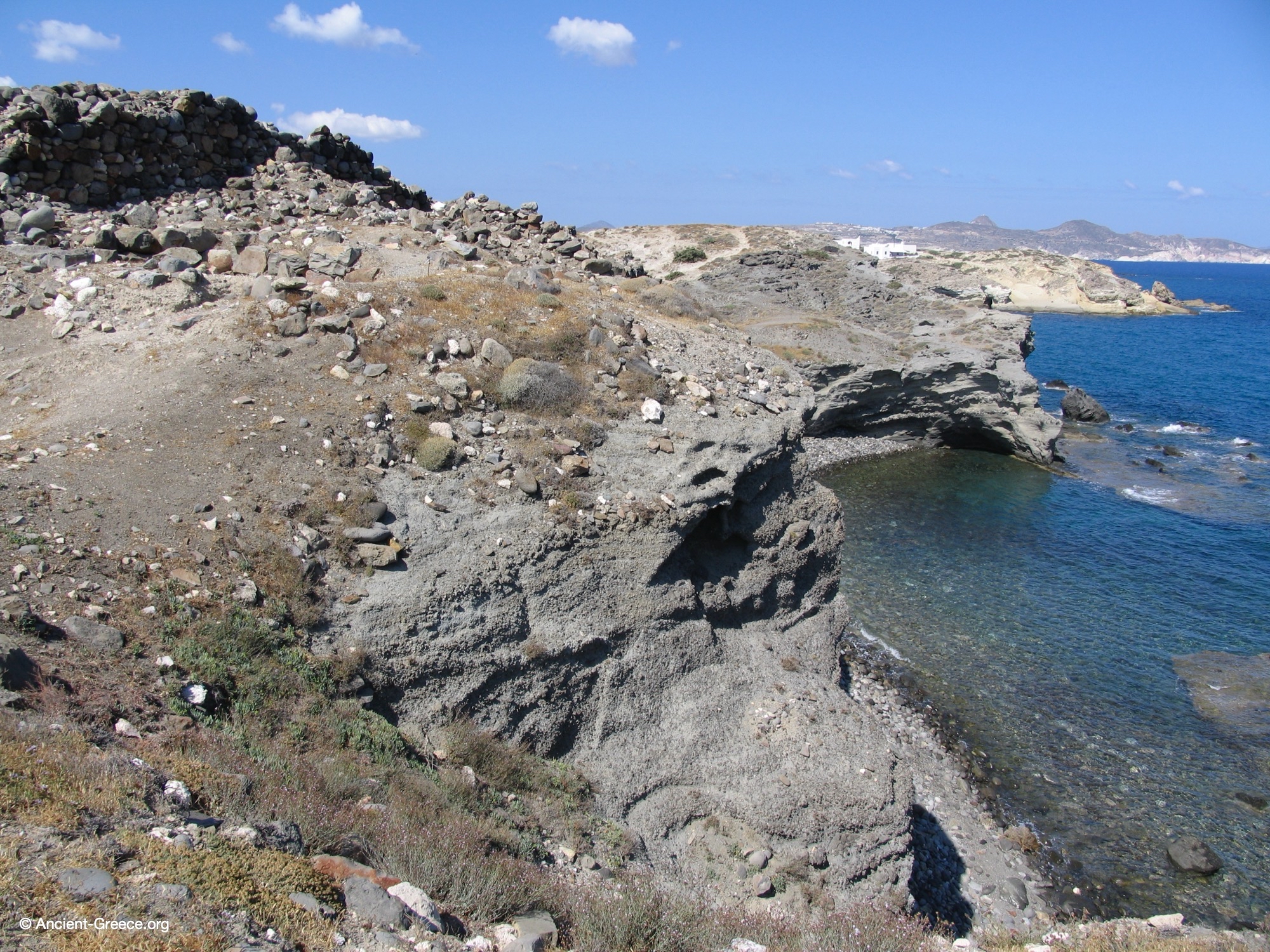
Ο οικισμός της Φυλακωπής αποτελεί βασική πηγή για την Πρωτοκυκλαδική έως την Υστεροελλαδική περίοδο. Τα ευρήματα περιλαμβάνουν ένα μυκηναϊκό μέγαρο, κυκλώπεια τείχη και την τοιχογραφία με τα ιπτάμενα ψάρια [1].
Μάθετε περισσότερα για την Φυλακωπή…
Αρχαιολογικό Μουσείο Μήλου
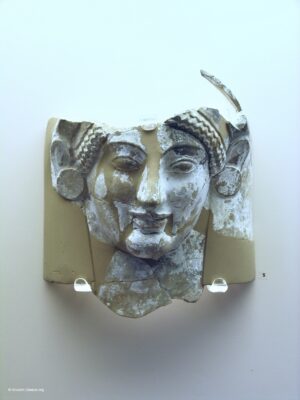
Το Αρχαιολογικό Μουσείο Μήλου, το οποίο λειτουργεί από το 1984, στεγάζεται σε ένα νεοκλασικό κτίριο στην Πλάκα και φιλοξενεί μια ολοκληρωμένη συλλογή αρχαιοτήτων από τα τέλη της 4ης χιλιετίας π.Χ. έως τους πρώτους χριστιανικούς χρόνους [1]. Τα παλαιότερα εκθέματα του μουσείου περιλαμβάνουν νεολιθικάευρήματα και κατάλοιπα της Πρώιμης Εποχής του Χαλκού, που μαρτυρούν πυκνή κατοίκηση σε όλο το νησί [1]. Σημαντικά Πρωτοκυκλαδικά αντικείμενα περιλαμβάνουν χαρακτηριστικά λίθινα ομοιώματα μιας θολωτής οικίας και ενός πλοίου, καθώς και μια μοναδική πήλινη μάσκα από τον οικισμό της Φυλακωπής [1]. Το μουσείο τεκμηριώνει την οικονομική ακμή του νησιού μέσω της εκτεταμένης εκμετάλλευσης του οψιανού, ενός ηφαιστειακού πετρώματος που χρησιμοποιήθηκε για εργαλεία και όπλα σε όλο τον αρχαίο κόσμο.
Ιστορική Εξέλιξη και Καλλιτεχνία
Η περίοδος της Φυλακωπής (2300–1400 π.Χ.) αντιπροσωπεύεται από προηγμένα είδη κεραμικής και την μυκηναϊκή επιρροή, η οποία αναδεικνύεται από την αρχιτεκτονική του «μεγάρου» και το περίφημο ειδώλιο της «Κυράς της Φυλακωπής». Μετά από μια σύντομη εγκατάλειψη τον 11ο αιώνα π.Χ., Δωριείς άποικοι ίδρυσαν έναν νέο οικισμό κοντά στο Κλήμα, ευνοώντας μια τοπική καλλιτεχνική σχολή που παρήγαγε Γεωμετρική κεραμική και περίτεχνες στεατιτικές σφραγίδες. Η συλλογή περιλαμβάνει επίσης αρχαϊκέςεπιγραφές στη δωρική διάλεκτο και μια σημαντική σειρά από Ελληνιστικά και Ρωμαϊκά επιτύμβια ανάγλυφα. Ένα γύψινο εκμαγείο της Αφροδίτης της Μήλου δεσπόζει στην είσοδο, λειτουργώντας ως υπενθύμιση του αυθεντικού Ελληνιστικού αριστουργήματος που βρίσκεται σήμερα στο Λούβρο.
Milos remains a pivotal site for understanding Aegean prehistory and classical development, primarily due to its unique geological resources and strategic maritime position. The island’s history is characterized by a continuous trajectory of resource extraction and urban evolution from the Upper Paleolithic through the Roman periods [1].
Geological Evolution and Mineral Wealth
Volcanic Origins and Resource Extraction
The landscape of Milos is the result of intense volcanic activity within the South Aegean Volcanic Arc, beginning approximately 2.7 million years ago [3]. This activity produced a diverse geological environment of andesitic and rhyolitic formations. In antiquity, the island was a vital industrial hub for the extraction of alum, sulfur, and bentonite[3]. Additionally, melian earth was highly prized as a white pigment by ancient painters, and the island’s trachyte deposits provided the raw material for millstones exported throughout the Mediterranean during the Roman era [4].
The Stone Age and the Obsidian Network
The island’s most significant contribution to the Stone Age was the supply of obsidian, a volcanic glass essential for lithic technologies. Specialized quarrying at sites like Sta Nychia and Demenegaki facilitated a trade network that reached the Greek mainland as early as the 11th millennium BCE, as evidenced by findings in Franchthi Cave [2].
During the Neolithic, this obsidian network served as a primary driver for maritime navigation and cultural exchange across the Aegean basin [3].
Ancient Milos and the City of Klima
The Urban Center and Roman Theater
The ancient capital, Klima, was established by Dorian settlers near modern Trypiti. The most prominent remaining structure is the Ancient Theater of Milos, a Hellenistic construction later rebuilt in Parian marble by the Romans to seat 7,000 spectators [4]. Surrounding the theater, scattered ruins of city walls and Classical fortifications define the ancient urban landscape.
The Ancient Theater of Milos and the Aegean landscape Milos 3rd Century BCE (Hellenistic) Parian Marble Milos
Milos
3rd Century BCE (Hellenistic)
Parian Marble
Milos
The ancient theater is situated within a natural hollow of the hillside, offering a panoramic view of the bay of Milos and the Aegean Sea. This location was strategically chosen during the Hellenistic period to integrate the theatrical experience with the dramatic volcanic landscape of the island.
◈ ◈ ◈
Πανόραμα του αρχαίου θεάτρου
Μήλος
3ος αιώνας π.Χ. (Ελληνιστική)
Πάριο Μάρμαρο
Μήλος
Το αρχαίο θέατρο είναι χτισμένο σε μια φυσική κοιλότητα της πλαγιάς, προσφέροντας πανοραμική θέα στον κόλπο της Μήλου και το Αιγαίο Πέλαγος. Η τοποθεσία αυτή επιλέχθηκε στρατηγικά κατά την Ελληνιστική περίοδο για να ενσωματώσει τη θεατρική εμπειρία στο εντυπωσιακό ηφαιστειακό τοπίο του νησιού.
Milos
3rd Century BCE (Hellenistic)
Parian Marble
Milos
The ancient theater is situated in an idyllic natural setting overlooking the serene bay and the distant volcanic hills of the Aegean. This scenic location provided a dramatic backdrop for cultural and political gatherings, where spectators could witness performances while viewing the maritime traffic below. The integration of the Hellenistic marble architecture with the surrounding coastal environment exemplifies the classical Greek ideal of harmonizing man-made structures with the natural world.
◈ ◈ ◈
Το Αρχαίο Θέατρο της Μήλου και το τοπίο του Αιγαίου
Μήλος
3ος αιώνας π.Χ. (Ελληνιστική)
Πάριο Μάρμαρο
Μήλος
Το αρχαίο θέατρο βρίσκεται σε μια ειδυλλιακή τοποθεσία με θέα στον γαλήνιο κόλπο και τους μακρινούς ηφαιστειακούς λόφους του Αιγαίου. Αυτή η προνομιακή θέση προσέφερε ένα εντυπωσιακό σκηνικό για τις πολιτιστικές και πολιτικές συγκεντρώσεις, όπου οι θεατές παρακολουθούσαν τις παραστάσεις αγναντεύοντας παράλληλα τη θαλάσσια κίνηση. Η ενσωμάτωση της Ελληνιστικής μαρμάρινης αρχιτεκτονικής στο παράκτιο περιβάλλον αποτελεί χαρακτηριστικό παράδειγμα του ελληνικού ιδεώδους για την αρμονική συνύπαρξη των κτισμάτων με τον φυσικό κόσμο.
———
Bibliography
https://cyclades.culture.gov.gr/wp-content/uploads/2024/03/MILOS-ENTYPO.pdf
Sparkes, B. A. (1982). “The Roman Theater at Milo.” Expedition Magazine, 25(1), 2–11.
Milos
3rd Century BCE (Hellenistic)
Parian Marble
Milos
The view from the upper tiers of the ancient theater reveals the meticulously restored rows of Parian marble seating facing the orchestra and the sea. Originally constructed during the Hellenistic period, the structure was significantly expanded in Roman times to accommodate approximately 7,000 spectators within the Aegean landscape. The preservation of the marble blocks illustrates the monumental scale of the civic architecture that served the inhabitants of ancient Klima.
◈ ◈ ◈
Αρχαίο Θέατρο της Μήλου
Μήλος
3ος αιώνας π.Χ. (Ελληνιστική)
Πάριο Μάρμαρο
Μήλος
Η θέα από τις ανώτερες βαθμίδες του αρχαίου θεάτρου αποκαλύπτει τις σχολαστικά αποκατεστημένες σειρές μαρμάρινων εδωλίων που είναι στραμμένες προς την ορχήστρα και τη θάλασσα. Το οικοδόμημα, που θεμελιώθηκε αρχικά κατά την Ελληνιστική περίοδο, επεκτάθηκε σημαντικά στους ρωμαϊκούς χρόνους για να φιλοξενεί περίπου 7.000 θεατές στο τοπίο του Αιγαίου. Η διατήρηση των μαρμάρινων μελών καταδεικνύει τη μνημειακή κλίμακα της πολιτικής αρχιτεκτονικής που εξυπηρετούσε τους κατοίκους του αρχαίου Κλήματος
The ancient theater is situated in an idyllic natural setting overlooking the serene bay and the distant volcanic hills of the Aegean. This scenic location provided a dramatic backdrop for cultural and political gatherings, where spectators could witness performances while viewing the maritime traffic below. The integration of the Hellenistic marble architecture with the surrounding coastal environment exemplifies the classical Greek ideal of harmonizing man-made structures with the natural world [1].
The monument was initially constructed by the inhabitants of the ancient city of Melos during the Hellenistic period, possibly as early as the 3rd century BCE. Following the destruction of the city by the Athenians in 416 BCE and its subsequent recovery, the theater became a focal point of civic life. Its location on the rocky slope above the settlement of Klima provided a natural auditorium that maximized the acoustic quality of the performances [5].
During the Roman period, the theater underwent extensive reconstruction and expansion, giving it its current monumental form [5]. The marble-clad cavea, the orchestra, and the elaborate two-story stage building (scenae frons) reflect the increased prosperity of Milos under Roman rule. Excavations have revealed that the theater remained in use until the 4th century CE, serving as a lasting testament to the island’s long-standing cultural vitality.
The Discovery of the Aphrodite of Melos
In 1820, the Aphrodite of Melos was discovered near the theater ruins. While the original Hellenistic sculpture is held in the Louvre, the Archaeological Museum of Milos—housed in a neoclassical building by Ernst Ziller—displays a full-scale plaster replica alongside significant finds from Phylakopi and the Roman period [4]. A commemorative plaque now marks the original findspot in the landscape.
Prehistoric Phylakopi
The settlement of Phylakopi provides a critical stratigraphic record from the Early Cycladic to the Late Helladicperiods. Notable archaeological features include a Mycenaean megaron, cyclopean walls, and the Flying Fish fresco, reflecting deep artistic ties with Minoan Crete [1].
Archaeological Museum of Milos
The Archaeological Museum of Milos, established in 1984, is situated within a neoclassical building in Plaka and houses a comprehensive collection of antiquities spanning the late 4th millennium BCE to the early Christian era [1]. The museum’s earliest exhibits include Neolithic surface finds and Early Bronze Age building remains that indicate dense settlement patterns throughout the island [1]. Notable Early Cycladic artifacts include distinctive limestonemodels of a vaulted house and a ship, alongside a unique four-footed clay mask from the settlement at Phylakopi . The museum further documents the island’s economic prosperity through the extensive exploitation of obsidian, a volcanic glass utilized for tools and weapons across the ancient world.
Milos Archaeological Museum
1600-1400 BCE
(Cycladic)
Terracotta
Milos
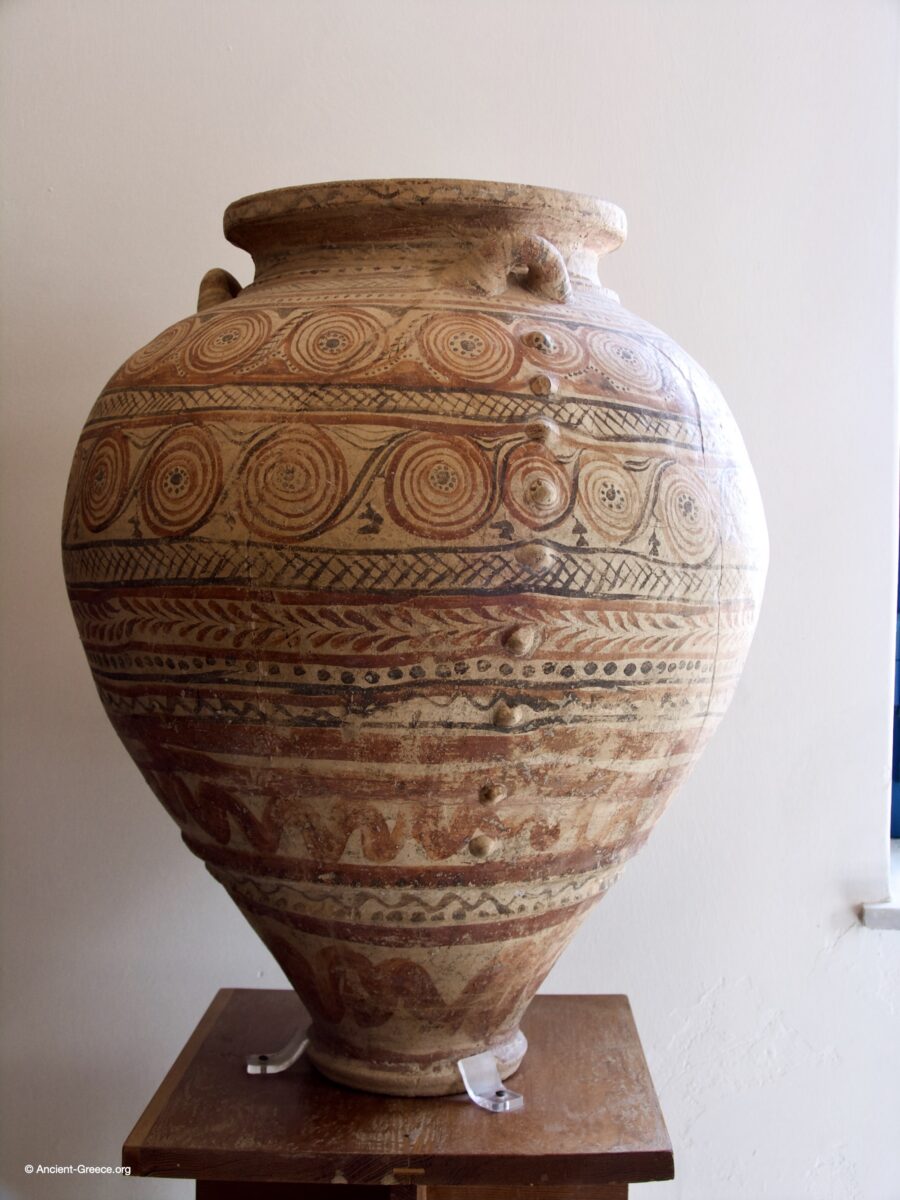
This storage Pithos belongs to the Phylakopi III phase, showcasing the refined ceramic production of the Late Cycladic period on the island. Found at the major settlement of Phylakopi, the vessel served as a primary container for the long-term preservation of oil, wine, or grain within a sophisticated urban economy. Its robust form and large capacity reflect the increased agricultural storage needs and the centralized trade activities characteristic of the Late Bronze Age Aegean [1].
◈ ◈ ◈
Πίθος από τη Φυλακωπή
Αρχαιολογικό Μουσείο Μήλου
1600-1400 π.Χ.
(Κυκλαδική)
Πηλός
Μήλος
Ο συγκεκριμένος αποθηκευτικός Πίθος ανήκει στη φάση Φυλακωπή ΙΙΙ, αναδεικνύοντας την εξελιγμένη κεραμική παραγωγή της Ύστερης Κυκλαδικής περιόδου στο νησί. Το αγγείο, το οποίο βρέθηκε στον σημαντικό οικισμό της Φυλακωπής, χρησίμευε ως κύριο δοχείο για τη μακροχρόνια συντήρηση λαδιού, οίνου ή σιτηρών στο πλαίσιο μιας ανεπτυγμένης αστικής οικονομίας. Η στιβαρή μορφή και η μεγάλη του χωρητικότητα αντανακλούν τις αυξημένες ανάγκες αποθήκευσης και τις συγκεντρωτικές εμπορικές δραστηριότητες που χαρακτήριζαν το Αιγαίο κατά την Ύστερη Εποχή του Χαλκού [1].
Τα συγκεκριμένα ευρήματα αντιπροσωπεύουν την εκτεταμένη λιθοτεχνία που αναπτύχθηκε γύρω από τα κοιτάσματα ηφαιστειακού γυαλιού στη Μήλο. Η παρουσία προετοιμασμένων πυρήνων και πρισματικών λεπίδων υποδηλώνει τις εξειδικευμένες τεχνικές κρούσης και πίεσης που εξελίχθηκαν στον χώρο του Αιγαίου. Ως κύριο εξαγώγιμο προϊόν, το υλικό αυτό διαδραμάτισε καθοριστικό ρόλο στη διαμόρφωση των εμπορικών δικτύων που χαρακτήρισαν τον Κυκλαδικό πολιτισμό της Πρώιμης Εποχής του Χαλκού [1].
———
Bibliography
Torrence, R. (1986). Production and Exchange of Stone Tools: Prehistoric Obsidian in the Aegean. Cambridge: Cambridge University Press.
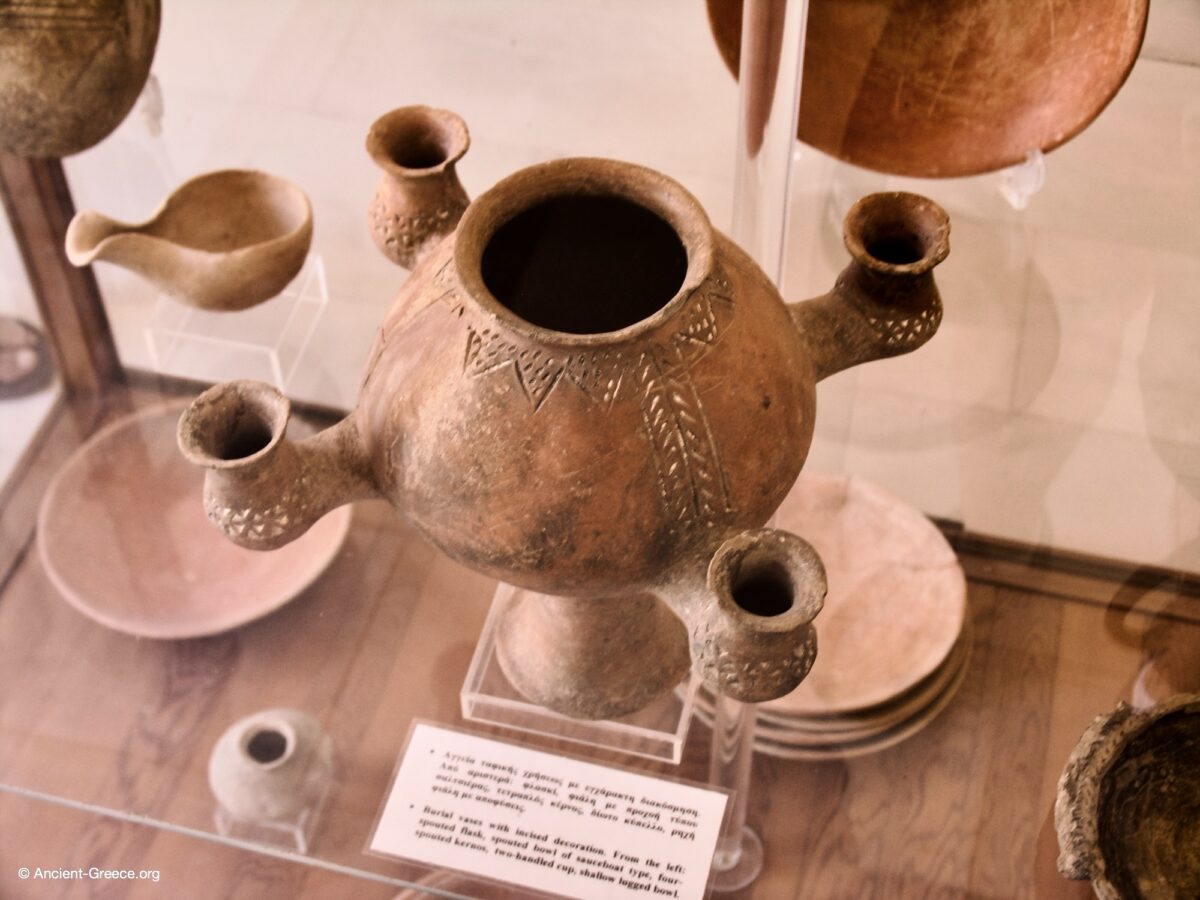
Milos Archaeological Museum
3rd Millennium BCE
(Cycladic)
Terracotta
Milos
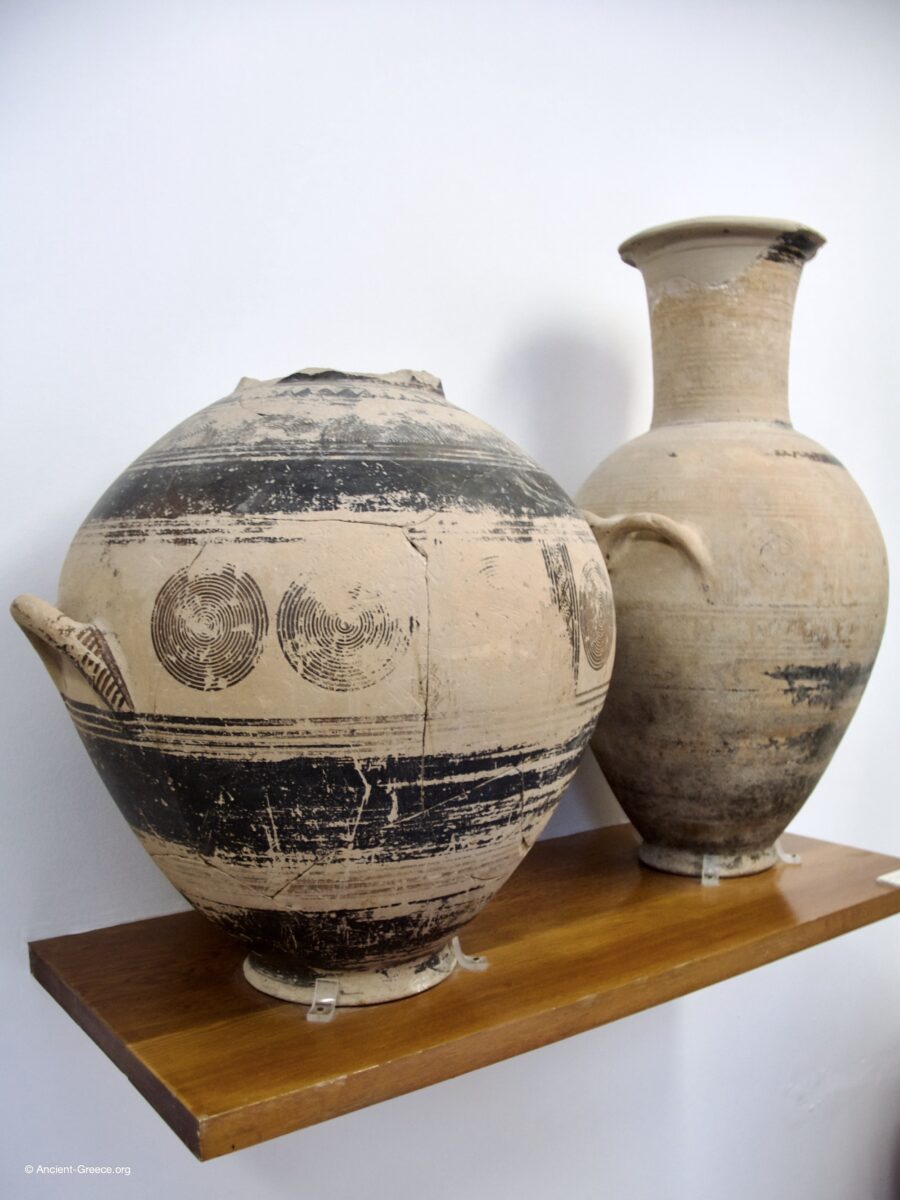
This assemblage of Early Cycladic burial vessels features distinct incised geometric patterns and specialized forms such as the Kernos and the Sauceboat. The presence of diverse shapes, including a spouted flask and a two-handled cup, indicates a sophisticated ceramic tradition associated with Aegean funerary rituals. Such artifacts are essential for understanding the material culture and social complexity of the Cycladic civilization during the Bronze Age [1].
◈ ◈ ◈
Αγγεία ταφής με εγχάρακτη διακόσμηση
Αρχαιολογικό Μουσείο Μήλου
3η χιλιετία π.Χ.
(Κυκλαδική)
Πηλός
Μήλος
Αυτό το σύνολο πρωτοκυκλαδικών ταφικών αγγείων φέρει χαρακτηριστικά εγχάρακτα γεωμετρικά μοτίβα και εξειδικευμένους τύπους, όπως ο Κέρνος και η Σαλτσιέρα. Η παρουσία ποικίλων σχημάτων, συμπεριλαμβανομένης μιας προχοϊσκης και ενός αμφικύπελλου, υποδηλώνει μια εξελιγμένη κεραμική παράδοση που συνδέεται με τις ταφικές τελετουργίες στο Αιγαίο. Αυτά τα αντικείμενα είναι απαραίτητα για την κατανόηση του υλικού πολιτισμού και της κοινωνικής οργάνωσης του Κυκλαδικού πολιτισμού κατά την Εποχή του Χαλκού [1].
Bibliography
Renfrew, C. (1972). The Emergence of Civilisation: The Cyclades and the Aegean in the Third Millennium B.C. London: Methuen.
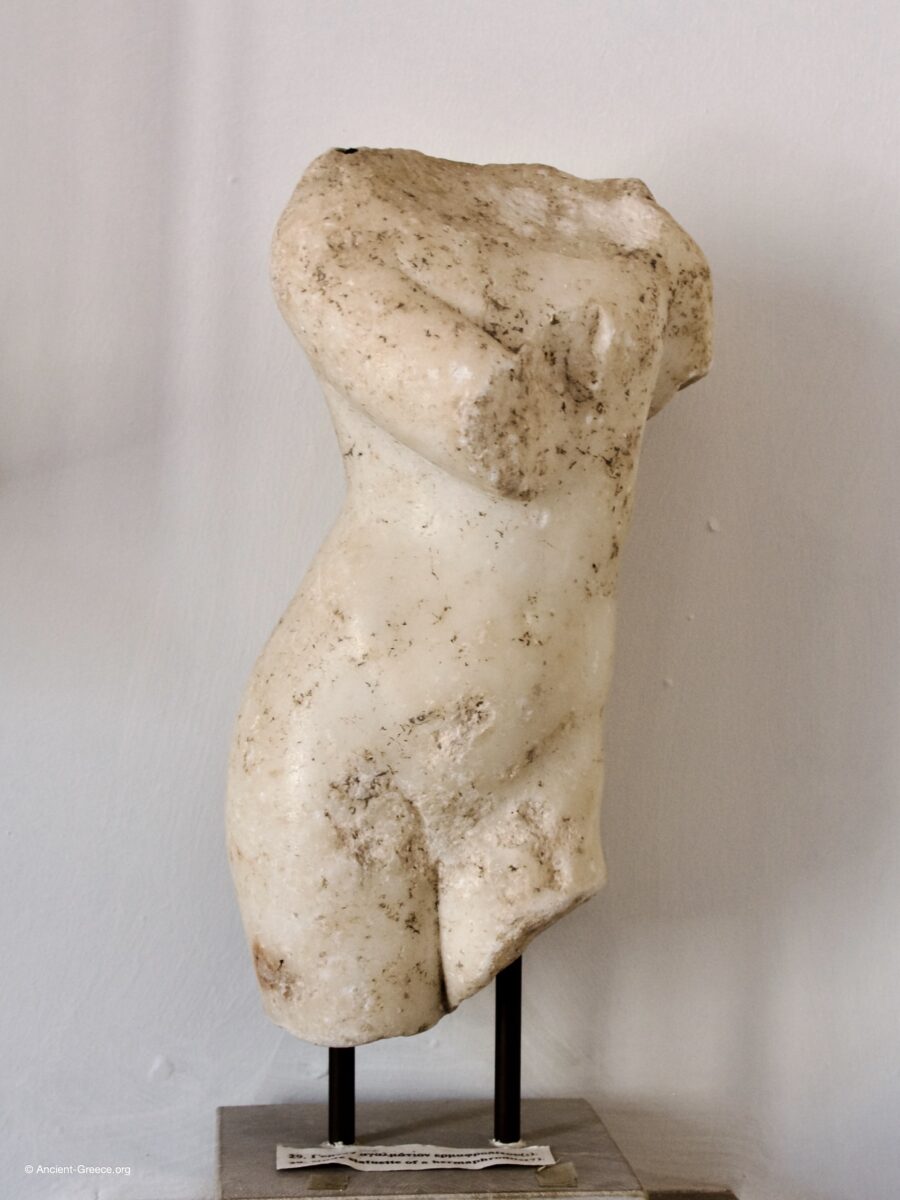
Milos Archaeological Museum
2nd Century BCE (Hellenistic)
Marble
Milos
This fragmentary marble torso represents Hermaphrodite, a subject that gained significant popularity during the late Aegean artistic traditions. The sculpture displays the soft, idealized musculature and dual sexual characteristics typical of the refined anatomical explorations found in the Hellenistic period. Despite the extensive damage to the extremities, the surviving torso remains an important example of the sophisticated stone carving techniques practiced on Milos [1].
◈ ◈ ◈
Μαρμάρινο άγαλμα Ερμαφρόδιτου
Αρχαιολογικό Μουσείο Μήλου
2ος αιώνας π.Χ. (Ελληνιστική)
Μάρμαρο
Μήλος
Αυτός ο αποσπασματικός μαρμάρινος κορμός αναπαριστά τον Ερμαφρόδιτο, ένα θέμα που απέκτησε μεγάλη δημοτικότητα κατά τις ύστερες καλλιτεχνικές παραδόσεις στο Αιγαίο. Το γλυπτό παρουσιάζει την απαλή, εξιδανικευμένη μυολόγια και τα διπλά σεξουαλικά χαρακτηριστικά που είναι τυπικά των εκλεπτυσμένων ανατομικών αναζητήσεων της Ελληνιστικής περιόδου. Παρά τις εκτεταμένες φθορές στα άκρα, ο σωζόμενος κορμός παραμένει ένα σημαντικό δείγμα των εξελιγμένων τεχνικών λάξευσης λίθου που εφαρμόζονταν στη Μήλο [1].
———
Bibliography
Pollitt, J. J. (1986). Art in the Hellenistic Age. Cambridge: Cambridge University Press.
The Phylakopi period (2300–1400 BCE) is represented by advanced ceramic styles and Mycenaean influence, highlighted by the “megaron” architecture and the renowned “Lady of Phylakopi” figurine.
Following a brief abandonment in the 11th century BCE, Dorian colonists established a new settlement near Klima, fostering a local school of art that produced Geometric pottery and intricate steatite seal-stones depicting mythical beings.
The collection is anchored by Archaic inscriptions in the Doric dialect and a significant series of Hellenistic and Roman grave reliefs [1].
A plaster cast of the Aphrodite of Milos stands at the entrance, serving as a surrogate for the original Hellenistic masterpiece now held in the Louvre.
Photographs
Φωτογραφίες
More photos ◈ Περισσότερες φωτογραφίες …
Bibliography
[1] Renfrew, C. (1985). The Archaeology of Cult: The Sanctuary at Phylakopi. British School at Athens.
[2] Perlès, C. (1987). Les industries lithiques taillées de Franchthi (Argolide). Indiana University Press.
[3] Torrence, R. (1986). Production and Exchange of Stone Tools: Prehistoric Obsidian in the Aegean. Cambridge University Press.
[4] Zafiropoulou, P. (1998). Milos: The Archaeological Museum. Apollo Editions.
[4] Ministry of Culture and Sports. (2024). The Ancient Theater of Milos [Brochure]. Ephorate of Antiquities of Cyclades.
Related Pages