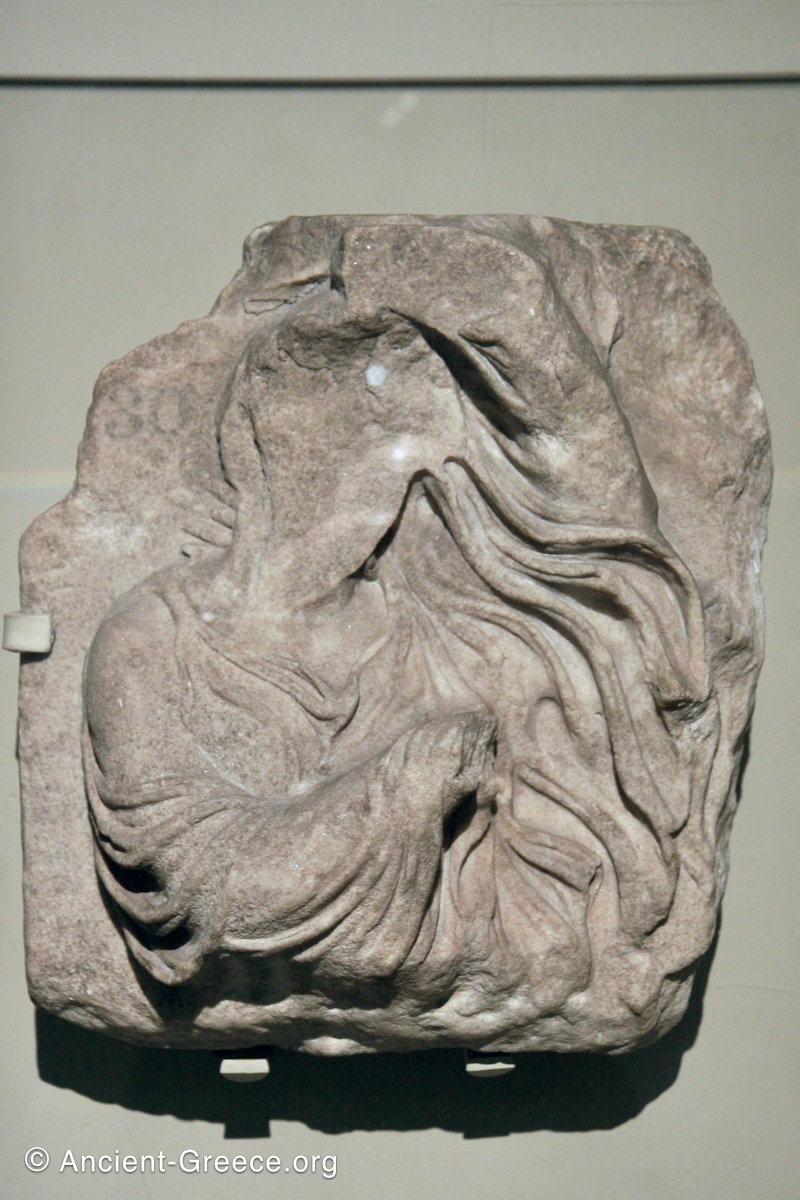
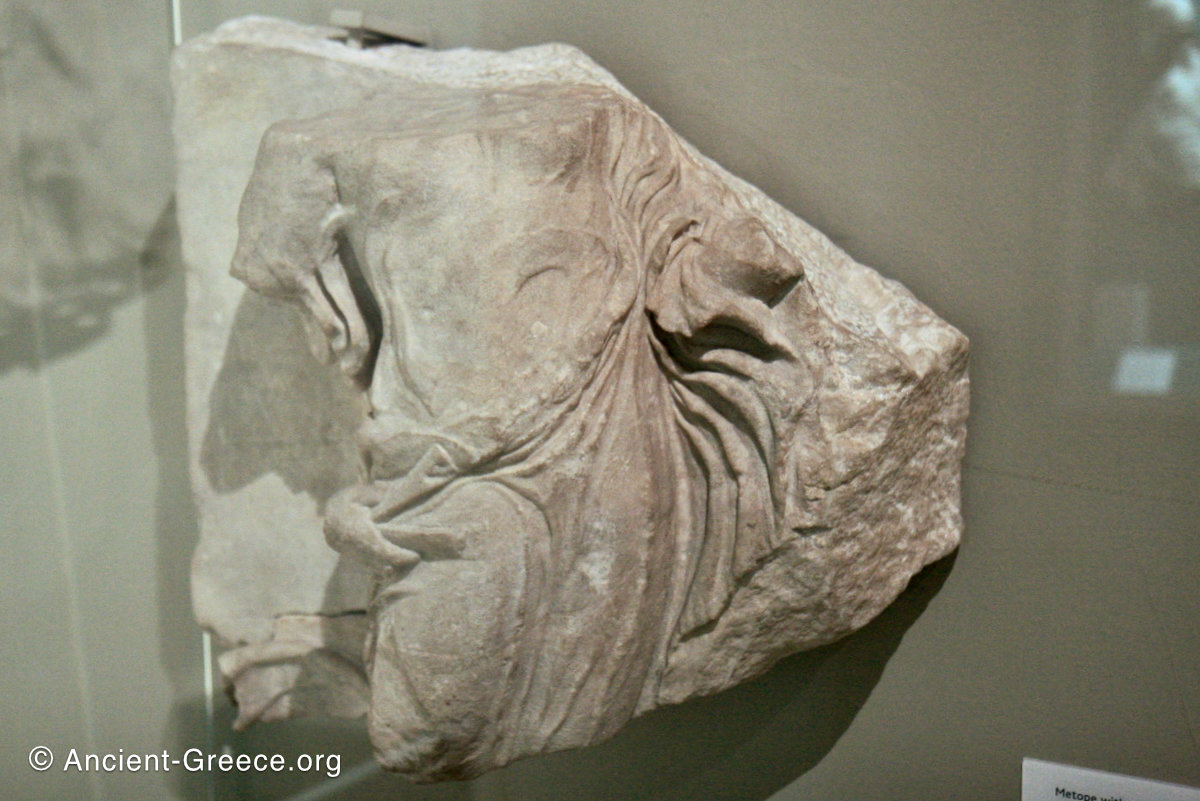
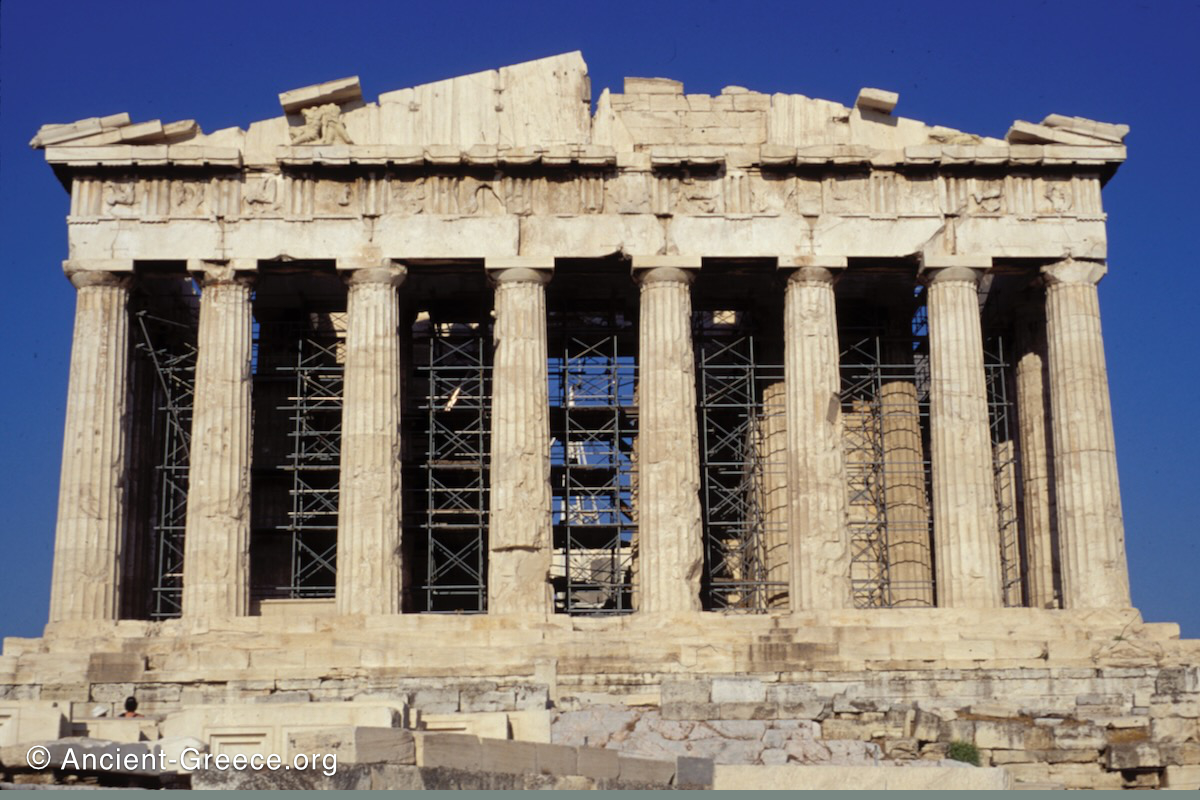
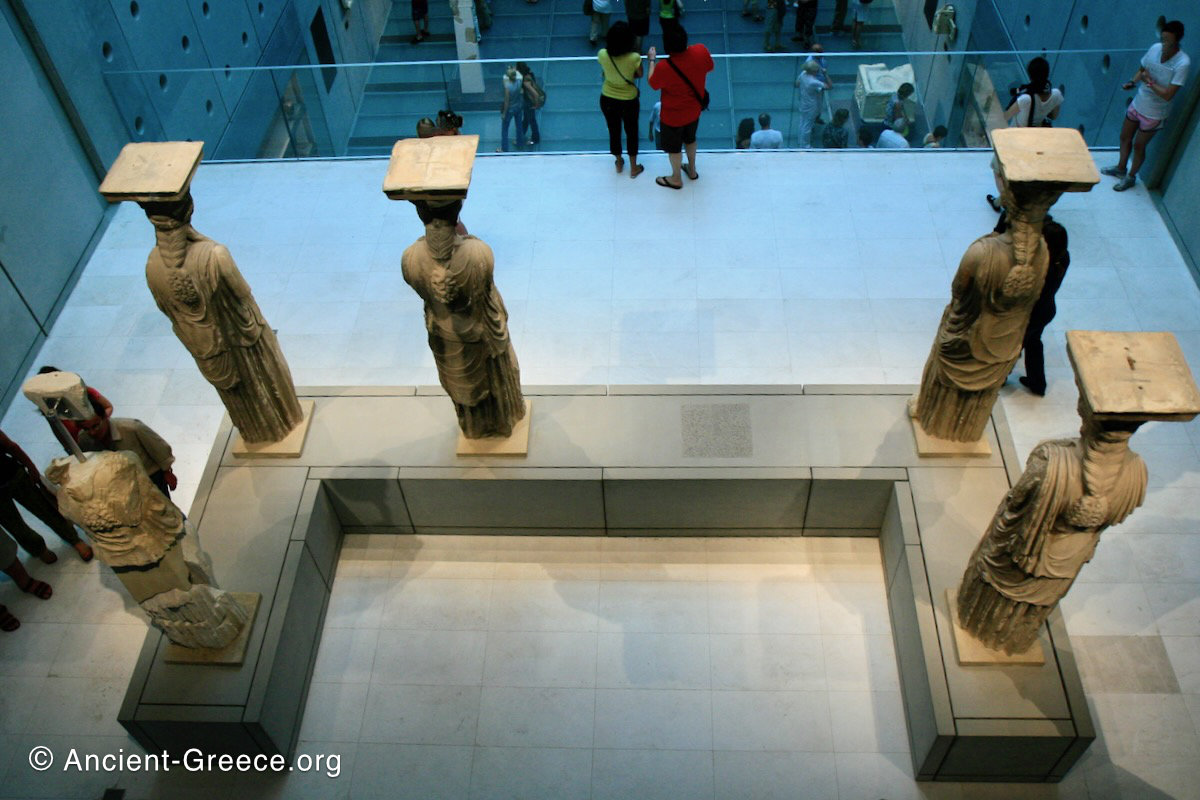
The Museum has been the subject of media discussions on the custody of cultural artifacts, like the Parthenon (or Elgin) marbles, many of which are pictured here.
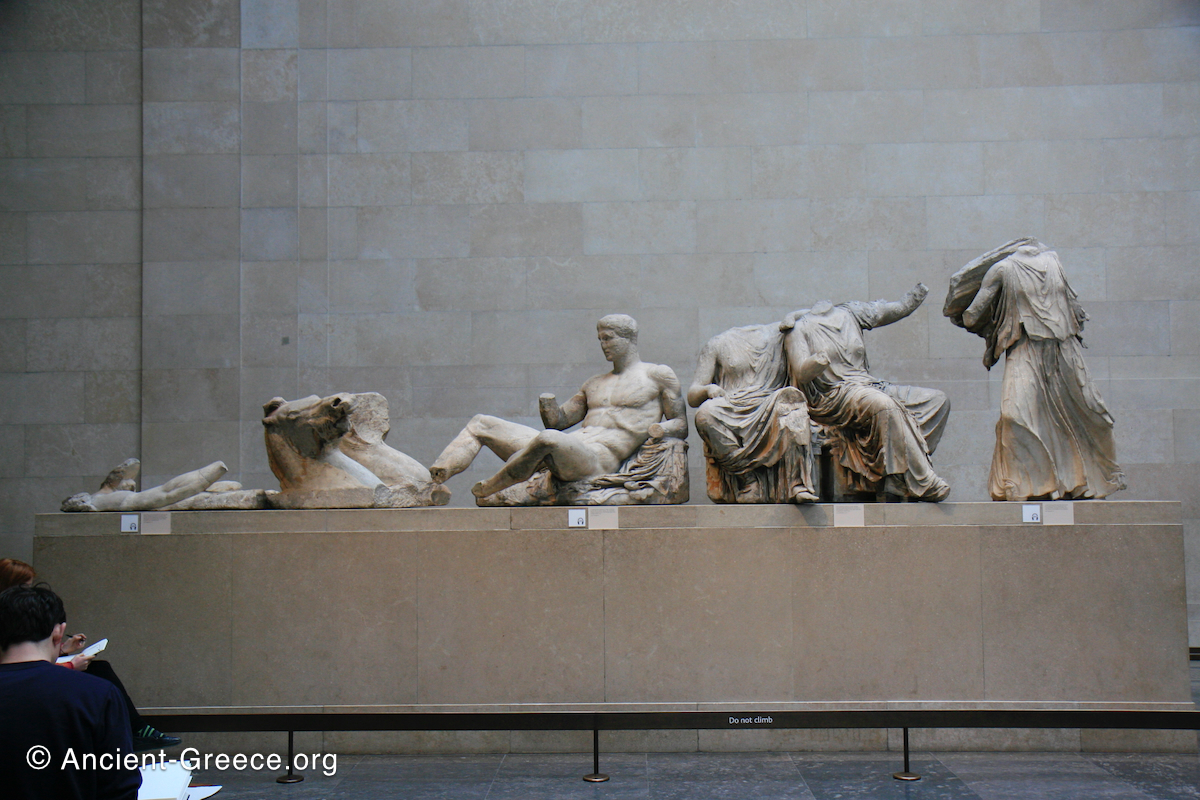
The Parthenon Pediments
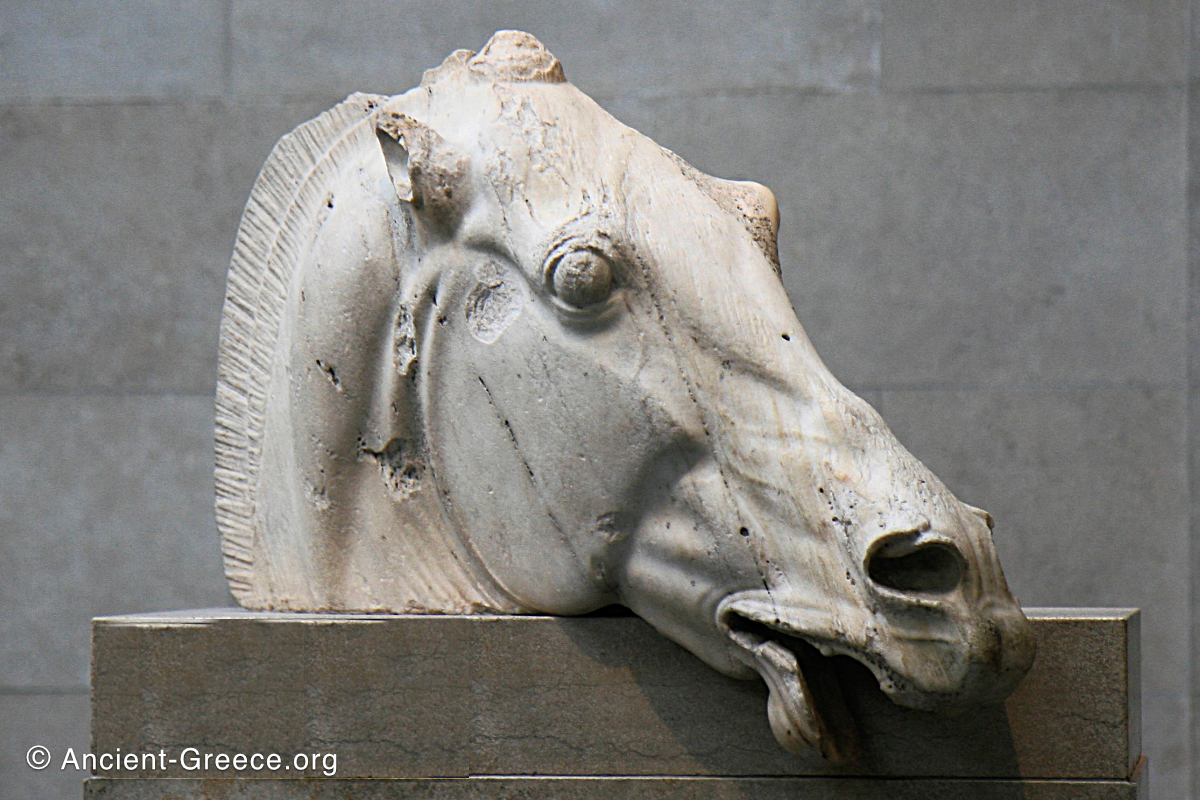
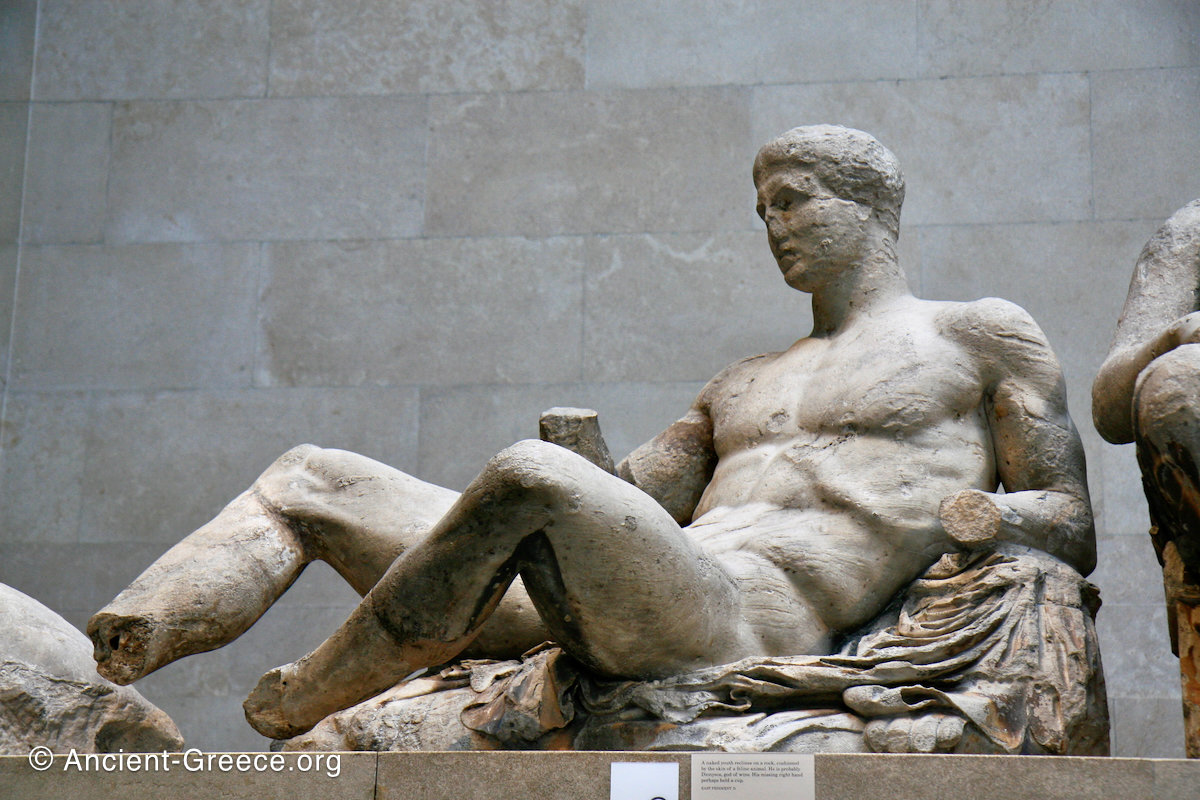
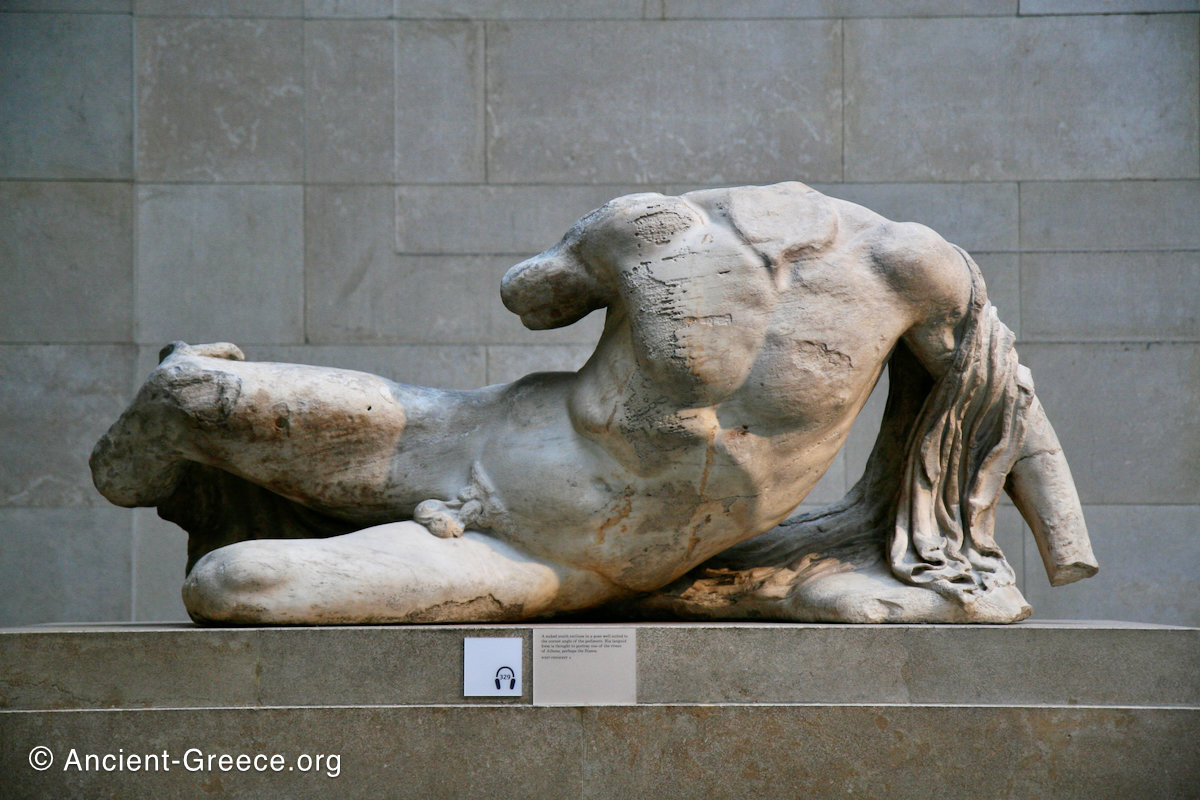
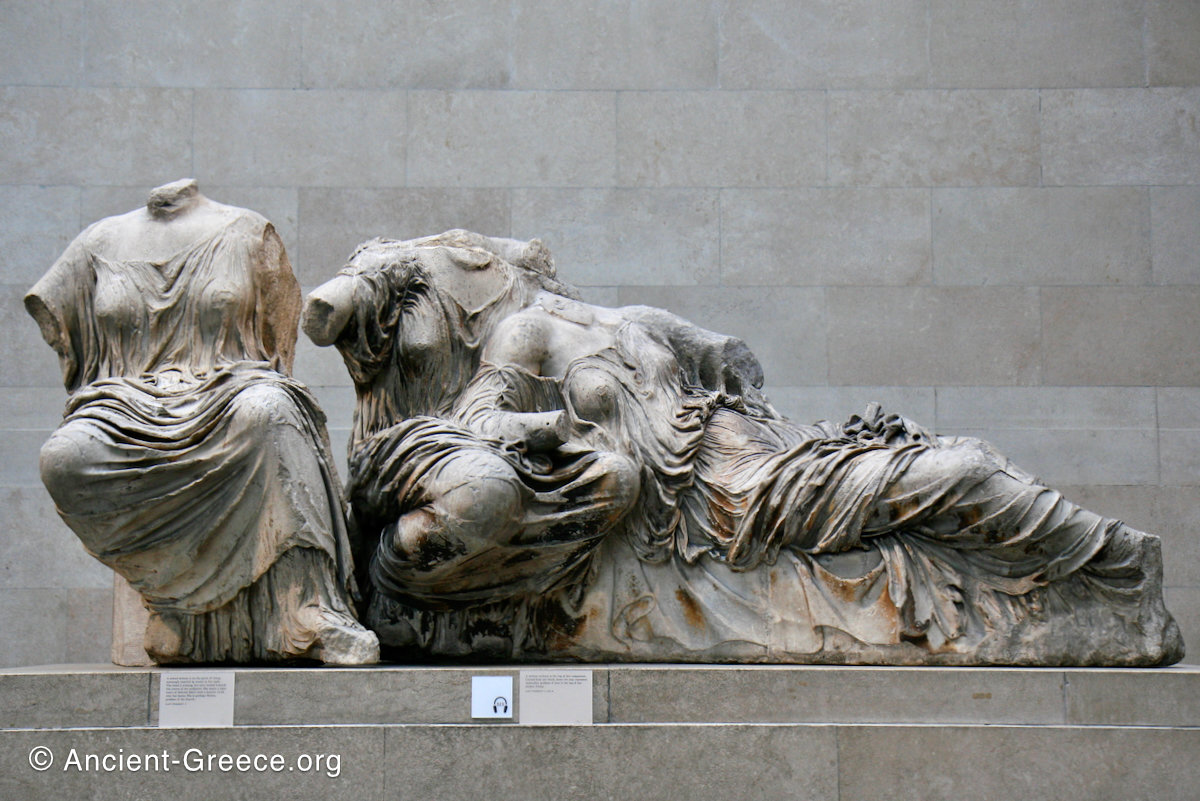
Parthenon East pediment, south end. Left to right: Chariot of Helios, Dionysus, Demeter and Kore, Artemis.Horse head of Selene’s chariot. From the east pediment of the Parthenon. 5th c. BCE.Parthenon East pediment statue of Dionysus. 447 – 432 BCE. British Museum, London.Parthenon West pediment statue of river god Ilissos (or Eridanos and Kephisos), all local Athenian streams. 447 – 432 BCE. British Museum, London.Parthenon East pediment statues. Hestia, Dione, and Aphrodite 447 – 432 BCE. British Museum, London.
The east pediment represented the birth of Athena, and the west pediment faced depicted the contest between Athena and Poseidon during their competition for the honor of becoming the city’s patron.
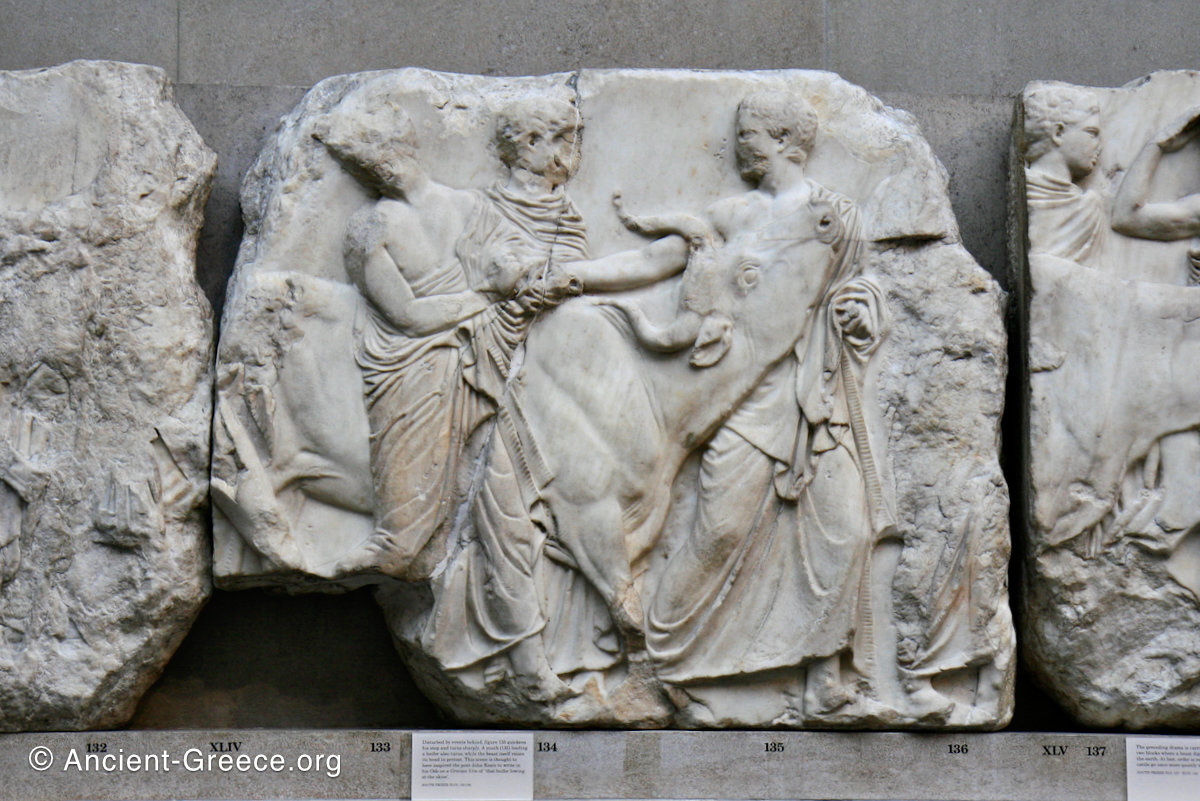
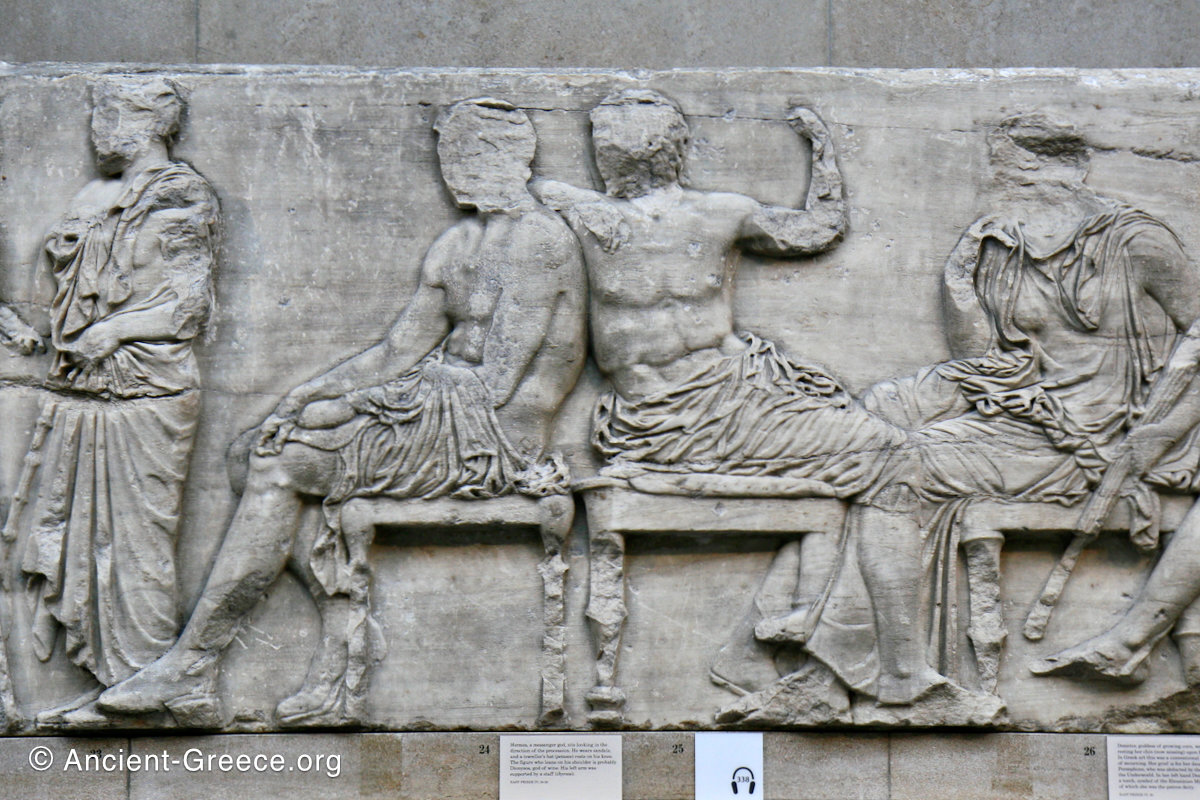
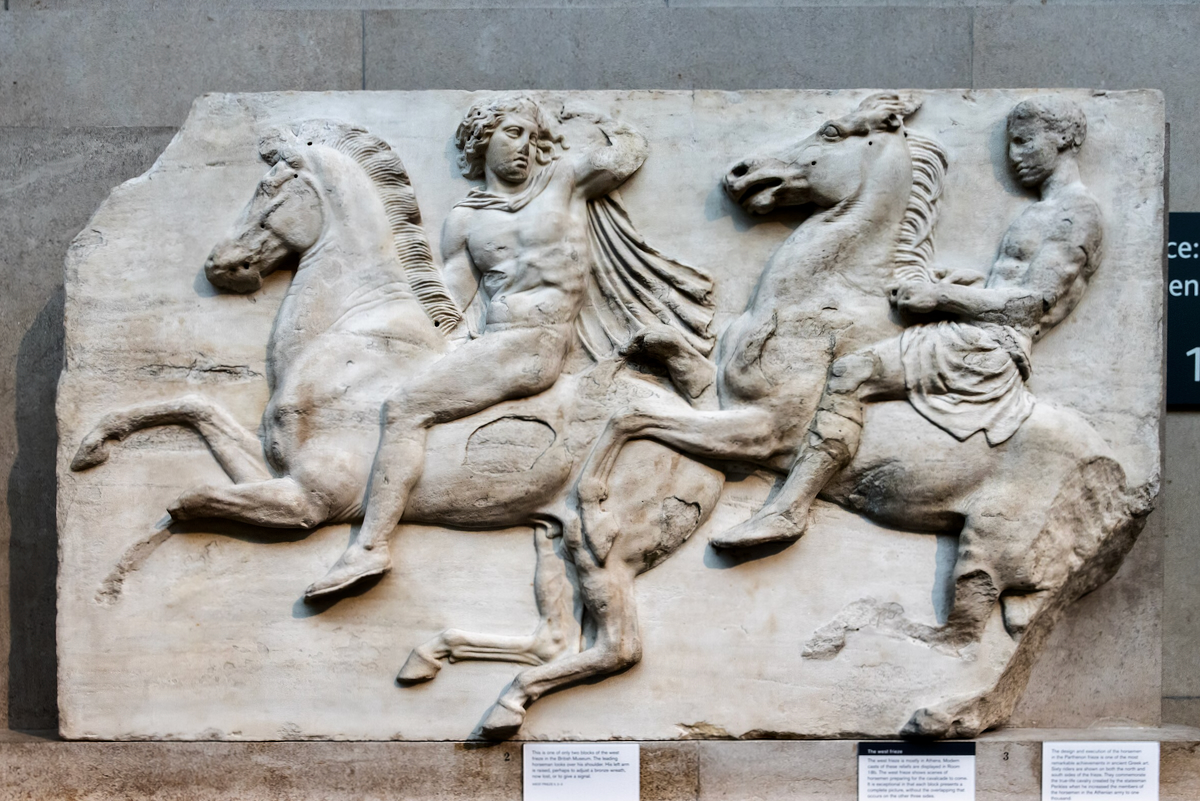
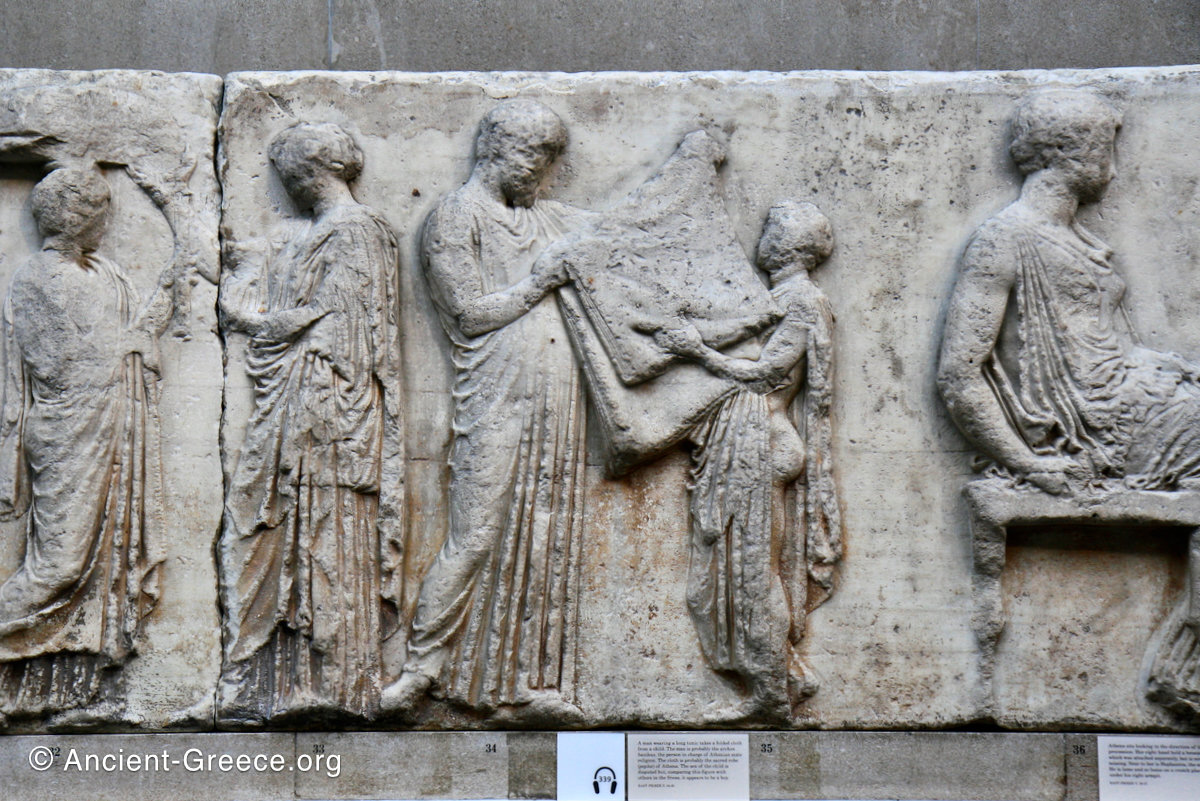
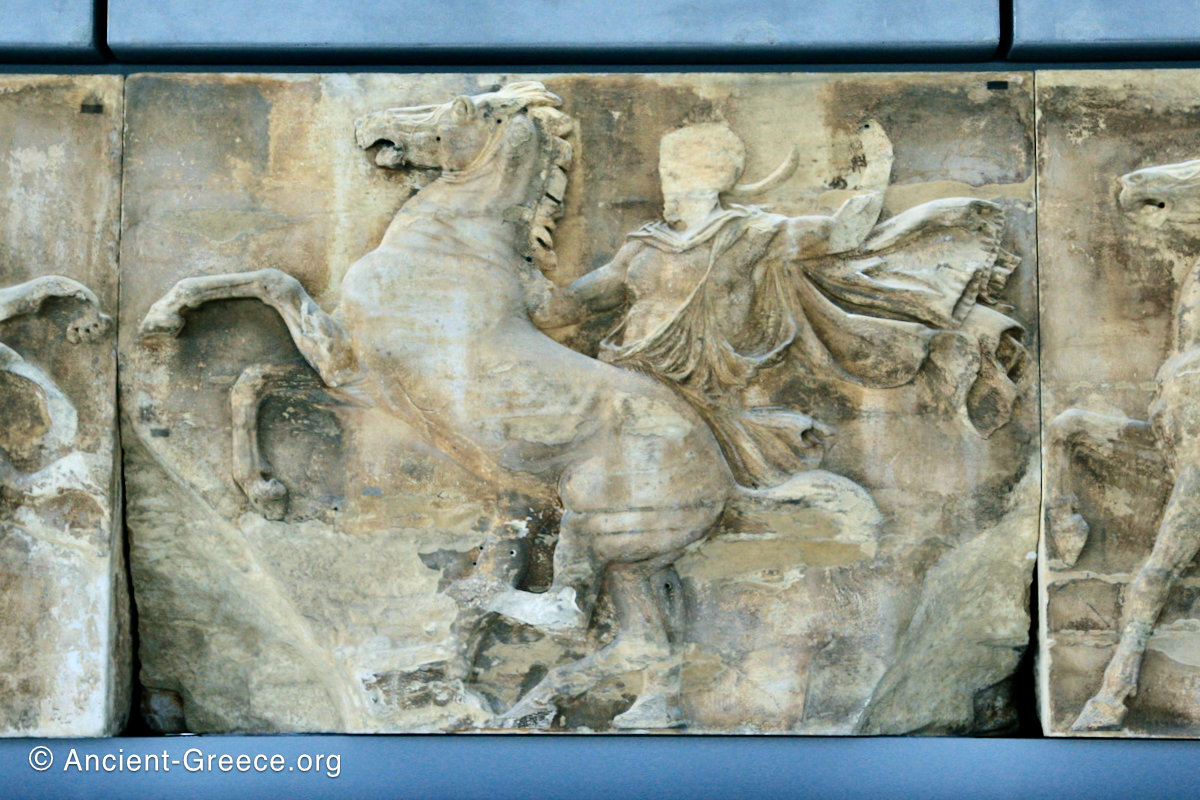
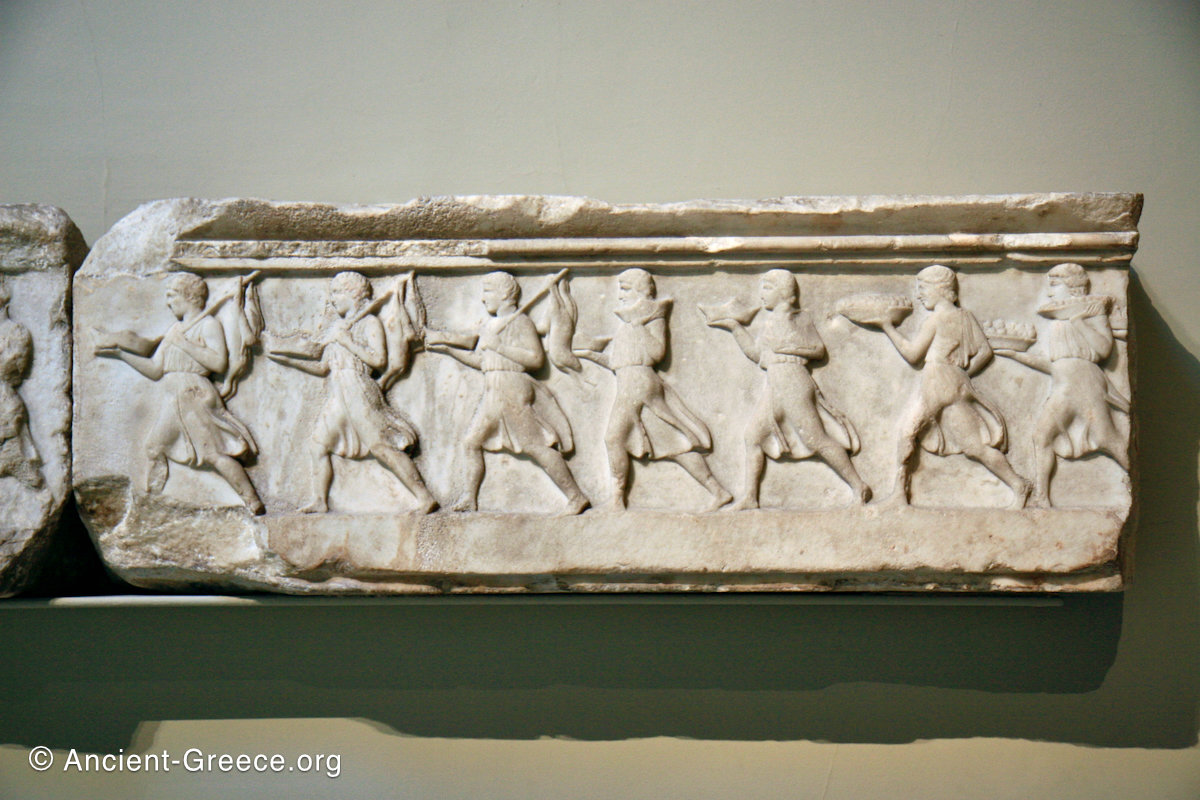
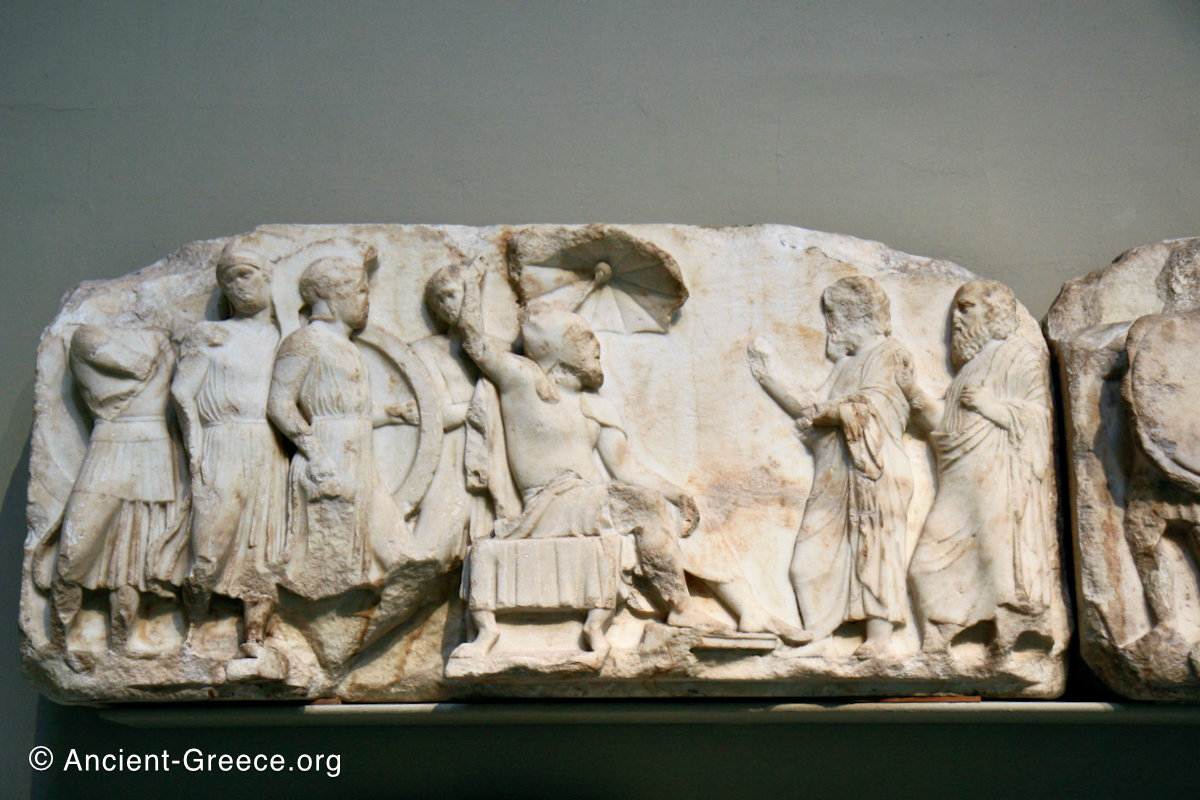
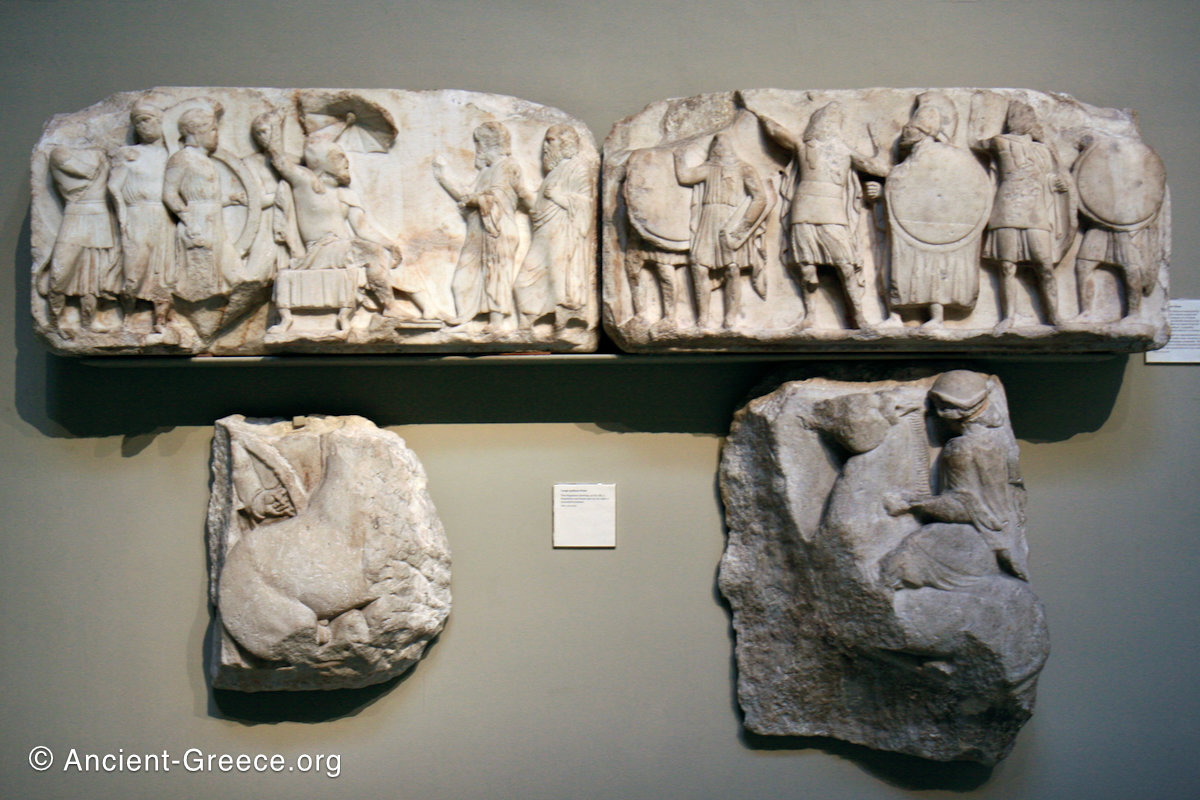
Parthenon frieze. Block S XLIV. 447 – 432 BCE. British Museum, London.Parthenon frieze. Block E IV. 447 – 432 BCE. British Museum, London.Parthenon frieze. Block W II. 447 – 432 BCE. British Museum, London.Parthenon frieze. Block E V. 447 – 432 BCE. British Museum, London.Parthenon frieze. Block W VIII. 447 – 432 BCE. Acropolis Museum, Athens.
The Parthenon frieze, is a group of relief sculptures created specifically to decorate the perimeter of the exterior wall of the Parthenon’s cella. It is 1 meter high and 160 meters long.
The sculptures are executed in low relief and depict the people of Athens in two processions that begin at the southwest corner and parade in opposite directions until they converge over the door of the cella at the east end of the Parthenon.
Almost certainly it represents the Panathenaic procession that was a central celebration in Athens during Classical times.
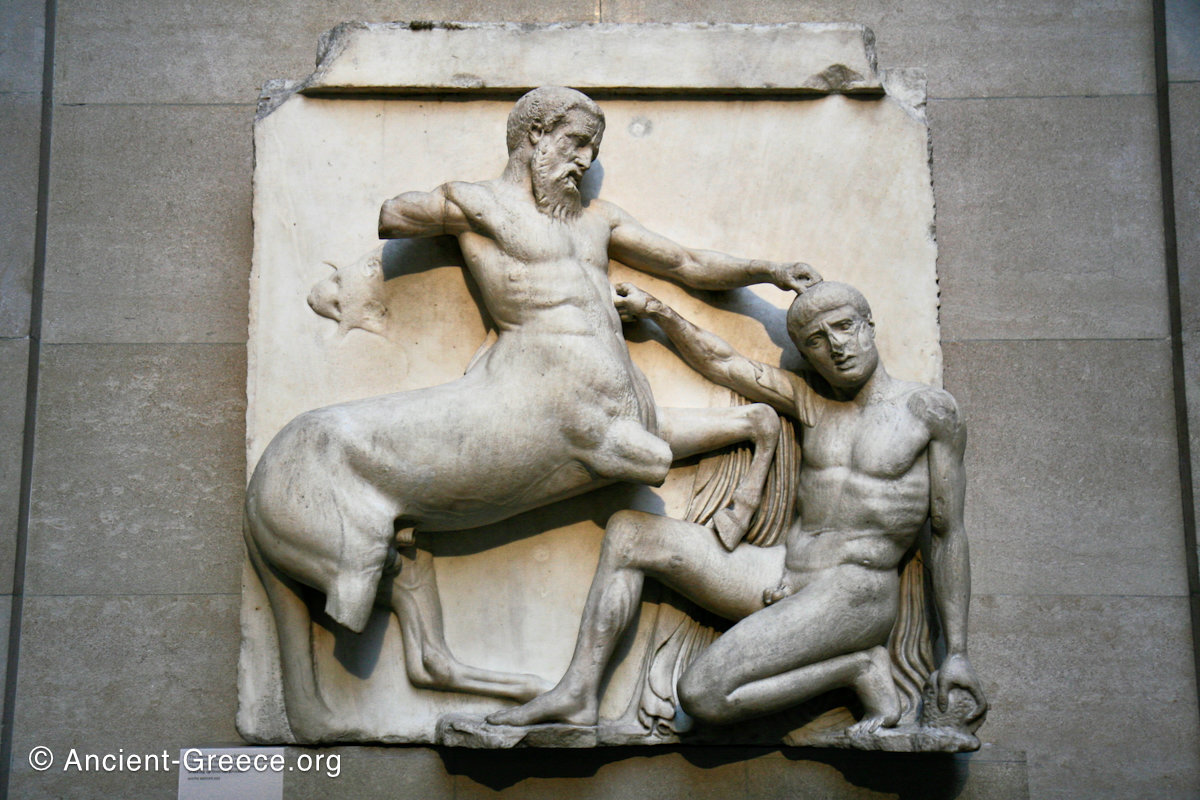
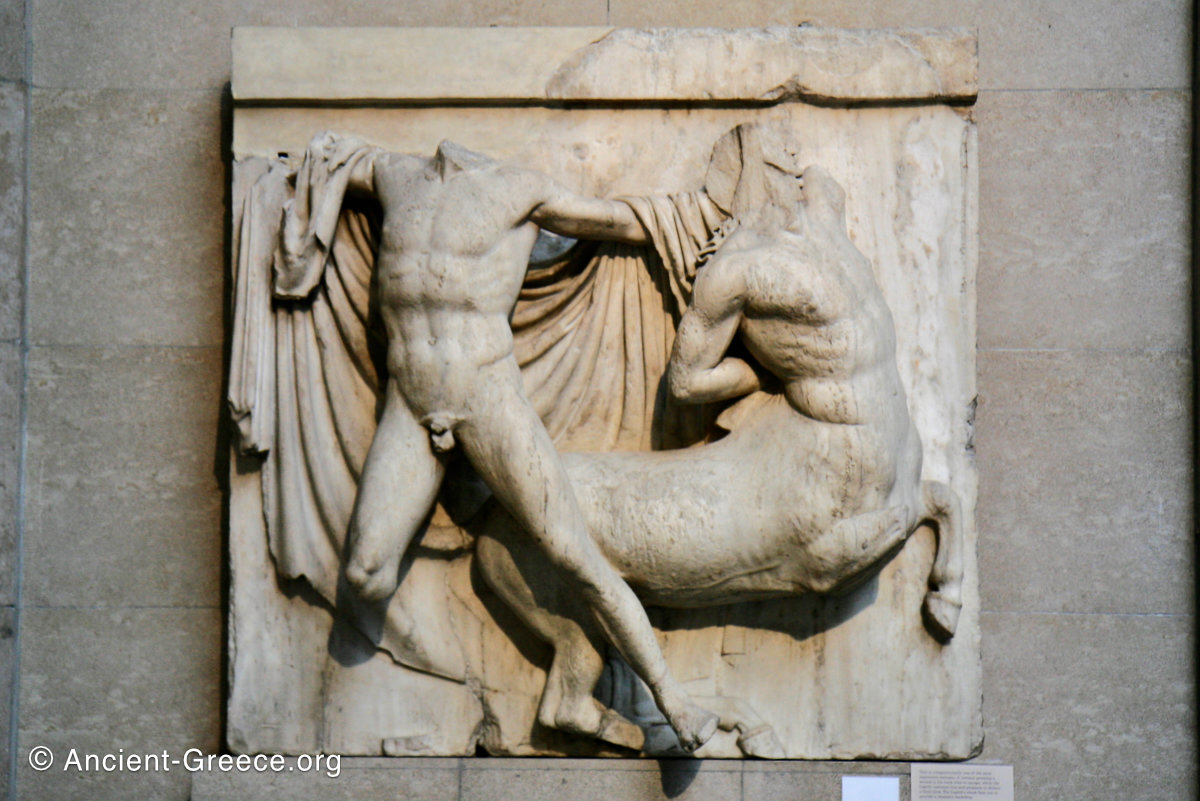
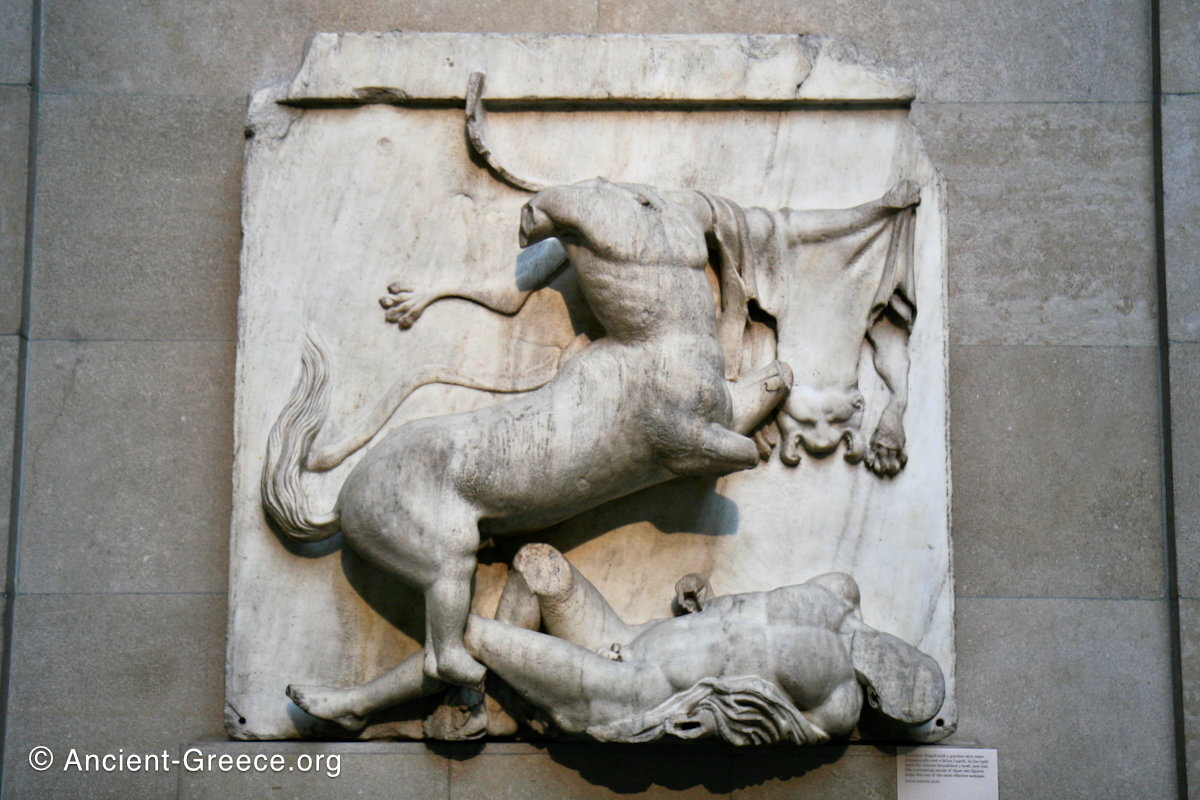
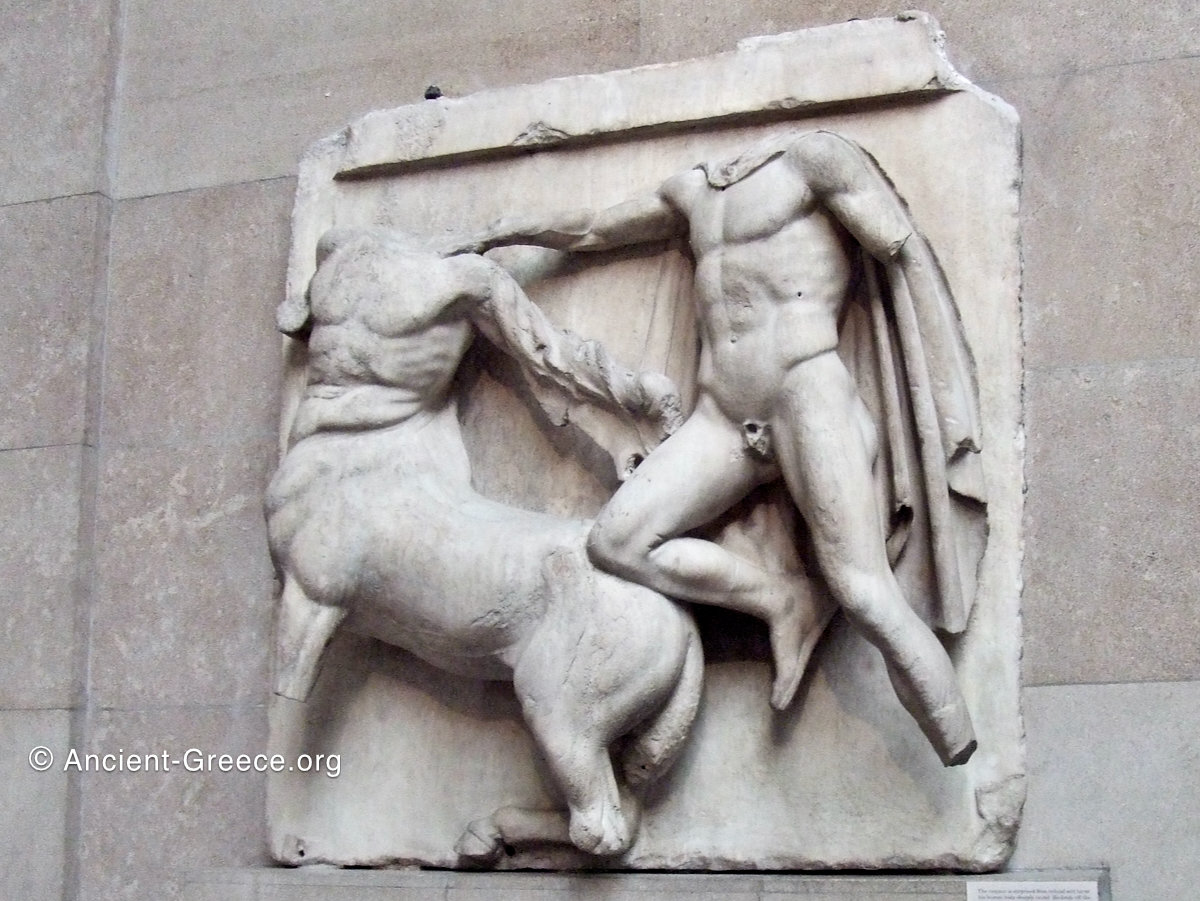
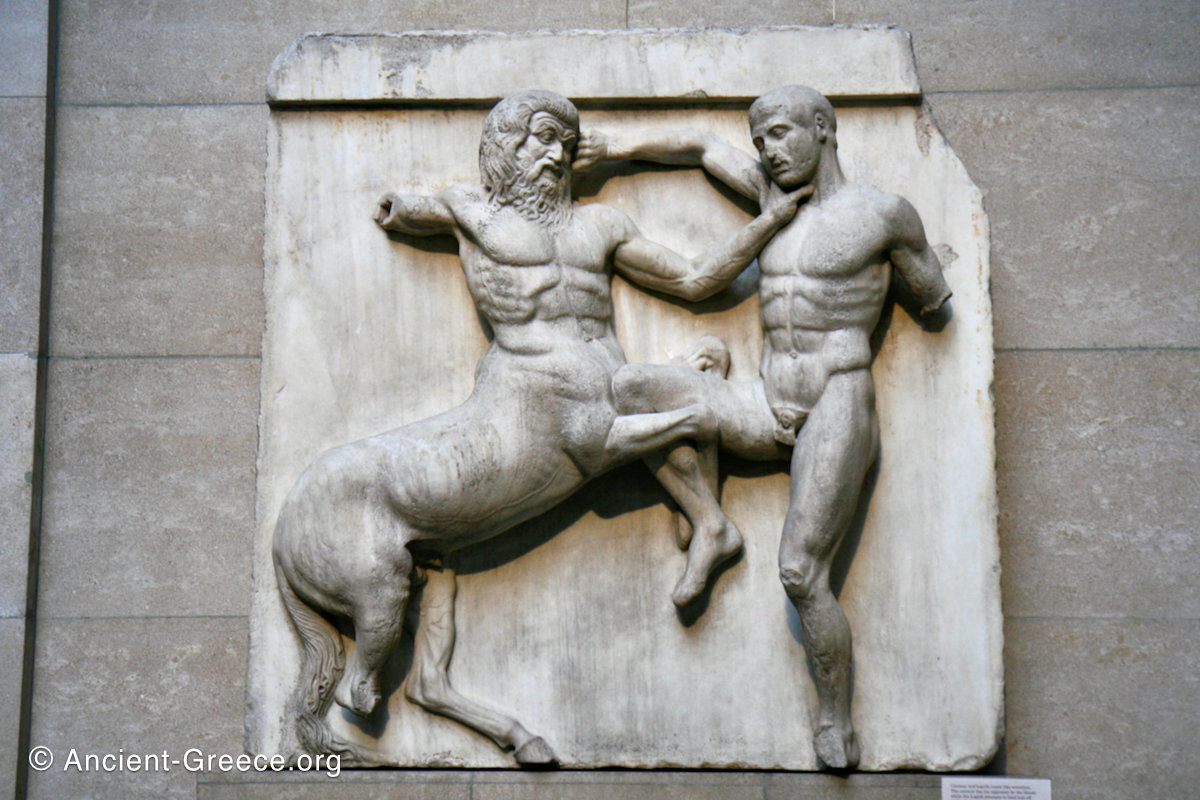
Parthenon metope South XXX. Centaur fights a Lapith. 447 – 432 BCE.Parthenon metope. South XXVII. A Lapith (perhaps Theseus) holds a wounded Centaur from behind. 447 – 432 BCE.Parthenon metope. Centaur over a fallen Lapith. 447 – 432 BCE.Parthenon metope. South III. A Lapith attacks a Centaur from behind. 447 – 432 BCE.Parthenon metope. South XXXI. Lapith fights a Centaur. 447 – 432 BCE.
The Parthenon metopes that were visible on the exterior of the temple were made in deep relief and surrounded the temple on all sides. Most Greek temples had few decorated metopes, but in the Parthenon all ninety-two metopes were decorated on all sides with scenes from Greek mythology.
Nereid Monument
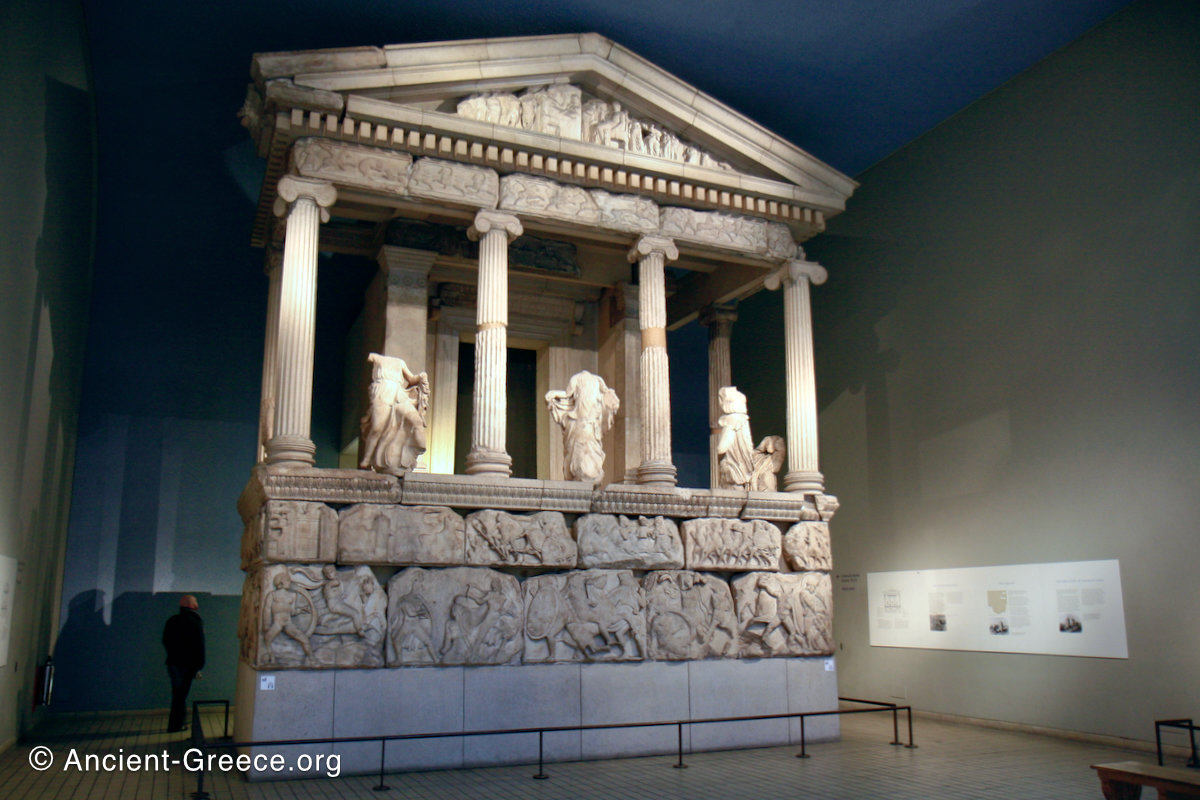
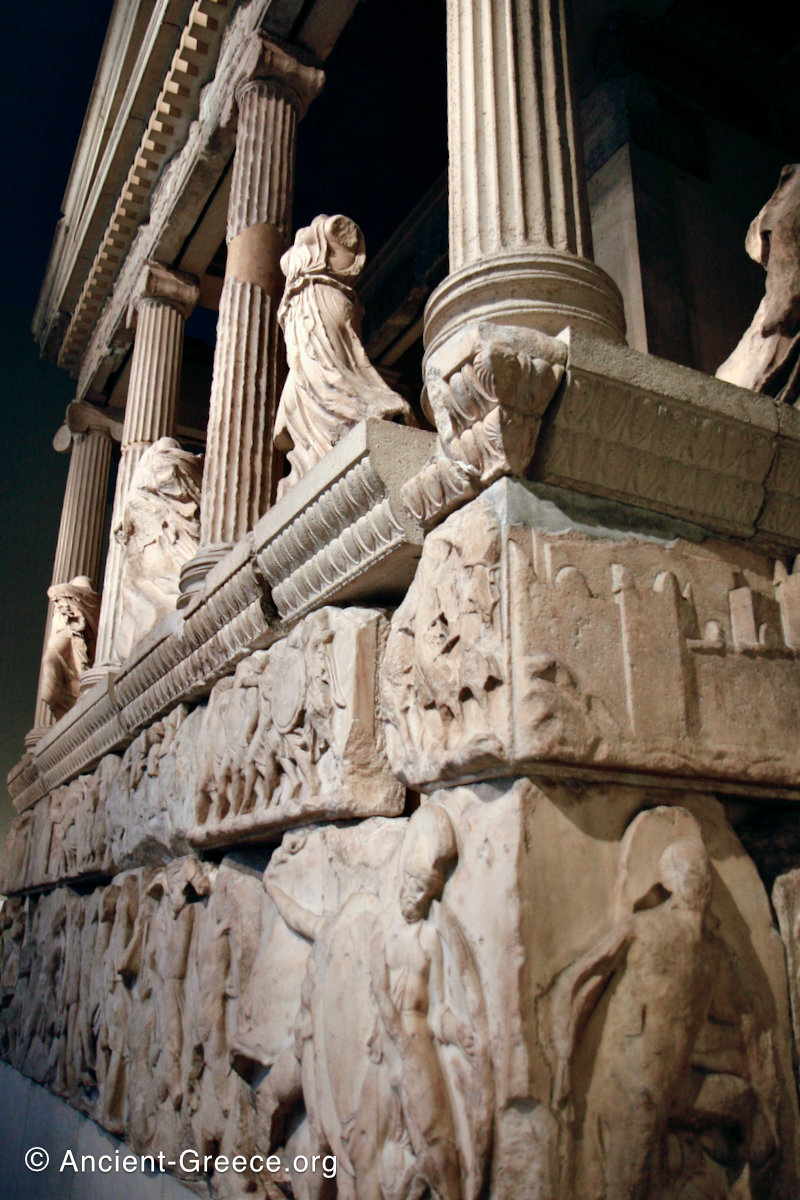
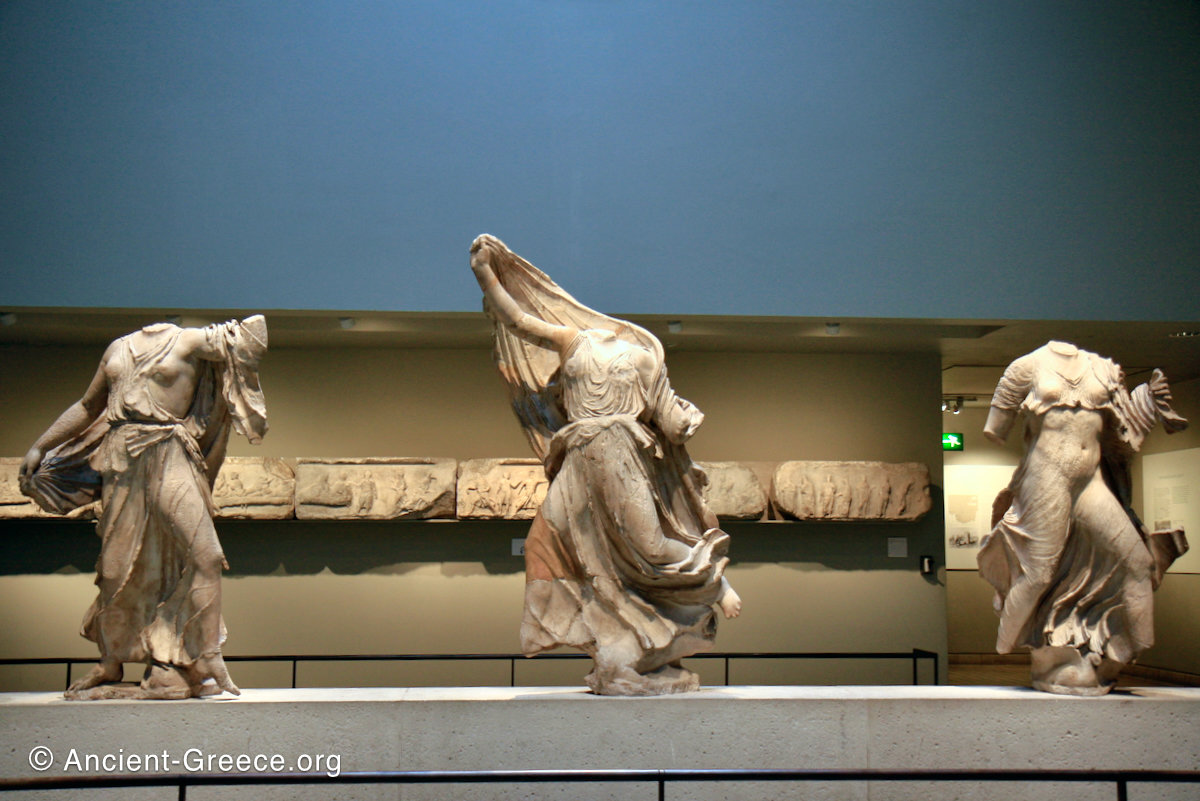
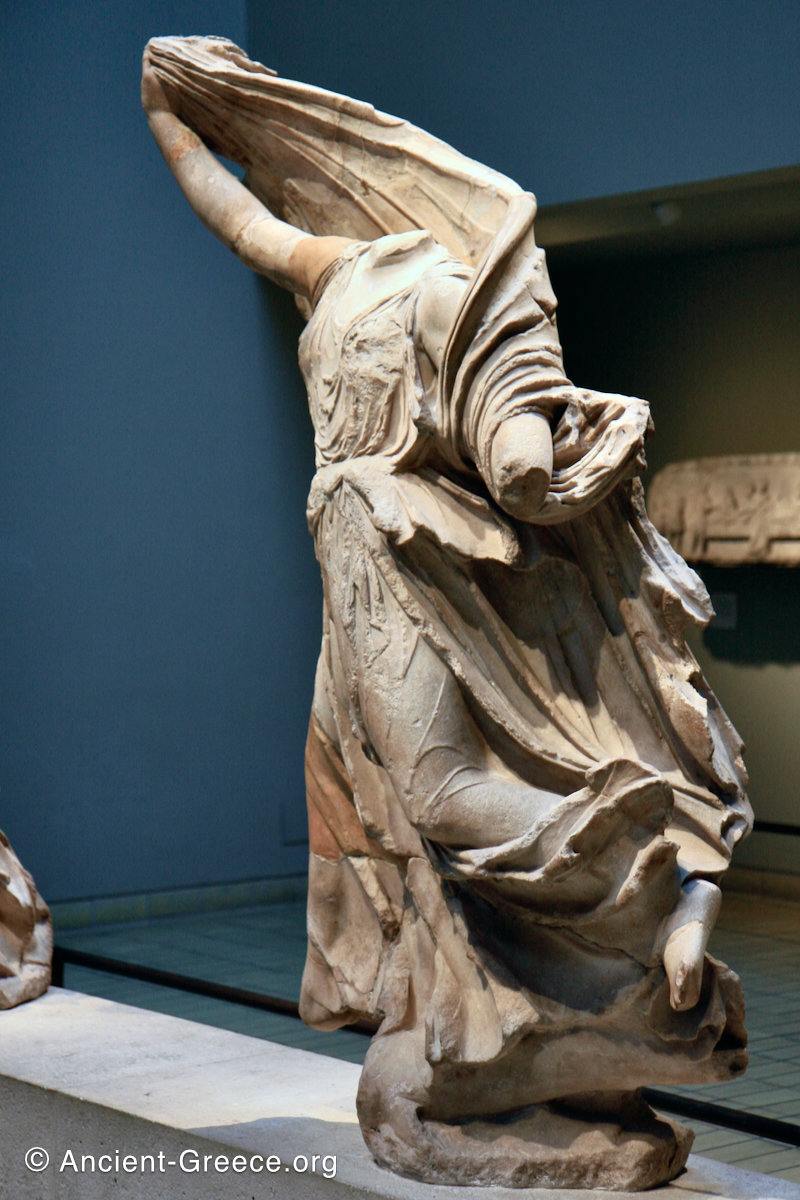
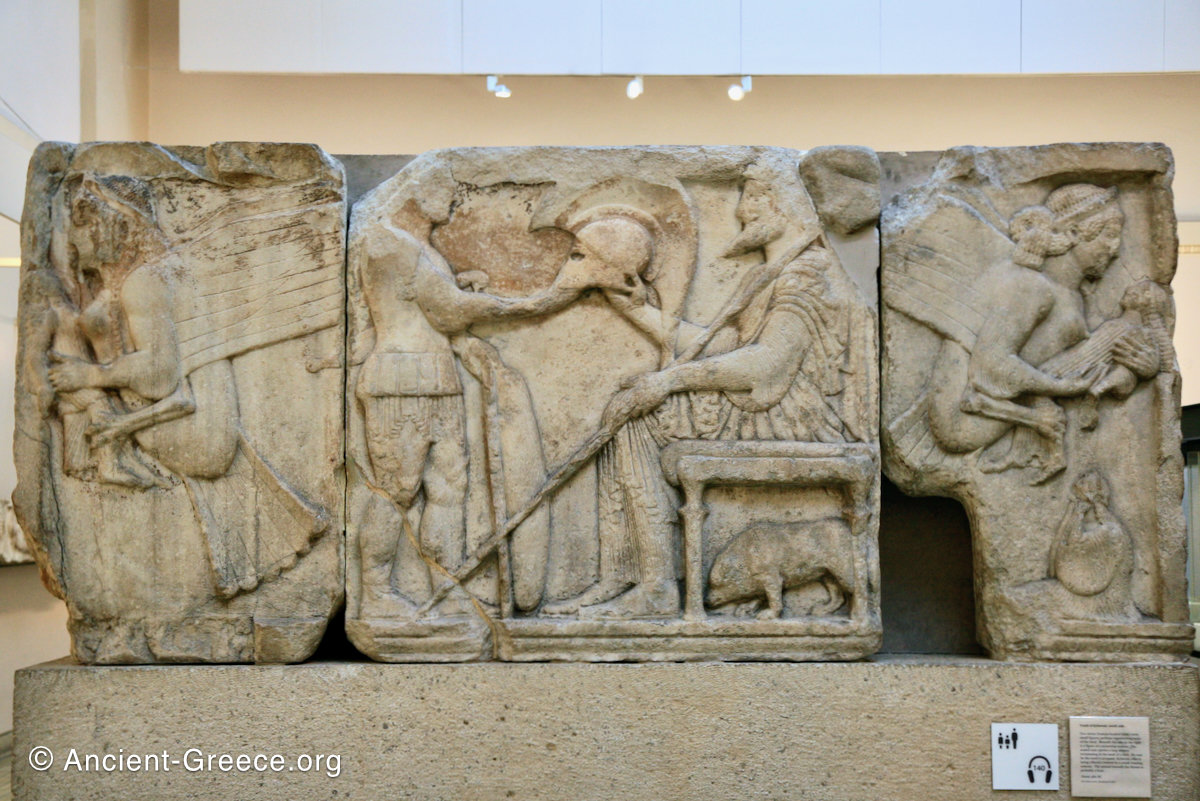
The Nereid Monument at the British Museum, London. Built around 390 -380 BCE. The Nereid Monument detail. Circa 390 -380 BCE. British Museum – Relief SculptureThe Nereid Monument detail of the Architrave frieze. Circa 390 -380 BCE. The Nereid Monument detail from the lesser podium frieze. Circa 390 -380 BCE. The Nereid Monument detail from the lesser podium frieze. Circa 390 -380 BCE. The Nereid Monument detail from the large podium frieze. Circa 390 -380 BCE. The Nereid Monument detail from the large podium frieze. Circa 390 -380 BCE. The Nereid Monument frieze detail. Circa 390 -380 BCE. The Nereid Monument frieze detail. Circa 390 -380 BCE. The Nereid Monument frieze detail. Circa 390 -380 BCE. The Nereid Monument frieze detail. Circa 390 -380 BCE. The Nereid Monument frieze detail. Circa 390 -380 BCE. The Nereid Monument. Frieze detail. Circa 390 – 380 BCE. Three Nereid sculptures from the Nereid Monument. Circa 390 – 380 BCE. Nereid sculpture from the Nereid Monument. Circa 390 – 380 BCE.
Nereid Monument
Mausoleum of Halikarnassos
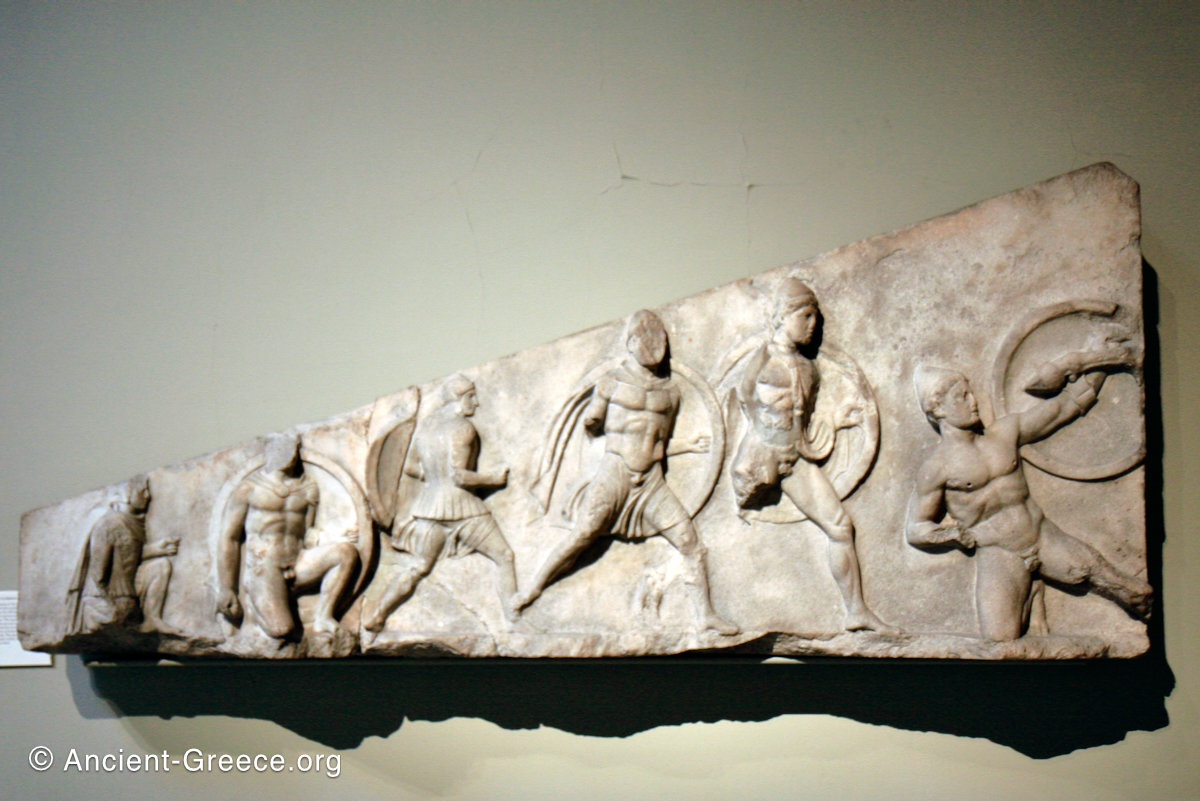
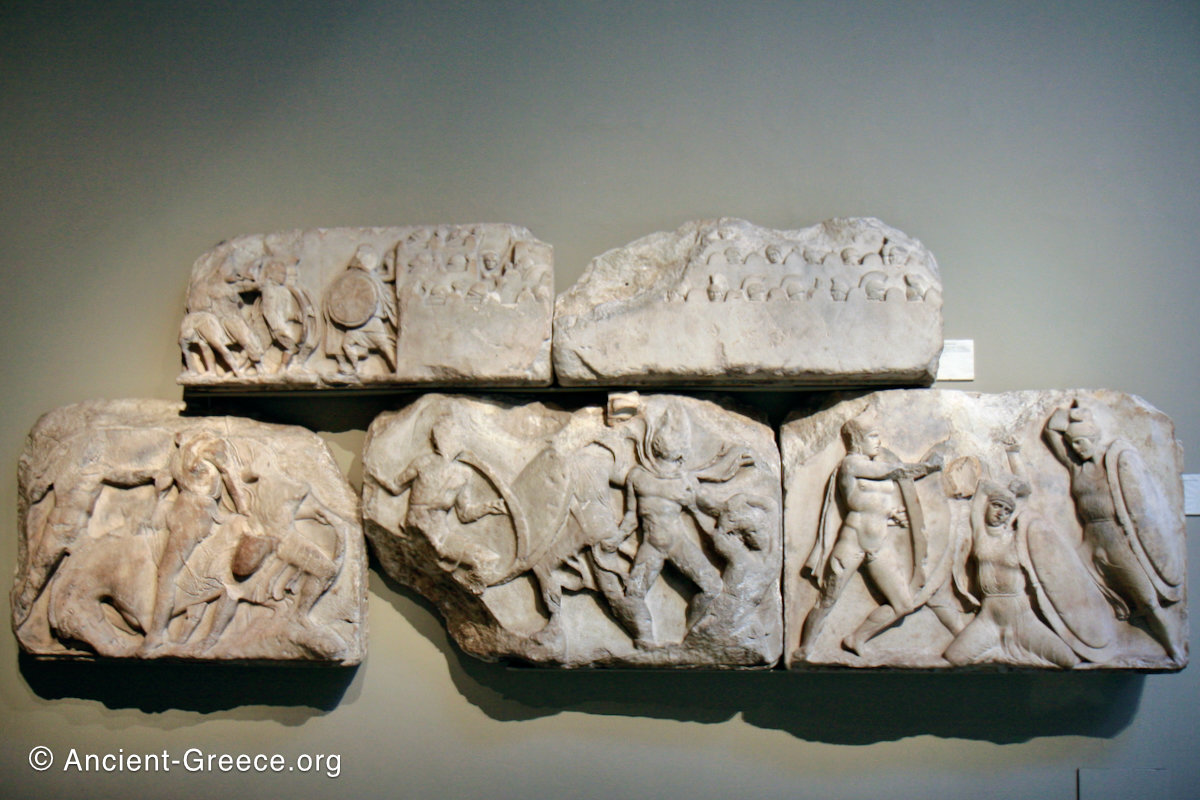
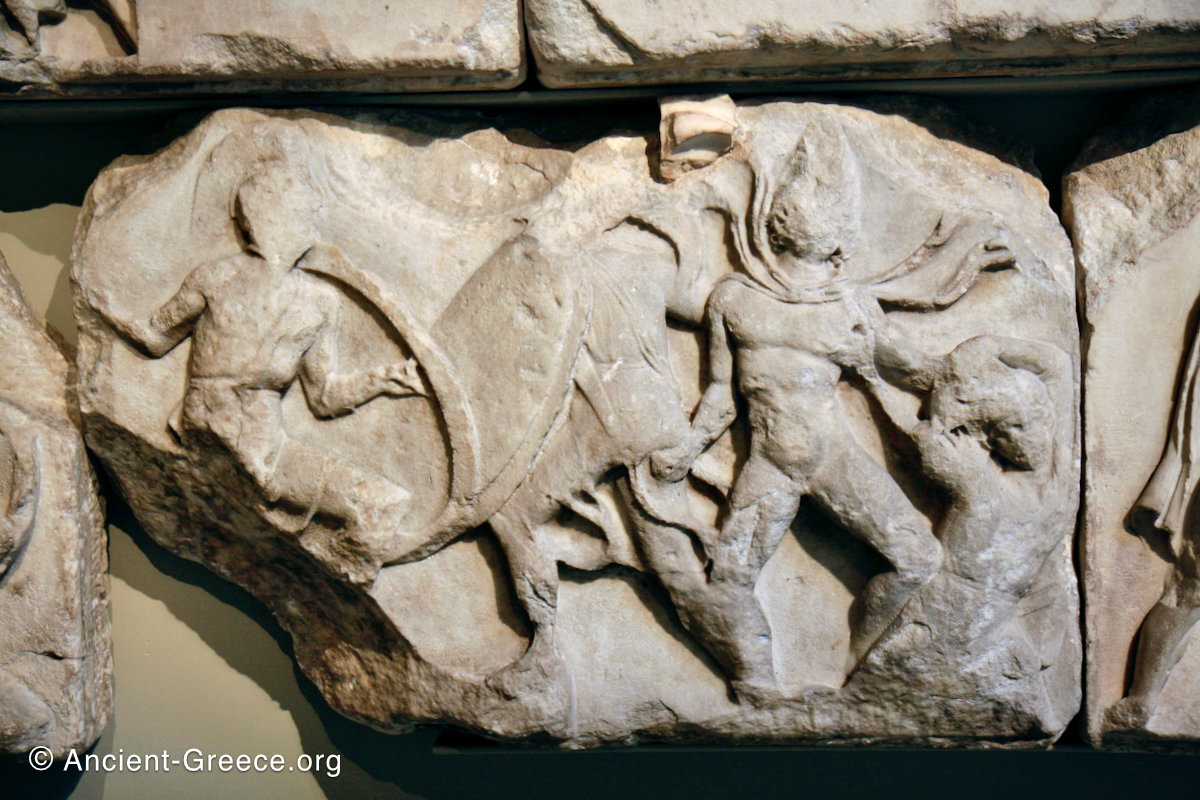
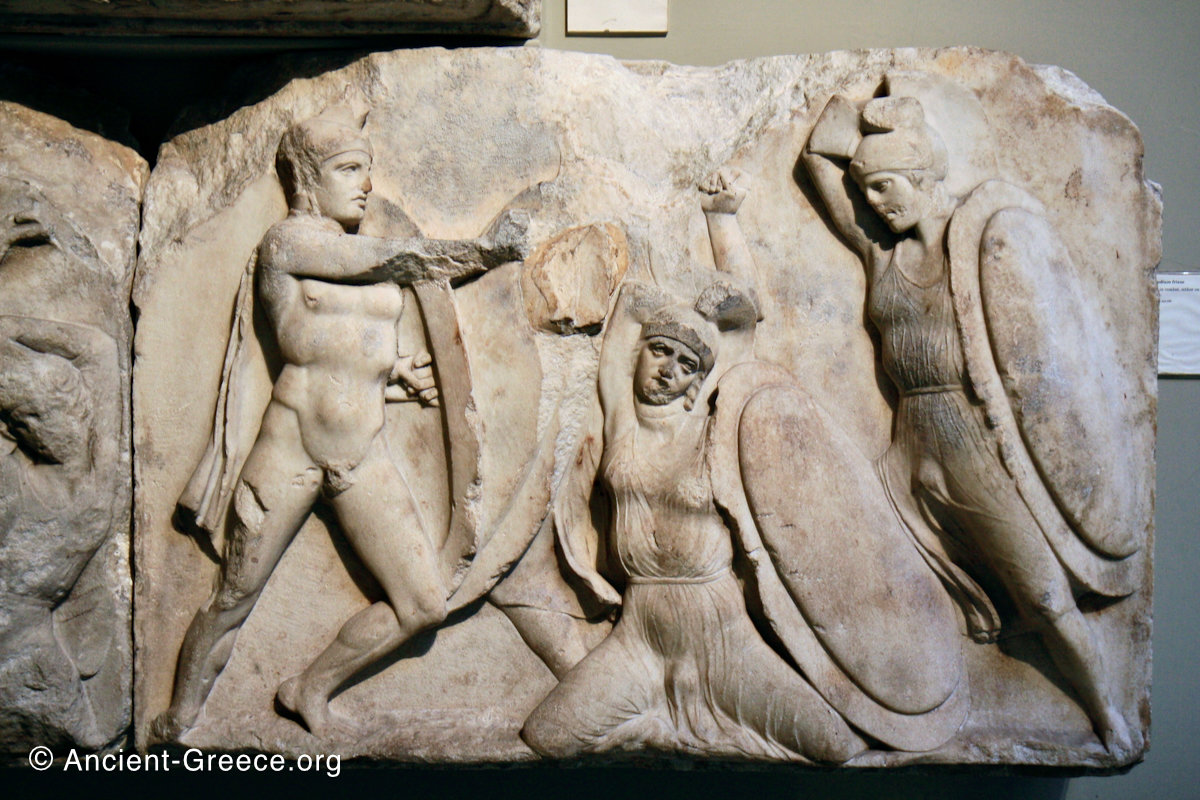
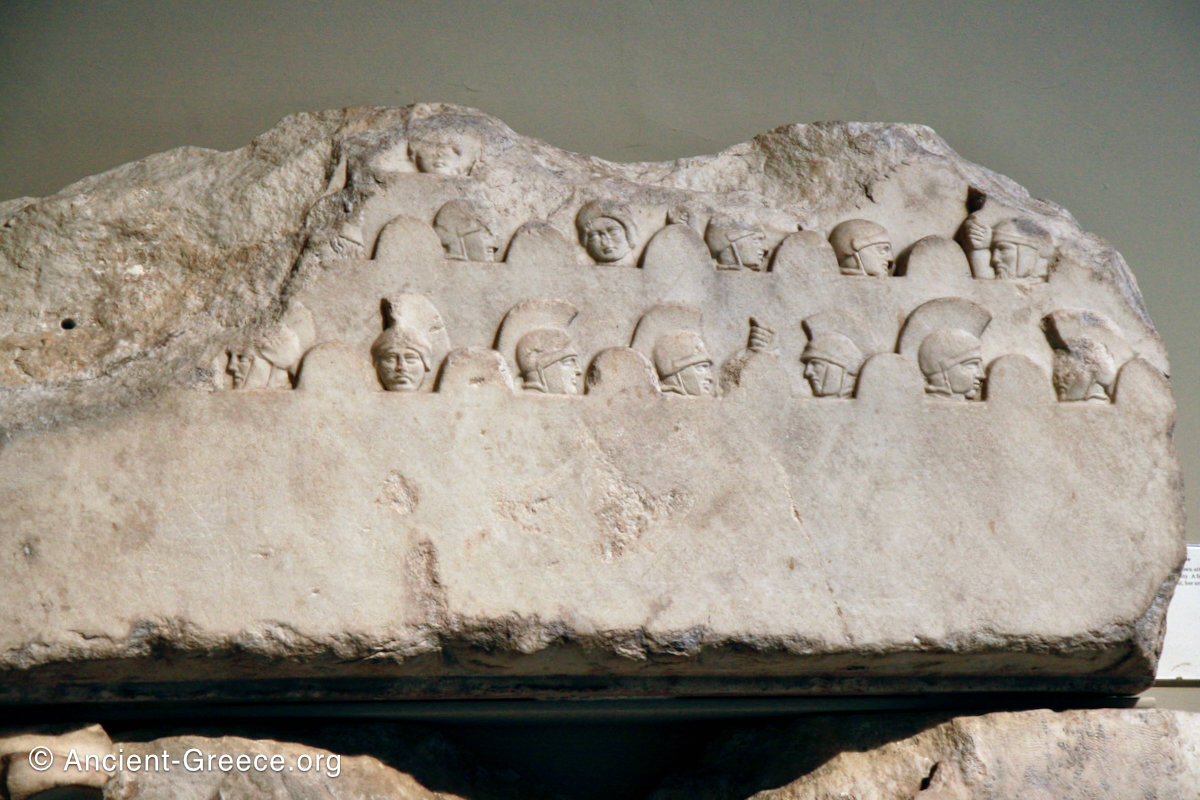
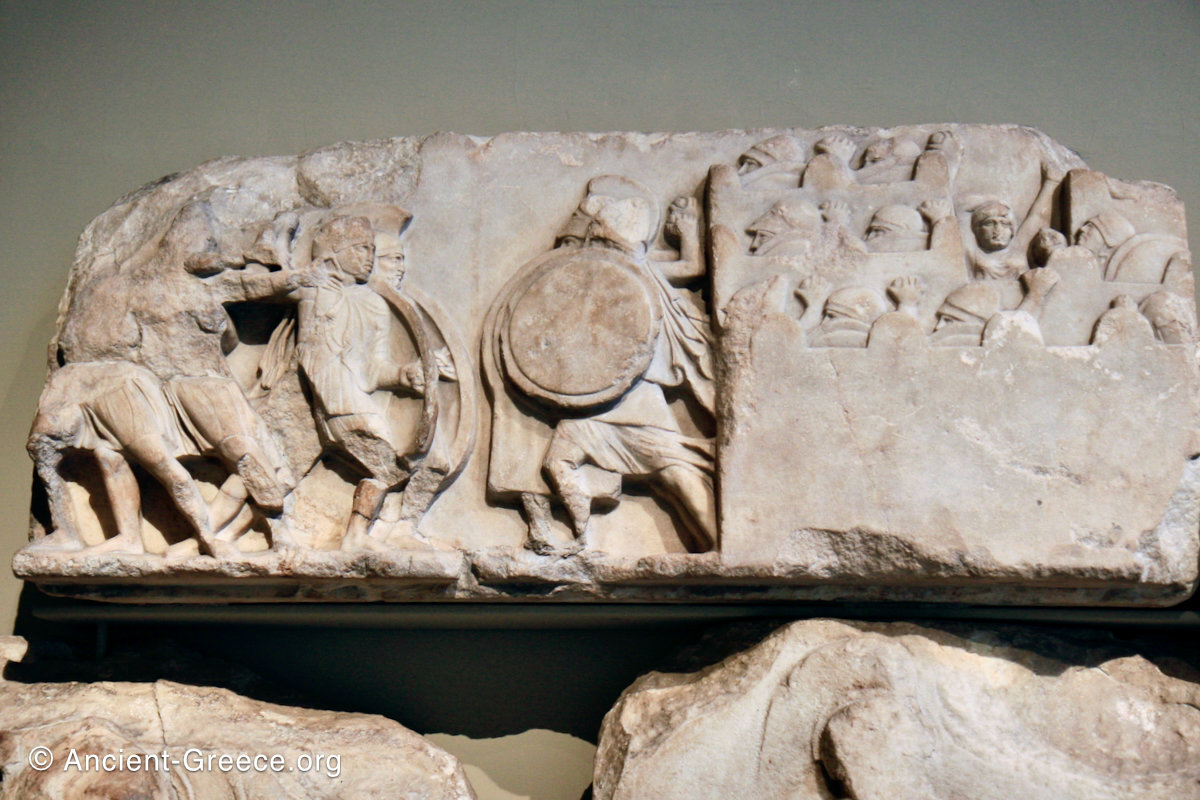
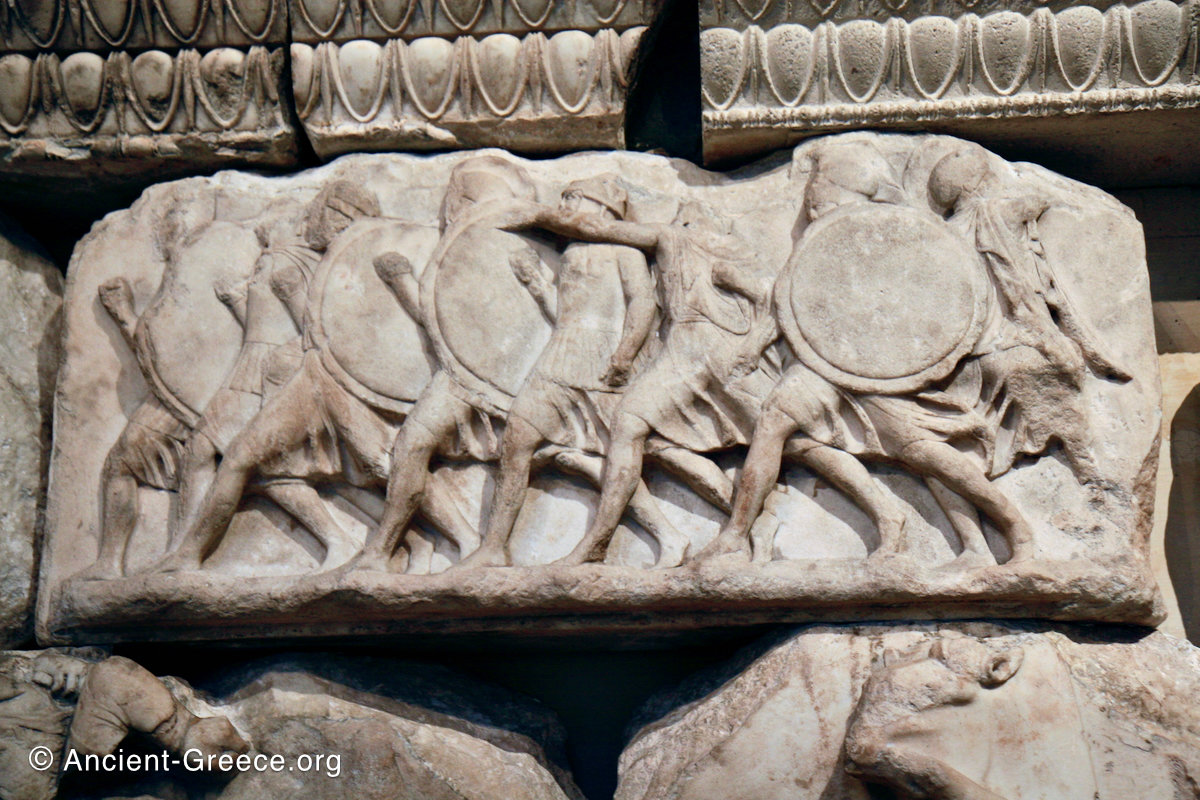
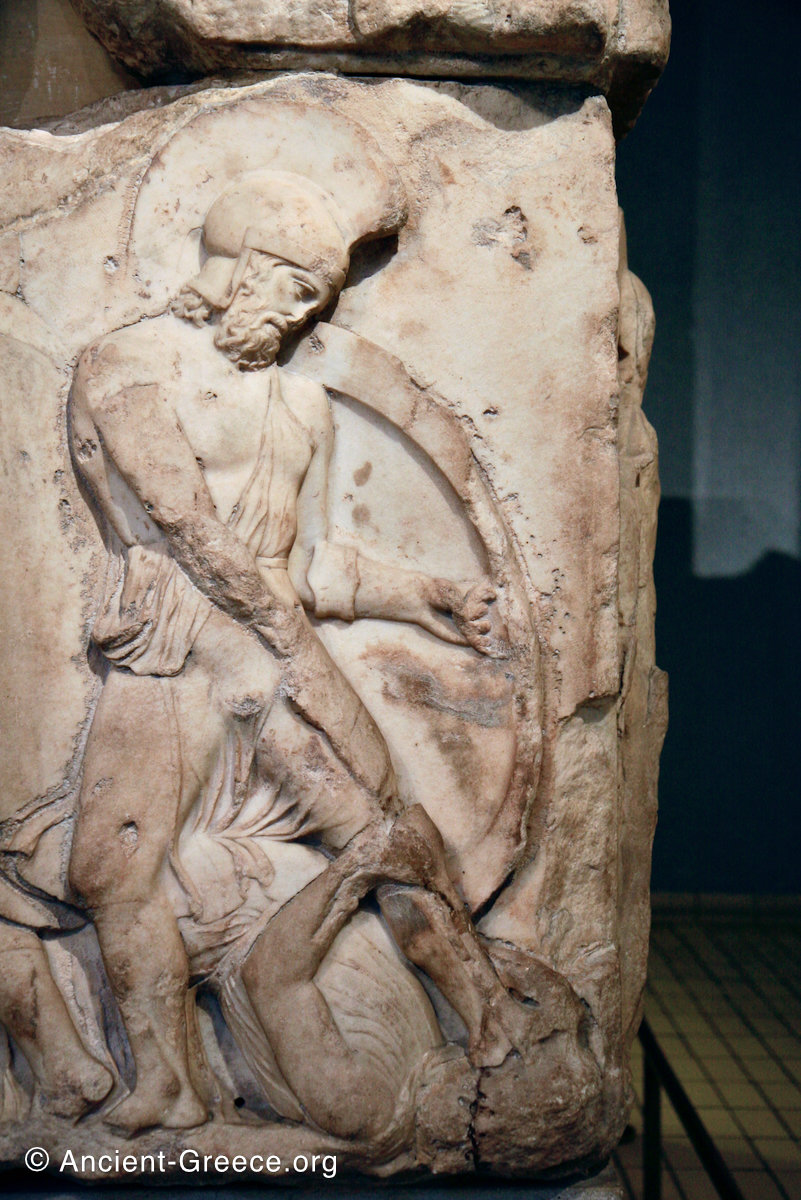
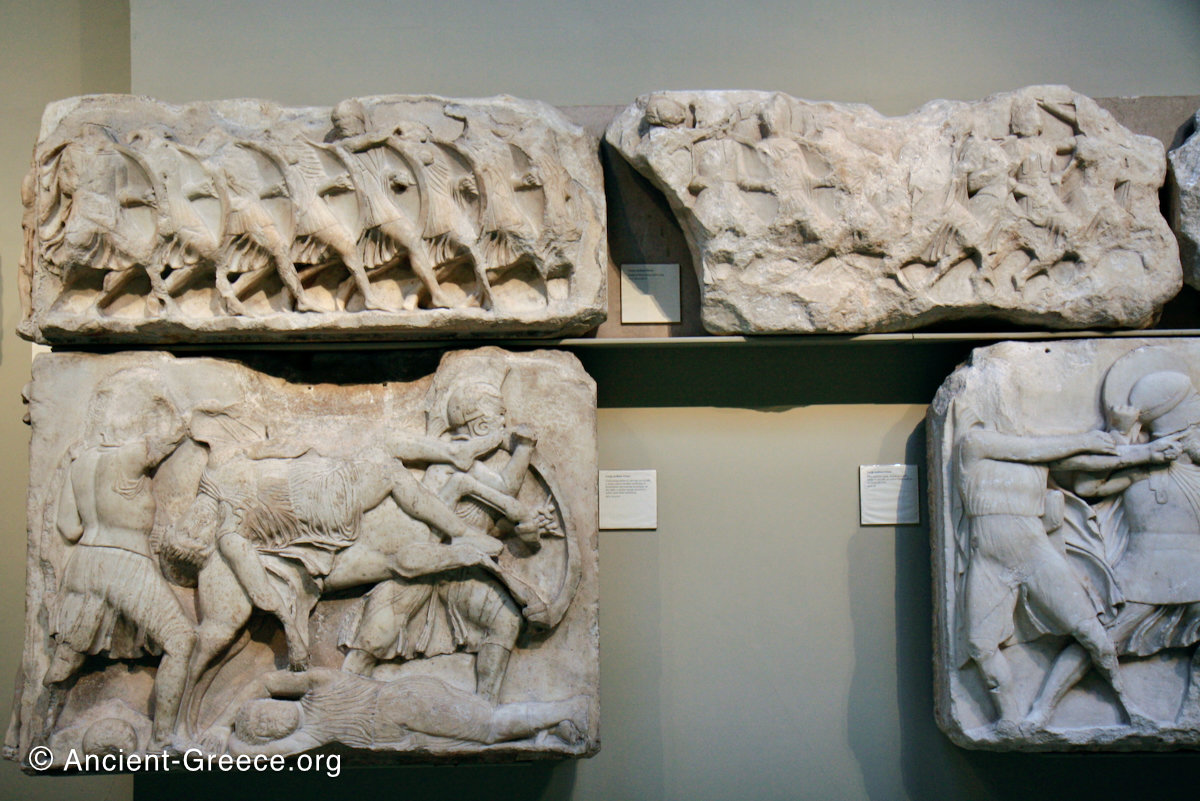
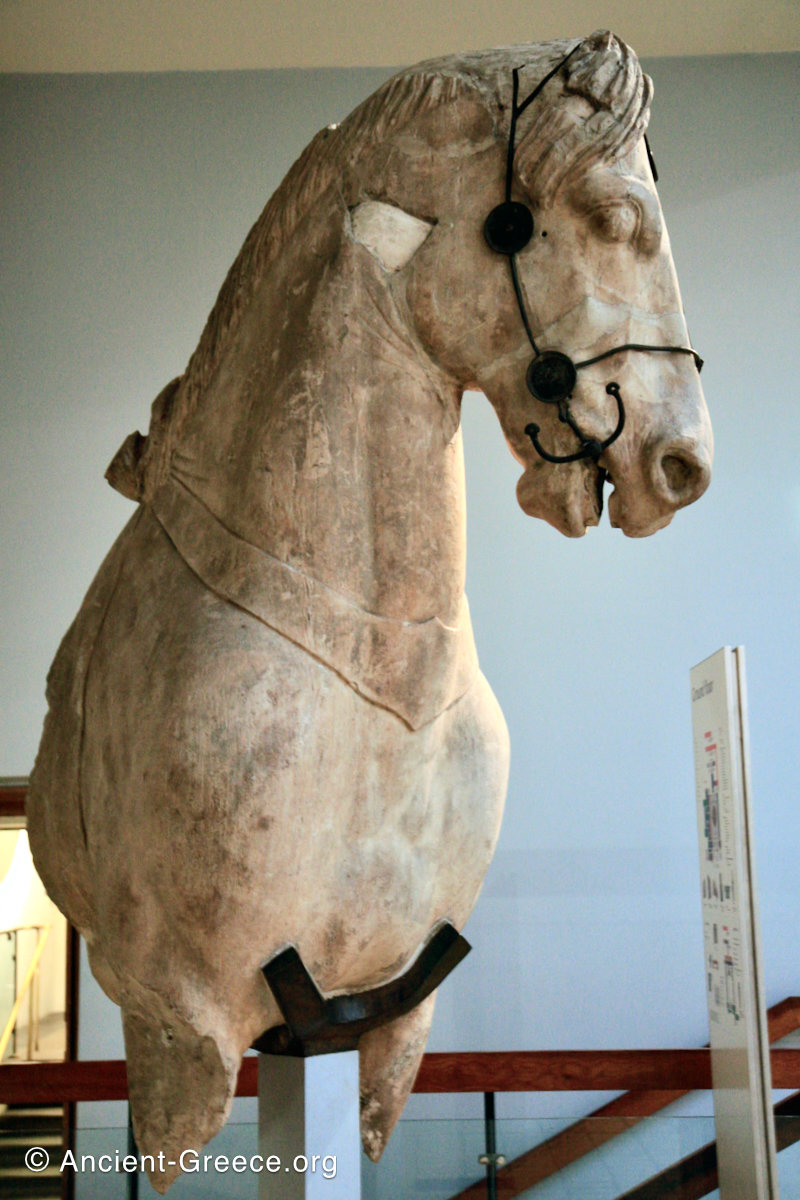
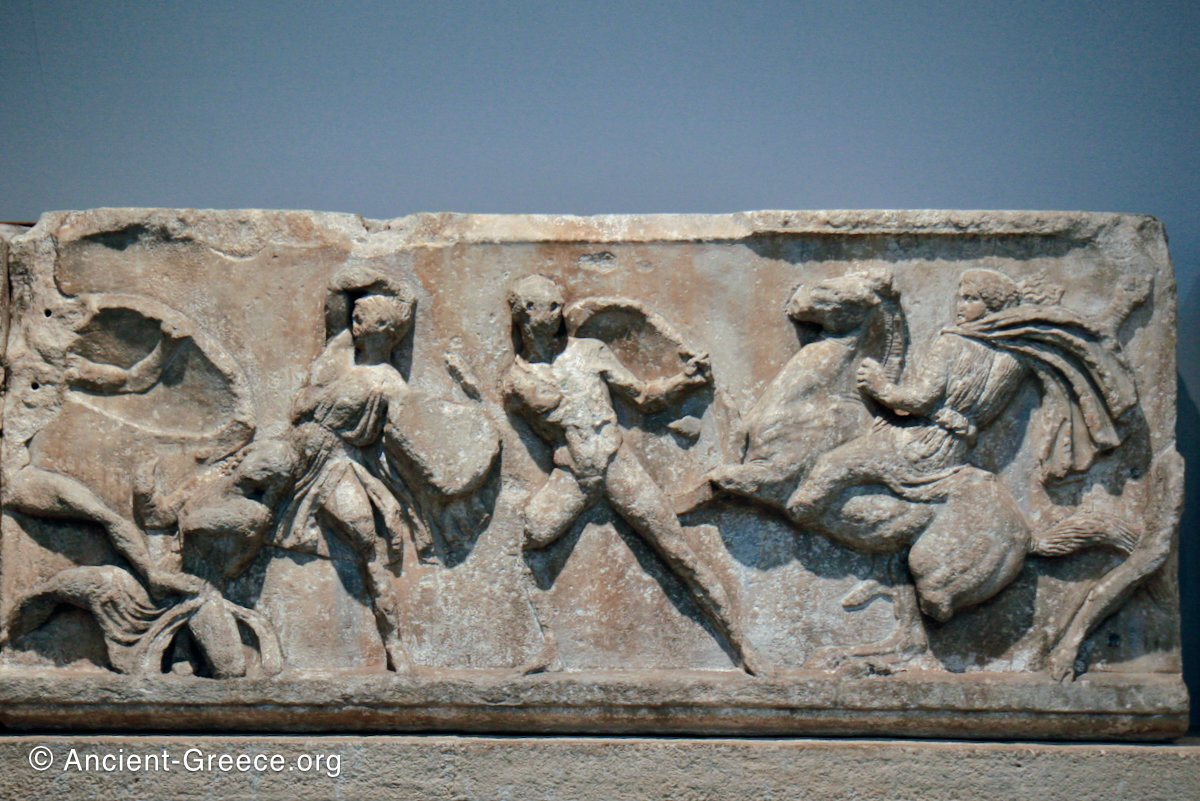
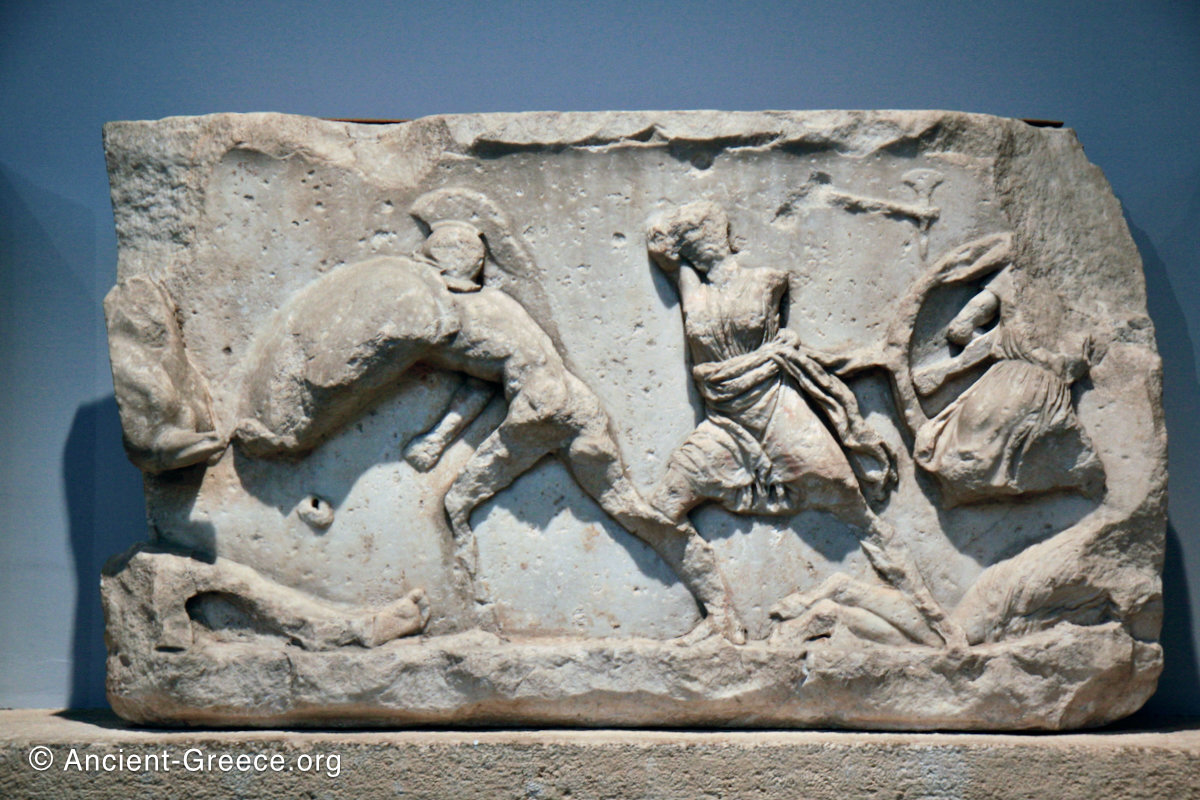
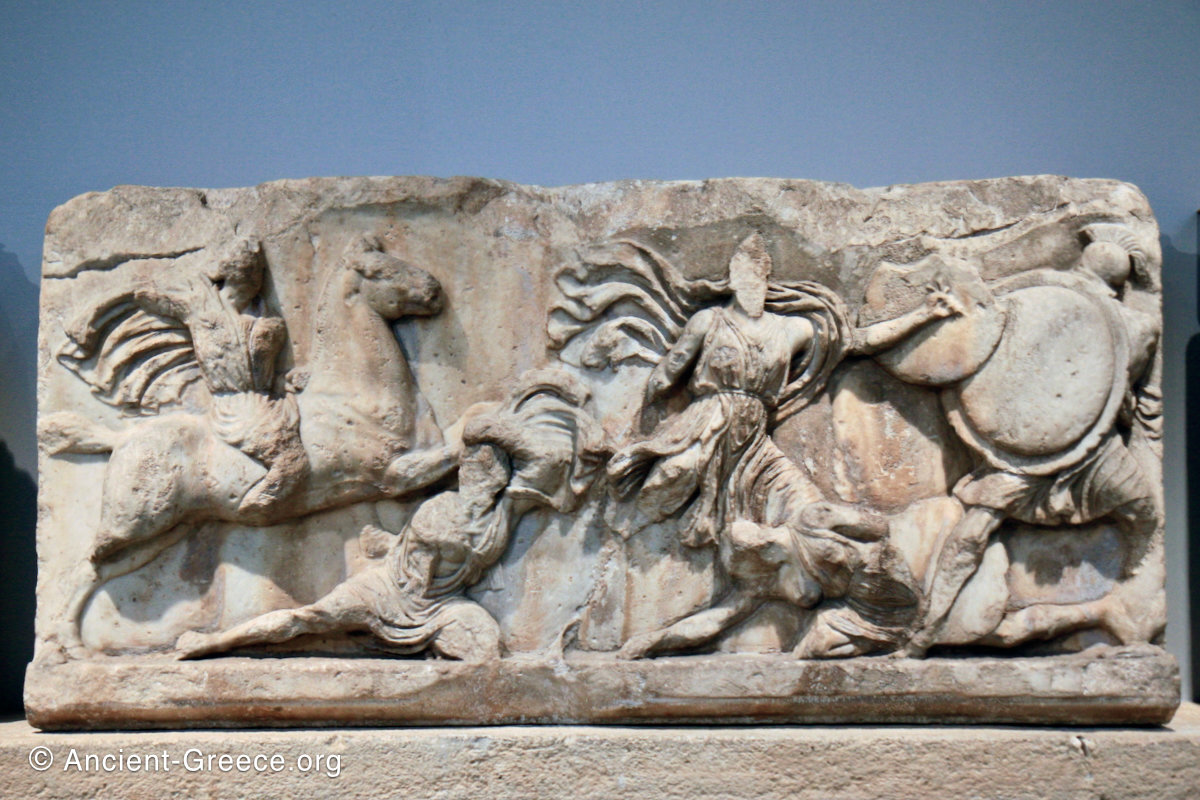
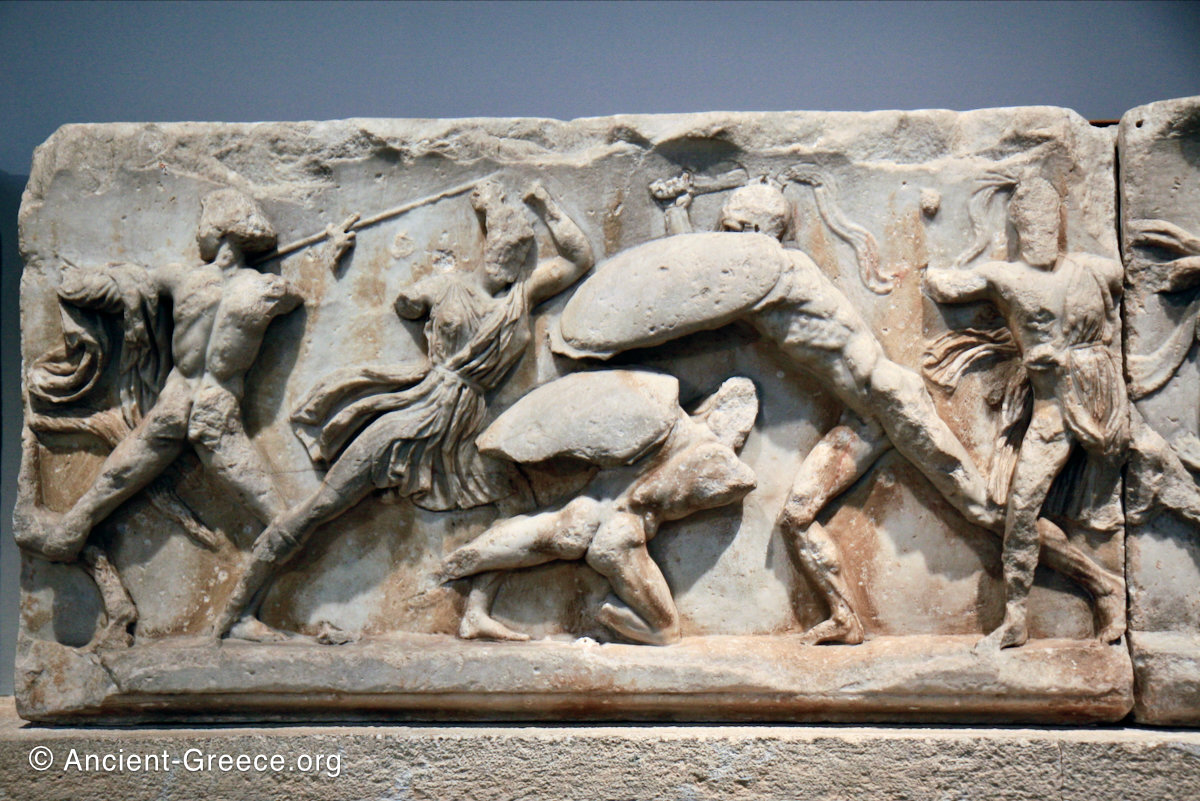
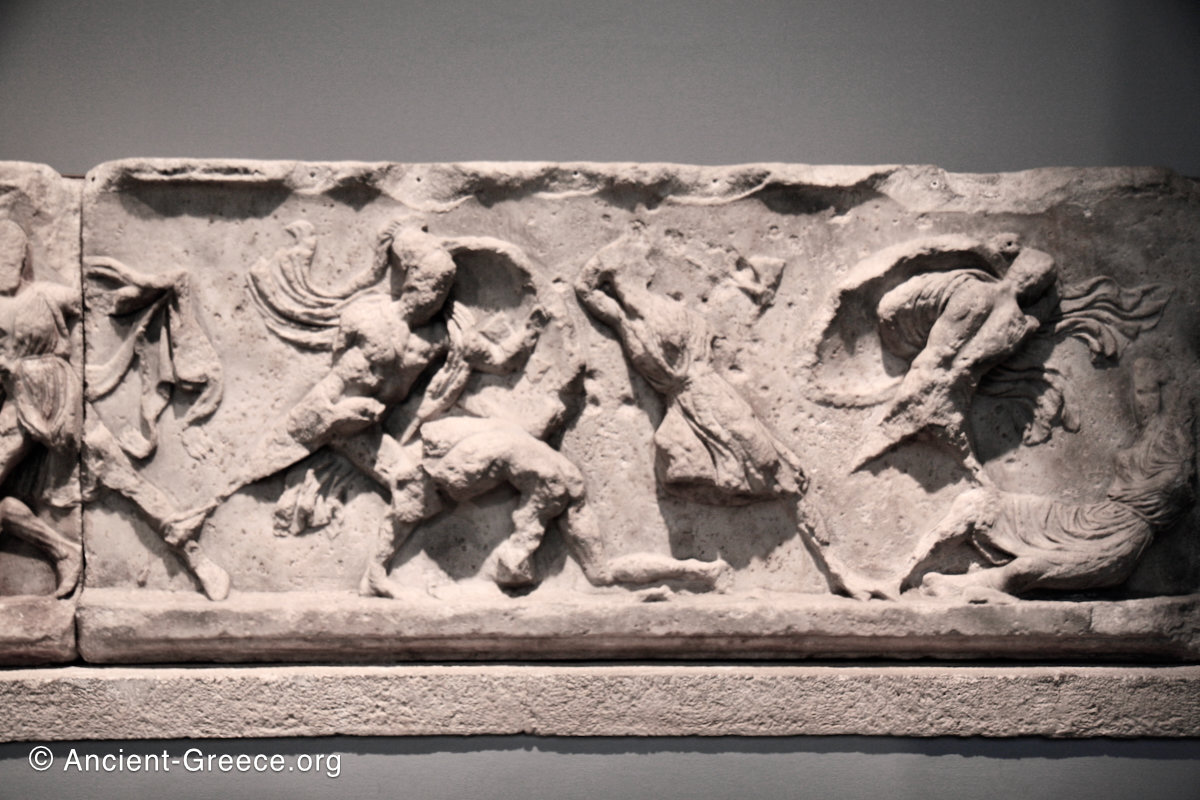
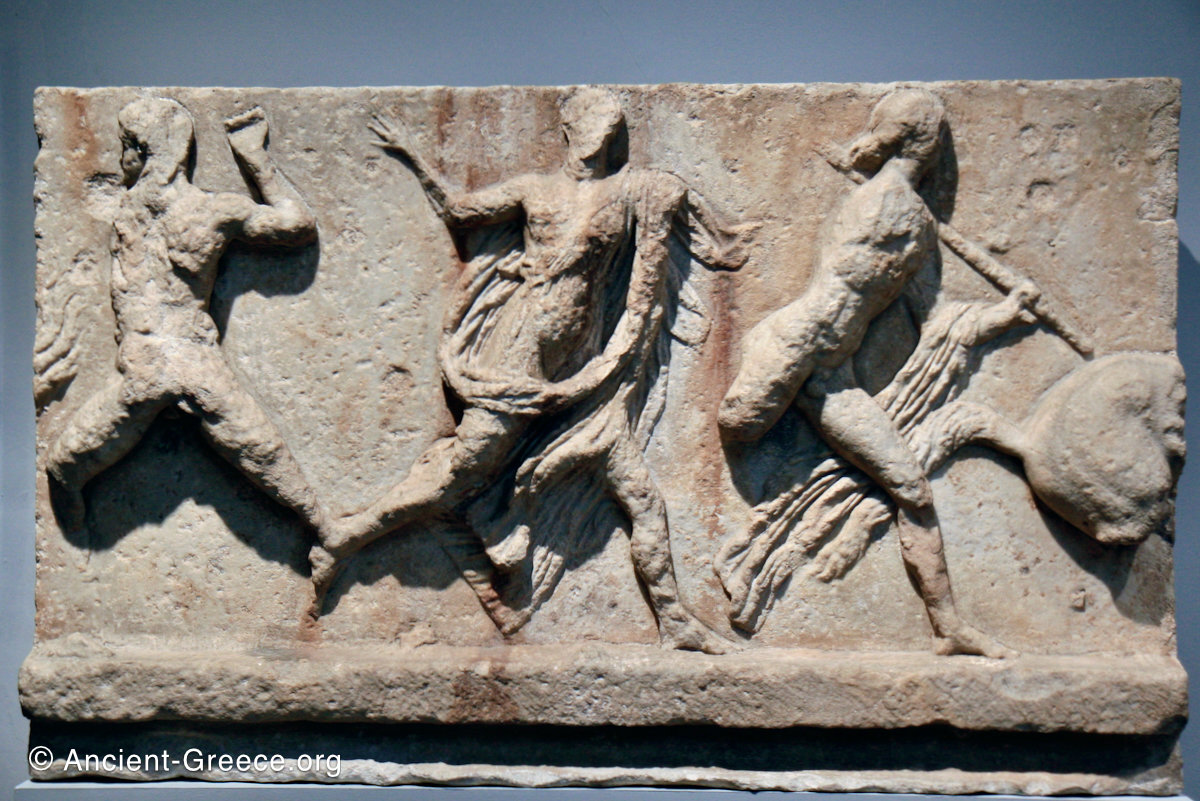
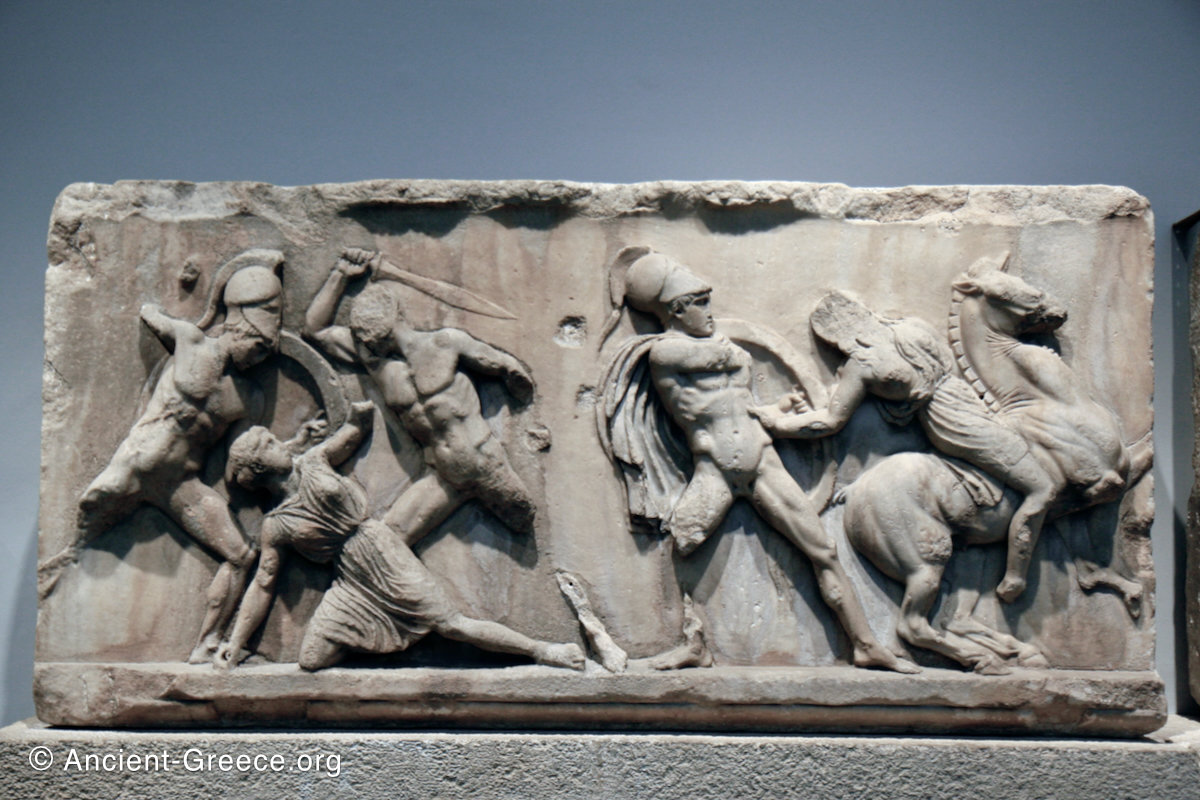
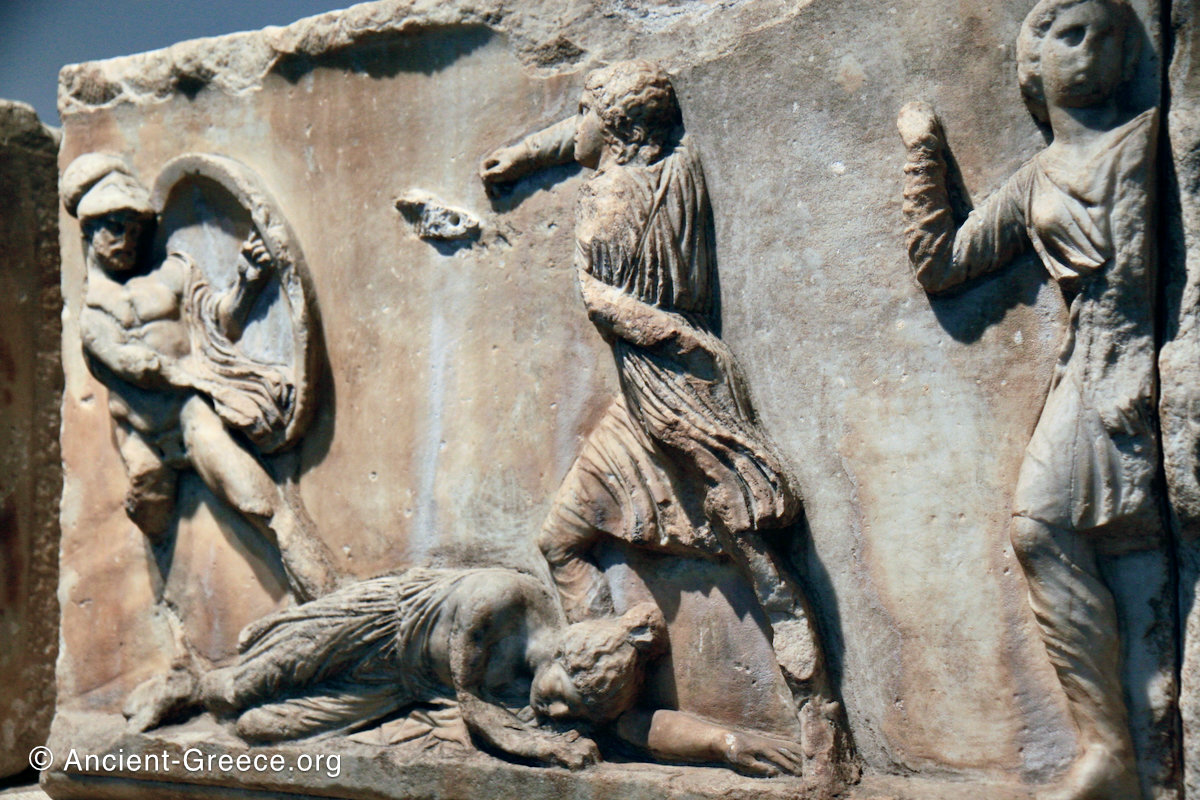
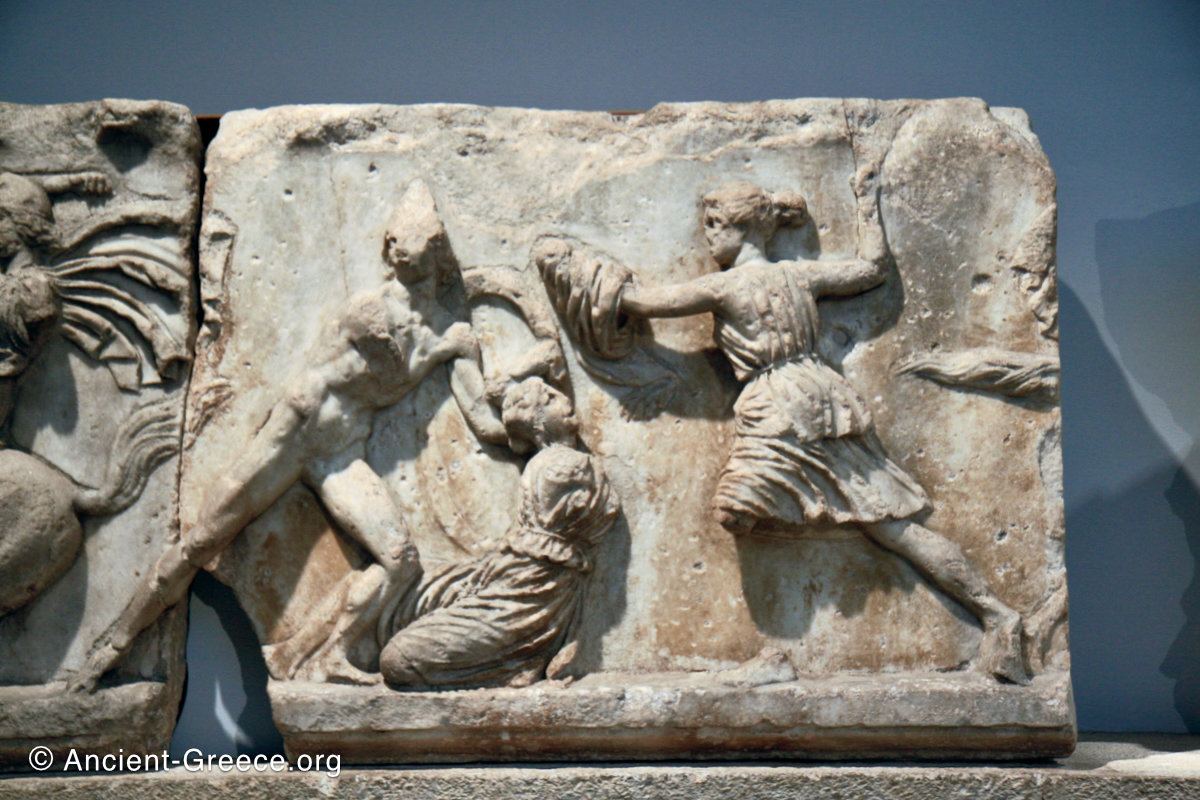
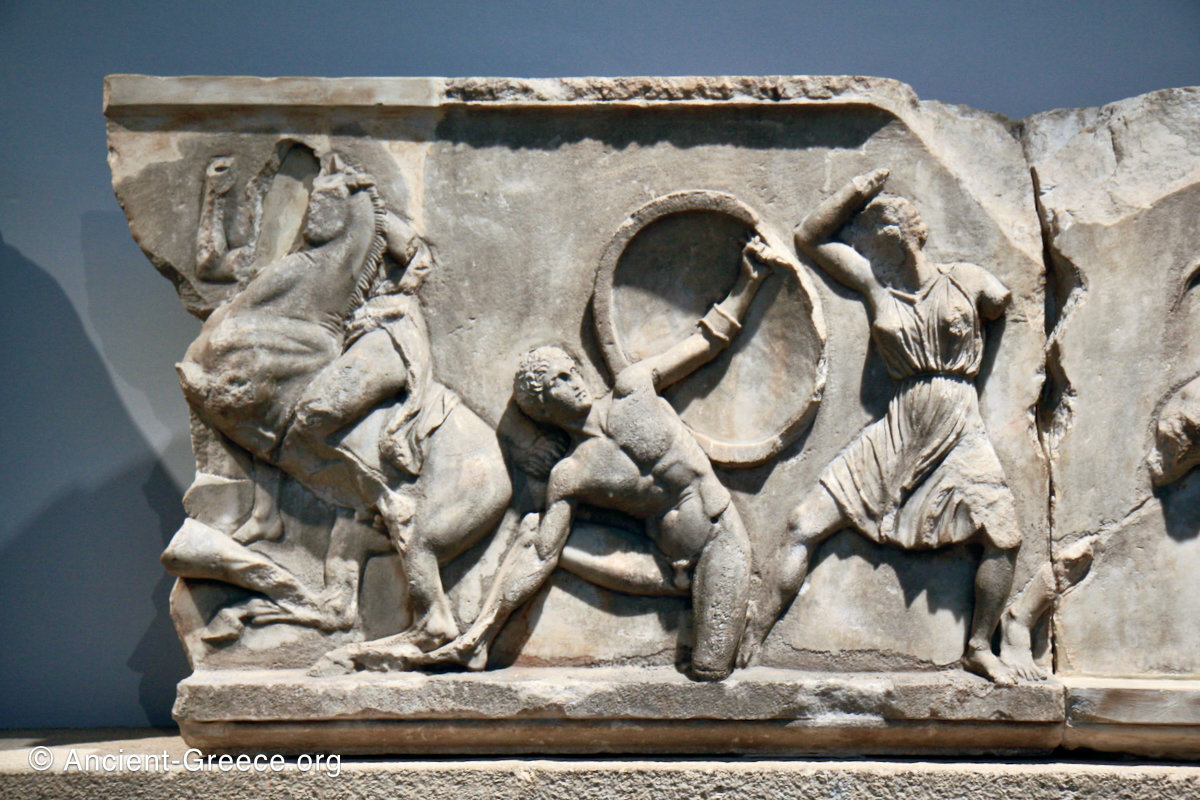
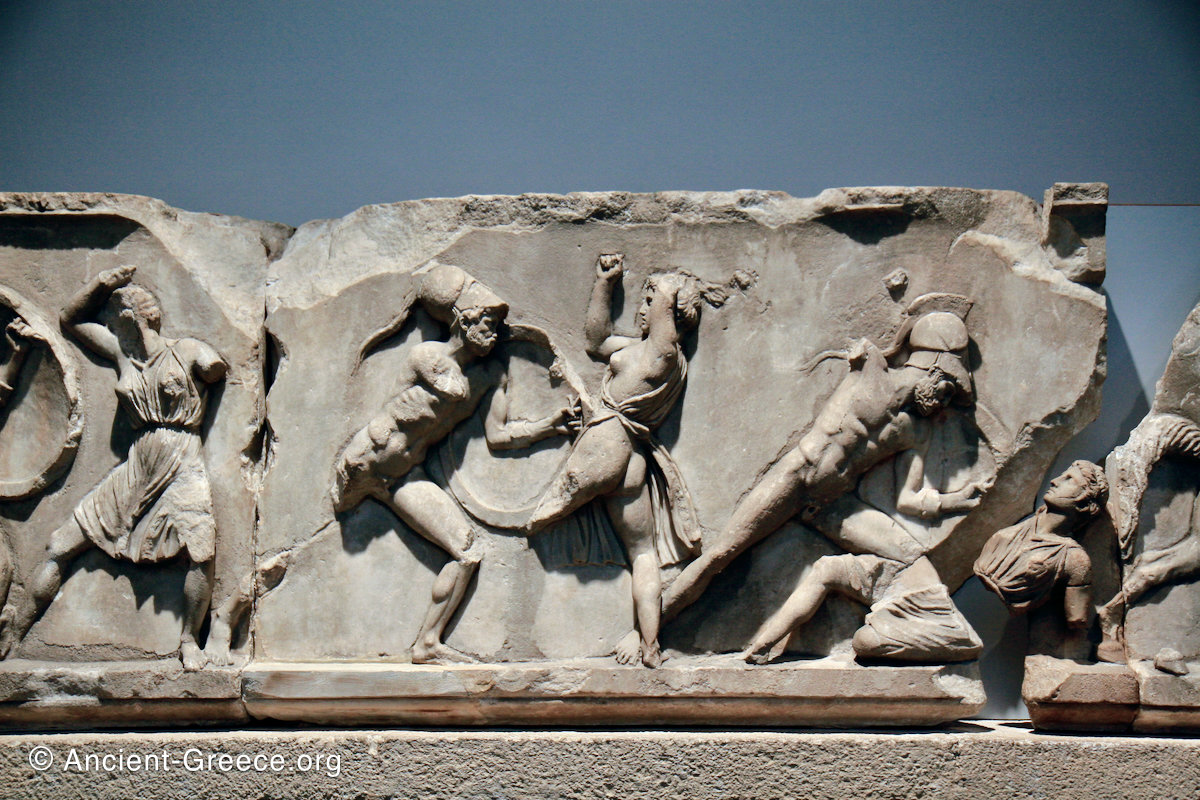
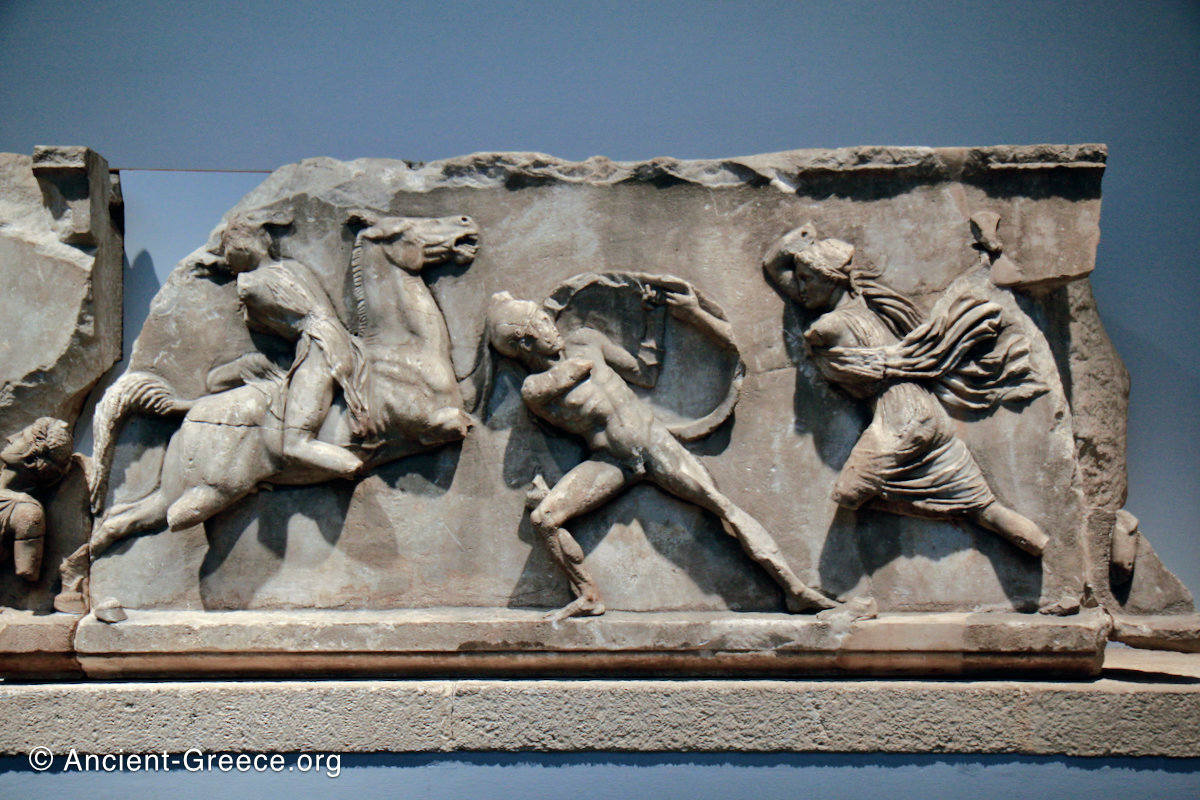
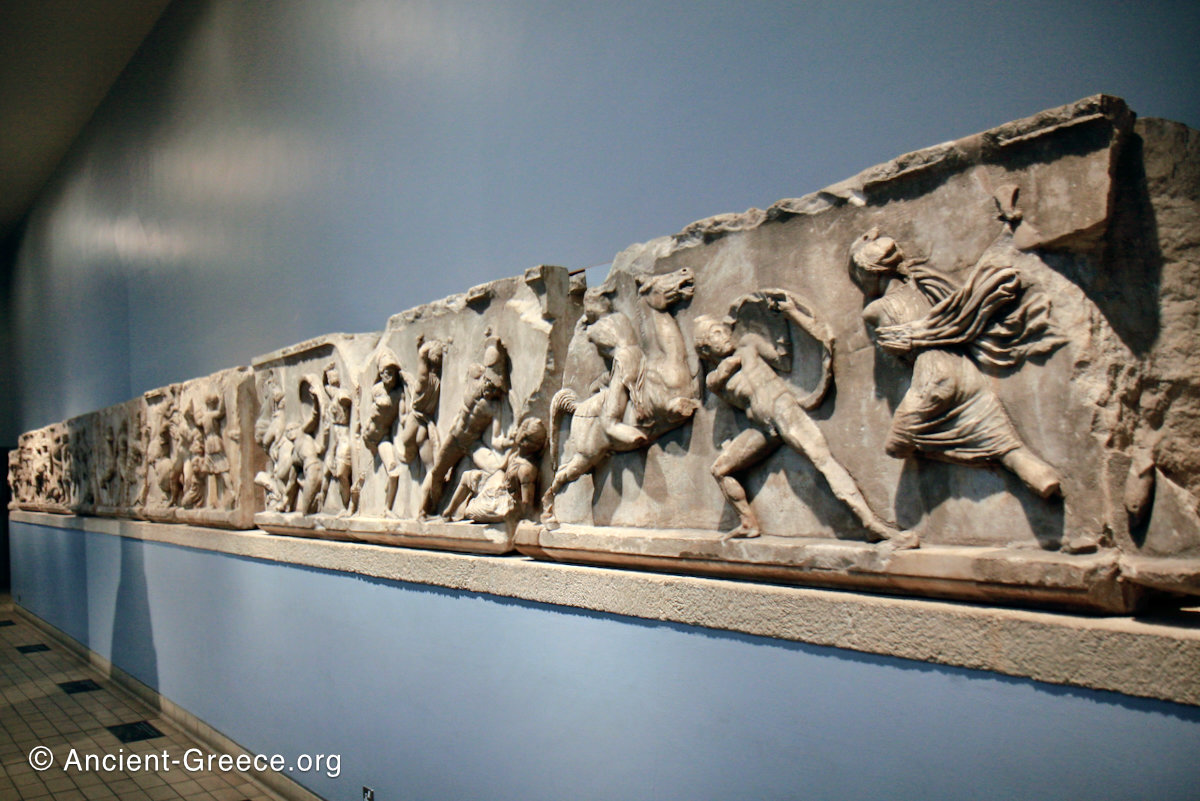
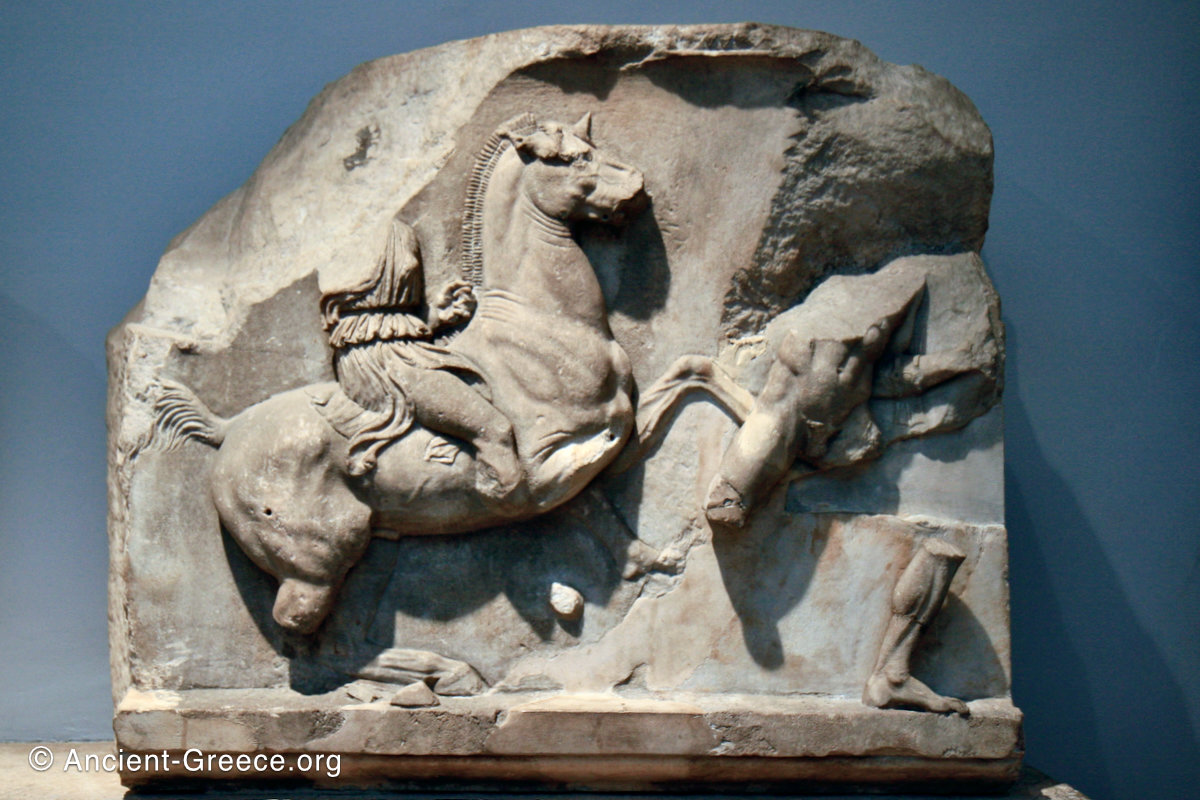
Horse sculpture from the Mausoleum at Halicarnassus. 351 BCE.Greeks fighting Amazons. From the Mausoleum at Halicarnassus Amazon frieze. 350 BCE.Greeks fighting Amazons. From the Mausoleum at Halicarnassus Amazon frieze. 350 BCE.Greeks fighting Amazons. From the Mausoleum at Halicarnassus Amazon frieze. 351 BCE.Amazonomachy. From the Mausoleum at Halicarnassus Amazon frieze. 350 BCE.Greeks fighting Amazons. From the Mausoleum at Halicarnassus Amazon frieze. 350 BCE.Relief sculpture from the Mausoleum at Halicarnassus. 350 BCE.Relief sculpture of Greeks fighting Amazons. from Halikarnassos. 350 BCE.Relief sculpture from the Mausoleum at Halicarnassus. Greeks fighting over the body of a fallen Amazon. 350 BCE.Relief sculpture from the Mausoleum at Halicarnassus. Amazonomachy. 350 BCE.Relief sculpture from the Mausoleum at Halicarnassus. Amazonomachy. 350 BCE.Relief sculpture from the Mausoleum at Halicarnassus. Amazonomachy. 350 BCE.Relief sculpture from the Mausoleum at Halicarnassus. Amazonomachy. 350 BCE.Relief sculpture from the Mausoleum at Halicarnassus. Amazonomachy. 350 BCE.Greeks fighting Amazons. From the Mausoleum at Halicarnassus Amazon frieze. 350 BCE.
Photographs from Mausoleum of Halikarnassos artwork at the British Museum.
Archaic, Classical, and Hellenistic Sculptures and Artifacts
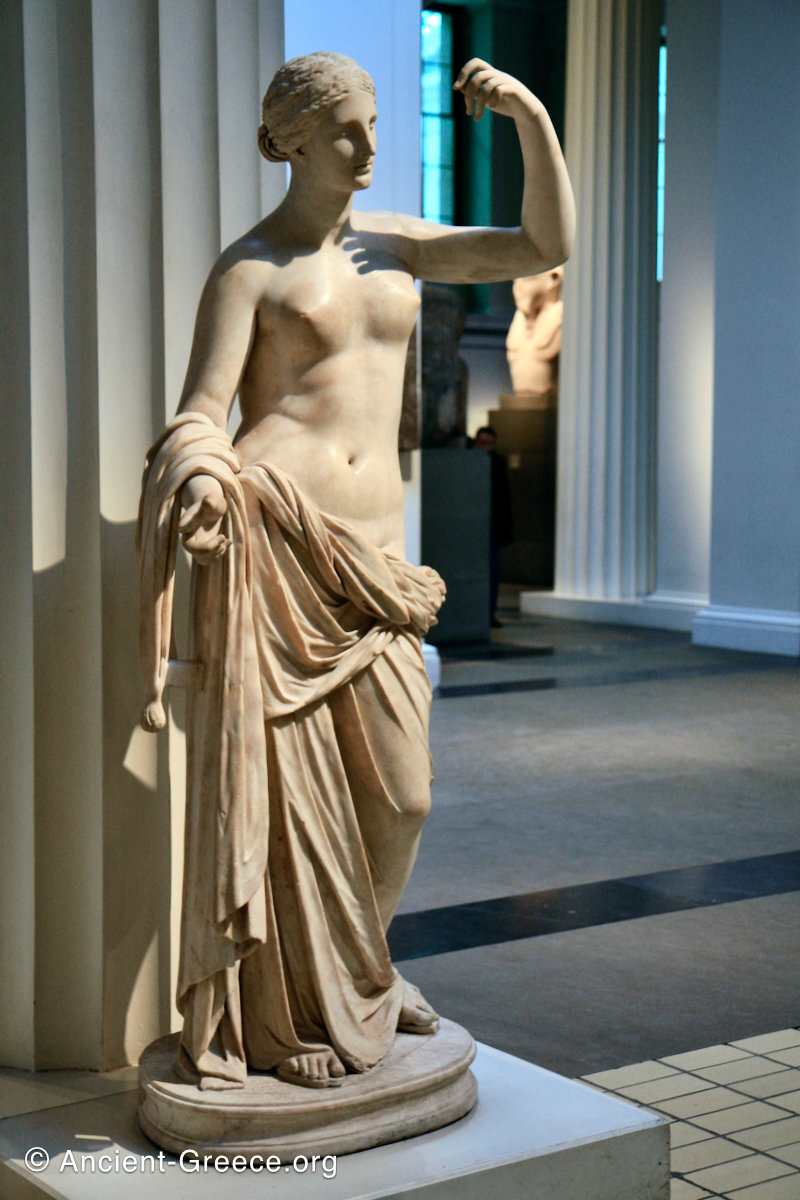
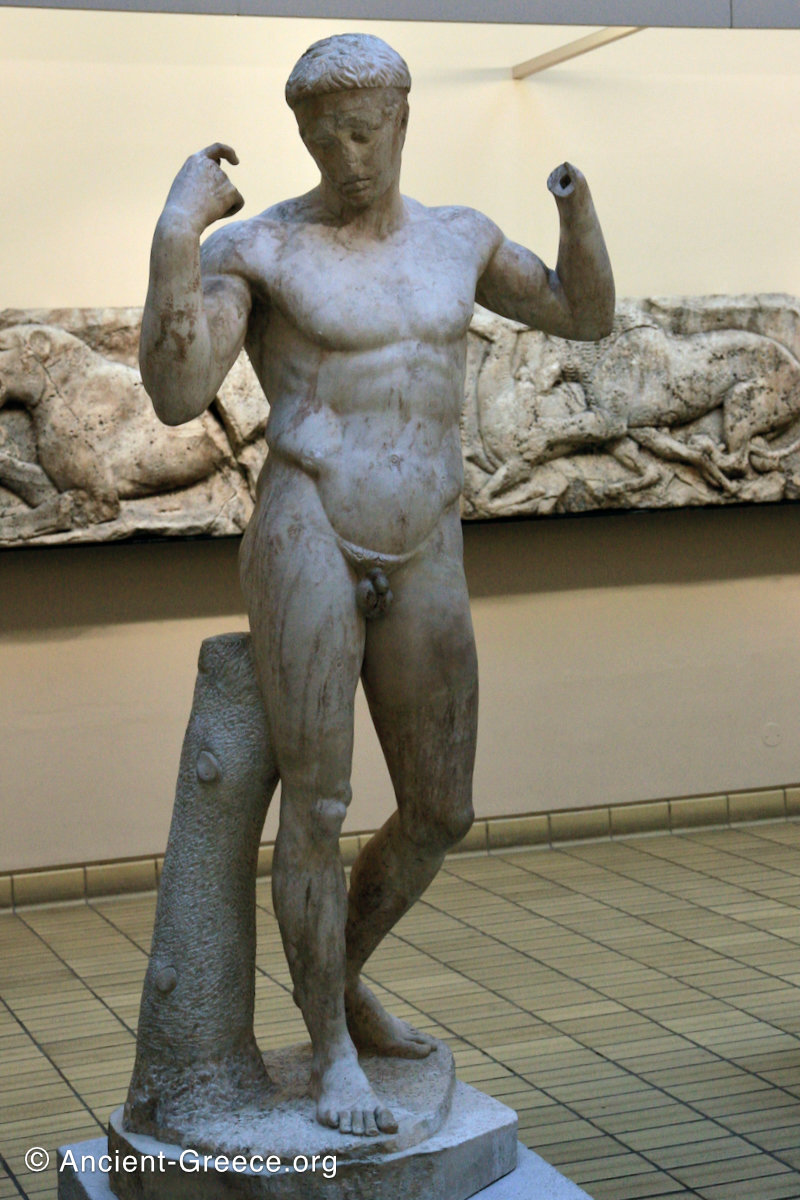
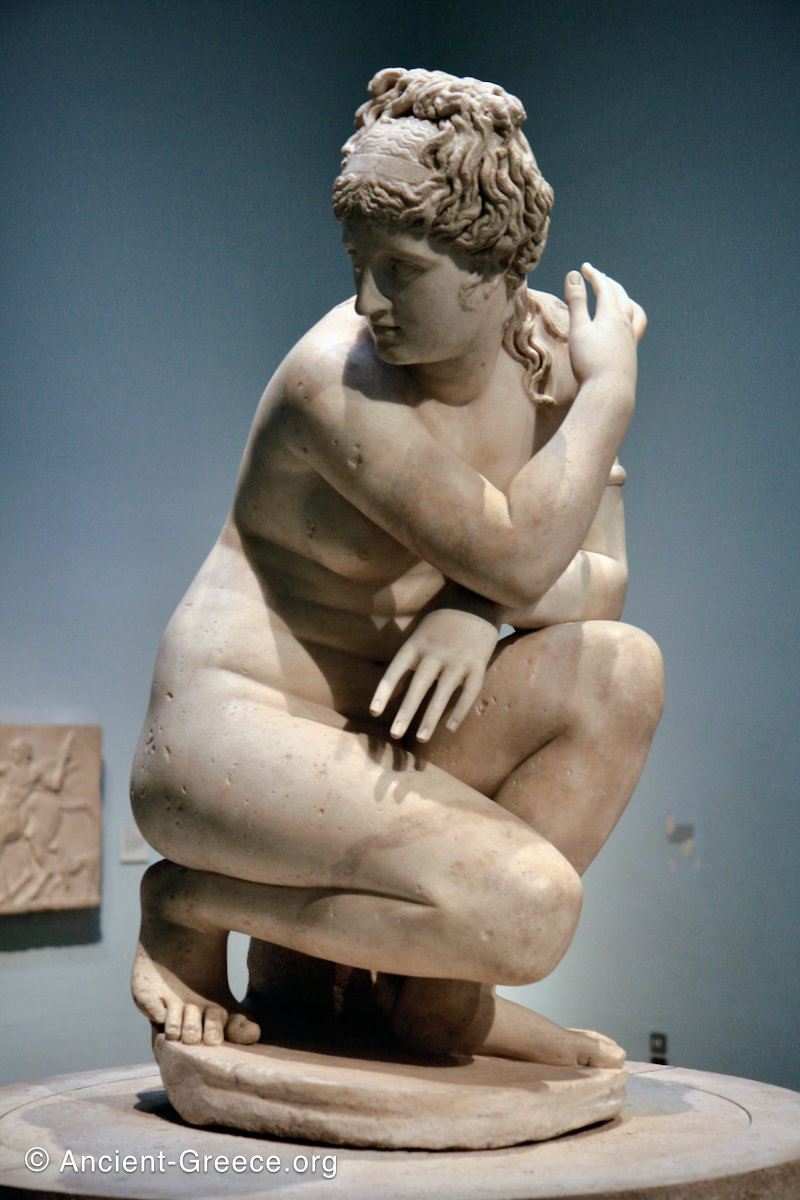
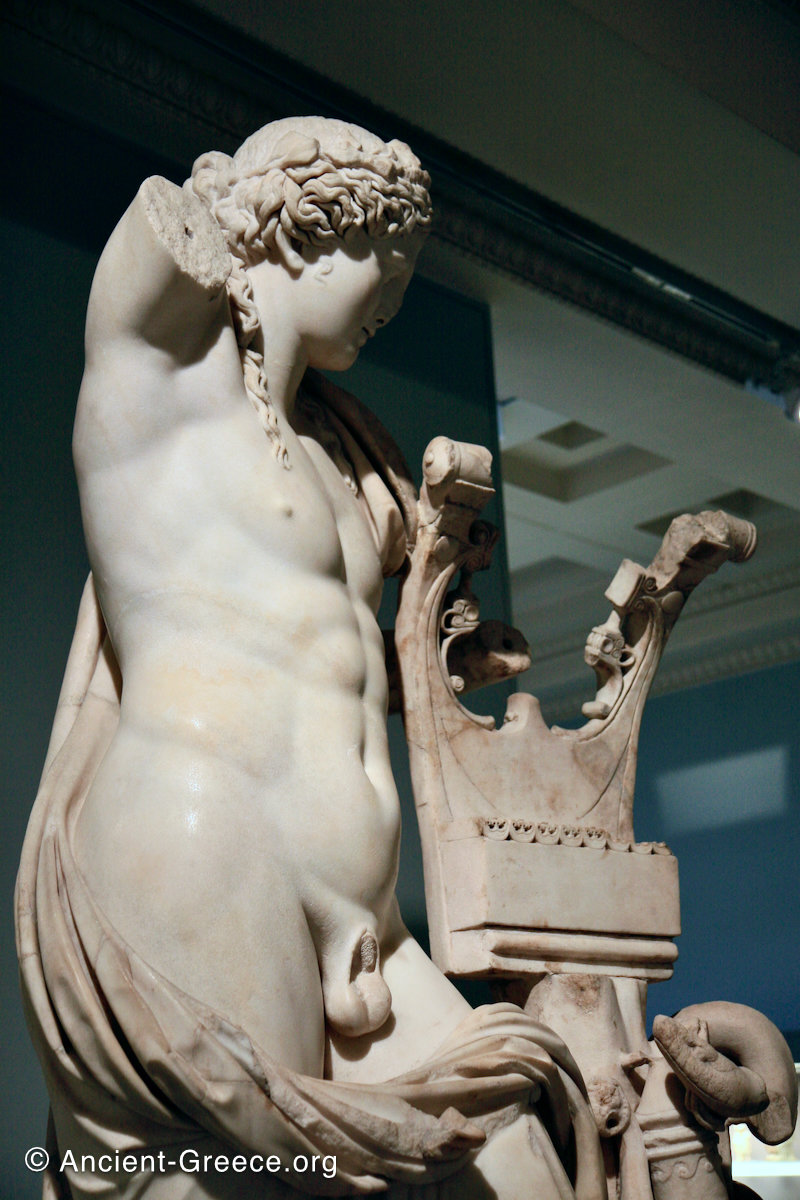
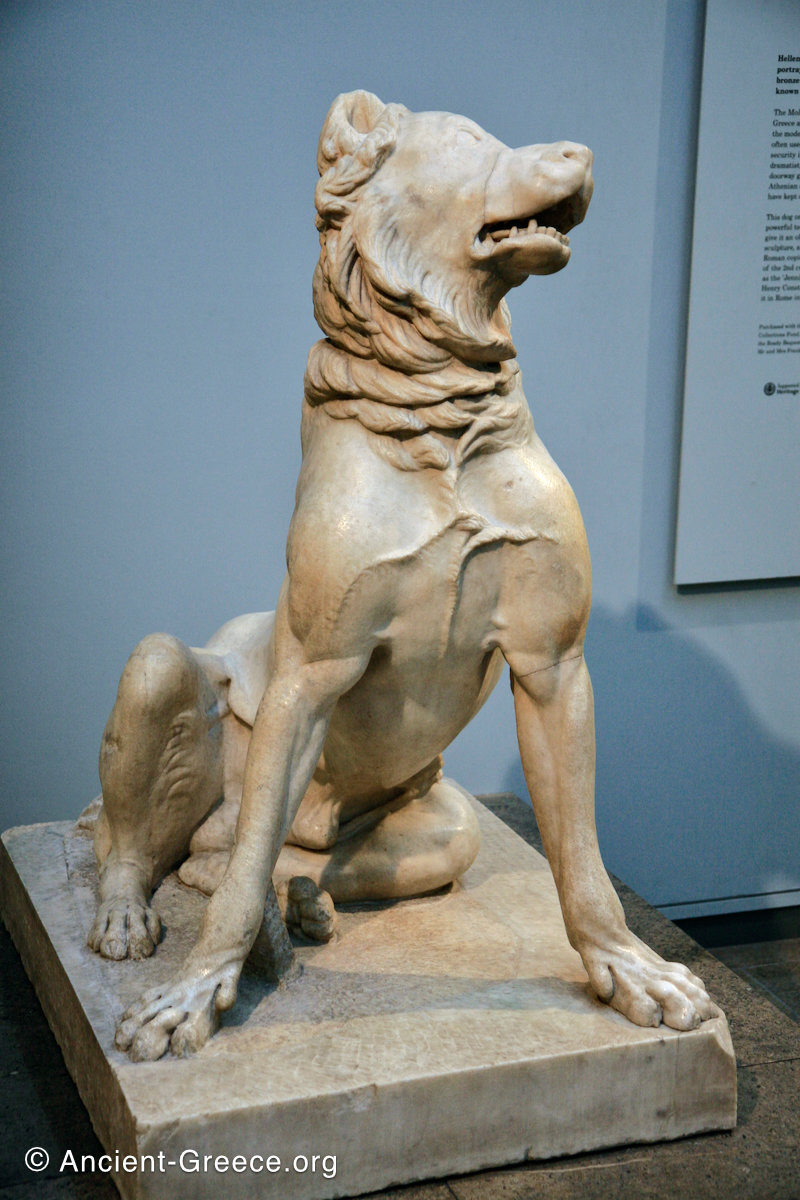
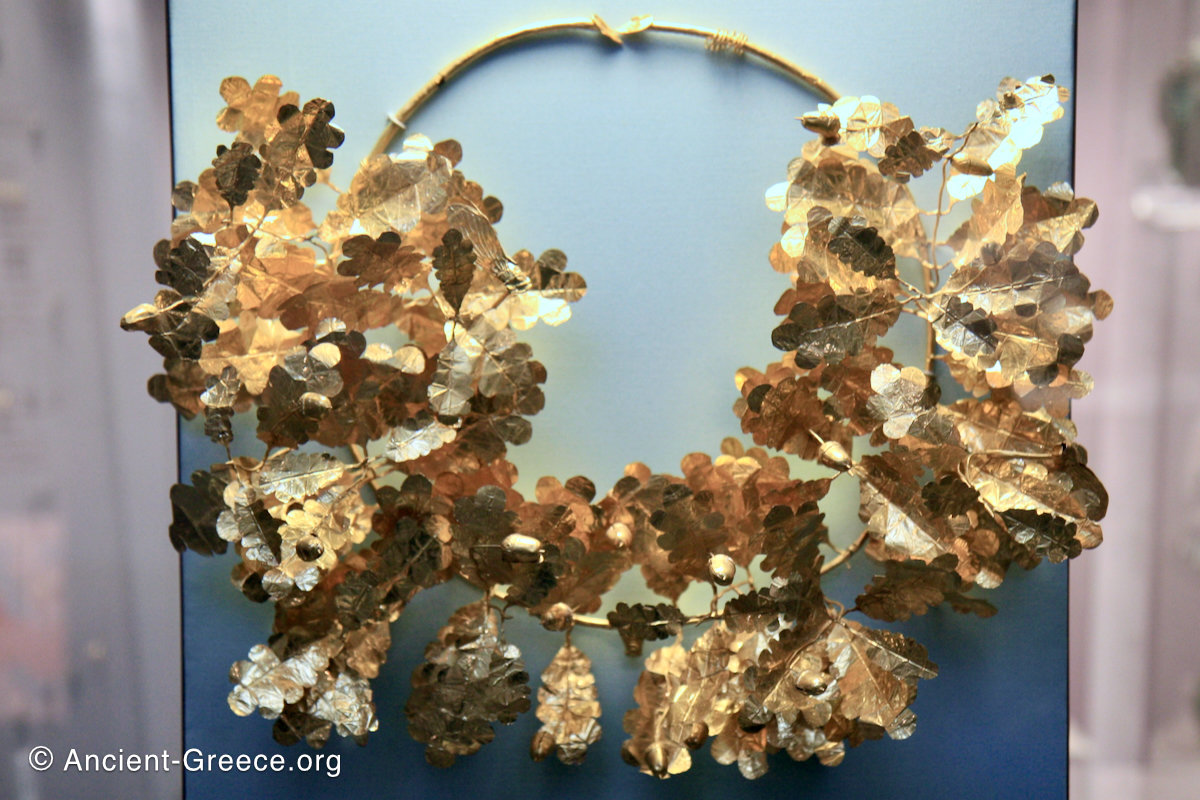
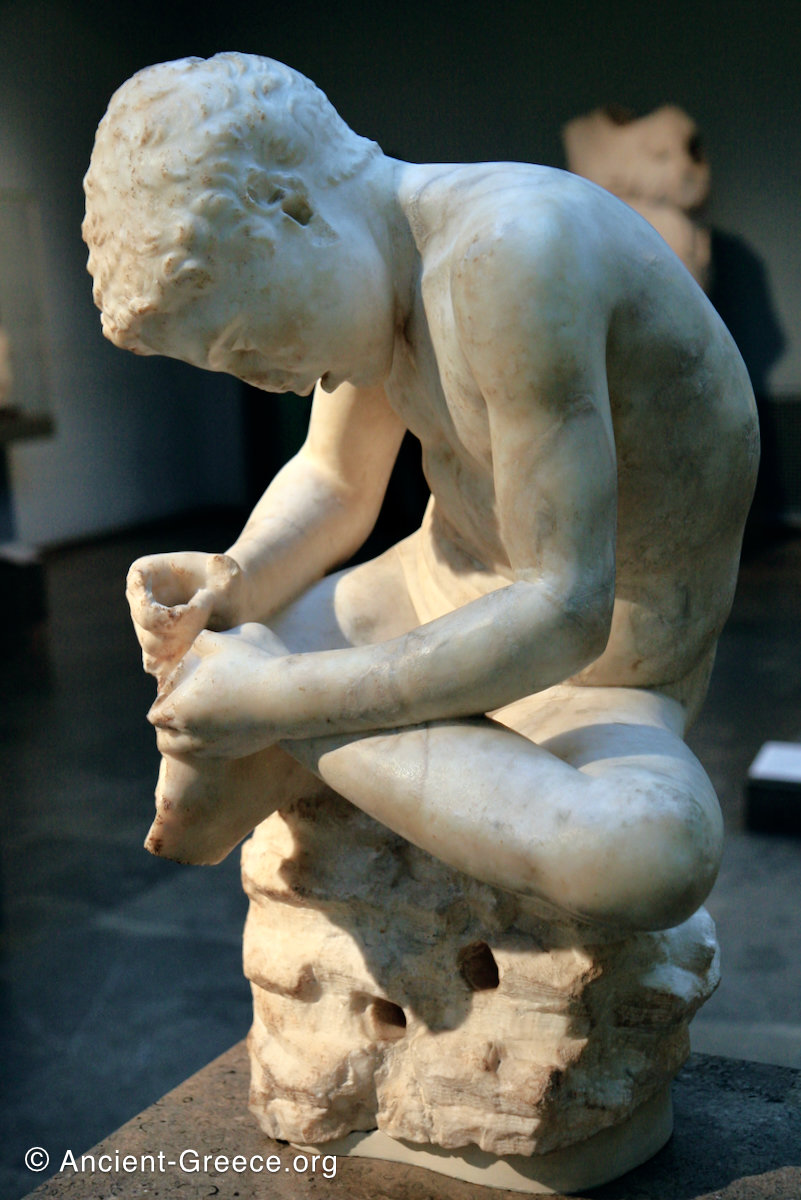
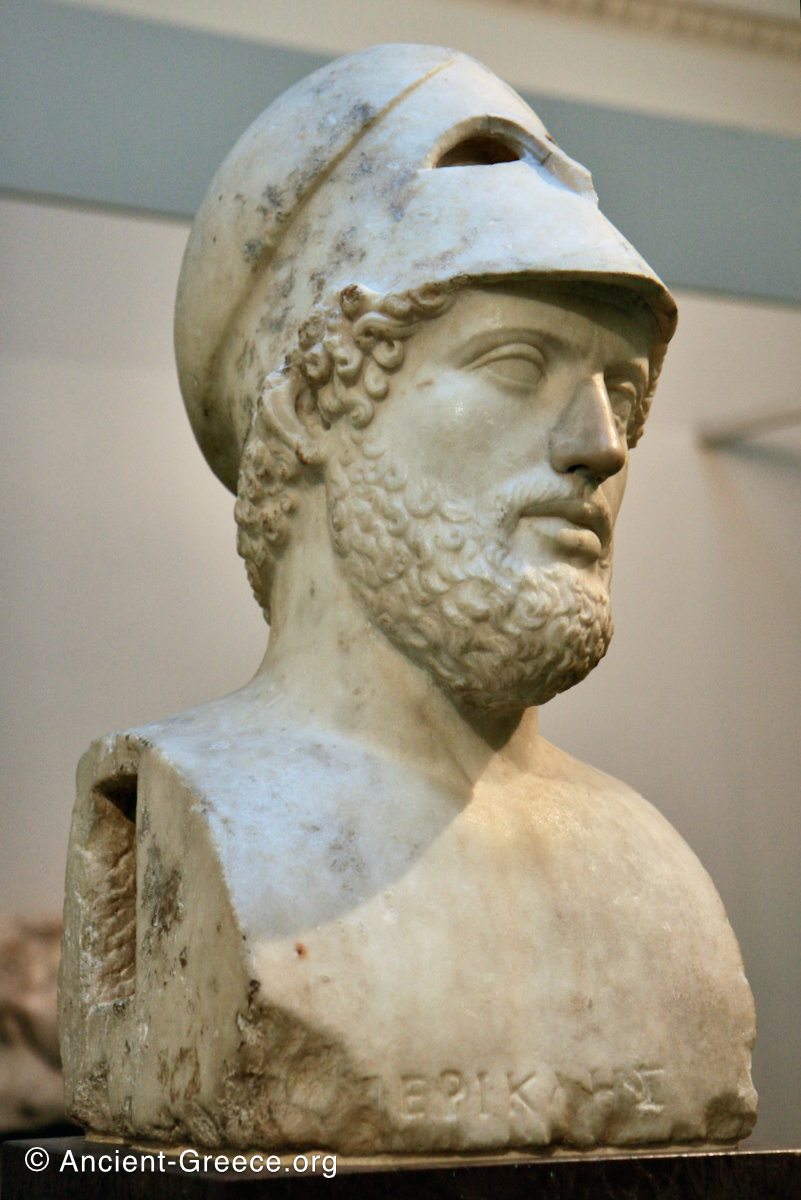
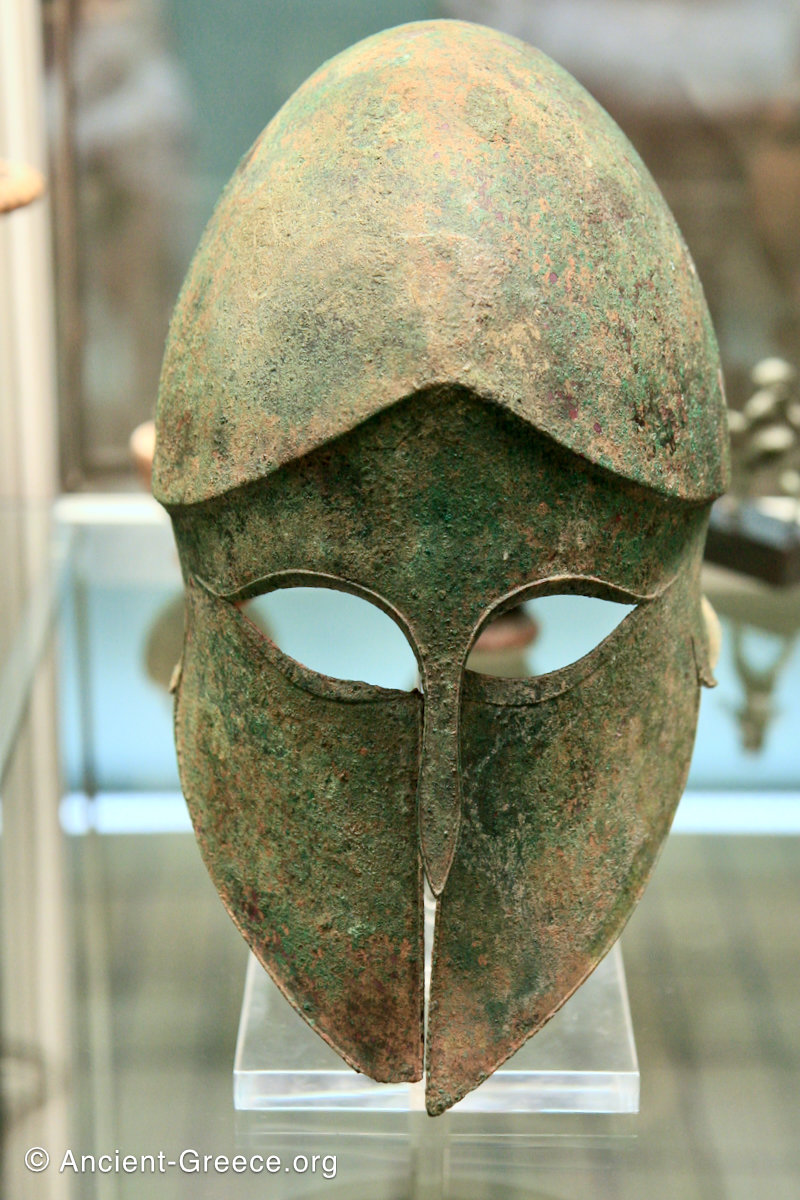
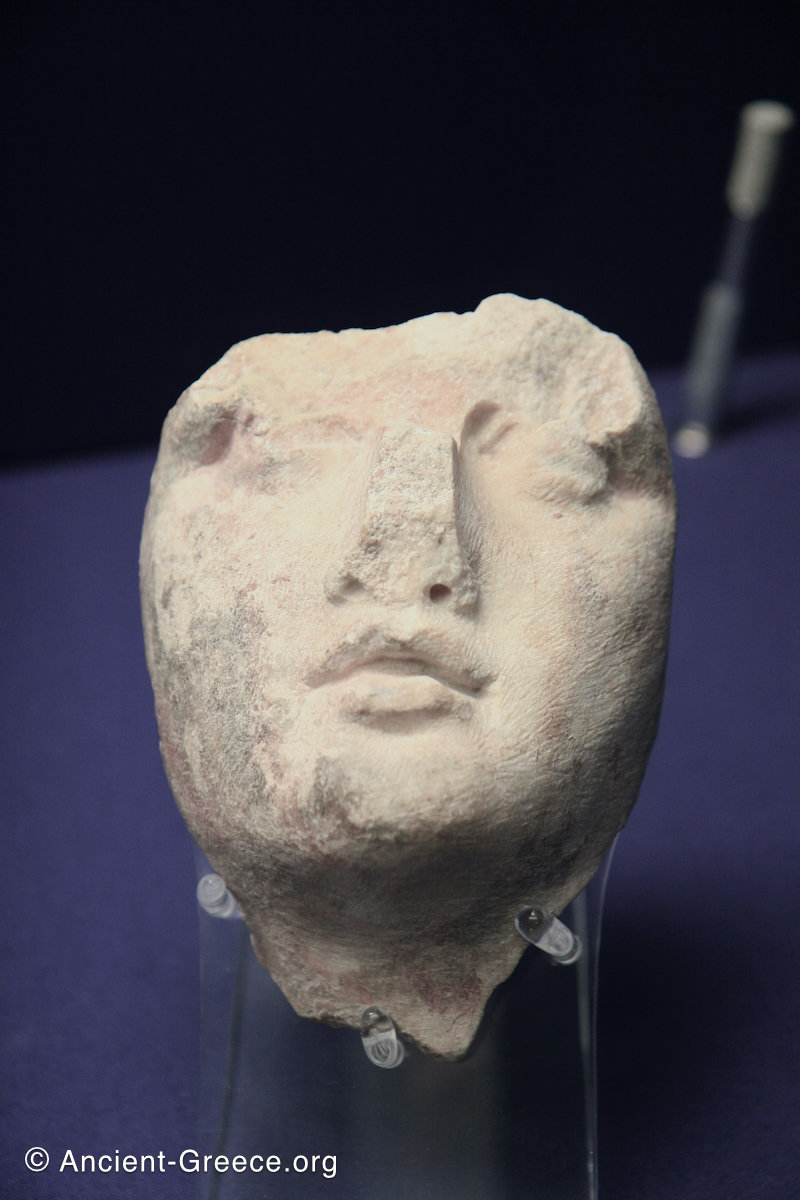
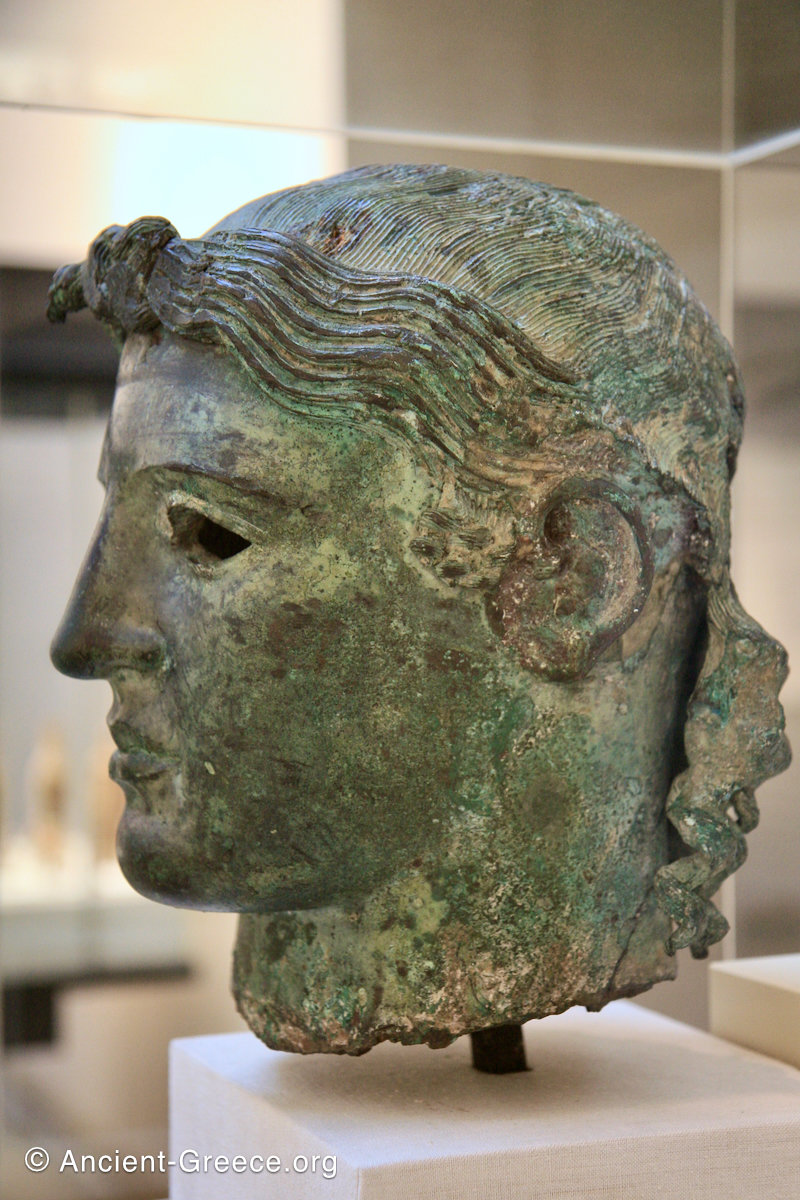
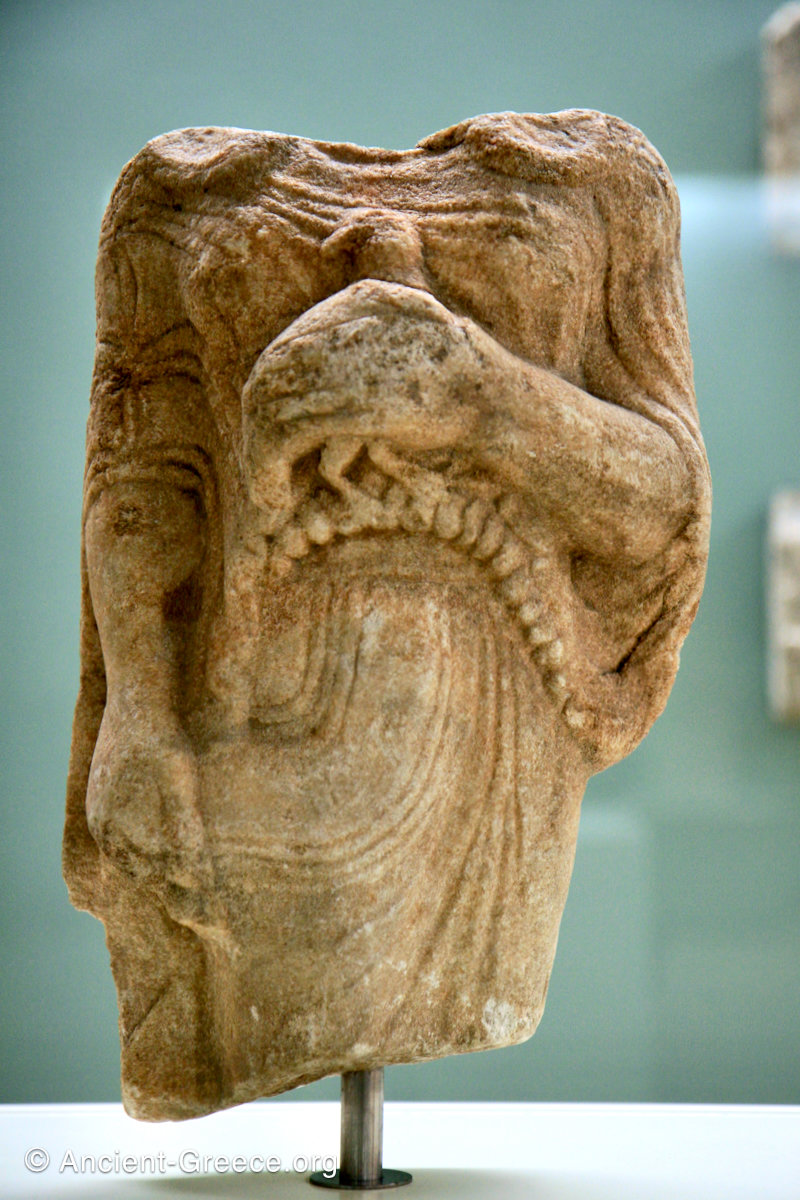
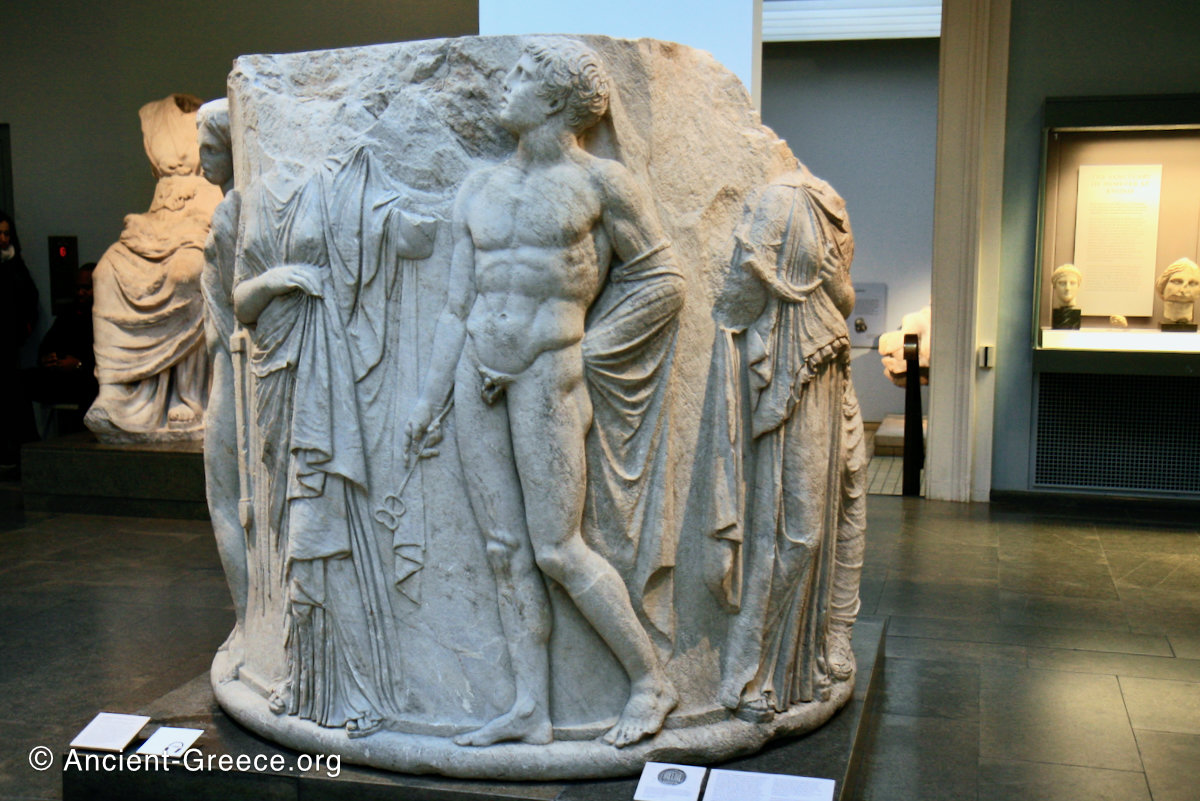
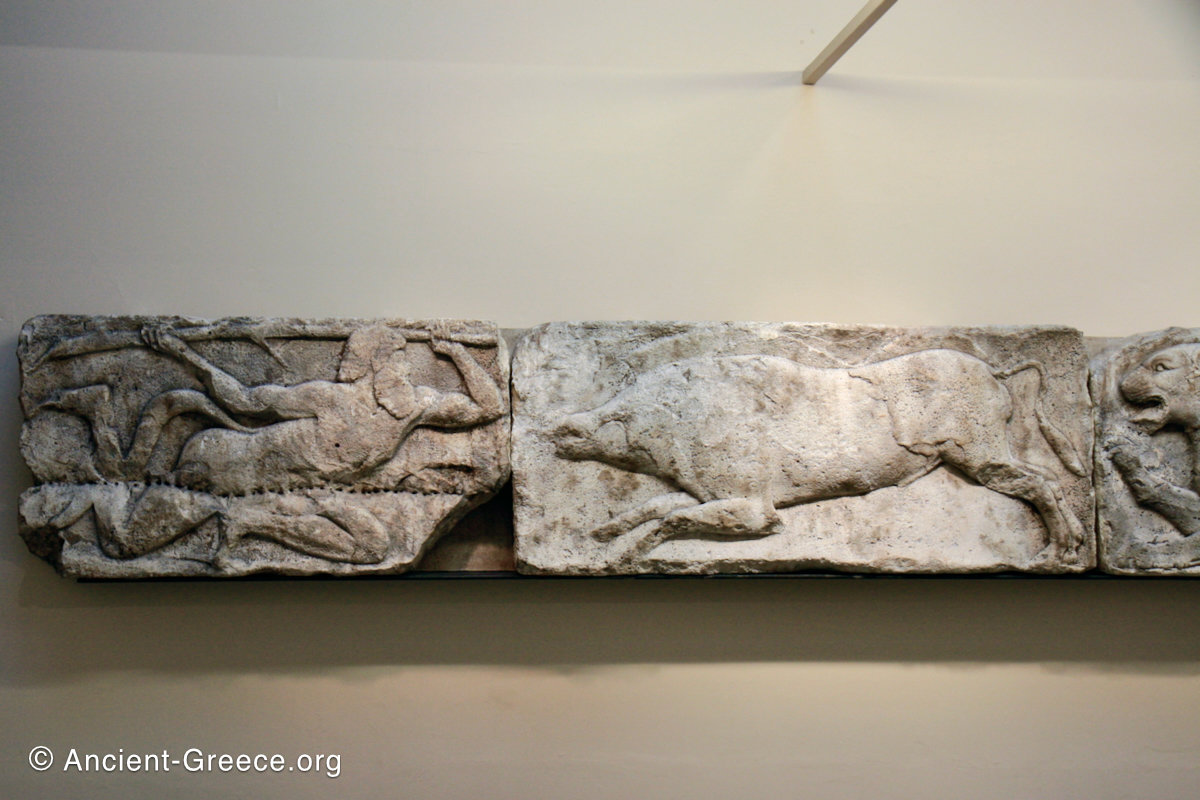
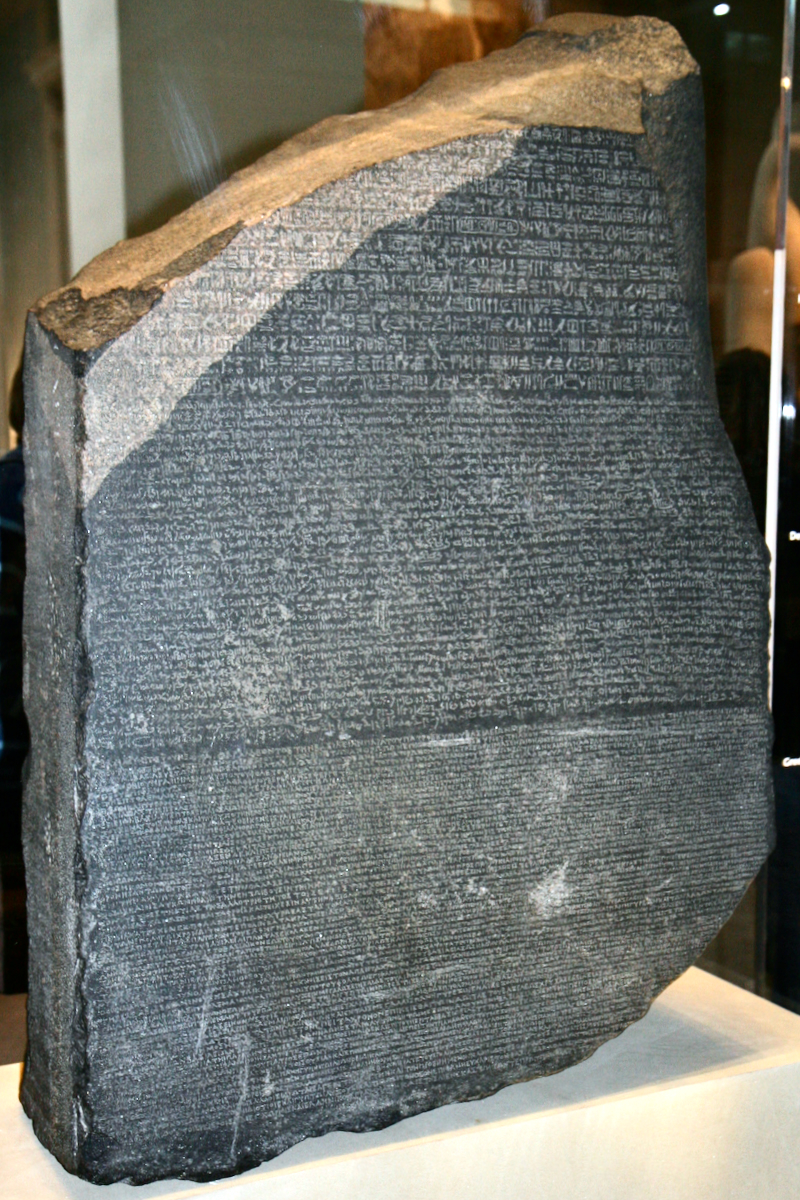
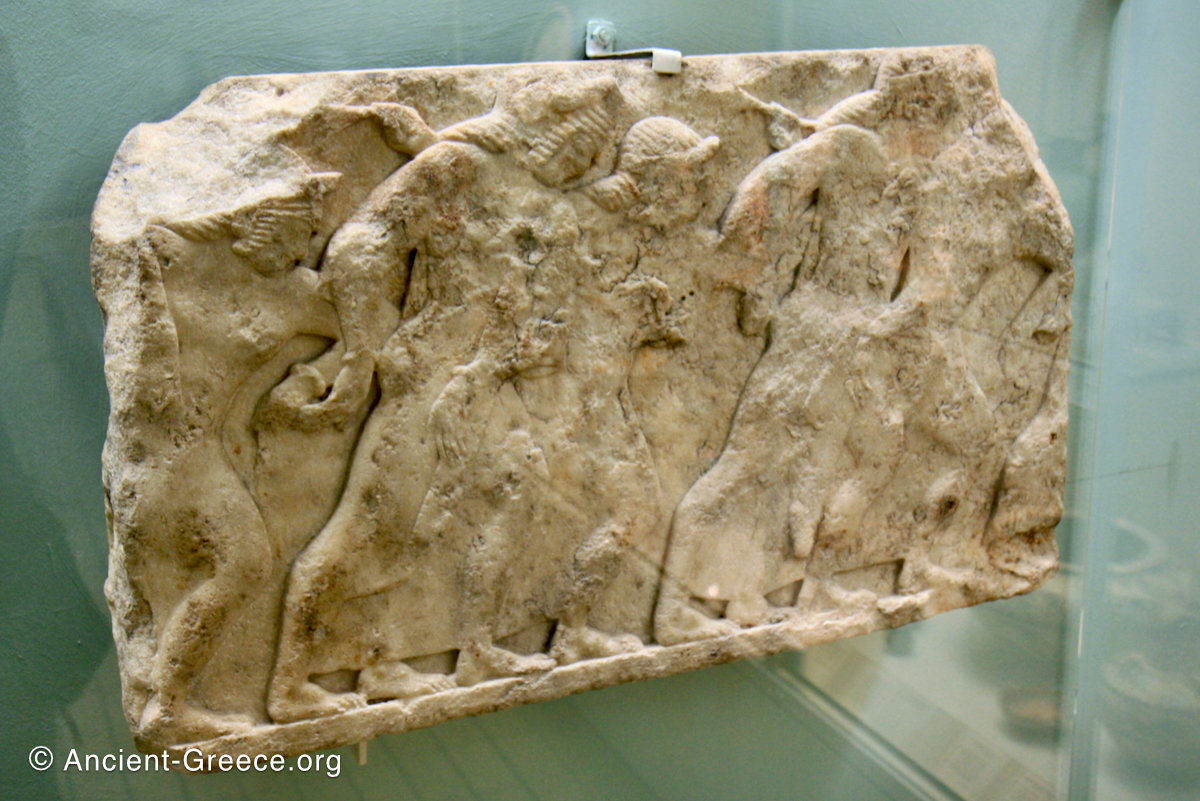
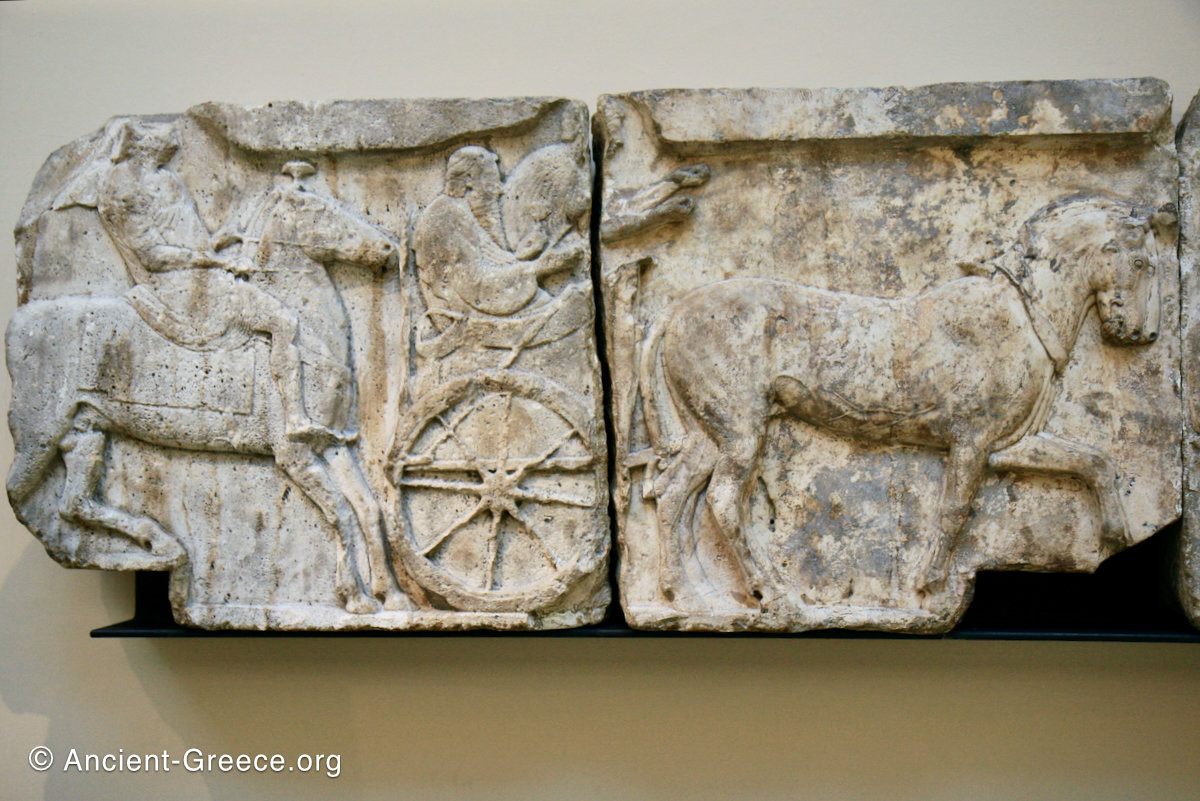
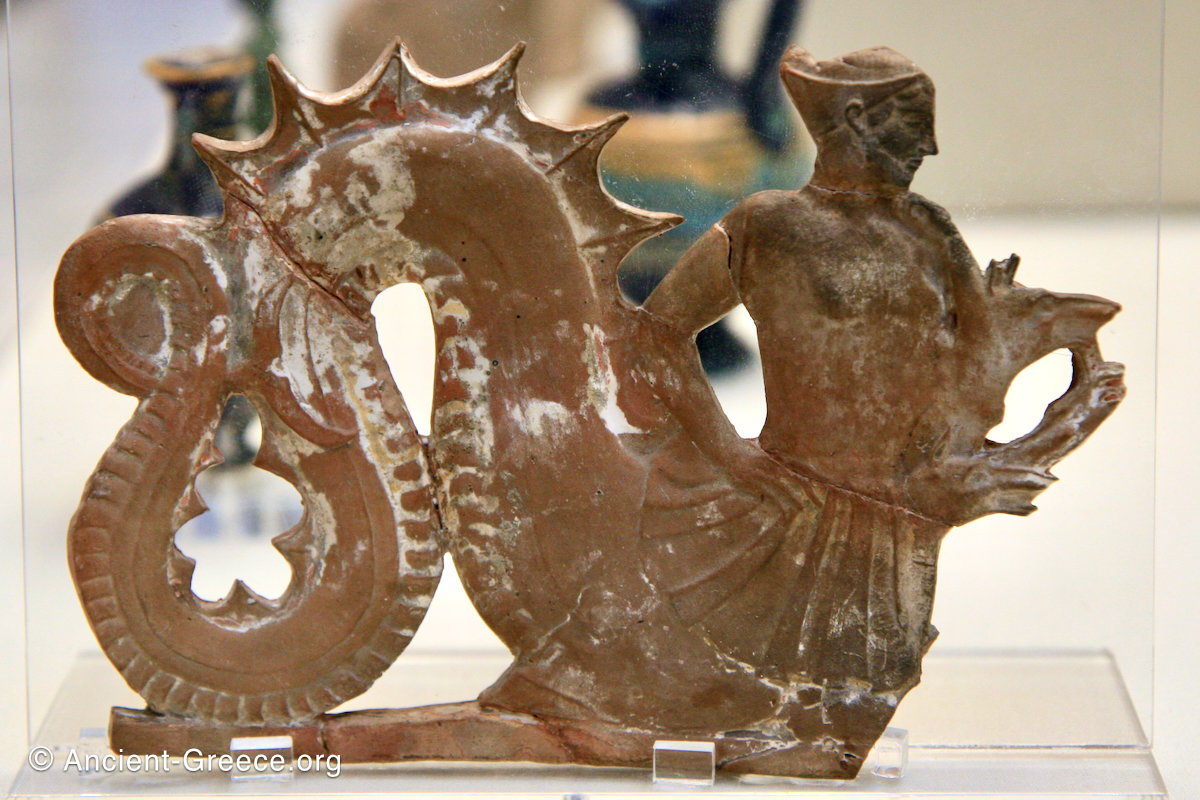
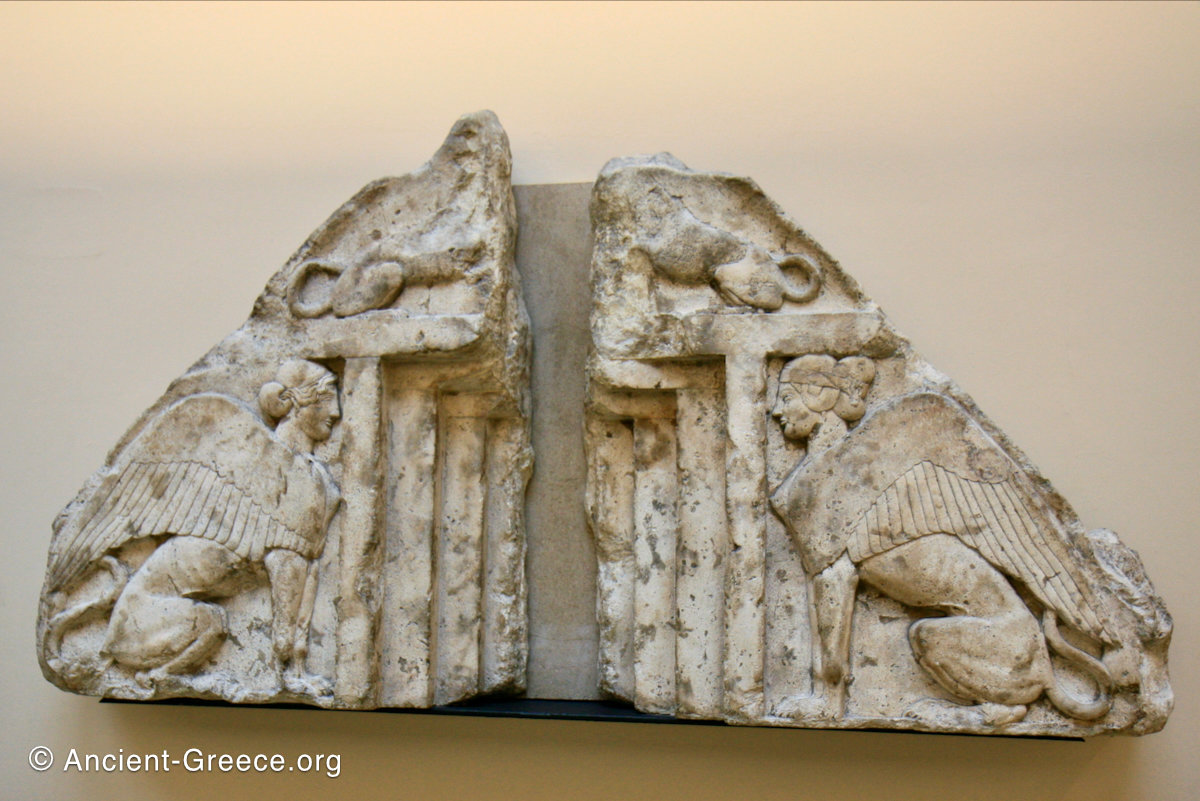
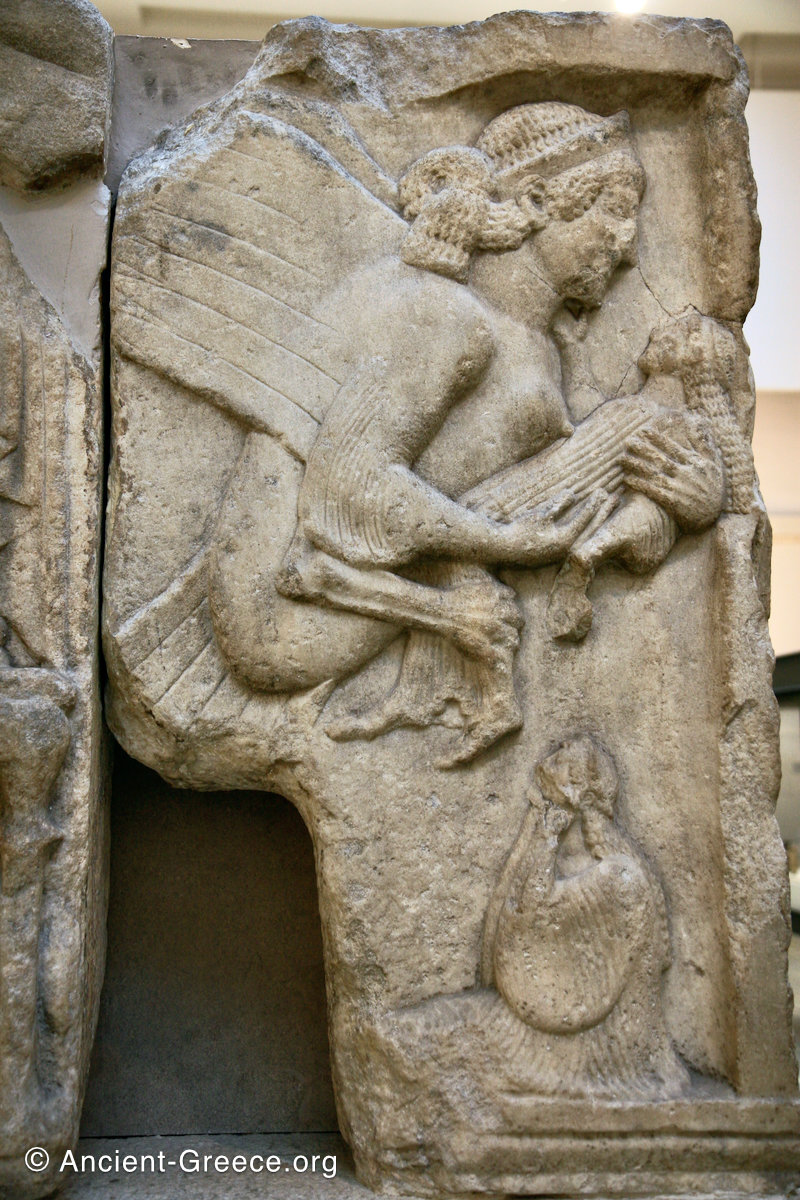
Statue of Venus. Dated to 1st or 2nd c. CE. Copy of Greek original from the 4th c. BCE. Diadoumenos (Victorious Athlete Tying a Ribbon). Marble copy made about 50 CE, based on a Greek original bronze statue from around 440 BCE.Lely’s Venus (Aphrodite) statue. Dated to 1st or 2nd c. CE. Copy of Greek original perhaps from the 2nd c. BCE. Apollo holding a kithara. Marble sculpture from the Temple of Apollo, Cyrene.. 2nd c. CE copy of a Hellenistic original, probably from 200-150 BCE. Molossian Hound sculpture. Roman copy of a lost Greek bronze original, probably of the 2nd century BCE. Gold oak wreath. Dardanelles Tomb Group. 350 – 300 BCE.Statue of a boy tying to remove a thorn from the sole of his foot. 25-50 CE copy of a lost original from the 3d c. BCE.Marble bust of Pericles. Marble. Roman copy of a lost original from 440 – 430 BCE. Classical Era. Pericles was a central Athenian leader during the Greek Golden Age. Corinthian-type bronze helmet. Circa 500 BCE.“Old Blue Eyes” Head of a Statue from the temple of Artemis at Ephesus. Circa 350 – 300 BCE.Bronze head of Apollo known as The Chatsworth Head. From Tamassos, Cyprus. Circa 470 – 460 BCE.Fragment of a Kore statue holding a bird. Made in Ionia circa 525 – 500 BCE.Sculpted Drum from The Later Temple of Artemis at Ephesos. 4th c. BCE. Relief sculpture of Satyrs hunting wild animals. Limestone. Circa 460 BCE.The Rosetta Stone at the British Museum. 196 BCE. The Rosetta Stone is inscribed with Ancient Egyptian hieroglyphs, Demotic script, and Greek script, and it was instrumental in the decipherment of ancient Egyptian scripts.Frieze slab with dancing women. Made in Miletos, Asia Minor, from Teichioussa. Circa 540 – 530 BCE. Tomb of Kybernis: north side frieze. Circa 480 BCE. Relief sculpture of procession of chariots and horsemen. Limestone Circa 460 BCE. Clay statuette of Scylla. Made in Melos about 460 – 450 BCE.Guardian Sphinxes. Circa 460 BCE. Tomb of Kybernis: north side frieze detail of Siren carrying a small figure. Circa 480 BCE.
Bronze Age Artifacts from Greece
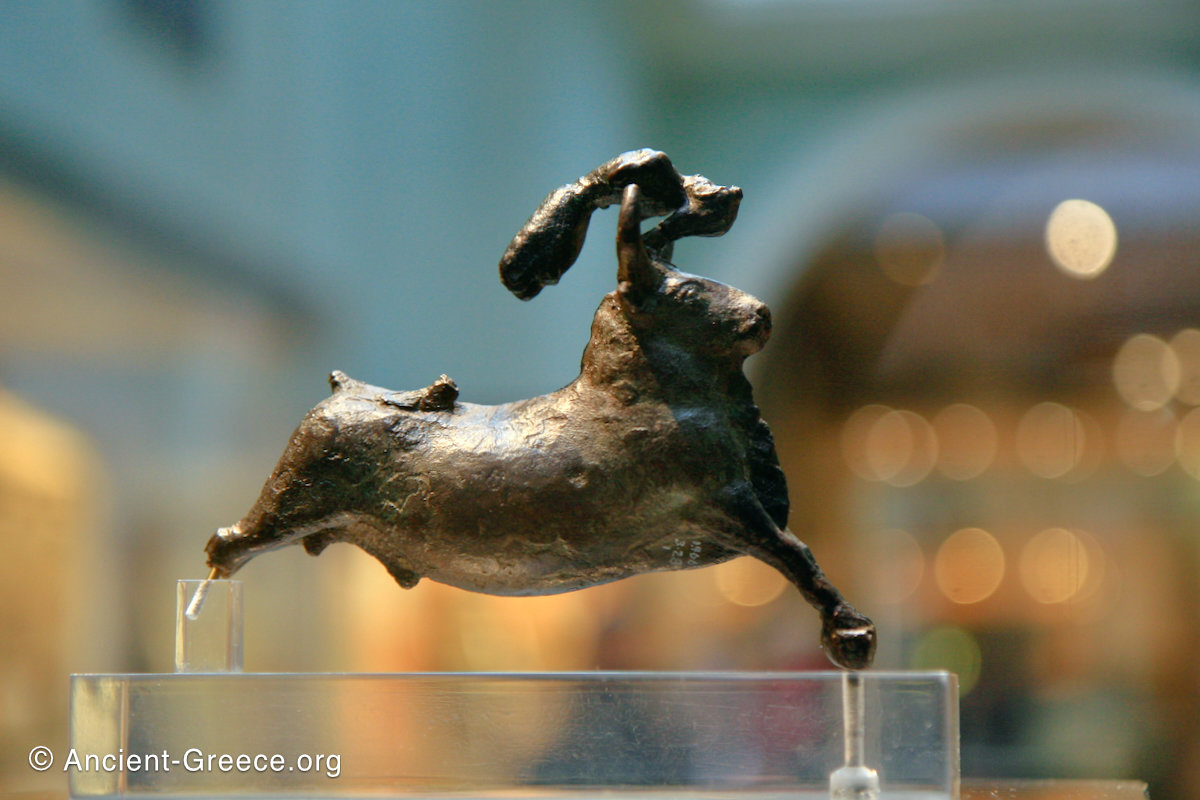
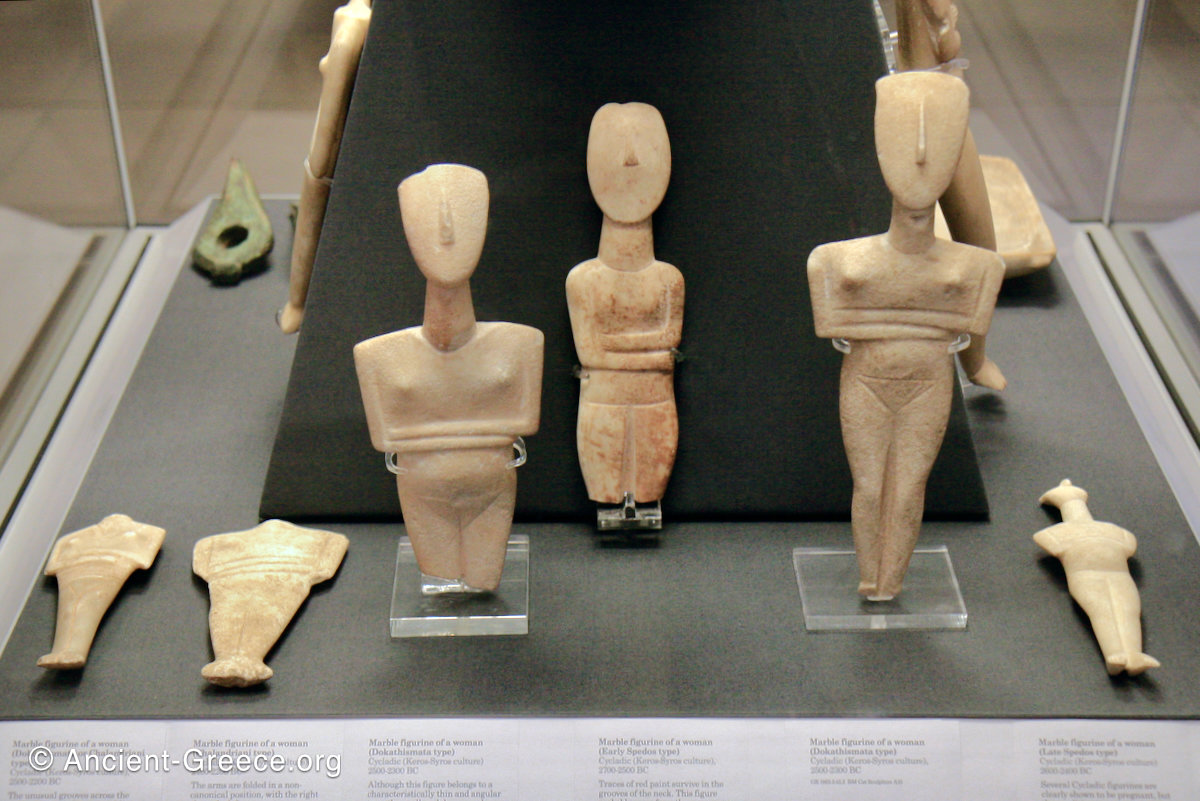
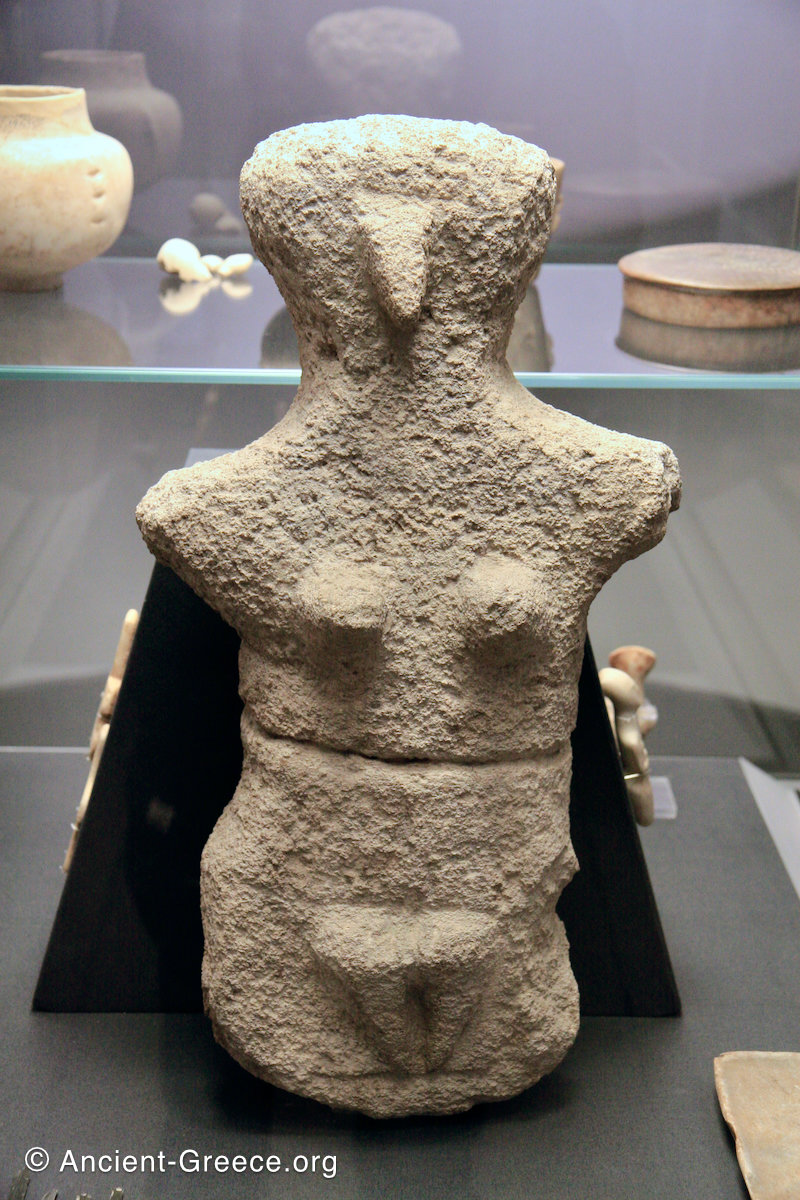
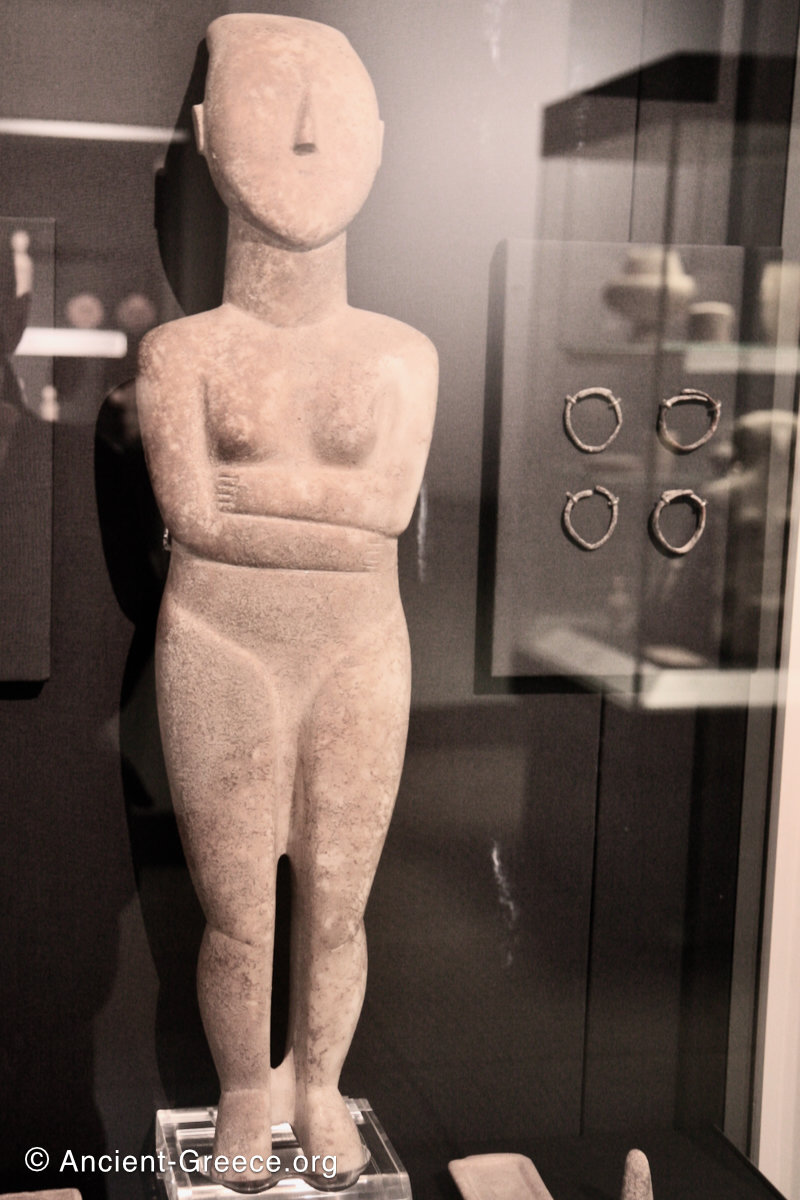
Minoan bronze statuette of a bull with acrobat on its back. 1550 – 1450 BCE.Cycladic figurines. Circa 2500 – 2300 BCE.Limestone female figure from Karpathos. Probably Late Neolithic, 4500-3200 BC
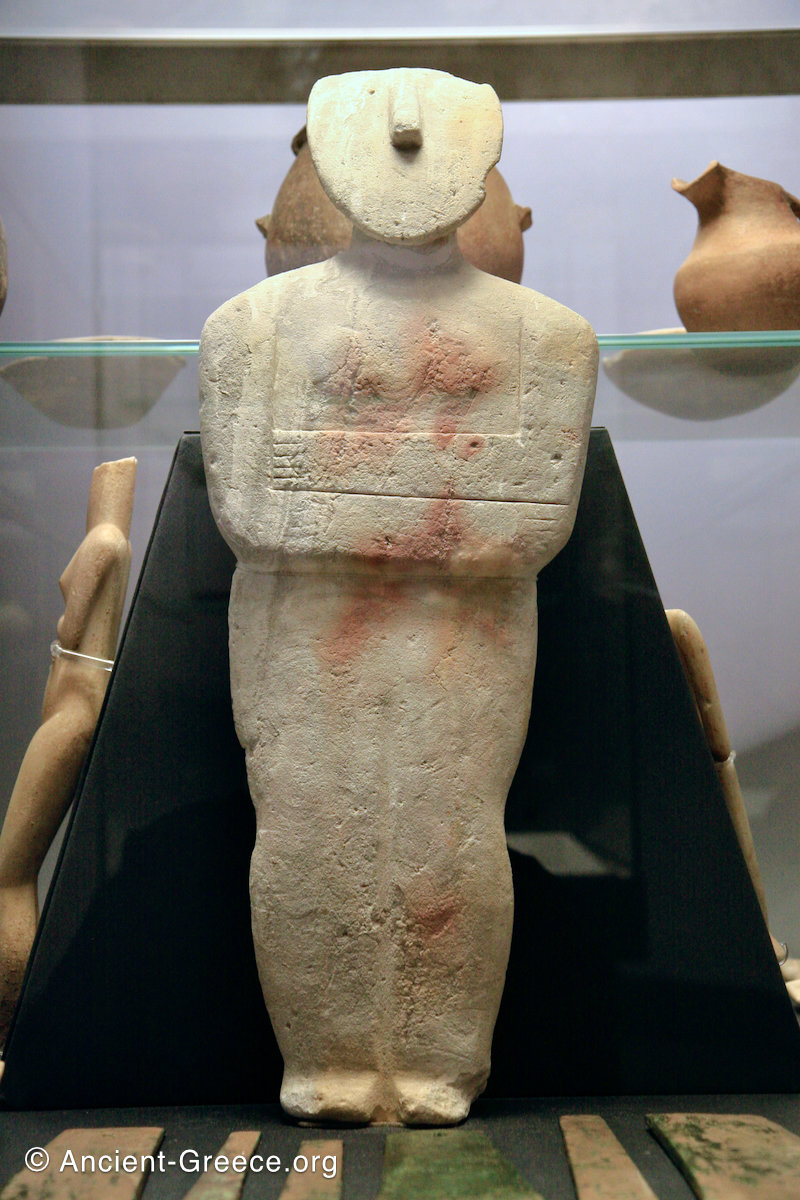
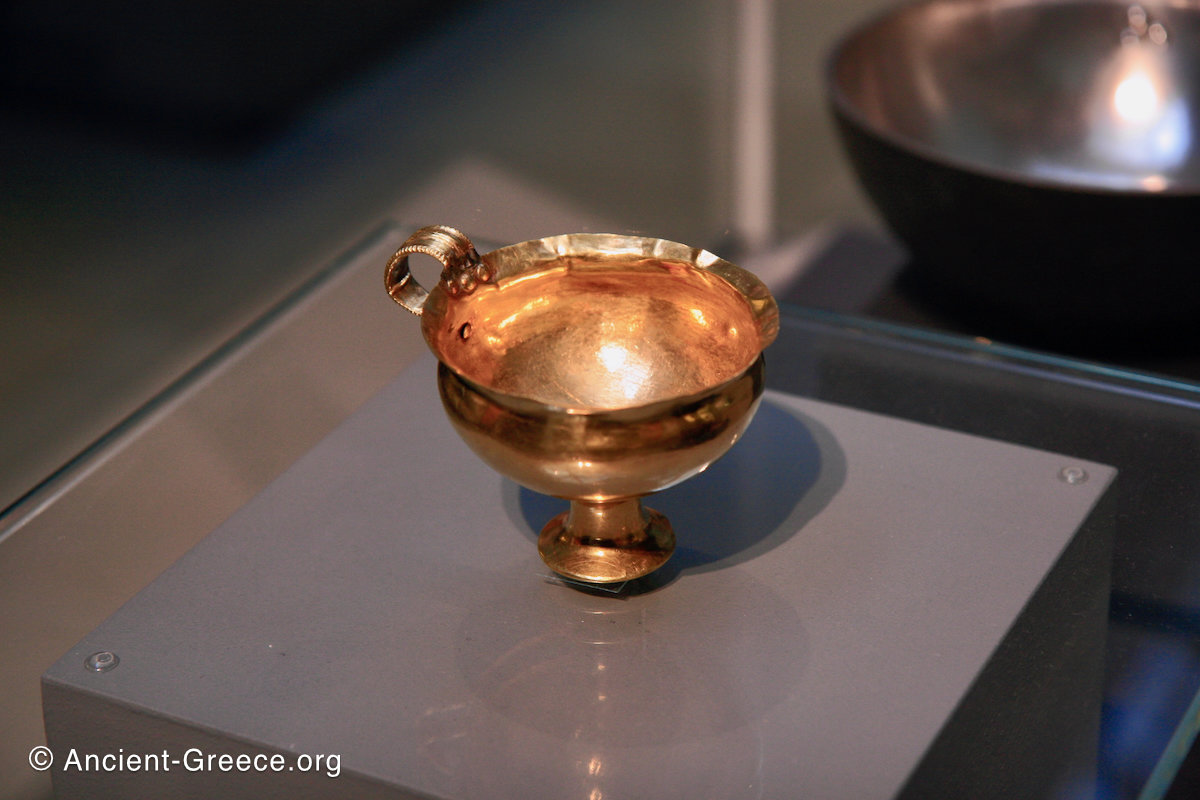
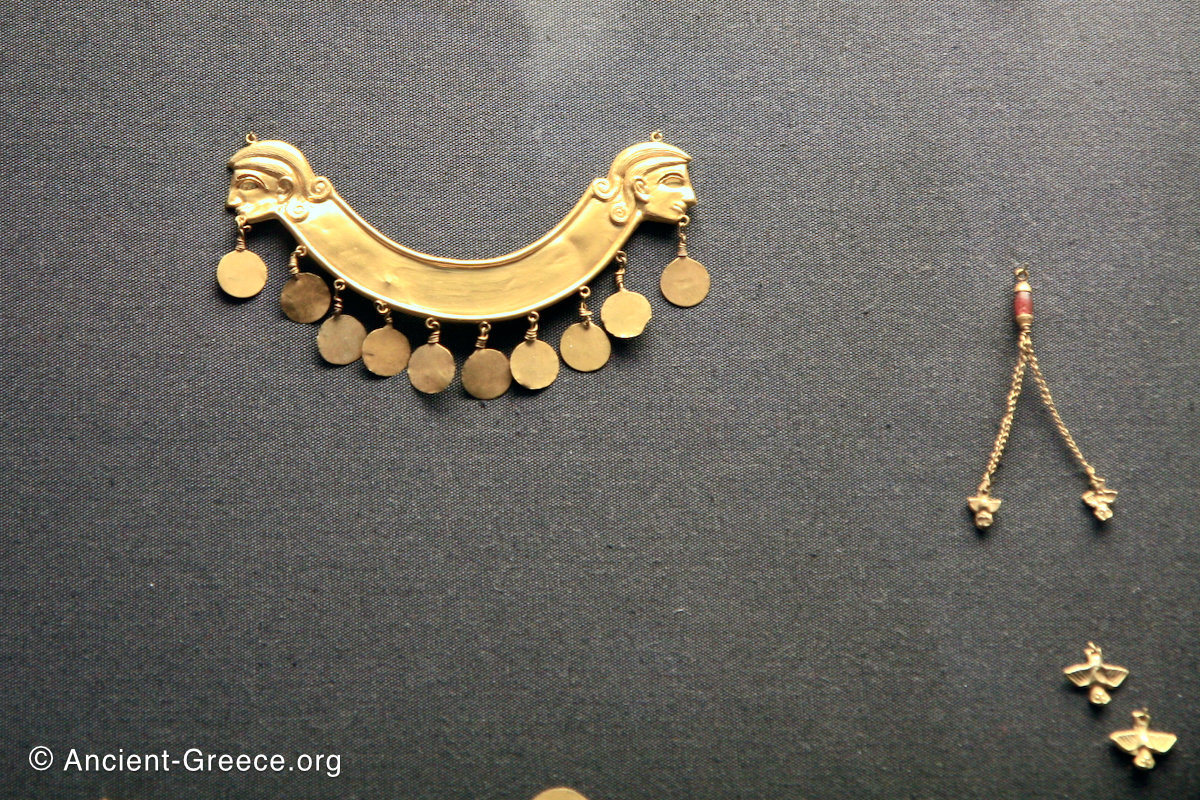
Cycladic female figurine (Early Spedos type, Keros-Syros culture). 2700-2500 ВСCycladic female statuette. 2700 – 2500 BCE.Minoan gold jewelry. The Aigina Treasure. 1850 – 1550 BCE.Mycenaean gold goblet with stem and one handle. Circa 1500 BCE.Minoan jewelry. The Aigina Treasure. 1850 – 1550 BCE.Minoan jewelry. The Aigina Treasure. 1850 – 1550 BCE.Minoan jewelry. The Aigina Treasure. 1850 – 1550 BCE.
Pre-Classical Greek Artifacts in the British museum include objects from Bronze and Iron Ages in Greece. It includes Cycladic, Minoan, Mycenaean, and Archaic objects.
Temple of Apollo Epikouros at Bassai
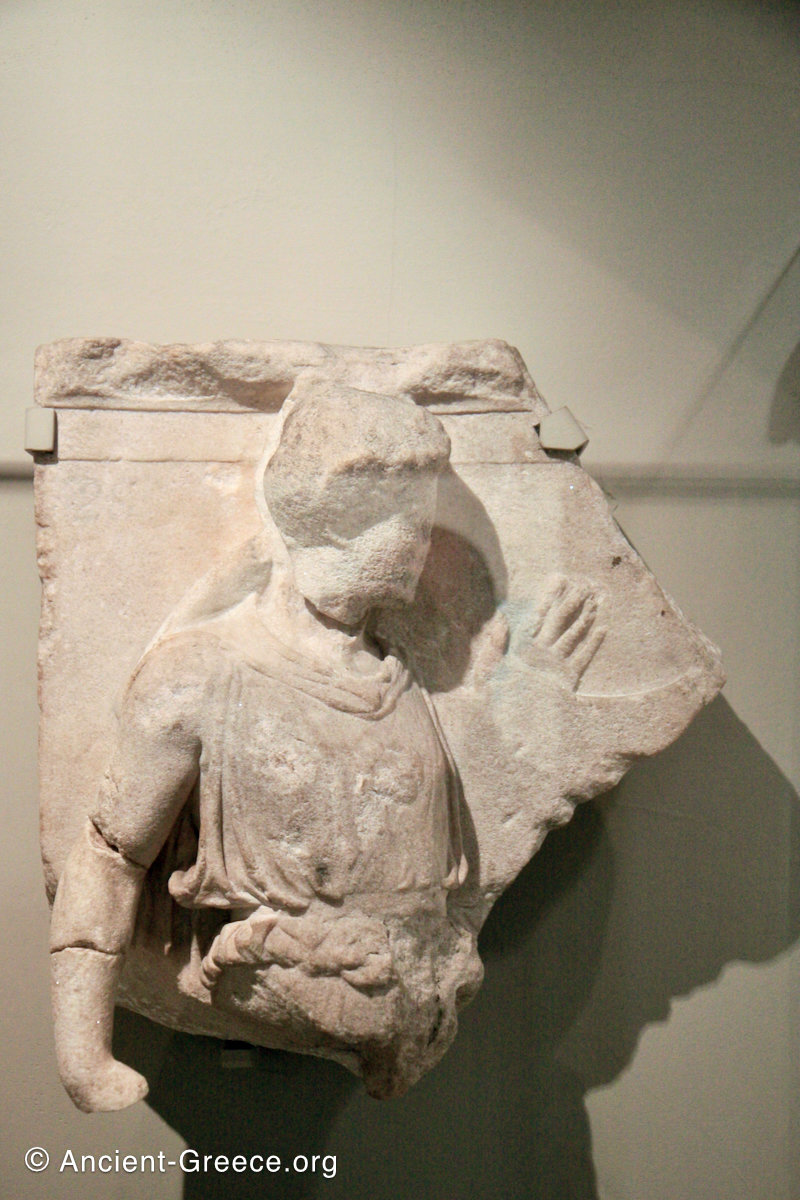
Bassai, Temple of Apollo. Metope sculpture of a kithara player. Circa 420 – 400 BCE.Bassai, Temple of Apollo. Metope with a female figure. Circa 420 – 400 BCE.Bassai, Temple of Apollo. Metope depicting a dancing female figure. Circa 420 – 400 BCE.
Artifacts from the temple of Apollo Epikourios at Bassai.
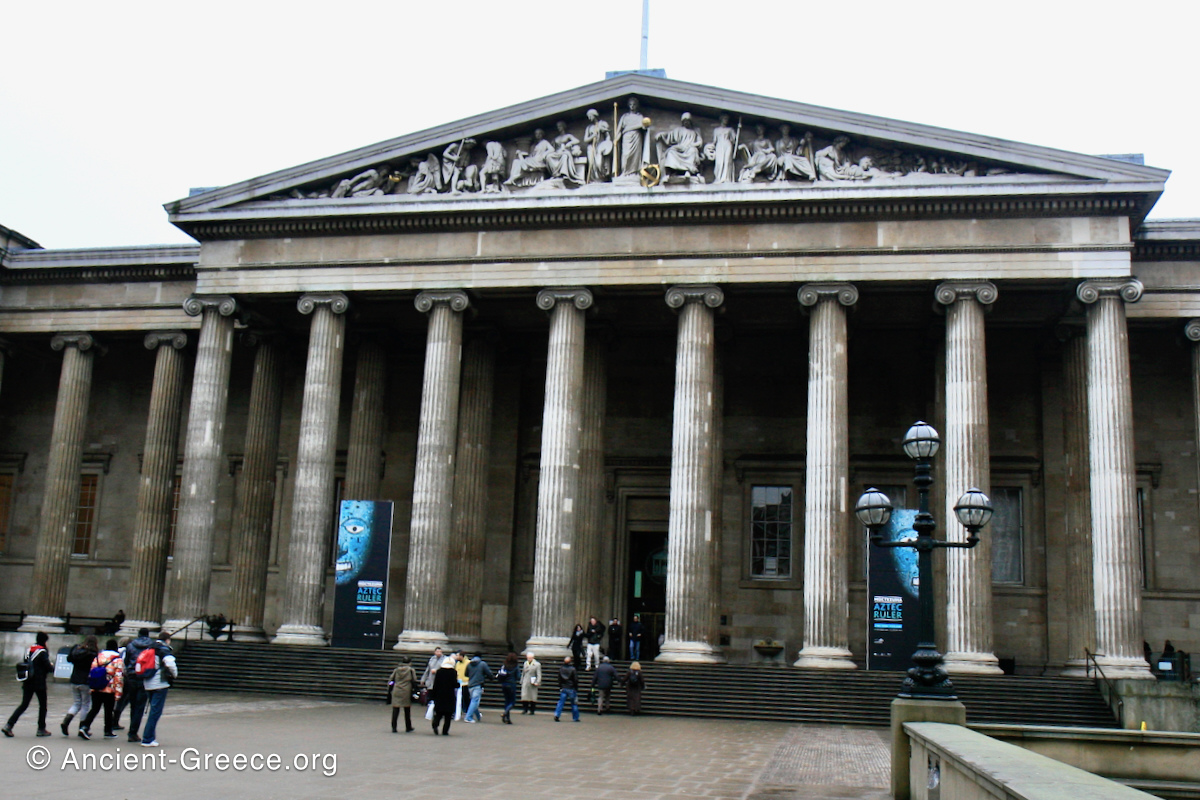
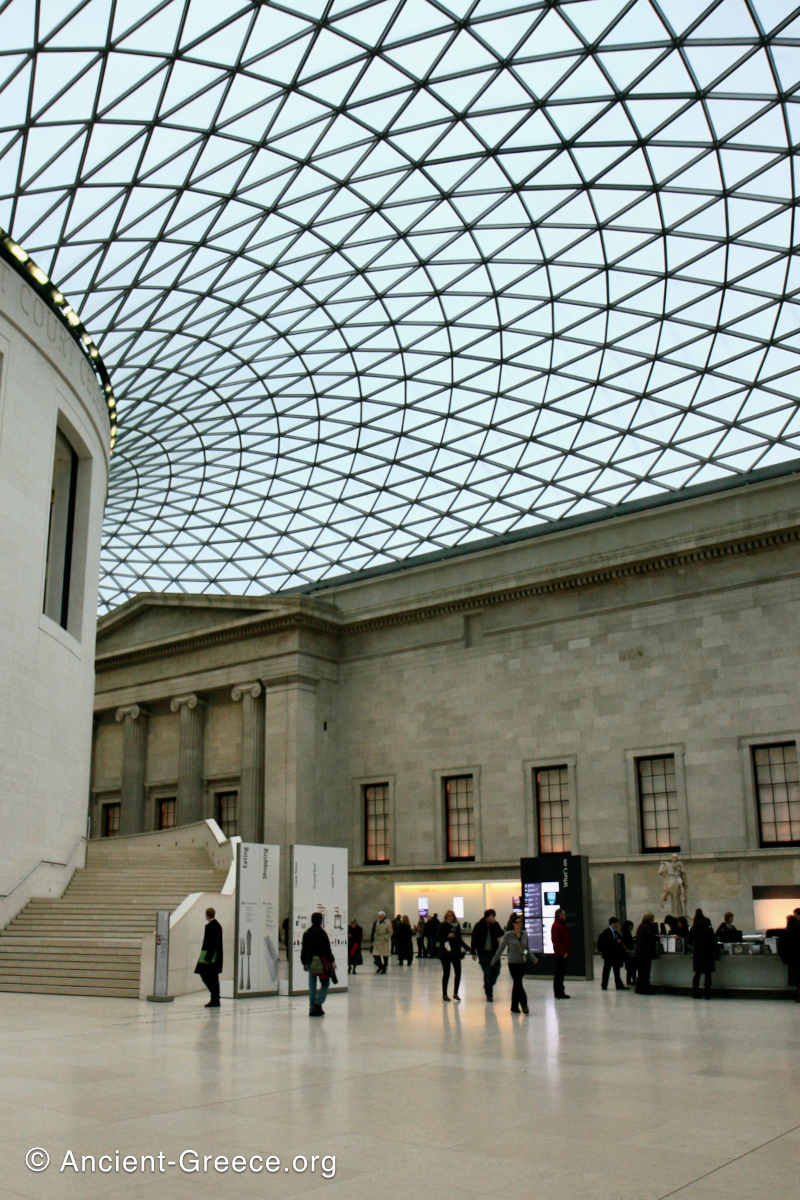
British Museum front, London, UK.British Museum lobby area, London, UK.