On this page:
Ελληνικά
Αρχαία Αμβρακία
Η αρχαία Αμβρακία (Αγγλικα: Ambracia, Ancient Greek: Ἀμβρακία, occasionally Ἀμπρακία, Ampracia) υπήρξε σημαντική πόλη-κράτος της βορειοδυτικής Ελλάδας στον λόφο Περάνθης. Το λιμάνι της ήταν ο Άμβρακος στις εκβολές του ποταμού Άραχθου. Τα αρχαιολογικά της κατάλοιπα είναι ενσωματωμένα στον σύγχρονο αστικό ιστό της Άρτας, αντιπροσωπεύοντας μια συνεχή αλληλουχία κατοίκησης από την Αρχαϊκή εποχή έως σήμερα.

Panoramic view from the Ambracian Gulf and its lagoons toward the Tzoumerka Mountains
A panoramic view across the serenity of the Ambracian Gulf and its lagoons, looking toward the snowy peaks of the Tzoumerka mountains. On the right, the city of Arta (ancient Ambracia) is visible at the foot of the hills, while snow begins to brew over the highlands in the background. The landscape reflects the natural diversity of the Epirus region, connecting the calm, shallow waters of the coast to the rugged interior.
◈ ◈ ◈
Η Άρτα (Αμβρακία) και τα Τζουμέρκα. 2008
Πανοραμική άποψη από τον Αμβρακικό Κόλπο και τις λιμνοθάλασσές του προς τα Τζουμέρκα
Μια πανοραμική άποψη πάνω από τη γαλήνη του Αμβρακικού Κόλπου και των λιμνοθαλασσών του, με κατεύθυνση προς τις χιονισμένες κορυφές των Τζουμέρκων. Στα δεξιά διακρίνεται η πόλη της Άρτας (αρχαία Αμβρακία) στους πρόποδες των λόφων, ενώ στο βάθος το χιόνι πυκνώνει πάνω από τον ορεινό όγκο. Το τοπίο αντανακλά τη φυσική ποικιλομορφία της Ηπείρου, συνδέοντας τα ήρεμα, ρηχά νερά των ακτών με την άγρια ομορφιά της ενδοχώρας.
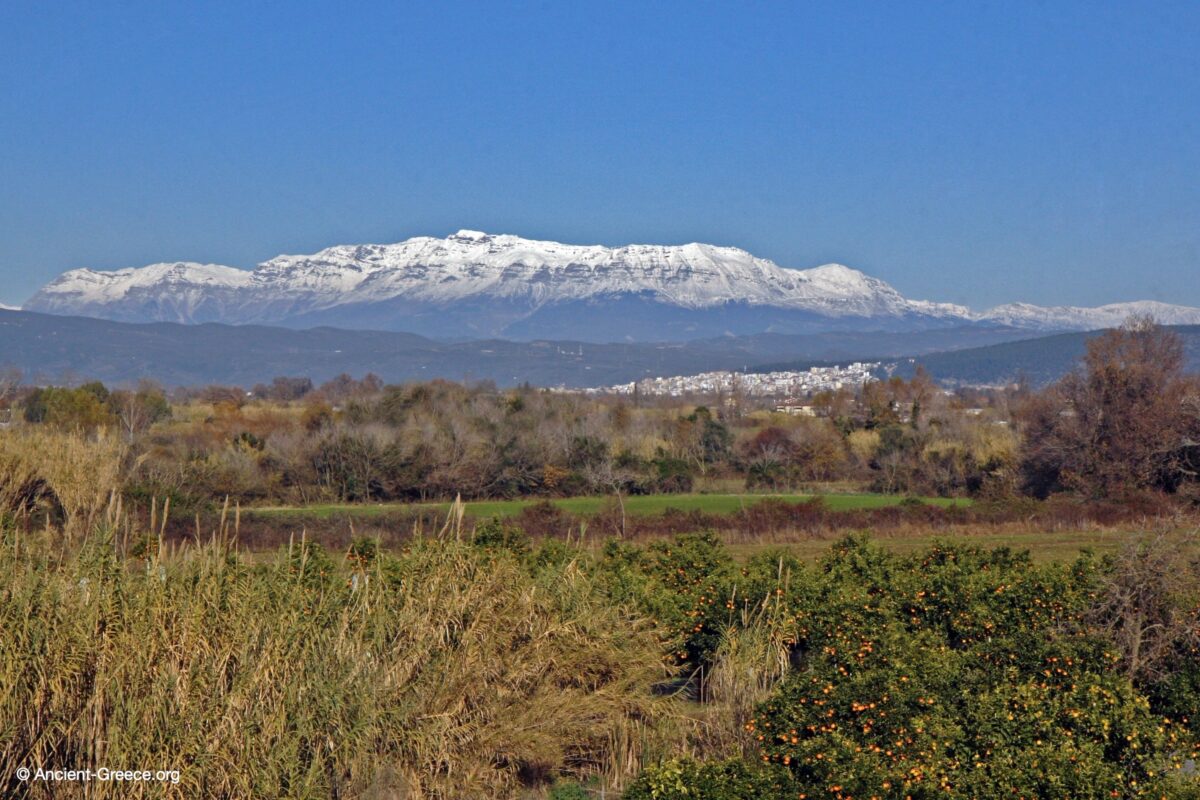
Landscape of Arta with Peranthi Hill and the Tzoumerka Mountains
The white buildings of Arta spread across the slopes of Peranthi Hill, framed by the snow-capped Tzoumerka peaks in the distance. In the valley below, the landscape is lush and green, with tall reeds and orange trees heavy with ripe fruit. It is a quiet, classic view of Epirus, where the winter snow on the mountains meets the fertile, sun-filled plains of the coast.
◈ ◈ ◈
Η Άρτα και τα Τζουμέρκα. 2008
Τοπίο της Άρτας με τον Λόφο της Περάνθης και τα Τζουμέρκα.
Τα λευκά κτίρια της Άρτας απλώνονται στις πλαγιές του λόφου της Περάνθης, με φόντο τις χιονισμένες κορυφές των Τζουμέρκων στο βάθος. Στην πεδιάδα, το τοπίο είναι καταπράσινο, με ψηλά καλάμια και πορτοκαλιές φορτωμένες με ώριμους καρπούς. Είναι μια γαλήνια, κλασική εικόνα της Ηπείρου, όπου το χιόνι των βουνών συναντά την εύφορη και ηλιόλουστη πεδιάδα κοντά στις ακτές.
Η πόλη ήταν χτισμένη σε μια εύφορη προσχωσιγενή πεδιάδα, εντός μιας έντονης καμπής του ποταμού Άραχθου. Η θέση αυτή παρείχε στρατηγικό έλεγχο στις χερσαίες εμπορικές οδούς και πρόσβαση στο Ιόνιο Πέλαγος, διευκολύνοντας την ανάδειξη της Αμβρακίας σε περιφερειακή οικονομική και πολιτική δύναμη.
Ίδρυση και Κορινθιακός Αποικισμός
Η Αμβρακία ιδρύθηκε περί το 625 π.Χ. ως αποικία της Κορίνθου, με οικιστή τον Γόργο, γιο του τυράννου Κυψέλου. Τοποθετημένη στις όχθες του τότε πλωτού ποταμού Άραχθου, εξελίχθηκε σε μείζον εμπορικό κέντρο που διατήρησε τους θεσμικούς και πολιτιστικούς δεσμούς με τη μητρόπολή της.
Η πόλη οργανώθηκε βάσει του Ιπποδάμειου συστήματος, με τυποποιημένα οικοδομικά τετράγωνα και ευρείες οδικές αρτηρίες. Ο πολεοδομικός αυτός σχεδιασμός υποστήριξε έναν σημαντικό πληθυσμό και αντανακλούσε τα προηγμένα πρότυπα των μεγάλων ελληνικών κέντρων της εποχής.
Η Πρωτεύουσα του Βασιλείου της Ηπείρου
Η πόλη έφτασε στο πολιτικό της απόγειο το 295 π.Χ., όταν ο βασιλιάς Πύρρος όρισε την Αμβρακία ως πρωτεύουσα του Βασιλείου των Μολοσσών και του Κοινού των Ηπειρωτών. Κατά την περίοδο αυτή, η πόλη απέκτησε μνημειώδη χαρακτήρα με την ανέγερση ανακτόρων και δημόσιων ιερών.
Ως διοικητικό κέντρο του ηπειρωτικού κράτους, η Αμβρακία αποτέλεσε επίκεντρο της ελληνιστικής διπλωματίας. Η επέκταση των υποδομών και η συγκέντρωση σημαντικών έργων τέχνης κατά την εποχή αυτή κατέστησαν την πόλη έναν από τους κυριότερους πολιτιστικούς πόλους της Μεσογείου.
Ο Ναός του Απόλλωνα Πυθίου Σωτήρα
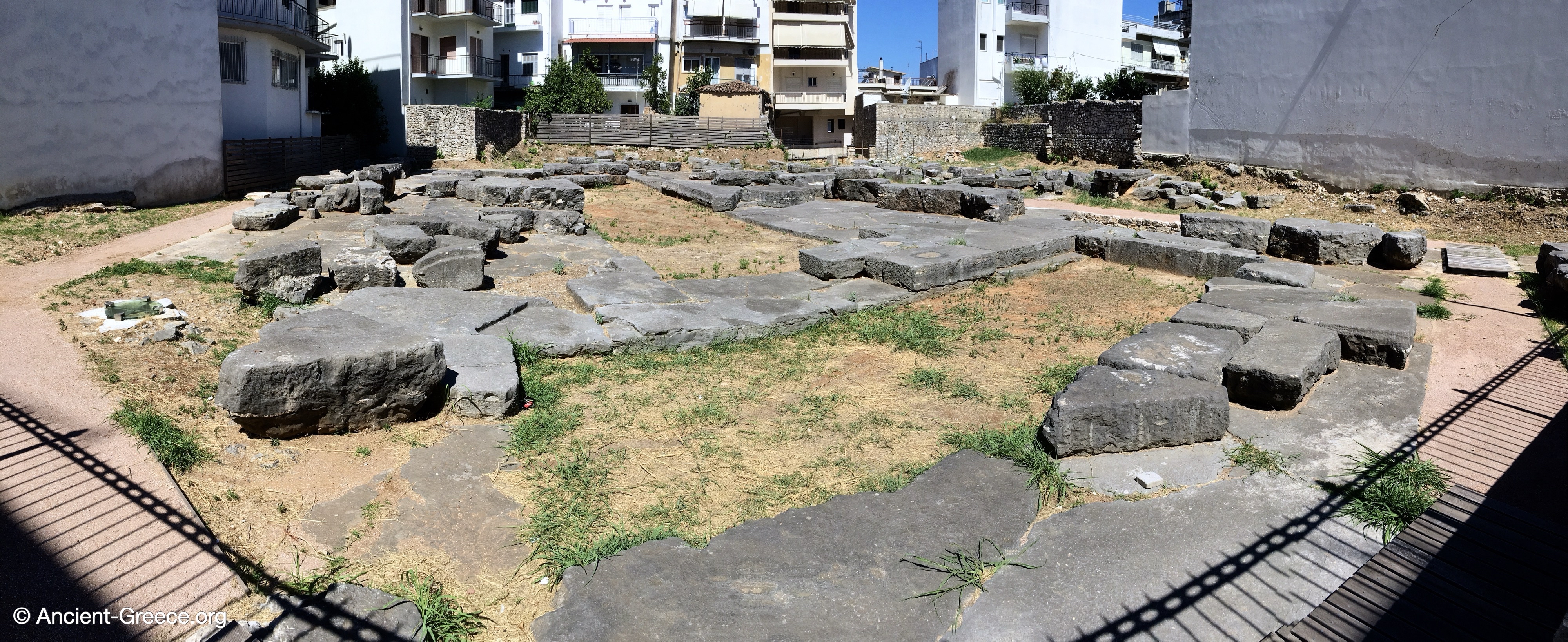
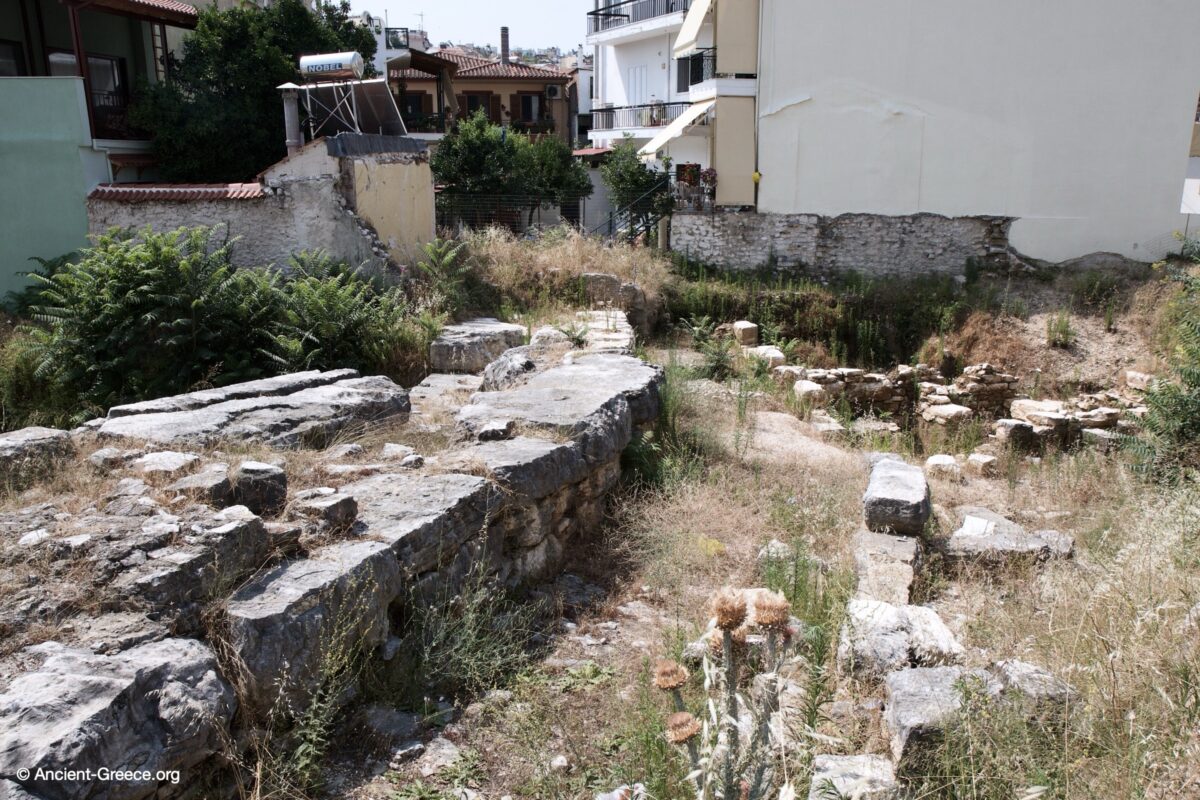
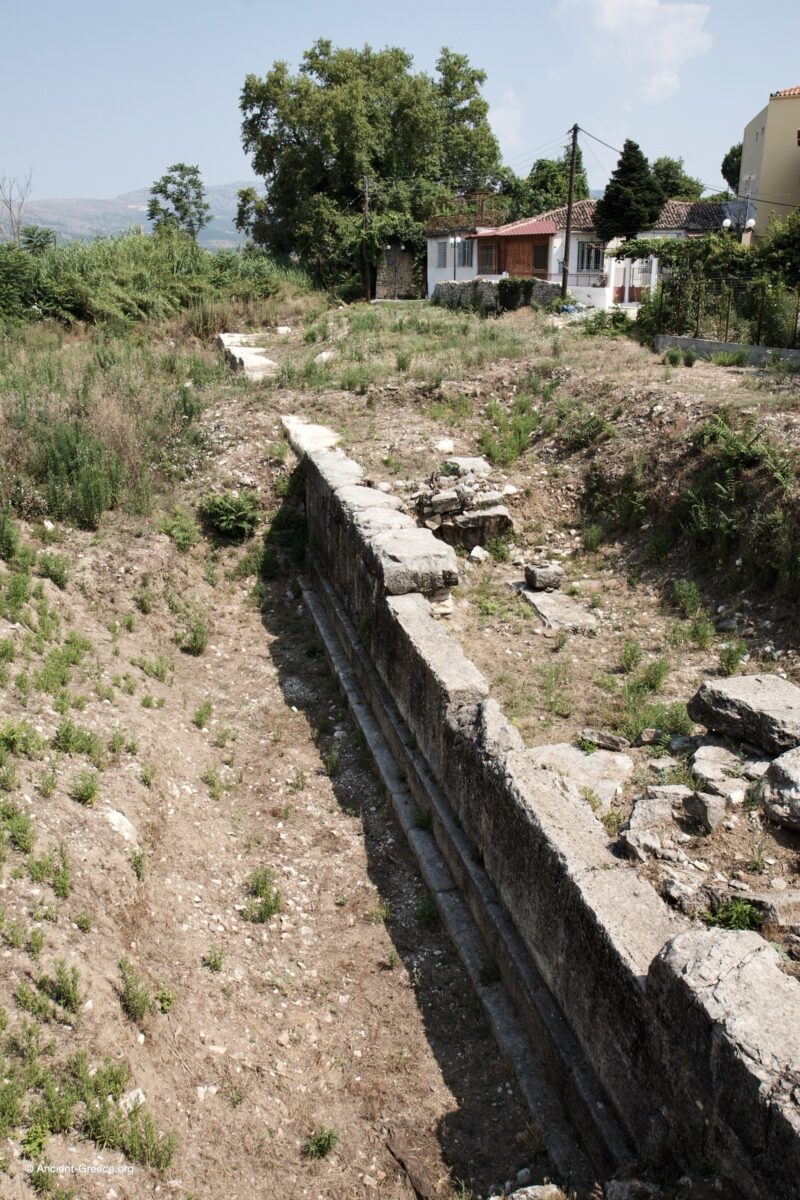
Τα θεμέλια του ναού του Απόλλωνα Πυθίου Σωτήρα, προστάτη θεού της πόλης, βρίσκονται στο κέντρο της Άρτας. Ο δωρικός αυτός περίπτερος ναός, που χρονολογείται περί το 500 π.Χ., αποτελούσε το θρησκευτικό και πολιτικό κέντρο της αρχαίας πόλης.
Ο ναός διέθετε κιονοστοιχία έξι επί δώδεκα κιόνων. Πέραν της λατρευτικής του λειτουργίας, το ιερό χρησίμευε ως δημόσιο αρχείο για τη φύλαξη κρατικών ψηφισμάτων και διεθνών συνθηκών, λειτουργώντας ως το επίσημο «αρχειοφυλάκειο» των Αμβρακιωτών.
Το Μικρό Θέατρο της Αμβρακίας
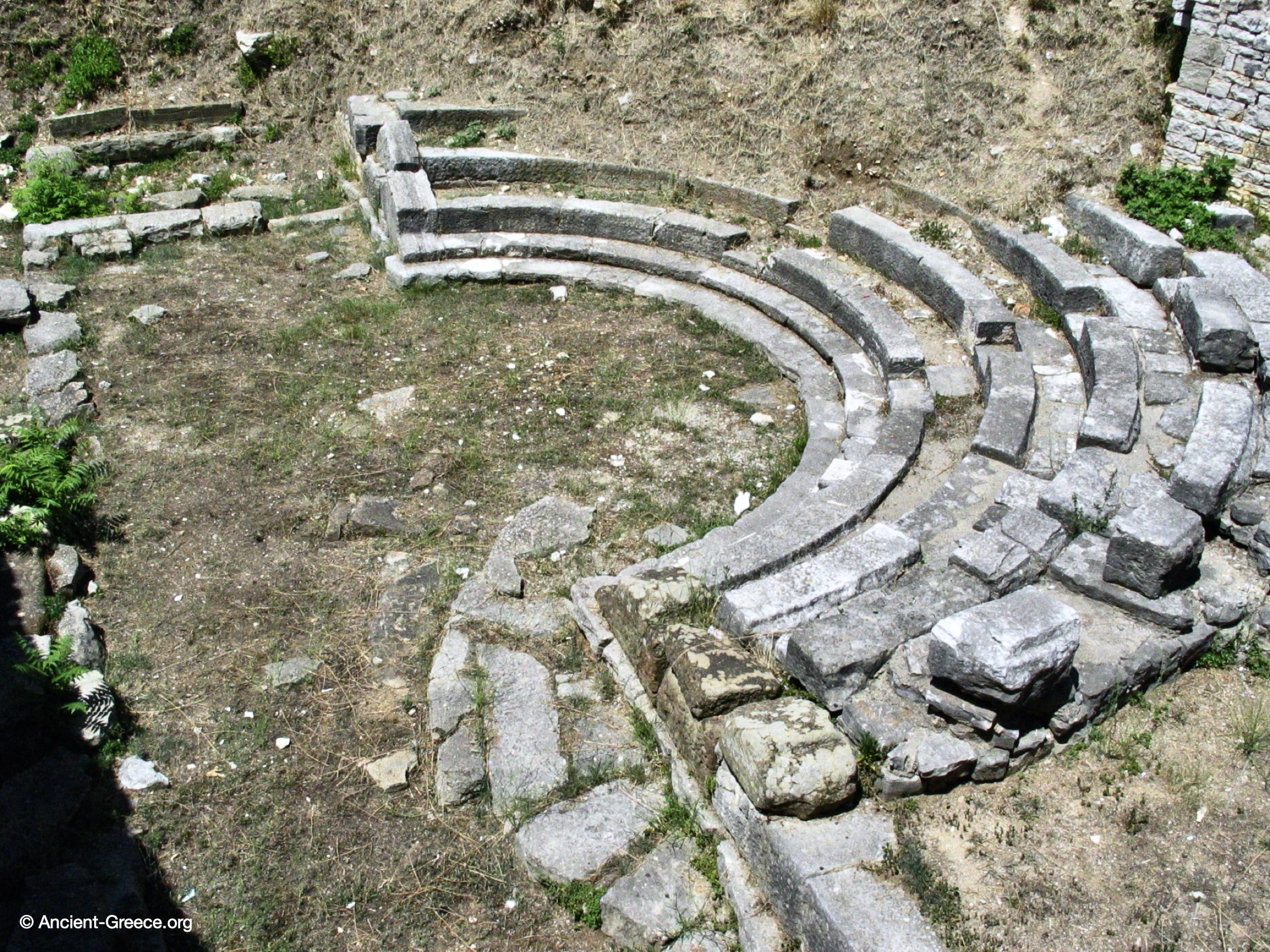
Το Μικρό Θέατρο, το οποίο λειτουργούσε και ως Βουλευτήριο, εντοπίζεται εντός του οικιστικού ιστού της σύγχρονης πόλης. Είναι το μικρότερο αρχαίο θέατρο που έχει ανασκαφεί στην Ελλάδα και οικοδομήθηκε πάνω σε προγενέστερο λουτρικό συγκρότημα, το οποίο περιλάμβανε ψηφιδωτά δάπεδα με θαλάσσια θέματα.
Το μνημείο αντανακλά τη διπλή ανάγκη για έναν χώρο παραστάσεων και έναν χώρο πολιτικών συναθροίσεων. Η διατήρηση των παλαιότερων ψηφιδωτών κάτω από το κοίλο του θεάτρου παρέχει τεκμήρια για τη λειτουργική εξέλιξη του χώρου από την ιδιωτική χρήση στη δημόσια.
Η Μουσική στην Αμβρακία
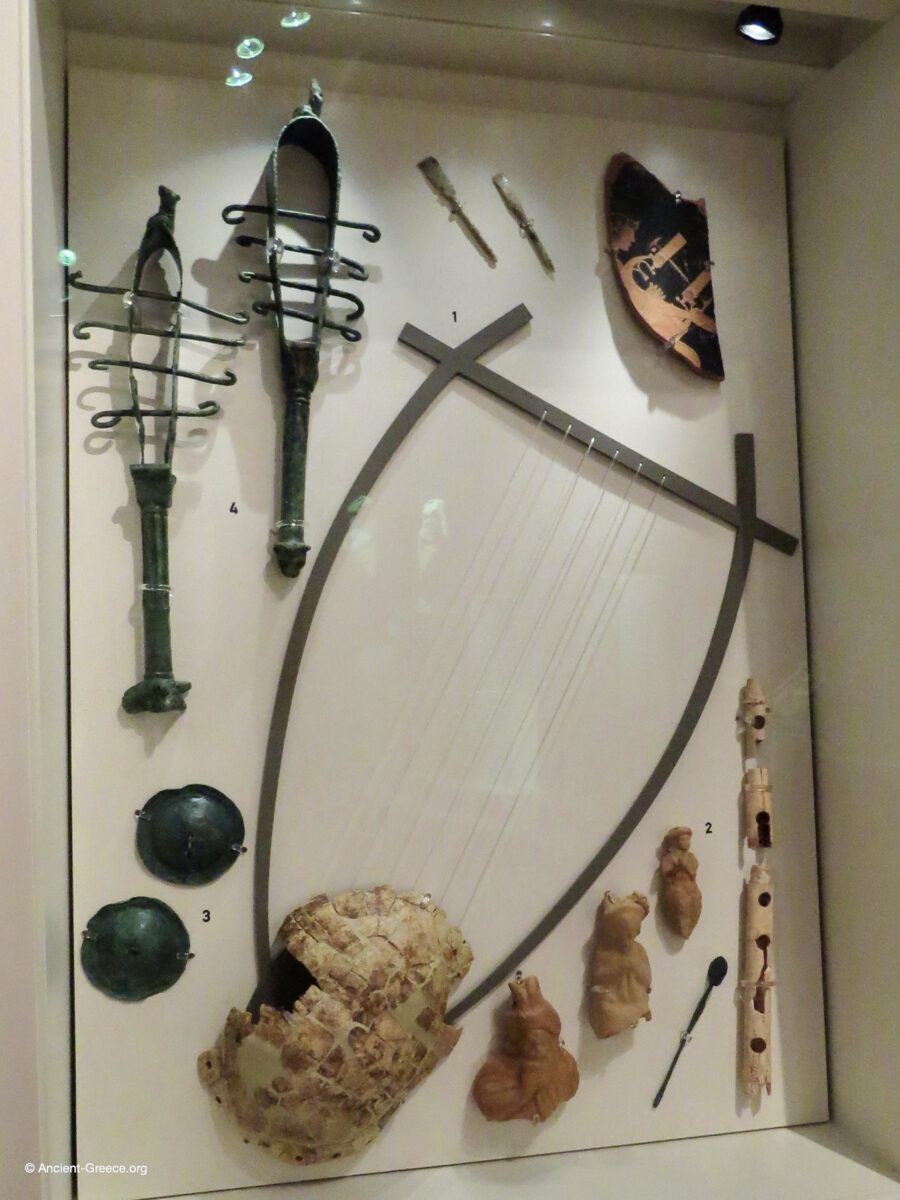
Archaeological Museum of Arta
Classical to Hellenistic Period
Bone, Bronze, and Tortoise Shell
Ambracia held a significant musical tradition, home to renowned figures like the citharoedus Xenocrates and the piper Nicolas.
Most famous was Epigonus, inventor of the epigoneion—a forty-stringed kithara played on the knees and an ancestor of the modern guitar and dulcimer. This display features the remains of various instruments: stringed instruments like the lyre (using a tortoise shell soundbox [1]); wind instruments including the aulos [2] and syrinx; and percussion such as kymbala [3] and the seistron [4], used in both musical performances and religious ceremonies.
◈ ◈ ◈
Αρχαία Μουσικά Όργανα της Αμβρακίας
Αρχαιολογικό Μουσείο Άρτας
Κλασική έως Ελληνιστική Περίοδος
Οστό, Ορείχαλκος και Όστρακο Χελώνας
Η Αμβρακία είχε σημαντική μουσική παράδοση, όντας πατρίδα ονομαστών μουσικών όπως ο κιθαρωδός Ξενοκράτης και ο αυλητής Νικόλας. Ο επιφανέστερος όλων ήταν ο Επίγονος, εφευρέτης του επιγονείου—μιας τεσσαρακοντάχορδης κιθάρας που παιζόταν στα γόνατα και αποτελεί πρόγονο της σύγχρονης κιθάρας και του σαντουριού. Η προθήκη περιλαμβάνει υπολείμματα οργάνων: έγχορδα όπως η λύρα (με ηχείο από όστρακο χελώνας [1]), πνευστά όπως ο αυλός [2] και η σύριγγα, καθώς και κρουστά όπως τα κύμβαλα [3] και το σείστρο [4], που χρησιμοποιούνταν σε μουσικές παραστάσεις και θρησκευτικές τελετές.
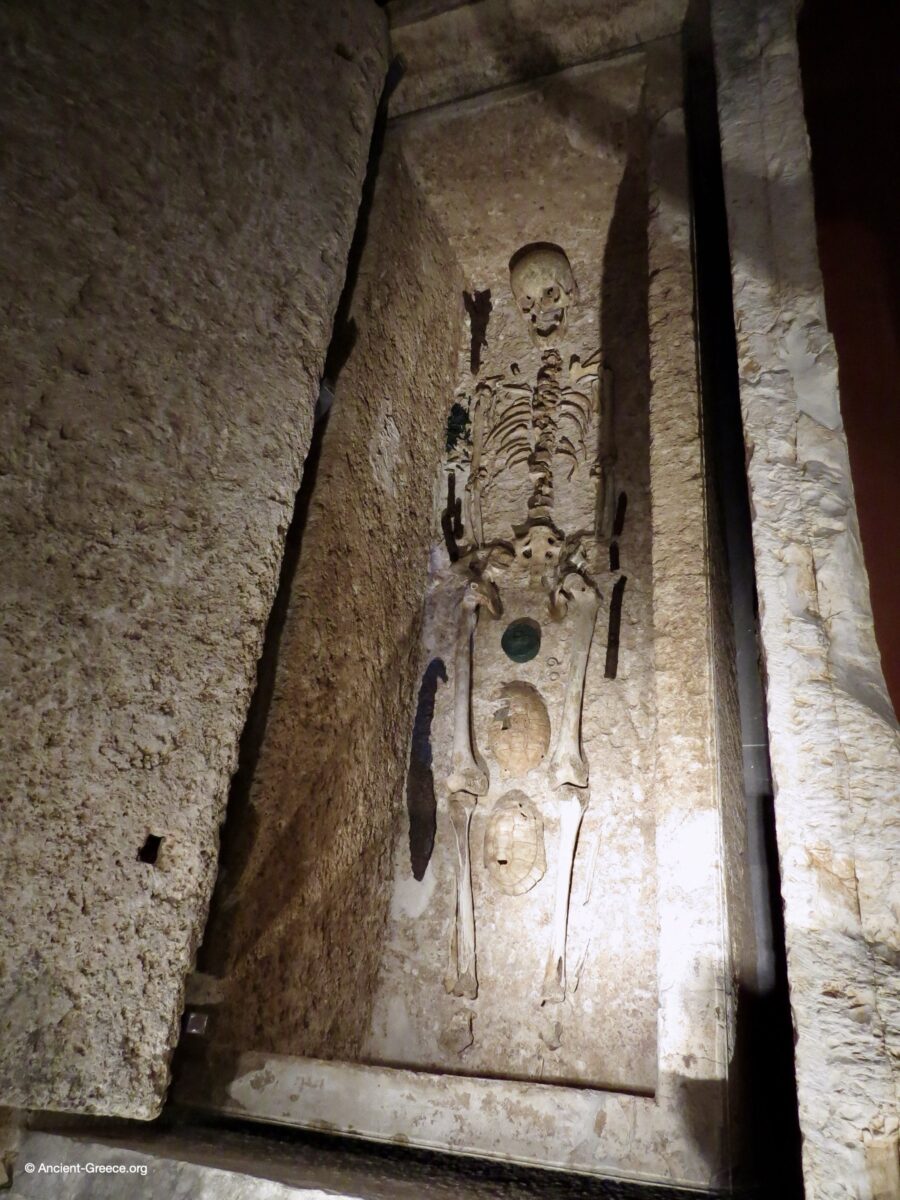
Archaeological Museum of Arta
4th century BCE (Late Classical Period)
Poros Stone, Bone, and Bronze
This unique burial features a poros stone sarcophagus placed inside a larger cist grave. It contains the remains of an adult male, accompanied by a significant array of grave offerings [15]. These include iron weapons, indicating his status as a warrior, and several turtle carapaces. These shells originally served as the sound boxes for lyres, marking the deceased not only as a man of arms but also as a person of musical cultivation. This combination of “mousike” (music/education) and “gymnastike” (physical/military prowess) perfectly embodies the Classical Greek ideal of the well-rounded citizen.
◈ ◈ ◈
Πωρόλιθινη Σαρκοφάγος εντός Κιβωτιόσχημου Τάφου
Αρχαιολογικό Μουσείο Άρτας
4ος αι. π.Χ. (Ύστερη Κλασική Περίοδος)
Πωρόλιθος, Οστά και Ορείχαλκος
Αυτή η μοναδική ταφή περιλαμβάνει μια πωρόλιθινη σαρκοφάγο τοποθετημένη μέσα σε έναν μεγαλύτερο κιβωτιόσχημο τάφο. Περιέχει τα οστά ενός ενήλικου άνδρα, ο οποίος συνοδεύεται από μια σημαντική σειρά κτερισμάτων [15]. Αυτά περιλαμβάνουν σιδερένια όπλα, που υποδηλώνουν την ιδιότητά του ως πολεμιστή, και αρκετά όστρακα χελώνας. Τα όστρακα αυτά χρησίμευαν αρχικά ως ηχεία για λύρες, χαρακτηρίζοντας τον νεκρό όχι μόνο ως άνδρα των όπλων αλλά και ως άνθρωπο με μουσική παιδεία. Αυτός ο συνδυασμός «μουσικής» και «γυμναστικής» ενσαρκώνει απόλυτα το κλασικό ελληνικό ιδεώδες του ολοκληρωμένου πολίτη.
Η Αμβρακία διέθετε μια σημαντική μουσική παράδοση, η οποία επιβεβαιώνεται από διάφορες αρχαίες πηγές. Ανάμεσα στους ονομαστούς μουσικούς συγκαταλέγονται ο κιθαρωδός Ξενοκράτης και ο αυλητής Νικόλας. Ωστόσο, η πλέον εξέχουσα μορφή ήταν ο Επίγονος, ο εφευρέτης του επιγονείου. Το όργανο αυτό ήταν μια τεσσαρακοντάχορδη κιθάρα που παιζόταν στα γόνατα και θεωρείται πρόδρομος της σύγχρονης κιθάρας και του σαντουριού.
Ο Επίγονος θεωρείται ο πρώτος μουσικός που έπαιξε χωρίς τη χρήση πλήκτρου, χρησιμοποιώντας τα δάκτυλα. Επιπλέον, ίδρυσε στην Αμβρακία μια μουσική σχολή, στην οποία αποδίδεται η εισαγωγή των σόλο εμφανίσεων κιθάρας με τη συνοδεία αυλού.
Ο Αθλητισμός στην Αμβρακία
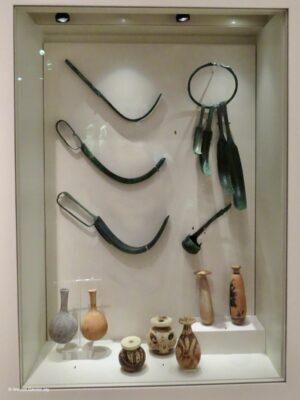
Παρά το γεγονός ότι οι αρχαίες πηγές μαρτυρούν μια σπουδαία αθλητική παράδοση στην Αμβρακία, δεν έχουν ακόμη ανακαλυφθεί στην πόλη στάδιο, γυμνάσιο ή άλλες αθλητικές εγκαταστάσεις. Ο Παυσανίας και άλλοι χρονογράφοι αναφέρουν αρκετούς Αμβρακιώτες νικητές στους Ολυμπιακούς Αγώνες, από τον 5ο έως τον 1ο αιώνα π.Χ.:
- Σώφρων – Στάδιο (αγώνας δρόμου) – 87η Ολυμπιάδα (432 π.Χ.)
- Λέων – Στάδιο (αγώνας δρόμου) – 96η Ολυμπιάδα (396 π.Χ.)
- Τλασίμαχος – Αρματοδρομία (με πώλους) – 121η Ολυμπιάδα (296 π.Χ.)
- Ανδρόμαχος – Στάδιο (αγώνας δρόμου) – 180η Ολυμπιάδα (60 π.Χ.)
Πριν από την προπόνηση ή τον αγώνα, οι αθλητές άλειφαν το σώμα τους με ένα μείγμα ελαιολάδου και λεπτής άμμου. Το λάδι μεταφερόταν σε μικρά δοχεία, όπως ο αρύβαλλος, το αλάβαστρο ή το λειβήσιο(unguentarium), τα οποία συχνά γεμίζονταν με τη βοήθεια μιας μικρής χάλκινης κουτάλας, της αρύταινας. Μετά τους αγώνες, οι αθλητές χρησιμοποιούσαν τη στλεγγίδα—ένα καμπυλωτό χάλκινο ή σιδερένιο εργαλείο—για να απομακρύνουν το στρώμα λαδιού, ιδρώτα και άμμου από το δέρμα τους. Στη συνέχεια, πλένονταν με σφουγγάρι και άλειφαν το σώμα τους με αρωματικά έλαια.
Οχυρώσεις και η Ρωμαϊκή Μετάβαση
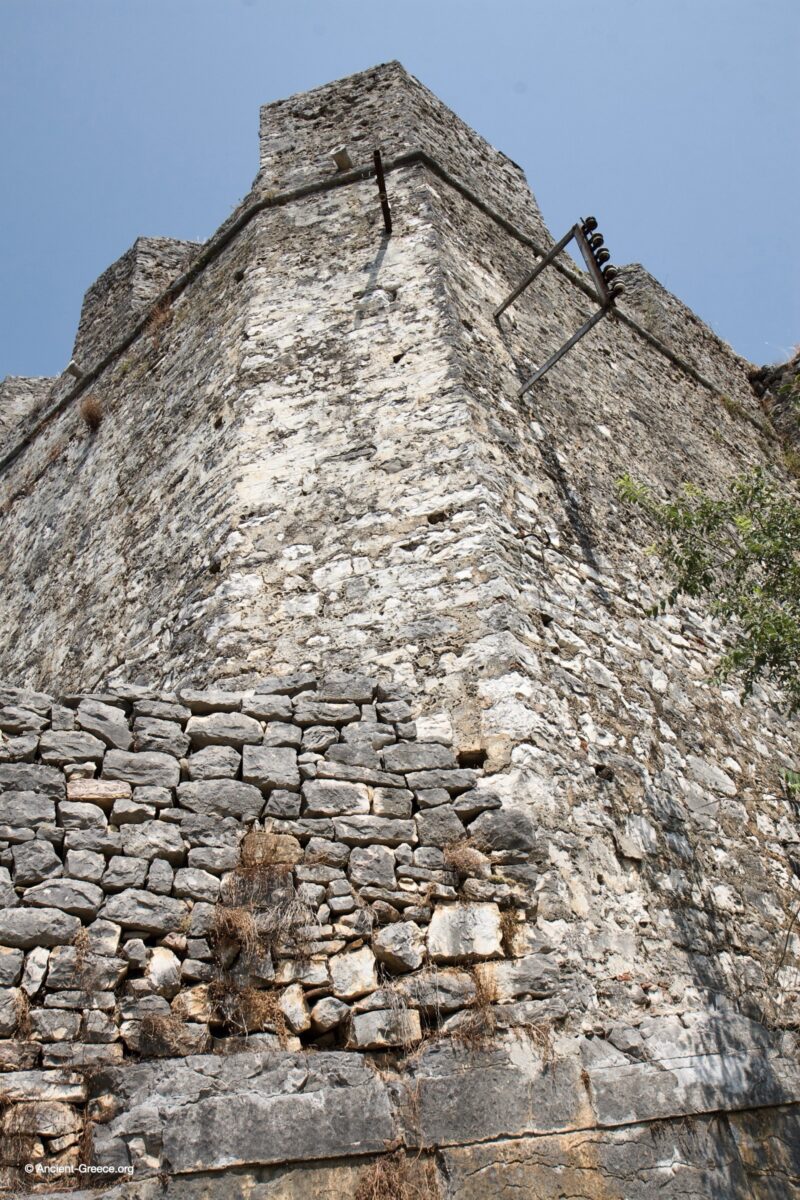
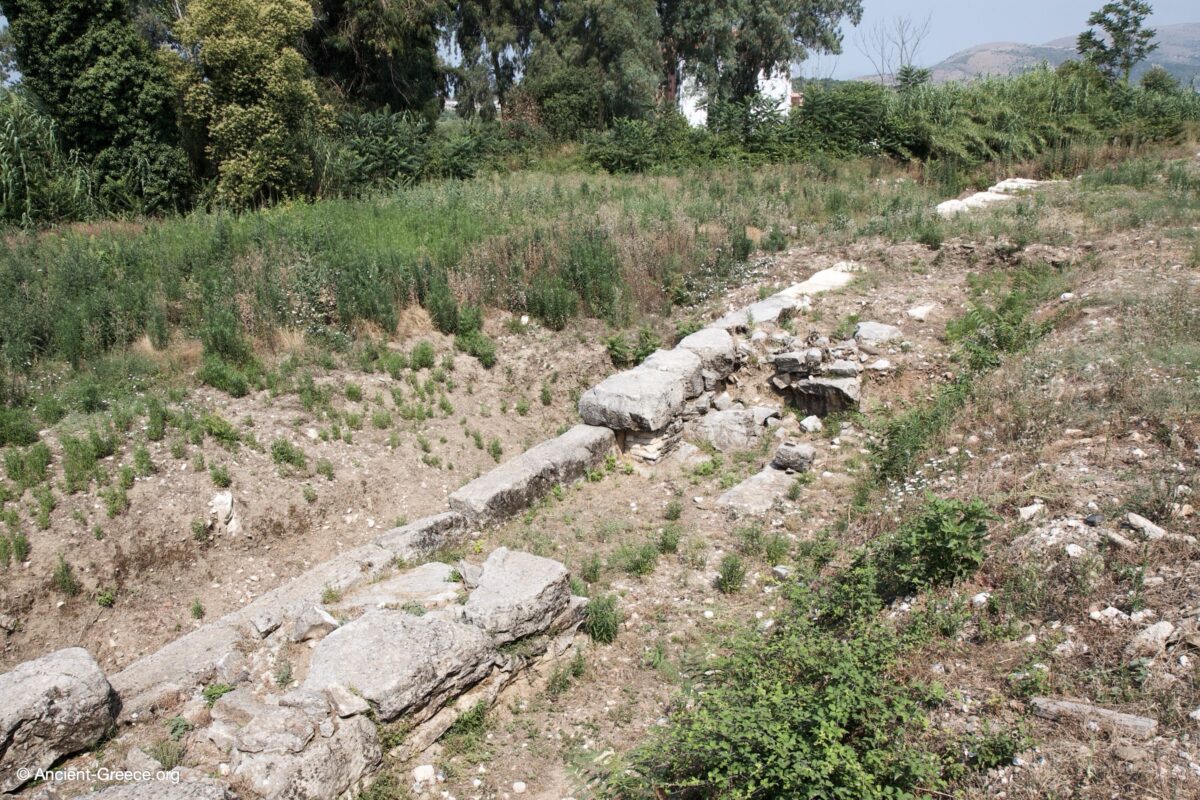
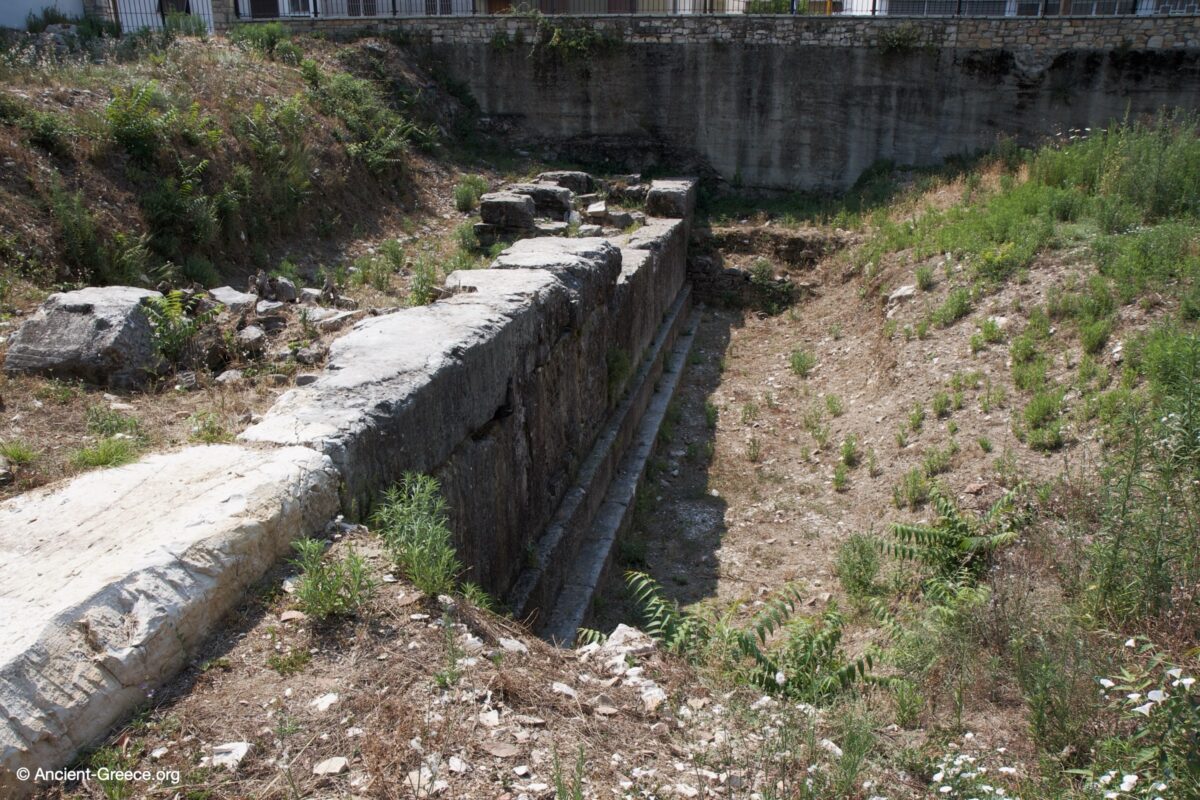
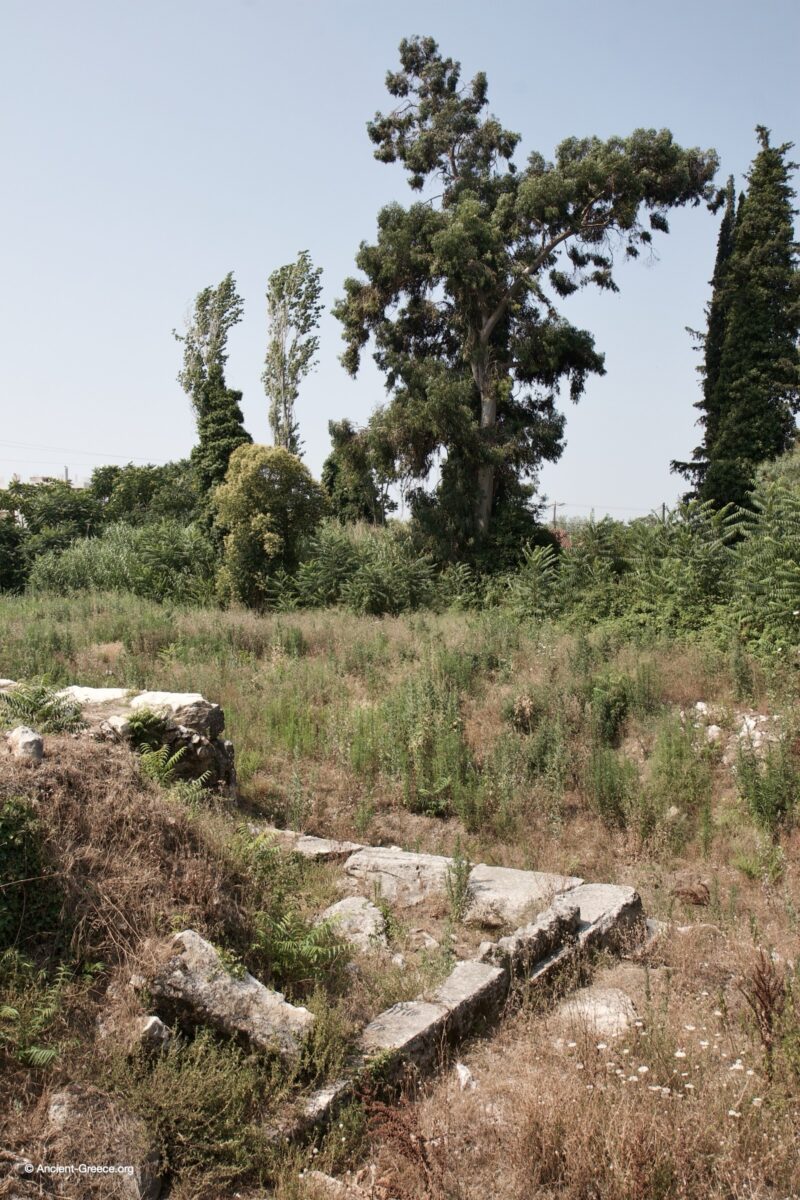
Η Αμβρακία περιβαλλόταν από οχυρωματικό περίβολο μήκους περίπου 4,5 χιλιομέτρων, τμήματα του οποίου σώζονται εντός της Άρτας. Το 189 π.Χ., μετά από παρατεταμένη πολιορκία, η πόλη καταλήφθηκε από τις ρωμαϊκές δυνάμεις υπό τον Μάρκο Φούλβιο Νοβιλίωρα.
Η πολιορκία καταγράφεται από τον ιστορικό Λίβιο, ο οποίος επισημαίνει τη χρήση αμυντικών μηχανών από τους Αμβρακιώτες για την ανάσχεση της ρωμαϊκής προέλασης. Μετά την παράδοση, οι Ρωμαίοι αφαίρεσαν πλήθος χάλκινων και μαρμάρινων γλυπτών, μεταφέροντάς τα στη Ρώμη ως λάφυρα.


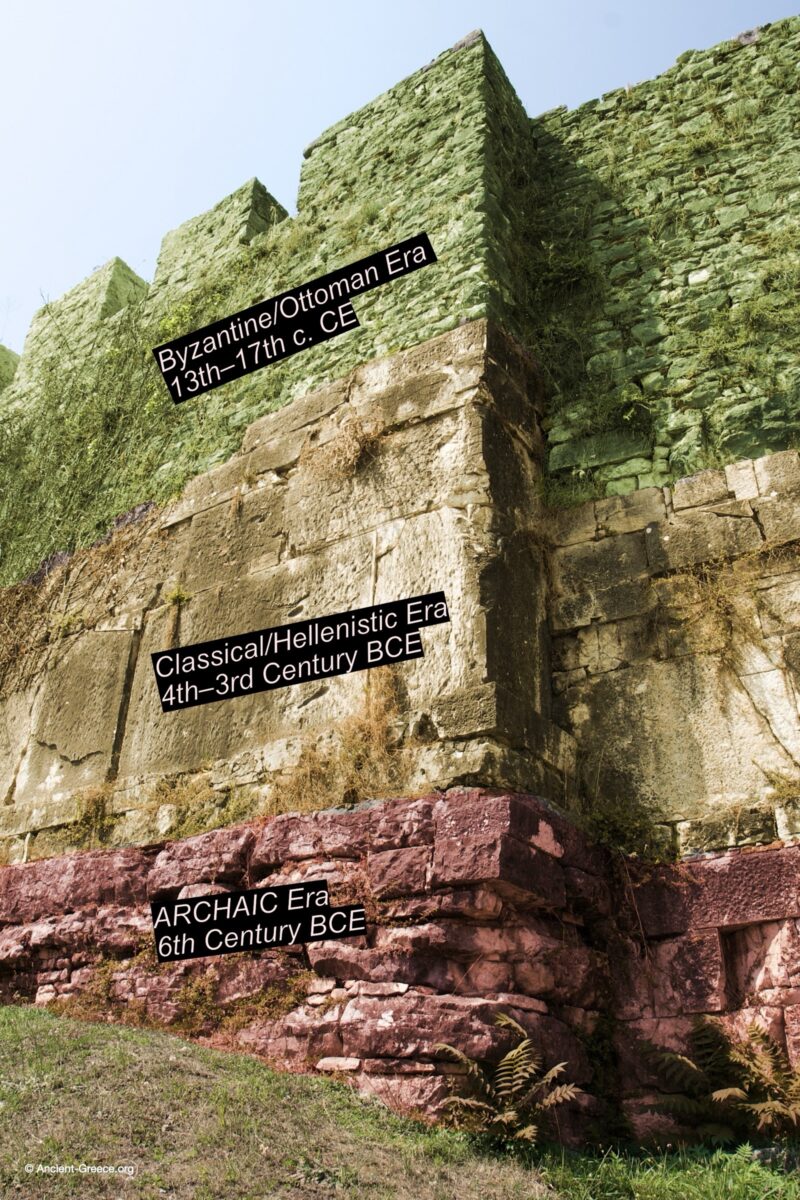
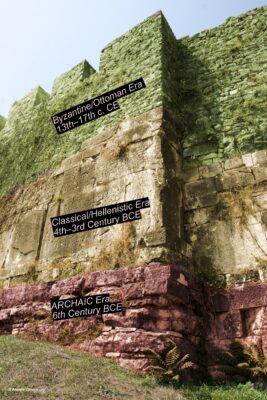
Arta, Greece
Archaic Period to Ottoman Era (6th Century BCE – 17th Century CE)
Limestone, Conglomerate, Mortar, and Brick
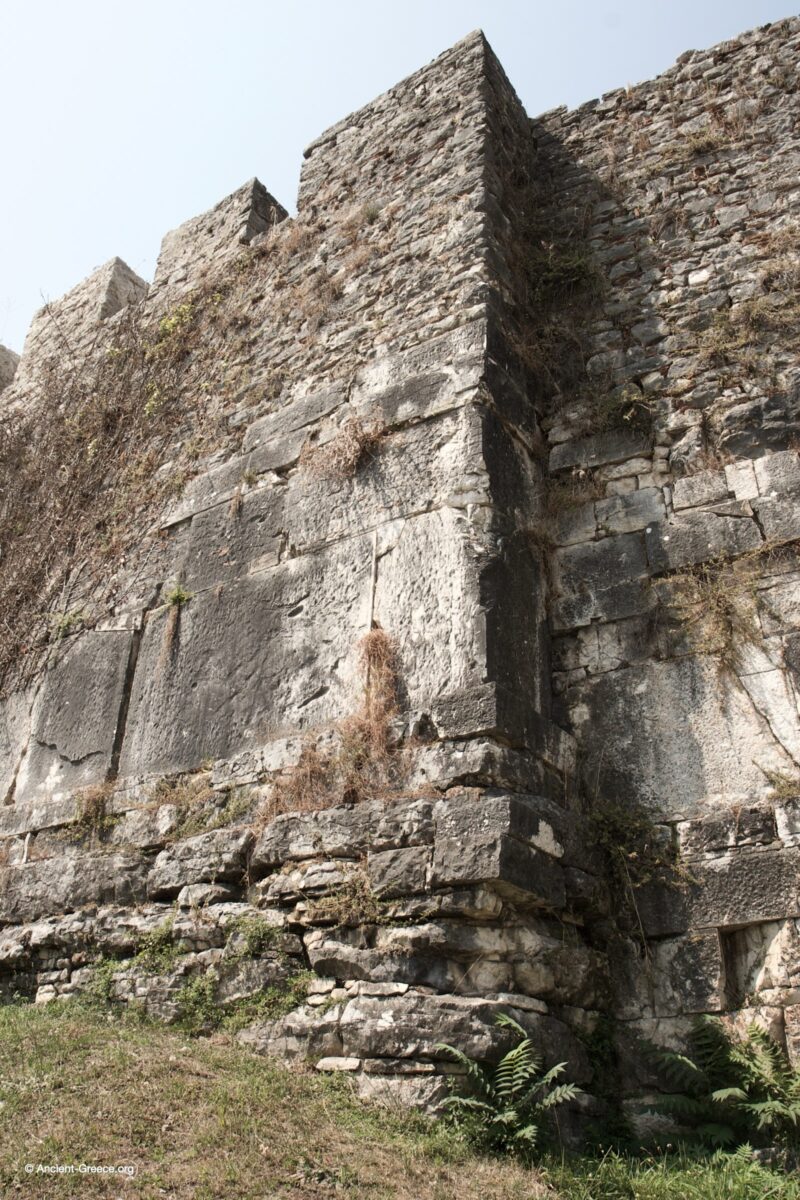
Western fortification wall corner with chronological annotation.
This high-angle view captures a critical section of the ancient defensive circuit, clearly annotated to show nearly 2,000 years of construction history. The pink-highlighted section shows the earliest Archaic (6th c. BCE) foundations of Ambracia. The massive, precisely fit isodomic blocks of the Classical/Hellenistic era (4th–3rd c. BCE) rise above them. The green-highlighted top layer, culminating in the crenellations, shows the medieval and later reconstructions from the Byzantine Despotate of Epirus through the Ottoman period.
◈ ◈ ◈
Διαστρωμάτωση Τείχους Κάστρου Άρτας
Άρτα, Ελλάδα
Αρχαϊκή Περίοδος έως Οθωμανική Εποχή (6ος αιώνας π.Χ. – 17ος αιώνας μ.Χ.)
Ασβεστόλιθος, Κροκαλοπαγές πέτρωμα, Κονίαμα και Πλίνθοι
Γωνία δυτικού οχυρωματικού τείχους με χρονολογική επισήμανση.
Αυτή η άποψη από ψηλά αποτυπώνει ένα κρίσιμο τμήμα του αρχαίου αμυντικού κυκλώματος, με σαφείς επισημάνσεις που δείχνουν σχεδόν 2.000 χρόνια κατασκευαστικής ιστορίας. Το τμήμα με ροζ επισήμανση δείχνει τα παλαιότερα Αρχαϊκά (6ος αι. π.Χ.) θεμέλια της Αμβρακίας. Οι μνημειώδεις, ακριβείς ισόδομοι πλίνθοι της Κλασικής/Ελληνιστικής εποχής (4ος–3ος αι. π.Χ.) υψώνονται από πάνω. Το ανώτερο στρώμα με πράσινη επισήμανση, που καταλήγει στις επάλξεις, δείχνει τις μεσαιωνικές και μεταγενέστερες ανακατασκευές από το Βυζαντινό Δεσποτάτο της Ηπείρου έως την Οθωμανική περίοδο.
Η Μετακίνηση στη Νικόπολη και η Ανάπτυξη της Άρτας
Μετά τη ναυμαχία του Ακτίου το 31 π.Χ., ο Οκταβιανός Αύγουστος ίδρυσε τη Νικόπολη και διέταξε την υποχρεωτική μετακίνηση του πληθυσμού της Αμβρακίας στη νέα πόλη. Η Αμβρακία παρήκμασε έως τον Μεσαίωνα, οπότε η θέση κατοικήθηκε εκ νέου ως Άρτα.
Κατά τον 13ο αιώνα μ.Χ., υπό το Δεσποτάτο της Ηπείρου, πολλά αρχιτεκτονικά μέλη από τα αρχαία ερείπια επαναχρησιμοποιήθηκαν για την ανέγερση βυζαντινών ναών και άλλων μνημείων. Αυτή η χρήση δομικού υλικού (spolia) είχε ως αποτέλεσμα τη φυσική ενσωμάτωση της αρχαίας Αμβρακίας στις μεσαιωνικές και σύγχρονες δομές της πόλης.
Ancient Ambracia (Ancient Greek: Ἀμβρακία, occasionally Ἀμπρακία, Ampracia) was one of the most significant city-states of northwestern Greece, built on Peranthi Hill (Greek: Λόφος Περάνθης). Its main port, Ambracus guarded the mouth of Arachthos river. Today, Ambracia’s remains are scattered throughout the urban fabric of modern Arta, creating a unique archaeological palimpsest where a storied past meets the pace of contemporary life.
Panoramic view from the Ambracian Gulf and its lagoons toward the Tzoumerka Mountains
A panoramic view across the serenity of the Ambracian Gulf and its lagoons, looking toward the snowy peaks of the Tzoumerka mountains. On the right, the city of Arta (ancient Ambracia) is visible at the foot of the hills, while snow begins to brew over the highlands in the background. The landscape reflects the natural diversity of the Epirus region, connecting the calm, shallow waters of the coast to the rugged interior.
◈ ◈ ◈
Η Άρτα (Αμβρακία) και τα Τζουμέρκα. 2008
Πανοραμική άποψη από τον Αμβρακικό Κόλπο και τις λιμνοθάλασσές του προς τα Τζουμέρκα
Μια πανοραμική άποψη πάνω από τη γαλήνη του Αμβρακικού Κόλπου και των λιμνοθαλασσών του, με κατεύθυνση προς τις χιονισμένες κορυφές των Τζουμέρκων. Στα δεξιά διακρίνεται η πόλη της Άρτας (αρχαία Αμβρακία) στους πρόποδες των λόφων, ενώ στο βάθος το χιόνι πυκνώνει πάνω από τον ορεινό όγκο. Το τοπίο αντανακλά τη φυσική ποικιλομορφία της Ηπείρου, συνδέοντας τα ήρεμα, ρηχά νερά των ακτών με την άγρια ομορφιά της ενδοχώρας.
Landscape of Arta with Peranthi Hill and the Tzoumerka Mountains
The white buildings of Arta spread across the slopes of Peranthi Hill, framed by the snow-capped Tzoumerka peaks in the distance. In the valley below, the landscape is lush and green, with tall reeds and orange trees heavy with ripe fruit. It is a quiet, classic view of Epirus, where the winter snow on the mountains meets the fertile, sun-filled plains of the coast.
◈ ◈ ◈
Η Άρτα και τα Τζουμέρκα. 2008
Τοπίο της Άρτας με τον Λόφο της Περάνθης και τα Τζουμέρκα.
Τα λευκά κτίρια της Άρτας απλώνονται στις πλαγιές του λόφου της Περάνθης, με φόντο τις χιονισμένες κορυφές των Τζουμέρκων στο βάθος. Στην πεδιάδα, το τοπίο είναι καταπράσινο, με ψηλά καλάμια και πορτοκαλιές φορτωμένες με ώριμους καρπούς. Είναι μια γαλήνια, κλασική εικόνα της Ηπείρου, όπου το χιόνι των βουνών συναντά την εύφορη και ηλιόλουστη πεδιάδα κοντά στις ακτές.
The city was strategically positioned on a fertile plain, protected by the loop of the Arachthos River. This location allowed Ambracia to control the trade routes between the Ionian Sea and the interior of Epirus, ensuring its status as a dominant regional power for centuries.
Brief History of Ambracia
Ambracia was founded around 625 BCE by Corinthian colonists led by Gorgus, the son of the Corinthian tyrant Cypselus. Built on the banks of the then-navigable Arachthos River, the city rapidly evolved into a powerful naval force and a thriving commercial hub, maintaining its deep-rooted cultural and political ties to its mother city, Corinth.
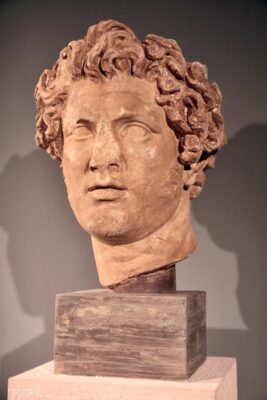
The settlers implemented a sophisticated Hippodamian urban plan, characterized by wide, parallel streets and organized residential blocks. This organized layout facilitated the city’s rapid growth, allowing it to house a large population that rivaled the major urban centers of southern Greece. The city reached the zenith of its power in 295 BCE, when King Pyrrhus chose it as the capital of the Kingdom of the Molossians and Epirus. Pyrrhus adorned the city with magnificent buildings, palaces, and sanctuaries, transforming it into one of the most splendid cultural centers of the Hellenistic world.
Under his rule, Ambracia became a diplomatic bridge between the Greek world and the rising powers of the Italian peninsula. The king’s ambitious building program not only modernized the city’s infrastructure but also filled it with masterworks of art, making it a rival to the prestige of Athens or Pella.
Architecture
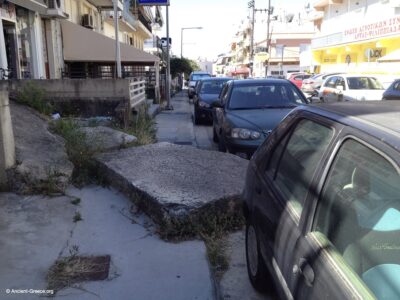
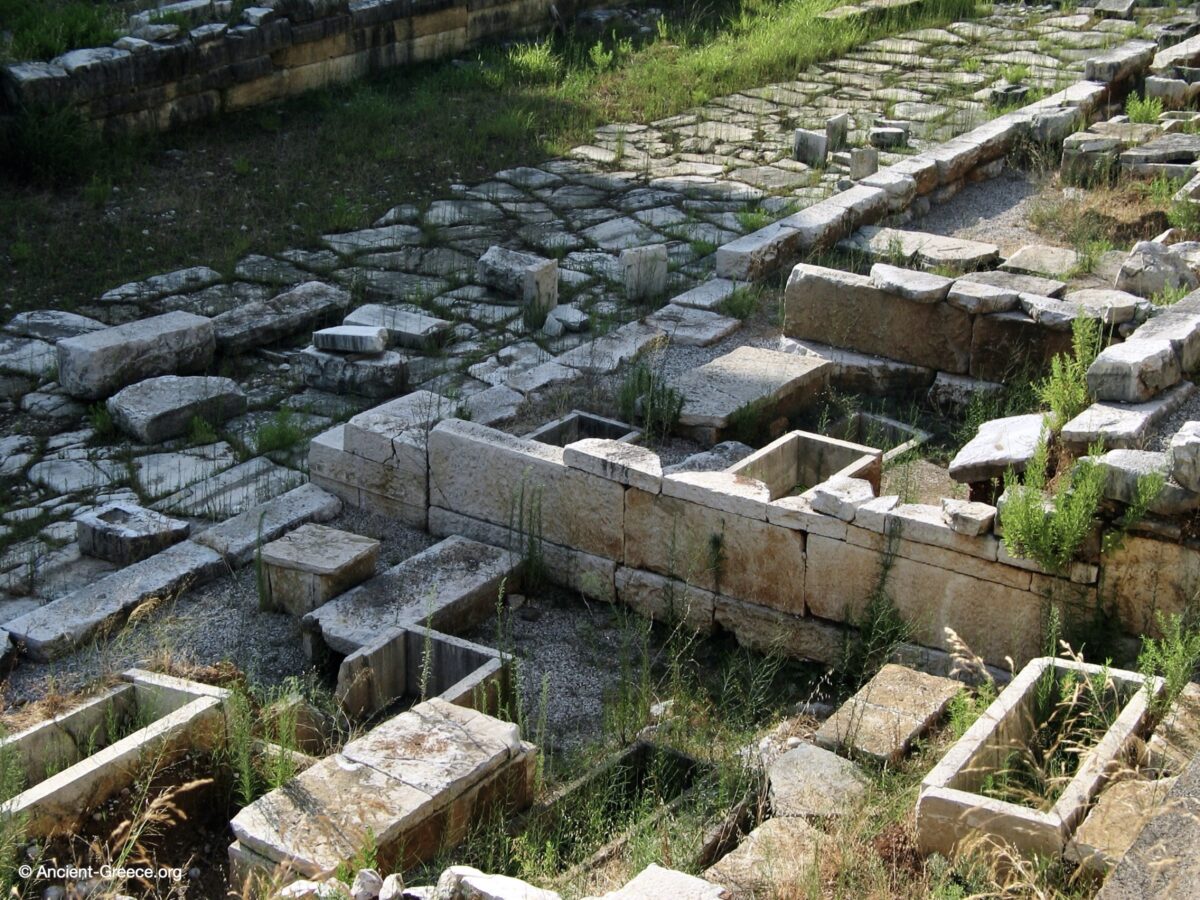
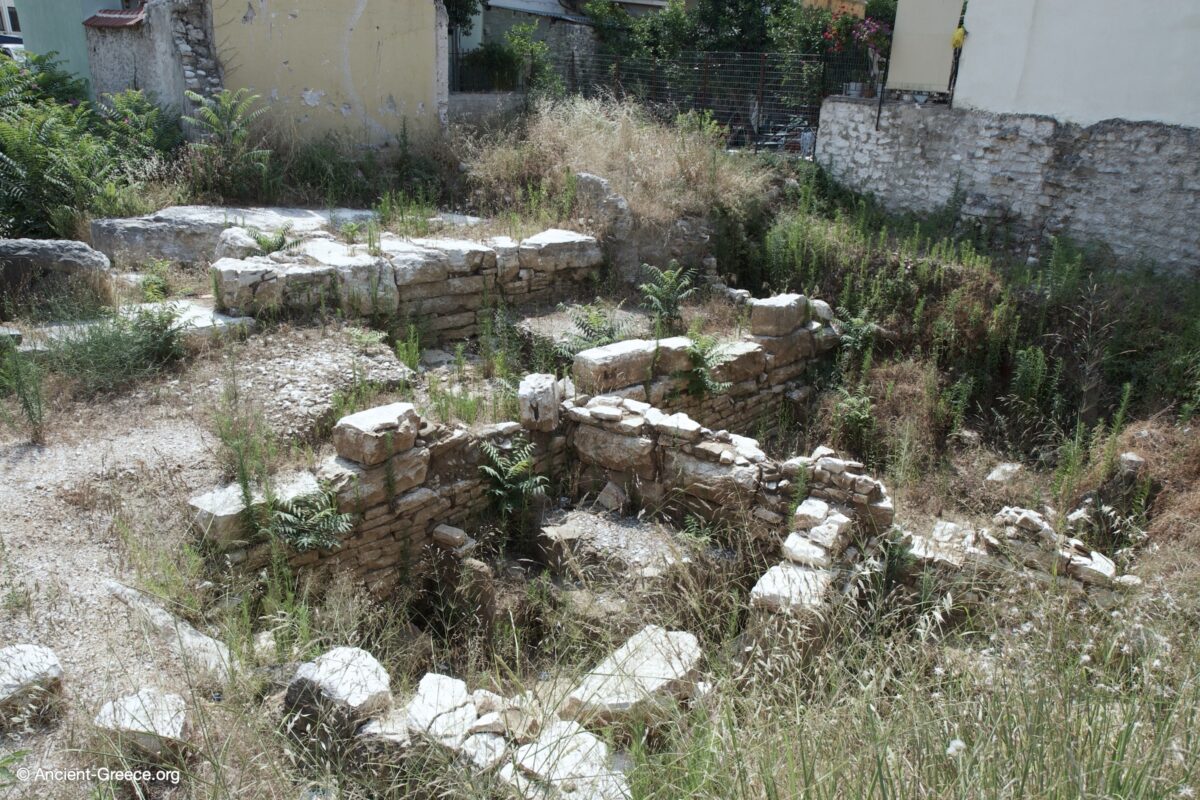
In the heart of present-day Arta (near Kilkis Square), the foundations of the Temple of Apollo Pythios Soter, the city’s patron deity, remain visible. This Doric temple, dating back to approximately 500 BCE, served as the religious and administrative focal point of the ancient city.
The temple was of the peripteral type, featuring six columns on the narrow sides and twelve on the long sides. Excavations have revealed that the sanctuary was a repository for official state documents and treaties, highlighting its role as the civic “archive” of the Ambraciot people.
One of the most remarkable monuments unearthed within the modern city grid is the Small Theater, which also functioned as a Bouleuterion (council chamber). It is the smallest ancient theater excavated in Greece and is built atop older bath complexes featuring impressive floor mosaics depicting aquatic scenes.
This structure is unique because it combines theatrical performance with political deliberation. The presence of the earlier pebble mosaics beneath the seating area provides a fascinating glimpse into the evolution of the city’s public spaces from private luxury to civic utility.
Culture
Ambracia maintained a distinguished musical tradition, attested by several ancient sources. Notable musicians included the citharoedus Xenocrates and the piper Nicolas. However, the most prominent figure was Epigonus, the inventor of the epigoneion. This instrument was a forty-stringed kithara played on the knees and is regarded as an ancestor to the modern guitar and dulcimer.
Archaeological Museum of Arta
Classical to Hellenistic Period
Bone, Bronze, and Tortoise Shell
Ambracia held a significant musical tradition, home to renowned figures like the citharoedus Xenocrates and the piper Nicolas.
Most famous was Epigonus, inventor of the epigoneion—a forty-stringed kithara played on the knees and an ancestor of the modern guitar and dulcimer. This display features the remains of various instruments: stringed instruments like the lyre (using a tortoise shell soundbox [1]); wind instruments including the aulos [2] and syrinx; and percussion such as kymbala [3] and the seistron [4], used in both musical performances and religious ceremonies.
◈ ◈ ◈
Αρχαία Μουσικά Όργανα της Αμβρακίας
Αρχαιολογικό Μουσείο Άρτας
Κλασική έως Ελληνιστική Περίοδος
Οστό, Ορείχαλκος και Όστρακο Χελώνας
Η Αμβρακία είχε σημαντική μουσική παράδοση, όντας πατρίδα ονομαστών μουσικών όπως ο κιθαρωδός Ξενοκράτης και ο αυλητής Νικόλας. Ο επιφανέστερος όλων ήταν ο Επίγονος, εφευρέτης του επιγονείου—μιας τεσσαρακοντάχορδης κιθάρας που παιζόταν στα γόνατα και αποτελεί πρόγονο της σύγχρονης κιθάρας και του σαντουριού. Η προθήκη περιλαμβάνει υπολείμματα οργάνων: έγχορδα όπως η λύρα (με ηχείο από όστρακο χελώνας [1]), πνευστά όπως ο αυλός [2] και η σύριγγα, καθώς και κρουστά όπως τα κύμβαλα [3] και το σείστρο [4], που χρησιμοποιούνταν σε μουσικές παραστάσεις και θρησκευτικές τελετές.
Archaeological Museum of Arta
4th century BCE (Late Classical Period)
Poros Stone, Bone, and Bronze
This unique burial features a poros stone sarcophagus placed inside a larger cist grave. It contains the remains of an adult male, accompanied by a significant array of grave offerings [15]. These include iron weapons, indicating his status as a warrior, and several turtle carapaces. These shells originally served as the sound boxes for lyres, marking the deceased not only as a man of arms but also as a person of musical cultivation. This combination of “mousike” (music/education) and “gymnastike” (physical/military prowess) perfectly embodies the Classical Greek ideal of the well-rounded citizen.
◈ ◈ ◈
Πωρόλιθινη Σαρκοφάγος εντός Κιβωτιόσχημου Τάφου
Αρχαιολογικό Μουσείο Άρτας
4ος αι. π.Χ. (Ύστερη Κλασική Περίοδος)
Πωρόλιθος, Οστά και Ορείχαλκος
Αυτή η μοναδική ταφή περιλαμβάνει μια πωρόλιθινη σαρκοφάγο τοποθετημένη μέσα σε έναν μεγαλύτερο κιβωτιόσχημο τάφο. Περιέχει τα οστά ενός ενήλικου άνδρα, ο οποίος συνοδεύεται από μια σημαντική σειρά κτερισμάτων [15]. Αυτά περιλαμβάνουν σιδερένια όπλα, που υποδηλώνουν την ιδιότητά του ως πολεμιστή, και αρκετά όστρακα χελώνας. Τα όστρακα αυτά χρησίμευαν αρχικά ως ηχεία για λύρες, χαρακτηρίζοντας τον νεκρό όχι μόνο ως άνδρα των όπλων αλλά και ως άνθρωπο με μουσική παιδεία. Αυτός ο συνδυασμός «μουσικής» και «γυμναστικής» ενσαρκώνει απόλυτα το κλασικό ελληνικό ιδεώδες του ολοκληρωμένου πολίτη.
Epigonus is credited as the first musician to perform without a plectrum, utilizing a finger-picking technique. Furthermore, he established a musical school in Ambracia that introduced the practice of guitar solos accompanied by pipe accompaniment.
Athletics
Although ancient sources attest to a robust athletic tradition in Ambracia, no stadium, gymnasium, or other sporting facilities have yet been discovered within the city. Pausanias and other chronographers record several Ambracian victors at the Olympic Games, spanning from the 5th to the 1st century BCE:
- Sophron – Stadion (foot race) – 87th Olympiad (432 BCE)
- Leon – Stadion (foot race) – 96th Olympiad (396 BCE)
- Tlasimachus – Chariot race (with young fillies) – 121st Olympiad (296 BCE)
- Andromachus – Stadion (foot race) – 180th Olympiad (60 BCE)
Prior to training or competition, athletes applied a mixture of olive oil and fine sand to their bodies. This oil was carried in small vessels such as the aryballos, alabastron, or unguentarium, which were often filled using a small copper spoon known as an arytena. After the games, athletes used a strigil—a curved bronze or iron tool—to scrape the accumulated oil, sweat, and sand from their skin. This was followed by washing with a sponge and the application of aromatic oils.
Ambracia Fortification Walls (The Castle of Arta)
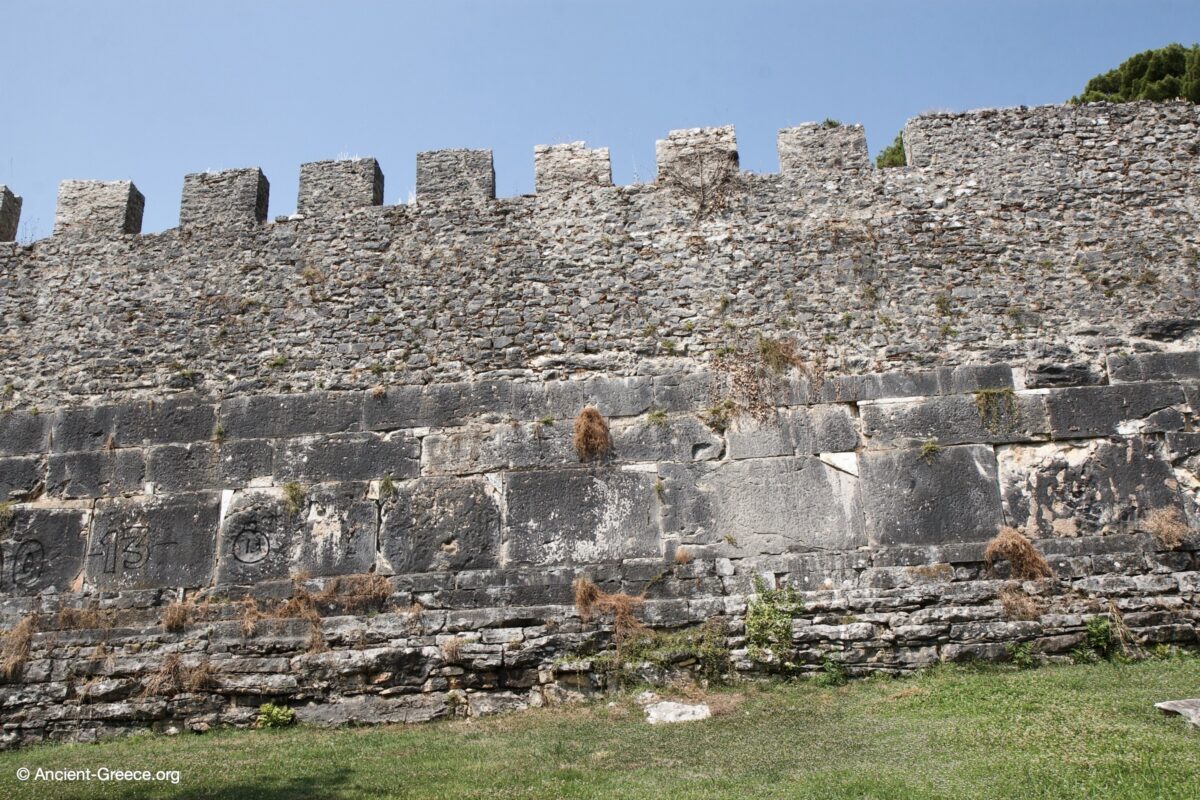
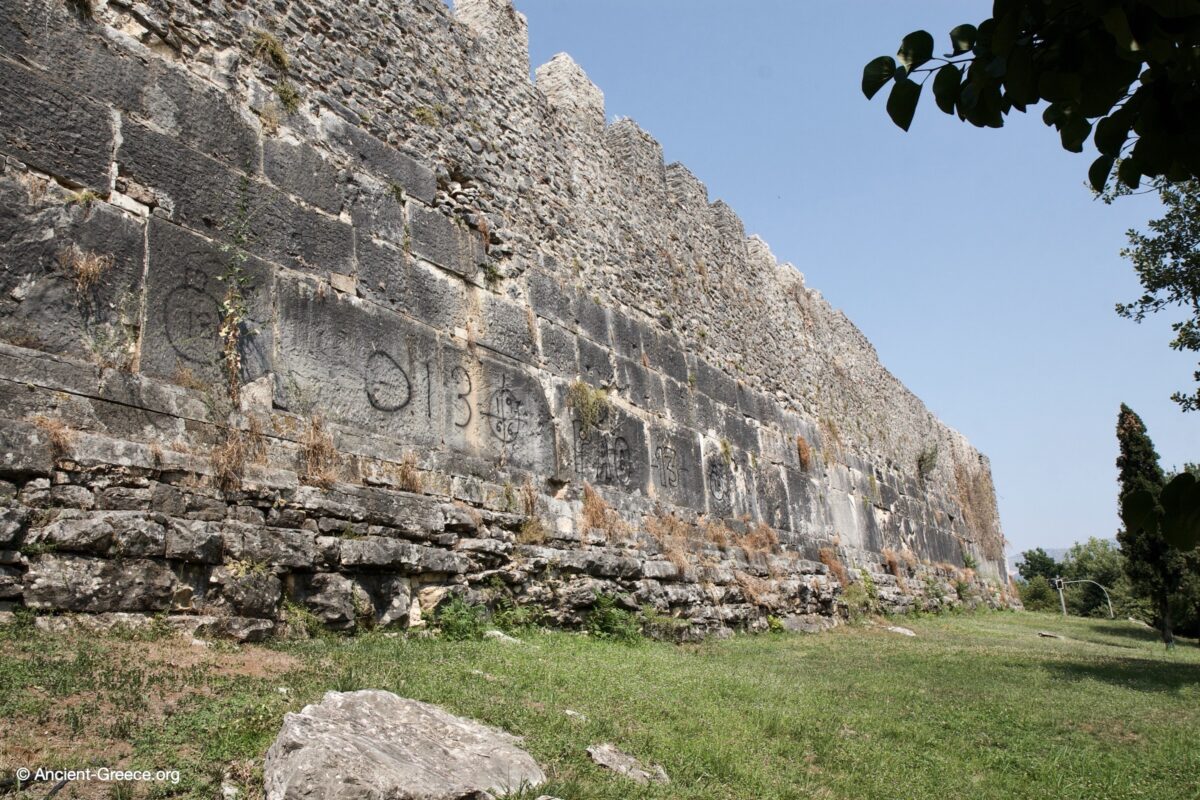
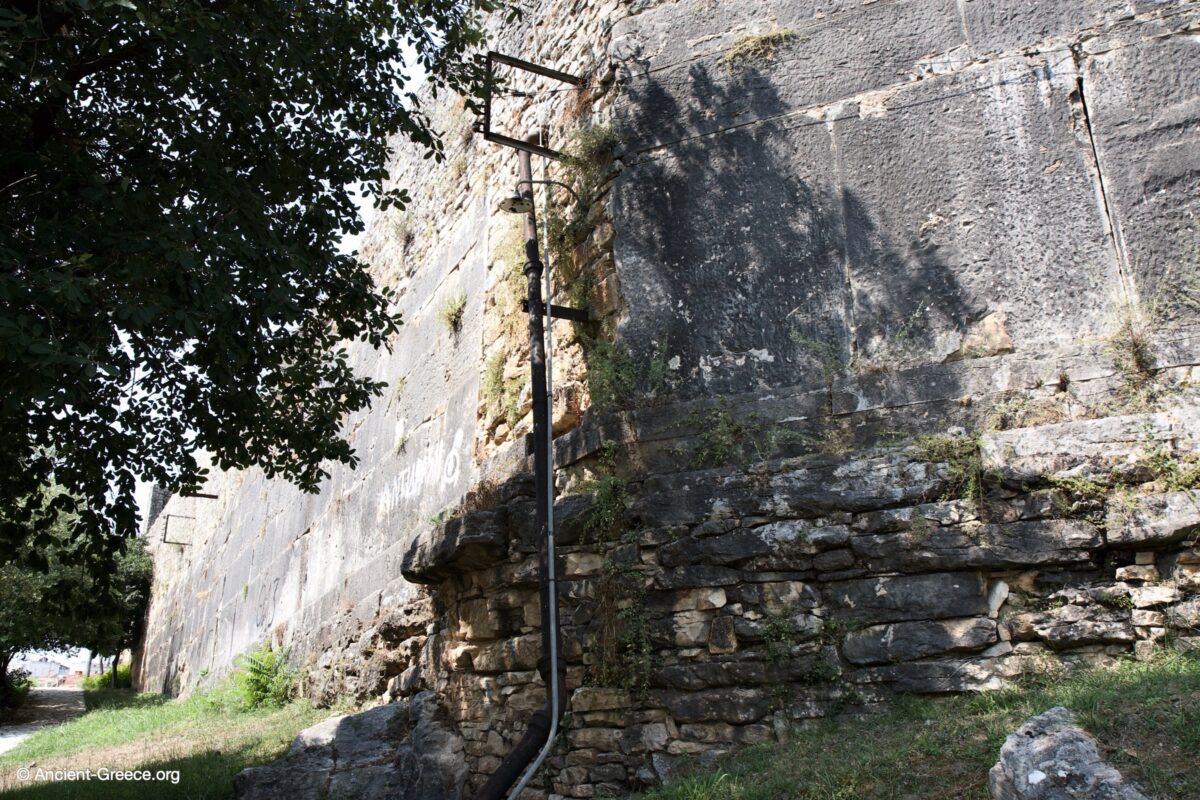
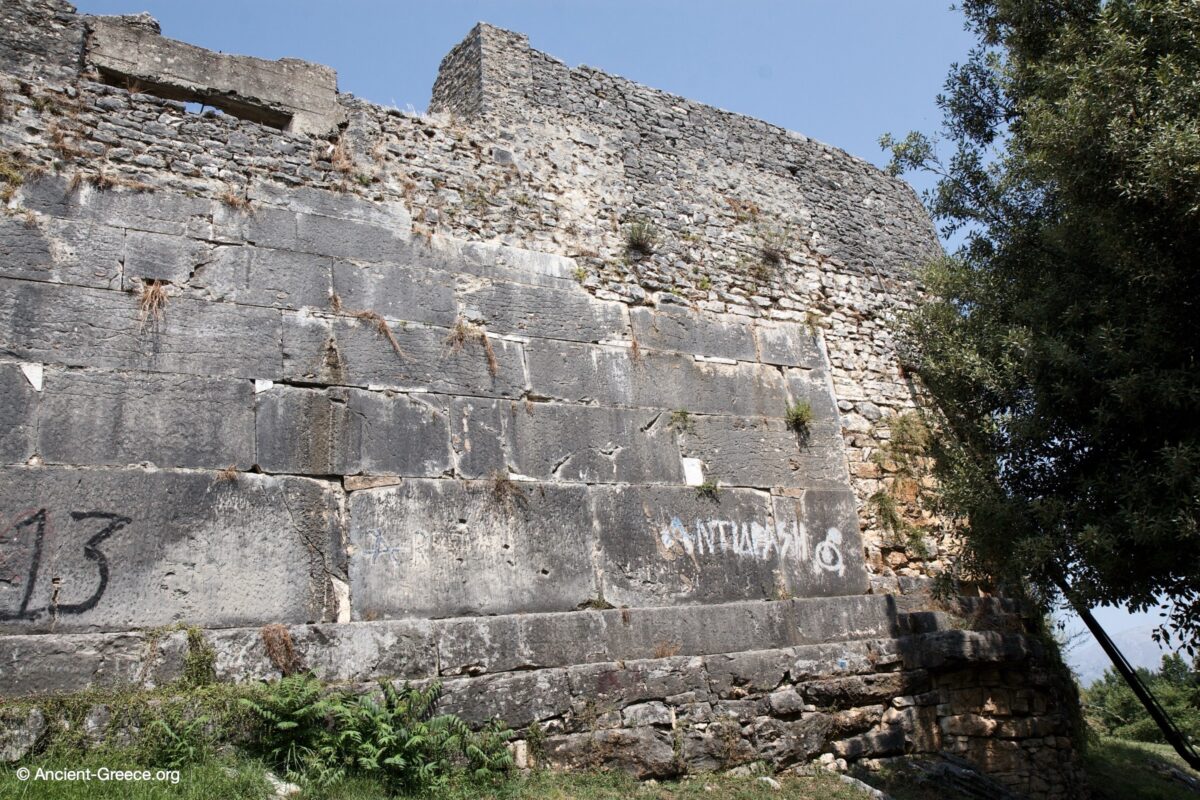
Ambracia was protected by a massive fortification wall spanning 4.5 kilometers, segments of which are still visible at various points in Arta today. In 189 BCE, following a heroic siege, the city fell to the Romans under Marcus Fulvius Nobilior, who famously plundered its vast artistic treasures and transported them to Rome.
The Roman historian Livy detailed the siege, describing how the Ambraciots used innovative defensive machines and tunnels to thwart the Roman legions. Despite their surrender, the city was spared total destruction, though hundreds of its bronze and marble statues were carried away to adorn the Roman Forum.
A photo survey of the walls as they appeared in 2008:
Archaeological Site of Arta
4th Century BCE (Classical) | 13th Century CE (Byzantine) | Ottoman & Modern Repairs
Limestone
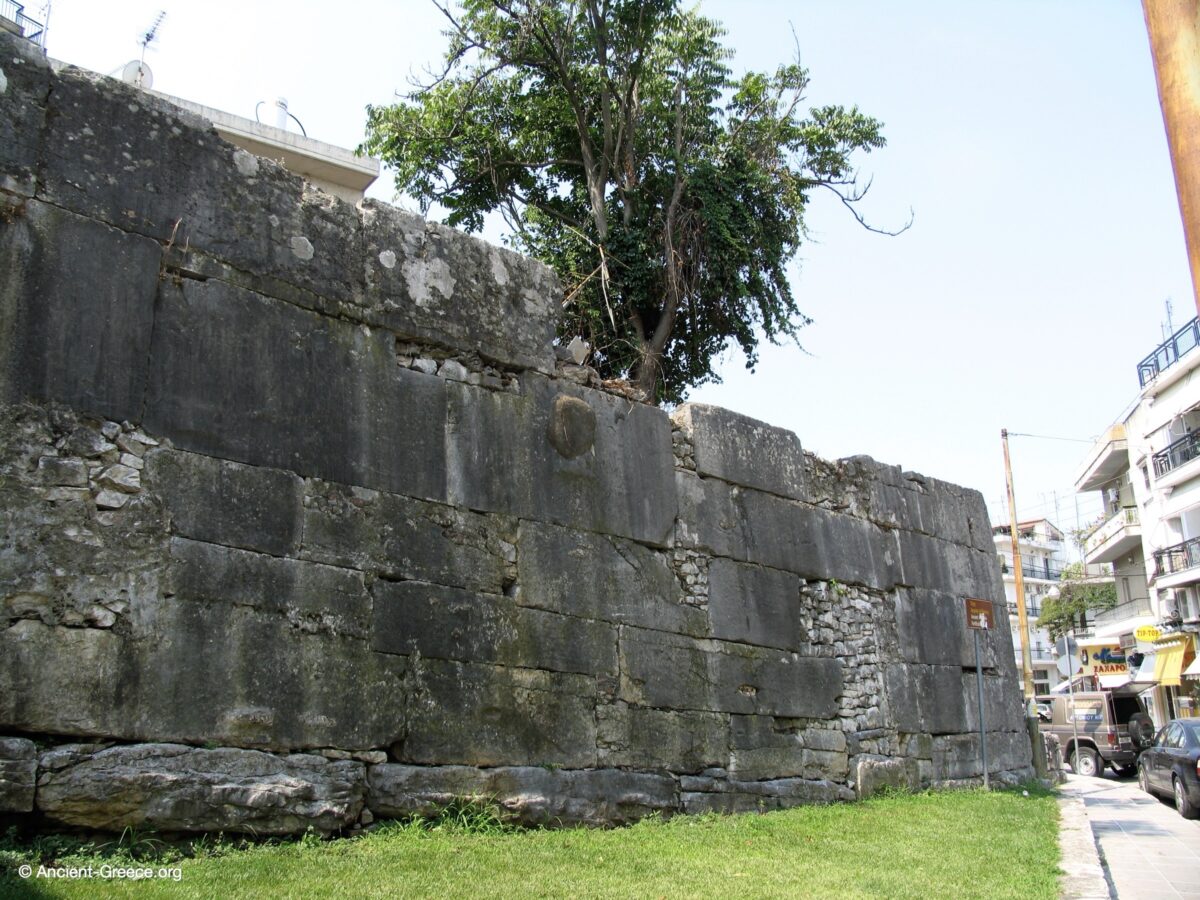
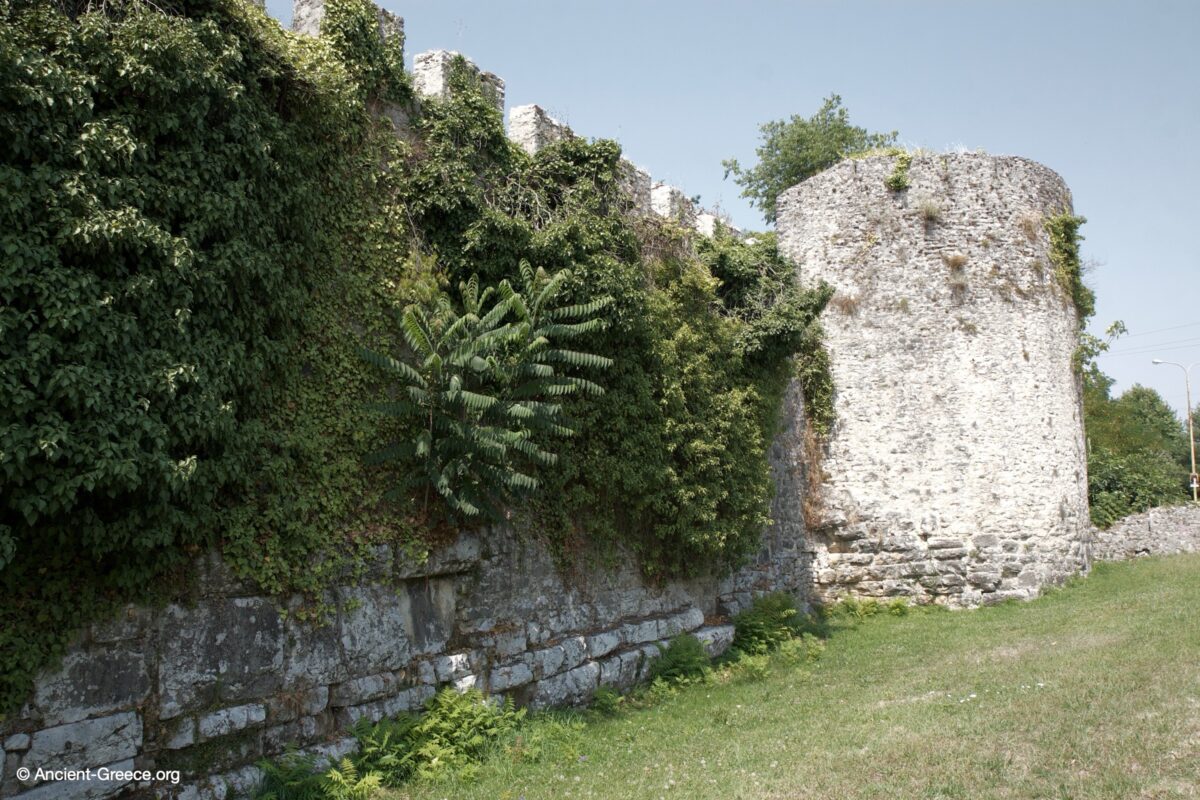
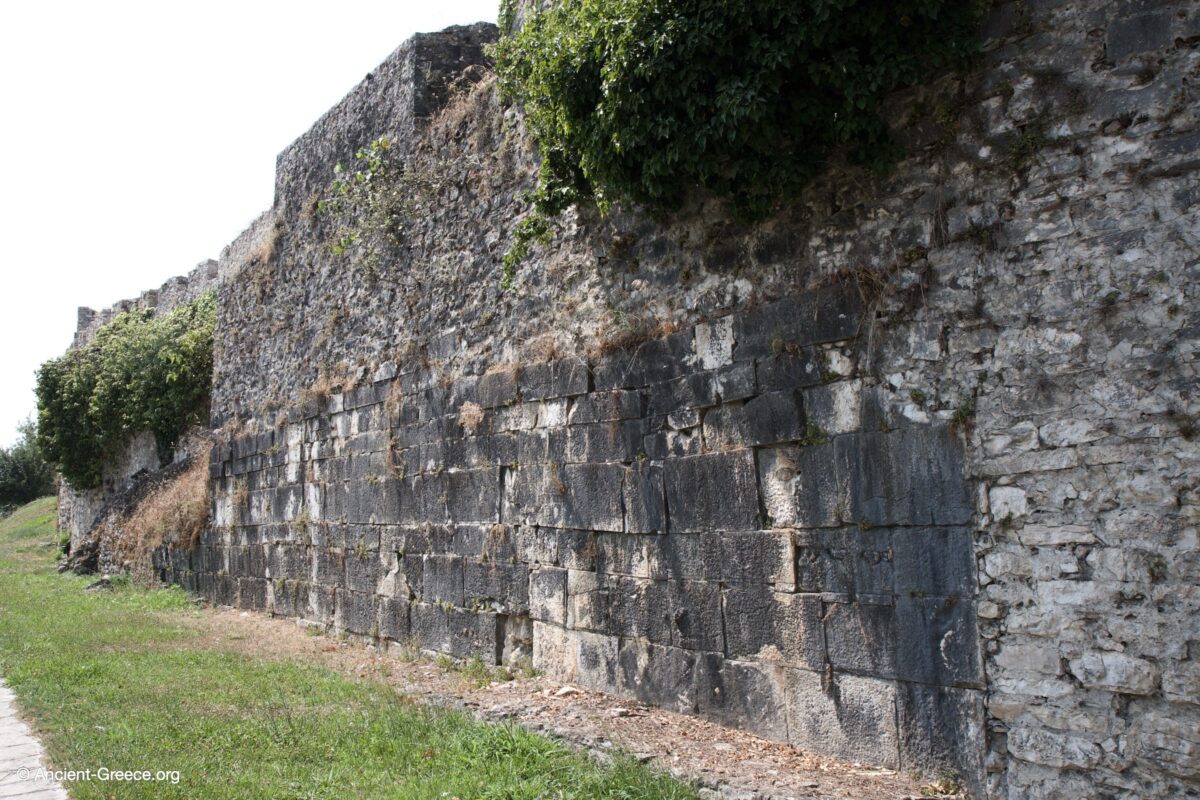
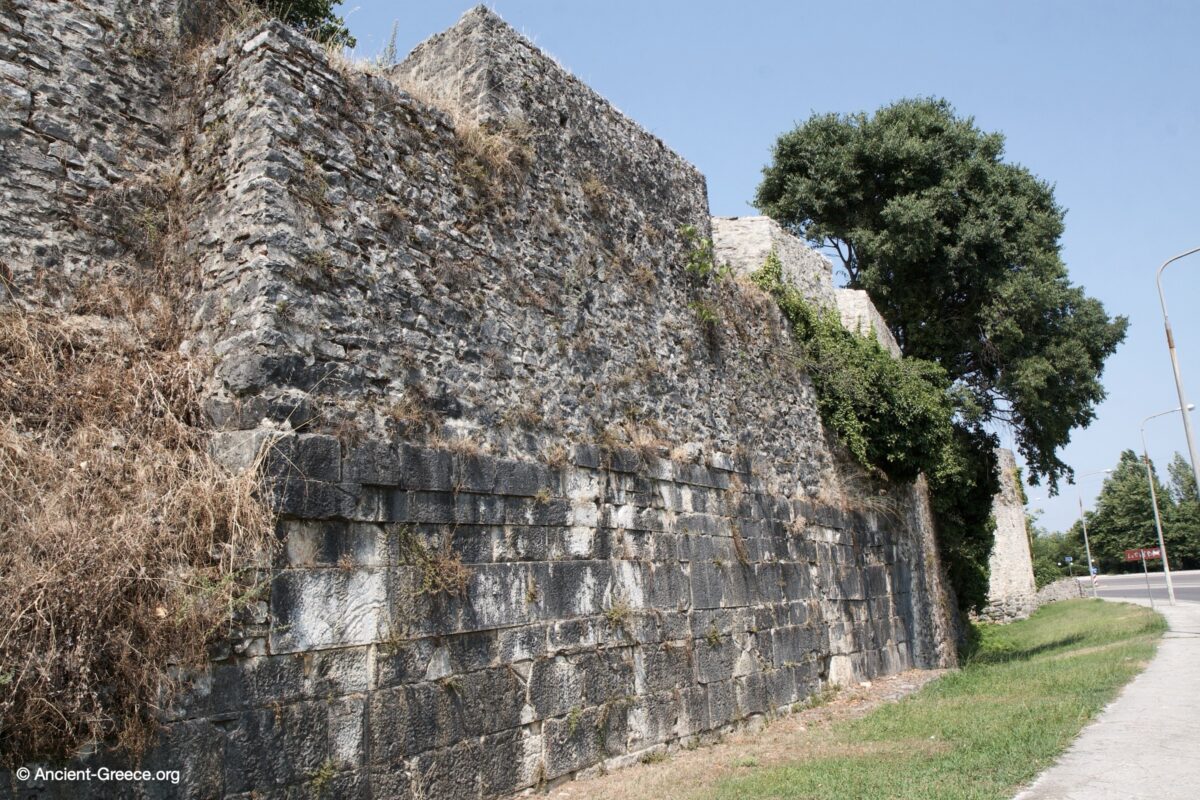
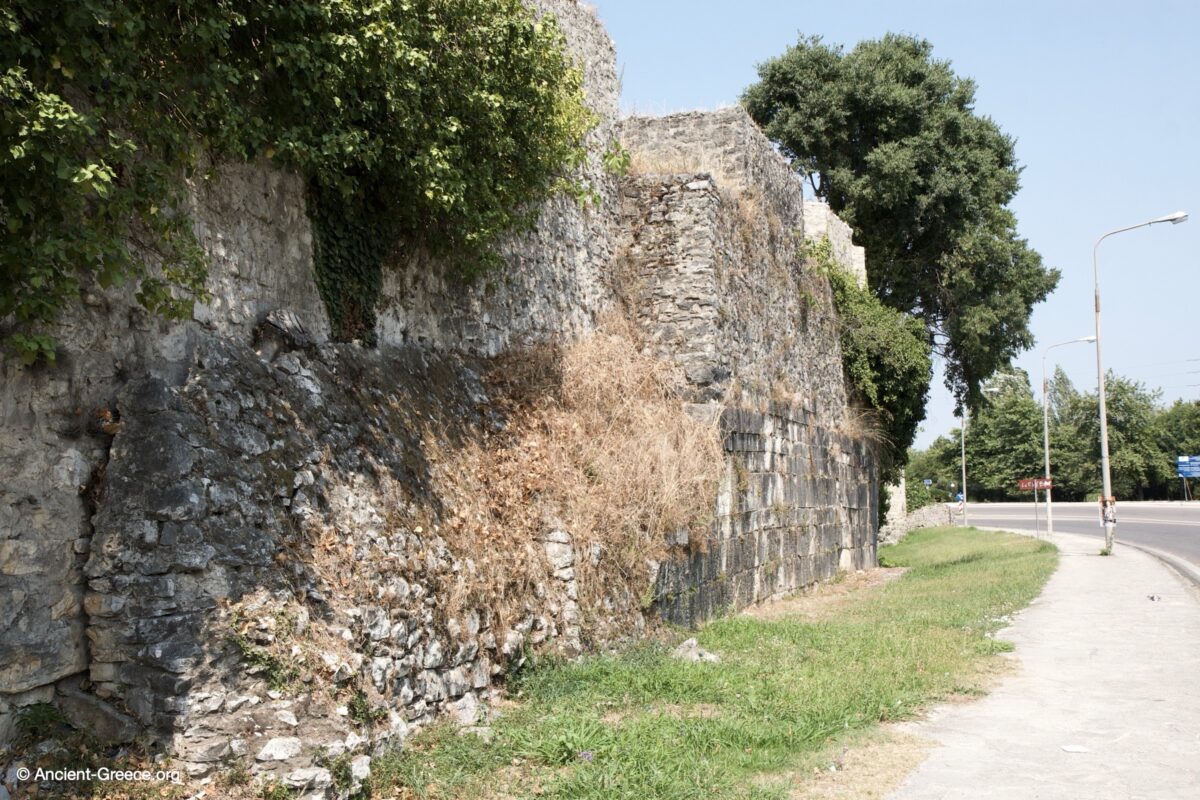
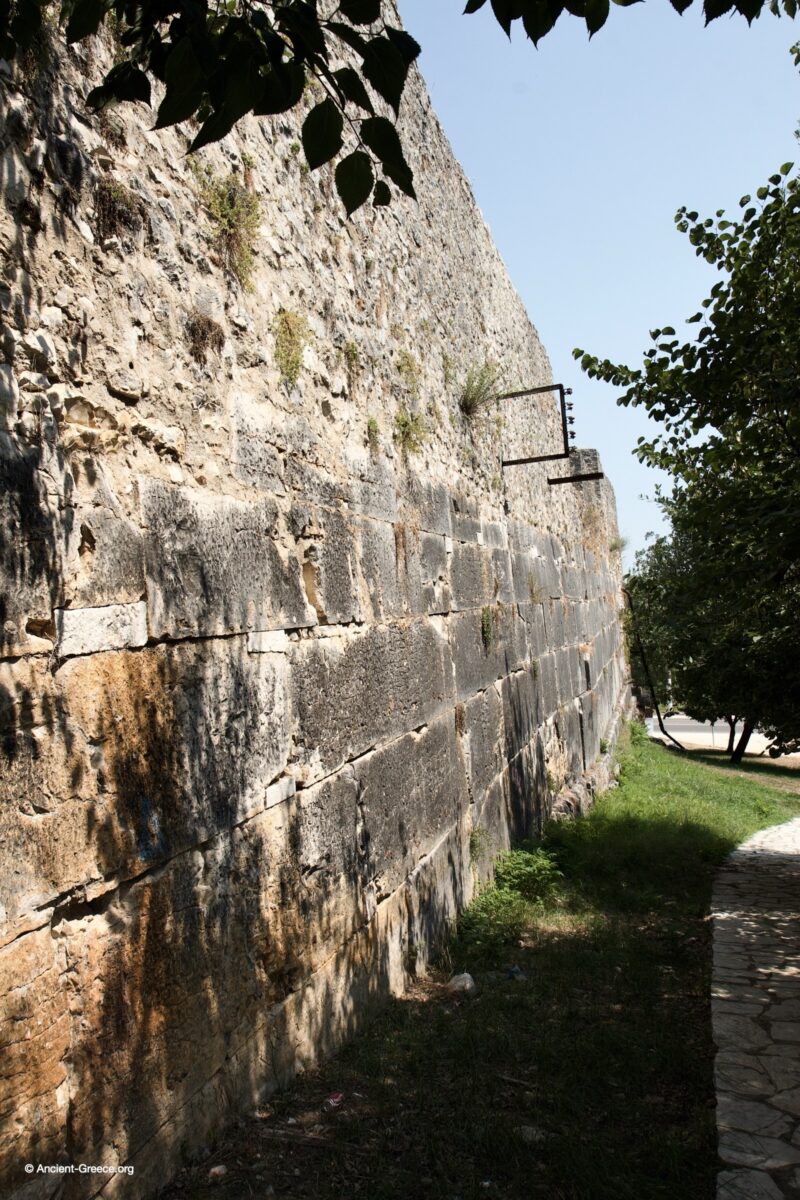
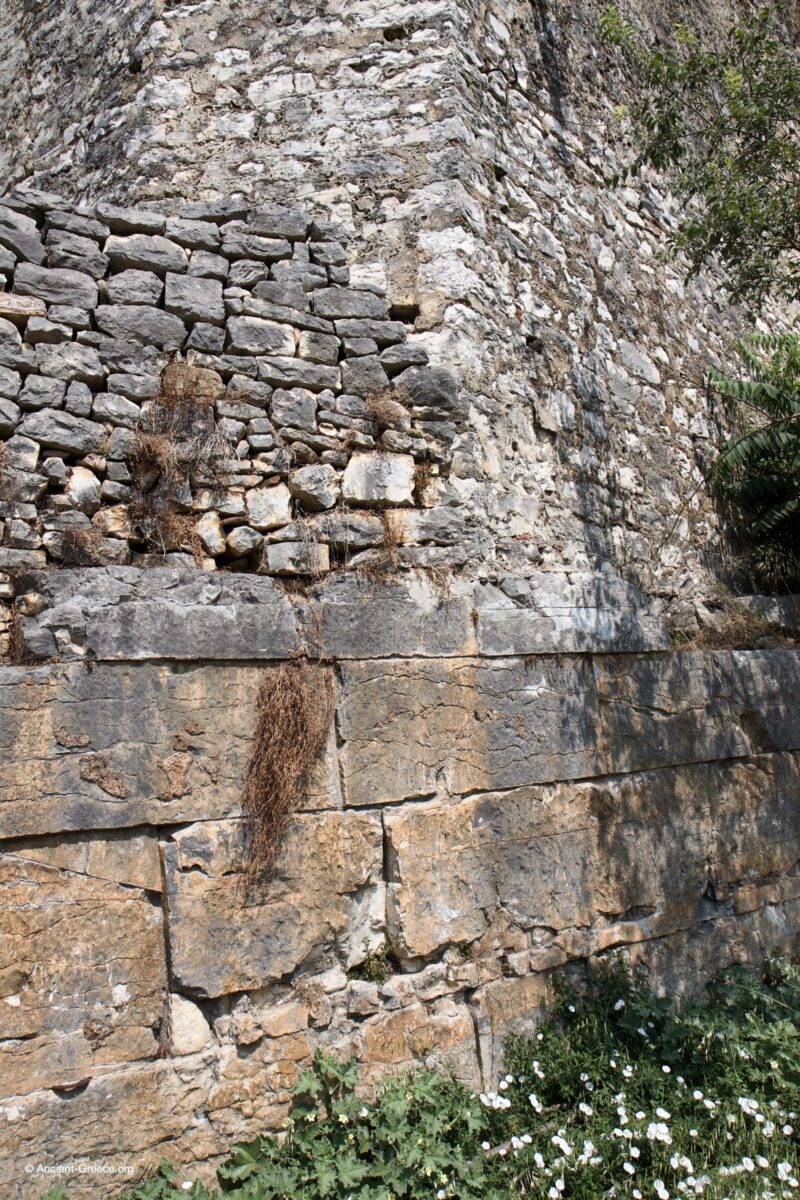
The towering walls of the Castle of Arta are a vertical timeline of the city’s history. The lowest courses feature massive, megalithic limestone blocks—remnants of the 4th-century BCE fortifications of ancient Ambracia. These Hellenistic foundations were so formidable that the Byzantine Despots of Epirus built directly upon them in the 13th century, often reusing ancient blocks (spolia) alongside their signature brick-and-stone masonry. The smaller, more irregular stonework visible in certain sections indicates centuries of maintenance, ranging from Ottoman-era patches to modern structural “rescue” interventions designed to stabilize the aging monument.
◈ ◈ ◈
Το Βορειοδυτικό Τείχος του Κάστρου της Άρτας
Αρχαιολογικός Χώρος Άρτας
4ος αιώνας π.Χ. (Κλασική) | 13ος αιώνας μ.Χ. (Βυζαντινή) | Οθωμανικές & Σύγχρονες Επισκευές Ασβεστόλιθος
Τα επιβλητικά τείχη του Κάστρου της Άρτας αποτελούν ένα κατακόρυφο χρονολόγιο της ιστορίας της πόλης. Τα κατώτερα στρώματα αποτελούνται από τεράστιους, μεγάλιθικούς ασβεστολιθικούς δόμους—κατάλοιπα των οχυρώσεων της αρχαίας Αμβρακίας του 4ου αιώνα π.Χ. Αυτά τα ελληνιστικά θεμέλια ήταν τόσο ισχυρά, ώστε οι Βυζαντινοί Δεσπότες της Ηπείρου έχτισαν απευθείας πάνω τους τον 13ο αιώνα, επαναχρησιμοποιώντας συχνά αρχαίους δόμους (spolia) δίπλα στη χαρακτηριστική πλινθοπερίβλητη τοιχοποιία τους. Η μικρότερη, πιο ακανόνιστη λιθοδομή που διακρίνεται σε ορισμένα τμήματα μαρτυρά αιώνες συντήρησης, από οθωμανικές προσθήκες έως σύγχρονες «σωστικές» επεμβάσεις που αποσκοπούν στη σταθεροποίηση του μνημείου.
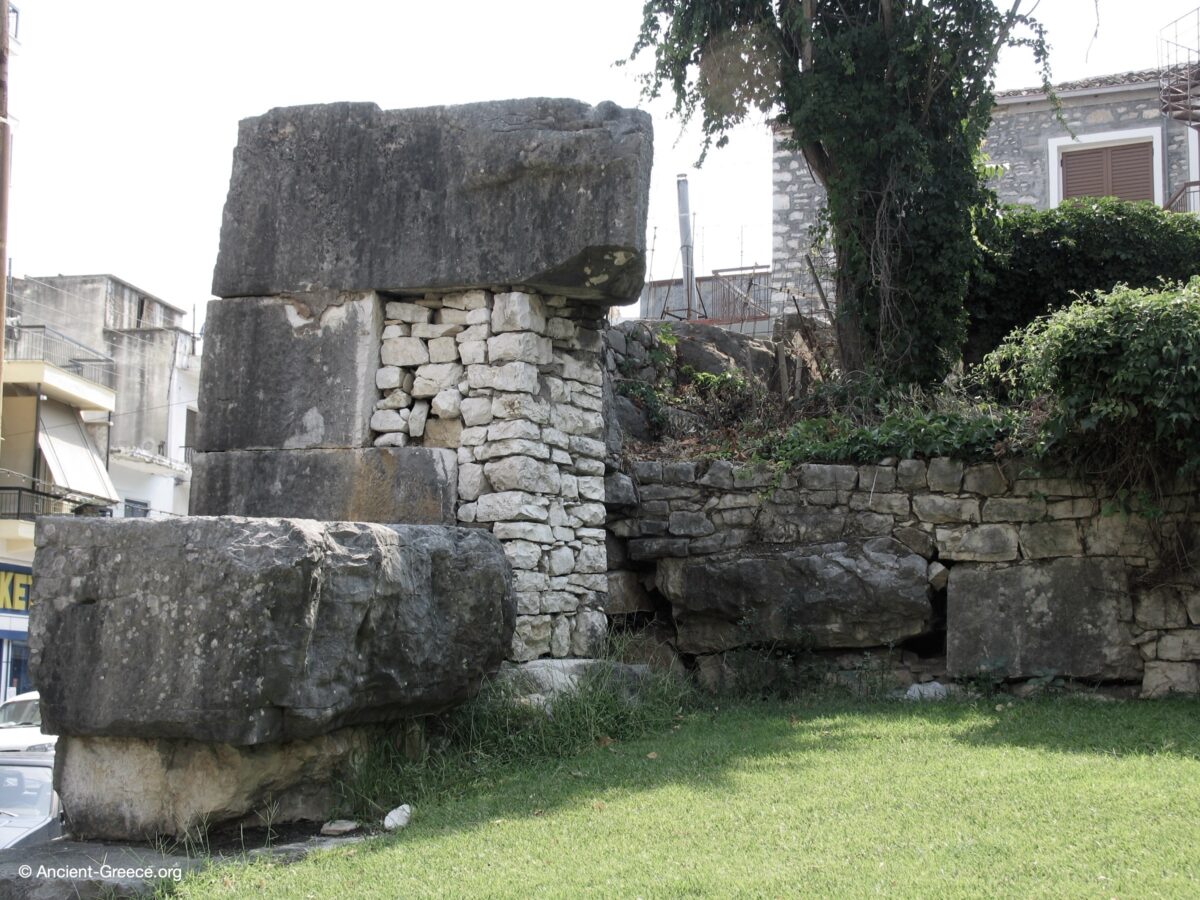
(Arta Castle District) 4th Century BCE (Classical Period) with Medieval/Modern
InfillLimestone
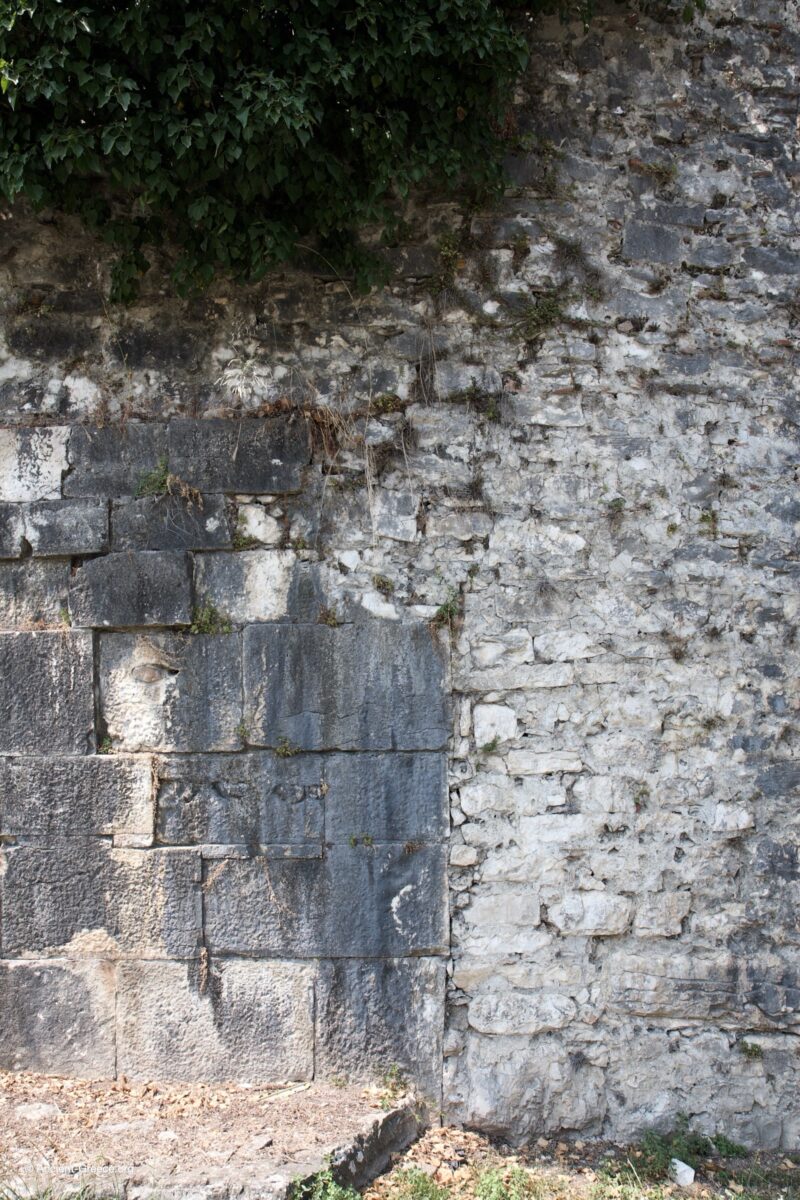
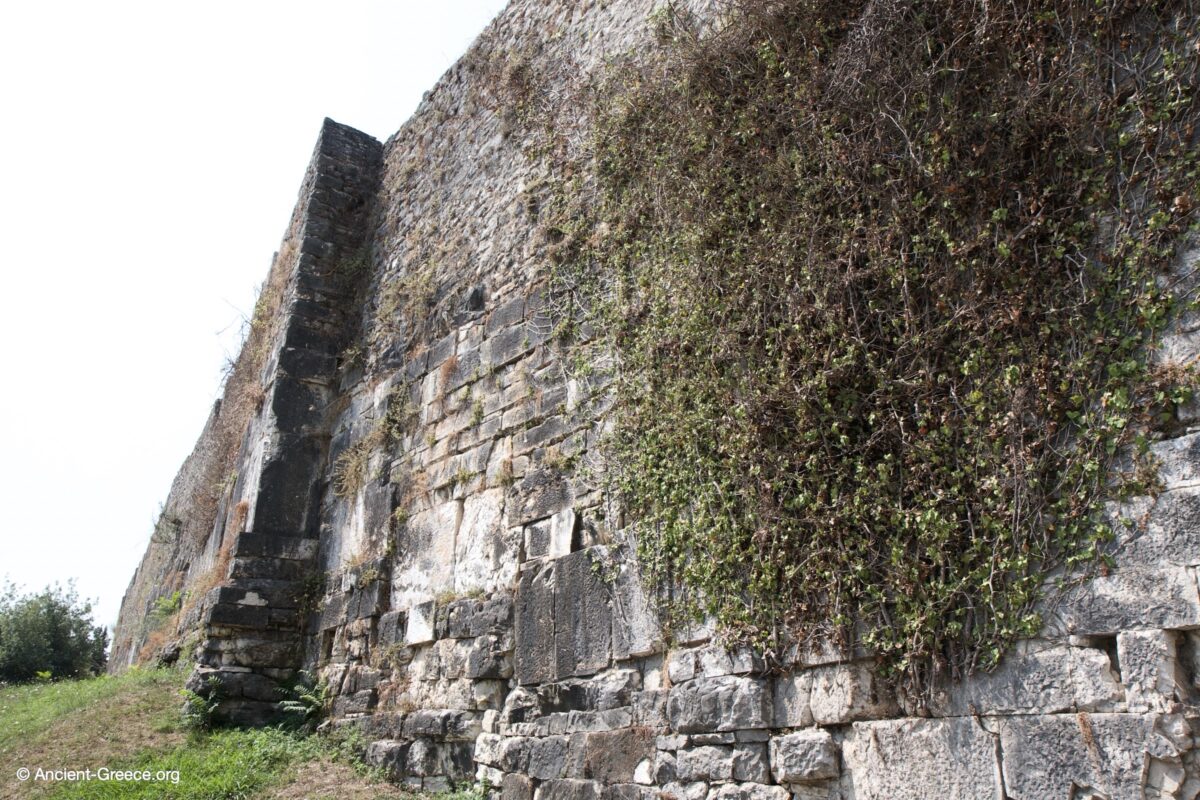
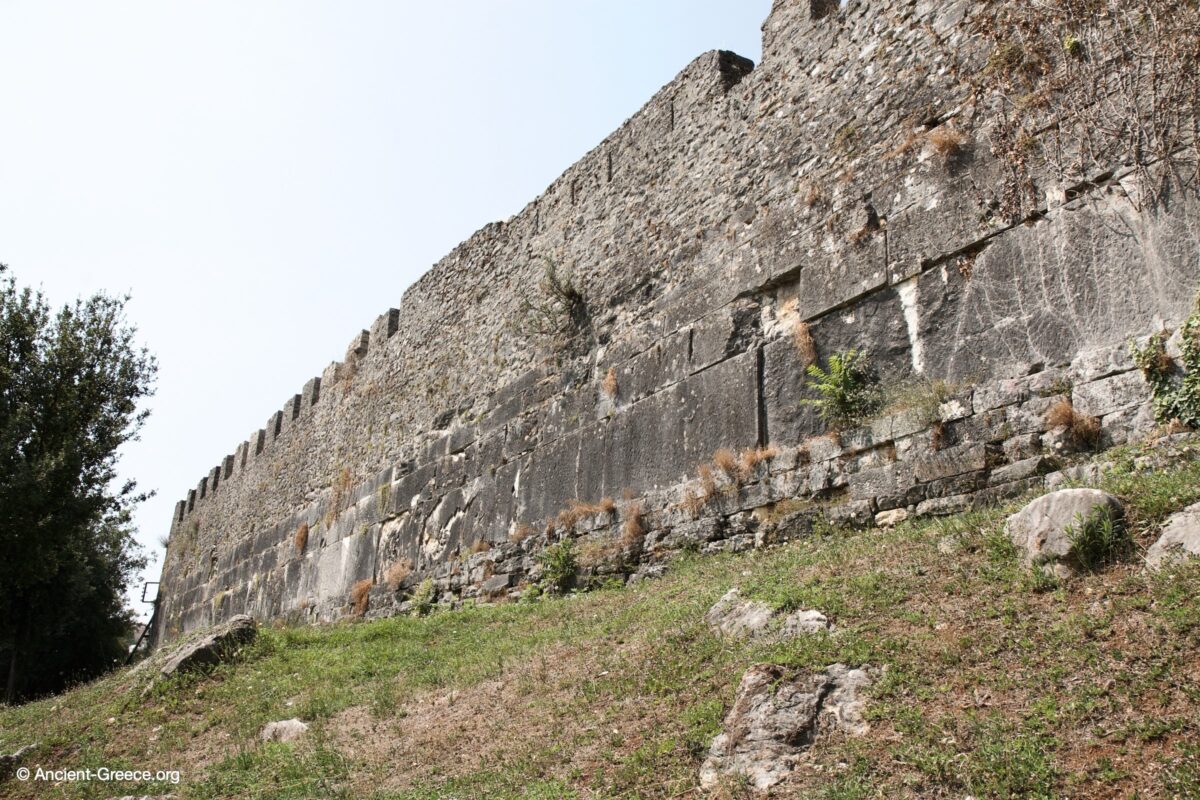
These massive, dark limestone blocks represent the original 4th-century BCE fortifications of ancient Ambracia. Constructed using a dry-stone isodomic technique, these megaliths were so precisely cut that they required no mortar to remain stable for over two millennia. As the city evolved, these ancient walls were incorporated into the Byzantine castle’s defenses. The sections of smaller, lighter-colored stonework visible today are later “rescue” interventions and structural repairs, highlighting the contrast between the monumental engineering of the Classical world and the pragmatic patchwork of later eras.
◈ ◈ ◈
Τα Μεγαλιθικά Θεμέλια της Αρχαίας ΑμβρακίαςΑρχαιολογικός Χώρος Άρτας (Περιοχή Κάστρου) 4ος αιώνας π.Χ. (Κλασική Περίοδος) με Μεταγενέστερες Προσθήκες Ασβεστόλιθος
Αυτοί οι τεράστιοι, σκουρόχρωμοι ασβεστολιθικοί δόμοι αποτελούν μέρος των αρχικών οχυρώσεων της αρχαίας Αμβρακίας του 4ου αιώνα π.Χ. Κατασκευασμένοι με την ισόδομη τεχνικήξερολιθιάς, αυτοί οι μεγάλιθοι λαξεύτηκαν με τέτοια ακρίβεια ώστε παρέμειναν σταθεροί για πάνω από δύο χιλιετίες χωρίς τη χρήση κονιάματος. Καθώς η πόλη εξελισσόταν, τα αρχαία αυτά τείχη ενσωματώθηκαν στις αμυντικές κατασκευές του βυζαντινού κάστρου. Τα τμήματα με τις μικρότερες, ανοιχτόχρωμες πέτρες που διακρίνονται σήμερα αποτελούν μεταγενέστερες «σωστικές» επεμβάσεις και δομικές επισκευές, αναδεικνύοντας την αντίθεση μεταξύ της μνημειακής μηχανικής του κλασικού κόσμου και των πρακτικών επιδιορθώσεων των μεταγενέστερων εποχών.
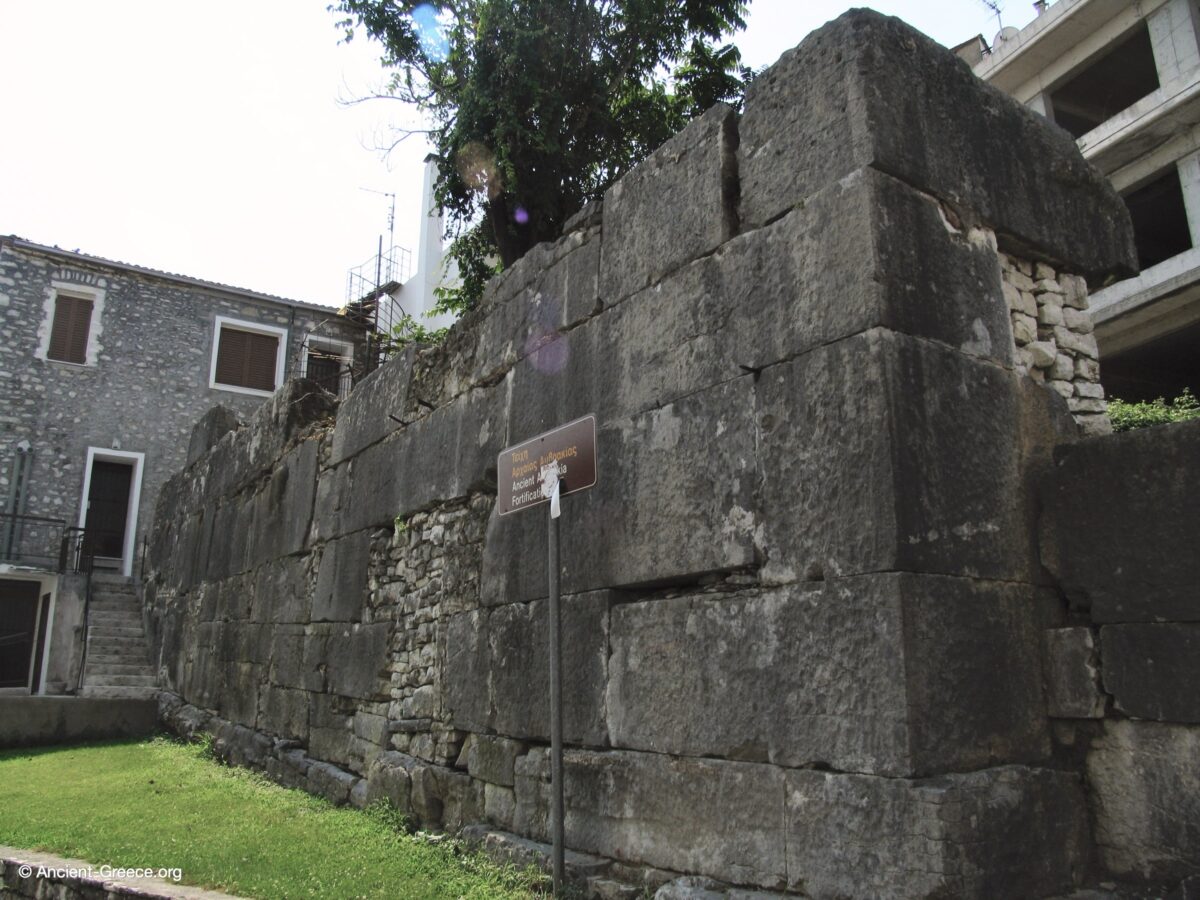
Archaeological Site of Arta (Castle District)
Late 4th Century BCE (Hellenistic Period)
Limestone
This segment of the ancient fortification wall highlights the remarkable engineering of Hellenistic Ambracia. The use of isodomic masonry—where rectangular blocks of equal height are laid in regular courses—provided both aesthetic symmetry and immense structural stability. You can clearly see the “patchwork” areas where smaller stones were used to fill gaps caused by millennia of weathering and stone robbing. The massive blocks at the base are particularly noteworthy, as they were carved to follow the natural unevenness of the bedrock, creating a “custom fit” foundation that has survived for over 2,400 years.
◈ ◈ ◈
Αρχαίο Ισόδομο Τείχος της Αμβρακίας
Αρχαιολογικός Χώρος Άρτας (Περιοχή Κάστρου)
Τέλη 4ου αιώνα π.Χ. (Ελληνιστική Περίοδος) Ασβεστόλιθος
Αυτό το τμήμα του αρχαίου οχυρωματικού τείχους αναδεικνύει την εξαιρετική μηχανική της ελληνιστικής Αμβρακίας. Η χρήση της ισόδομης τοιχοποιίας—όπου ορθογώνιοι δόμοι ίσου ύψους τοποθετούνται σε κανονικές στρώσεις—προσέφερε τόσο αισθητική συμμετρία όσο και τεράστια δομική σταθερότητα. Διακρίνονται καθαρά τα σημεία «μπαλώματος» όπου χρησιμοποιήθηκαν μικρότερες πέτρες για να γεμίσουν κενά που προκλήθηκαν από χιλιετίες διάβρωσης και λιθοθηρίας. Οι ογκώδεις λίθοι στη βάση είναι ιδιαίτερα αξιοσημείωτοι, καθώς λαξεύτηκαν για να ακολουθούν τη φυσική ανομοιομορφία του βράχου, δημιουργώντας μια «κατά παραγγελία» θεμελίωση που επιβιώνει για πάνω από 2.400 χρόνια.
Arta, Epirus
13th Century CE (Byzantine Era), incorporating 4th Century BCE (Classical/Hellenistic) foundations
Limestone and masonry
Defensive wall and tower
◈ ◈ ◈
Οχυρώσεις της Άρτας και της Αρχαίας Αμβρακίας
Άρτα, Ήπειρος
13ος αιώνας μ.Χ. (Βυζαντινή Περίοδος), με ενσωματωμένα θεμέλια του 4ου αιώνα π.Χ. (Κλασική/Ελληνιστική Περίοδος)
Ασβεστόλιθος και λιθοδομή
Αμυντικό τείχος και πύργος
Arta, Epirus
13th Century CE (Byzantine Era), incorporating 4th Century BCE (Classical/Hellenistic) foundations
Limestone and masonry
Defensive wall and tower
◈ ◈ ◈
Οχυρώσεις της Άρτας και της Αρχαίας Αμβρακίας
Άρτα, Ήπειρος
13ος αιώνας μ.Χ. (Βυζαντινή Περίοδος), με ενσωματωμένα θεμέλια του 4ου αιώνα π.Χ. (Κλασική/Ελληνιστική Περίοδος)
Ασβεστόλιθος και λιθοδομή
Αμυντικό τείχος και πύργος
Arta, Epirus
13th Century CE (Byzantine Era), incorporating 4th Century BCE (Classical/Hellenistic) foundations
Limestone and masonry
Defensive wall and tower
◈ ◈ ◈
Οχυρώσεις της Άρτας και της Αρχαίας Αμβρακίας
Άρτα, Ήπειρος
13ος αιώνας μ.Χ. (Βυζαντινή Περίοδος), με ενσωματωμένα θεμέλια του 4ου αιώνα π.Χ. (Κλασική/Ελληνιστική Περίοδος)
Ασβεστόλιθος και λιθοδομή
Αμυντικό τείχος και πύργος
Arta, Epirus
13th Century CE (Byzantine Era), incorporating 4th Century BCE (Classical/Hellenistic) foundations
Limestone and masonry
Defensive wall and tower
◈ ◈ ◈
Οχυρώσεις της Άρτας και της Αρχαίας Αμβρακίας
Άρτα, Ήπειρος
13ος αιώνας μ.Χ. (Βυζαντινή Περίοδος), με ενσωματωμένα θεμέλια του 4ου αιώνα π.Χ. (Κλασική/Ελληνιστική Περίοδος)
Ασβεστόλιθος και λιθοδομή
Αμυντικό τείχος και πύργος
Arta, Epirus
13th Century CE (Byzantine Era), incorporating 4th Century BCE (Classical/Hellenistic) foundations
Limestone and masonry
Defensive wall and tower
◈ ◈ ◈
Οχυρώσεις της Άρτας και της Αρχαίας Αμβρακίας
Άρτα, Ήπειρος
13ος αιώνας μ.Χ. (Βυζαντινή Περίοδος), με ενσωματωμένα θεμέλια του 4ου αιώνα π.Χ. (Κλασική/Ελληνιστική Περίοδος)
Ασβεστόλιθος και λιθοδομή
Αμυντικό τείχος και πύργος
Arta, Epirus
13th Century CE (Byzantine Era), incorporating 4th Century BCE (Classical/Hellenistic) foundations
Limestone and masonry
Defensive wall and tower
◈ ◈ ◈
Οχυρώσεις της Άρτας και της Αρχαίας Αμβρακίας
Άρτα, Ήπειρος
13ος αιώνας μ.Χ. (Βυζαντινή Περίοδος), με ενσωματωμένα θεμέλια του 4ου αιώνα π.Χ. (Κλασική/Ελληνιστική Περίοδος)
Ασβεστόλιθος και λιθοδομή
Αμυντικό τείχος και πύργος
Arta, Epirus
13th Century CE (Byzantine Era), incorporating 4th Century BCE (Classical/Hellenistic) foundations
Limestone and masonry
Defensive wall and tower
◈ ◈ ◈
Οχυρώσεις της Άρτας και της Αρχαίας Αμβρακίας
Άρτα, Ήπειρος
13ος αιώνας μ.Χ. (Βυζαντινή Περίοδος), με ενσωματωμένα θεμέλια του 4ου αιώνα π.Χ. (Κλασική/Ελληνιστική Περίοδος)
Ασβεστόλιθος και λιθοδομή
Αμυντικό τείχος και πύργος
Arta, Epirus
13th Century CE (Byzantine Era), incorporating 4th Century BCE (Classical/Hellenistic) foundations
Limestone and masonry
Defensive wall and tower
◈ ◈ ◈
Οχυρώσεις της Άρτας και της Αρχαίας Αμβρακίας
Άρτα, Ήπειρος
13ος αιώνας μ.Χ. (Βυζαντινή Περίοδος), με ενσωματωμένα θεμέλια του 4ου αιώνα π.Χ. (Κλασική/Ελληνιστική Περίοδος)
Ασβεστόλιθος και λιθοδομή
Αμυντικό τείχος και πύργος
Arta, Epirus
13th Century CE (Byzantine Era), incorporating 4th Century BCE (Classical/Hellenistic) foundations
Limestone and masonry
Defensive wall and tower
◈ ◈ ◈
Οχυρώσεις της Άρτας και της Αρχαίας Αμβρακίας
Άρτα, Ήπειρος
13ος αιώνας μ.Χ. (Βυζαντινή Περίοδος), με ενσωματωμένα θεμέλια του 4ου αιώνα π.Χ. (Κλασική/Ελληνιστική Περίοδος)
Ασβεστόλιθος και λιθοδομή
Αμυντικό τείχος και πύργος
Arta, Epirus
13th Century CE (Byzantine Era), incorporating 4th Century BCE (Classical/Hellenistic) foundations
Limestone and masonry
Defensive wall and tower
◈ ◈ ◈
Οχυρώσεις της Άρτας και της Αρχαίας Αμβρακίας
Άρτα, Ήπειρος
13ος αιώνας μ.Χ. (Βυζαντινή Περίοδος), με ενσωματωμένα θεμέλια του 4ου αιώνα π.Χ. (Κλασική/Ελληνιστική Περίοδος)
Ασβεστόλιθος και λιθοδομή
Αμυντικό τείχος και πύργος
Arta, Epirus
13th Century CE (Byzantine Era), incorporating 4th Century BCE (Classical/Hellenistic) foundations
Limestone and masonry
Defensive wall and tower
◈ ◈ ◈
Οχυρώσεις της Άρτας και της Αρχαίας Αμβρακίας
Άρτα, Ήπειρος
13ος αιώνας μ.Χ. (Βυζαντινή Περίοδος), με ενσωματωμένα θεμέλια του 4ου αιώνα π.Χ. (Κλασική/Ελληνιστική Περίοδος)
Ασβεστόλιθος και λιθοδομή
Αμυντικό τείχος και πύργος
Arta, Epirus
13th Century CE (Byzantine Era), incorporating 4th Century BCE (Classical/Hellenistic) foundations
Limestone and masonry
Defensive wall and tower
◈ ◈ ◈
Οχυρώσεις της Άρτας και της Αρχαίας Αμβρακίας
Άρτα, Ήπειρος
13ος αιώνας μ.Χ. (Βυζαντινή Περίοδος), με ενσωματωμένα θεμέλια του 4ου αιώνα π.Χ. (Κλασική/Ελληνιστική Περίοδος)
Ασβεστόλιθος και λιθοδομή
Αμυντικό τείχος και πύργος
Arta, Epirus
13th Century CE (Byzantine Era), incorporating 4th Century BCE (Classical/Hellenistic) foundations
Limestone and masonry
Defensive wall and tower
◈ ◈ ◈
Οχυρώσεις της Άρτας και της Αρχαίας Αμβρακίας
Άρτα, Ήπειρος
13ος αιώνας μ.Χ. (Βυζαντινή Περίοδος), με ενσωματωμένα θεμέλια του 4ου αιώνα π.Χ. (Κλασική/Ελληνιστική Περίοδος)
Ασβεστόλιθος και λιθοδομή
Αμυντικό τείχος και πύργος
Arta, Epirus
13th Century CE (Byzantine Era), incorporating 4th Century BCE (Classical/Hellenistic) foundations
Limestone and masonry
Defensive wall and tower
◈ ◈ ◈
Οχυρώσεις της Άρτας και της Αρχαίας Αμβρακίας
Άρτα, Ήπειρος
13ος αιώνας μ.Χ. (Βυζαντινή Περίοδος), με ενσωματωμένα θεμέλια του 4ου αιώνα π.Χ. (Κλασική/Ελληνιστική Περίοδος)
Ασβεστόλιθος και λιθοδομή
Αμυντικό τείχος και πύργος
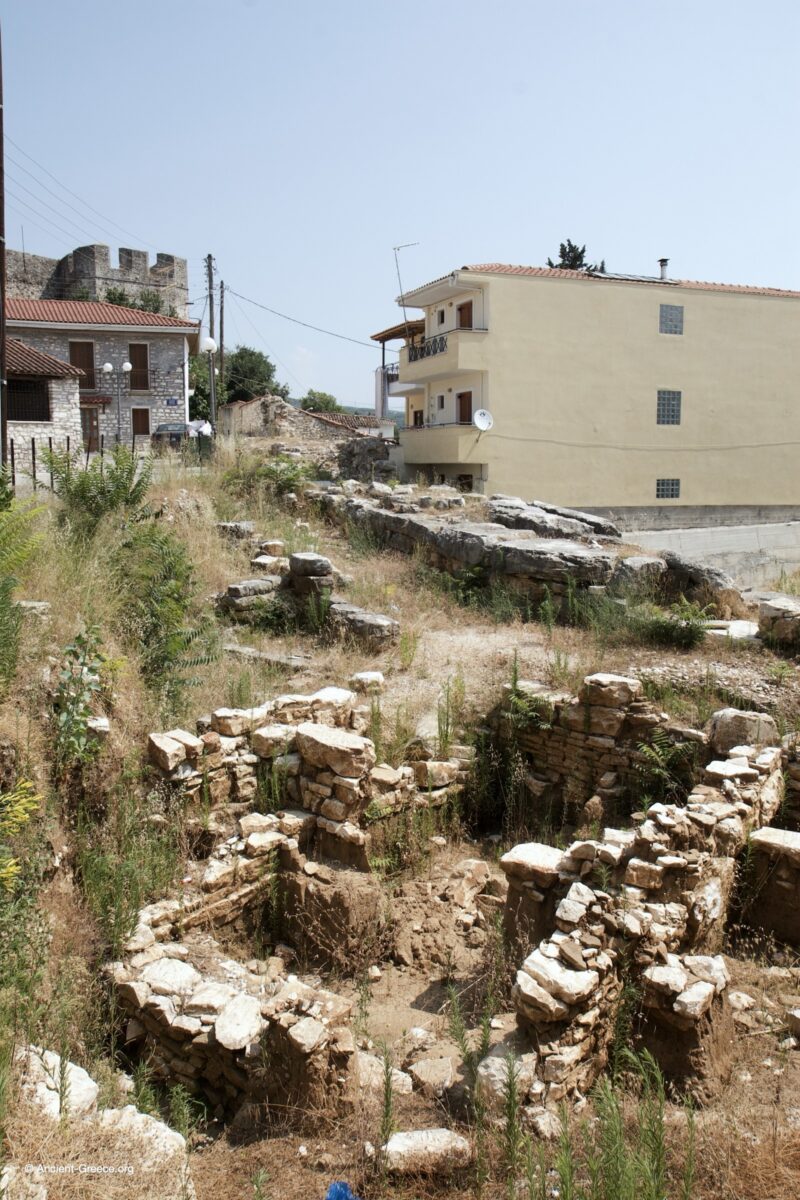
Arta, Epirus
13th Century CE (Byzantine Era), incorporating 4th Century BCE (Classical/Hellenistic) foundations
Limestone and masonry
Defensive wall and tower
◈ ◈ ◈
Οχυρώσεις της Άρτας και της Αρχαίας Αμβρακίας
Άρτα, Ήπειρος
13ος αιώνας μ.Χ. (Βυζαντινή Περίοδος), με ενσωματωμένα θεμέλια του 4ου αιώνα π.Χ. (Κλασική/Ελληνιστική Περίοδος)
Ασβεστόλιθος και λιθοδομή
Αμυντικό τείχος και πύργος
Arta, Epirus
13th Century CE (Byzantine Era), incorporating 4th Century BCE (Classical/Hellenistic) foundations
Limestone and masonry
Defensive wall and tower
◈ ◈ ◈
Οχυρώσεις της Άρτας και της Αρχαίας Αμβρακίας
Άρτα, Ήπειρος
13ος αιώνας μ.Χ. (Βυζαντινή Περίοδος), με ενσωματωμένα θεμέλια του 4ου αιώνα π.Χ. (Κλασική/Ελληνιστική Περίοδος)
Ασβεστόλιθος και λιθοδομή
Αμυντικό τείχος και πύργος
Arta, Epirus
13th Century CE (Byzantine Era), incorporating 4th Century BCE (Classical/Hellenistic) foundations
Limestone and masonry
Defensive wall and tower
◈ ◈ ◈
Οχυρώσεις της Άρτας και της Αρχαίας Αμβρακίας
Άρτα, Ήπειρος
13ος αιώνας μ.Χ. (Βυζαντινή Περίοδος), με ενσωματωμένα θεμέλια του 4ου αιώνα π.Χ. (Κλασική/Ελληνιστική Περίοδος)
Ασβεστόλιθος και λιθοδομή
Αμυντικό τείχος και πύργος
Arta, Epirus
13th Century CE (Byzantine Era), incorporating 4th Century BCE (Classical/Hellenistic) foundations
Limestone and masonry
Defensive wall and tower
◈ ◈ ◈
Οχυρώσεις της Άρτας και της Αρχαίας Αμβρακίας
Άρτα, Ήπειρος
13ος αιώνας μ.Χ. (Βυζαντινή Περίοδος), με ενσωματωμένα θεμέλια του 4ου αιώνα π.Χ. (Κλασική/Ελληνιστική Περίοδος)
Ασβεστόλιθος και λιθοδομή
Αμυντικό τείχος και πύργος
Arta, Epirus
13th Century CE (Byzantine Era), incorporating 4th Century BCE (Classical/Hellenistic) foundations
Limestone and masonry
Defensive wall and tower
◈ ◈ ◈
Οχυρώσεις της Άρτας και της Αρχαίας Αμβρακίας
Άρτα, Ήπειρος
13ος αιώνας μ.Χ. (Βυζαντινή Περίοδος), με ενσωματωμένα θεμέλια του 4ου αιώνα π.Χ. (Κλασική/Ελληνιστική Περίοδος)
Ασβεστόλιθος και λιθοδομή
Αμυντικό τείχος και πύργος
Arta, Epirus
13th Century CE (Byzantine Era), incorporating 4th Century BCE (Classical/Hellenistic) foundations
Limestone and masonry
Defensive wall and tower
◈ ◈ ◈
Οχυρώσεις της Άρτας και της Αρχαίας Αμβρακίας
Άρτα, Ήπειρος
13ος αιώνας μ.Χ. (Βυζαντινή Περίοδος), με ενσωματωμένα θεμέλια του 4ου αιώνα π.Χ. (Κλασική/Ελληνιστική Περίοδος)
Ασβεστόλιθος και λιθοδομή
Αμυντικό τείχος και πύργος
Arta, Epirus
13th Century CE (Byzantine Era), incorporating 4th Century BCE (Classical/Hellenistic) foundations
Limestone and masonry
Defensive wall and tower
◈ ◈ ◈
Οχυρώσεις της Άρτας και της Αρχαίας Αμβρακίας
Άρτα, Ήπειρος
13ος αιώνας μ.Χ. (Βυζαντινή Περίοδος), με ενσωματωμένα θεμέλια του 4ου αιώνα π.Χ. (Κλασική/Ελληνιστική Περίοδος)
Ασβεστόλιθος και λιθοδομή
Αμυντικό τείχος και πύργος
Arta, Epirus
13th Century CE (Byzantine Era), incorporating 4th Century BCE (Classical/Hellenistic) foundations
Limestone and masonry
Defensive wall and tower
◈ ◈ ◈
Οχυρώσεις της Άρτας και της Αρχαίας Αμβρακίας
Άρτα, Ήπειρος
13ος αιώνας μ.Χ. (Βυζαντινή Περίοδος), με ενσωματωμένα θεμέλια του 4ου αιώνα π.Χ. (Κλασική/Ελληνιστική Περίοδος)
Ασβεστόλιθος και λιθοδομή
Αμυντικό τείχος και πύργος
Arta, Greece
Archaic Period to Ottoman Era (6th Century BCE – 17th Century CE)
Limestone, Conglomerate, Mortar, and Brick
Western fortification wall corner with chronological annotation.
This section of the wall is annotated to show nearly 2,000 years of construction history. The pink-highlighted section shows the earliest Archaic (6th c. BCE) foundations of Ambracia. The massive, precisely fit isodomic blocks of the Classical/Hellenistic era (4th–3rd c. BCE) rise above them. The green-highlighted top layer, culminating in the crenellations, shows the medieval and later reconstructions from the Byzantine Despotate of Epirus through the Ottoman period.
◈ ◈ ◈
Διαστρωμάτωση Τείχους Κάστρου Άρτας
Άρτα, Ελλάδα
Αρχαϊκή Περίοδος έως Οθωμανική Εποχή (6ος αιώνας π.Χ. – 17ος αιώνας μ.Χ.)
Ασβεστόλιθος, Κροκαλοπαγές πέτρωμα, Κονίαμα και Πλίνθοι
Γωνία δυτικού οχυρωματικού τείχους με χρονολογική επισήμανση.
Αυτή η άποψη από ψηλά αποτυπώνει ένα κρίσιμο τμήμα του αρχαίου αμυντικού κυκλώματος, με σαφείς επισημάνσεις που δείχνουν σχεδόν 2.000 χρόνια κατασκευαστικής ιστορίας. Το τμήμα με ροζ επισήμανση δείχνει τα παλαιότερα Αρχαϊκά (6ος αι. π.Χ.) θεμέλια της Αμβρακίας. Οι μνημειώδεις, ακριβείς ισόδομοι πλίνθοι της Κλασικής/Ελληνιστικής εποχής (4ος–3ος αι. π.Χ.) υψώνονται από πάνω. Το ανώτερο στρώμα με πράσινη επισήμανση, που καταλήγει στις επάλξεις, δείχνει τις μεσαιωνικές και μεταγενέστερες ανακατασκευές από το Βυζαντινό Δεσποτάτο της Ηπείρου έως την Οθωμανική περίοδο.
From Ambracia to Nicopolis and Arta
Final decline came in 31 BCE, when Octavian Augustus founded Nicopolis and forced the inhabitants of Ambracia to relocate there. The city began to flourish again during the Byzantine era as Arta, though it has forever preserved the traces of its ancient glory within its foundations.
During the Despotate of Epirus in the 13th century CE, many ancient stones were repurposed for the construction of Arta’s famous Byzantine churches and other monuments. This continuous use of the site ensures that the spirit of Ambracia remains physically integrated into the modern city’s identity.
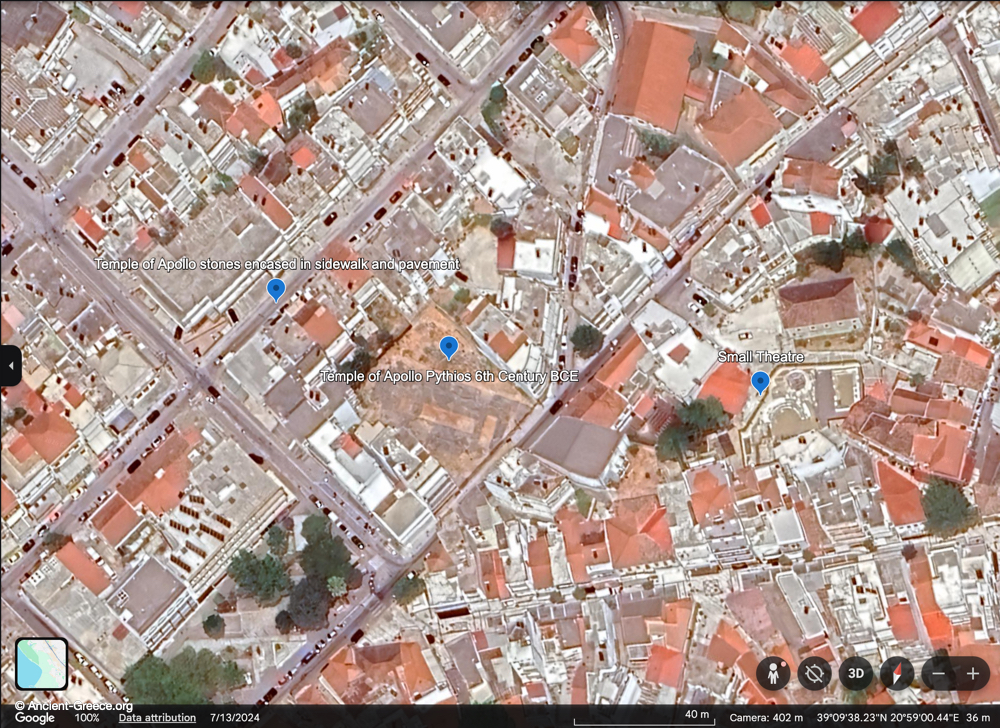
The archaeological site of Ambracia reveals the remains of the Archaic Temple of Apollo Pythios, a significant religious structure in the ancient capital of Pyrrhus. The aerial view demonstrates the integration of these ancient ruins within the contemporary urban fabric of Arta, where monumental foundations and temple stones are encased in sidewalk and pavement. Adjacent to the temple remains is the Small Theatre, dating to the late 4th or early 3rd century BCE, which served as a space for cultural and political assembly. This Archaic site remains a primary example of Architecture and urban continuity in the region of Epirus.
Primary Tags: Apollo, Archaic, Architecture, Arta, Arta Archaeological Museum
Additional Suggestions: Ambracia, Small Theatre, Aerial, Temple, Ruins
◈ ◈ ◈
Ναός του Πυθίου Απόλλωνα και Μικρό Θέατρο
Άρτα
6ος αιώνας π.Χ.
Αρχαϊκή
Ασβεστόλιθος
Απόλλων, Αμβρακία, Μικρό Θέατρο
Ο αρχαιολογικός χώρος της Αμβρακίας αποκαλύπτει τα ερείπια του Αρχαϊκού Ναού του Πυθίου Απόλλωνα, ενός σημαντικού θρησκευτικού οικοδομήματος στην αρχαία πρωτεύουσα του Πύρρου. Η αεροφωτογραφία δείχνει την ενσωμάτωση αυτών των αρχαίων ερειπίων στον σύγχρονο αστικό ιστό της Άρτας, όπου τα μνημειώδη θεμέλια και οι λίθοι του ναού είναι εγκλωβισμένοι στο πεζοδρόμιο και το οδόστρωμα. Δίπλα στα ερείπια του ναού βρίσκεται το Μικρό Θέατρο, το οποίο χρονολογείται στα τέλη του 4ου ή στις αρχές του 3ου αιώνα π.Χ. και χρησίμευε ως χώρος πολιτιστικών και πολιτικών συγκεντρώσεων. Αυτός ο Αρχαϊκός χώρος παραμένει ένα κύριο παράδειγμα Αρχιτεκτονικής και αστικής συνέχειας στην περιοχή της Ηπείρου.
Ancient Musical Instruments.
Archaic Bronze, Bone, Wood, Tortoise Shell Lyre and Aulos
▣ This display features a reconstructed Lyre with a tortoise-shell sound box and a bone Aulos, illustrating the instrumental variety of the Archaic period in Abracia. These artifacts, found at the Arta Archaeological Museum, highlight the importance of music in ancient social and religious life.
◈ Αυτό το έκθεμα παρουσιάζει μια ανακατασκευασμένη Λύρα με ηχείο από καλούπι χελώνας και έναν οστέινο Αυλό, απεικονίζοντας την οργανική ποικιλία της Αρχαϊκής περιόδου στην Αμβρακία. Αυτά τα ευρήματα, που βρίσκονται στο Αρχαιολογικό Μουσείο Άρτας, υπογραμμίζουν τη σημασία της μουσικής στην αρχαία κοινωνική και θρησκευτική ζωή.
Related Pages
Sources: Arta Archaeological Museum.