On this page | Περιεχόμενα:
The Goddess of Victory
Nike, the goddess of victory, was the daughter of the Titan Pallas, and of Styx, the presiding nymph of the river of that name in the lower world.
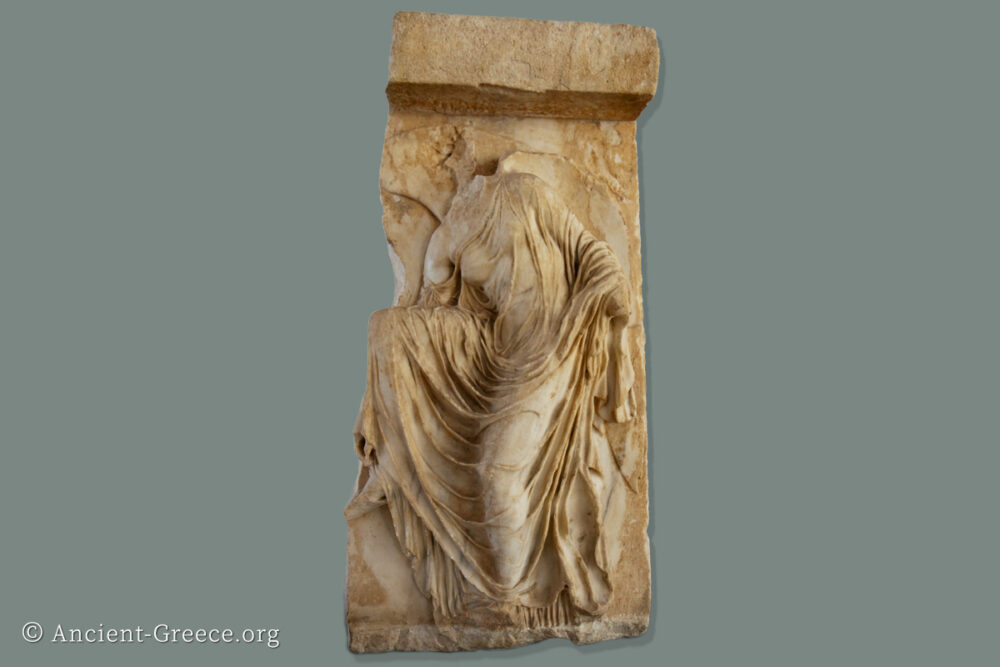
In her statues, Nike somewhat resembles Athene, but may easily be recognized by her large, graceful wings and flowing drapery, which is negligently fastened on the right shoulder, and only partially conceals her lovely form. In her left hand, she holds aloft a crown of laurel, and in the right, a palm-branch.
In ancient sculpture, Nike is usually represented in connection with colossal statues of Zeus or Pallas-Athene, in which case she is life-sized, and stands on a ball, held in the open palm of the deity she accompanies. Sometimes she is represented engaged in inscribing the victory of a conqueror on his shield, her right foot being slightly raised and placed on a ball.
A celebrated temple was erected to this divinity on the Acropolis at Athens, which is still to be seen, and is in excellent preservation.
Victoria
Under the name of Victoria, Nike was highly honoured by the Romans, with whom love of conquest was an all-absorbing characteristic.
There were several sanctuaries in Rome dedicated to her, the principal of which was on the Capitol, where it was the custom of generals, after success had attended their arms, to erect statues of the goddess in commemoration of their victories. The most magnificent of these statues, was that raised by Augustus after the battle of Actium. A festival was celebrated in honour of Nike on the 12th of April.
From: Berens, E.M. The Myths and Legends of Ancient Greece and Rome. New York: Maynard, Merril, & Co., 1880. Text in the public domain.
Η Νίκη, η θεά της νίκης, ήταν κόρη του Τιτάνα Πάλλαντα και της Στύγας, της προστάτιδας νύμφης του ομώνυμου ποταμού στον Κάτω Κόσμο.
Στα αγάλματά της, η Νίκη μοιάζει κάπως με την Αθηνά, αλλά μπορεί εύκολα να αναγνωριστεί από τα μεγάλα, χαριτωμένα φτερά της και τις πλούσιες πτυχώσεις του ενδύματός της, το οποίο είναι ατημέλητα στερεωμένο στον δεξιό ώμο και κρύβει μόνο εν μέρει την όμορφη μορφή της. Στο αριστερό της χέρι κρατά ψηλά ένα στεφάνι δάφνης και στο δεξί ένα κλαδί φοίνικα.
Στην αρχαία γλυπτική, η Νίκη συνήθως αναπαριστάται σε σχέση με κολοσσιαία αγάλματα του Δία ή της Παλλάδας Αθηνάς, οπότε έχει φυσικό μέγεθος και στέκεται πάνω σε μια σφαίρα, την οποία κρατά στην ανοιχτή παλάμη της η θεότητα που συνοδεύει. Μερικές φορές απεικονίζεται να χαράσσει τη νίκη ενός κατακτητή στην ασπίδα του, με το δεξί της πόδι ελαφρώς ανασηκωμένο και τοποθετημένο πάνω σε μια σφαίρα.
Ένας περίφημος ναός ανεγέρθηκε για αυτή τη θεότητα στην Ακρόπολη των Αθηνών, ο οποίος είναι ακόμη ορατός και διατηρείται σε εξαιρετική κατάσταση.
Βικτώρια Με το όνομα Βικτώρια, η Νίκη τιμούνταν ιδιαίτερα από τους Ρωμαίους, για τους οποίους η αγάπη για την κατάκτηση ήταν ένα κυρίαρχο χαρακτηριστικό.
Υπήρχαν αρκετά ιερά στη Ρώμη αφιερωμένα σε αυτήν, το κυριότερο από τα οποία βρισκόταν στο Καπιτώλιο, όπου ήταν έθιμο των στρατηγών, μετά από στρατιωτικές επιτυχίες, να αναγείρουν αγάλματα της θεάς σε ανάμνηση των νικών τους. Το πιο μεγαλοπρεπές από αυτά τα αγάλματα ήταν εκείνο που ανέγειρε ο Αύγουστος μετά τη ναυμαχία του Ακτίου. Μια γιορτή τελούνταν προς τιμήν της Νίκης στις 12 Απριλίου.
Από: Berens, E.M. The Myths and Legends of Ancient Greece and Rome. Νέα Υόρκη: Maynard, Merril, & Co., 1880. Κείμενο σε κοινό κτήμα.
Photographs | Φωτογραφίες
← Keyboard Navigation →
Related Pages | Σχετικά Ἀρθρα