
On this page:
Ancient Greek spiritual beliefs, religion, and oral tradition are all reflected and formulated through rich myths and legends that besides entertainment provided an articulation of Greek civilization’s moral fiber as it evolved over centuries.
This mythology forms a complex tapestry of profound, fantastical, and didactic narratives with enduring universal appeal.
Taken as a whole, what is now categorized as mythology represents the bulk of ancient polytheistic religious practices intertwined with oral heritage. Because the formal concept of history only emerged in the 5th century BCE with the writings of Herodotus, prior cultural memory was transmitted orally from generation to generation. Deities were intimately connected to specific landmarks, heroes, and mortals.
Lacking an organized, dogmatic religion in the modern sense, the Greeks animated their physical landscape with these tales and worshiped a wide pantheon of deities. By the fall of the Roman Empire, these localized traditions were largely supplanted by new religions spreading through the Eastern Mediterranean. However, because these narratives were deeply interwoven into Greek culture and rich in literary value, they survived through antiquity embedded in art and literature. As their original religious function faded, these stories were distilled over recent centuries into the modern concept of mythology.
The term itself derives from the Greek word mythos (μῦθος), meaning a tale or story. Having survived through ancient plays, texts, and material culture, these 3,000-year-old narratives continue to evolve, inspiring fresh interpretations in contemporary art, literature, and media.
Οι αρχαίες ελληνικές πνευματικές πεποιθήσεις και οι προφορικές παραδόσεις αντικατοπτρίζονται σε ένα πλούσιο σώμα μύθων και θρύλων. Πέρα από την ψυχαγωγία, αυτές οι ιστορίες παρείχαν μια έκφραση του ηθικού ιστού του ελληνικού πολιτισμού, καθώς αυτός εξελισσόταν μέσα στους αιώνες. Αυτή η μυθολογία αποτελεί ένα σύνθετο μωσαϊκό από βαθιές, φανταστικές και διδακτικές αφηγήσεις με διαχρονική, παγκόσμια απήχηση.
Στο σύνολό της, αυτό που σήμερα κατηγοριοποιείται ως μυθολογία αντιπροσωπεύει το μεγαλύτερο μέρος των αρχαίων πολυθεϊστικών θρησκευτικών πρακτικών, συνυφασμένων με την προφορική κληρονομιά. Δεδομένου ότι η τυπική έννοια της ιστορίας εμφανίστηκε μόλις τον 5ο αιώνα π.Χ. με τα έργα του Ηροδότου, η προγενέστερη πολιτισμική μνήμη μεταδιδόταν προφορικά από γενιά σε γενιά.
Οι θεότητες συνδέονταν στενά με συγκεκριμένα τοπόσημα, ήρωες και θνητούς. Ελλείψει μιας οργανωμένης, δογματικής θρησκείας με τη σύγχρονη έννοια, οι Έλληνες έδωσαν πνοή στο φυσικό τους τοπίο μέσα από αυτές τις ιστορίες και λάτρευαν ένα ευρύ πάνθεον θεοτήτων. Μέχρι την πτώση της Ρωμαϊκής Αυτοκρατορίας, αυτές οι τοπικές παραδόσεις είχαν σε μεγάλο βαθμό αντικατασταθεί από νέες θρησκείες που εξαπλώθηκαν στην Ανατολική Μεσόγειο.
Ωστόσο, επειδή αυτές οι αφηγήσεις ήταν τόσο βαθιά ριζωμένες στον ελληνικό πολιτισμό και πλούσιες σε λογοτεχνική αξία, διασώθηκαν κατά την αρχαιότητα ενσωματωμένες στην τέχνη και τη λογοτεχνία. Καθώς η αρχική θρησκευτική τους λειτουργία εξασθενούσε, αυτές οι ιστορίες μετουσιώθηκαν τους τελευταίους αιώνες στη σύγχρονη έννοια της μυθολογίας.
Ο ίδιος ο όρος προέρχεται από την ελληνική λέξη μῦθος, που σημαίνει αφήγηση ή ιστορία. Έχοντας επιβιώσει μέσα από αρχαία θεατρικά έργα, κείμενα και τον υλικό πολιτισμό, αυτές οι αφηγήσεις ηλικίας 3.000 ετών συνεχίζουν να εξελίσσονται, εμπνέοντας νέες ερμηνείες στη σύγχρονη τέχνη, λογοτεχνία και μέσα ενημέρωσης.
Alphabetical Index
From: Berens, E.M. The Myths and Legends of Ancient Greece and Rome. New York: Maynard, Merril, & Co., 1880. Text in the public domain.
Alcmene • Ananke • Antiope • Aphrodite • Apollo • Ares (Mars) • Asclepius • Artemis • Atalanta • Ate • Athena
Daedalus • Danae • Demeter • Dionysus
Ganymedes • Ge • Gigantomachy • Glaucus • Gorgons • Graces (Charities) • Graeae
Hades (Pluto) • Harpies • Hebe • Hecate • Helios (Sol) • Hephestus • Hera • Heracles (Hercules) • Hermes (Mercury) • Hesperides • Hestia • Horae • Hymen
Icarus • Io • Ion • Iris • Isis • Ker • Leda • Leto • Leucothea
Metis • Minotaur • Mnemosyne • Momus • Morpheus • Muses • Myrae
Nemesis • Nereus • Nike • Nymphs • Nyx
Pan • Pegasus • Phorcys & Ceto • Plutus • Poseidon • Priapus • Proteus
Satyrs • Selene • Semele • Sirens • Sphinx
Thanatos & Hypnus • Thaumas • Themis • Theseus • Theseus and the Minotaur • Themis • Triton • Tyche
Enduring Legacy | Διαχρονική Κληρονομιά
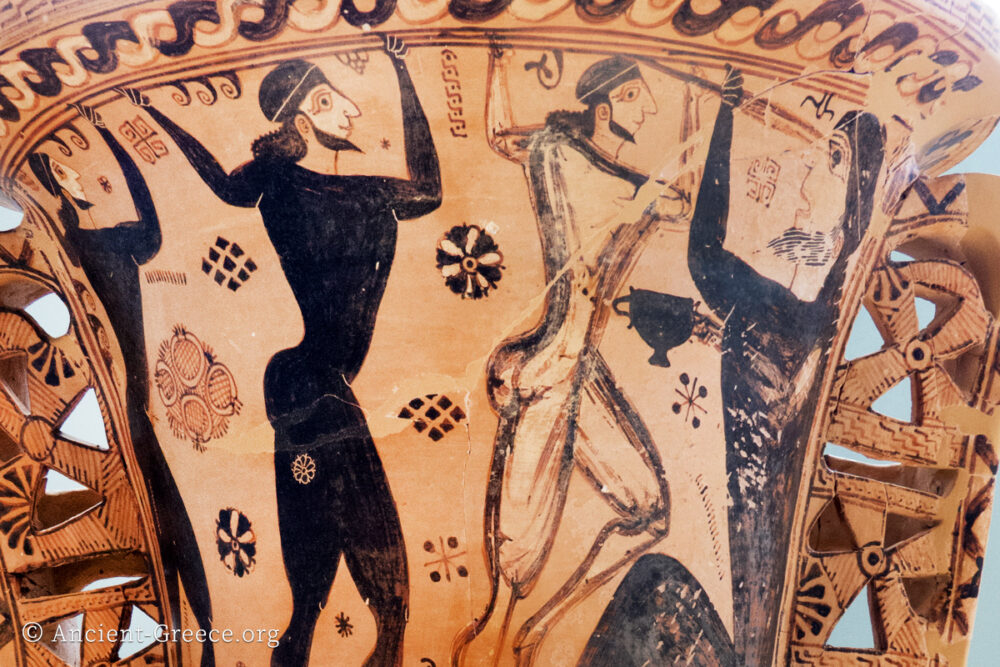
In antiquity, these narratives and characters permeated all cultural activities, featuring prominently in art, architecture, theater, and written texts. While the origins of these oral traditions are lost to time, the earliest concrete records of Greek mythology appear in Bronze Age art and Linear B tablets dating to approximately 1400 BCE. The future decipherment of the Linear A script may eventually reveal even older accounts. Coinciding with the late Minoan and Mycenaean eras, this period is often termed the “Age of Heroes.” Many of the most renowned mythological figures and events, including Heracles, Theseus, and the Trojan War, are rooted in this era. Throughout the Bronze Age, these legends were transmitted across generations via a robust oral tradition. Following the development of the Greek alphabet during the Iron Age, around the 8th century BCE, mythological themes began to be systematically recorded in writing.
Greek mythology remained a primary source of cultural inspiration for centuries and was heavily adopted by the Romans, who preserved and adapted these narratives well into the first millennium CE. The influence of these myths extended far beyond the fall of the Roman Empire. The celestial sphere remains populated by Greek heroes and deities, immortalized in the names of constellations, planets, and moons. Notably, early human spaceflight to the moon was achieved under the namesake of the Apollo program.
These mythological themes continue to permeate Western culture because they address eternal human questions regarding existence, self-determination, and purpose. Above all, they explore the complexity of human relationships, social conventions, the dichotomy of good and evil, and fundamental human hopes and fears.
Στην αρχαιότητα, αυτές οι αφηγήσεις και οι χαρακτήρες διέπουν όλες τις πολιτισμικές δραστηριότητες, κατέχοντας εξέχουσα θέση στην τέχνη, την αρχιτεκτονική, το θέατρο και τα γραπτά κείμενα. Ενώ οι ρίζες αυτών των προφορικών παραδόσεων χάνονται στα βάθη του χρόνου, οι παλαιότερες απτές καταγραφές της ελληνικής μυθολογίας εμφανίζονται στην τέχνη της Εποχής του Χαλκού και στις πινακίδες της Γραμμικής Β, που χρονολογούνται περίπου στο 1400 π.Χ. Η μελλοντική αποκρυπτογράφηση της Γραμμικής Α ενδέχεται να φέρει στο φως ακόμη παλαιότερες μαρτυρίες. Συμπίπτοντας με την Ύστερη Μινωική και Μυκηναϊκή περίοδο, αυτή η εποχή ονομάζεται συχνά «Εποχή των Ηρώων». Πολλές από τις πιο διάσημες μυθολογικές μορφές και γεγονότα, συμπεριλαμβανομένων του Ηρακλή, του Θησέα και του Τρωικού Πολέμου, έχουν τις ρίζες τους σε αυτή την περίοδο.
Κατά τη διάρκεια της Εποχής του Χαλκού, αυτοί οι θρύλοι μεταδίδονταν από γενιά σε γενιά μέσω μιας ισχυρής προφορικής παράδοσης. Μετά την ανάπτυξη του ελληνικού αλφαβήτου κατά την Εποχή του Σιδήρου, γύρω στον 8ο αιώνα π.Χ., τα μυθολογικά θέματα άρχισαν να καταγράφονται συστηματικά σε γραπτή μορφή.
Η ελληνική μυθολογία παρέμεινε πρωταρχική πηγή πολιτισμικής έμπνευσης για αιώνες και υιοθετήθηκε σε μεγάλο βαθμό από τους Ρωμαίους, οι οποίοι διατήρησαν και προσάρμοσαν αυτές τις αφηγήσεις μέχρι και την πρώτη χιλιετία μ.Χ. Η επιρροή αυτών των μύθων επεκτάθηκε πολύ πέρα από την πτώση της Ρωμαϊκής Αυτοκρατορίας. Η ουράνια σφαίρα παραμένει γεμάτη από Έλληνες ήρωες και θεότητες, που έχουν απαθανατιστεί στα ονόματα αστερισμών, πλανητών και δορυφόρων. Αξίζει να σημειωθεί ότι η πρώτη επανδρωμένη διαστημική πτήση στη σελήνη πραγματοποιήθηκε υπό την ονομασία του προγράμματος Απόλλων.
Αυτά τα μυθολογικά θέματα συνεχίζουν να διαποτίζουν τον δυτικό πολιτισμό επειδή πραγματεύονται αιώνια ανθρώπινα ερωτήματα σχετικά με την ύπαρξη, τον αυτοπροσδιορισμό και τον σκοπό. Πάνω απ’ όλα, εξερευνούν την πολυπλοκότητα των ανθρώπινων σχέσεων, τις κοινωνικές συμβάσεις, τη διχοτομία μεταξύ καλού και κακού, και τις θεμελιώδεις ανθρώπινες ελπίδες και φόβους.